



When I first started working on attic organization, I quickly realized most attics are wasted spaces filled with clutter, confusion, and unused corners that people don’t know how to handle properly. In this guide, I’m sharing 18 practical attic storage ideas that helped me personally turn awkward sloped ceilings and tight angles into fully functional storage zones that actually make sense in real life. I focus on smart shelving, built-in storage, and layout strategies that work even in small or unfinished attics.
Whether your attic is messy, partially converted, or completely empty, these ideas will help you make better use of every inch. By the end, you’ll clearly understand how to turn your attic into a clean, organized, and highly usable storage space.


Key Takeaways
From my experience, attic storage only becomes truly effective when I stop fighting the roof shape and start working with it instead. Sloped ceilings, low edges, and tight corners are not problems—they are opportunities if used correctly with built-in solutions and angled shelving. I also learned that keeping the center walkway open is one of the most important rules because it maintains movement and prevents the space from becoming chaotic.
Another key lesson is that proper labeling and sealed storage bins protect items from dust, heat, and long-term damage. Even very small attics can become highly efficient storage areas if planned correctly from the beginning.
How Can I Turn My Attic Into Useful Storage Space?
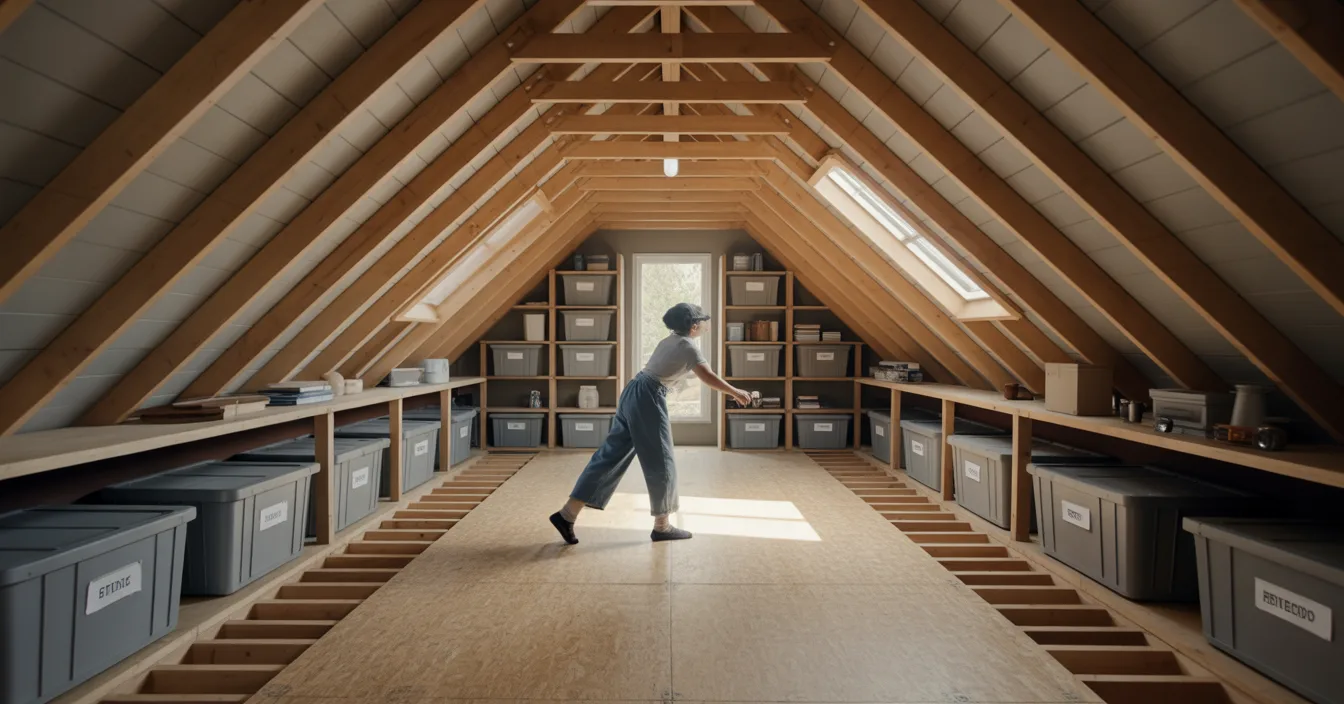
When I first started using my attic for storage, I made the common mistake of simply throwing boxes in without any structure or planning. Very quickly, I realized that the first and most important step is always clearing everything out so I can actually see the full space, understand the layout, and identify usable zones instead of guessing blindly.
After that, I carefully check the flooring because most attics are not built for safe walking or storage. If I see exposed beams, I install simple plywood sheets to create a stable walking surface that also protects items from shifting or falling into insulation gaps.
Next, I focus on the low-height perimeter areas along the roof slope, which are usually ignored but extremely valuable. These sections are perfect for storage bins, drawers, or low shelving units, while I always keep the center area open so I can move comfortably without bumping into stored items.
Finally, I make it a habit to store everything in sealed, labeled containers so I never waste time searching through random piles again. This system completely changes the attic from a cluttered dumping space into a structured and efficient storage zone that actually works long term.
Pro Tip: Always group similar items together before storing them so retrieval becomes faster later.
Knee Cabinets
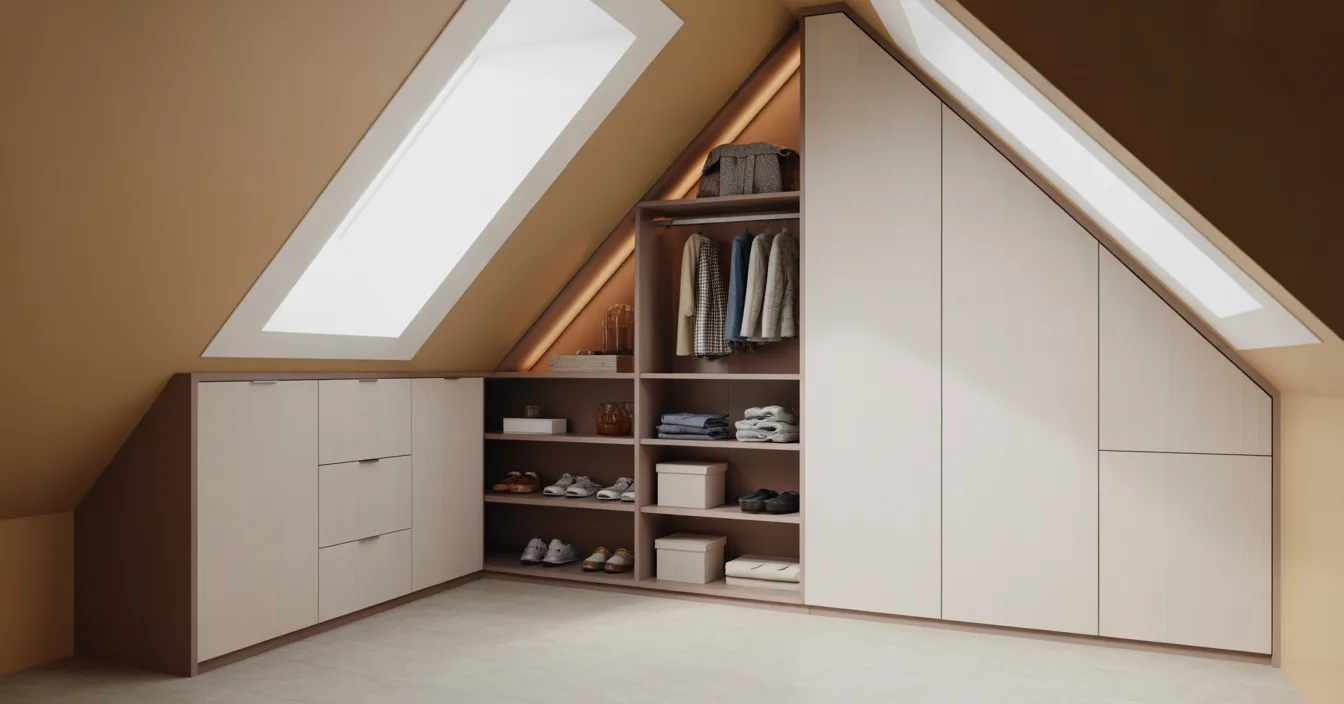
In my experience, knee-wall cabinets are one of the most effective ways to use the sloped edges of an attic because they transform otherwise unusable low-height space into hidden and organized storage. Instead of leaving that awkward strip empty or cluttered, I turn it into built-in cabinetry that blends naturally into the wall design.
I usually install long, low cabinets along the entire slope and divide the interior into drawers, shelves, and small compartments depending on what I plan to store. This setup works especially well for shoes, bags, seasonal clothes, and other items that don’t require standing height.
To keep everything clean and protected, I prefer closed doors that block dust and maintain a smooth visual appearance across the attic. Whenever possible, I also enhance brightness using nearby skylights or small lighting fixtures so the storage area doesn’t feel dark or hidden.
Pro Tip: Measure the slope carefully before building cabinets to avoid wasted corner gaps.
Triangle Shelving
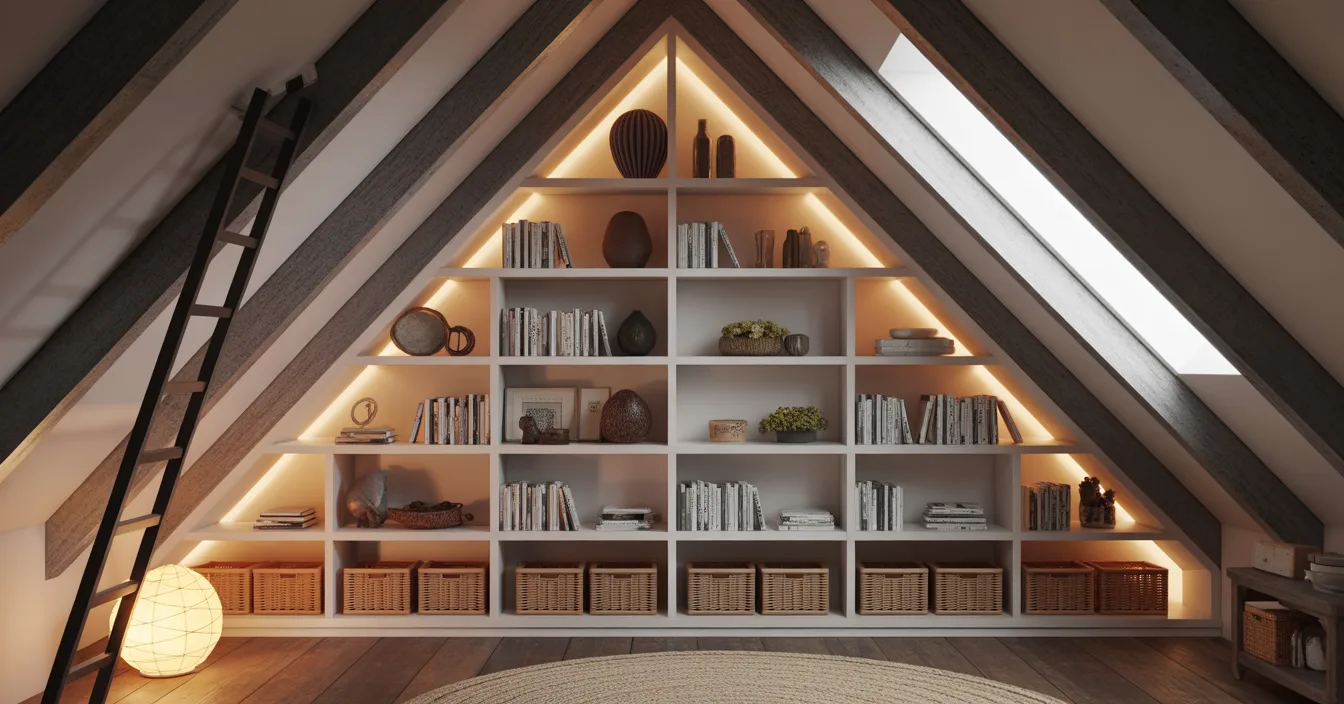
From my experience, attic peaks are often completely ignored because people assume they are too awkward to use, but triangle shelving actually turns that wasted vertical space into one of the most useful storage zones. By following the exact roof angle, I can create shelves that perfectly fit into the triangular structure without losing usable height.
I start by building a simple wooden frame that matches the pitch of the roof and then install evenly spaced shelves inside that structure. This allows me to store books, decorative pieces, storage baskets, and lightweight containers in a very organized way.
Heavier items always go on the lower levels for safety and stability, while lighter or less frequently used items go higher up. This design turns what used to be a dead corner into a visually structured and highly functional storage wall.
Pro Tip: Reinforce upper shelves properly if you plan to store decorative but fragile items.
Walk-In Layout
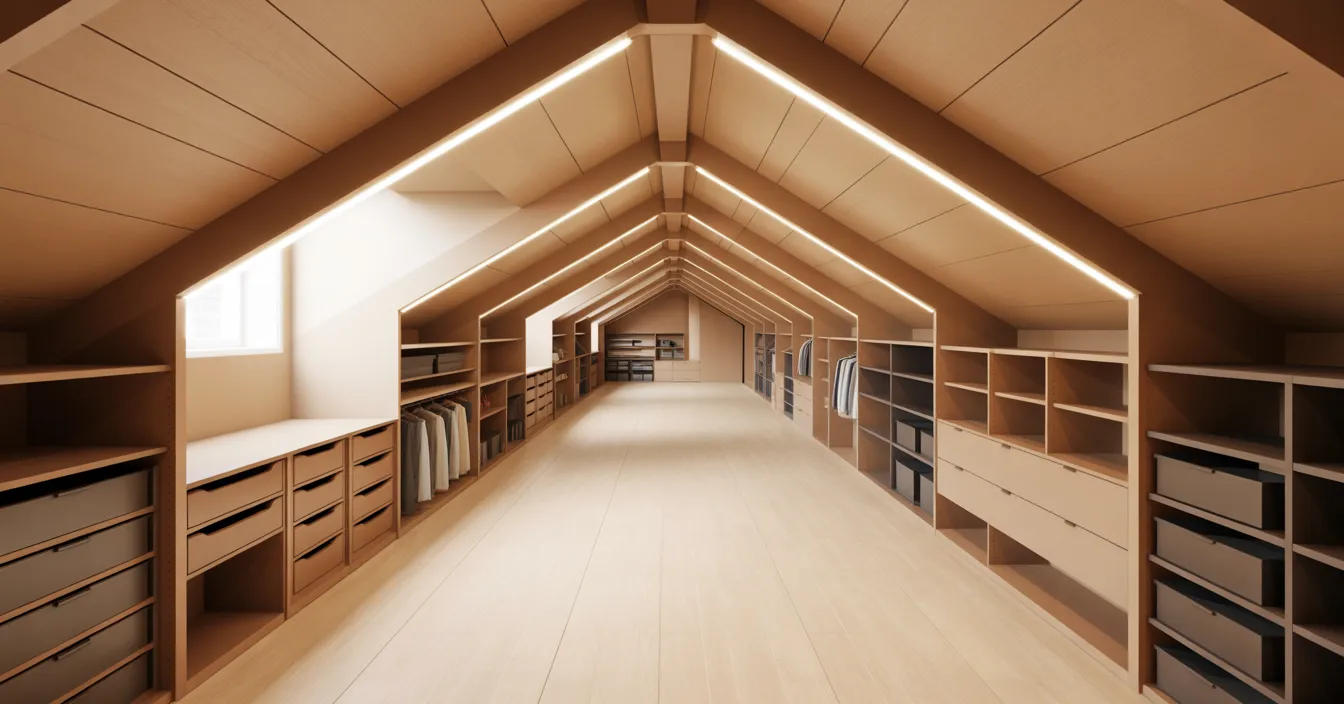
Whenever I’m dealing with a long attic space, I prefer turning it into a walk-in layout because it instantly improves organization and usability. I place storage units along both sides of the attic while keeping a clear central walkway that allows easy movement from one end to the other. This setup makes the attic feel more like a dressing room than a storage space, especially when I divide items properly into drawers, shelves, and hanging sections. Lower drawers are ideal for smaller accessories, while upper shelves work best for boxes and seasonal storage.
Lighting plays a very important role in this layout because attics often lack natural brightness, so I always install strong overhead lighting or LED strips to make the entire area feel more open and usable.
Pro Tip: Keep at least one side slightly lighter in storage density to avoid a cramped feel.
Window Shelves
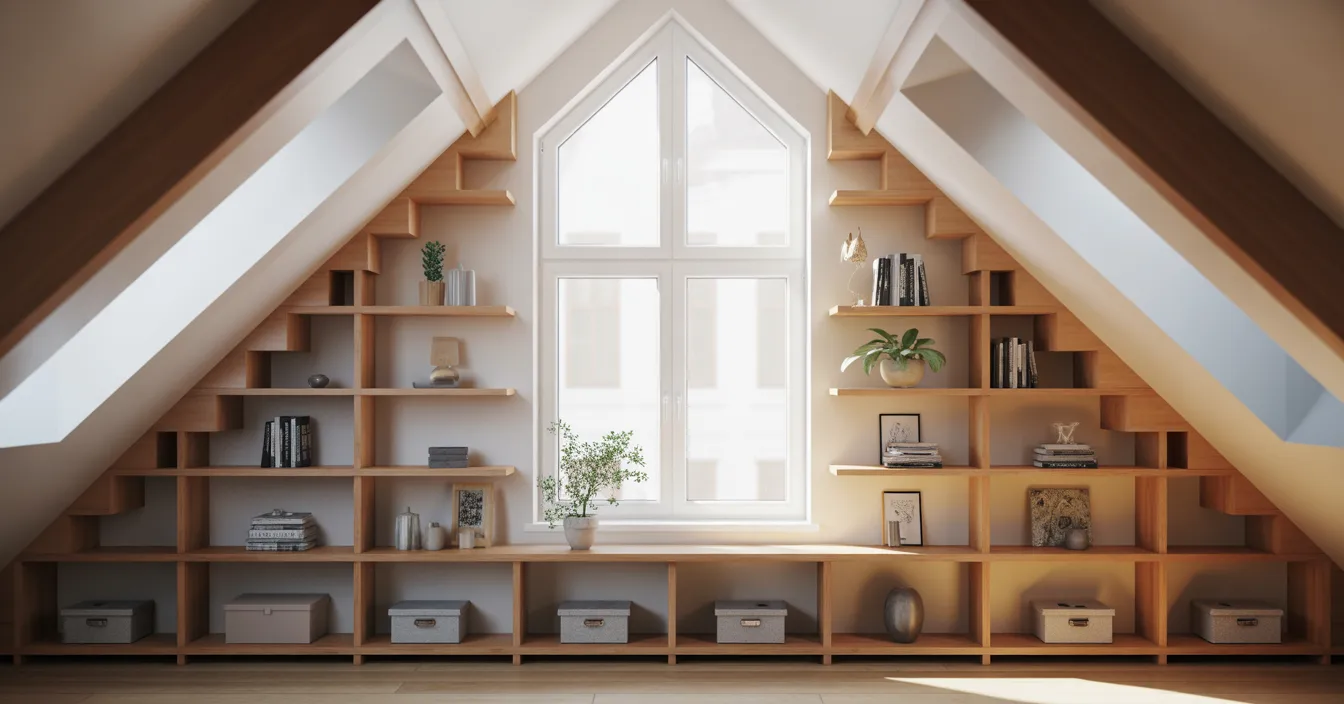
In many attics, I notice that the space around windows is completely wasted because of awkward angles and tight corners, but I’ve found that stepped shelving is a great way to turn that area into functional storage. By following the roof slope and window shape, I can create shelves that fit naturally into the structure without blocking light.
I use these shelves for books, small storage boxes, plants, or decorative items, depending on the room setup. Lower shelves are best for heavier objects, while upper ones are perfect for lighter décor pieces that don’t require frequent access.
One important thing I always do is keep the center area near the window open so it can still function as a reading corner, workspace, or small seating area without feeling crowded.
Pro Tip: Avoid deep shelves near windows to maintain natural light flow.
Shoe Wall
One of my favorite attic storage upgrades is building a dedicated shoe wall because it immediately brings order to what is usually a messy collection of footwear. Instead of stacking shoes randomly, I create structured cubbies so every pair has a visible and accessible place.
I design the system from floor to ceiling to maximize vertical space, especially in narrow attic sections where floor area is limited. Each cubby is shallow enough to hold a single pair while keeping everything visible at a glance. This setup works well for sneakers, heels, boots, and sandals, and it also helps prevent damage caused by stacking or improper storage. It turns an overlooked wall into a highly functional and organized feature.
Pro Tip: Leave slight spacing between cubbies to improve air circulation and prevent odor buildup.
Peak Storage
In most attics I’ve worked with, the highest central point is often left completely empty, but I’ve learned that this area can actually become one of the most efficient storage zones if used correctly. By building shelves that follow the roofline, I can fully utilize the vertical space without wasting height. I typically use this area for luggage, seasonal storage boxes, and items that I don’t need to access frequently. Lower sections are reserved for heavier storage, while the upper peak area is better suited for lightweight and less frequently used items.
This approach helps balance the entire attic layout so no section is overloaded or underused. It also keeps the floor area open and easy to navigate.
Pro Tip: Store rarely used items at the highest point to avoid unnecessary climbing.
Slope Shelving
Slope shelving is one of the simplest but most effective attic storage solutions I use because it directly follows the roof angle and eliminates wasted triangular gaps. Instead of trying to force standard furniture into the space, I build shelving that fits the natural slope of the ceiling.
This type of shelving works especially well for books, baskets, and small containers that need easy access. In smaller attic rooms, I often keep the design open without doors to maintain a light and airy feeling.
It also helps keep frequently used items within reach, which improves daily convenience and reduces clutter buildup.
Pro Tip: Use consistent shelf depth to maintain a clean, uniform visual line.
Rafter Shelves
Exposed rafters give me a natural guide for installing long, continuous shelving that blends perfectly with the structure of the attic. I usually build low-profile shelves along the rafter line so they don’t interfere with movement but still provide plenty of storage space. These shelves are ideal for books, decorative items, or storage boxes that don’t need frequent rearrangement. Because they follow the roof angle, they look like part of the original structure rather than an added feature.
I also like adding soft LED lighting along the shelves because it improves visibility and creates a warm, cozy atmosphere in the attic space.
Pro Tip: Avoid overloading long shelves by distributing weight evenly across sections.
Wardrobe Wall
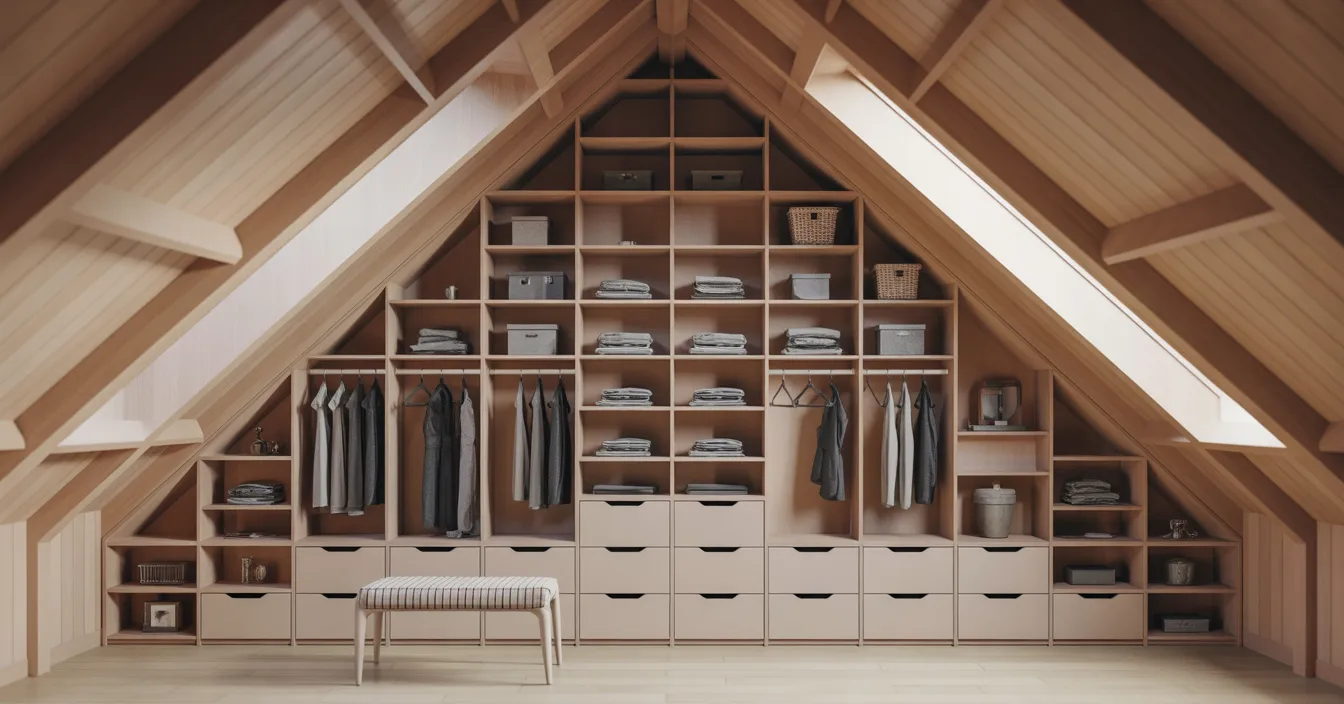
When I want a clean and highly organized clothing system, I design a wardrobe wall that follows the exact slope of the attic ceiling. This approach removes wasted triangular gaps and turns the entire wall into usable storage from end to end. I divide the space into hanging sections, folded storage shelves, and drawer units so every clothing type has a proper place. This helps maintain order and makes it easy to rotate seasonal clothing when needed.
I also like adding a small seating area in front because it makes the space feel more like a functional dressing room rather than just storage.
Pro Tip: Use uniform hangers to instantly improve visual organization.
Angled Closet
Standard wardrobes rarely fit properly in attic spaces, so I prefer building angled closets that match the ceiling slope exactly. This allows me to fully use the available height without leaving awkward empty gaps behind furniture.
I design taller sections for hanging coats and shirts, while lower sections are ideal for folded clothes, storage bins, or shoes. Drawers at the base help keep small accessories organized and easy to access.
This built-in approach makes the entire room feel cleaner and more open because everything sits flush with the wall instead of sticking out.
Pro Tip: Plan closet zones based on clothing length for better efficiency.
Island Storage
If the attic has enough central height, I like adding an island storage unit because it creates extra storage without crowding the walls. It also improves flow because I can access items from both sides of the unit. I usually use the island for frequently worn clothes, accessories, or folded outfits, while keeping upper sections for storage boxes or less-used items. This setup improves organization and accessibility at the same time.
Proper lighting around the island is also very important because attic spaces often lack natural brightness, so I make sure the area is well-lit and easy to use.
Pro Tip: Keep pathways around the island clear to maintain smooth movement.
Hidden Cabinets
Hidden cabinets are one of my favorite attic storage solutions because they turn unused sloped corners into completely functional but discreet storage. I design them to follow the roofline so they blend seamlessly into the wall. These cabinets are perfect for storing items that don’t require daily access, such as seasonal decorations or archived belongings. The upper open shelves can be used for lighter display items, while lower sections remain hidden behind doors.
When I add mirrored panels, the space immediately feels brighter and more spacious because they reflect available light across the attic.
Pro Tip: Use hidden handles or push-to-open systems for a cleaner finish.
Vanity Storage
Whenever I find an attic area near a skylight, I like transforming it into a vanity and storage zone because it naturally has good lighting. I build cabinets along the slope and place a mirror in the center to create a functional grooming space.
This setup allows me to store accessories, daily essentials, and clothing items in a very organized way. Side cabinets help keep things structured while maintaining a clean appearance.
I also include internal lighting inside drawers or shelves so the space remains usable even when natural light changes throughout the day.
Pro Tip: Position the vanity where natural light falls from the side, not directly behind.
Vanity Cabinets
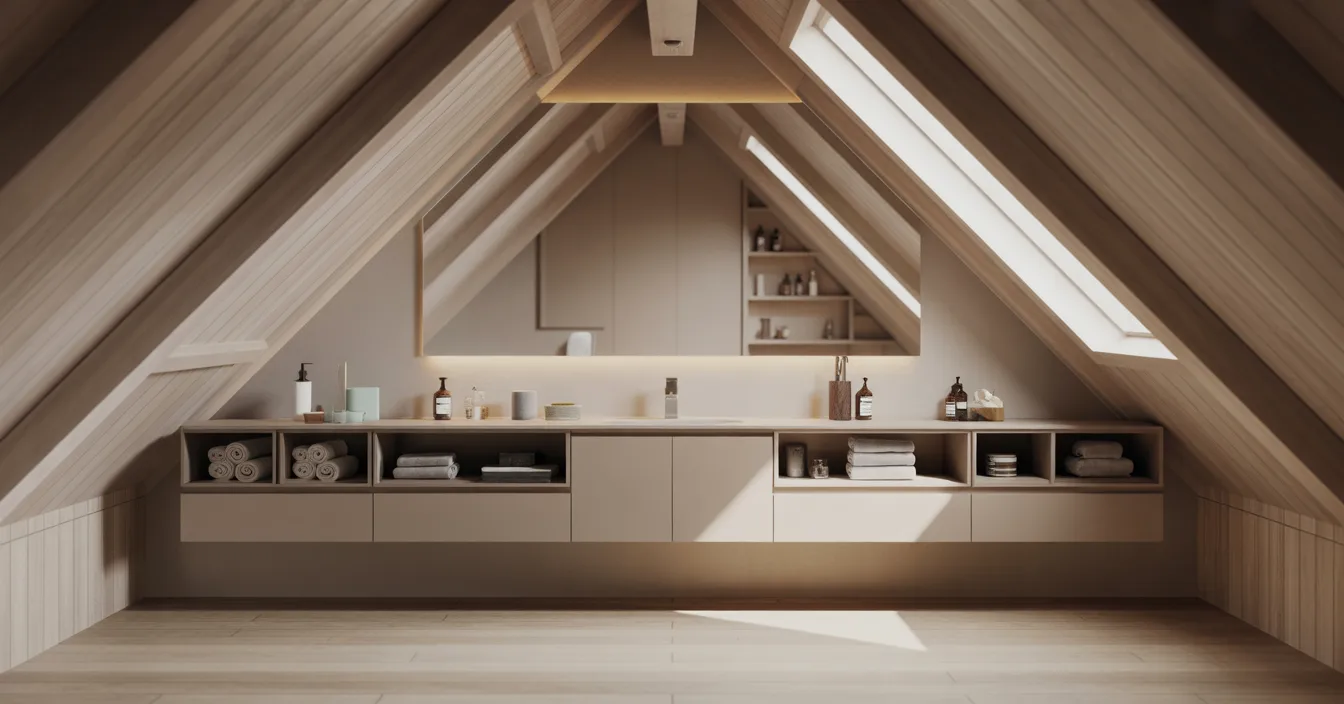
In attic bathrooms, I prefer floating vanity cabinets because they make the room feel larger by keeping the floor area open. This design also makes cleaning easier and improves overall space efficiency. I use the cabinets to store towels, toiletries, and cleaning supplies so the countertop remains clutter-free. It helps maintain a simple and functional bathroom setup even in tight attic spaces.
Placing the vanity under lower ceiling sections works best because sinks don’t require full standing height, making the space more practical.
Pro Tip: Always choose water-resistant materials for long-term durability.
Rack Storage
For long attic walls, I like installing continuous clothing racks because they create an open and accessible storage system. Instead of hiding clothes behind doors, everything stays visible and easy to manage. I position the racks slightly below skylight height so they don’t block natural light while still maximizing vertical storage. This keeps the attic bright and functional at the same time.
At the ends, I add shelves or cubbies for shoes and accessories so everything stays organized in one flow.
Pro Tip: Keep hanger spacing consistent to avoid visual clutter.
Bin Stacking
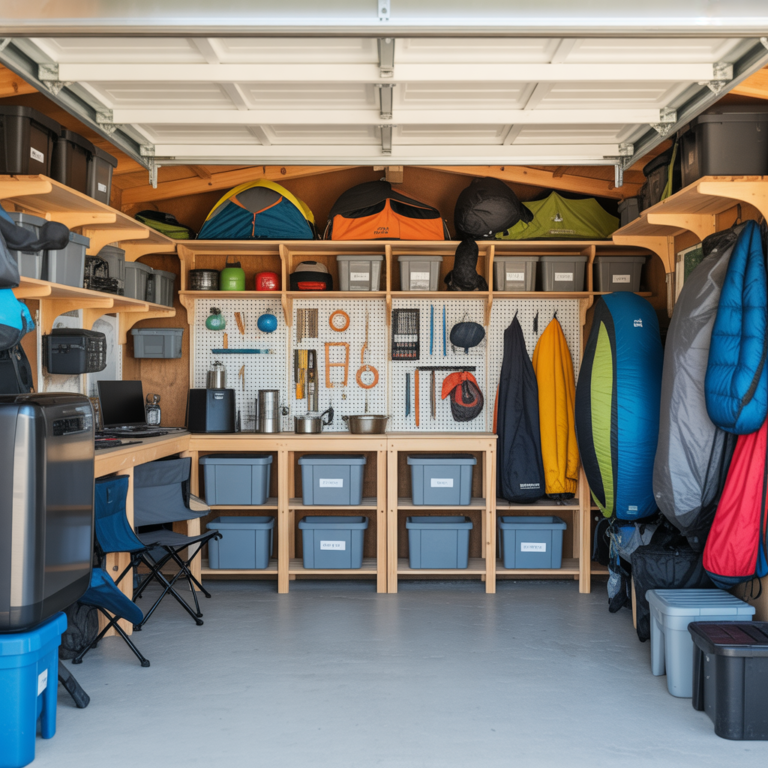
For simple and cost-effective attic storage, I rely heavily on stackable bins because they work well even in unfinished spaces. These bins are especially useful for seasonal items and long-term storage. I always use sealed containers to protect belongings from dust, pests, and temperature fluctuations. Labeling each bin is essential because it saves time when retrieving items later.
I also place bins on plywood flooring to protect insulation and ensure stability when stacking multiple layers.
Pro Tip: Place frequently used bins at eye level for easy access.
Corner Shelving
Attic corners are often ignored, but I turn them into structured shelving units that maximize every available inch. This approach is especially useful in attic offices or workspaces. I use open shelves for books, decor, and supplies, while closed cabinets store less visually appealing items. This helps maintain a clean and balanced look throughout the space.
By matching shelving to the roof angle, I ensure that no space is wasted, even in the tightest corners.
Pro Tip: Add corner lighting to eliminate shadows and improve usability.
Open Wardrobe
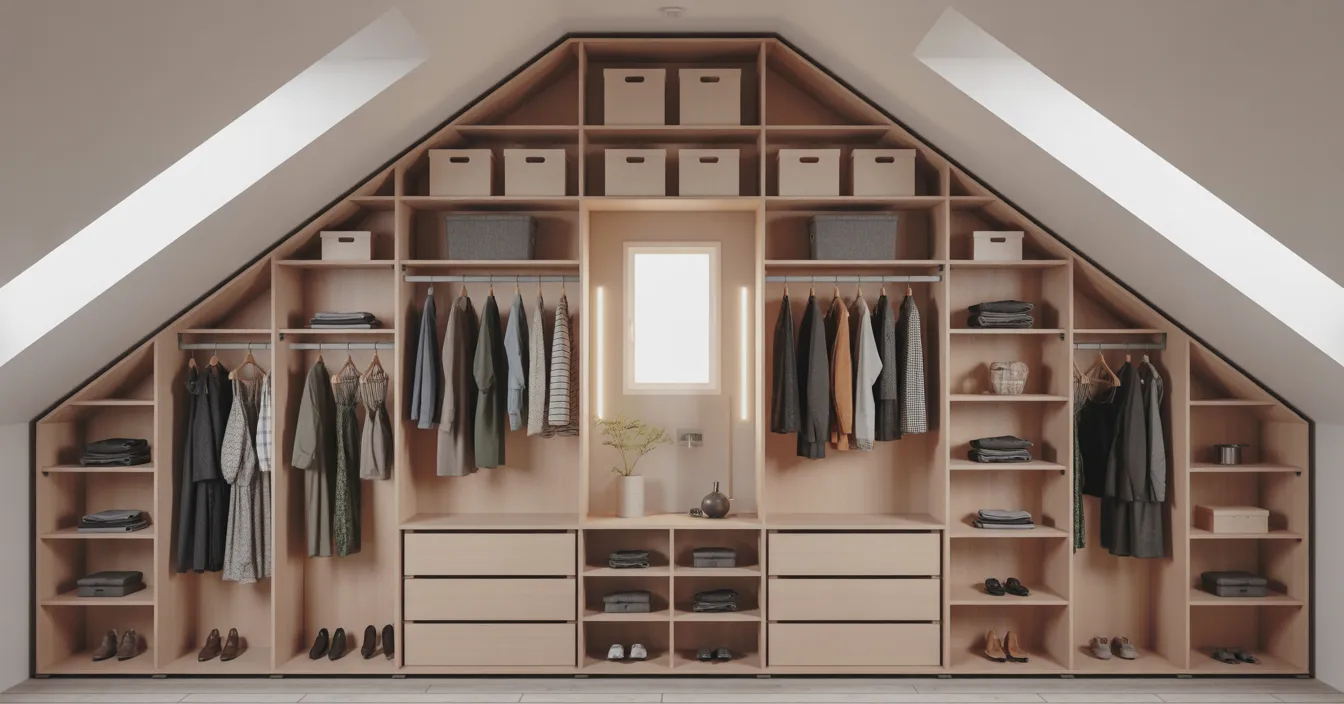
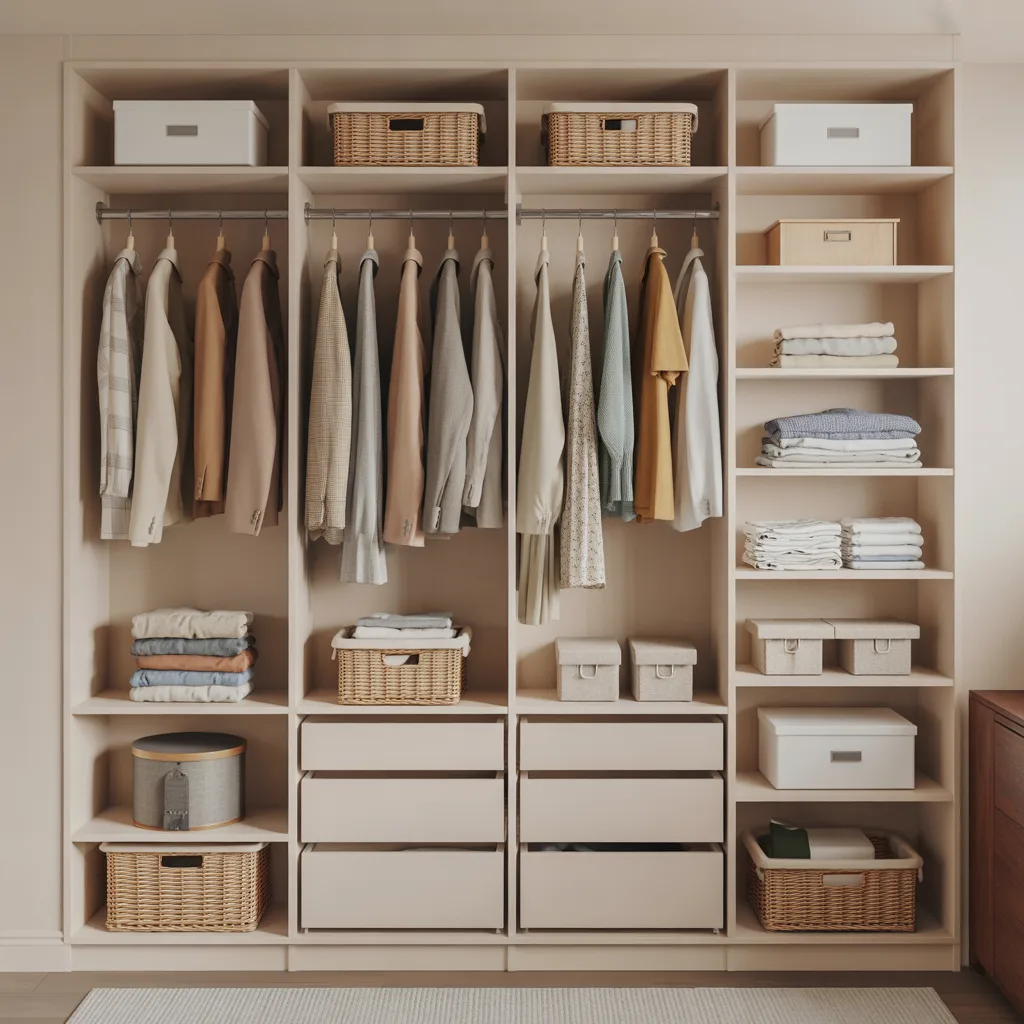
An open wardrobe system works really well in attics because it eliminates bulky doors and keeps everything visible at a glance. I organize it into sections so clothing remains easy to sort and access. I use taller sections for coats and dresses, while shorter areas handle shirts, folded clothes, and accessories. Upper shelves are ideal for seasonal storage boxes that don’t need frequent access.
This setup makes even narrow attics feel more open and less cluttered because there are no barriers between me and the storage.
Pro Tip: Regularly rotate clothes to keep the system functional and organized.
FAQs
1. Can attic storage damage insulation?
Yes, it can if not done correctly. I always avoid placing heavy storage directly on insulation because it compresses it and reduces its ability to regulate temperature. Instead, I install raised plywood flooring or storage platforms to protect insulation and maintain airflow.
2. What type of storage works best in small attics?
From my experience, the best storage for small attics is built-in and slope-following designs. I use angled shelves, low cabinets, and wall-mounted systems to make use of every awkward corner. Keeping the center walkway open is also essential for accessibility.
Conclusion
After working through all these attic storage ideas, I’ve realized that the biggest transformation comes from how I use space, not how much space I actually have. Once I started working with slopes, corners, and height differences instead of ignoring them, my attic became one of the most useful areas in my home.
I don’t treat the attic as a dumping ground anymore. Instead, I see it as a flexible storage zone where every wall, angle, and empty gap has potential if designed correctly. Small improvements like built-in shelves, labeled bins, and clear walkways completely changed how I use the space every day.
If you apply even a few of these ideas, you’ll notice your attic becoming cleaner, more functional, and much easier to manage. The key is consistency and smart planning from the start.