


I’ve seen how quickly hat collections can take over a space when there’s no proper system in place. In this article, I’m sharing practical hat storage ideas that actually work in real homes, not just in staged setups. These ideas are designed for anyone who wants to keep hats organized, protected, and easy to access. Whether you live in a small apartment or have a walk-in closet, you’ll find simple solutions that help you reclaim your space. I focus on realistic setups that balance function and style without overcomplicating things.
By the end, you’ll know exactly how to turn messy hat piles into a clean, organized display that feels intentional.

Key Takeaways
The best hat storage systems use vertical space instead of cluttering shelves or floors.
Keeping hats visible makes them easier to use and helps prevent damage or forgotten items.
Wall-based storage, hooks, and racks are the most space-efficient solutions.
A good system protects hat shape while also improving room aesthetics.
What Is The Best Storage Solution For A Large Hat Collection?

From my experience, the biggest challenge with hats isn’t owning them, it’s storing them without ruining their shape. I always look for storage that keeps everything visible and easy to reach while still protecting the brim. Wall-mounted systems and vertical organizers tend to work best because they don’t eat up closet or drawer space. They also make the collection feel like part of the room instead of hidden clutter.
When each hat has a defined place, it becomes much easier to maintain order without constant cleanup.
Pro Tip: Start with one wall or one closet section instead of trying to organize everything at once.
Hat Gallery
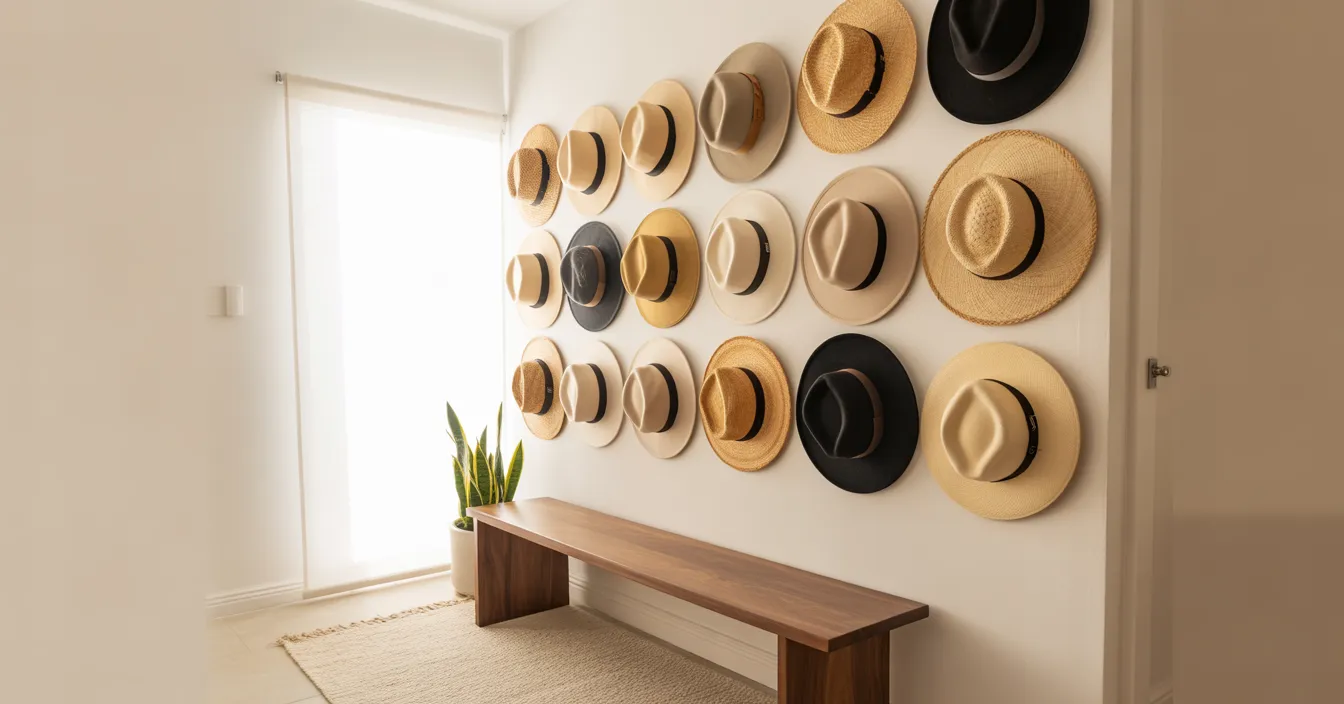
I like using empty wall space as a hat gallery because it instantly turns storage into decor. Instead of hiding hats away, I treat them like visual elements that add texture and personality to the room. Wide-brim hats especially work well because they naturally fill space and create a balanced display. I usually start with a central piece and build outward for symmetry. This approach works best in hallways or entry areas where you want both function and visual impact.
Pro Tip: Mix hat sizes and textures to make the display look more natural and less staged.
Shelf Hooks
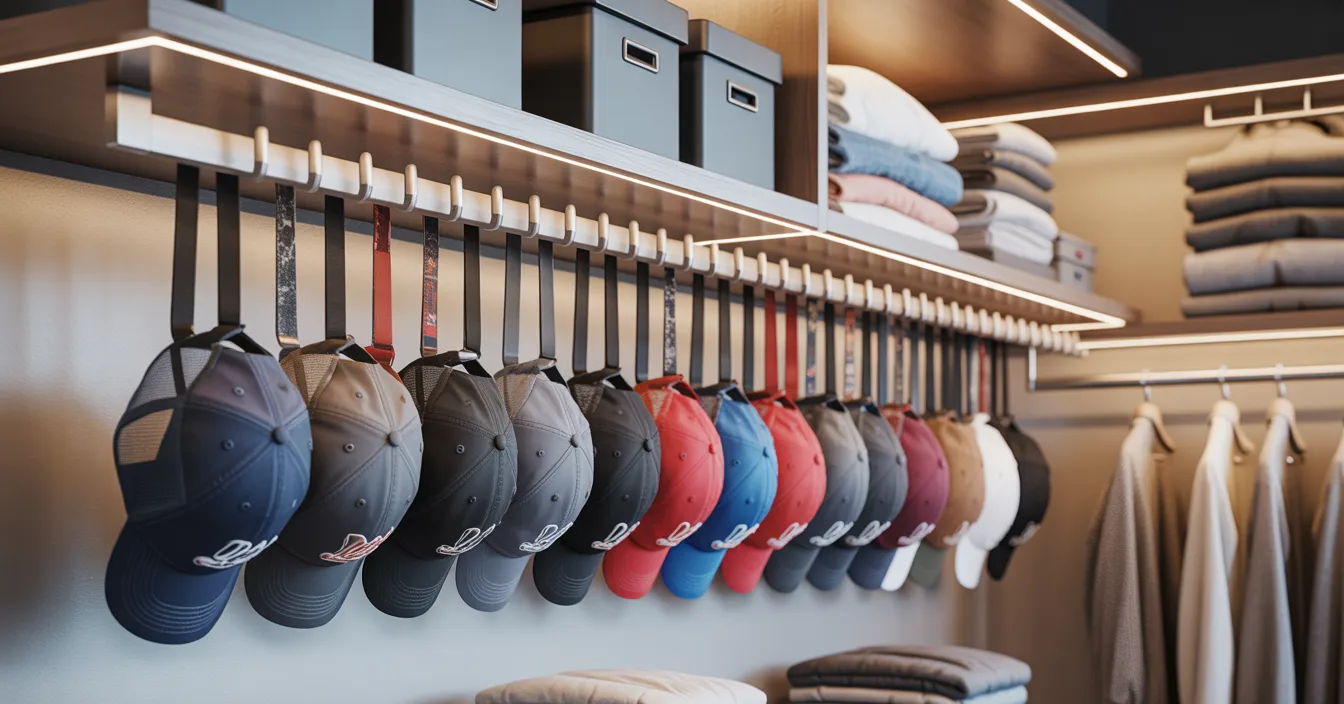
Shelf hooks are one of the simplest tricks I use when closet space is tight. I attach hooks under existing shelves so caps can hang neatly without stacking. Each hat stays in shape because it hangs freely instead of being pressed together. I also like sorting them by color or style to make selection faster. It turns unused shelf space into a practical storage system without any major installation.
Pro Tip: Use evenly spaced hooks so hats don’t overlap and become hard to grab.
Wall Display
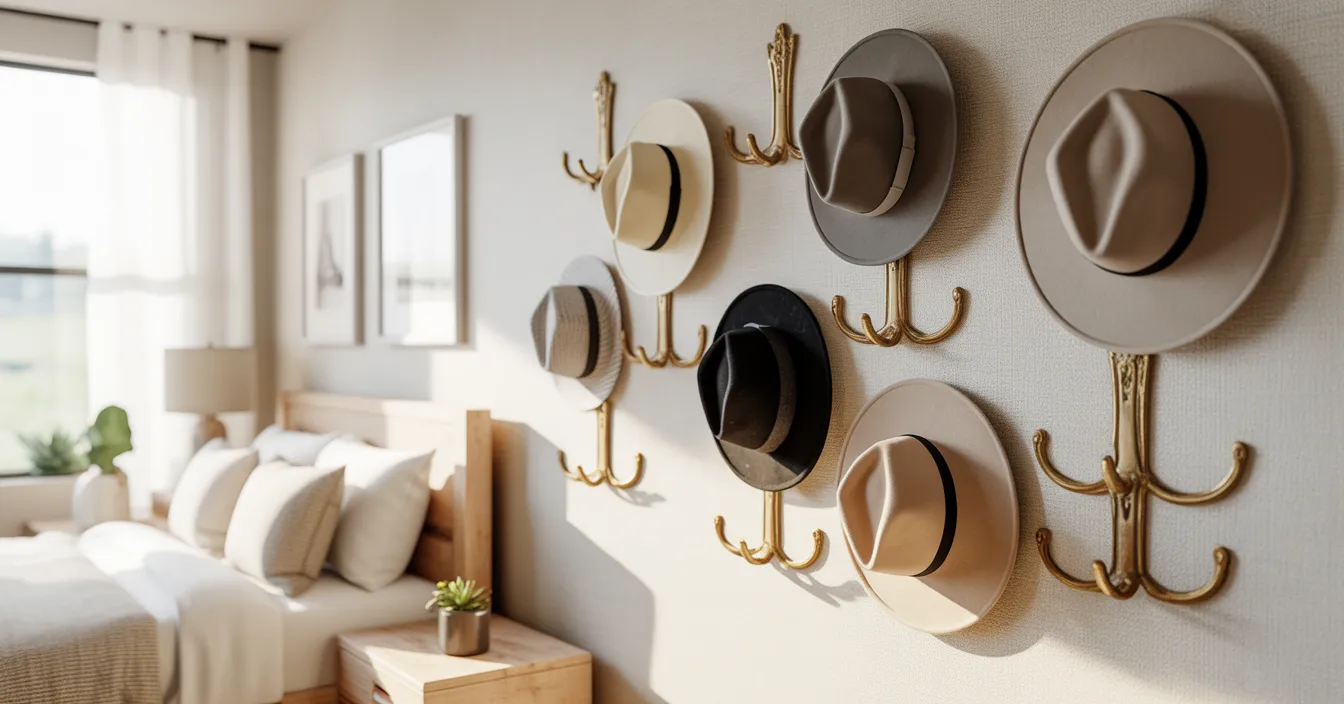
I often turn empty walls into functional hat displays because it saves space and looks stylish at the same time. Hooks placed in a loose pattern allow hats to sit naturally without looking forced. Wide-brim hats work especially well since they create a strong visual shape on the wall. I avoid rigid alignment so the display feels more relaxed and personal. This setup keeps hats accessible while also acting as room decor.
Pro Tip: Leave consistent breathing space between hats so the wall doesn’t feel overcrowded.
Door Organizer

I’ve found that the back of a door is one of the most underrated storage spots for hats. Hanging organizers or slim basket systems let me store multiple hats vertically without crushing them. Each hat sits in its own section, which makes it easy to grab the one I need when heading out. It also keeps my closet and shelves completely free for clothes.
This method works especially well in smaller bedrooms where every inch matters.
Pro Tip: Keep frequently used hats in the middle section for quick access.
Rope Rail
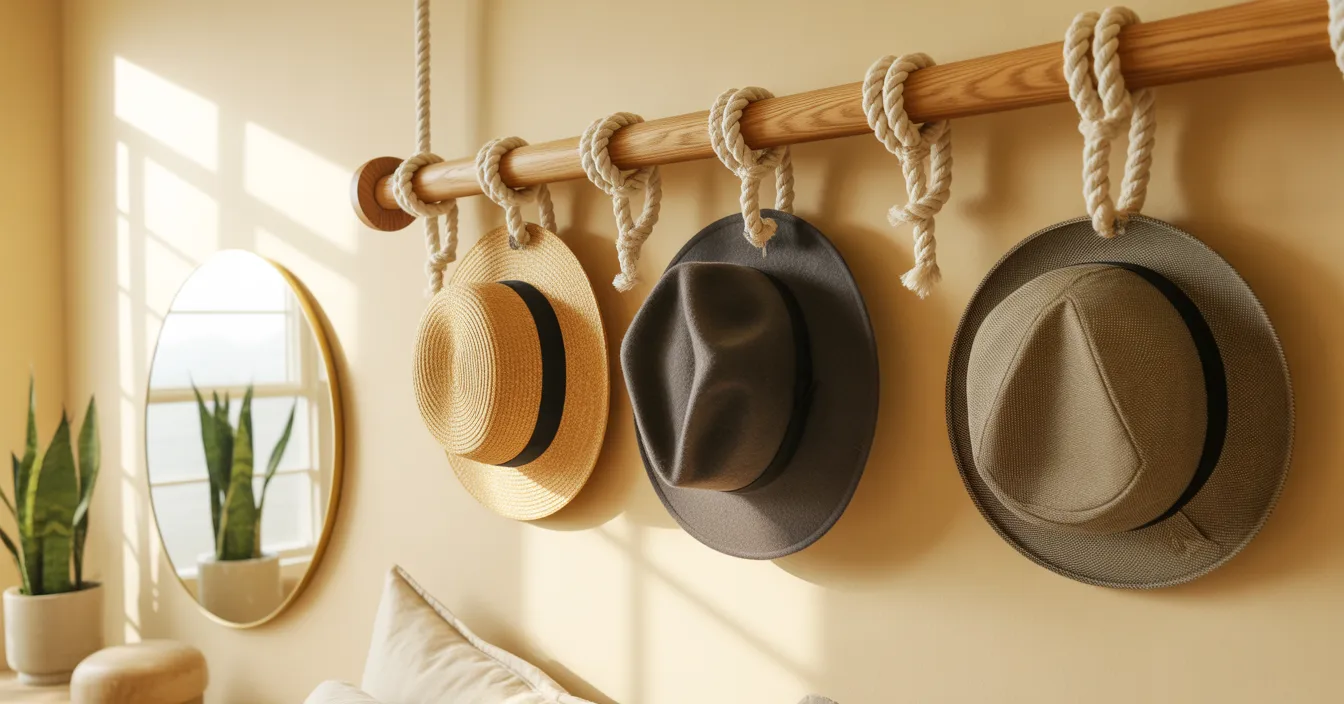
A rope rail system is something I like when I want storage that also looks decorative. A simple wooden rod with rope loops lets hats hang naturally without losing shape. Each hat has its own loop, which prevents stacking and keeps everything visible at a glance. It also adds a soft, handmade aesthetic to the wall.
I usually place it in bedrooms or dressing areas for easy daily access.
Pro Tip: Use natural fiber ropes to avoid slipping and add visual warmth.
Clip Board
Clip board-style storage works surprisingly well inside closets for caps. I attach clips to a vertical panel so each hat can hang individually without touching others. This prevents bending and keeps the brim structure intact even with a growing collection. I also like how easy it is to rearrange the layout when needed.
It’s a flexible system that adapts as your collection expands.
Pro Tip: Choose adjustable clips so you can fit different hat sizes easily.
Hat Stands
Hat stands are my go-to for structured hats because they maintain shape perfectly over time. I place them on shelves so each hat has its own elevated position. This prevents flattening and makes the collection look like a curated display instead of storage. Clear stands also keep the focus on the hats themselves.
It works best in walk-in closets where visibility matters.
Pro Tip: Leave small gaps between stands so brims don’t touch each other.
Strap Hanger
Strap hangers are one of the most efficient ways I’ve found to store caps vertically. One strap can hold multiple hats, which saves a lot of space instantly. Each cap stays visible and easy to remove without disturbing the others. I often install them on doors or inside wardrobes.
It’s a simple system that works well for growing collections.
Pro Tip: Use strong hooks to prevent sagging when the strap is fully loaded.
Rail Display
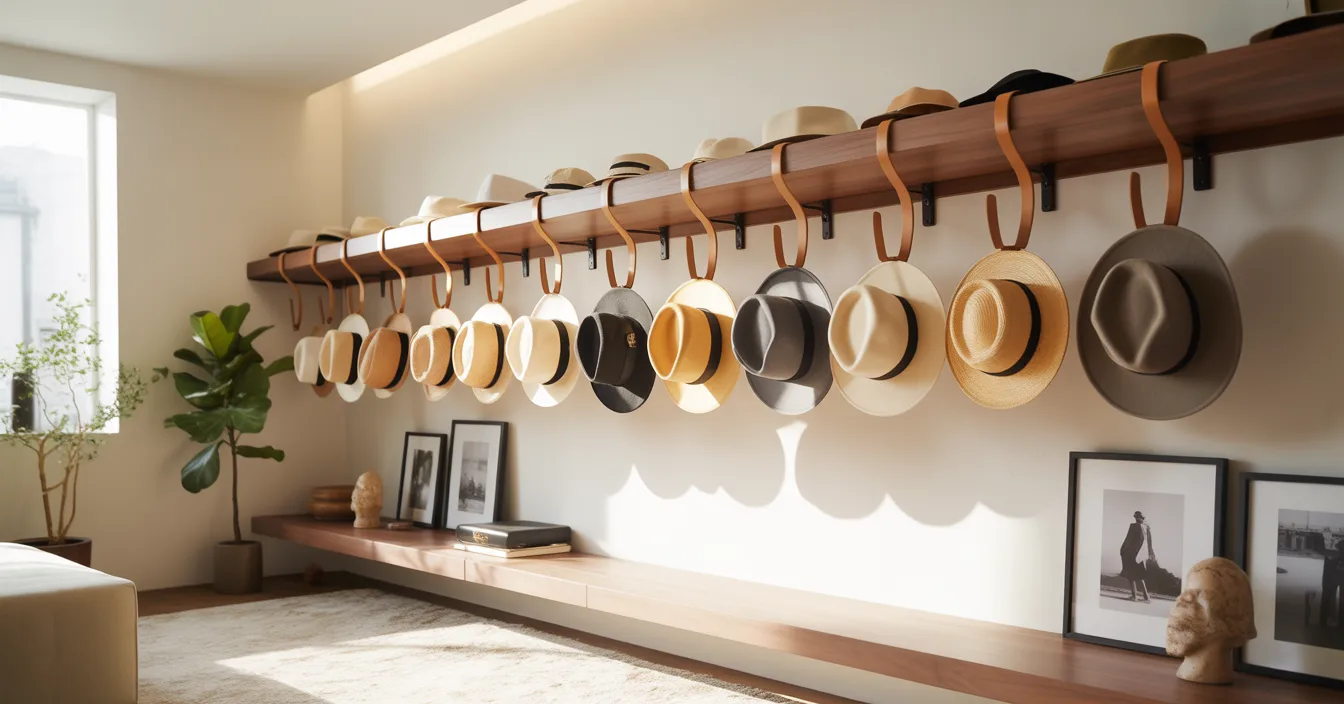
I like rail displays because they combine storage and wall design in one system. A wooden rail with loops allows hats to hang evenly across a wall. This keeps everything structured without feeling rigid or over-organized. It also makes hats part of the room’s visual flow.
It works especially well in dressing rooms or large bedrooms.
Pro Tip: Keep equal spacing between loops to maintain visual balance.
Closet Shelf
Closet shelves often go unused at the top, so I use them for hat storage. Placing hats on stands keeps them elevated and prevents deformation. This also keeps the rest of the wardrobe organized without interference. I like how everything stays visible but still protected.
It’s one of the easiest ways to store hats long-term.
Pro Tip: Add shelf guards if your hats tend to slide forward.
Hat Wall
A dedicated hat wall is one of my favorite ways to organize a large collection. I use hooks in a balanced layout so each hat has its own space.
This turns the collection into a feature rather than clutter. I usually place larger hats around the edges for balance.
It also makes outfit planning much easier when everything is visible.
Pro Tip: Group hats by type or color for a more cohesive look.
Macrame Holder
Macrame holders work well when I need vertical storage in tight spaces. The woven loops gently hold each hat without damaging shape.
It also adds a decorative, soft aesthetic to the room while staying highly functional. I like using it near corners or narrow walls.
It’s especially useful when floor space is limited.
Pro Tip: Keep loop tension even so hats stay aligned properly.
Pocket Organizer
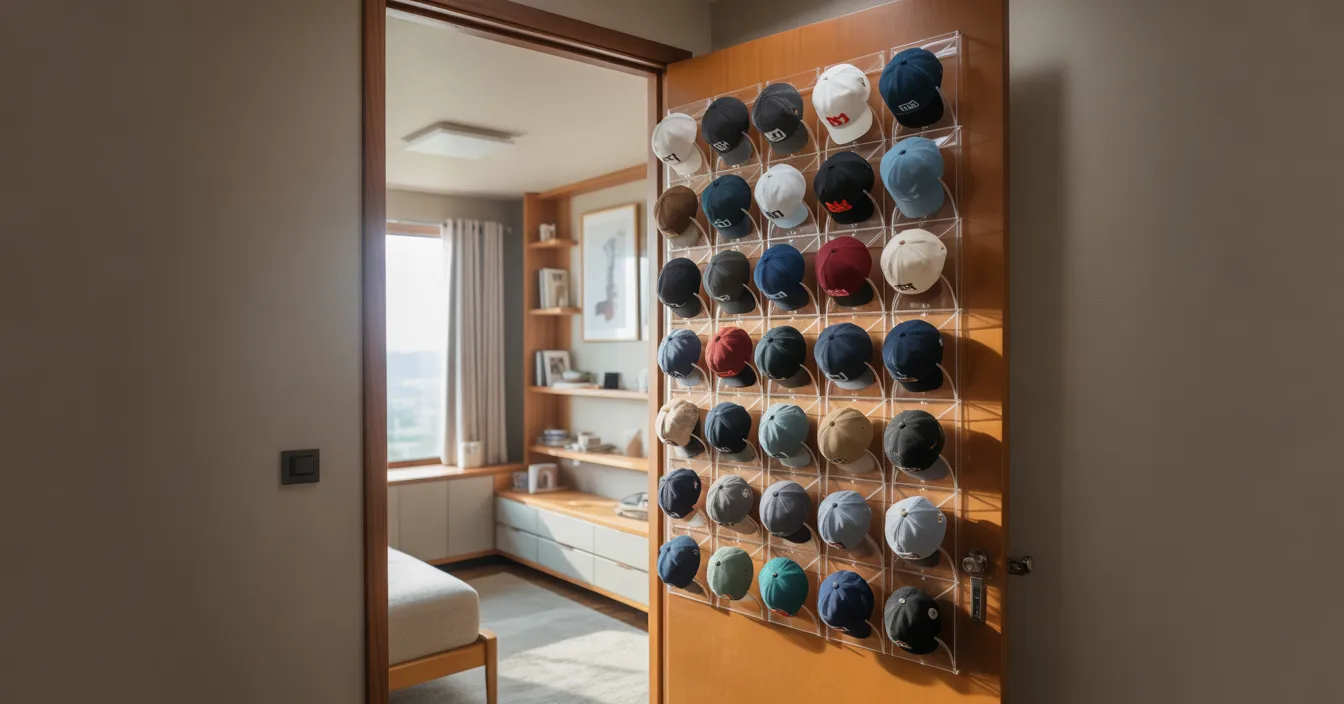
Pocket organizers are great for caps because they use door space efficiently. Each pocket holds one hat, keeping everything separated and visible. I like how easy it is to sort by color or frequency of use. It also prevents stacking damage completely.
This system works best in compact bedrooms or closets.
Pro Tip: Use clear pockets so you can see hats instantly.
Shelf Hooks
Combining shelves with hooks gives me both storage and display in one setup. Hats hang below while small items sit above on the shelf.
This dual-purpose system saves space while keeping everything organized. I often use it in entryways for convenience.
It’s practical and visually clean at the same time.
Pro Tip: Keep heavier hats on stronger hooks to avoid strain.
Hat Tapestry
Hat tapestry setups turn storage into wall art. I hang hats from vertical cords attached to a rod so each one sits separately.
It creates a flowing display that feels artistic and structured at the same time. I like using it in larger open rooms.
It also makes a strong visual statement.
Pro Tip: Keep cord lengths equal for a balanced appearance.
Rack Hooks
Rack hooks are perfect when I need quick-access hat storage near entrances. A standing rack allows me to hang multiple hats without crowding shelves. It also doubles as coat storage, which is useful in small spaces. I like how easy it is to grab a hat on the way out.
This setup keeps daily essentials organized in one place.
Pro Tip: Place the rack near the door for faster routine use.
Hanger Rack

Hanger racks make use of vertical space inside closets very efficiently. I can store multiple caps in a single hanging column without stacking them. Each hat remains visible, which makes selection quick and easy. It also prevents bending and piling issues.
It’s a simple upgrade that makes a big difference.
Pro Tip: Rotate hats occasionally to maintain shape consistency.
Wall Rack
Wall racks are great when I want to maximize vertical wall space. Each hook holds one hat, keeping everything structured and easy to see.
I often install two rows to double storage capacity without clutter. It keeps the floor completely clear.
It’s ideal for small rooms or dorm-style spaces.
Pro Tip: Keep rows evenly spaced for a cleaner look.
Bar Holder
Bar holders are one of the cleanest storage solutions I’ve used for hats. A horizontal rod lets hats slide on without stacking or pressure.
Each hat sits neatly next to the other, making the system very efficient. It works best for lightweight caps.
It creates a compact and organized display.
Pro Tip: Leave slight gaps between hats to avoid friction.
Macrame Rack
Macrame racks combine storage and decor in a vertical design. Each loop holds a hat securely without damaging structure.
It’s ideal for walls where traditional shelves won’t fit. I like how soft and aesthetic it looks in bedrooms.
It turns storage into a design element.
Pro Tip: Use thicker rope for heavier hats.
Rod Rack

Rod racks are simple but highly effective for closet organization. Hats hang through a horizontal rod, keeping everything aligned and visible.
It prevents stacking and makes browsing the collection effortless. I use it above clothing rods for extra space.
It’s one of the most space-efficient systems.
Pro Tip: Keep spacing consistent to prevent overlap.
Decor Hooks
Decor hooks let me turn hats into part of the room design. Stylish hooks make storage look intentional instead of functional.
Each hat becomes a decorative element on the wall. I like matching hook styles with room decor.
It blends storage with interior design beautifully.
Pro Tip: Choose hook finishes that match your room theme.
Ball Hooks
Ball hooks are small but very effective for cap storage. The rounded shape holds hats securely without damaging structure.
They also add a playful, colorful look to the wall. I use them in small spaces like apartments or dorms.
They’re simple but surprisingly practical.
Pro Tip: Install at shoulder height for easy daily access.
Window Hooks
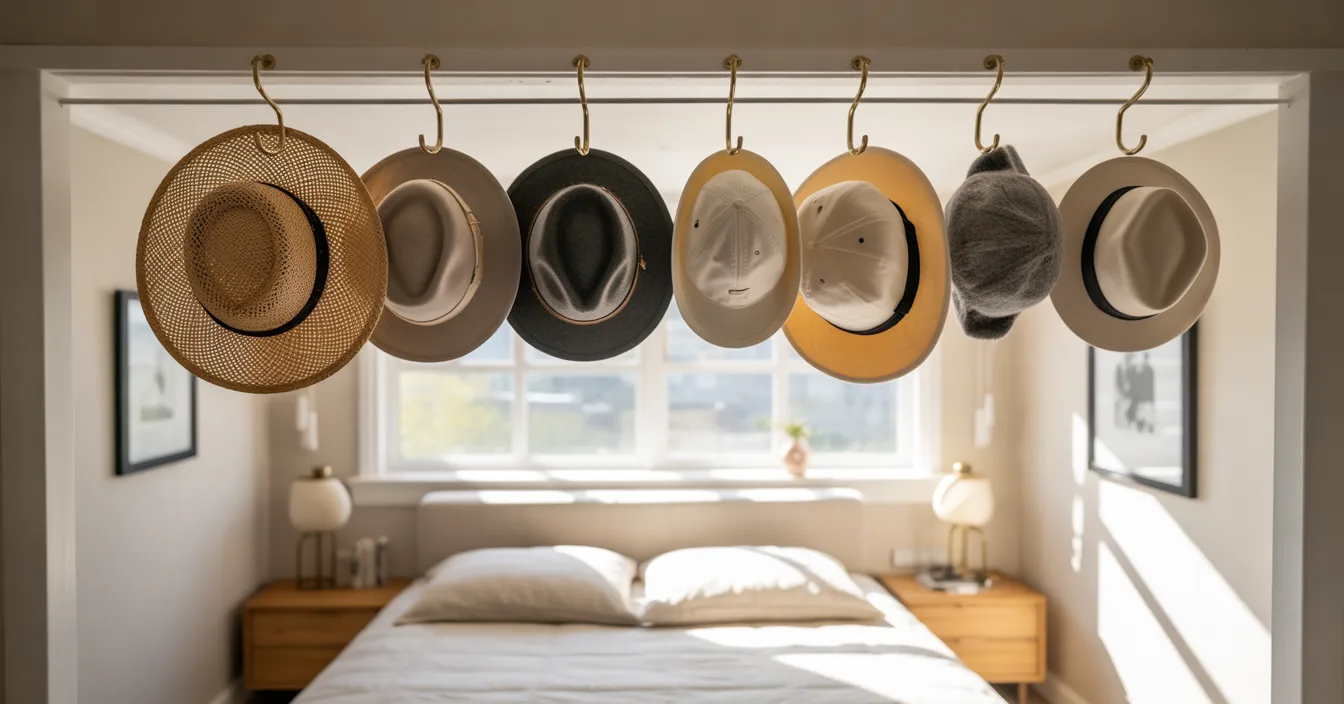
Window hooks utilize unused wall space above windows for storage. I hang hats along the top so they stay visible but out of the way.
It works especially well in small rooms where space is limited. Wide-brim hats fit naturally without distortion.
It’s a smart way to use overlooked areas.
Pro Tip: Space hooks evenly to avoid visual clutter.
FAQs
1. What is the best way to store hats without ruining their shape?
I always avoid stacking hats because it quickly ruins their shape over time. Instead, I use hooks, stands, or wall pegs so each hat has proper support. Caps do better when hung, while wide-brim hats stay safe when the crown is supported and the brim stays flat. This keeps everything looking new for longer.
2. How can you store a large hat collection in a small space?
I rely on vertical storage when space is tight because it uses walls and doors instead of shelves or floors. Hooks, straps, and over-the-door organizers work really well. This keeps hats visible, easy to grab, and completely off crowded surfaces. It also helps me fit more hats in less space.
Conclusion
After working through so many storage setups, I’ve learned that hat organization is all about using space wisely and protecting shape. Simple systems often work better than complex ones.
When hats are displayed properly, they stop feeling like clutter and start becoming part of the room design. That shift makes a big difference in daily routines.With the right setup, even a large collection can stay clean, accessible, and visually appealing.