I’ve noticed that family game nights work best when the games are simple, active, and easy for everyone to join. Whether we’re playing a quick guessing game or setting up a messy challenge in the kitchen, these moments usually turn into the funniest memories of the week.
Studies from the American Academy of Pediatrics show that regular family activities help improve communication, reduce stress, and strengthen relationships between parents and kids. That’s one reason I always keep a few game ideas ready for weekends and holidays.
In this list, I’m sharing family game night ideas that work for different age groups, small families, and even large gatherings. Some are classic games, while others are low-cost DIY activities that only need common household items.

Key Takeaways
- Family game nights help improve bonding and communication
- Most games here need little to no setup
- Many activities use simple household items
- Indoor and outdoor options are included
- Several games help kids build teamwork and problem-solving skills
- These ideas work for both kids and adults
1. Mad Libs
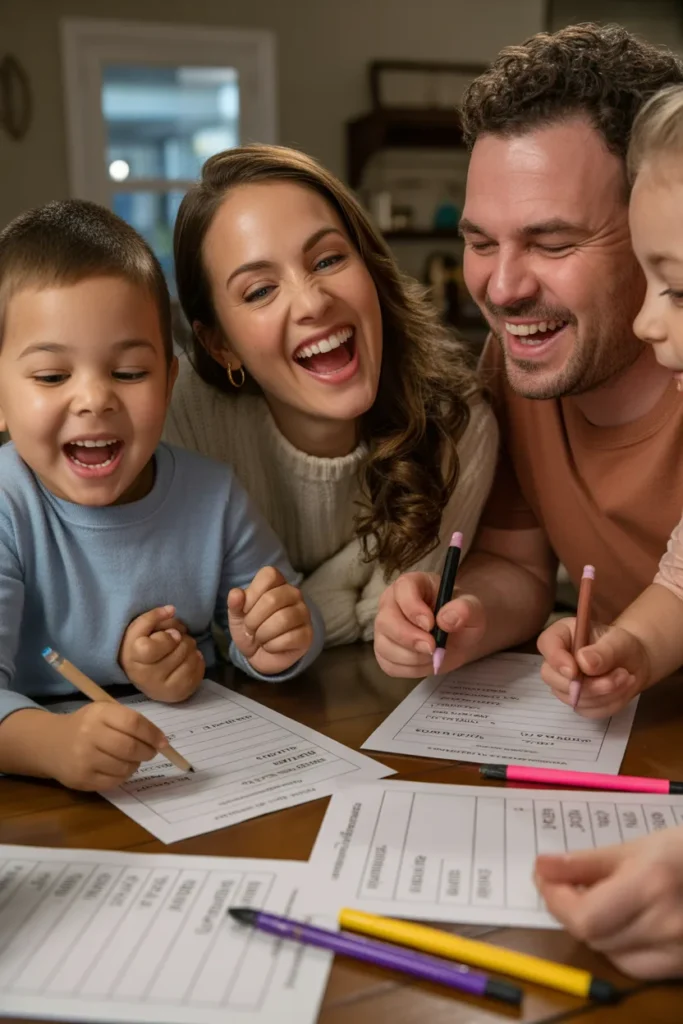
I like using Mad Libs when I want a quick game that gets everyone laughing without much setup. One person asks for random words while another secretly fills in the blanks of the story.
The funniest part usually happens when the story gets read out loud because the sentences make absolutely no sense. Kids especially enjoy hearing silly combinations and weird descriptions.
Pro Tip: I sometimes create custom stories using family names or inside jokes because it makes the game feel more personal and memorable.
2. Jeopardy
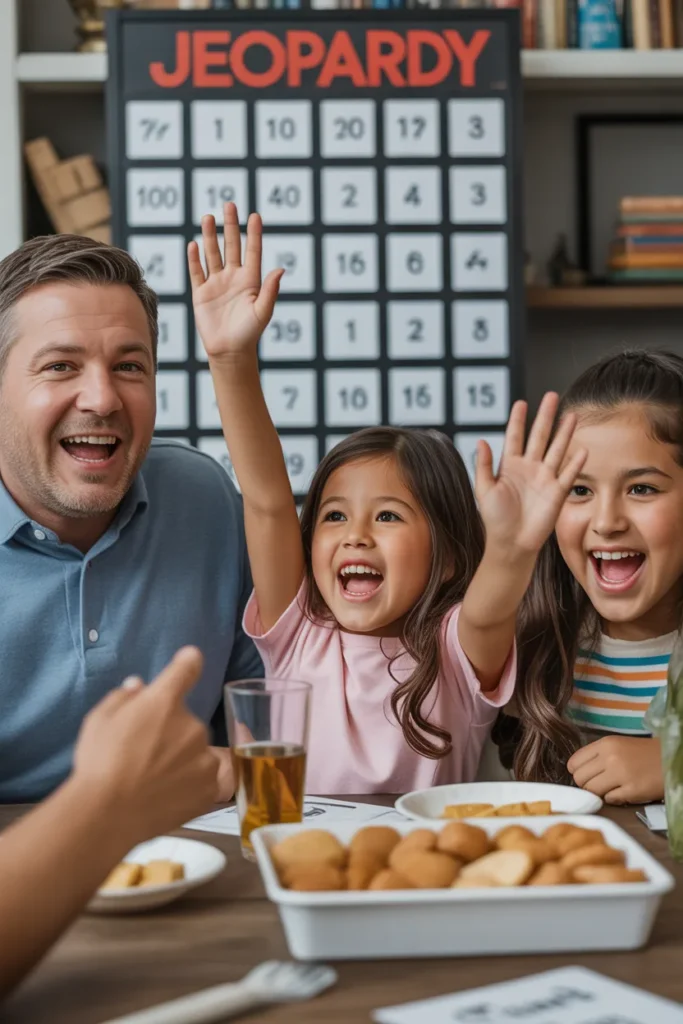
Jeopardy works really well when my family wants something competitive but still educational. I usually create categories around movies, sports, food, or family memories to keep everyone interested.
I divide players into teams and use a whiteboard to track scores during the game. Fast rounds usually keep the energy high and stop players from getting bored.
Research on trivia-based learning shows games like this can improve memory recall and teamwork skills, especially for kids and teens.
3. Hedbanz
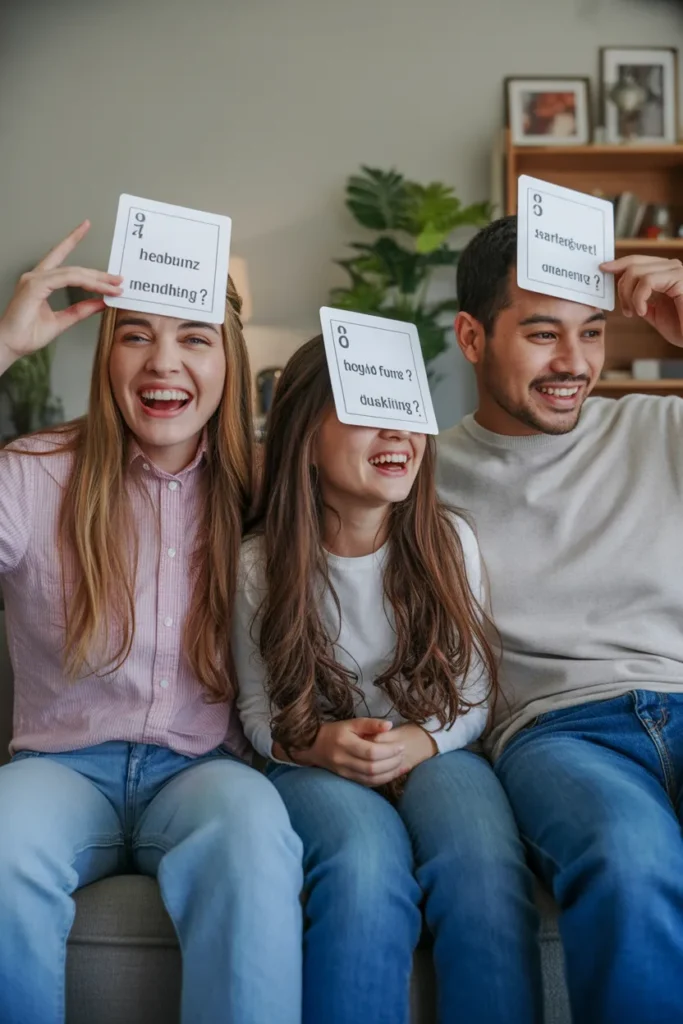
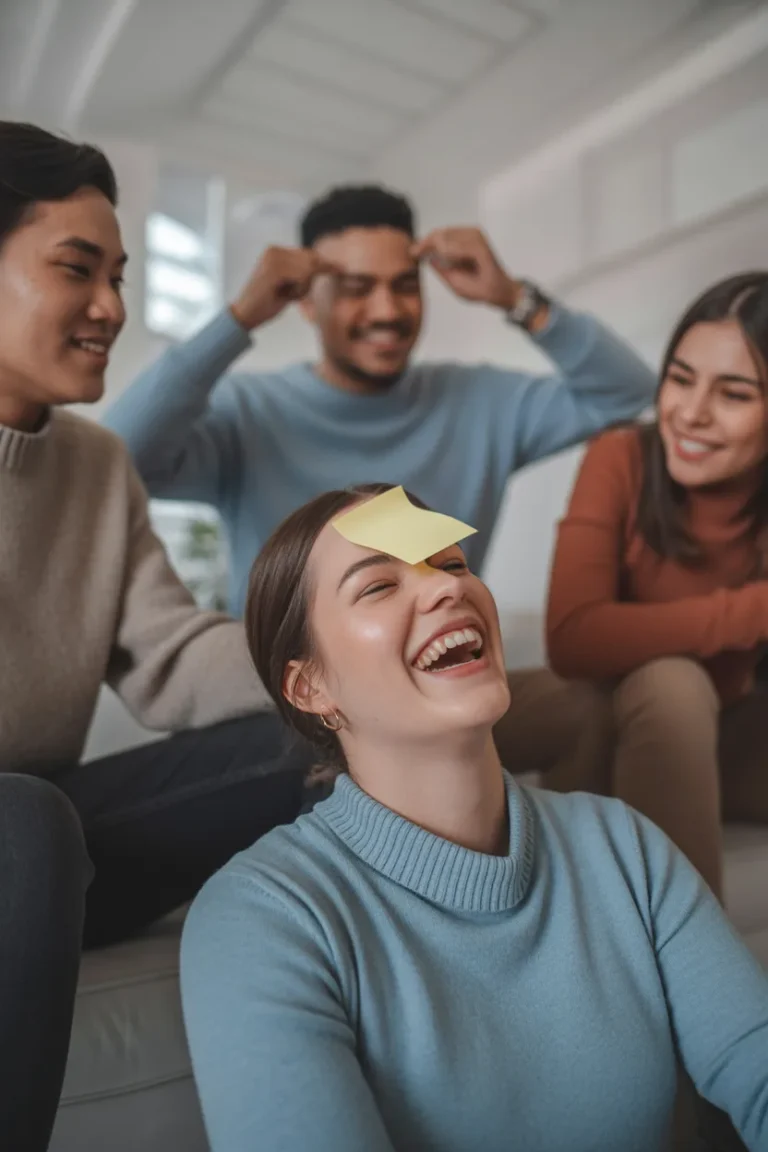
Hedbanz is one of the easiest games to set up because players only need cards and headbands. Everyone asks yes-or-no questions to figure out what card is sitting on their forehead.
I’ve noticed the game gets funnier once adults start overthinking simple clues and asking ridiculous questions. Kids usually guess much faster than expected.
Pro Tip: I like using a timer because it keeps the rounds moving quickly and adds pressure that makes answers even funnier.
4. Chopped

This game turns a regular kitchen into a mini cooking competition with almost no preparation needed. I usually give teams random ingredients and let them create snacks or desserts within a time limit.
The best part is watching how creative people become with simple foods they normally would not combine together. Some dishes actually turn out surprisingly good.
Kids also enjoy being judges because they get to score dishes based on taste, creativity, and presentation.
5. Heads Up

Heads Up is one of my favorite family games because almost everyone can join at once. One player holds the phone on their forehead while others give clues to help them guess the word.
Movie categories and celebrity themes usually create the loudest reactions during our game nights. The quick rounds help keep everyone involved without long waiting times.
I’ve found this game works especially well during large gatherings because people naturally start shouting clues and laughing together.
6. Treasure Hunt
Treasure hunts are perfect when kids have extra energy and need something active to do indoors or outside. I usually hide clues around the house and make each clue lead to another location.
Adding small prizes or snacks at the end makes the challenge more exciting for younger players. Older kids usually enjoy solving riddles and racing to the final clue.
Pro Tip: I keep clues simple for younger children and slightly harder for teens so everyone can stay involved without getting frustrated.
7. Bingo
Bingo is one of the easiest family games because players of all ages can understand the rules quickly. I sometimes make themed bingo cards for holidays, birthdays, or movie nights.
The excitement builds every time someone gets close to finishing a row or pattern. Even adults usually get competitive once the game starts moving faster.
Studies on learning games show pattern-recognition activities like Bingo can help younger kids improve focus and visual processing skills.
8. Detective Games
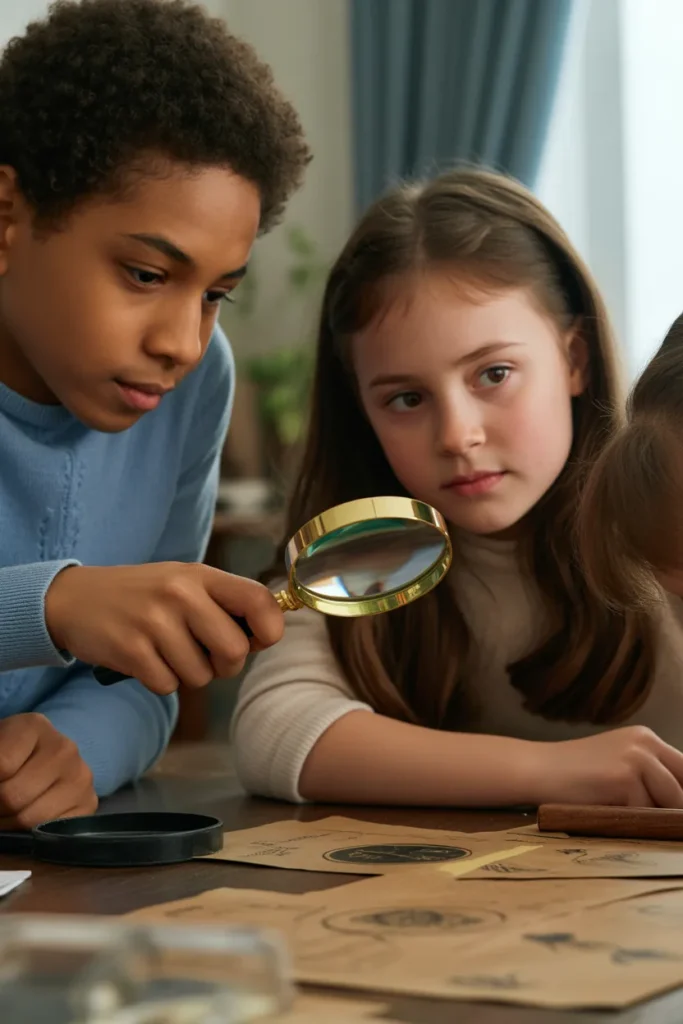
Detective games work really well for families that enjoy puzzles and mystery challenges together. I usually create a simple storyline and hide clues in different rooms around the house.
Adding props like flashlights, notebooks, or magnifying glasses makes the experience feel more realistic for kids. Teams then work together to solve the mystery before time runs out.
These games are also great for building teamwork and problem-solving skills without making the activity feel educational.
9. Virtual Game Night
Virtual game nights help families stay connected even when everyone lives in different cities or countries. I usually use video calls for trivia games, charades, or online drawing activities.
Simple games tend to work best online because they are easier for everyone to follow without technical problems. Online whiteboards also make games like Pictionary much smoother.
Even a short virtual game night can help family members feel more connected and involved in each other’s lives.
10. Family Scavenger Hunt
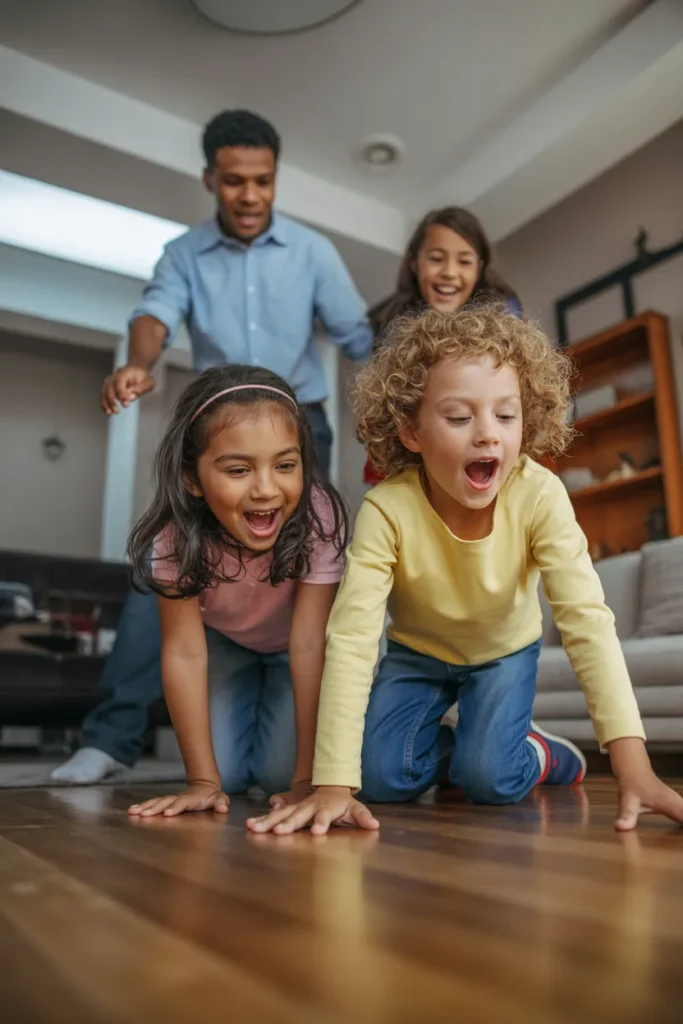
Family scavenger hunts are great because they keep everyone active and moving around instead of sitting in one place. I usually create lists using household items, outdoor objects, or funny photo challenges.
The time limit adds pressure and makes players move faster while trying to complete the list. Kids especially enjoy racing against parents or siblings.
Pro Tip: I like mixing easy tasks with funny challenges because it keeps the game balanced and entertaining for all ages.
11. Pie Face
Pie Face is messy, simple, and almost guaranteed to make everyone laugh within minutes. Players take turns turning the handle while hoping they avoid getting whipped cream in the face.
The suspense before the hand springs forward is what makes the game entertaining for both kids and adults. Everyone usually starts laughing before the cream even hits.
I’ve noticed this game becomes the highlight of the night during birthdays or holiday gatherings because people always want rematches.
12. Selfie Hot Potato

This game adds a modern twist to the classic hot potato activity using a phone or camera. Players quickly pass the device around while waiting for a random photo to snap.
The funniest part is looking through the unexpected selfies after the game ends. Most photos capture ridiculous expressions and reactions nobody planned.
I think this game works best with larger groups because the random reactions become even more entertaining with more players involved.
13. Charades
Charades is one of those classic games that never really gets old during family gatherings. Players act out words or phrases without speaking while others try to guess correctly.
I usually use movie titles, cartoon characters, or simple actions because younger kids can understand those clues more easily. Dramatic acting always makes the game funnier.
Pro Tip: I avoid difficult categories because fast guesses keep the game exciting and prevent players from losing interest.
14. 20 Questions
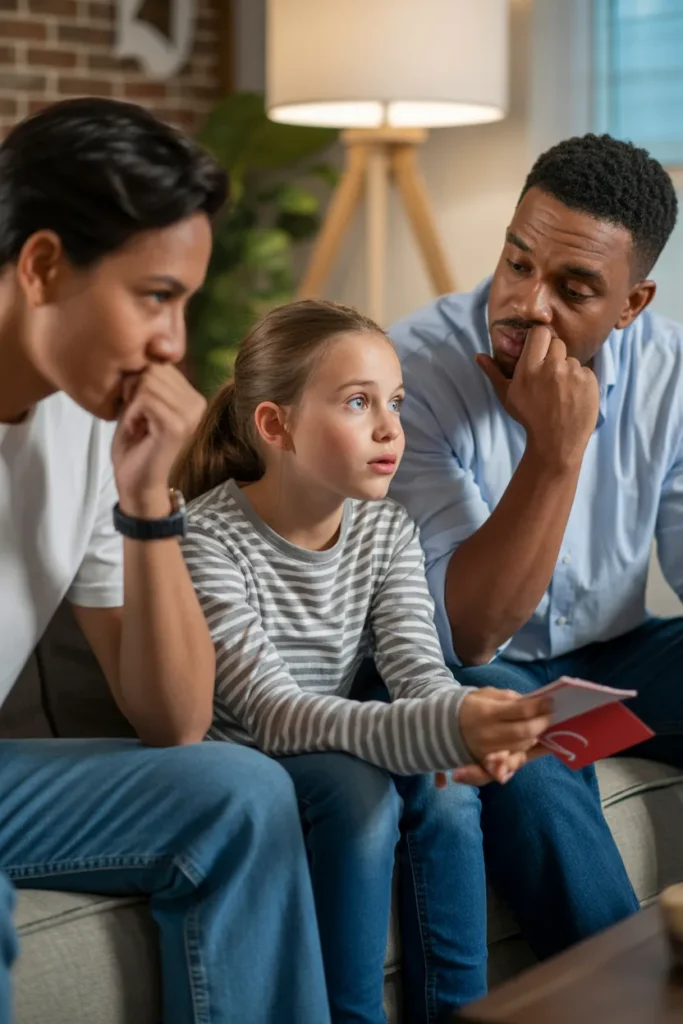
20 Questions is one of the best no-prep games for quiet evenings or long road trips. One player thinks of something while everyone else asks yes-or-no questions to figure it out.
The game becomes more interesting when players ask smart questions that narrow down possibilities quickly. Kids also improve communication and logical thinking while playing.
I like this game because it works almost anywhere and does not require supplies, apps, or extra setup.
15. Hot Lava
Hot Lava is a simple indoor game that helps kids burn energy without needing expensive equipment. I usually place pillows and cushions around the room as safe spots to jump on.
Players move from one spot to another while pretending the floor is lava. Anyone who touches the ground is either out or must complete a funny challenge.
This game works especially well during rainy days when kids need active entertainment inside the house.
16. Twister
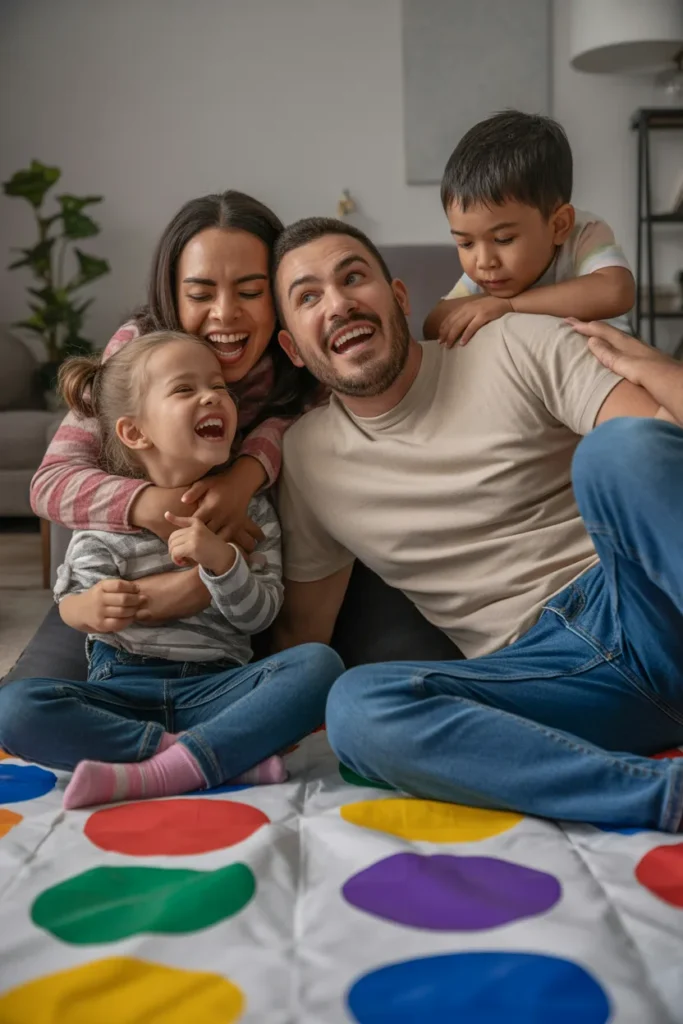
Twister always becomes chaotic after a few rounds because players end up tangled together trying not to fall over. The game starts simple, but balancing gets much harder as more moves are added.
I like using Twister during family gatherings because both kids and adults usually end up laughing at the ridiculous positions. It also keeps everyone active instead of sitting around.
Studies on movement-based activities show games like this can help improve flexibility, coordination, and balance in younger children.
17. Musical Chairs
Musical Chairs is one of the easiest party games because the rules are simple and setup only takes a few minutes. All you really need is music and enough chairs for the group.
Players walk around the chairs while the music plays and quickly sit down when it stops. The excitement builds every round as another chair gets removed.
I usually play upbeat songs to keep the energy high because faster music makes the game much more competitive and entertaining.
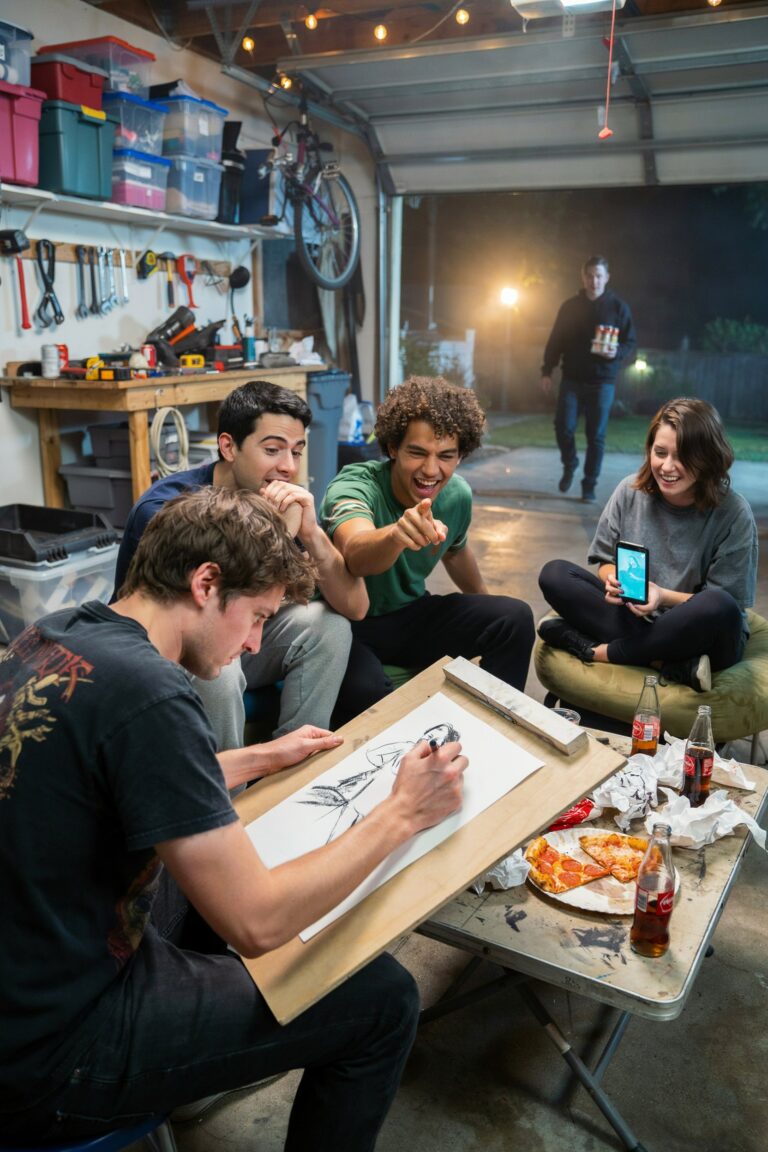
18. Pictionary

Pictionary is one of those games where terrible drawings actually make things funnier. Players draw clues while teammates try to guess the answer before time runs out.
I prefer using simple categories like movies, animals, or cartoons because younger kids can participate more easily. The fast guessing usually creates loud reactions and funny misunderstandings.
Pro Tip: I use a whiteboard instead of paper because larger drawings are easier for teams to see from across the room.
19. Simon Says
Simon Says is perfect for younger kids because it mixes movement, listening, and quick reactions into one simple game. One player gives commands while everyone else follows only when “Simon says” is included.
The game becomes harder once the leader starts giving faster instructions or tries tricking players with random commands. Kids usually get competitive trying to stay in until the end.
I’ve noticed this game works really well before bedtime because it helps younger children release extra energy in a fun way.
20. Tug of War
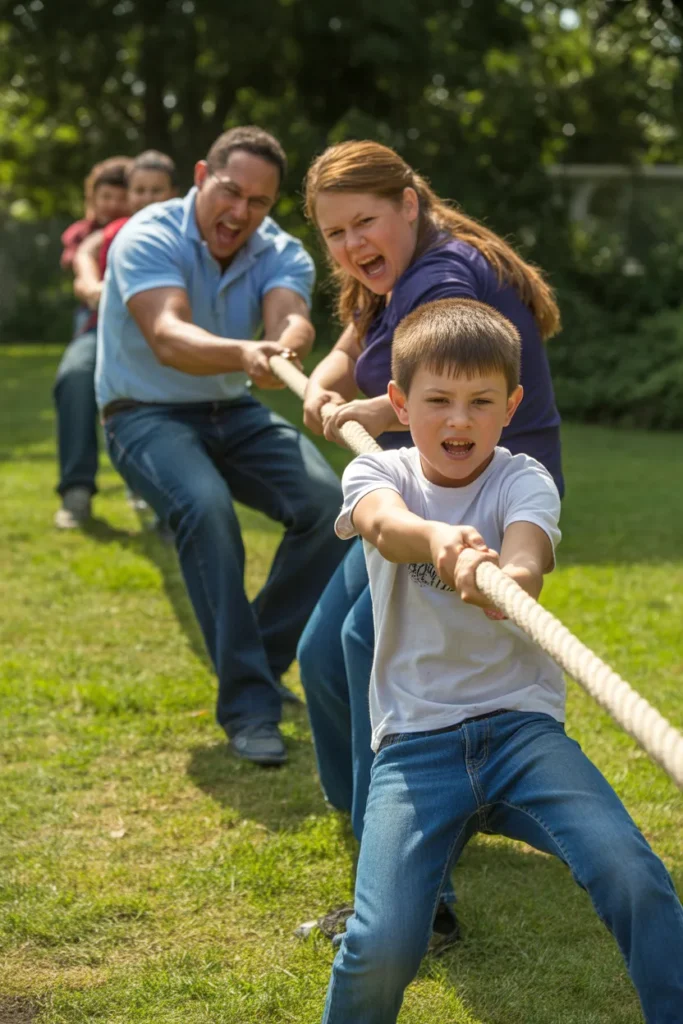
Tug of War is one of the best outdoor family games because it combines teamwork, strength, and competition. All you really need is a strong rope and an open playing area.
I usually balance the teams by age and strength so the game stays fair and exciting for everyone involved. The final moments are always the loudest and most competitive.
This activity also encourages teamwork because players quickly learn they must pull together instead of individually.
21. 5 Second Rule
The 5 Second Rule sounds easy until the timer actually starts counting down. Players only have five seconds to name three things that fit a category.
The pressure often causes hilarious answers because people panic and say the first things that come to mind. Even simple categories suddenly feel difficult under time pressure.
Fast-thinking games like this can also help improve vocabulary, memory recall, and reaction speed in kids and adults.
22. Stack It Up
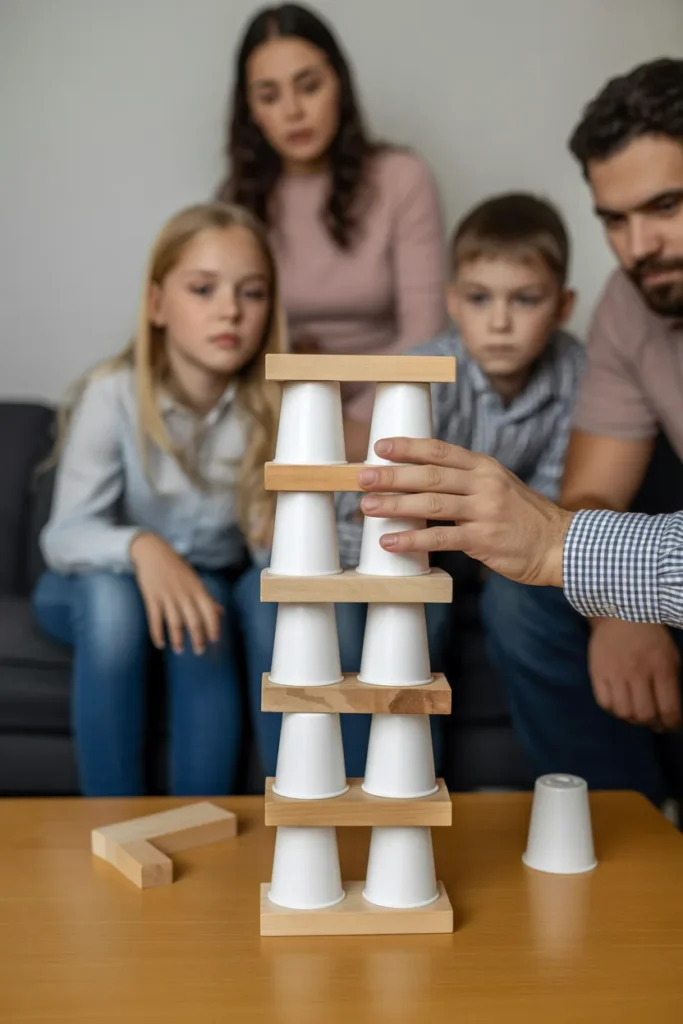
Stack It Up is simple to set up but surprisingly intense once the timer starts running. Players race to build the tallest tower possible without making it collapse.
I like using blocks, plastic cups, or household items because almost anything stackable works for the challenge. The higher the tower gets, the more nervous players become.
The funniest moments usually happen when towers fall apart seconds before the round ends and everyone starts laughing.
23. Speed Eraser
Speed Eraser is one of those games that looks easy until players actually try it themselves. The goal is to bounce erasers into cups within a short time limit.
Kids usually become very competitive once they realize timing and hand-eye coordination matter more than luck. Players often improve after a few practice rounds.
I like this game because it costs almost nothing to set up but still keeps everyone entertained for a long time.
24. DIY Bowling
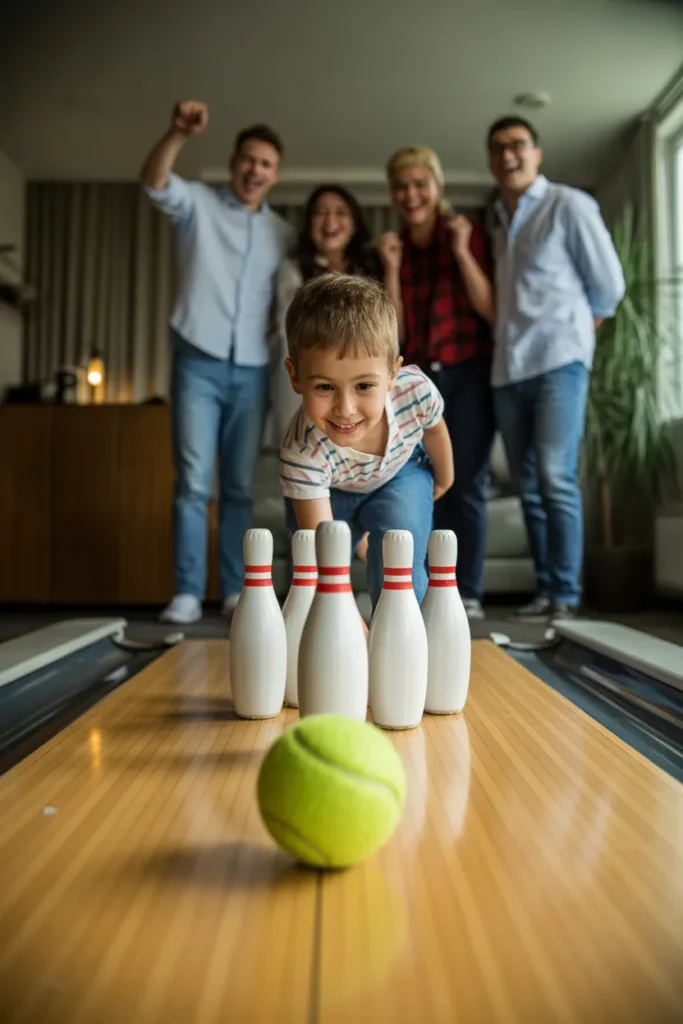
DIY Bowling is a fun low-cost activity that works indoors or outdoors depending on available space. I usually use empty bottles as pins and a tennis ball as the bowling ball.
Kids enjoy decorating the bottles before the game starts, which makes the activity feel even more personal and creative. Everyone then takes turns trying to knock down all the pins.
This game is also great for improving coordination and balance while keeping the setup simple and budget friendly.
25. Flour Game
The Flour Game gets messy quickly, which is exactly why most kids love playing it. Players carefully cut pieces from a flour tower while trying not to drop the object sitting on top.
As the flour pile becomes weaker, the tension builds because everyone knows the collapse is coming soon. The final challenge usually creates the loudest laughs of the night.
Pro Tip: I place newspapers or trays underneath before starting because cleanup becomes much easier afterward.
26. Pass It On
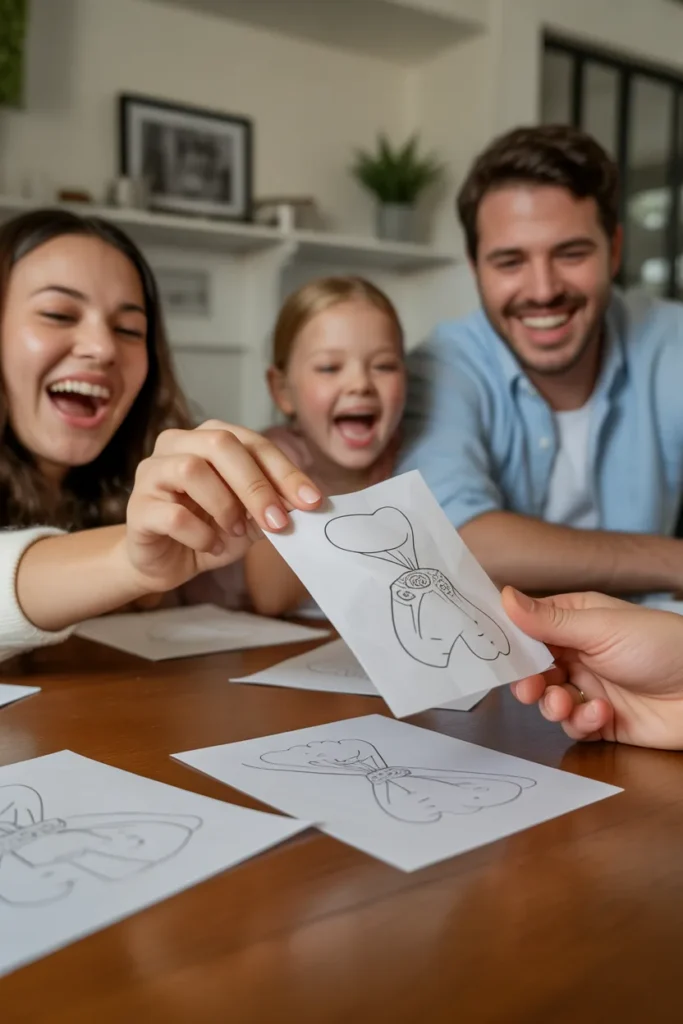
Pass It On is one of the funniest drawing games because the final result almost never matches the original idea. Players alternate between drawing something and writing what they think the drawing shows.
As the paper moves from person to person, the guesses slowly become more ridiculous and completely different from the starting picture. Everyone usually laughs once the papers are unfolded at the end.
I’ve found this game works especially well during sleepovers or family gatherings because large groups create even funnier results.
27. Knock It Out
Knock It Out combines balance, timing, and a lot of awkward movement into one challenge. Players wear an orange hanging from a pair of nylons and swing it to knock over bottles.
The difficult part is trying to control the swinging orange without using hands at all. Most players end up moving in hilarious ways while trying to hit the targets.
This game becomes even more entertaining when players race against a timer or compete in teams.
28. Defying Gravity
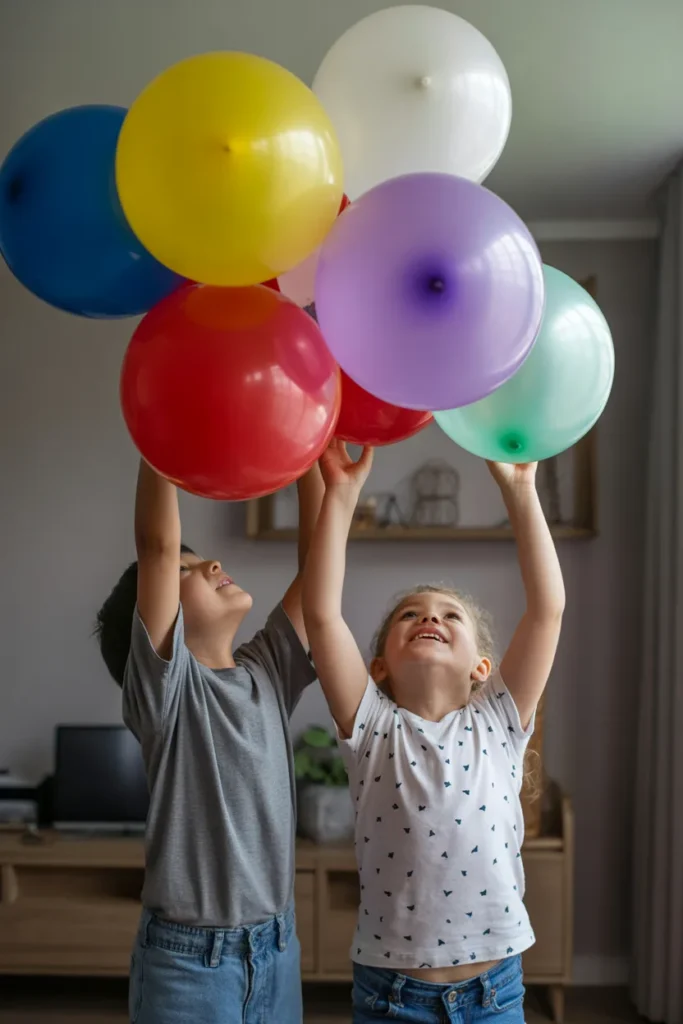
Defying Gravity looks simple at first, but keeping several balloons in the air becomes difficult very quickly. Players must stop every balloon from touching the ground using only their hands.
The challenge becomes harder with each extra balloon added into the game. Kids especially enjoy running around trying to save balloons at the last second.
I like using this game indoors during rainy days because it keeps everyone active without needing much space or setup.
29. Giant Feet
Giant Feet turns a regular race into complete chaos because players struggle to walk normally with oversized cardboard feet attached to their shoes.
The exaggerated movements usually lead to stumbling, wobbling, and nonstop laughter from both players and spectators. Outdoor spaces work best because there is more room to move safely.
This game is great for birthday parties because even simple races become entertaining once giant feet are involved.
30. Chocolate Face
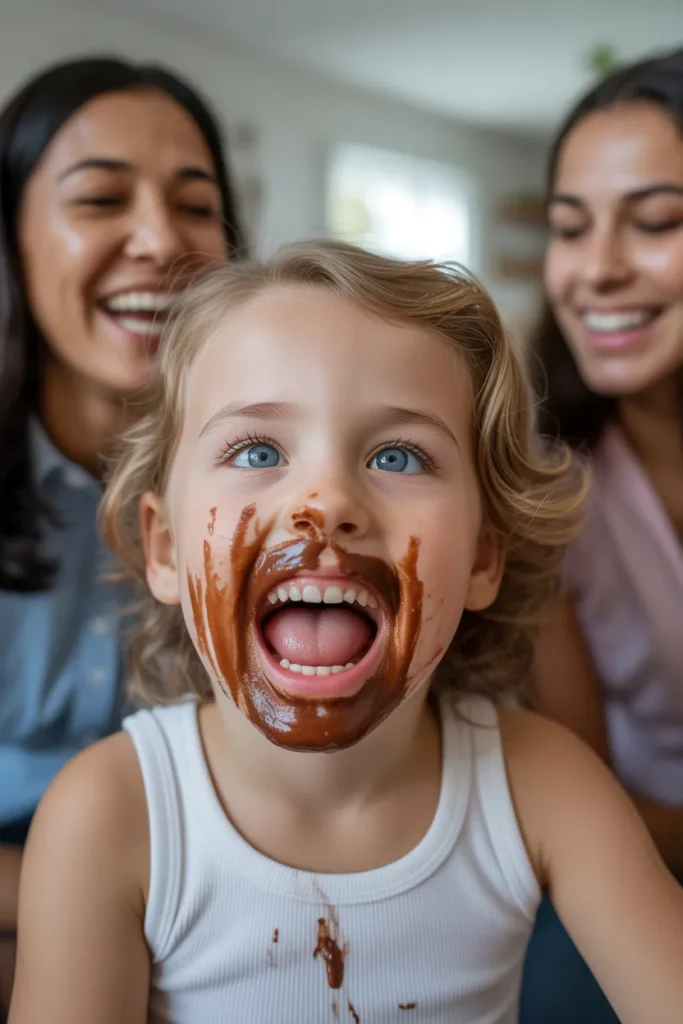
Chocolate Face is one of the funniest low-cost family games because players must move chocolate from their forehead into their mouth using only facial muscles.
Nobody is allowed to use hands, which makes the challenge much harder than expected. The funny facial expressions usually become the highlight of the game night.
I’ve noticed kids become very determined during this game because everyone wants to prove they can complete the challenge first.
31. Doodling with Noodles
Doodling with Noodles is a simple coordination challenge that becomes competitive very quickly. Players hold uncooked spaghetti in their mouths and use it to pick up pasta noodles from the table.
The game requires patience, balance, and careful movement because the spaghetti breaks easily under pressure. Players usually improve their technique after a few attempts.
Short time limits make the game more exciting because everyone starts rushing while trying not to drop noodles.
32. Head Bouncing
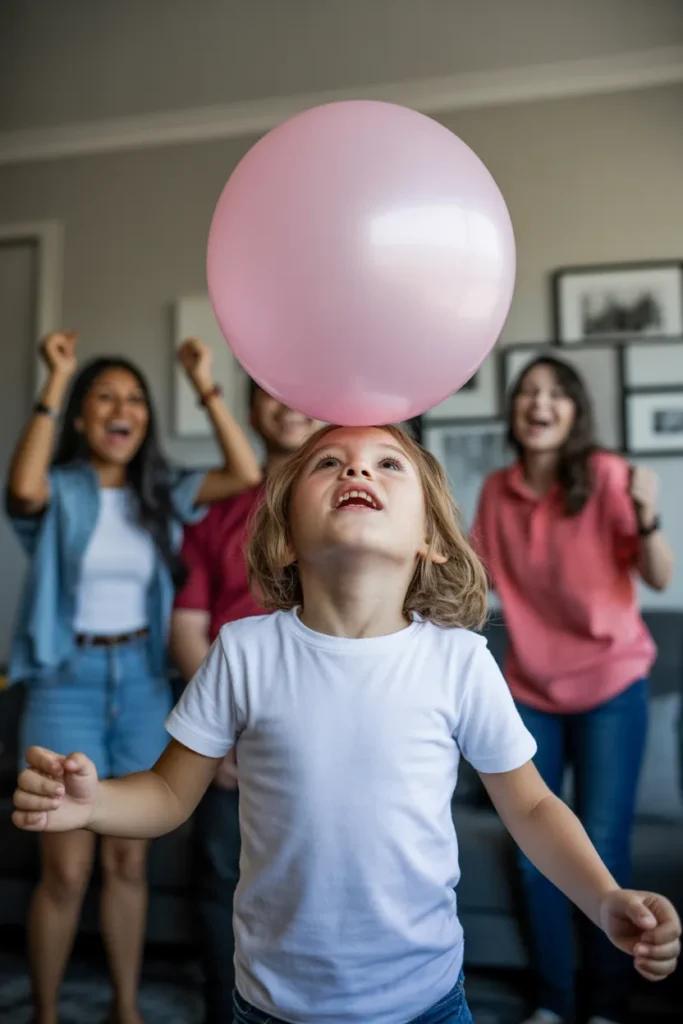
Head Bouncing is another easy balloon game that keeps kids active and moving indoors. Players try to keep balloons in the air using only their heads without letting them fall.
The challenge becomes more difficult once players start moving around the room to save falling balloons. Everyone usually ends up laughing while chasing balloons across the space.
I recommend clearing furniture beforehand because players can become very energetic once the competition starts.
33. Tear It Up
Tear It Up takes a little preparation, but the game becomes surprisingly exciting once players begin competing. Players use rubber bands to damage hanging toilet paper until bottles underneath drop down.
The challenge requires good aim and quick shooting because players race against the clock to finish first. Even adults usually become very competitive during this game.
I like this activity because it mixes strategy, speed, and a little bit of chaos into one challenge.
34. Tell a Joke

Tell a Joke becomes much harder when players must balance a ball on a spoon while trying to speak clearly. The goal is to finish the joke without dropping the ball.
Most players start laughing halfway through their joke, which usually causes the ball to fall immediately. The reactions from the audience make the game even funnier.
Simple jokes work best for younger children because they can focus more on balancing instead of remembering long punchlines.
35. Junk in the Trunk
Junk in the Trunk is one of the most active and hilarious family party games on this list. Players shake ping pong balls out of a box attached around their waist without using hands.
The wild dancing and awkward movements usually make everyone laugh before the game even finishes. Kids and adults both enjoy the challenge because it looks easier than it actually is.
This game works especially well during birthday parties or large gatherings where people enjoy loud, energetic activities.
36. Build a Tower
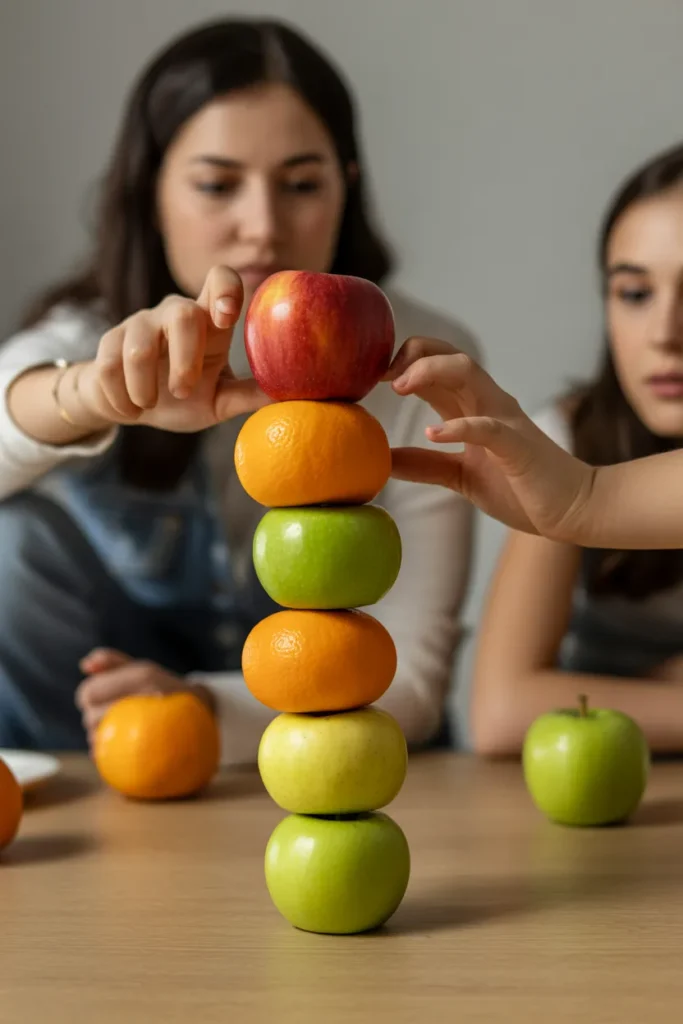
Build a Tower mixes creativity, balance, and competition into one simple challenge. Players stack fruits or vegetables into tall towers before the timer runs out.
Softer fruits make the game much harder because towers become unstable very quickly. Everyone usually gets nervous once the stack starts leaning sideways.
I like this game because families can work individually or in teams depending on the size of the group.
37. Suck It Up
Suck It Up is a fast-paced game where players use straws to move paper pieces from one pile to another. The challenge sounds easy until the timer actually begins.
Players quickly realize they need patience and control instead of speed alone. Small mistakes often slow people down more than expected during the race.
This game is perfect for short competitions because setup is simple and rounds move quickly.
38. Worm Diving
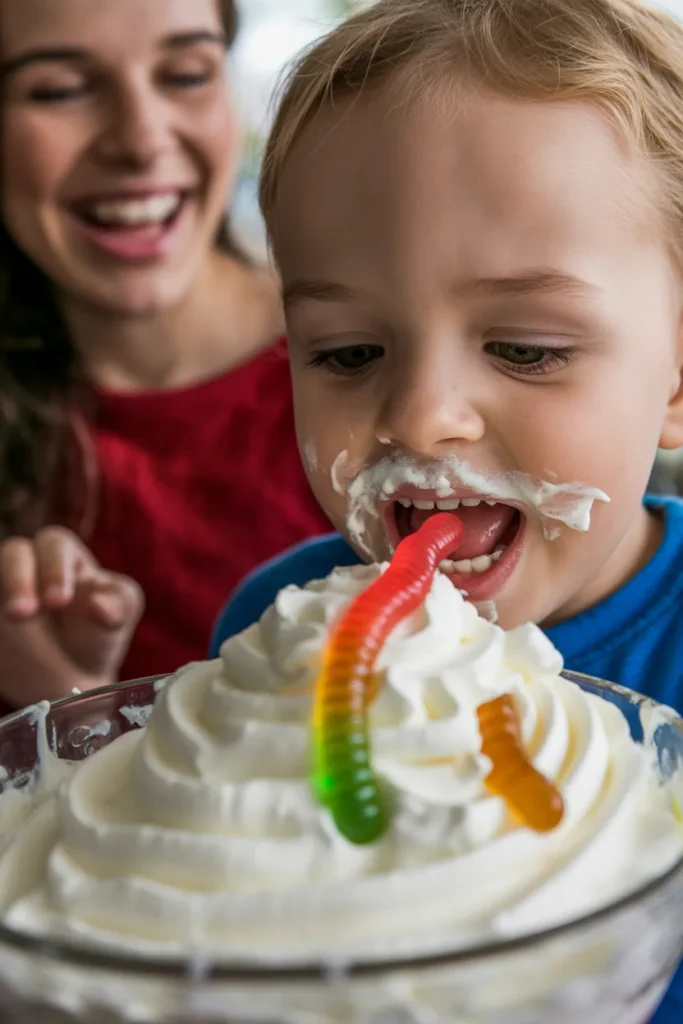
Worm Diving is messy, silly, and usually unforgettable for younger kids. Players search through whipped cream using only their mouths to find hidden gummy worms.
Everyone ends up covered in whipped cream by the end, which is part of what makes the game so funny. Kids usually ask to play multiple rounds afterward.
Pro Tip: I always keep towels and wipes nearby because cleanup becomes necessary almost immediately after the game ends.
39. Bike Ride
Sometimes the best family activity is simply getting outside together for a bike ride. It gives everyone a break from screens while encouraging exercise and conversation.
I usually plan easy routes that work for different age groups so nobody feels left behind. Scenic trails or quiet neighborhoods make the ride more relaxing and enjoyable.
Health experts often recommend family outdoor activities because they support both physical fitness and mental well-being.
40. Bake a Dessert
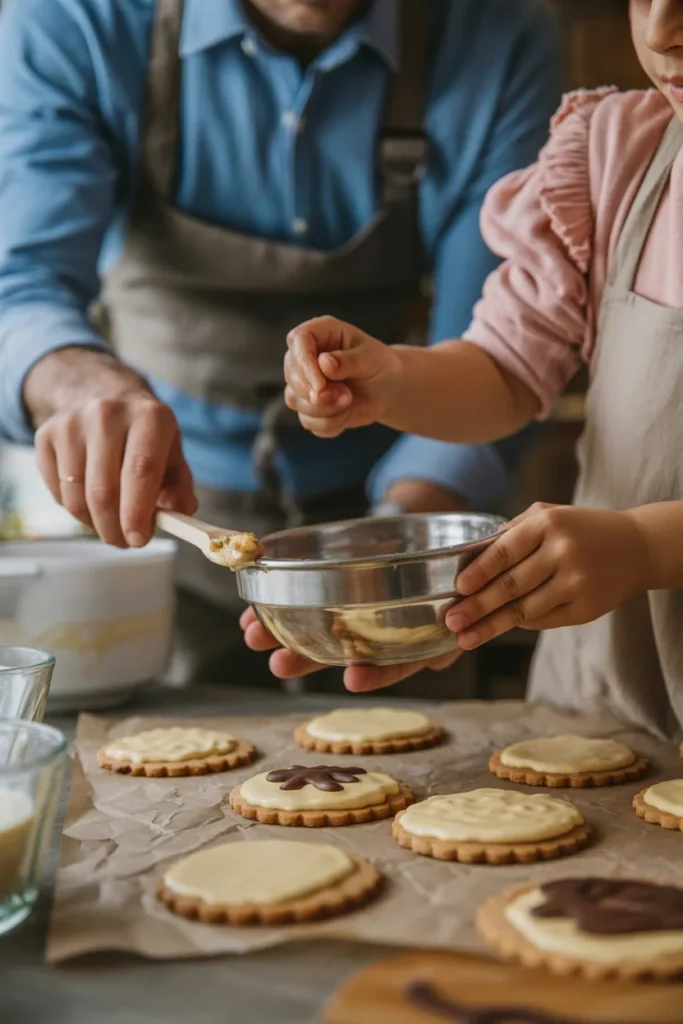
Baking a dessert together feels more relaxing after competitive games and active challenges. I usually choose simple recipes like cookies, brownies, or cupcakes so everyone can help.
Kids enjoy measuring ingredients, mixing batter, and decorating desserts while learning basic kitchen skills at the same time. The teamwork naturally brings everyone together.
The best part comes at the end when the whole family gets to enjoy something they made together from start to finish.