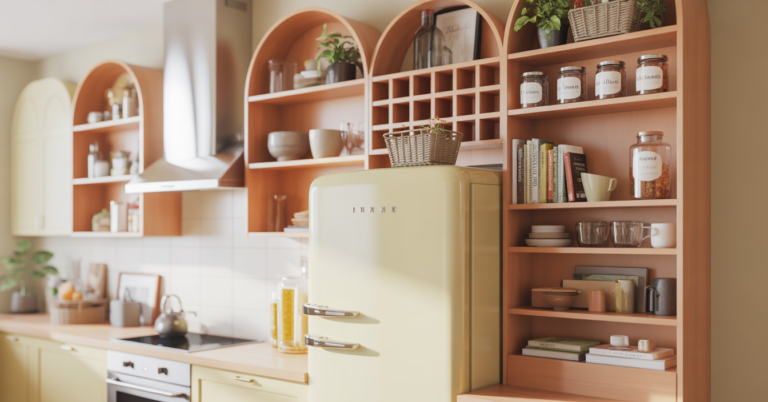

If your kitchen feels cramped and cluttered, your walls are your secret weapon. From floating shelves to pegboards, these 22 kitchen wall storage ideas will help you maximize space, keep essentials within reach, and maintain a clean, organized kitchen.
If you peek inside most kitchen cupboards, you’ll probably see the same problem I do: overflowing bowls, spice jars everywhere, and hardly any room for the things you actually use every day.
Meanwhile, the walls around your kitchen often sit empty, just waiting to be put to work. That’s wasted space that can be transformed into functional storage.Floating shelves are my go-to solution. They let you move everyday items onto the walls instead of cramming everything into cabinets.
This not only keeps things within easy reach but also frees up your counters. A well-placed shelf can hold spices, mugs, bowls, or even small plants without crowding your workspace.In this article, I’m sharing 22 modern kitchen wall storage ideas that make organization simple, stylish, and practical for your daily routine.
Key Takeaways
- Floating shelves and vertical storage maximize unused wall space.
- Hooks, rails, and pegboards keep frequently used items accessible.
- Open shelves make essentials visible, reducing clutter and saving cabinet space.
- Placement matters—keep high-use items near prep areas or sinks.
- Combining storage types creates a functional, organized kitchen wall.
How Do Floating Shelves Improve Kitchen Wall Storage?
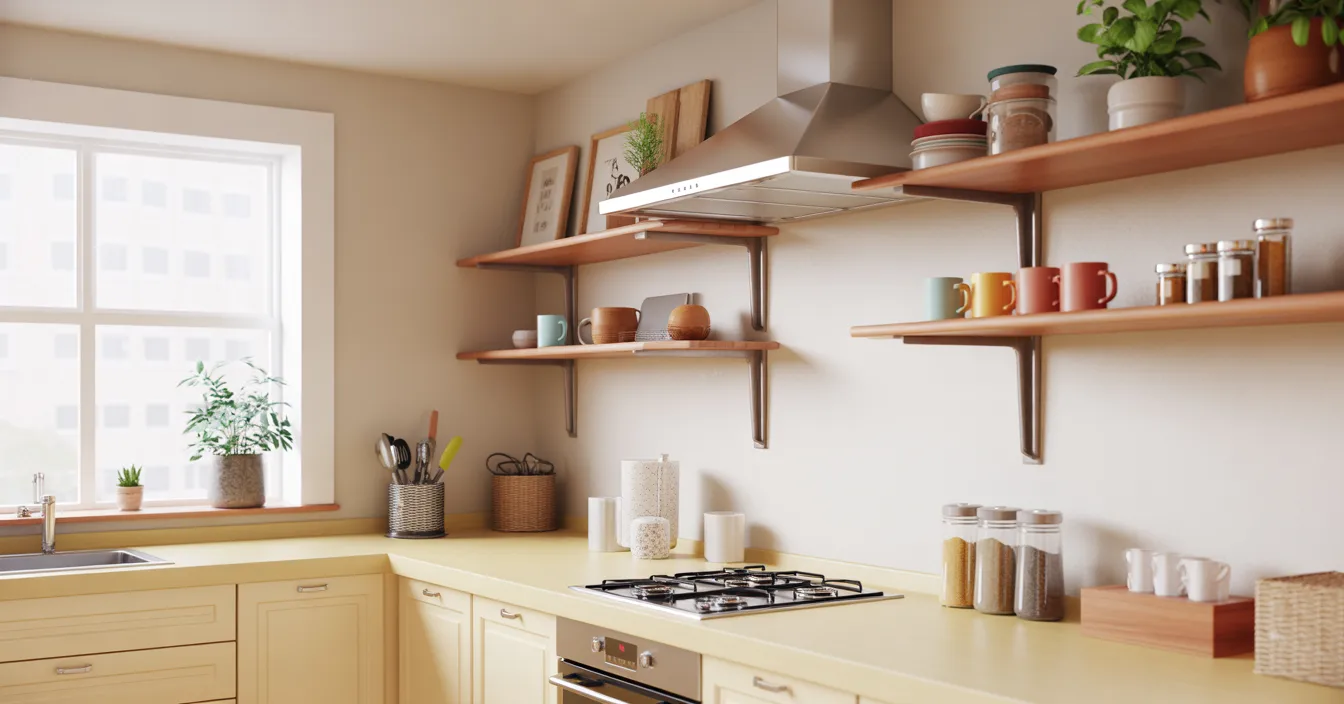
I’ve discovered that empty walls in the kitchen are a goldmine for storage. Floating shelves transform unused spaces into practical storage spots where everyday items like bowls, mugs, and spices can live. This not only frees up cabinet space but also makes everything easier to grab while cooking. Over time, adding shelves over counters or prep areas creates a more open and airy feel, giving your kitchen both function and style.
Pro Tip: Keep frequently used items at eye level for quick access and better workflow.
Lid Rack
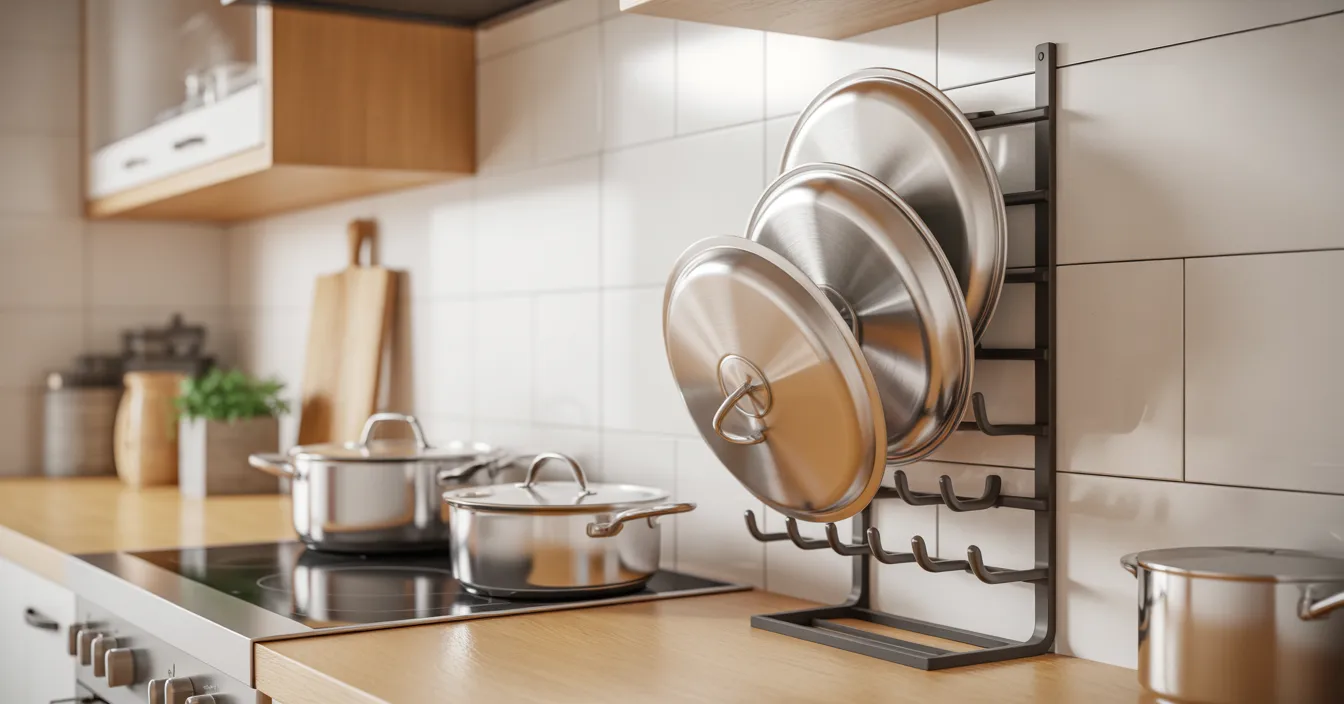
Pot lids are always the trickiest items to store—they end up hidden in crowded cabinets. A slim wall-mounted lid rack solves that problem instantly. Each slot keeps a lid upright so you can pick the right one without digging through piles. Placing it near the stove or a cupboard makes it convenient while cooking. Even if you can’t drill, strong adhesive racks can do the trick, making your kitchen feel more organized every day.
Pro Tip: Choose a rack with adjustable slots to fit different lid sizes easily.
Rail Shelves
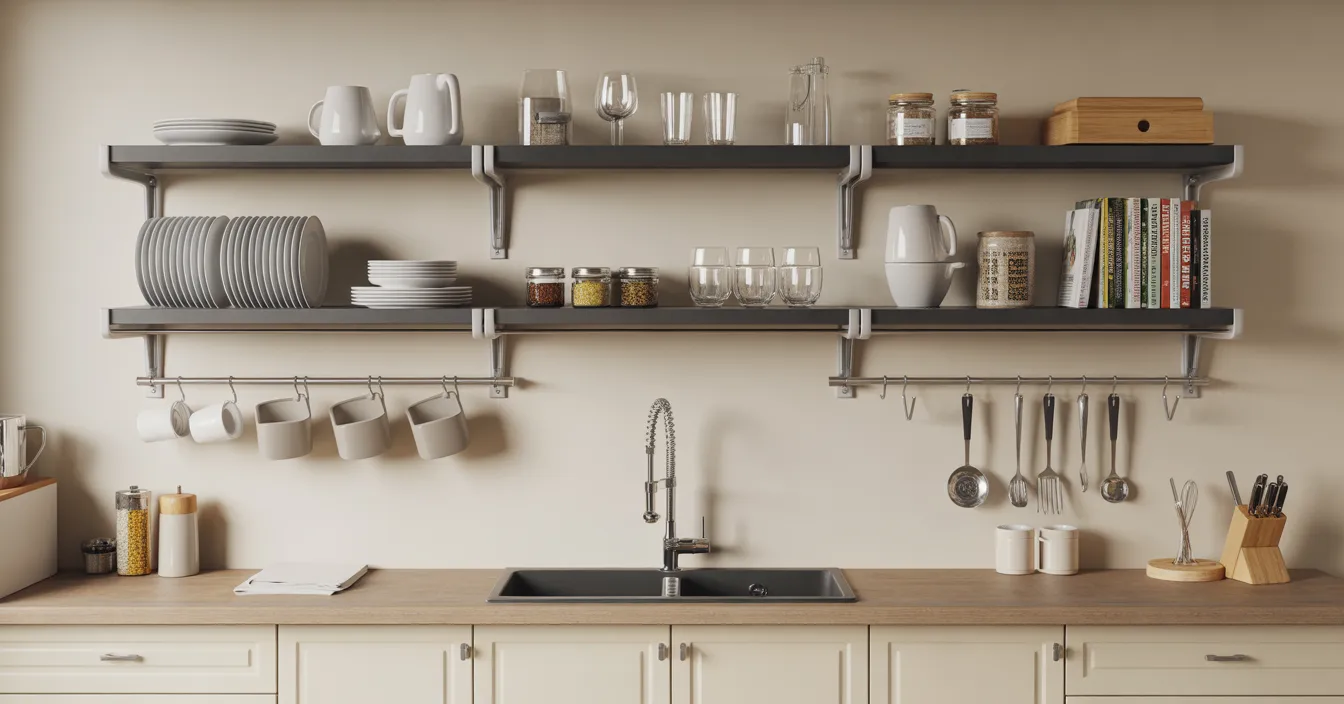
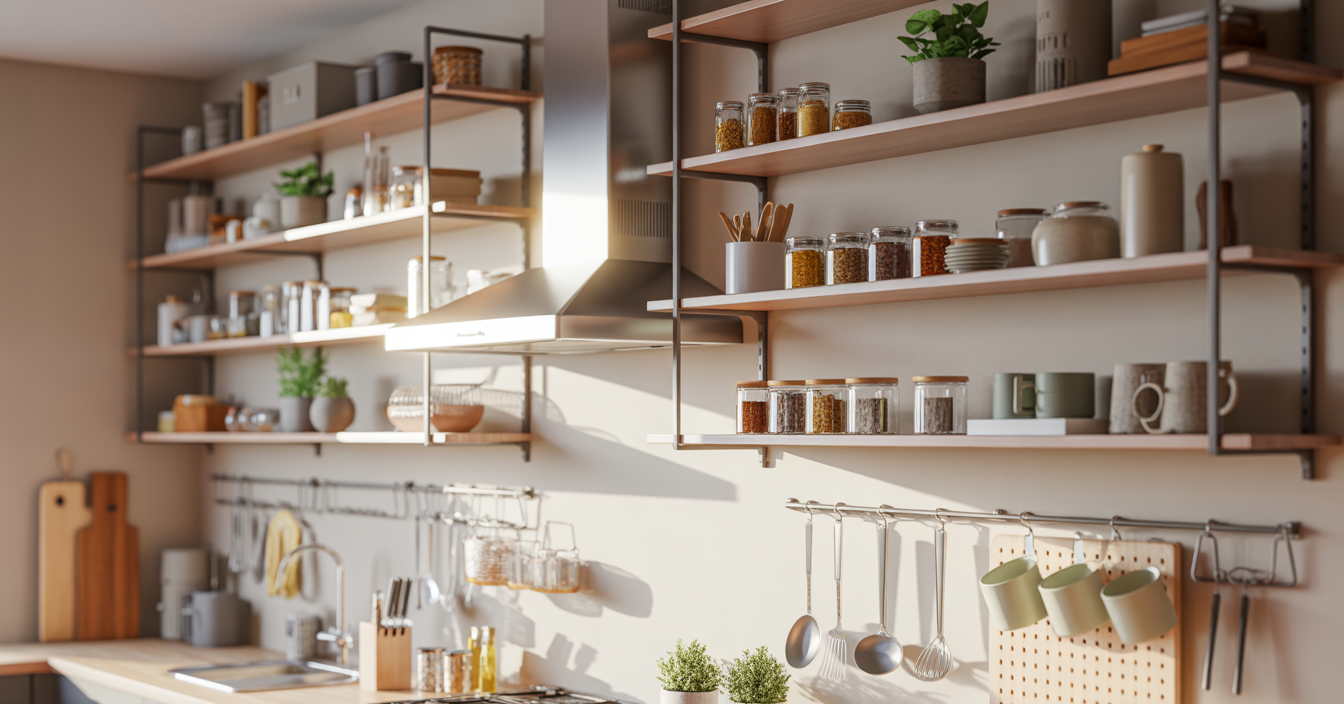
I’ve found that walls above sinks or counters are often wasted. Installing long metal rail shelves turns this area into a versatile storage space. You can line up plates, glasses, or cookbooks, and even add a bottom rail with hooks for mugs or utensils. This method keeps counters clear and makes the whole kitchen feel brighter and less crowded, while still giving your cabinets breathing room.
Pro Tip: Space shelves evenly to accommodate taller items without cramping the layout.
Shelf Hooks
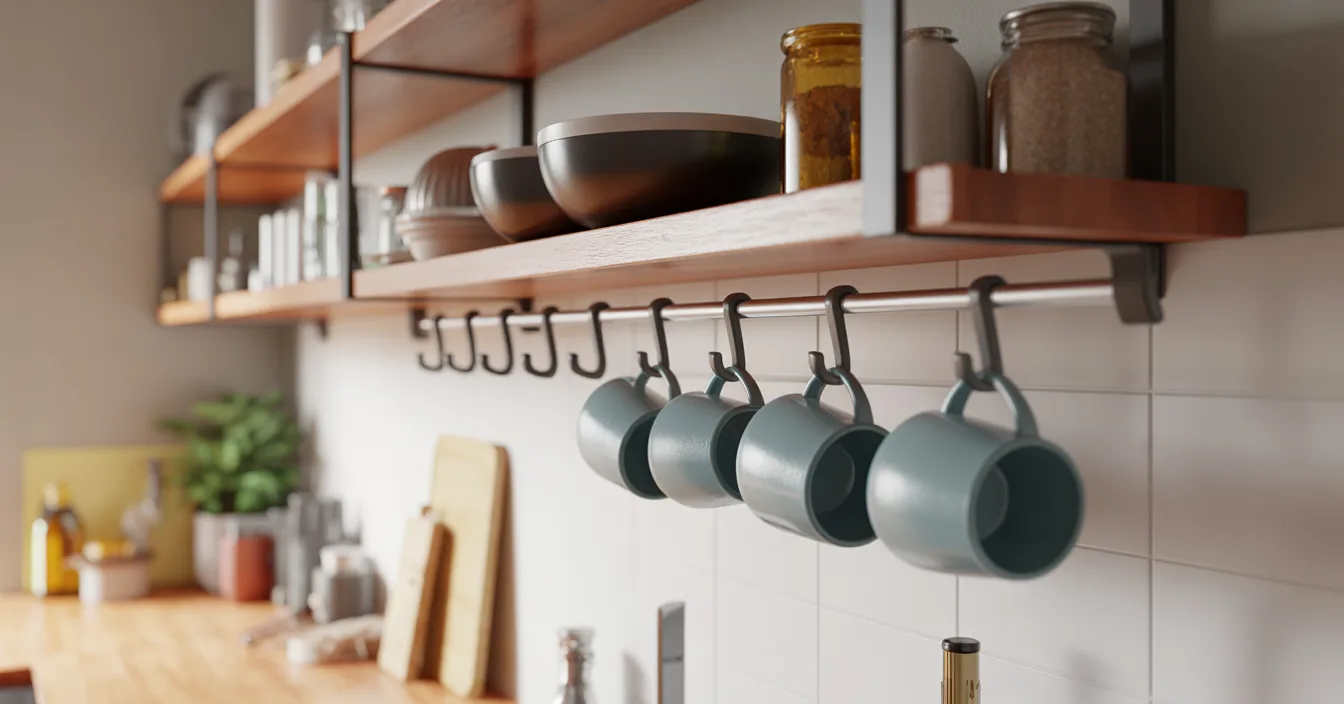
Mugs usually take up valuable cabinet space, especially if you drink coffee every morning. Hanging them under a shelf on a row of hooks is a game-changer. The top of the shelf can hold jars, bowls, or decorative items, while the hooks below free up space for items you use daily. Strong brackets help support heavier pieces, and placing it near your coffee corner turns a small wall into a practical storage hub.
Pro Tip: Use metal hooks for durability, especially if you hang heavy mugs or bowls.
Open Shelves
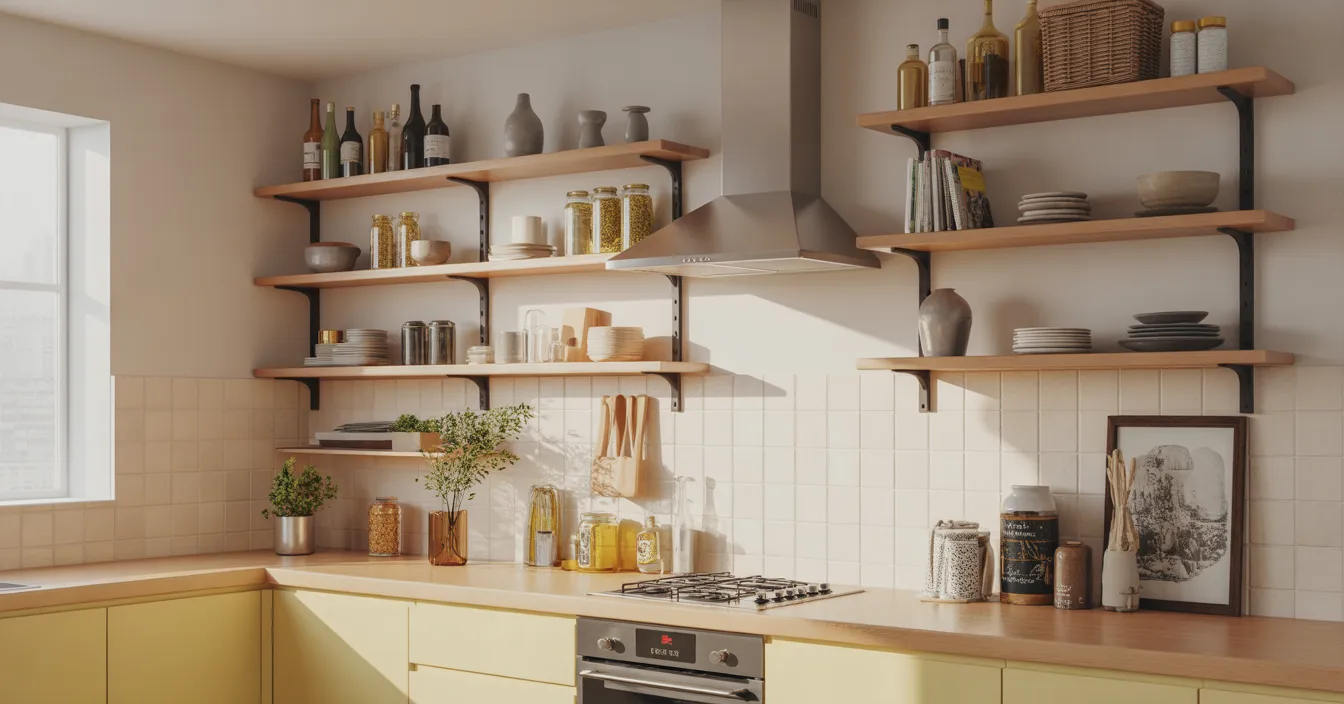
Empty walls above counters don’t have to be purely decorative. Installing long wooden shelves gives you room for plates, jars, and other kitchen essentials. Keeping things visible makes it easy to grab what you need quickly. Make sure there’s enough vertical space between shelves for taller items, and sprinkle in a few decorative pieces to balance function and style. In kitchens with fewer cabinets, open shelves are a lifesaver.
Pro Tip: Mix storage and décor to keep shelves visually appealing without cluttering them.
Rack Storage
Corners or narrow wall gaps often get overlooked, but tall metal racks can maximize these spots. Each shelf can serve a different purpose: dry goods, small appliances, or tools. Heavier items like blenders belong on lower shelves, while lighter items can go higher. A rack next to the fridge or on an empty wall can dramatically increase storage in smaller kitchens, making daily cooking much smoother.
Pro Tip: Label shelves or bins for quicker access to items during busy cooking sessions.
Hook Rail
Everyday items like cutting boards, cups, or small tools are easier to reach when hung on a simple hook rail. Combining hooks with floating shelves above creates a versatile storage wall. Upper shelves can hold jars, tea containers, or décor, while hooks keep frequently used items accessible. Installing this near a prep station or coffee corner turns wasted wall space into a functional area.
Pro Tip: Keep heavier items closer to the wall to prevent hooks from bending or sagging.
Mug Bar
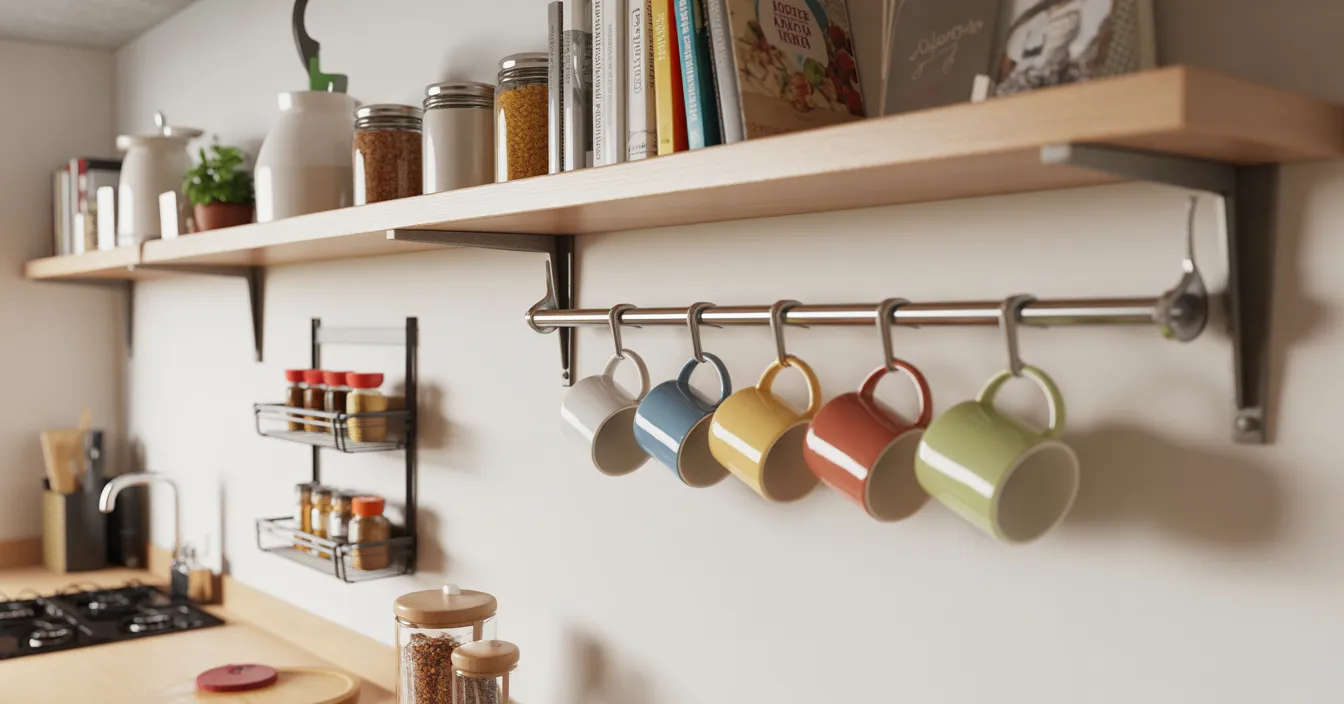
Mugs accumulate quickly, taking up precious cabinet space. I love using a rod under a shelf to hang mugs, making mornings less hectic. The shelf above can hold jars or books, while the rod below keeps daily cups within easy reach. Adding a small wall-mounted spice rack nearby further organizes your essentials without crowding the counter.
Pro Tip: Mount the rod just high enough to prevent mugs from hitting the counter when hung.
Towel Shelf
A compact shelf with a towel bar combines storage and function perfectly. Oils, spices, or utensils can sit on the upper tier, while a towel hangs below. This keeps frequently used items at eye level, reducing clutter on counters. Placing it near the prep area or sink keeps everything you need within easy reach, making cooking more efficient.
Pro Tip: Choose a shelf with a small lip to prevent jars from sliding off.
Corner Shelves
Corners often remain empty even though they’re perfect for storage. Floating shelves in these areas can hold jars, cutting boards, or small plants without obstructing your workspace. Vertical stacking works well here, with lower shelves for heavy items and upper ones for light containers or décor. Near a sink or prep area, these shelves keep essentials accessible while saving counter space.
Pro Tip: Use L-shaped shelves to maximize awkward corner space efficiently.
Ladder Shelves
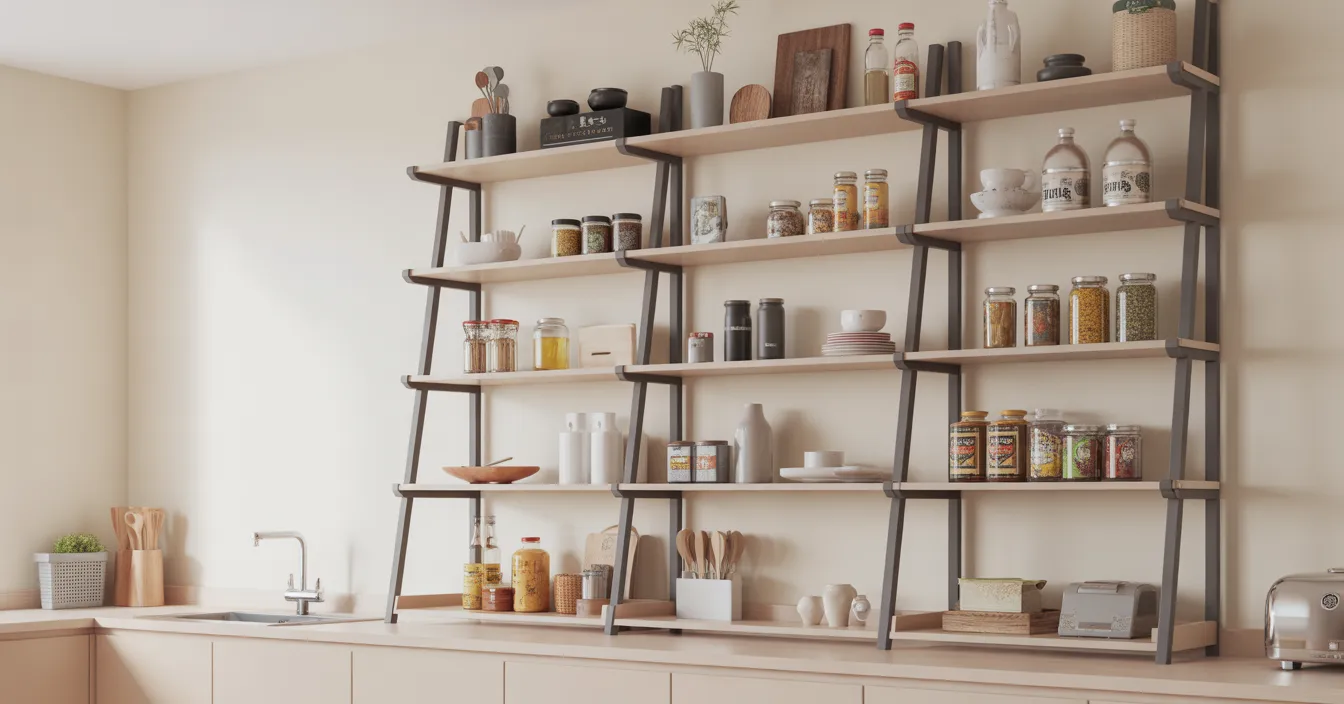
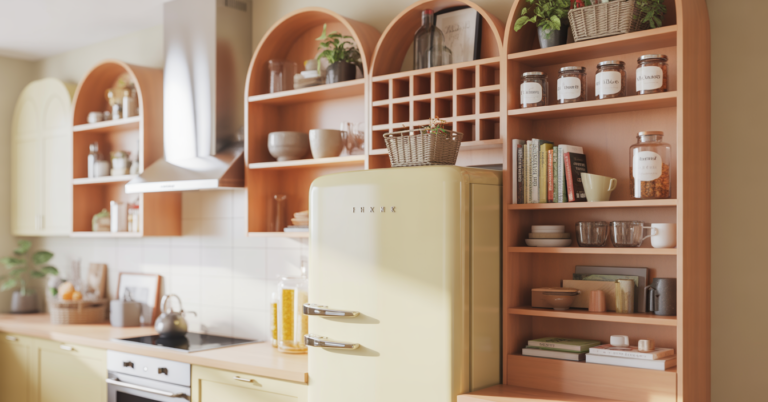
Tall walls can store more than you might think when you stack vertically. Ladder shelves hold everything from jars to bottles and small kitchen tools. Everyday items go on lower shelves, while less-used or decorative pieces occupy higher spots. Leaving space between items keeps the area from looking messy. Slim side frames maintain an open feel while boosting storage.
Pro Tip: Keep lower shelves for daily items to avoid climbing or reaching constantly.
Steel Shelves
Open steel shelves make dishes and glassware visible and accessible. I prefer these for small kitchens because they don’t feel bulky. Proper spacing ensures you can fit a variety of items without stacking them too high. You can even add a magnetic strip for knives or tools, keeping everything within reach and organized.
Pro Tip: Use stainless steel for durability and a sleek, modern look.
Pantry Wall
A dedicated pantry wall keeps dry goods visible and easy to manage. Matching containers help maintain a neat look, while baskets or drawers at the bottom store larger items. Adding a pegboard strip provides room for smaller tools. Placing this wall near your cooking area ensures ingredients are close at hand, making meal prep more streamlined.
Pro Tip: Arrange containers by frequency of use for a faster cooking workflow.
Tool Station
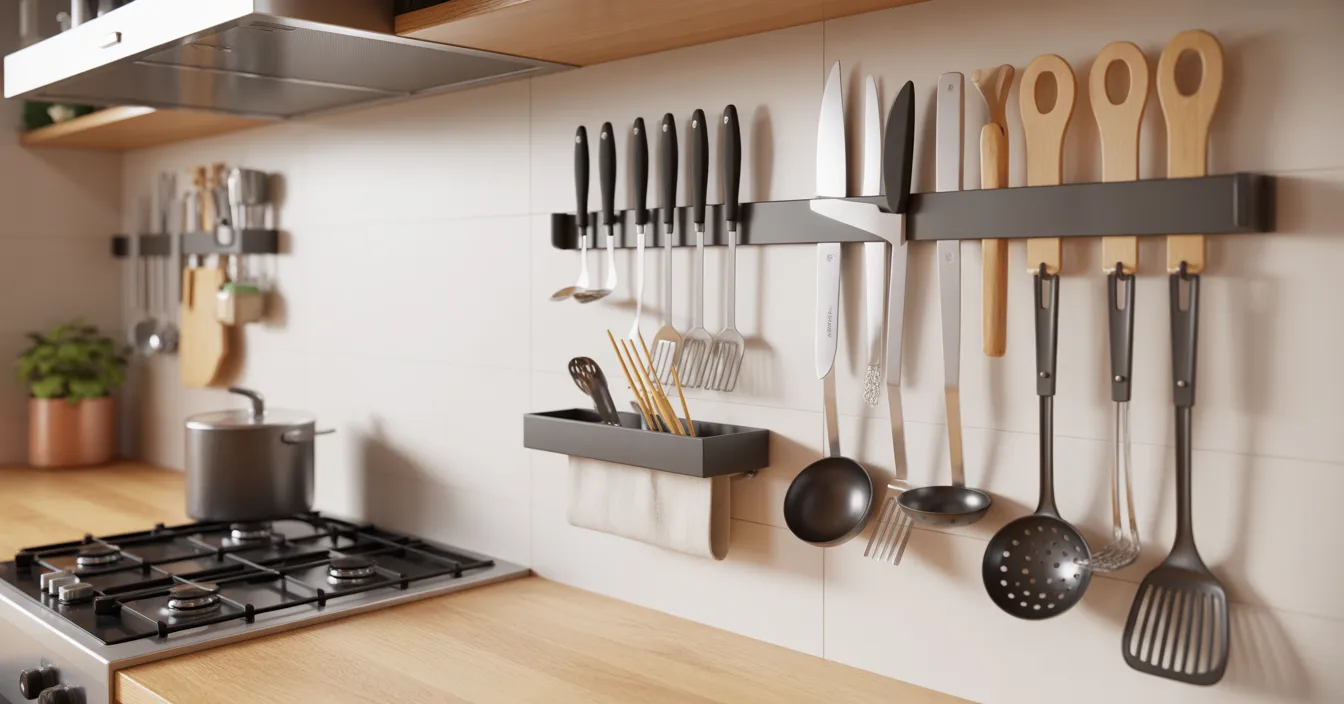
Cooking tools scattered across drawers slow me down, so I love a wall-mounted tool station. Hooks hold ladles, spatulas, and peelers, while the top section keeps knives and scissors organized. Built-in holders for chopsticks or spoons add even more efficiency. Adding a towel bar underneath creates a one-stop cooking station near your stove or prep area.
Pro Tip: Group tools by type or function for a more intuitive setup.
Basket Wall
Wire baskets on the wall make fruits and vegetables easy to see and grab. Vertical baskets maximize height, not countertop space. Assign different levels for produce, snacks, or small items, and add hooks at the bottom for mugs or utensils. Near the prep area or sink, this system keeps essentials close at hand while reducing clutter.
Pro Tip: Line baskets with cloth or silicone mats to prevent bruising delicate fruits.
Pot Display
Hanging pots on a rail immediately frees up cabinet space and turns cookware into a decorative element. Displaying metal or copper pots looks stylish while keeping them accessible. Heavier pots go on the bottom, lighter items on the shelves above. Ensure the rail is securely fastened to wall studs for safety.
Pro Tip: Group pots by size or frequency of use for easier cooking access.
Spice Rack
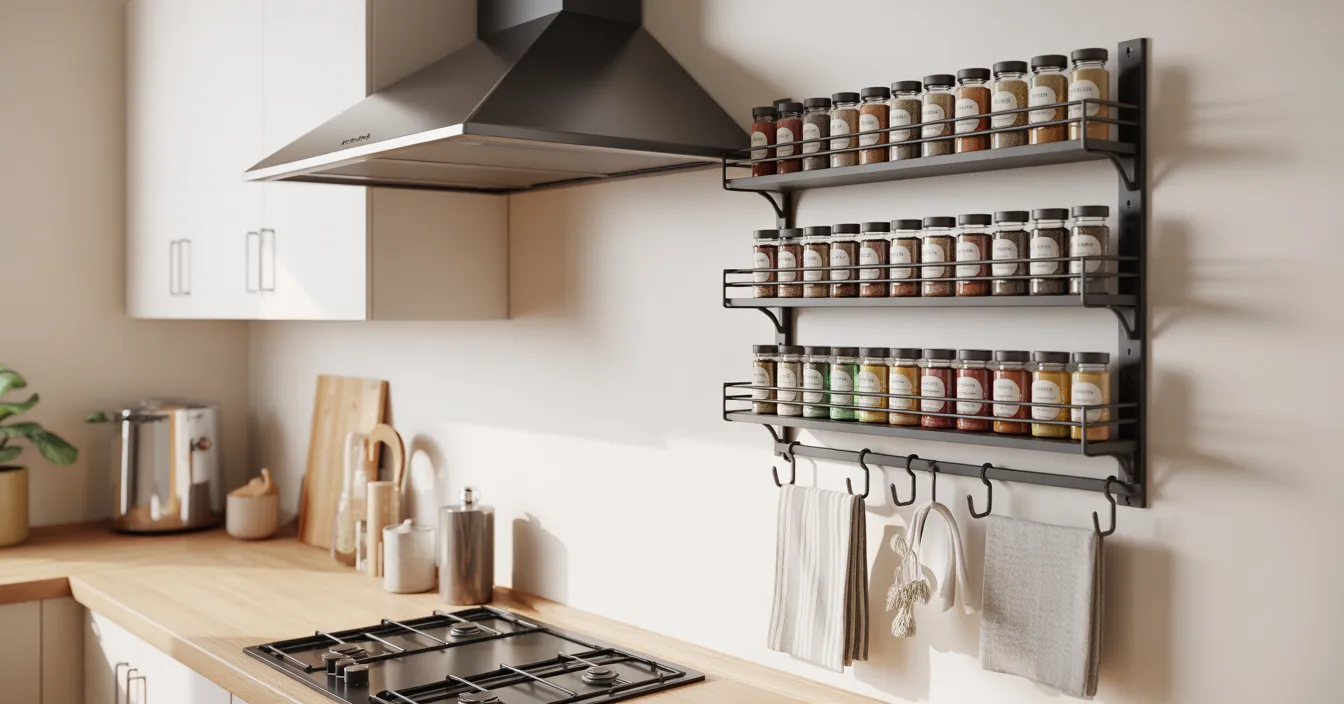
Spices disappear fast in cabinets, but vertical wall racks make everything visible. Matching containers keep rows tidy, while front rails prevent jars from slipping. Position the rack near the stove for easy access while cooking, and add hooks below for towels or cloths. This transforms a small wall into a fully functional spice station.
Pro Tip: Arrange spices alphabetically or by cuisine for faster meal prep.
Slot Shelves
Divided shelves give each item its own space, preventing mugs, plates, or books from toppling over. Vertical slots work well for cutting boards, plates, or small containers. Installing these near a prep area or coffee nook allows quick access while keeping the wall organized and visually neat.
Pro Tip: Use wider slots for mugs or containers to avoid crowding.
Pegboard Wall
Pegboards keep frequently used tools in plain sight. Hooks and holders can be rearranged to suit changing needs, while heavier items hang safely on stronger hooks. Installing this above a prep station makes it easy to grab utensils, pots, and pans without rifling through drawers.
Pro Tip: Paint or finish the pegboard to match your kitchen décor for a polished look.
Divider Storage
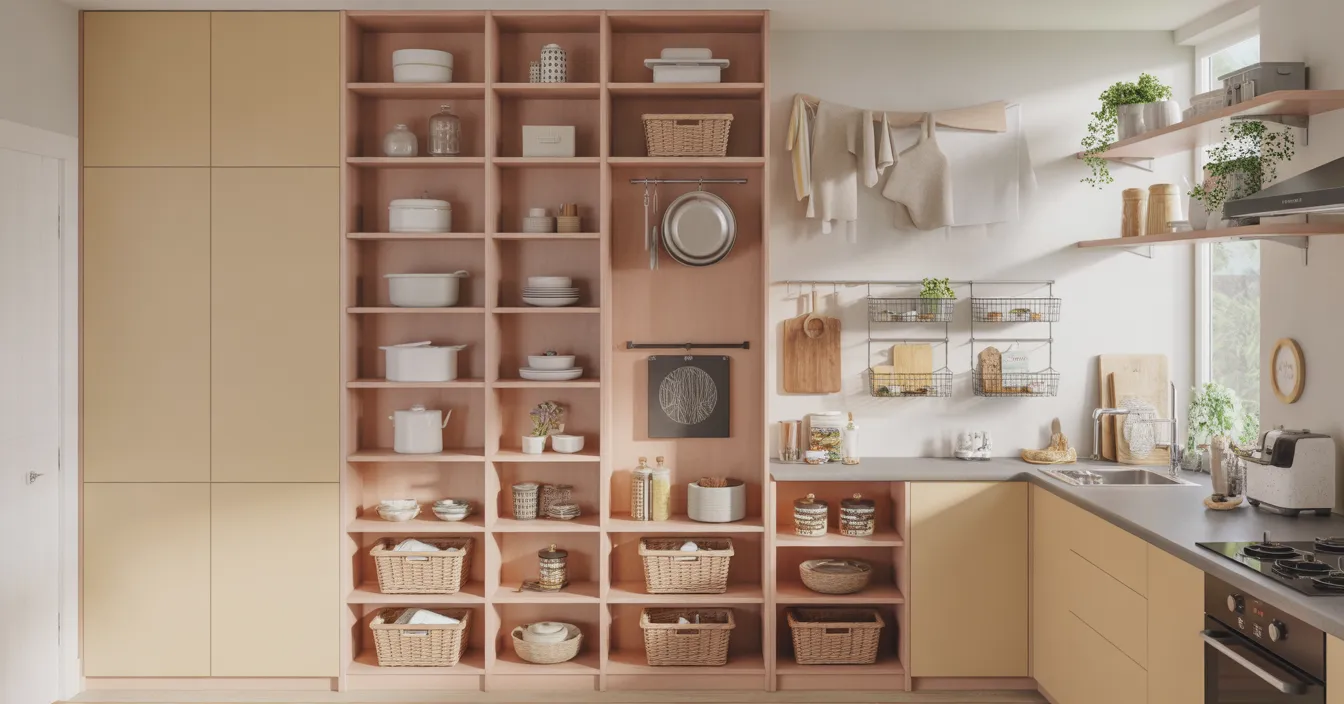
Divider walls often separate spaces without adding functionality. Using vertical storage on these walls provides spots for trays, pans, baskets, and cutting boards. Open sections prevent clutter from piling up, and wire racks can hold items of all shapes. It’s perfect for kitchens that need extra storage without closing off light or space.
Pro Tip: Keep frequently used items at eye level and decorative items higher to maintain a tidy look.
Wall System
I love creating a full wall storage system that combines shelves, rails, hooks, and baskets. Plates, jars, and containers sit on shelves, while utensils hang below. Top shelves hold bulky items, middle shelves store daily tools, and bottom shelves house heavy items or crates. This approach maximizes storage without adding cabinets and keeps everything organized.
Pro Tip: Design the system in zones for prep, cooking, and cleaning for faster workflow.
Ledge Shelf
Shallow ledges above the backsplash provide storage without overwhelming the space. They’re perfect for spices, decor, or everyday items. Because they’re narrow, nothing gets lost behind other objects, and everything is visible at a glance. Adding small wall lights above can make the space stylish and practical.
Pro Tip: Combine with small containers or jars to maximize ledge functionality.
Rustic Shelves
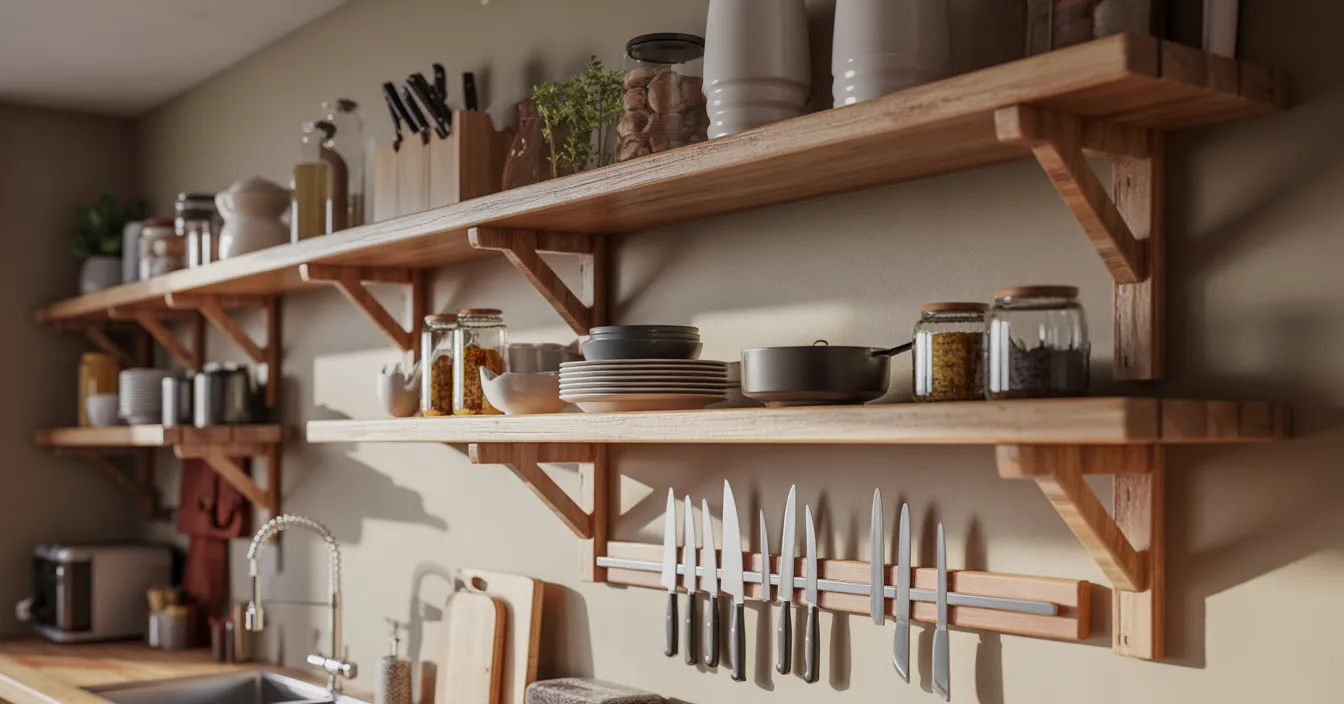
Layering simple wooden shelves is both functional and visually warm. The lower shelf can hold everyday items, while the higher shelf stores decorative or less-used items. Adding a magnetic strip underneath keeps knives handy. Placing these shelves near your prep area creates a cozy, organized wall without cluttering the kitchen.
Pro Tip: Use natural wood finishes to add warmth and texture to your kitchen.
FAQs
How high should floating shelves be in a kitchen?
I usually recommend 18 to 24 inches above the counter. Leave extra space if storing taller items like jars or small appliances. Measure what you need first, then adjust the height to suit your kitchen setup.
What should you avoid putting on kitchen wall shelves?
Avoid heavy pots or rarely used items. Shelves that aren’t properly secured can be dangerous. Stick to everyday items like mugs, jars, and small containers to maintain a tidy and functional space.
Conclusion
Transforming your kitchen walls into functional storage areas can completely change how your space feels and works. From floating shelves and pegboards to ladder and corner units, each idea helps keep essentials within reach while freeing up cabinets and counters. By mixing and matching these storage solutions, you can create a kitchen that’s not only organized but also stylish and efficient. Start with the walls you use most, and gradually expand—small changes can make a huge difference in your daily cooking experience.