

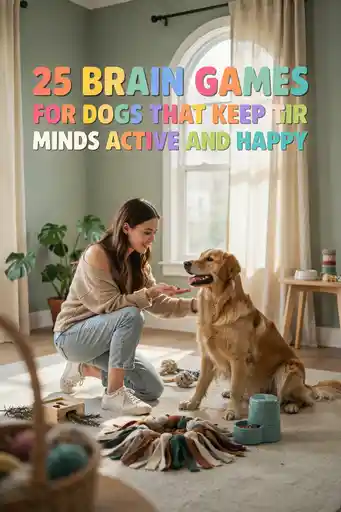
A tired dog isn’t always a happy dog. In my experience, dogs need mental exercise just as much as physical activity. While walks and playtime help burn energy, brain games challenge your dog’s mind, improve focus, and prevent destructive behaviors caused by boredom.
Research shows that mental stimulation can tire a dog almost as effectively as physical exercise. Even 15 to 20 minutes of problem-solving activities can help many dogs feel more relaxed and satisfied throughout the day.
In this guide, I’ll share 25 simple brain games for dogs that I have found effective for improving confidence, encouraging learning, and strengthening the bond between dogs and their owners. Most of these activities require little to no special equipment and can be done right at home.
Key Takeaways
- Brain games help reduce boredom and unwanted behaviors.
- Mental stimulation supports learning and confidence.
- Many games use your dog’s natural instincts like sniffing and searching.
- Most activities require only household items.
- Short daily sessions often provide better results than occasional long sessions.
- Brain training can benefit dogs of all ages and breeds.
1. Hide and Seek
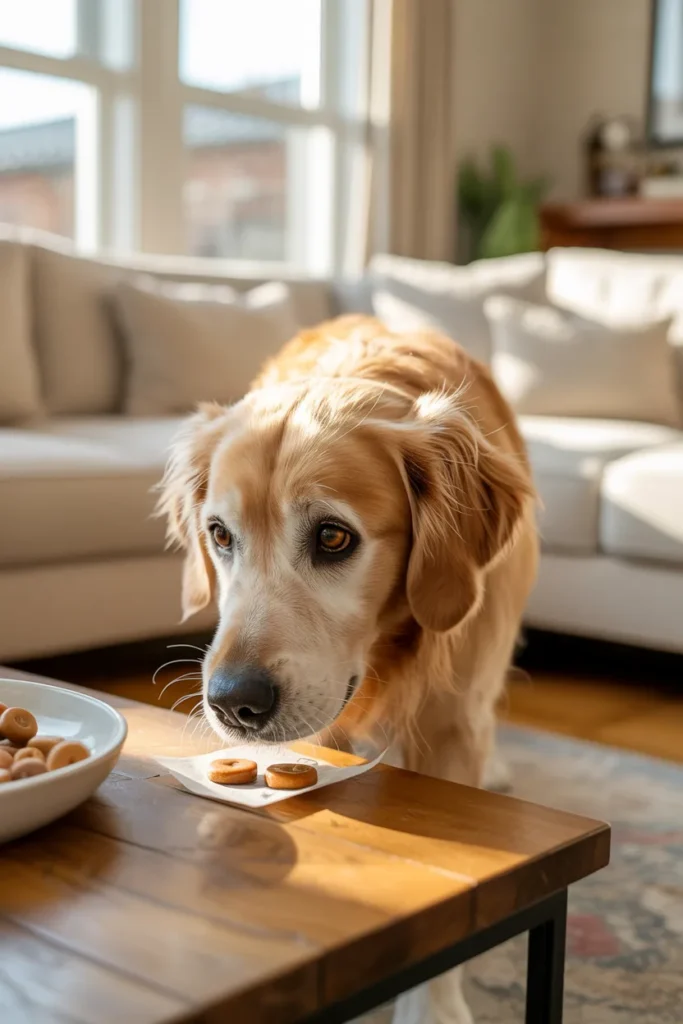
Hide and Seek is one of the easiest ways I keep a dog’s mind engaged. Instead of relying only on physical exercise, I hide treats or favorite toys around the house and encourage the dog to search for them using their nose.
Dogs experience the world primarily through scent, so this game taps into one of their strongest natural abilities. I usually start with easy hiding spots and gradually increase the difficulty as the dog becomes more confident.
For high-energy dogs, just 10 minutes of scent searching can provide surprisingly effective mental exercise.
2. The Shell Game
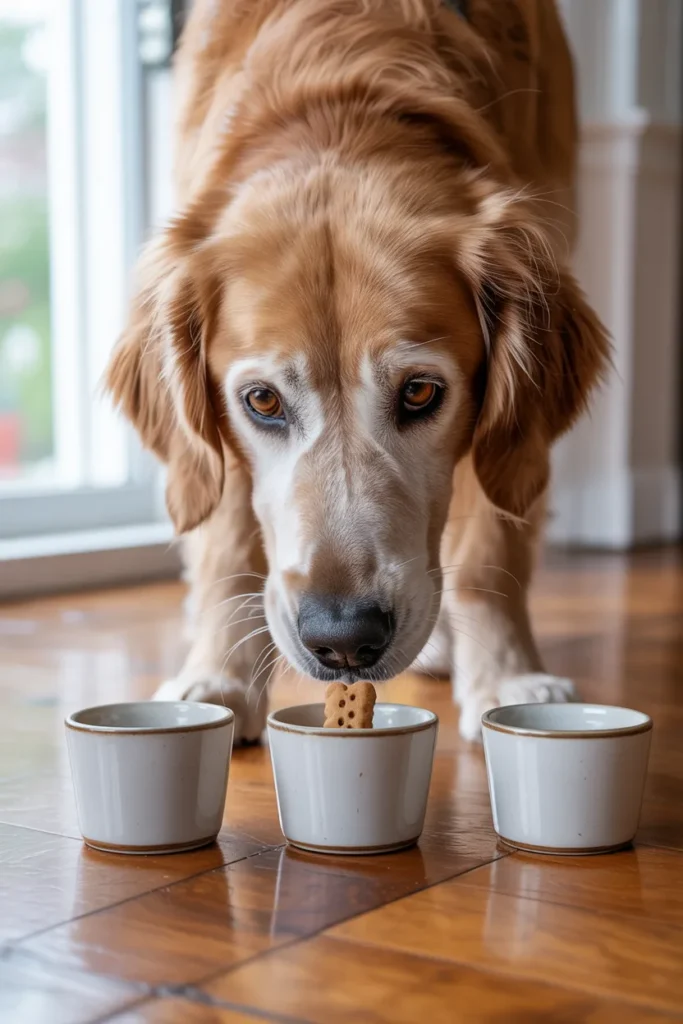
The Shell Game challenges a dog’s focus and observation skills. I place a treat under one cup, slowly move the cups around, and then allow the dog to choose where the reward is hidden.
This activity encourages concentration and teaches patience. Some dogs learn quickly, while others need time to understand the concept, which is completely normal.
To keep the game fair, I recommend starting with slow movements before increasing the difficulty level.
3. Puzzle Toys
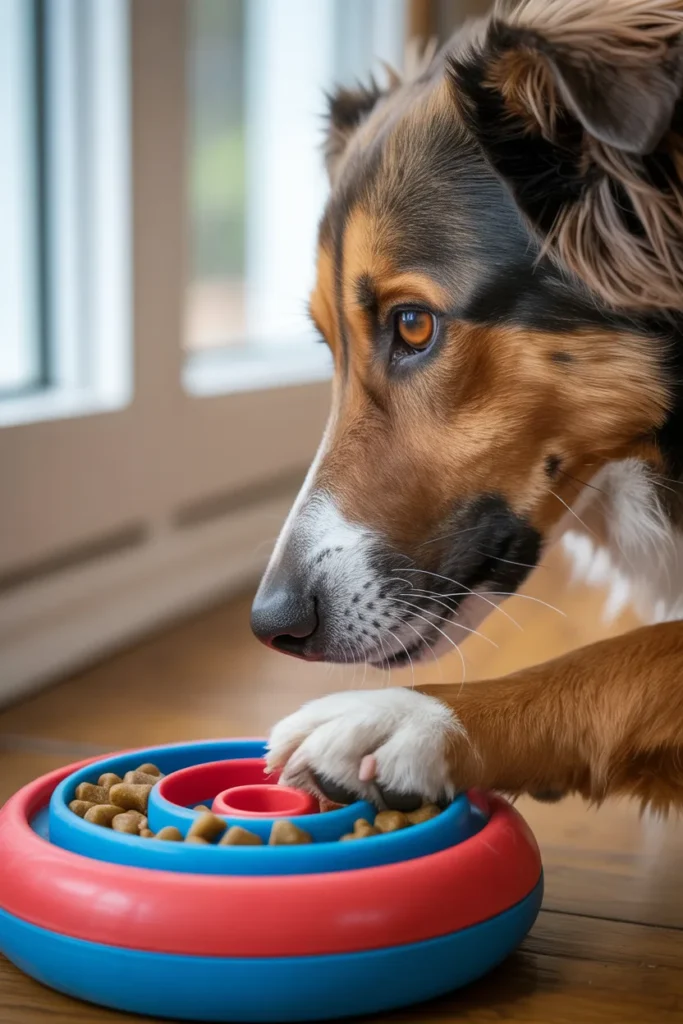
Puzzle toys are excellent for dogs that need independent mental stimulation. These toys require dogs to move pieces, open compartments, or slide sections to reach hidden treats.
I like puzzle toys because they keep dogs occupied while encouraging problem-solving. Studies on canine enrichment have shown that dogs often benefit from activities that require them to work for rewards.
Start with beginner-level puzzles and slowly introduce more advanced options as your dog gains confidence.
4. Name Game
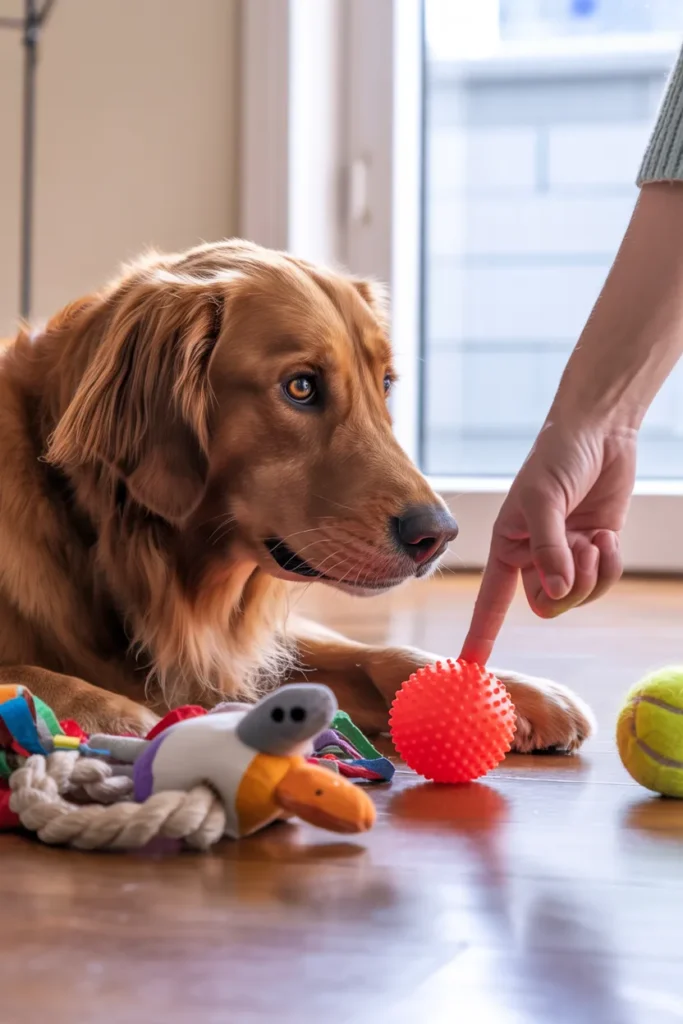
Teaching a dog the names of different toys is a surprisingly effective memory exercise. I usually begin with one toy and repeat its name consistently during play sessions.
Once the dog recognizes the first toy, I introduce another and practice asking for specific items. Over time, many dogs learn to distinguish between multiple toys by name.
Besides boosting memory skills, this game creates fun opportunities for interactive play with family members.
5. Towel Roll
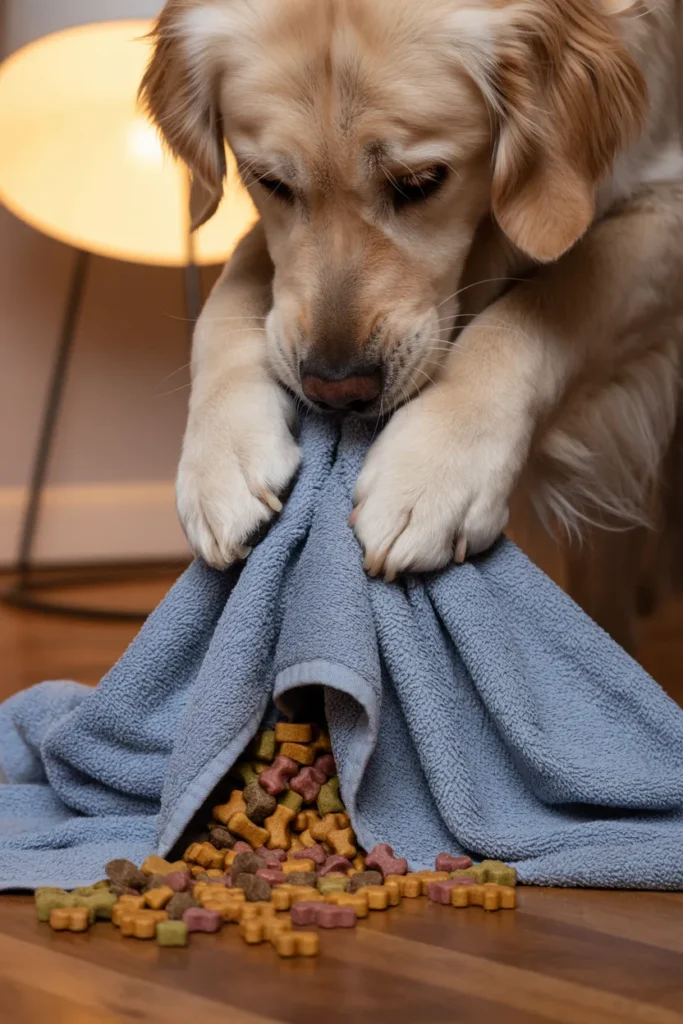
The Towel Roll game is simple, affordable, and highly engaging. I scatter small treats across a towel, roll it up, and let the dog figure out how to unroll it.
The challenge encourages persistence and independent thinking. Dogs must use both their nose and paws to uncover the hidden rewards.
This activity works especially well on rainy days when outdoor exercise may be limited.
6. Which Hand?
This classic guessing game helps strengthen scent recognition and decision-making. I place a treat in one hand, close both fists, and allow the dog to choose.
Many dogs become surprisingly skilled at using their nose to identify the correct hand. The game also encourages focus and patience.
For beginners, I recommend making the scent obvious before increasing the challenge.
7. Hot and Cold Game
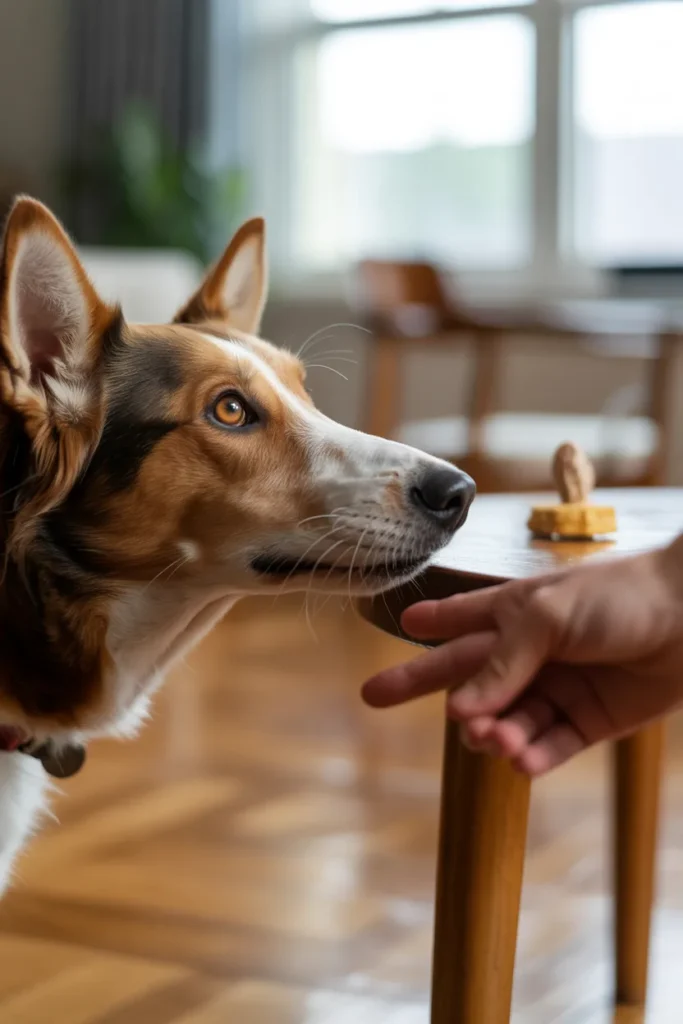
The Hot and Cold Game combines communication and problem-solving. After hiding a treat, I use my voice to guide the dog toward the correct location.
A calm tone signals they are moving away from the reward, while an excited tone indicates they are getting closer. Dogs quickly learn to pay attention to verbal feedback.
This game helps build trust while encouraging active listening.
8. Teach New Tricks
Learning new tricks is one of the most effective forms of mental exercise for dogs. Whether it’s spinning, rolling over, or giving a high five, every new skill challenges the brain.
I keep training sessions short, positive, and reward-based. Most dogs learn better through multiple five-minute sessions than one long lesson.
Regular training improves confidence, strengthens communication, and keeps the mind active regardless of age.
9. Dog Parkour
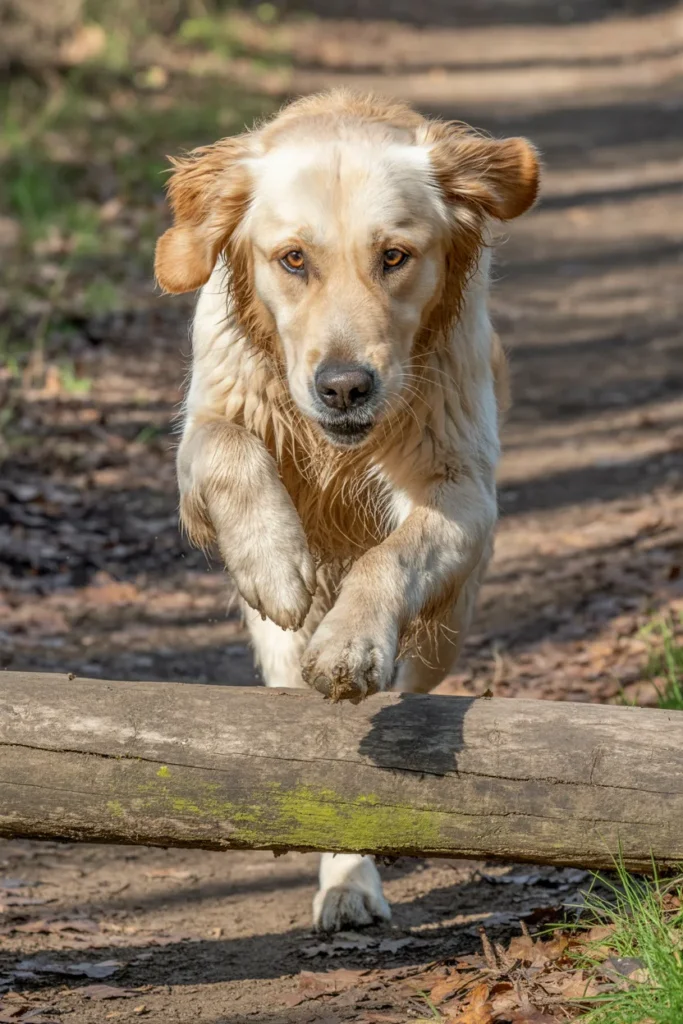
Dog Parkour turns everyday walks into exciting learning opportunities. I encourage dogs to safely interact with their surroundings by stepping onto low surfaces, weaving around objects, or walking over different textures.
This activity develops body awareness, balance, and concentration. Every obstacle requires the dog to think before acting.
Always prioritize safety and choose obstacles appropriate for your dog’s size and physical ability.
10. Fetch with a Twist
Traditional fetch becomes more mentally stimulating when I add simple tasks before each throw. I might ask the dog to sit, stay, lie down, or perform a trick first.
This approach encourages impulse control and teaches dogs that patience earns rewards. Instead of reacting immediately, they must think and respond correctly.
The combination of physical movement and mental engagement makes this one of my favorite enrichment activities for active dogs.
11. Snuffle Mat
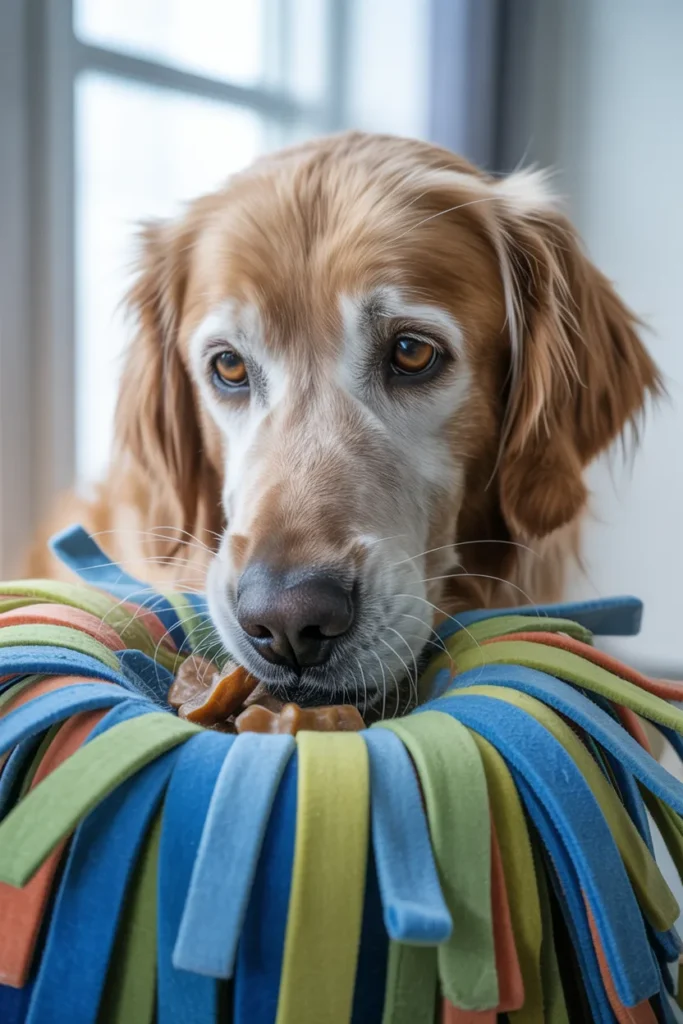
A snuffle mat is one of the best tools I recommend for dogs that love to sniff. Instead of placing food in a bowl, I hide kibble or treats between the fabric strips and let the dog search for every piece.
Since a dog’s nose contains millions more scent receptors than a human’s, sniffing activities provide valuable mental exercise. Many dogs stay focused much longer when food becomes a challenge to find.
This game is especially useful for energetic dogs and fast eaters.
12. Interactive Feeding
I often turn mealtime into a brain game by using food-dispensing toys or puzzle feeders. Rather than eating quickly from a bowl, dogs must work to access their food.
This method slows eating speed, which may help reduce digestive issues caused by gulping meals too quickly. It also transforms an everyday activity into a rewarding mental challenge.
Even replacing one meal a day with an interactive feeder can increase enrichment.
13. Toy Pick-Up
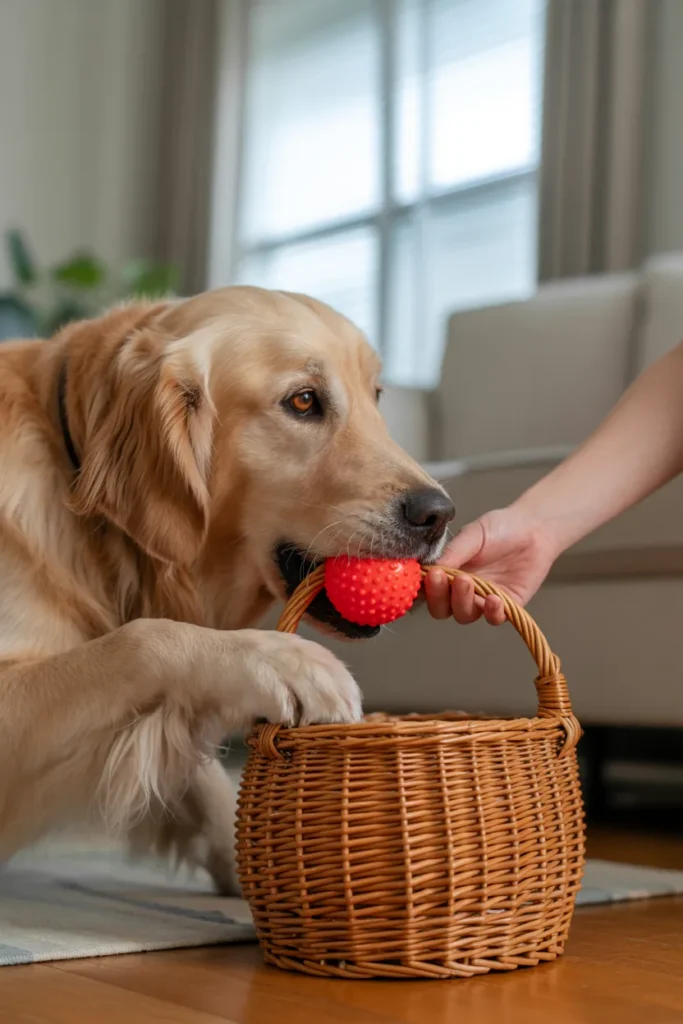
Teaching a dog to put toys away may sound advanced, but it becomes easier when broken into small steps. I begin by rewarding the dog for picking up a toy and then gradually teach them to drop it into a basket.
The process requires focus, memory, and obedience. Over time, dogs start understanding the complete routine.
Besides providing mental stimulation, this game can help keep your home more organized.
14. Switch Up Walks
Dogs notice far more scents than people realize. That’s why I avoid taking the exact same walking route every day.
Exploring new streets, trails, or parks introduces fresh smells, sounds, and sights. These changing environments encourage dogs to stay alert and process new information.
Sometimes a new route can be more mentally stimulating than a longer walk on a familiar path.
15. Obstacle Course
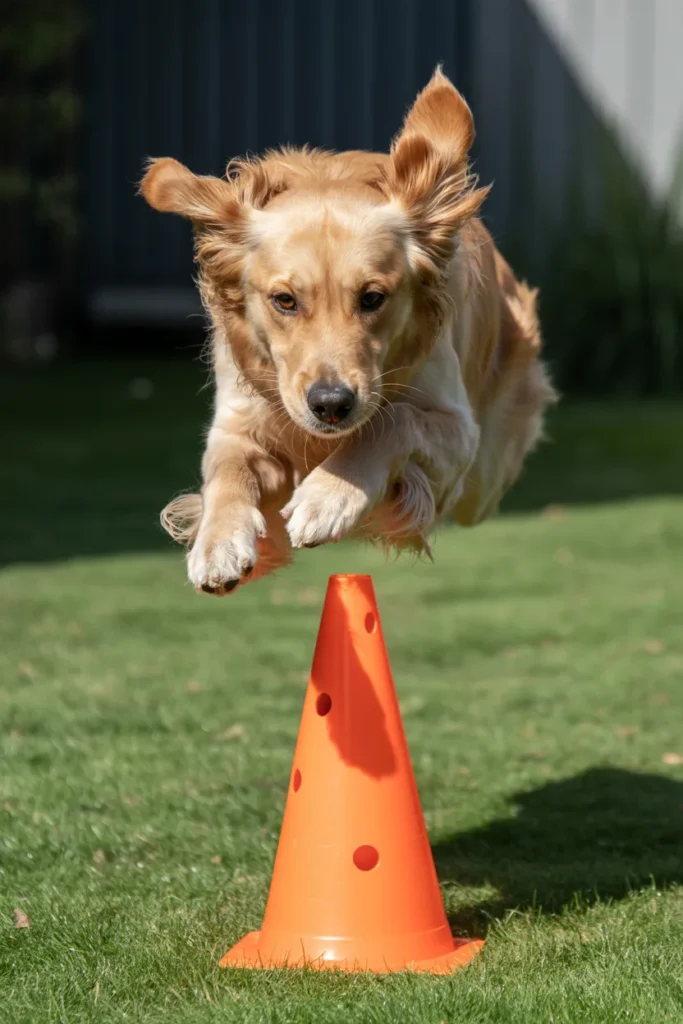
Creating a simple obstacle course at home challenges both the body and mind. I use everyday items such as chairs, cones, cushions, or tunnels to create different tasks.
Dogs must listen to instructions, navigate obstacles, and solve movement challenges along the way. This improves coordination and confidence.
Start with easy obstacles and gradually increase complexity as your dog improves.
16. DIY Agility Course
A DIY agility course provides a more structured version of an obstacle challenge. I set up jumps, weaving areas, and tunnels using affordable household materials.
Agility training encourages quick thinking because dogs must react to commands while moving through the course. It also strengthens the bond between owner and dog.
Many dogs become noticeably more confident after regular agility practice.
17. Learn to Make Eye Contact
Eye contact is a simple skill that can make a huge difference in training. I teach it by holding a treat near my face and rewarding the dog whenever they look into my eyes.
This exercise improves attention and helps dogs focus even when distractions are present. Strong eye contact often leads to better obedience overall.
I practice this skill for a few minutes daily during regular training sessions.
18. Interactive Tug-of-War
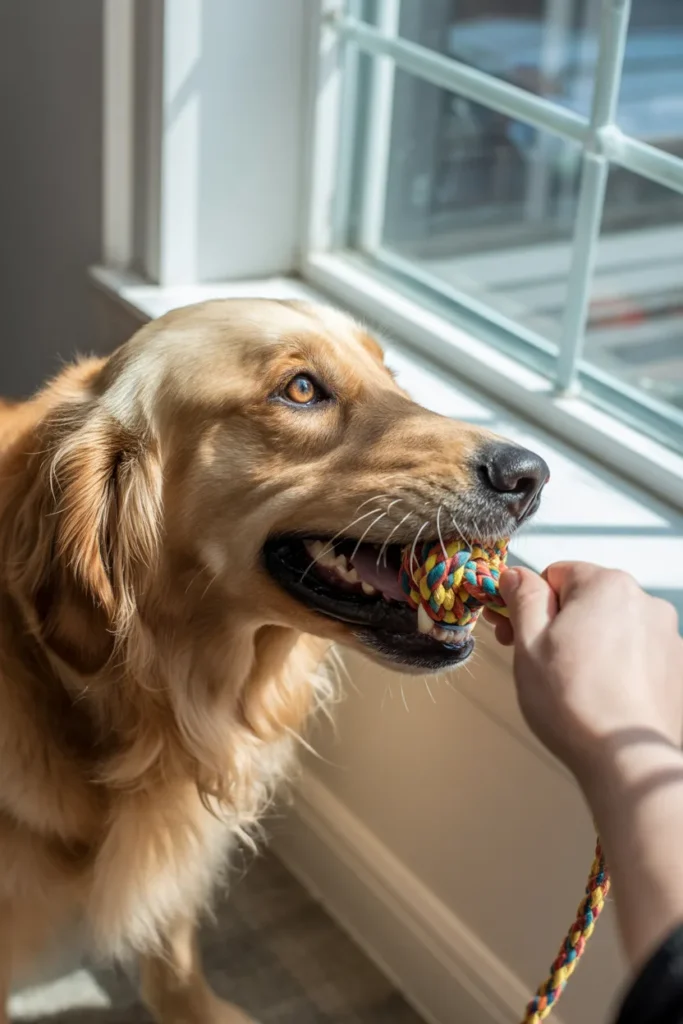
Tug-of-war becomes a brain game when clear rules are involved. Before the game starts, I ask the dog to sit, wait, or release the toy on command.
These small requirements teach self-control and reinforce listening skills. The dog learns that following instructions keeps the game going.
When played correctly, tug-of-war provides both physical exercise and mental engagement.
19. Treat Under Tennis Balls
This game challenges a dog’s problem-solving abilities using simple household items. I place treats inside a muffin tray and cover each section with a tennis ball.
The dog must figure out how to move the balls to uncover the rewards underneath. Some use their nose, while others prefer their paws.
Because the challenge is straightforward, it’s a great option for dogs new to puzzle games.
20. Scent Work
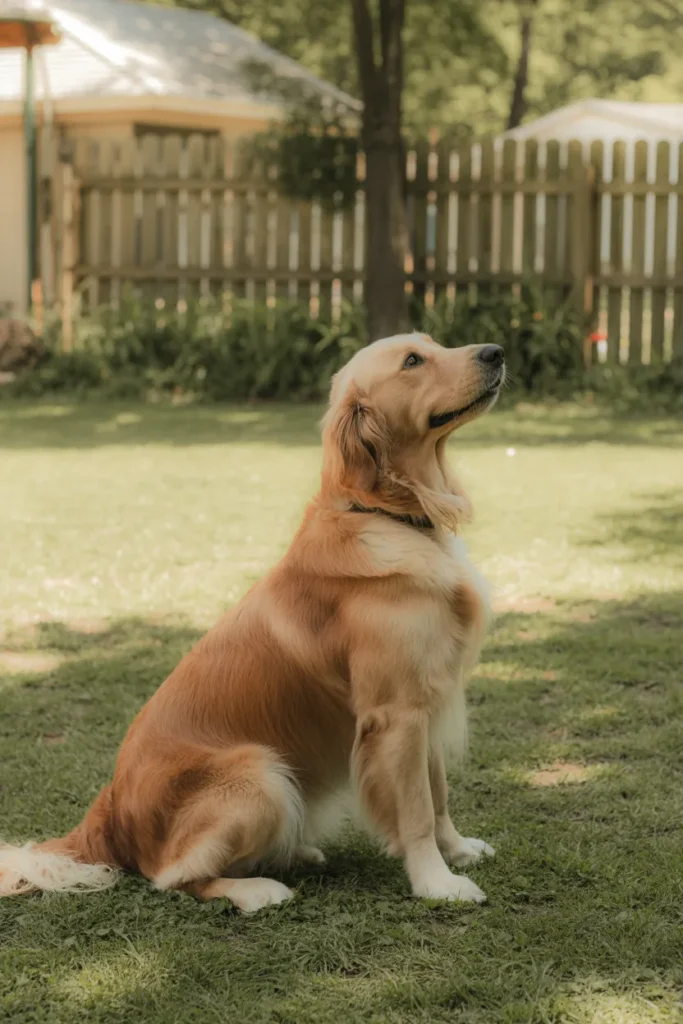
Scent work is one of the most rewarding brain games because it uses a dog’s strongest natural skill. I hide scented objects around the home and encourage the dog to locate them.
Professional working dogs rely heavily on scent detection, but family pets can enjoy the same type of activity. Searching for specific scents keeps the brain highly engaged.
Many trainers consider scent work one of the most effective forms of canine mental enrichment.
21. Follow the Leader
Follow the Leader teaches dogs to pay close attention to human movements. I walk around the yard or house while changing directions, stopping suddenly, or performing simple actions.
The dog learns to stay focused and react appropriately. This strengthens communication and improves responsiveness during everyday situations.
As the dog improves, I add more challenging movements to increase difficulty.
22. Hand Signals
Dogs often understand body language faster than spoken words. That’s why I enjoy teaching hand signals alongside verbal commands.
I start by pairing a hand gesture with a command the dog already knows. Once the dog understands the connection, I gradually rely less on verbal cues.
This activity exercises memory and helps dogs communicate effectively in noisy environments.
23. Teach Your Dog to Read
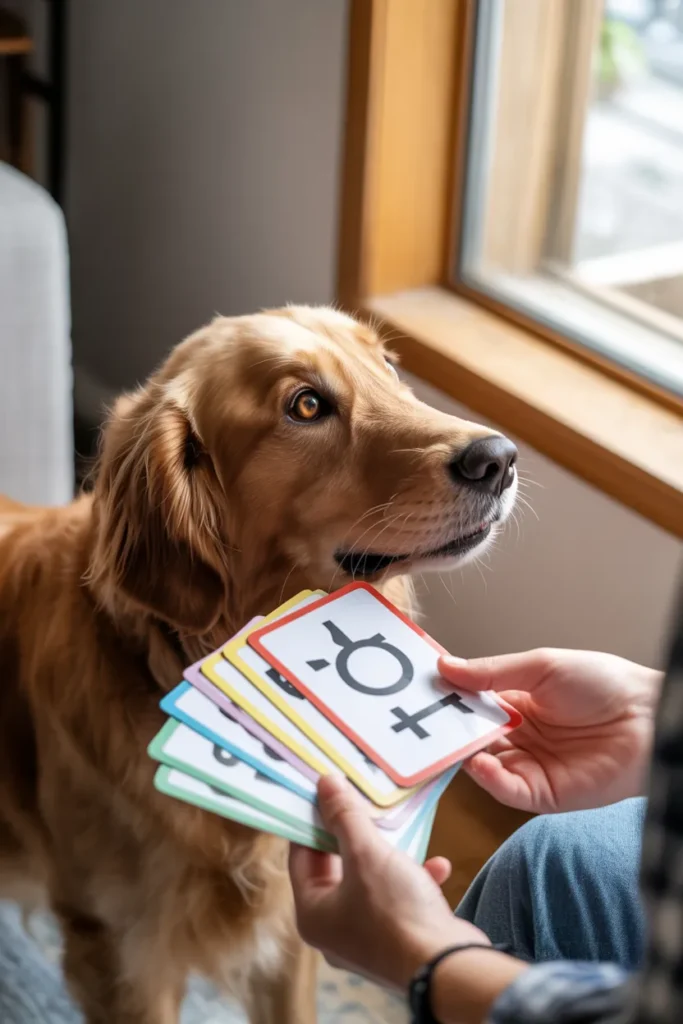
While dogs don’t actually read words the way humans do, they can learn to recognize symbols, shapes, and visual cues. I use simple cards paired with familiar commands.
Through repetition and rewards, many dogs learn to associate a specific card with a specific action. The process requires concentration and memory.
This advanced brain game can be a fun challenge for dogs that already enjoy training.
24. DIY Treat Dispenser
A homemade treat dispenser provides a low-cost way to encourage problem-solving. I create one using a clean plastic bottle with carefully placed openings.
As the dog rolls and nudges the bottle, treats fall out intermittently. The dog quickly learns that certain actions produce rewards.
This combination of movement and thinking keeps many dogs entertained for extended periods.
25. Treasure Hunt
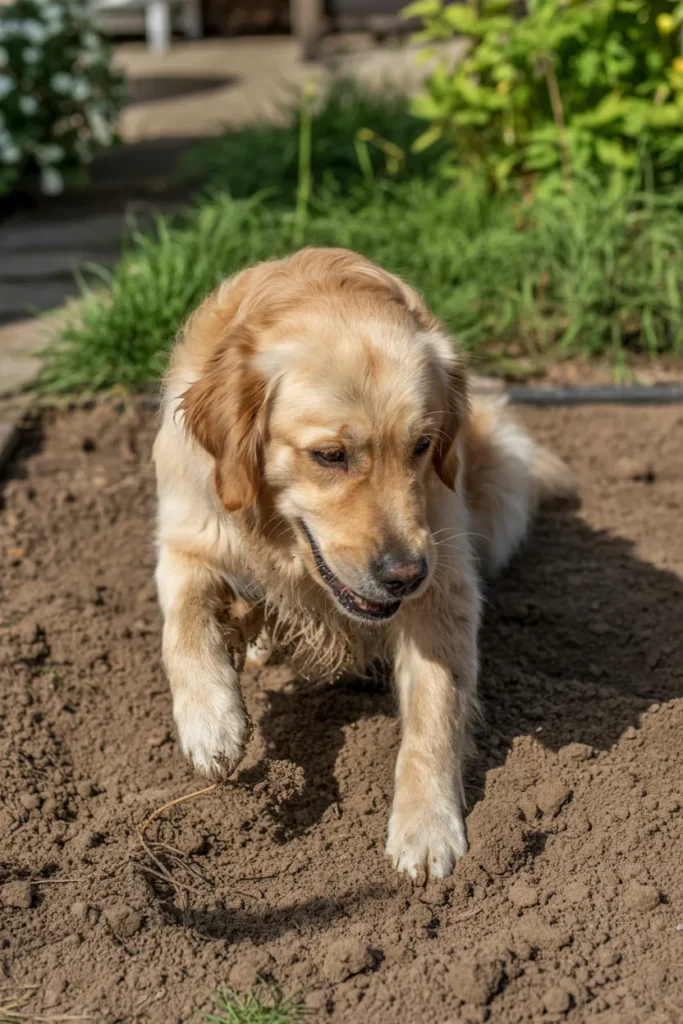
Treasure Hunt is often one of the most exciting enrichment activities for dogs. I hide toys or treats in a designated digging area and encourage the dog to search for them.
This game satisfies natural instincts such as sniffing, searching, and digging. Allowing dogs to use these behaviors in an appropriate way can reduce unwanted digging elsewhere.
For dogs that enjoy exploring, treasure hunts provide both fun and mental stimulation.
Frequently Asked Questions
How often should I play brain games with my dog?
I recommend at least 10 to 20 minutes of mental stimulation daily. Highly active breeds may benefit from longer or multiple sessions throughout the day.
Do brain games tire dogs out?
Yes. Mental exercise can be surprisingly exhausting for dogs. Many dogs feel calmer after a focused problem-solving session.
Are brain games suitable for puppies?
Absolutely. Puppies benefit from age-appropriate games that encourage learning, confidence, and positive behaviors.
Which brain game is best for beginners?
Hide and Seek, Which Hand?, and Treat Under Tennis Balls are excellent starting points because they are simple and require minimal equipment.
Can senior dogs benefit from brain games?
Yes. Mental stimulation helps keep older dogs engaged and active. Gentle puzzle games and scent-based activities often work particularly well.
What if my dog loses interest quickly?
Start with easier challenges and use high-value treats. Keeping sessions short and rewarding usually helps maintain enthusiasm.
Do I need expensive toys for brain games?
No. Many effective brain games use household items such as towels, cardboard boxes, muffin trays, plastic bottles, and cups.