



Getting kids to work together isn’t always easy, especially when different personalities, energy levels, and interests come into play. Over the years, I’ve found that team-building games are one of the simplest ways to help children connect, communicate, and build trust while having fun.
Research shows that cooperative play helps children develop stronger social skills, emotional awareness, and problem-solving abilities. Whether you’re a parent, teacher, camp leader, or homeschooler, these activities can help kids learn how to support one another while staying active and engaged.
In this collection, I’m sharing some of my favorite team-building games for kids. Some focus on communication, others encourage creativity, and many challenge children to solve problems together. The best part is that most require little preparation and use materials you probably already have at home or in the classroom.
Key Takeaways
- Team-building games help children improve communication and cooperation.
- Kids learn problem-solving skills while working toward a common goal.
- Group activities build confidence and encourage friendships.
- Many games require minimal supplies and setup time.
- These activities work well for classrooms, camps, parties, and family gatherings.
- Cooperative games help children practice leadership and listening skills.
1. Picture Pieces
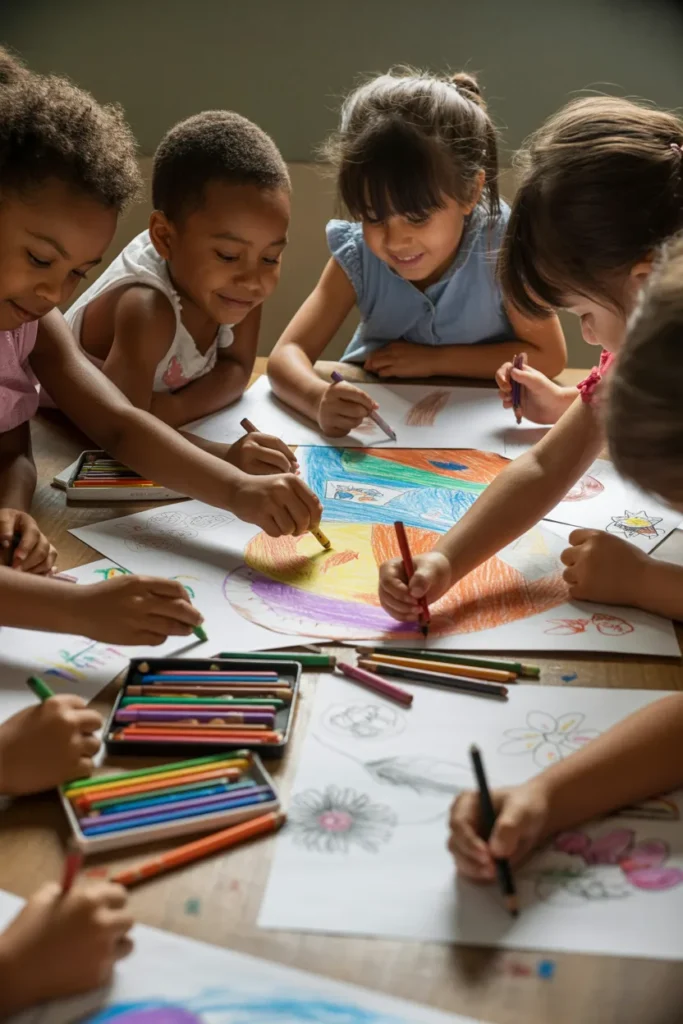
I love using Picture Pieces when I want children to see how individual efforts contribute to a larger goal. Every child receives a small section of an image and recreates it on their own paper without knowing exactly how the final picture will look.
Once everyone finishes, the pieces are combined to reveal the complete artwork. Watching kids realize how their contribution fits into the bigger picture creates a strong lesson about teamwork, cooperation, and shared success.
Pro Tip: Use simple images for younger children and more detailed designs for older kids to increase the challenge.
2. Get To Know You Balloons
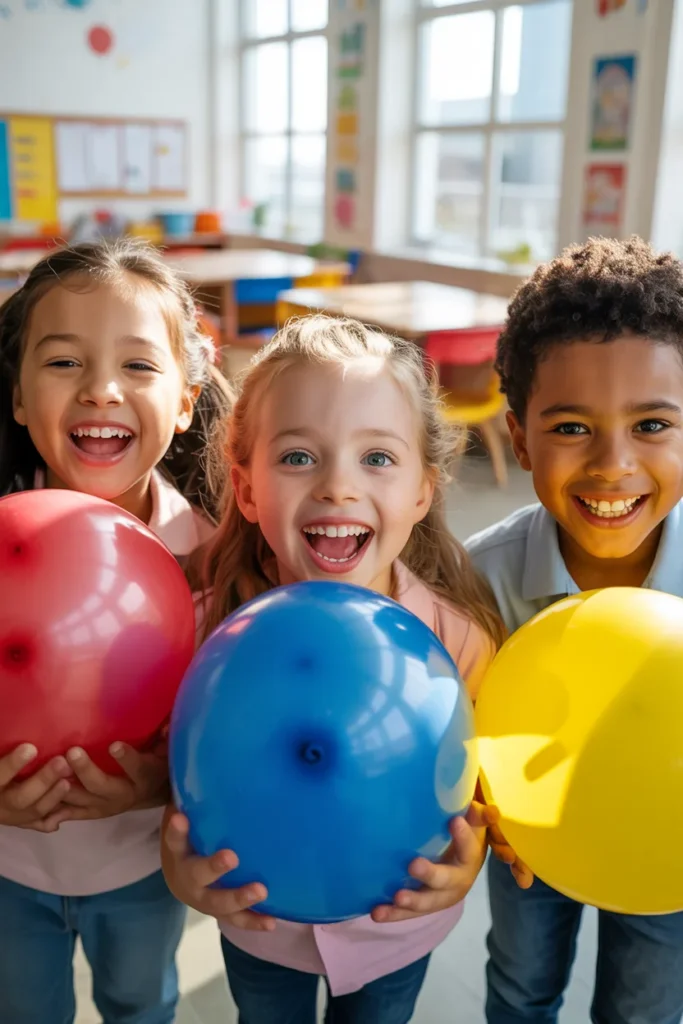
Whenever I introduce a new group of kids, this activity helps break the ice quickly. Each child writes a question about hobbies, favorite foods, dreams, or interests and places it inside a balloon.
After tossing the balloons around the room, everyone grabs one, pops it, and answers the question they find inside. The game naturally sparks conversations and helps children discover common interests.
This activity is especially effective during the first week of school, camps, or youth group events.
3. Hot and Cold
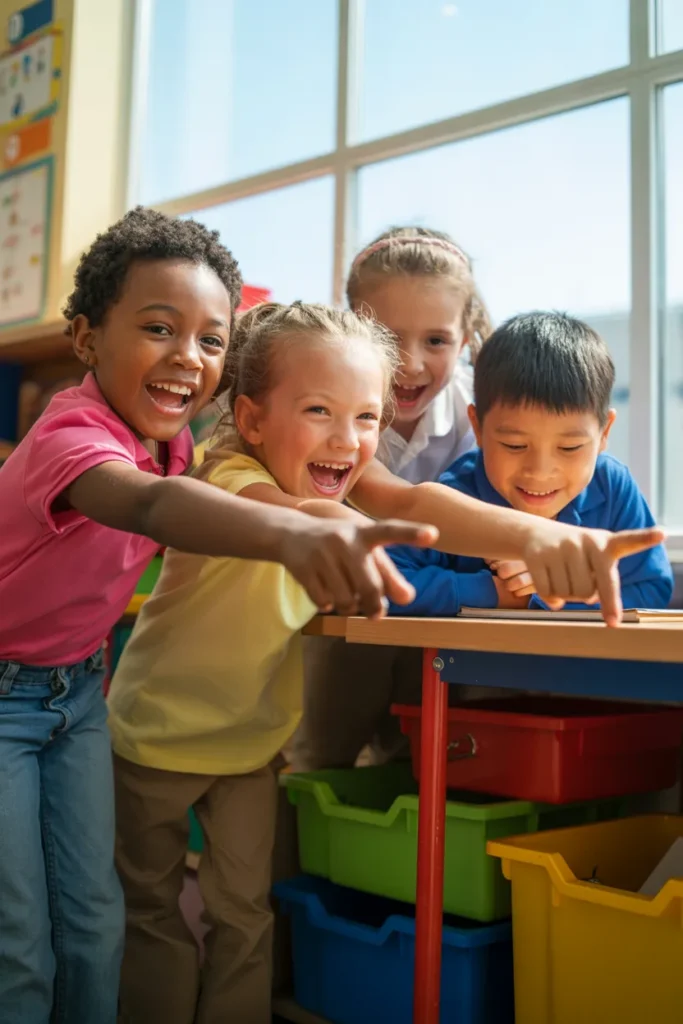
Hot and Cold remains one of the easiest team games to organize. One player searches for a hidden object while teammates provide clues using only “hot” and “cold” directions.
I’ve noticed this game teaches kids how to communicate clearly and pay close attention to verbal feedback. The more they play, the better they become at giving useful directions.
For larger groups, create multiple teams and hide different objects to keep everyone involved.
4. Marshmallow-and-Toothpick Challenge
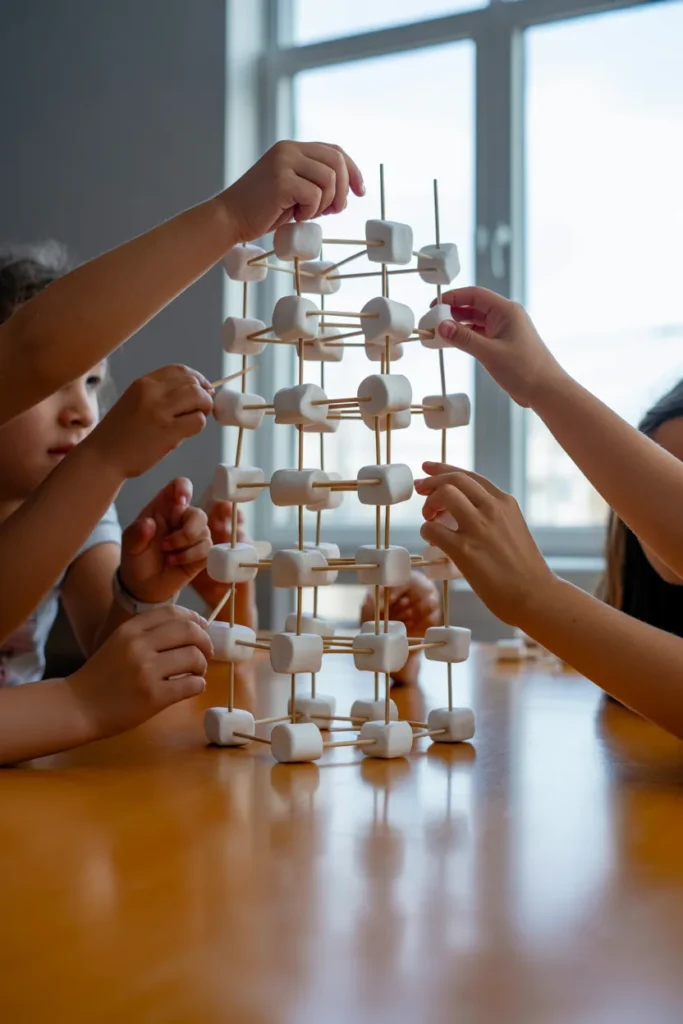
This activity combines creativity, engineering, and teamwork. Kids work in small groups using only marshmallows and toothpicks to build a structure before time runs out.
I often see teams naturally assign roles, with some members designing, others building, and others testing stability. These interactions help children practice leadership and collaboration in a fun environment.
To increase difficulty, challenge teams to build the tallest tower or strongest structure that can support a small object.
5. Hula-Hoop Pass
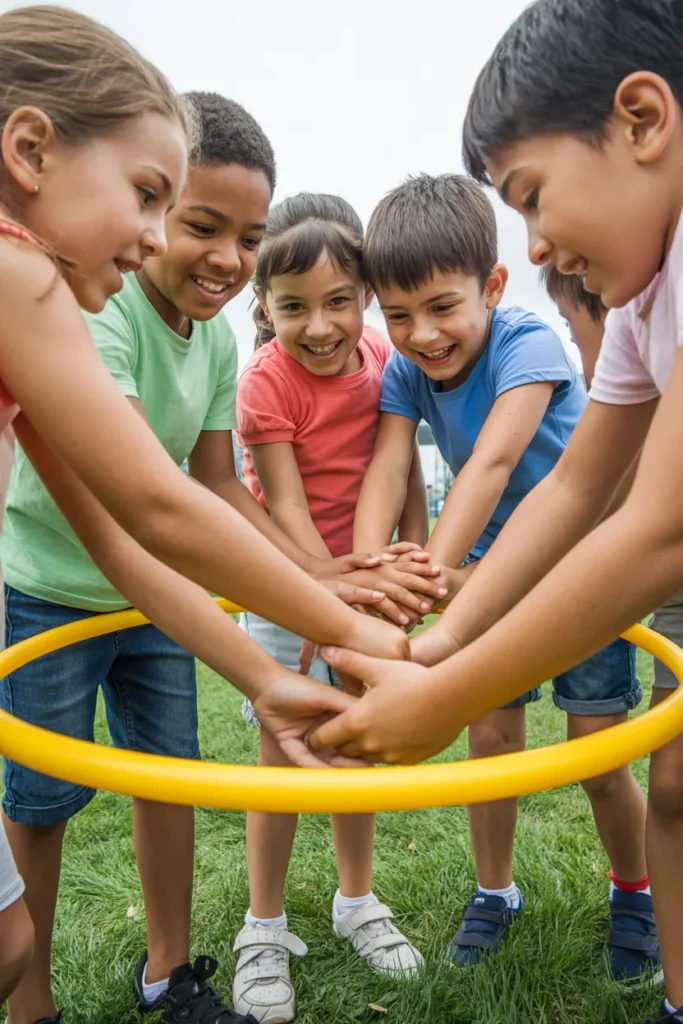
This game always gets kids laughing while encouraging teamwork. Players stand in a circle holding hands while a hula hoop travels around the group without anyone letting go.
Success depends on communication, flexibility, and patience. Children quickly learn that rushing often slows the entire team down.
I’ve found this activity works especially well for large groups because everyone participates at the same time.
6. Bumpity-ump-bump-bump
This fast-paced game helps children remember names while improving focus and reaction speed. One player stands in the center and calls on others using different directional commands.
Players must quickly identify the correct person before the leader finishes the phrase. As the game speeds up, it becomes both challenging and entertaining.
This is one of my favorite activities for helping new groups become familiar with each other.
7. Snakes
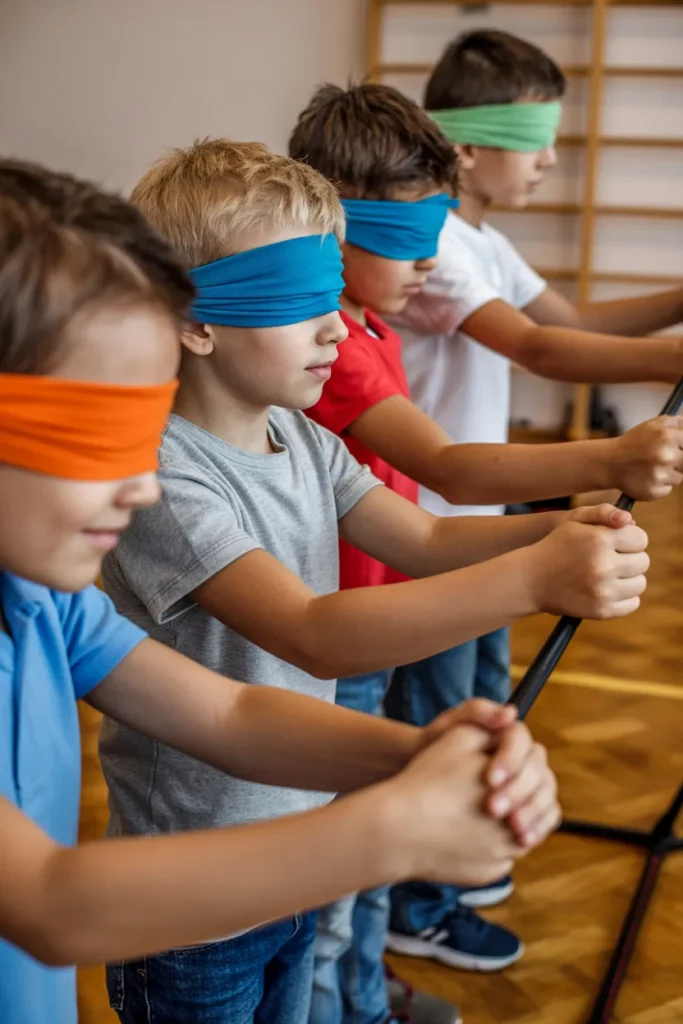
Snakes is an excellent trust-building exercise. Most players are blindfolded while one teammate guides them through non-verbal signals to collect objects scattered around the area.
Because children cannot rely on sight, they must pay close attention to their teammates and trust the instructions they receive.
This activity strengthens communication skills and teaches children the value of cooperation under pressure.
8. Human Tic-Tac-Toe
Human Tic-Tac-Toe turns a classic game into an active team challenge. Instead of using markers, children become the Xs and Os by standing inside a large grid.
I’ve seen kids develop surprisingly clever strategies as they work together to block opponents and complete winning lines.
The game encourages critical thinking, teamwork, and decision-making while keeping everyone physically active.
9. Relay Races
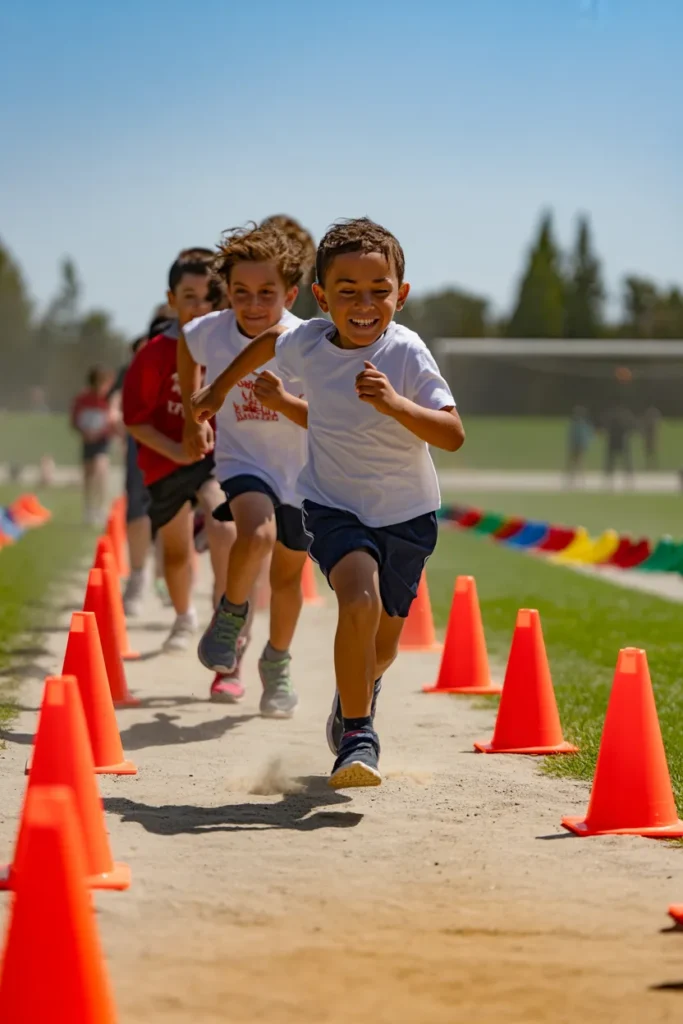
Relay races remain one of the most popular team-building activities for children. By adding different tasks at each station, the game becomes much more than a simple race.
Children must encourage teammates, complete challenges, and work together to reach the finish line first. Every participant plays an important role in the team’s success.
For maximum engagement, include a mix of speed, balance, and skill-based challenges.
10. Group Juggle
Group Juggle is one of the best games I’ve used for improving focus and communication. Children stand in a circle and toss a ball while calling out the receiver’s name.
As additional balls are added, the challenge grows quickly. Kids must stay alert and coordinate their actions with the entire group.
Besides teamwork, this activity improves memory, concentration, and hand-eye coordination.
11. Trust Walk
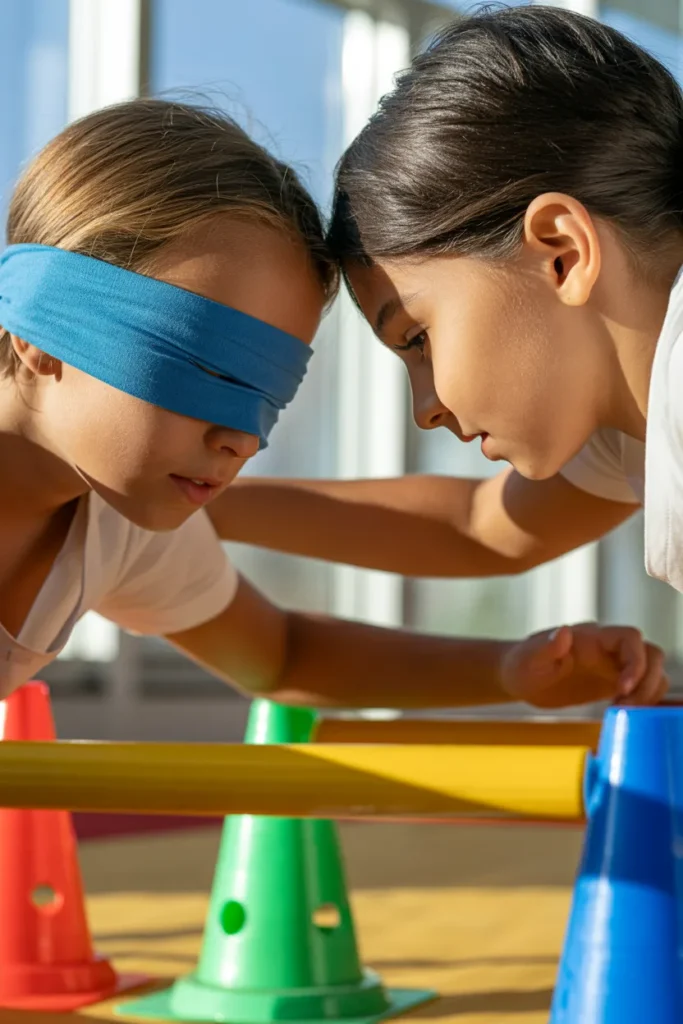
Trust Walk teaches children how important clear communication can be. One child wears a blindfold while their partner guides them through an obstacle course using only verbal instructions.
The experience encourages both listening and leadership skills. Guides learn to give precise directions, while blindfolded players learn to trust others.
For safety, always use soft obstacles and supervise closely.
12. Circle Sit
Circle Sit is a simple activity that demonstrates how teamwork creates support. Children stand shoulder-to-shoulder in a circle before carefully sitting on the lap of the person behind them.
When everyone works together, the entire group remains balanced. If one person loses focus, the formation becomes unstable.
This activity offers a memorable lesson about cooperation and group responsibility.
13. Cross the River
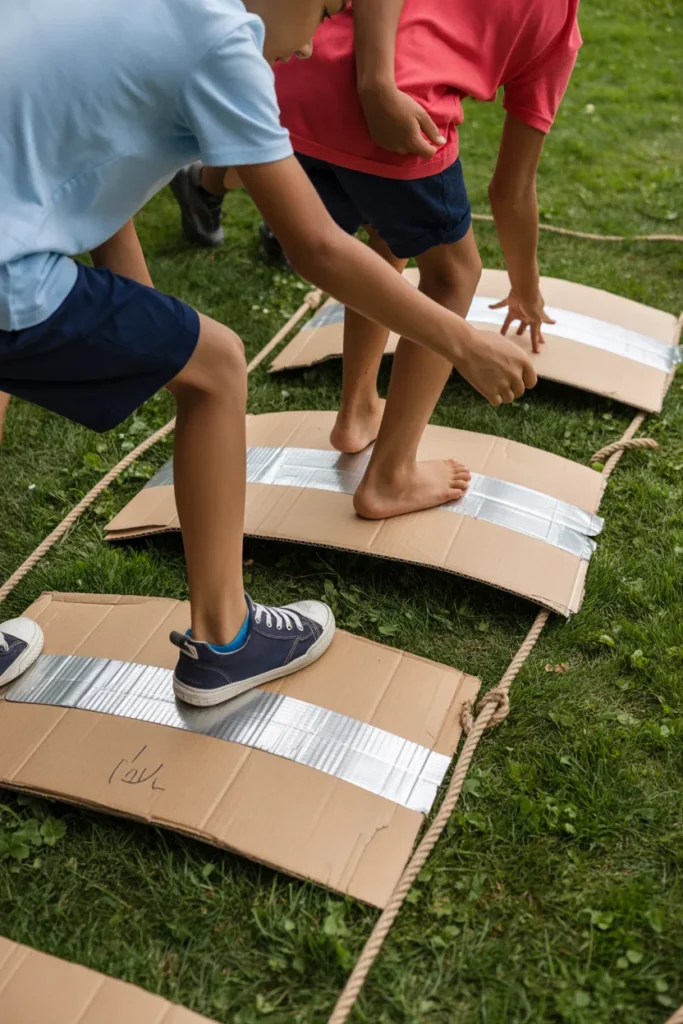
Cross the River challenges children to move an entire team across an imaginary river using a limited number of stepping platforms.
I’ve found this game encourages planning, communication, and creative problem-solving. Teams quickly realize that success depends on helping every member reach the other side.
Adding time limits can make the challenge even more exciting.
14. Floating Hula Hoop
Floating Hula Hoop looks easy at first, but it requires excellent teamwork. Players use only their fingertips to lower a hoop slowly to the ground.
Children must coordinate every movement and communicate continuously to keep the hoop level. Even small mistakes can affect the whole group.
This activity teaches patience and highlights the importance of working in sync.
15. Scavenger Hunt
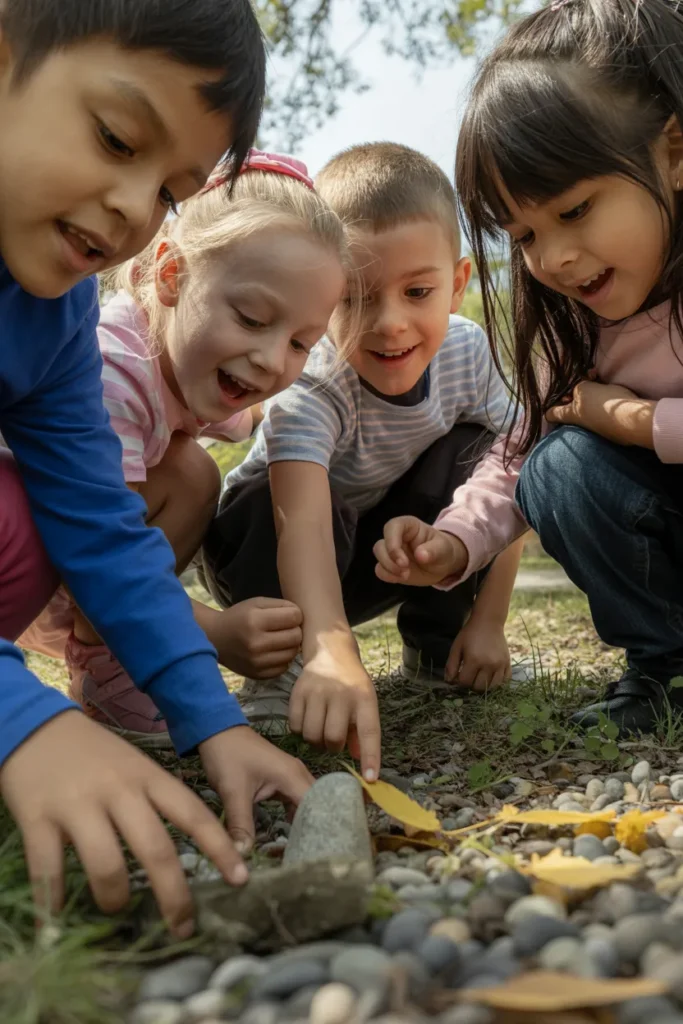
A team scavenger hunt combines adventure with problem-solving. Children work together to locate hidden items, solve clues, and complete challenges before time runs out.
I’ve noticed that scavenger hunts naturally encourage leadership, organization, and communication. Different children often contribute different strengths to help the team succeed.
For educational value, include clues related to science, history, reading, or nature.
16. Stranded
Stranded is one of the most creative problem-solving games for kids. A small group becomes “stuck” on an imaginary island while the rest of the players must find a way to rescue them using only available materials.
This activity pushes children to think creatively and collaborate under limitations. In many cases, the most successful teams are not the fastest but the ones that communicate the best.
17. Do Not Wake the Dragon
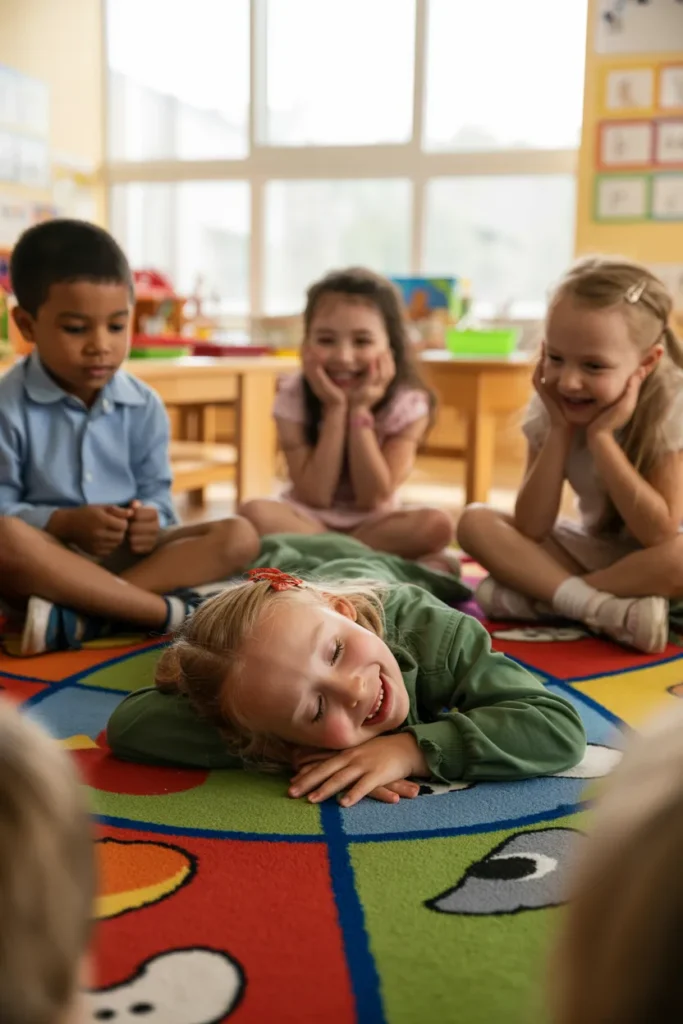
I like this game because it combines teamwork with self-control. Children must complete a task together while staying completely silent so they don’t wake the sleeping dragon.
The challenge teaches patience, non-verbal communication, and cooperation. Once the task is complete, the game turns into a fun chase that adds excitement and energy.
18. Leaps and Bounds
Leaps and Bounds helps children build confidence while working on coordination and balance. Players move across stepping stones while trying to avoid falling into the pretend river.
As the difficulty increases, children learn to focus, plan their movements, and encourage teammates attempting the challenge.
19. Magnetic Fishing Game
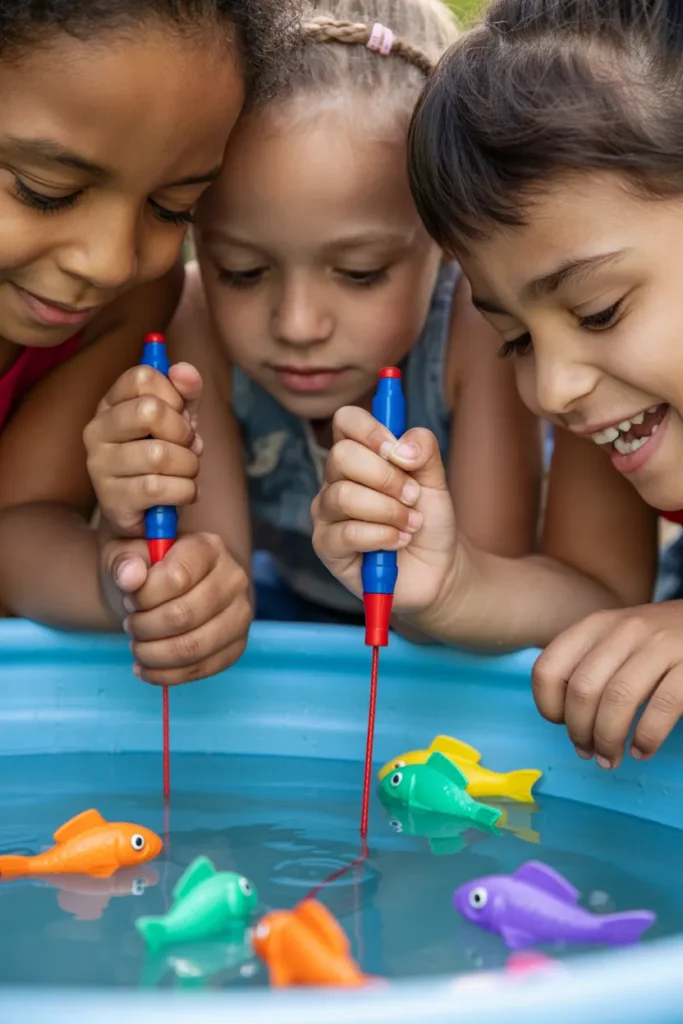
This activity is perfect for younger children who enjoy hands-on challenges. Players use magnetic fishing rods to catch fish from a pool within a set time.
When played in teams, children naturally encourage each other and celebrate group success. It also helps strengthen fine motor skills and concentration.
20. Balloon Pop Relay
Balloon Pop Relay adds energy and laughter to any gathering. Team members race to a balloon, pop it, and return to tag the next player.
The game encourages participation from every child and keeps the entire group engaged from start to finish.
21. Wheelbarrow Race
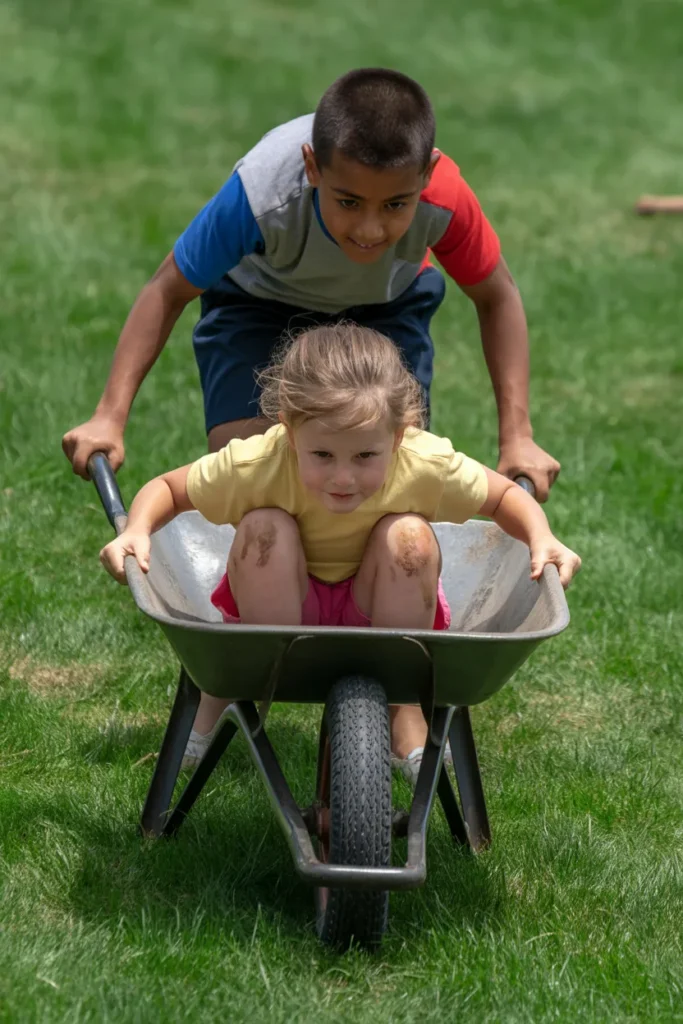
Wheelbarrow Race requires teamwork from the moment it starts. One child supports their partner’s legs while the other moves using their hands.
Success depends on balance, communication, and coordination. I’ve found this game works best on soft grass or gym mats for added safety.
22. Triangle Tag
Triangle Tag encourages quick thinking and teamwork. Two players work together to protect a teammate while a tagger attempts to reach them.
The activity develops communication skills, agility, and strategic movement as children adjust their positions to block the tagger.
23. Group Juggle
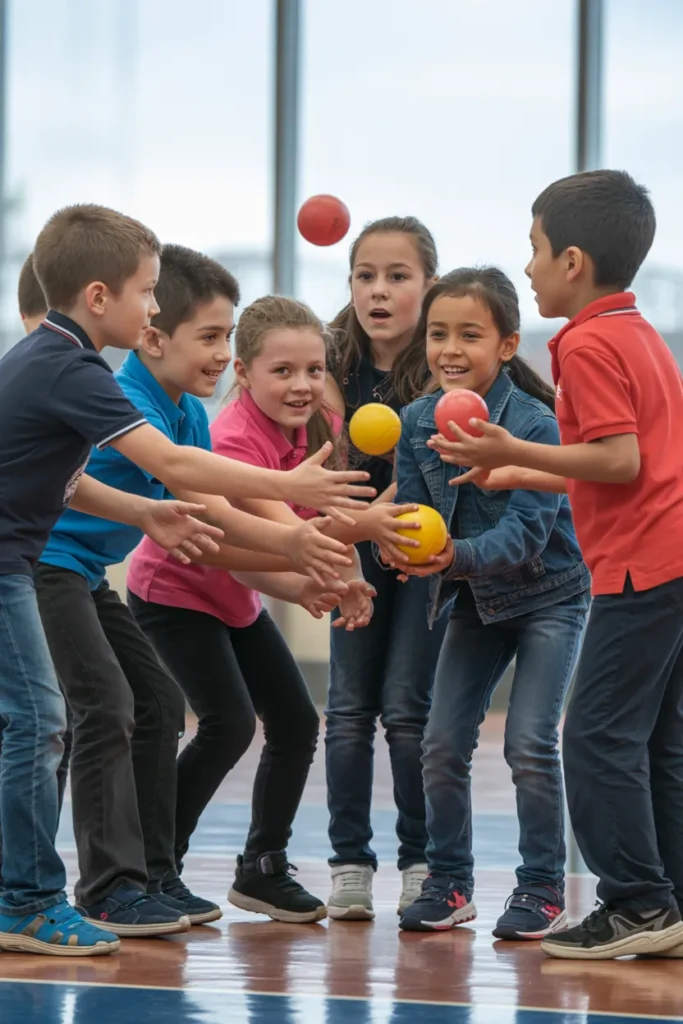
As children become comfortable with the basic version of Group Juggle, adding more balls creates a completely different challenge.
Players must stay focused, remember names, and react quickly while maintaining the flow of the game. It’s a simple activity that strengthens both communication and teamwork.
24. Snakes
This variation of Snakes requires children to move as a connected team while following a guide’s instructions without spoken words.
The activity builds trust and teaches children how body language and signals can communicate important information when words aren’t available.
25. Human Tic-Tac-Toe
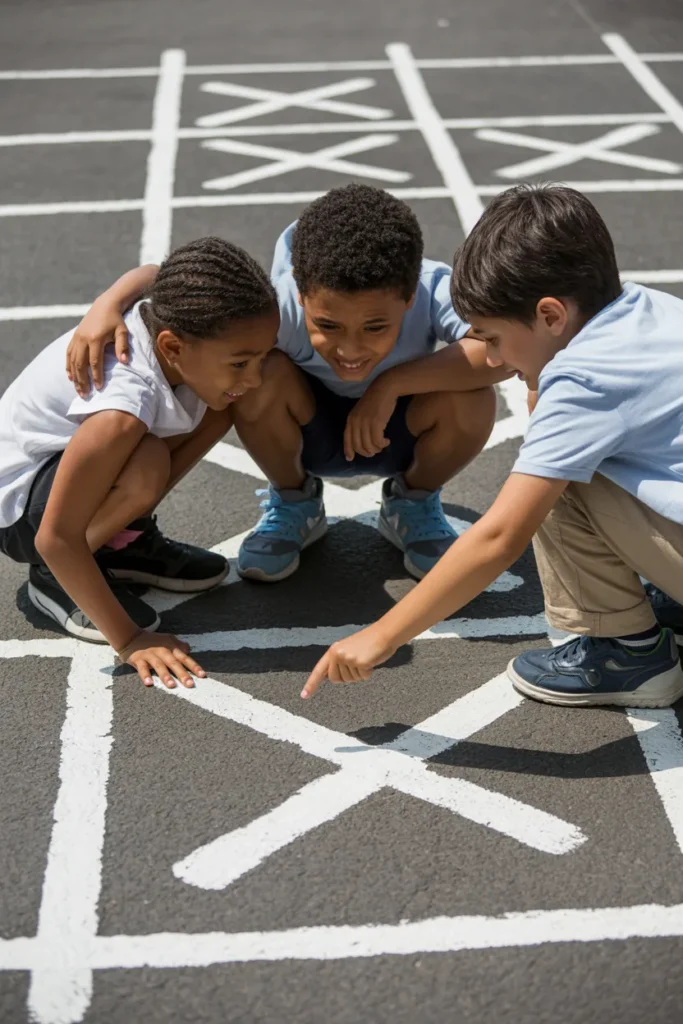
Human Tic-Tac-Toe continues to be one of my favorite strategy-based group games. Teams must think ahead, block opponents, and communicate effectively before making each move.
Although the rules are simple, the game encourages teamwork, planning, and healthy competition while keeping children active and engaged.
26. Relay Races
Relay Races are a simple way to get kids moving while teaching them how to depend on one another. Instead of focusing only on speed, I like adding different challenges at each station so every child can contribute in a unique way.
Whether they’re balancing an object, weaving through cones, or completing a small task, kids quickly learn that teamwork often matters more than individual performance. The excitement of cheering for teammates also helps build confidence and group spirit.
27. River Crossing
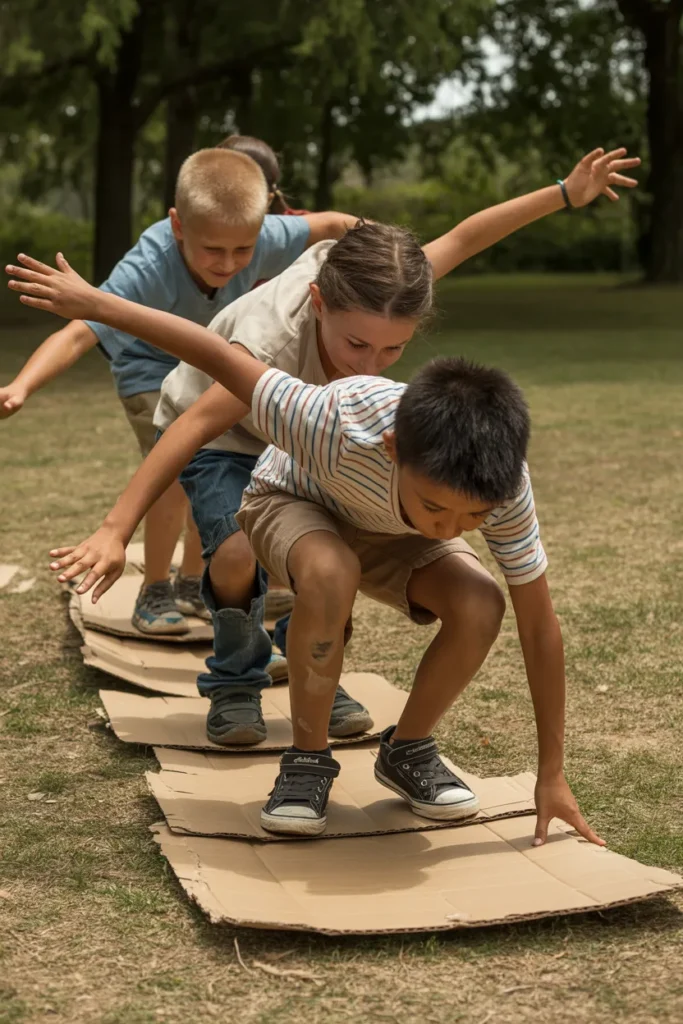
River Crossing is one of the best problem-solving activities for groups. Teams must figure out how to move everyone across an imaginary river using a limited number of rafts or stepping platforms.
I’ve noticed that children naturally begin discussing strategies and assigning roles. The game teaches planning, cooperation, and adaptability when things don’t go according to plan.
Pro Tip: Reduce the number of rafts to increase the challenge for older kids.
28. Race to the Middle
This fast-moving game encourages both teamwork and quick decision-making. Players race toward a central area to collect objects before returning them to their team.
While the game appears simple, children often create strategies to maximize their score and improve efficiency. It helps build coordination, communication, and healthy competition.
29. Eye of the Tiger
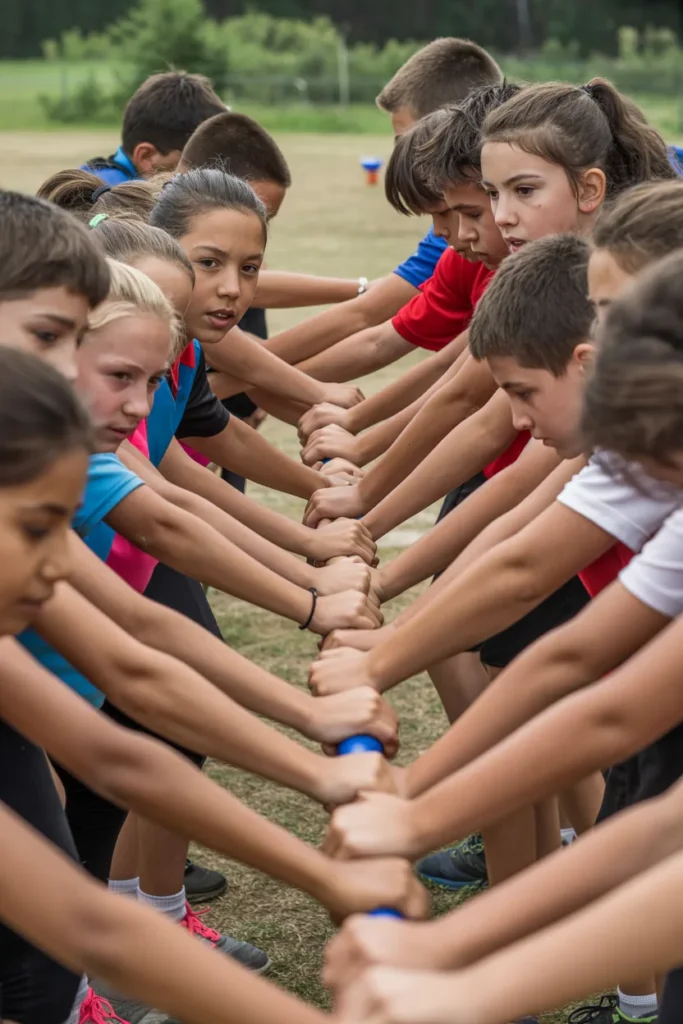
Eye of the Tiger combines physical movement with teamwork-focused challenges. Teams must complete tasks while staying organized and working together under pressure.
I like this activity because it teaches children that success depends on supporting teammates rather than focusing only on individual achievement. It also keeps energy levels high and encourages positive communication.
30. Human Caterpillar Challenge
The Human Caterpillar Challenge requires kids to move as one connected unit. Players link together and navigate a course while staying connected from start to finish.
This activity teaches children how important timing and coordination can be. One person’s movement affects the entire group, making teamwork essential for success.
31. 15 Seconds
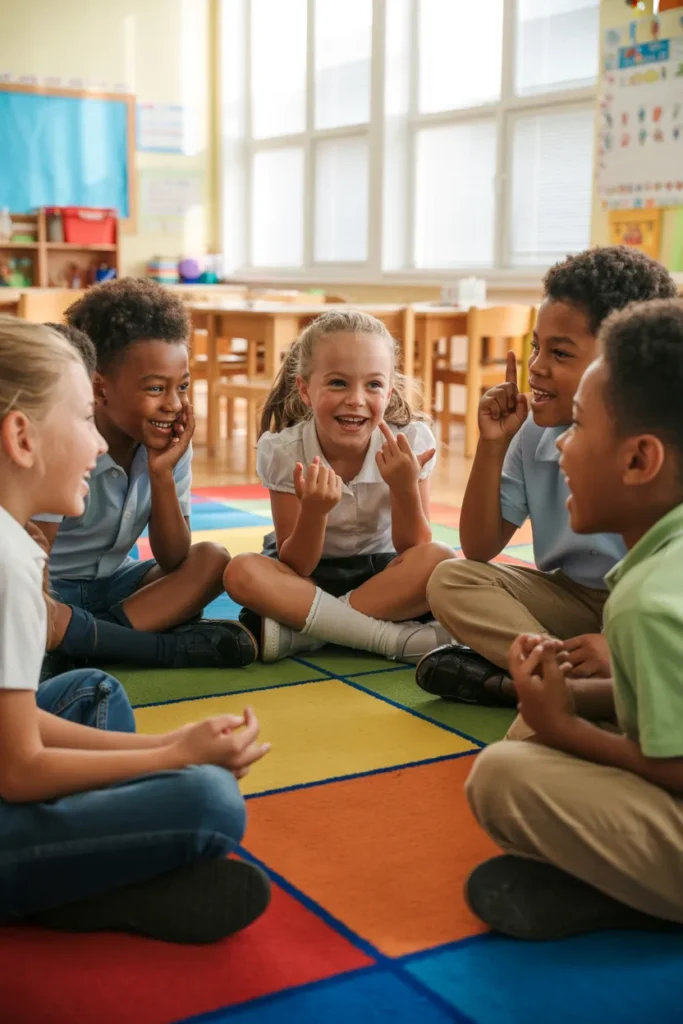
15 Seconds is a simple speaking game that helps children think quickly and express themselves clearly. Players receive a topic and must respond within the time limit.
I’ve found that this activity boosts confidence, especially for children who are shy about speaking in groups. It also encourages active listening because everyone wants to hear what others will say next.
32. Race to the Galaxy
Race to the Galaxy turns teamwork into an exciting adventure. Children use hula hoops as spaceships while collecting items scattered around the playing area.
The challenge forces teams to coordinate their movements carefully because touching the ground can result in penalties. It encourages communication, planning, and creative thinking while keeping everyone active.
33. Roller Coaster
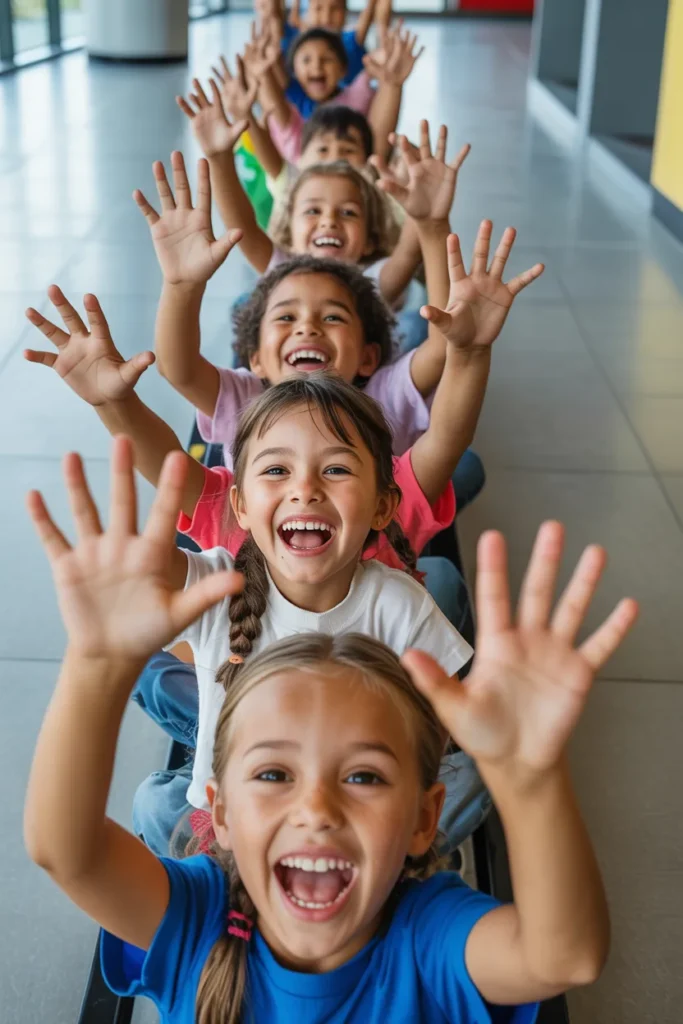
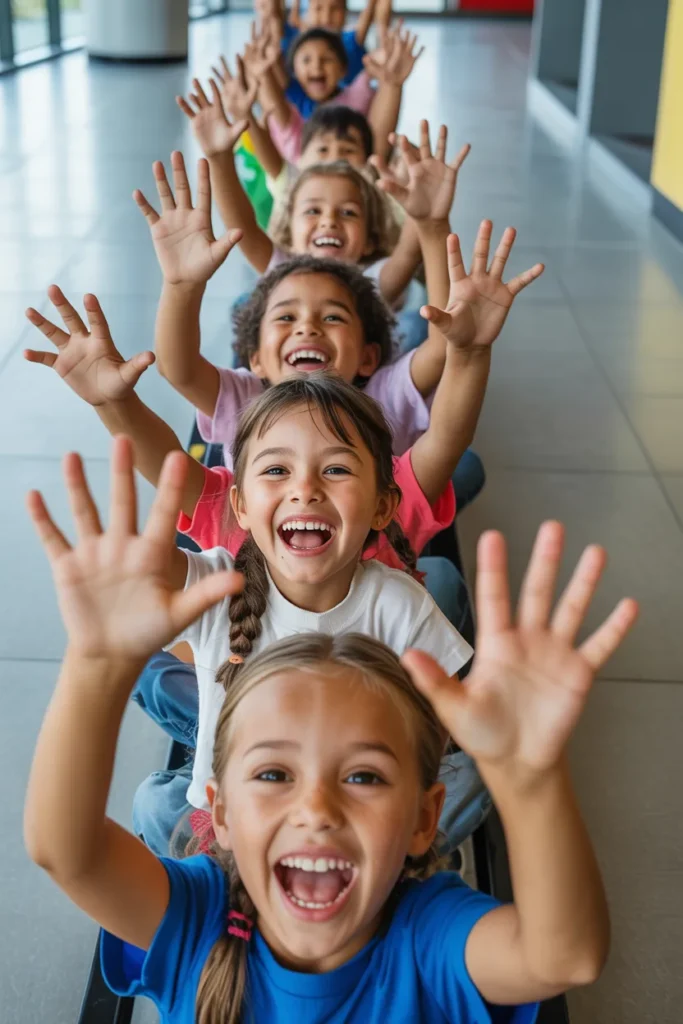
Roller Coaster is a fun listening game that works especially well with younger children. Players follow instructions that mimic the twists, turns, and drops of a roller coaster ride.
Besides creating lots of laughter, the game improves listening skills, focus, and coordination. It’s also a great option when you need a low-preparation group activity.
34. Tower Building
Tower Building challenges teams to create the tallest structure possible using limited materials. Every decision affects the tower’s stability, making cooperation extremely important.
Children naturally experiment with different designs, test ideas, and adjust their plans when things collapse. These experiences help develop problem-solving skills and resilience.
Research shows that hands-on building activities can support creativity and critical thinking, making this game both fun and educational.
35. Pool Noodle Fun
Pool Noodle Fun is a fantastic outdoor activity that encourages balance and teamwork. Players work together to carry or balance a ball using only pool noodles while following different movement instructions.
I’ve found that children quickly realize the task becomes much easier when they communicate and move at the same pace. The game also improves coordination and body awareness.
36. Balance Game for Littles
This activity is perfect for younger children who are still developing coordination skills. Partners balance a lightweight ball on a sheet of paper and carefully transport it to a target location.
The challenge may seem easy at first, but it requires patience and cooperation. Kids learn to slow down, communicate, and work together to prevent the ball from falling.
37. Three-Legged Race
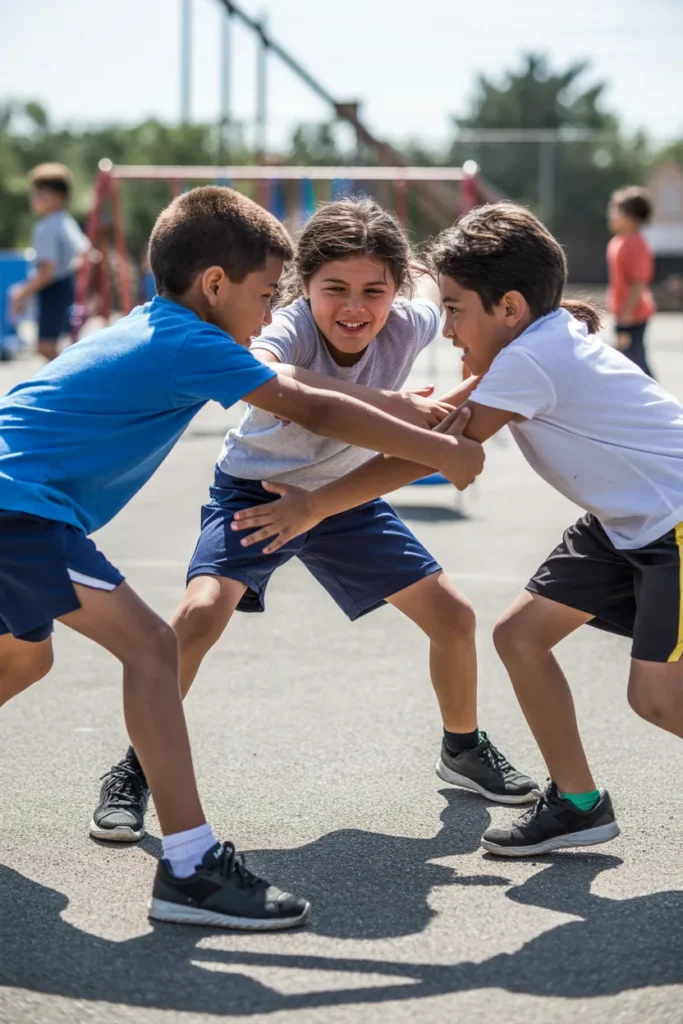
The Three-Legged Race has remained popular for generations because it teaches teamwork in a fun and active way. Two players share one set of movements as they race toward the finish line.
Success depends on communication and rhythm. The fastest pairs are usually the ones that learn how to move together instead of rushing ahead individually.
38. Triangle Tag
Triangle Tag combines teamwork with quick reactions. Two players work together to protect a teammate while avoiding the tagger.
Children must stay alert and communicate constantly to keep the protected player safe. This game improves agility, teamwork, and strategic thinking while providing plenty of physical activity.
39. Human Caterpillar Challenge
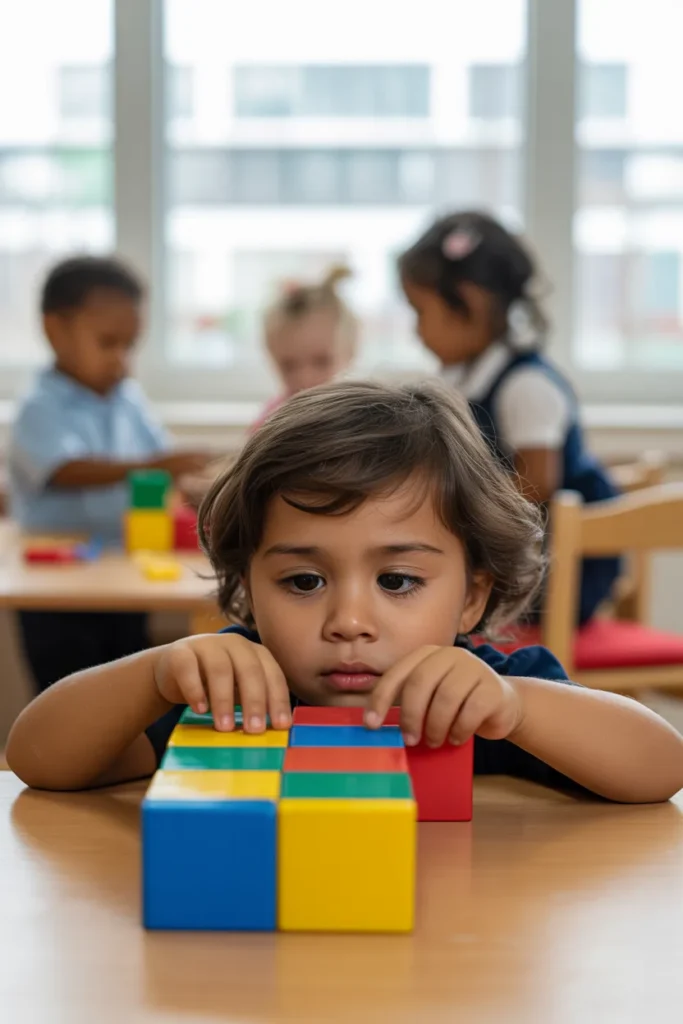
This variation of the Human Caterpillar Challenge focuses on maintaining formation while racing toward a finish line. Every player must stay connected and move in sync with the group.
I’ve seen teams discover that communication becomes the key factor in success. When children listen to one another and move together, they usually perform much better.
40. Sneak A Peek
Sneak A Peek is one of my favorite activities for developing communication skills. One team member briefly studies a hidden structure and then returns to explain what they saw.
The rest of the team must rebuild the structure using only the information provided. This game teaches observation, memory, listening, and the ability to communicate details clearly.
41. Cup Stacking Challenge
Cup Stacking Challenge encourages teamwork in a unique way. Teams use strings attached to a rubber band to lift and stack cups without touching them directly.
Children quickly learn that even small movements require coordination from the entire group. The activity improves communication, patience, and problem-solving skills.
42. Classification
Classification is a great social activity that helps children discover similarities with others. Players share information about themselves and then organize into groups based on common interests or preferences.
I like this game because it promotes inclusion and encourages meaningful conversations. Kids often realize they have more in common than they initially thought.
43. Marble Run Challenge
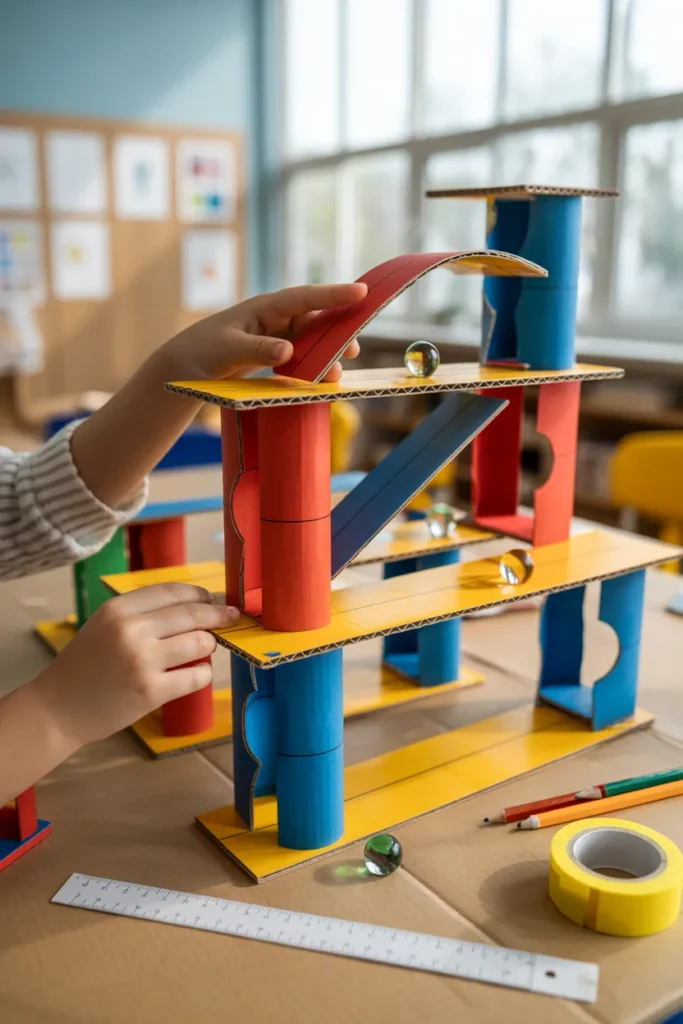
The Marble Run Challenge combines creativity, engineering, and teamwork. Teams design and build a track that guides a marble from start to finish.
Throughout the process, children test ideas, make improvements, and solve problems together. Activities like this help develop critical thinking while making learning feel like play.
44. Go!
Go! is a powerful communication game because players must complete tasks without speaking. Instead, they rely entirely on eye contact, gestures, and body language.
This activity helps children understand that communication involves much more than words. It also encourages focus, awareness, and teamwork.
45. Chuck the Chicken
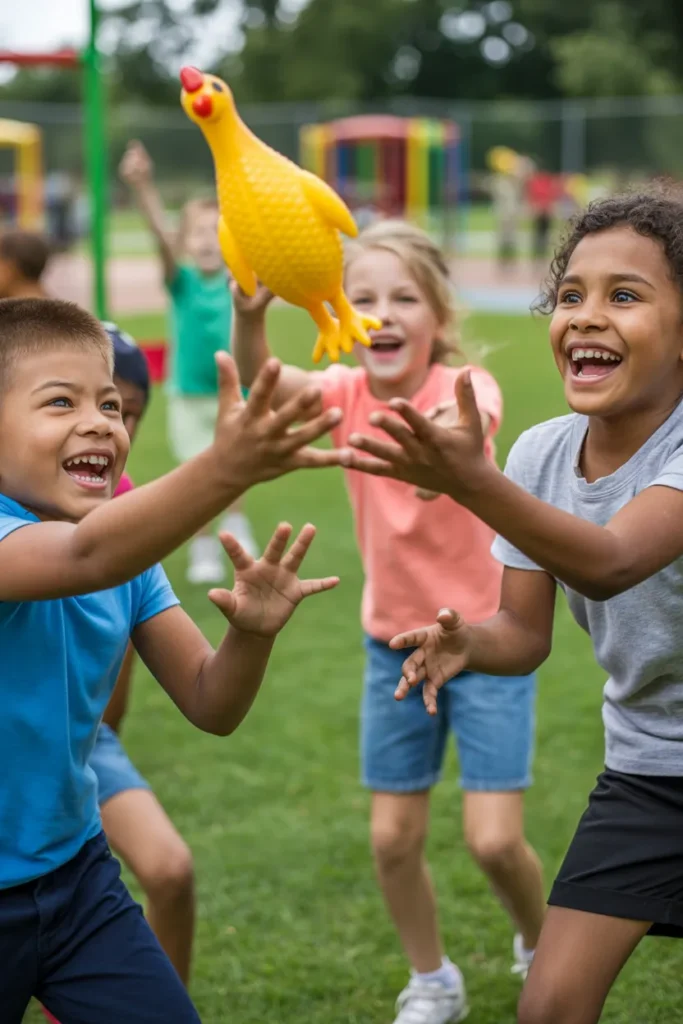
Chuck the Chicken is a high-energy game that combines running, teamwork, and strategy. One team throws a rubber chicken while the other team works together to retrieve it as quickly as possible.
Meanwhile, the throwing team races around a designated area to earn points before the chicken is returned. The game creates excitement while encouraging cooperation and friendly competition.
Final Thoughts
I’ve used many of these team-building games with groups of different ages, and one thing remains consistent: children learn best when they’re actively involved. These activities do much more than fill time. They help kids build trust, improve communication, solve problems, and develop friendships that often extend beyond the game itself.
Whether you’re planning classroom activities, summer camps, birthday parties, homeschool lessons, or family gatherings, these team-building games can create memorable experiences while teaching valuable life skills. Start with a few favorites and watch how quickly kids begin supporting, encouraging, and working with one another.
FAQs
Why are team-building games important for kids?
Team-building games help children develop communication skills, confidence, leadership abilities, problem-solving skills, and stronger friendships. They also encourage cooperation instead of competition.
What age group can play these team-building games?
Most of these activities work well for children between ages 5 and 14. You can easily adjust the rules and difficulty level based on the age and ability of the group.
How long should a team-building activity last?
Most team-building games can be completed in 10 to 30 minutes. For larger events or camps, combining several activities can create a full hour of engagement.
Are team-building games useful in classrooms?
Yes. Teachers often use team-building games to improve classroom relationships, increase participation, and encourage students to work together on academic and social tasks.
What are the easiest team-building games to set up?
Some of the easiest options include Hot and Cold, Group Juggle, Hula-Hoop Pass, 15 Seconds, Triangle Tag, and Go! because they require little or no equipment.
How can team-building games help shy children?
These activities provide a relaxed environment where shy children can participate without pressure. Over time, they often become more comfortable communicating and interacting with others.
Can team-building games improve problem-solving skills?
Absolutely. Many games require children to think critically, create strategies, adapt to challenges, and work together to achieve a shared goal, all of which strengthen problem-solving abilities.