
Opening a cabinet full of mismatched food containers can quickly become frustrating. Lids disappear, stacks fall apart, and finding the right container often takes longer than it should.
The good news is that most Tupperware clutter isn’t caused by owning too many containers. It’s usually the result of a storage system that doesn’t fit your kitchen or daily routine.
These Tupperware organization ideas will help you create a simple system that’s easy to maintain, saves time, and keeps your kitchen running smoothly in 2026.
Key Takeaways
- Group containers by size and shape.
- Store lids vertically whenever possible.
- Use drawer dividers to create clear zones.
- Keep frequently used containers within reach.
- Label storage areas for easier maintenance.
- Consider using one container system.
- Create dedicated spaces for lids and bases.
- Remove damaged or unused containers regularly.
How Do People Organize Their Tupperware?
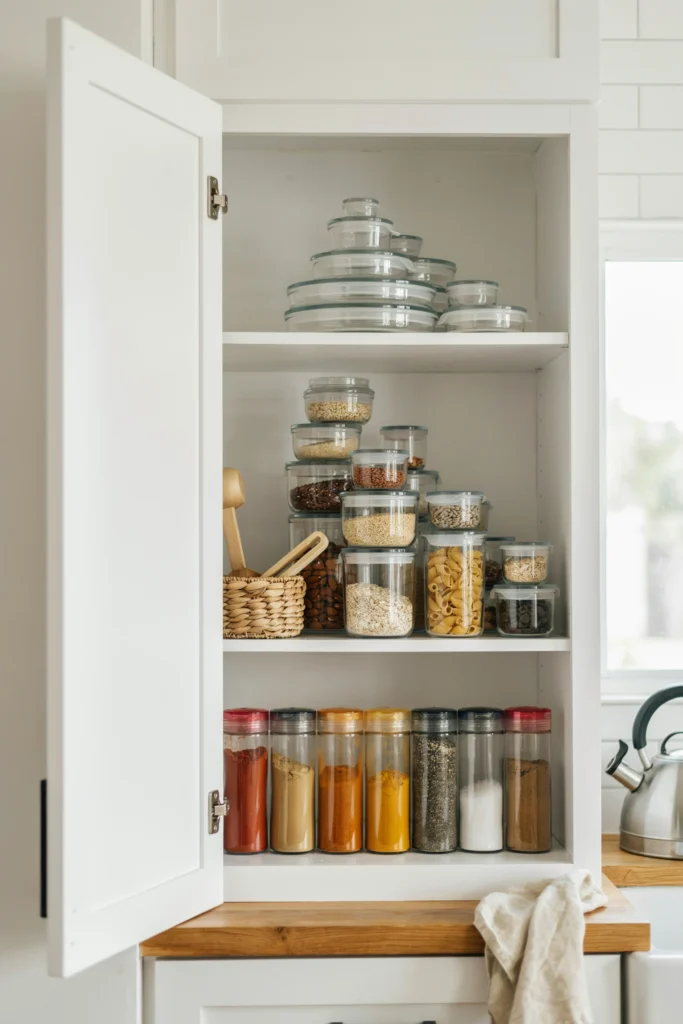
Most people organize Tupperware by simplifying what they own and creating a storage system that makes everyday access easier. Common methods include nesting containers by size, separating lids, and using bins or dividers to prevent clutter. The best system is one that fits your kitchen layout and is easy to maintain after every use.
Pro Tip: Start by removing unmatched lids and containers before organizing anything else.
Drawer First Storage
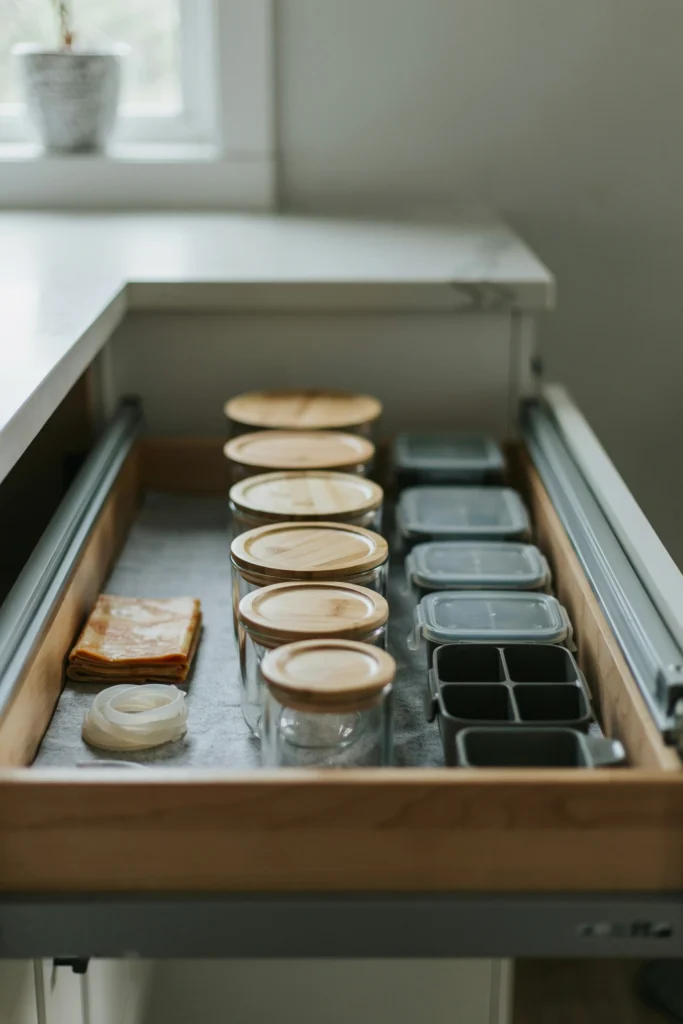
Storing food containers in deep drawers makes them easier to access than traditional cabinets. Containers can sit neatly side by side without toppling over, while matching sizes create a clean and predictable layout. This approach works especially well when you use only a few core container sizes.
Pro Tip: Arrange containers in rows to make grabbing one quick and hassle-free.
Size-Based Stacking
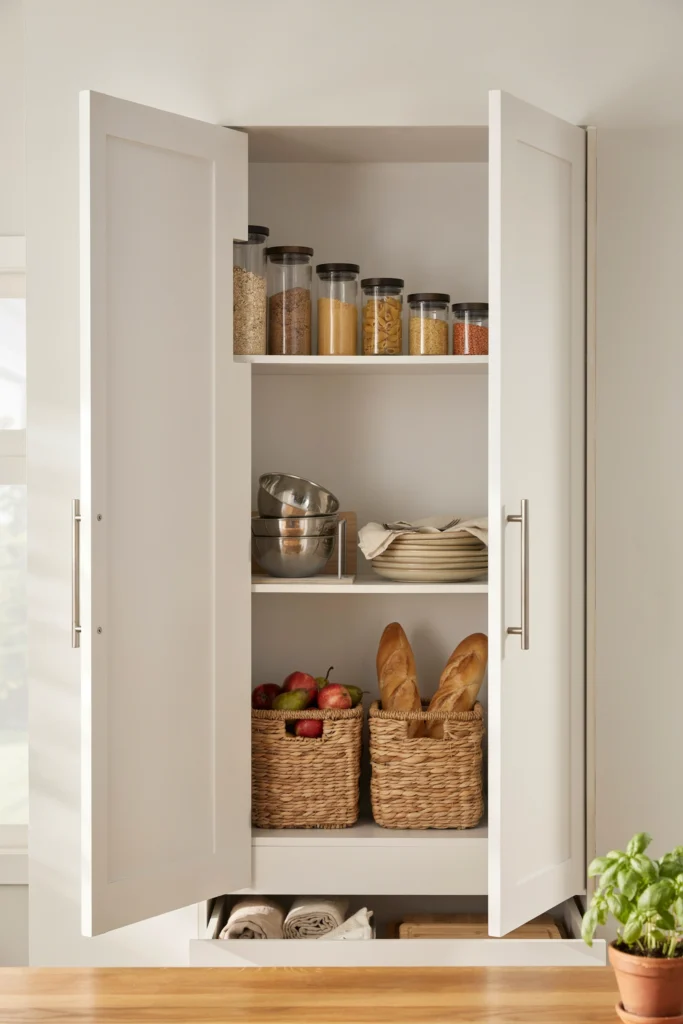
Grouping containers according to size helps maximize storage space and creates a more organized cabinet. Small, medium, and large containers each have their own area, making it easier to find what you need and put items away after cleaning.
Pro Tip: Use identical container shapes within each size group for more stable stacks.
Zoned Drawer Layout
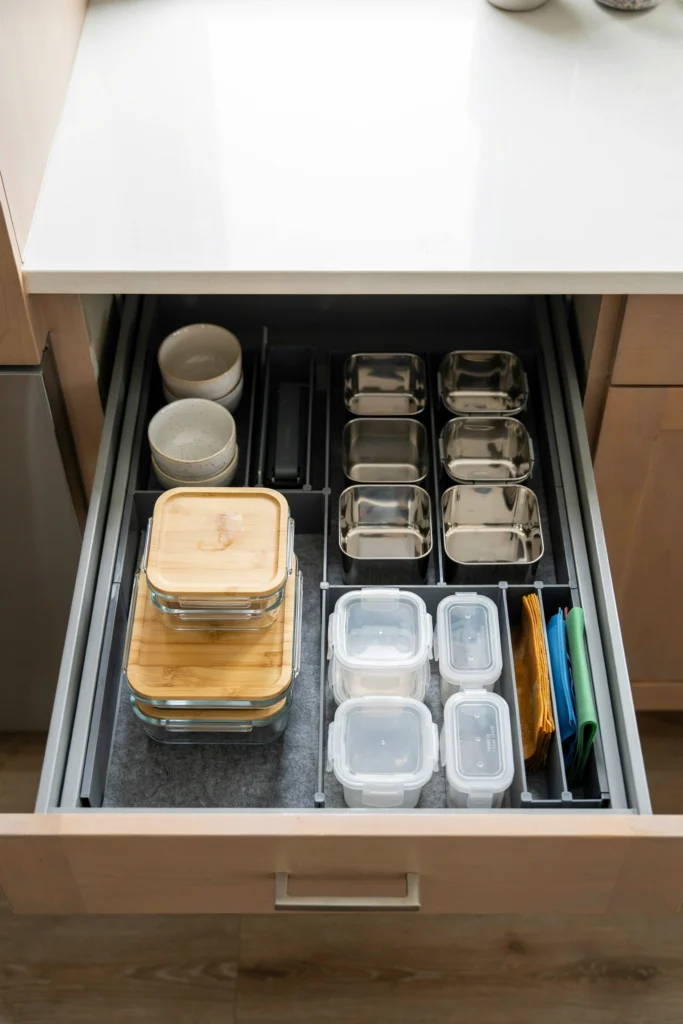
A drawer divided into designated sections prevents different container sizes from becoming mixed together. Each zone serves a specific purpose, making the system easier to maintain while creating a more organized appearance.
Pro Tip: Adjustable dividers allow you to customize zones as your storage needs change.
Lids Stored Upright
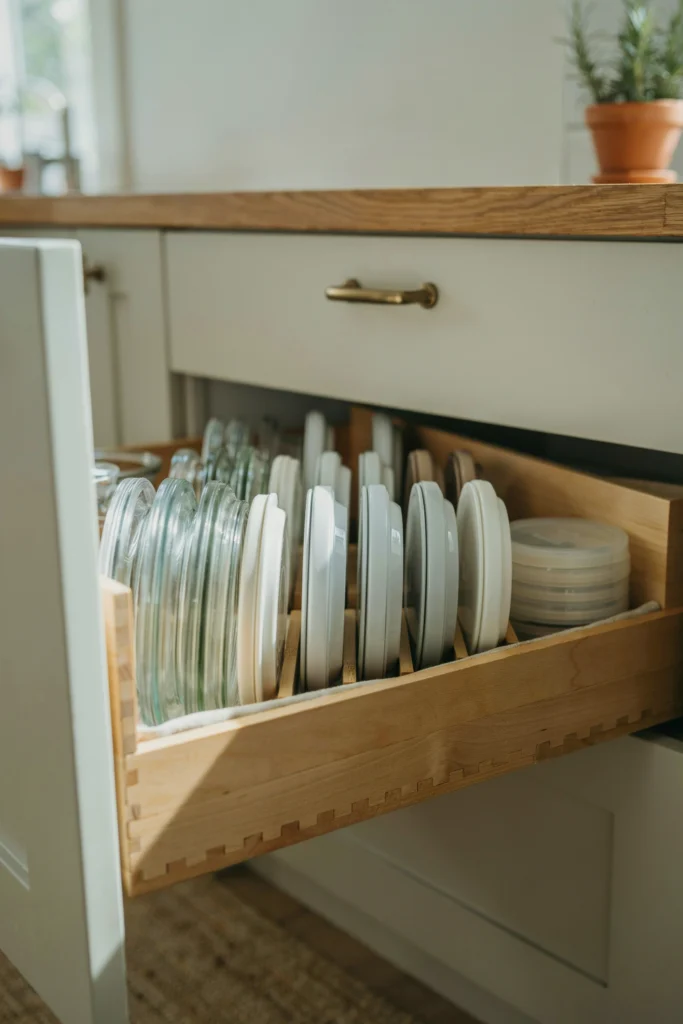
Storing lids vertically eliminates the frustration of digging through messy stacks. Upright storage keeps every lid visible and easy to grab, while drawer dividers help keep rows organized and prevent sliding.
Pro Tip: Sort lids by shape or size rather than by brand for faster matching.
Shape-Based Zones
Separating round and rectangular containers creates a more efficient storage system. Similar shapes stack better together, reduce wasted space, and make it easier to maintain order over time.
Pro Tip: Assign a dedicated section to each container shape for easier cleanup.
Vertical Lid Filing
Vertical filing transforms lid storage by keeping every piece visible from above. Instead of stacking lids, organize them upright in bins or dividers so you can quickly locate the right size without disturbing the rest.
Pro Tip: Group lids by dimensions to make matching faster and more consistent.
Pull-Out Shelving
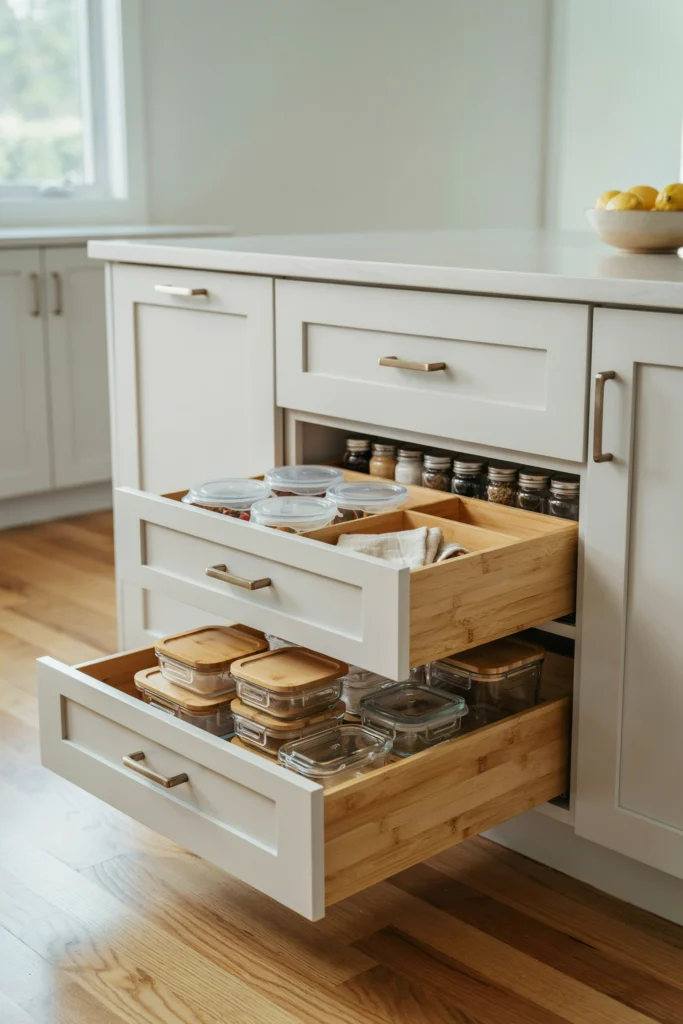
Pull-out shelves make deep cabinets significantly easier to use by bringing containers directly to you. Lids can be stored on upper shelves while containers remain organized below, reducing the need to reach into dark corners.
Pro Tip: Install sliding shelves in lower cabinets where visibility is limited.
Clear Bin Sorting
Clear bins create boundaries that prevent loose lids from spreading throughout a drawer. Organizing lids by size or shape inside separate bins keeps everything visible and easy to maintain.
Pro Tip: Transparent bins make it easier to identify contents at a glance.
Shelf Level Grouping
Assigning each shelf a specific purpose simplifies cabinet organization. Larger containers can occupy upper shelves while lids and smaller pieces remain accessible on lower levels.
Pro Tip: Keep frequently used items on shelves between waist and eye level.
Side-Wall Lid Slot
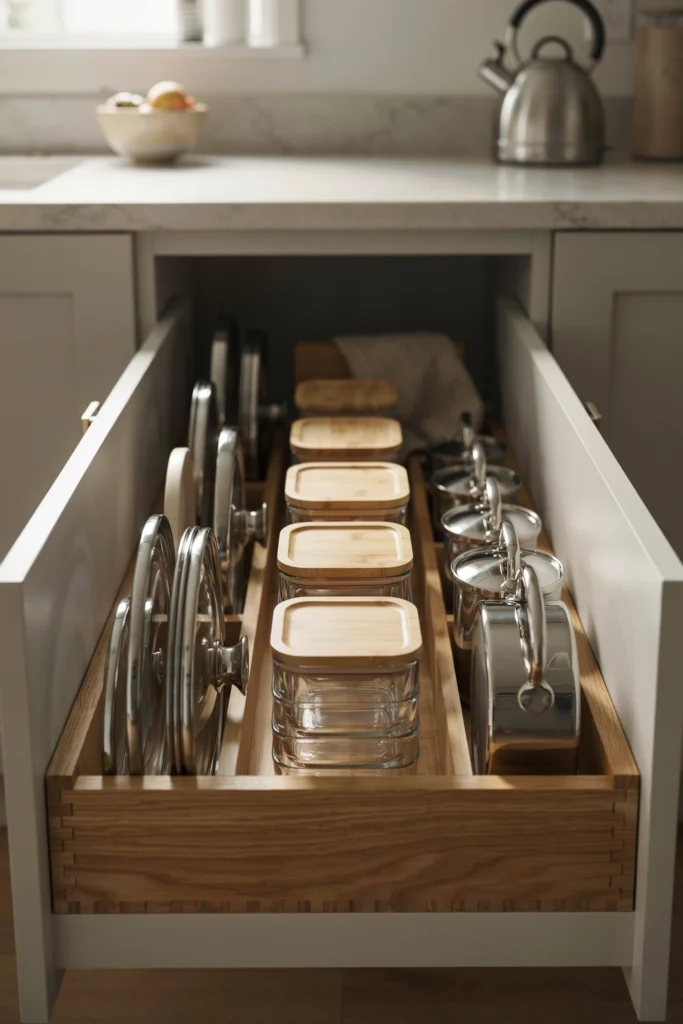
Using the side walls of a drawer for lid storage maximizes available space. Slim dividers or tension rods keep lids upright while leaving the center area available for container storage.
Pro Tip: Utilize unused side space before adding additional storage products.
Mixed Material Zones
Separating glass and plastic containers helps create a more organized and practical storage system. Glass pieces can occupy sturdier sections while lightweight plastic containers remain grouped separately.
Pro Tip: Store heavier glass containers in lower areas for easier access.
Color-Coded Grouping
Color coding adds visual organization and simplifies matching lids to containers. Grouping similar colors together creates a cleaner appearance and makes it easier to maintain order.
Pro Tip: Use color grouping only if your container collection includes consistent color variations.
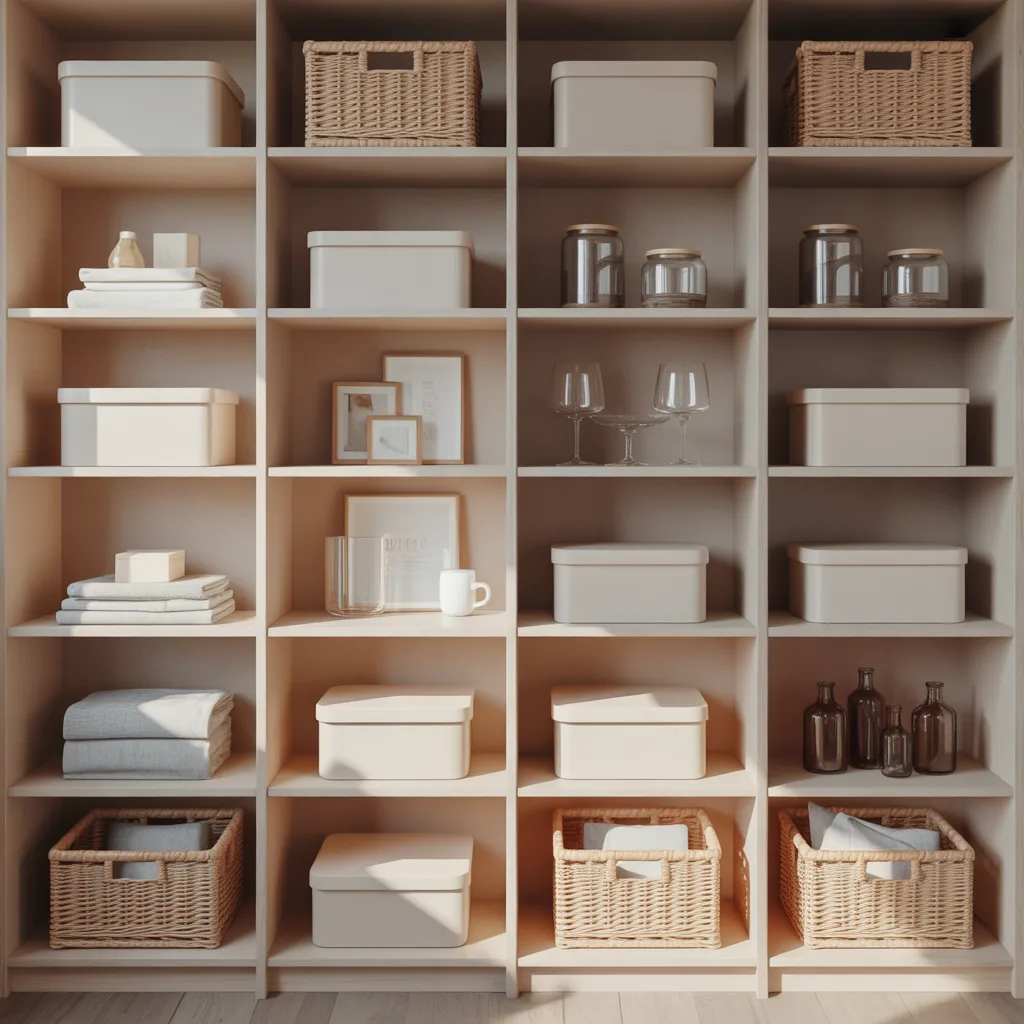
Bin-by-Shelf System
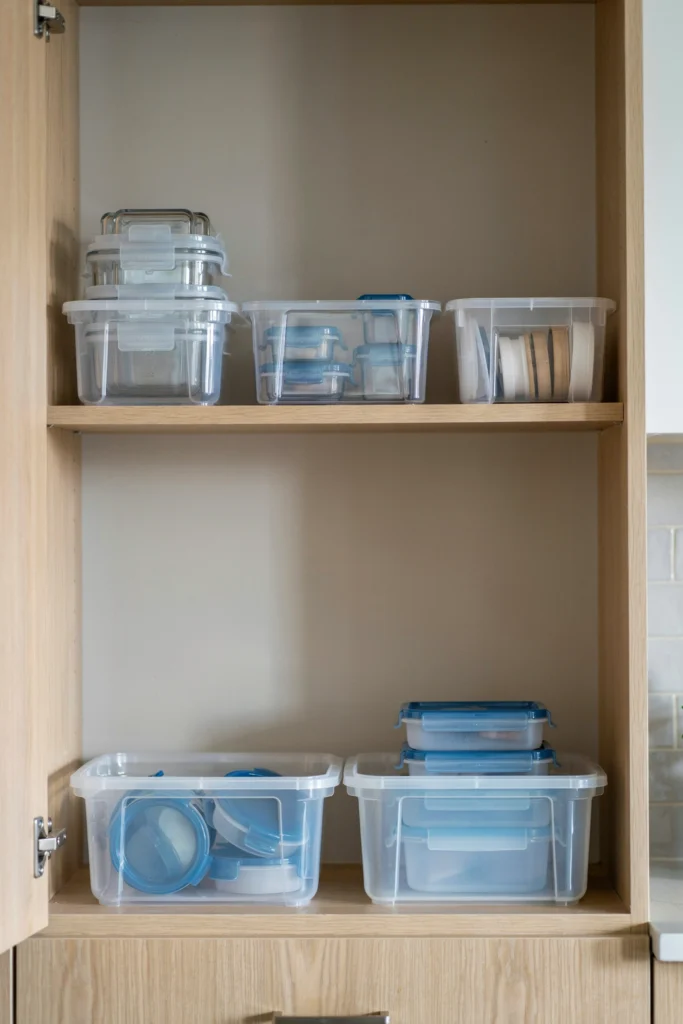
Dedicated bins on each shelf help contain clutter and create clear organizational boundaries. Containers and lids stay grouped together while remaining easy to access when needed.
Pro Tip: Use pull-out baskets or bins for deeper cabinet shelves.
Cabinet Lid Rack
A lid rack instantly improves cabinet organization by keeping lids upright and separated. This simple solution reduces clutter and makes finding matching pieces much quicker.
Pro Tip: Place lid racks on easily reachable shelves for maximum convenience.
Grid Drawer System
A grid organizer assigns every container and lid a designated location, preventing items from shifting around. The structured layout creates a tidy appearance while making it obvious where everything belongs.
Pro Tip: Use drawer inserts that can be adjusted as your collection changes.
Size-Labeled Bins
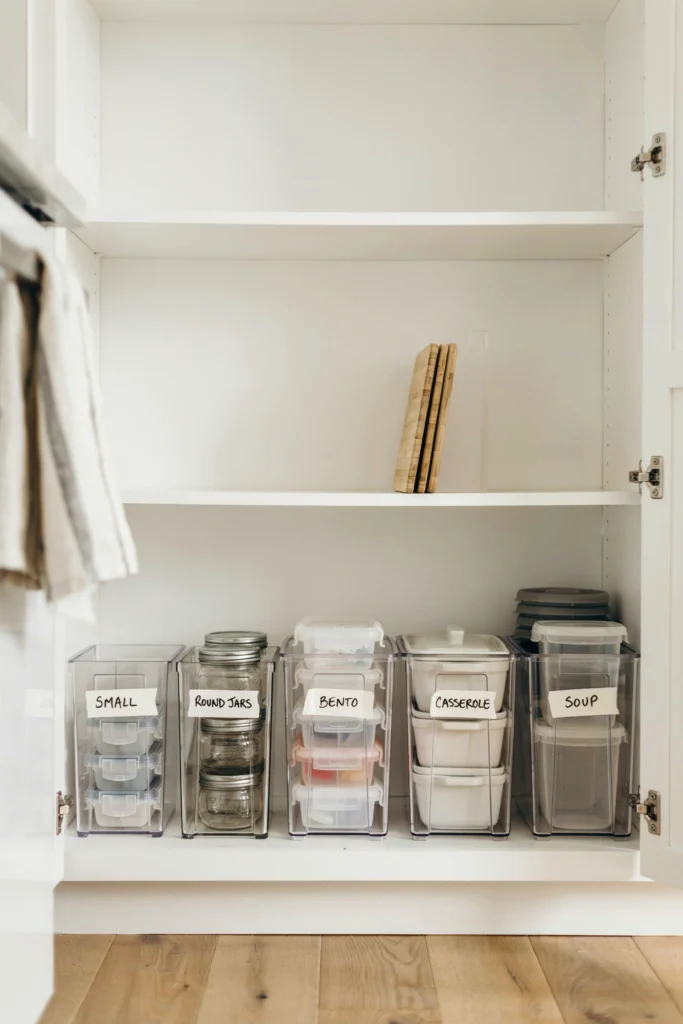
Labeling storage bins by size removes guesswork and speeds up cleanup. Family members can quickly identify where containers belong, helping the organization system stay consistent.
Pro Tip: Choose simple, easy-to-read labels for long-term success.
Pull-Out Lid Dock
A pull-out lid organizer makes deep cabinet storage more accessible and practical. Lids remain upright and visible while sliding mechanisms bring everything into view when needed.
Pro Tip: Keep similar-sized lids together to simplify matching.
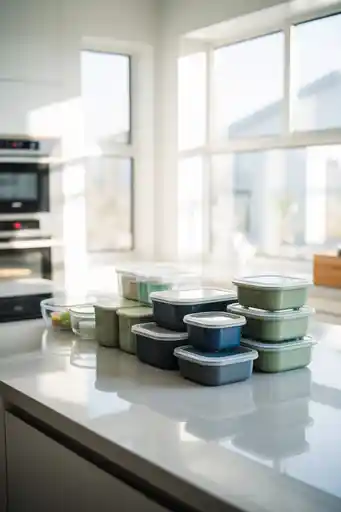
One-Size System
Using one primary container shape creates a cleaner and more efficient storage setup. Uniform pieces stack better, waste less space, and make organization easier to maintain.
Pro Tip: Limit your collection to two or three sizes within the same product line.
Lids-On Storage
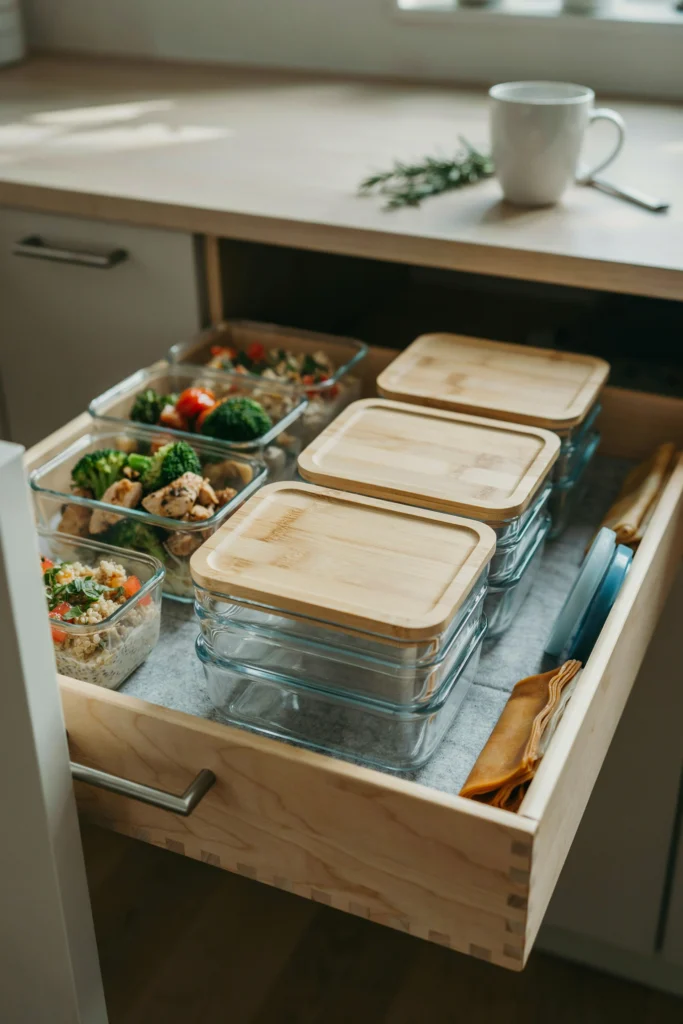
Keeping lids attached to containers eliminates the need to search for matching pieces. This method works particularly well in deep drawers where containers can be stored in neat rows.
Pro Tip: Avoid overstacking containers when storing lids attached.
Meal-Prep Zone
Creating a dedicated meal-prep storage area keeps frequently used containers close to where food preparation happens. This saves time and makes packing leftovers or lunches more efficient.
Pro Tip: Store your most-used container sizes nearest the prep area.
Kid-Friendly Access
Giving children easy access to lightweight containers encourages independence and simplifies family routines. Low shelves or drawers make containers easy to reach and return after use.
Pro Tip: Use simple matching sets that children can easily identify.
Overflow Reset Bin
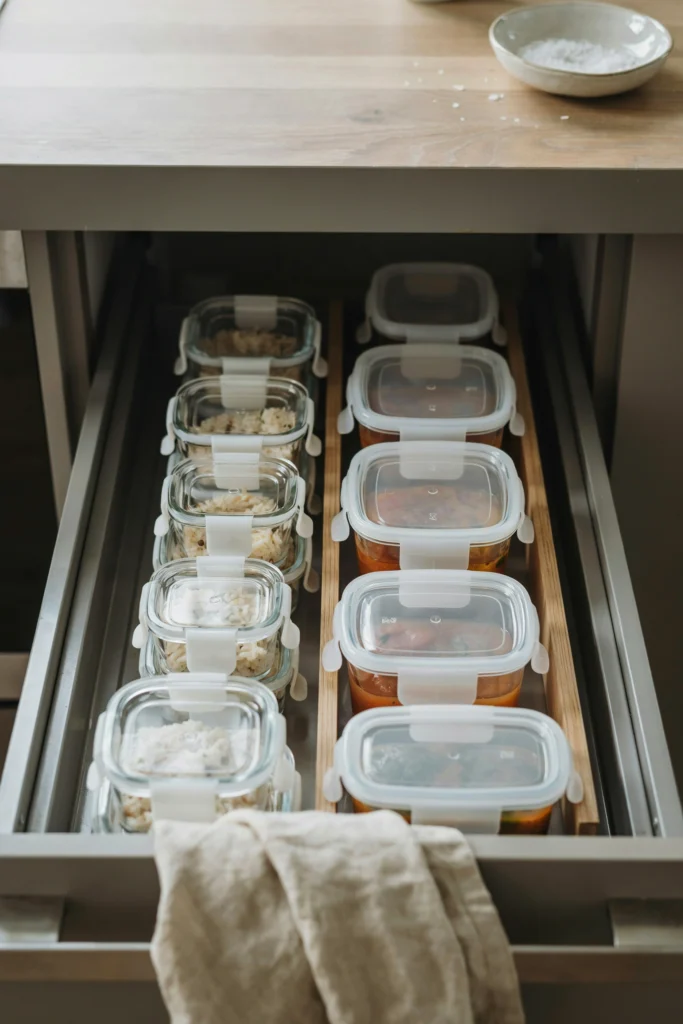
An overflow bin prevents extra containers from taking over your storage space. Instead of cluttering cabinets, excess pieces remain contained until you decide whether to keep or remove them.
Pro Tip: Review the overflow bin once a month to eliminate unused items.
Daily-Use Rotation
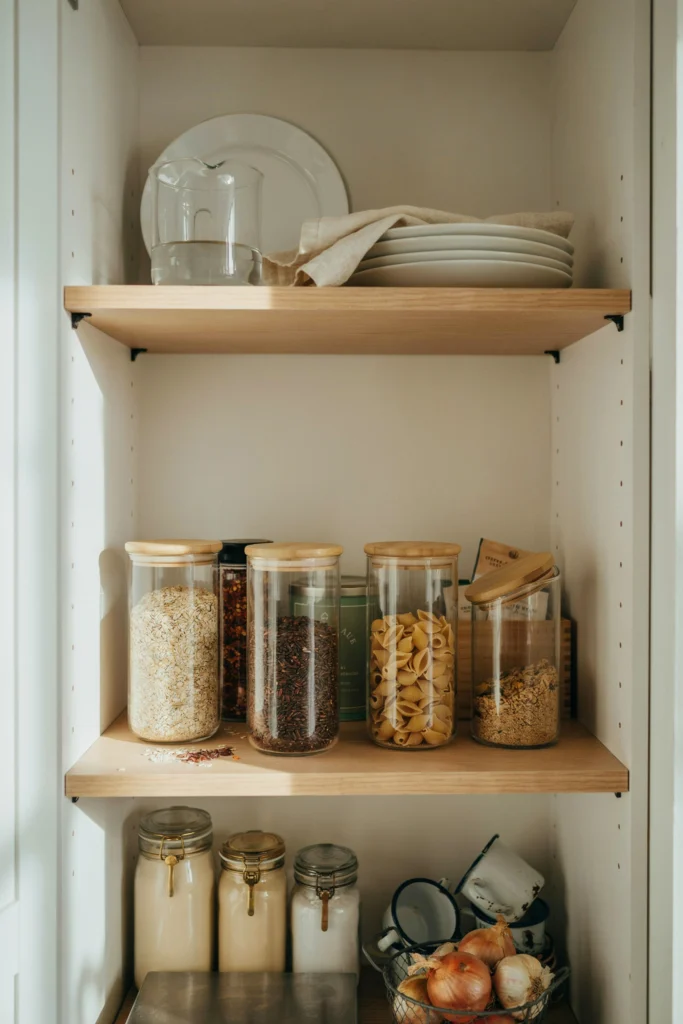
Not every container needs prime storage space. Keeping daily-use items front and center while moving rarely used pieces farther back creates a more functional system.
Pro Tip: Reevaluate your most-used containers every few months as habits change.
FAQs
Should Lids Be Stored With Containers or Separately?
Both methods can work effectively depending on your available space. Keeping lids attached saves time and eliminates searching, while separate lid storage often creates more stable stacks in cabinets. Choose the method that best supports your kitchen layout and daily routine.
Pro Tip: If lids frequently disappear, store them attached to their containers.
How Many Food Containers Should You Actually Keep?
Keep only the number of containers you regularly use without creating overcrowded storage. If containers are difficult to access, constantly fall over, or require moving several items to reach one piece, it’s a sign you may have too many.
Pro Tip: Maintain enough containers for leftovers, meal prep, and lunches, then remove the extras.