

Keeping your entryway organized can completely change how your day begins and ends. When everything has a place, mornings feel less rushed and coming home feels calmer instead of chaotic. Small changes in this space can make a big difference in your daily routine.
This guide shares simple, practical drop zone ideas designed to keep shoes, bags, keys, and everyday items under control. Whether you have a large entryway or a small corner, these ideas help you stay organized without overcomplicating things.
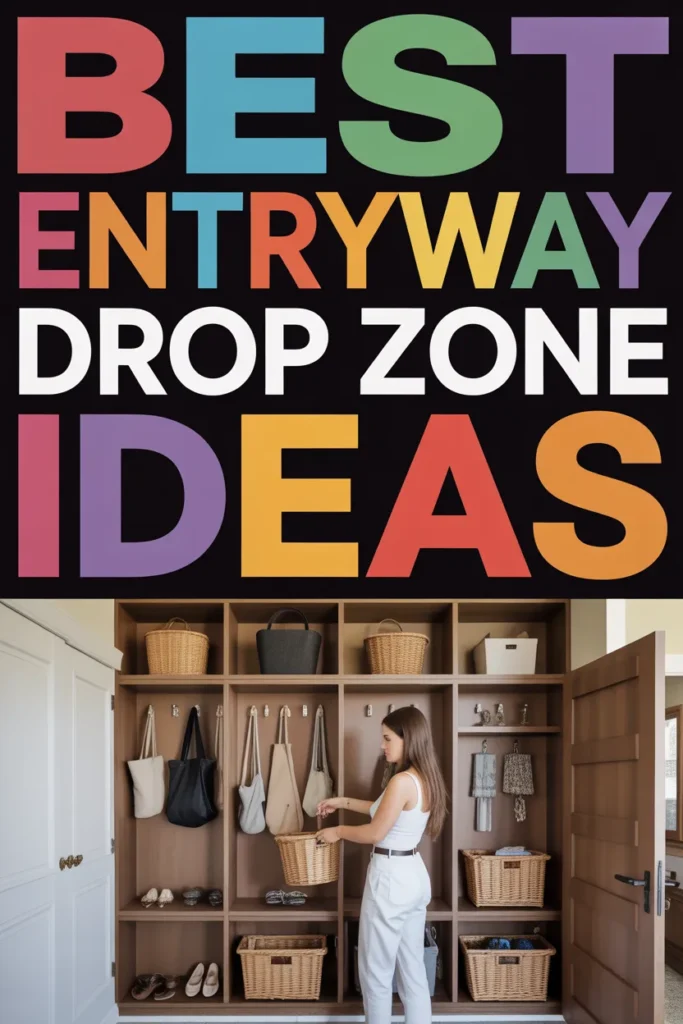
Key Takeaways
- A well-planned drop zone reduces daily stress and clutter
- Vertical storage helps maximize small spaces
- Assigning personal spots keeps things organized long-term
- Benches and hidden storage improve both function and comfort
- Simple systems work better than complicated setups
How to Create a Functional Entryway Drop Zone in Small Spaces
You don’t need more space to fix your entryway—you need a smarter setup. Focus on essentials like shoes, bags, keys, and mail, and give each item a clear home. Use vertical space with hooks and shelves, and keep storage shallow to avoid crowding. A small bench or baskets can add function without taking over the area.
Pro Tip: Keep your drop zone simple—if it’s easy to use, everyone will actually stick to it.
Cubby Zones
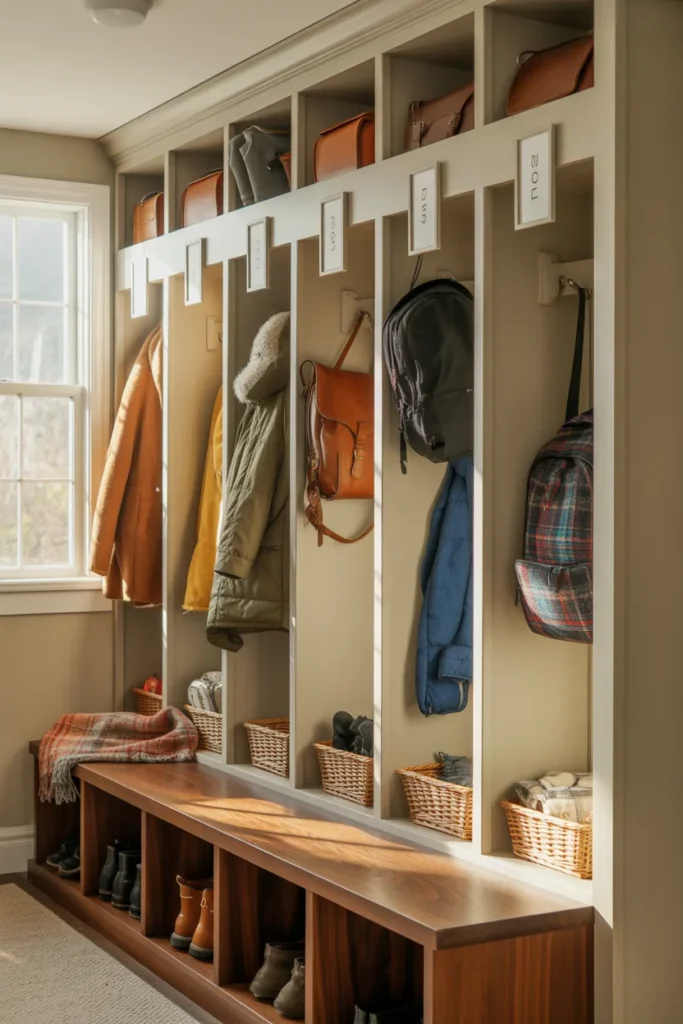
Giving each person their own cubby instantly brings order to a messy entryway. It creates clear boundaries where bags, coats, and accessories naturally belong. Adding hooks inside each section makes daily grab-and-go items easy to access, while a bench below adds comfort and keeps shoes from spreading out.
Pro Tip: Label each cubby to make it even easier for everyone to stay consistent.
Layered Storage
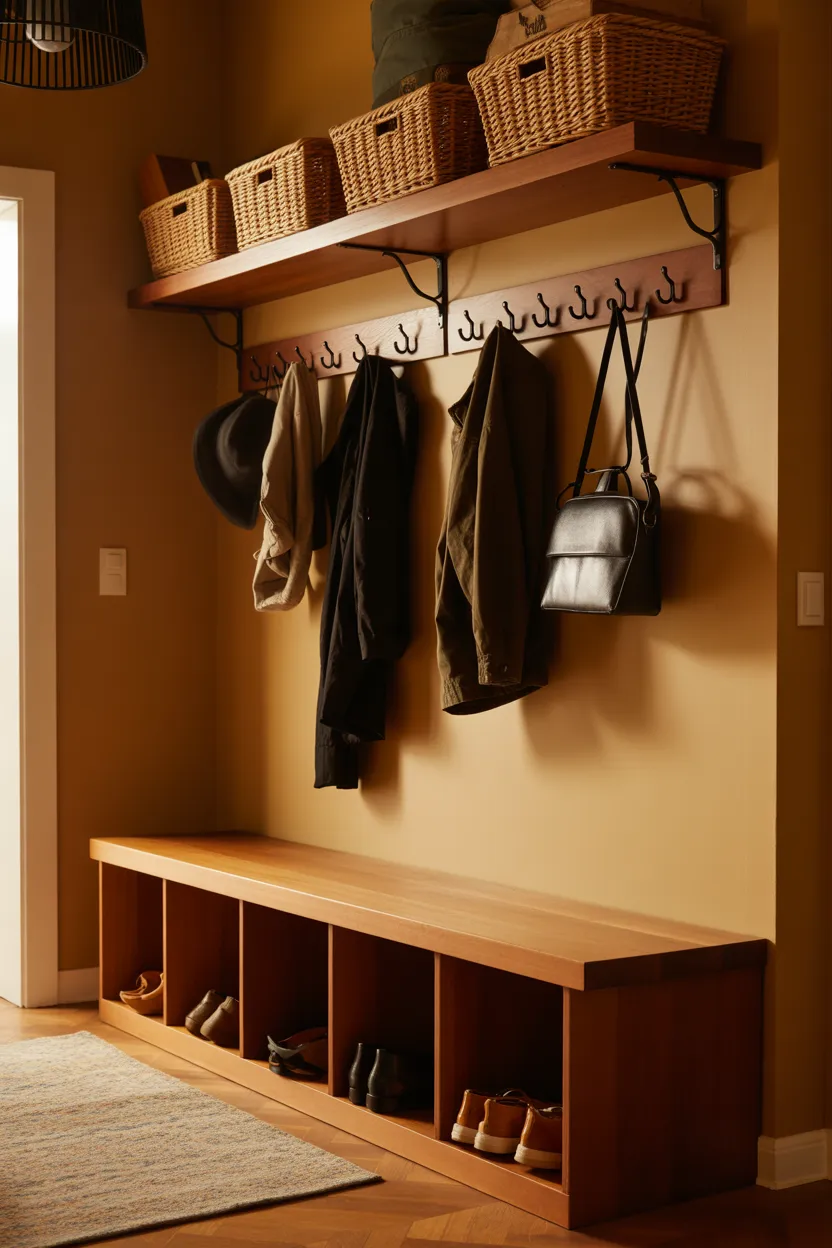
Layering your storage helps avoid piling everything in one place. Hooks handle jackets and bags, while shelves above store seasonal items in baskets. A small surface nearby keeps keys and everyday essentials from getting lost, and a bench with cubbies below keeps shoes organized and off the floor.
Pro Tip: Use baskets to visually reduce clutter while keeping items easy to access.
Family Stations
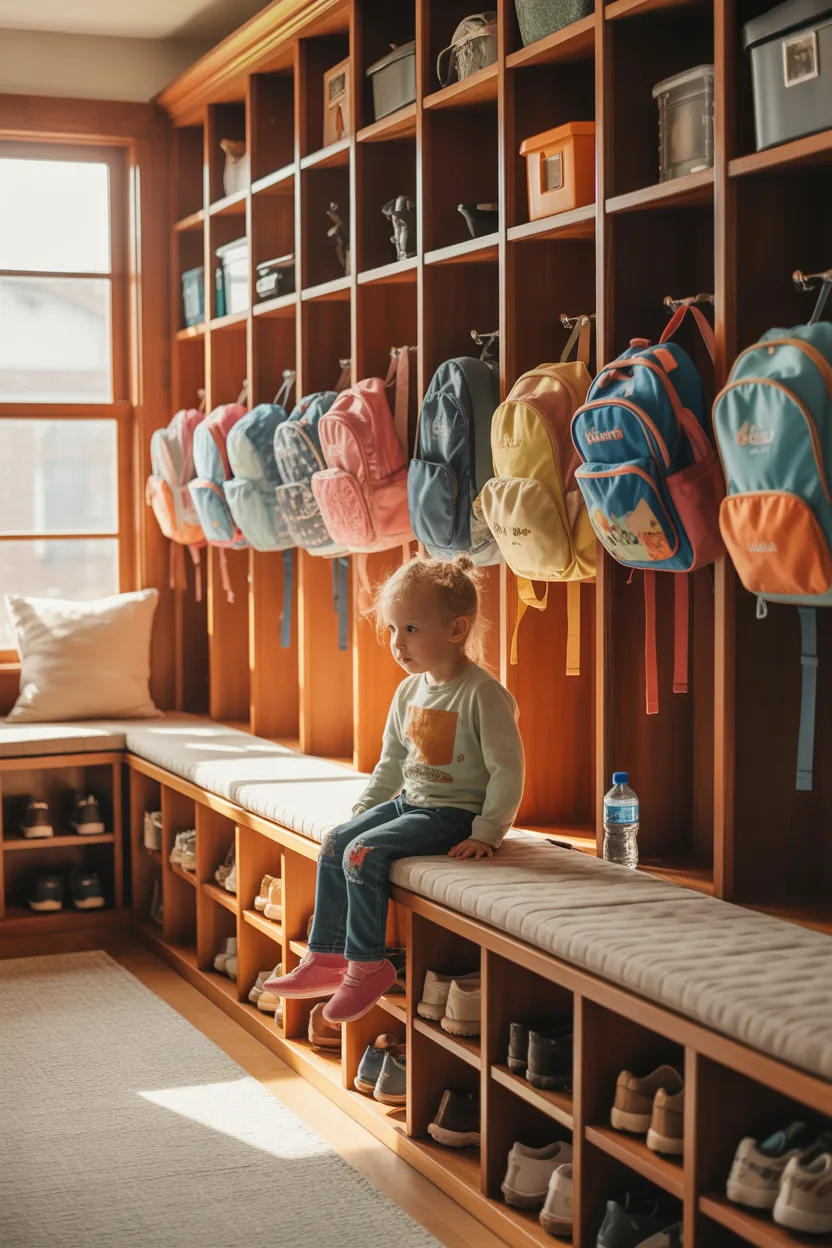
Creating individual stations for each family member makes daily routines smoother. Each person gets a dedicated spot for their belongings, which reduces confusion and clutter. Adding baskets for paperwork and a shared bench keeps everything functional while maintaining a clean look.
Pro Tip: Keep frequently used items at eye level for quick access during busy mornings.
Bag Hooks
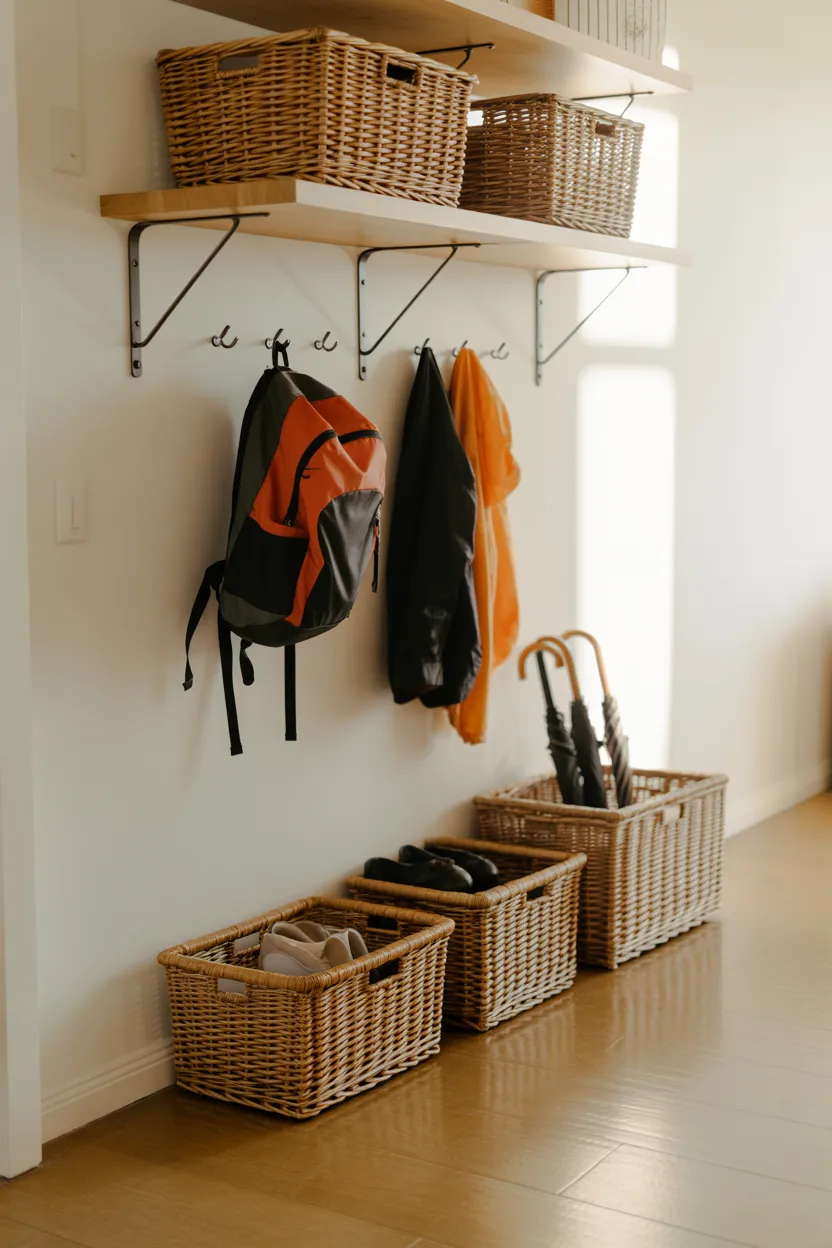
Dedicated hooks for bags prevent them from ending up all over the house. A simple wall-mounted setup keeps everything visible and easy to grab. Adding storage above and below helps manage extra items like shoes and seasonal gear without crowding the space.
Pro Tip: Install hooks at different heights so both kids and adults can use them easily.
Corner Bench
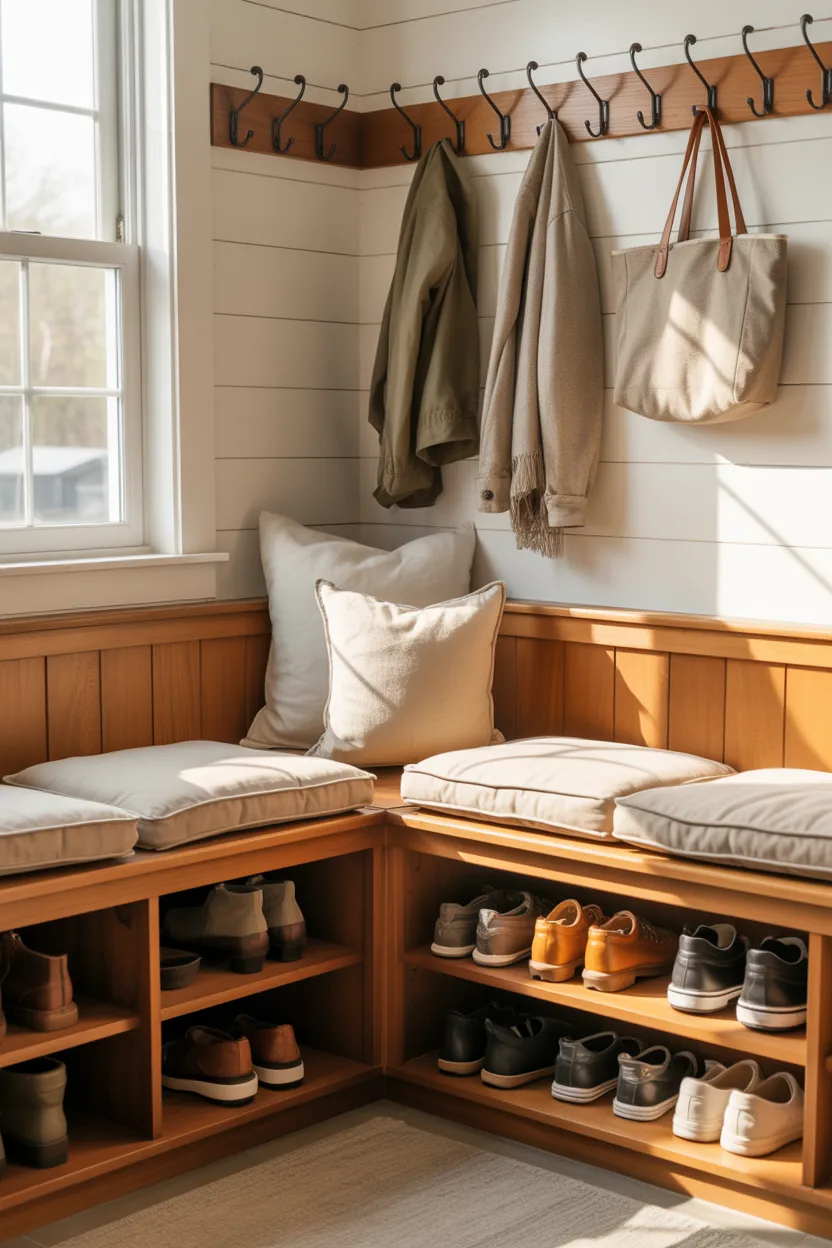
Turning an unused corner into a bench area creates a practical drop zone without taking up extra space. Hooks above keep essentials within reach, while storage underneath keeps shoes organized and visible. It’s a simple way to make the most of overlooked areas.
Pro Tip: Use corners wisely—they’re often the easiest spaces to transform into functional zones.
Vertical Cubbies
Vertical cubbies make the most of wall space while keeping items separated and easy to find. Each section acts like a personal storage column, reducing mix-ups and clutter. A bench below adds comfort and completes the setup.
Pro Tip: Go vertical whenever floor space is limited.
Wall Niche
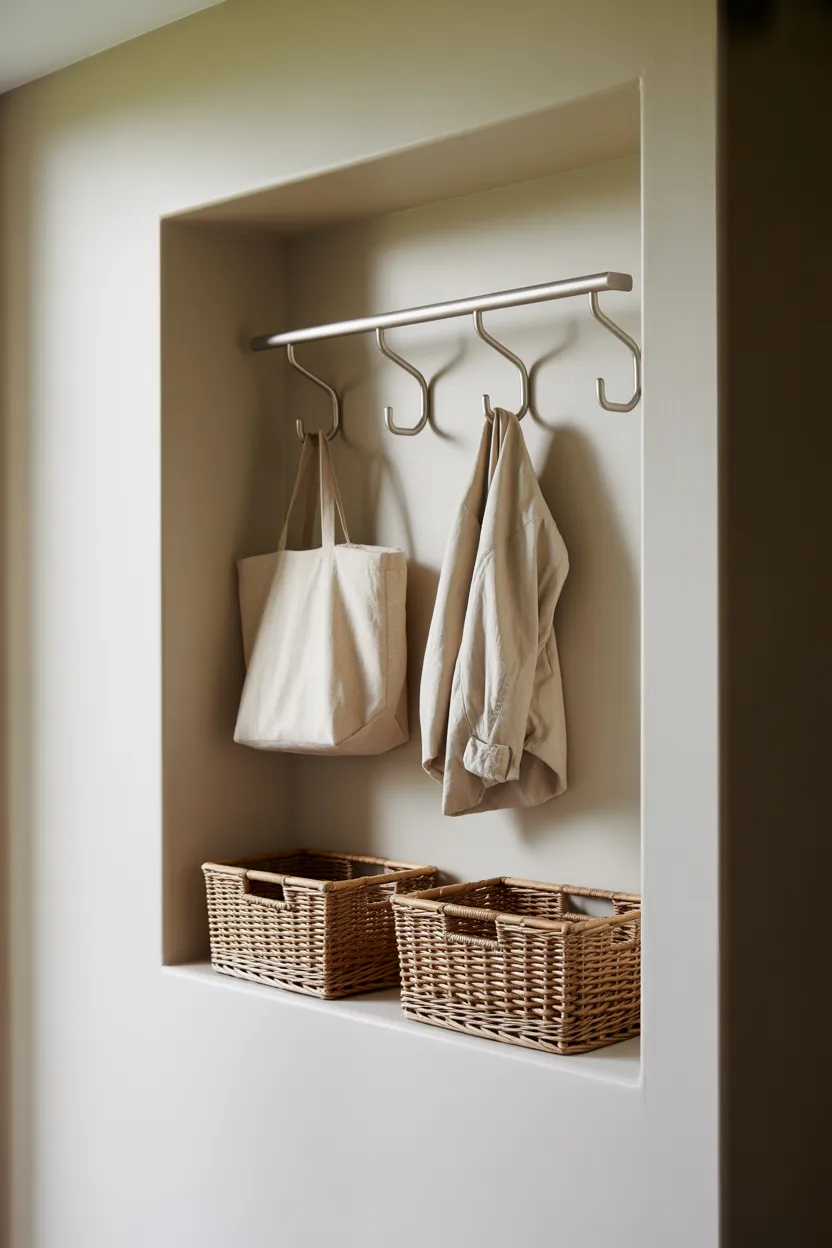
A built-in wall niche can become a ready-made drop zone with minimal effort. Adding hooks and shelves inside the recessed space keeps everything contained and visually neat. Baskets help organize smaller items without creating clutter.
Pro Tip: Use existing architectural features to save space and effort.
Stair Nook
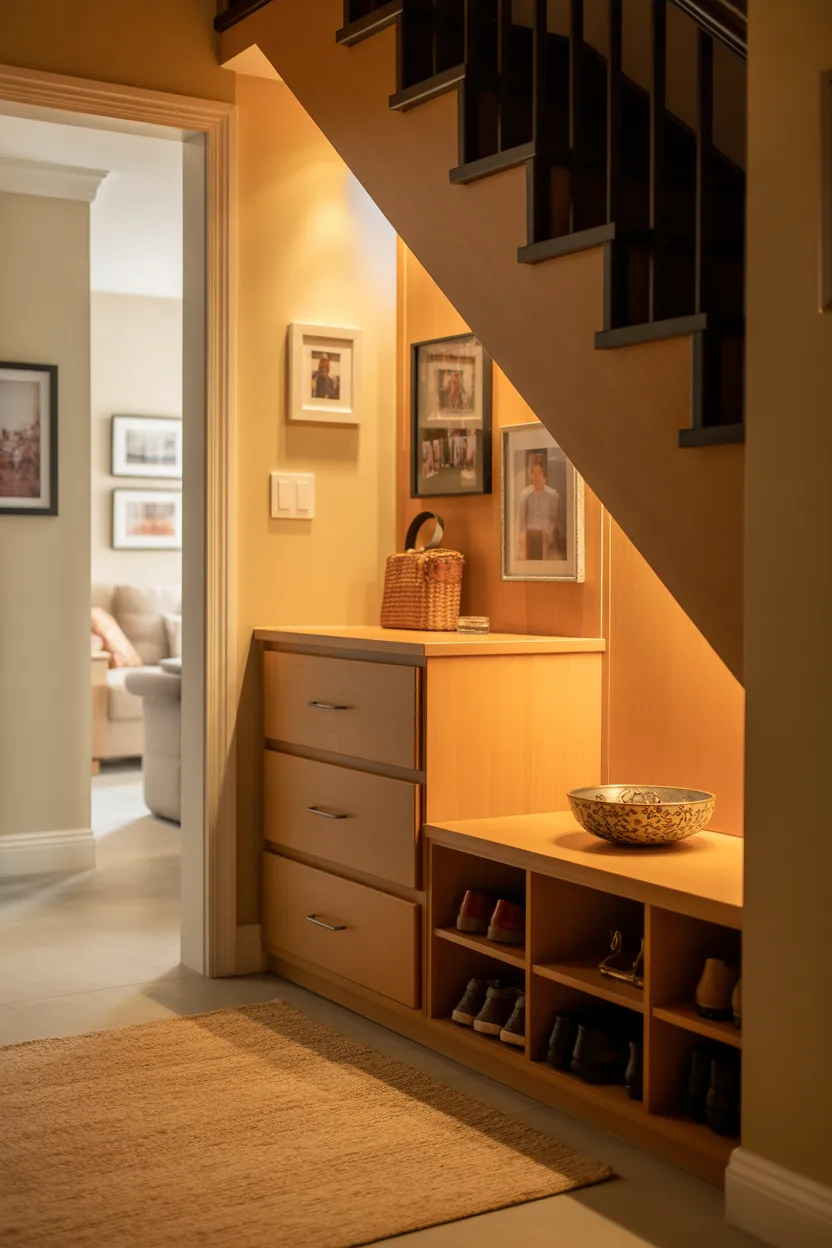
The space under the stairs can easily become a compact drop zone. A small surface for keys and drawers for hidden storage keep things organized without adding bulk. Lighting can also make the space more inviting and practical at night.
Pro Tip: Add soft lighting to make small storage areas more functional and welcoming.
Shoe Wall
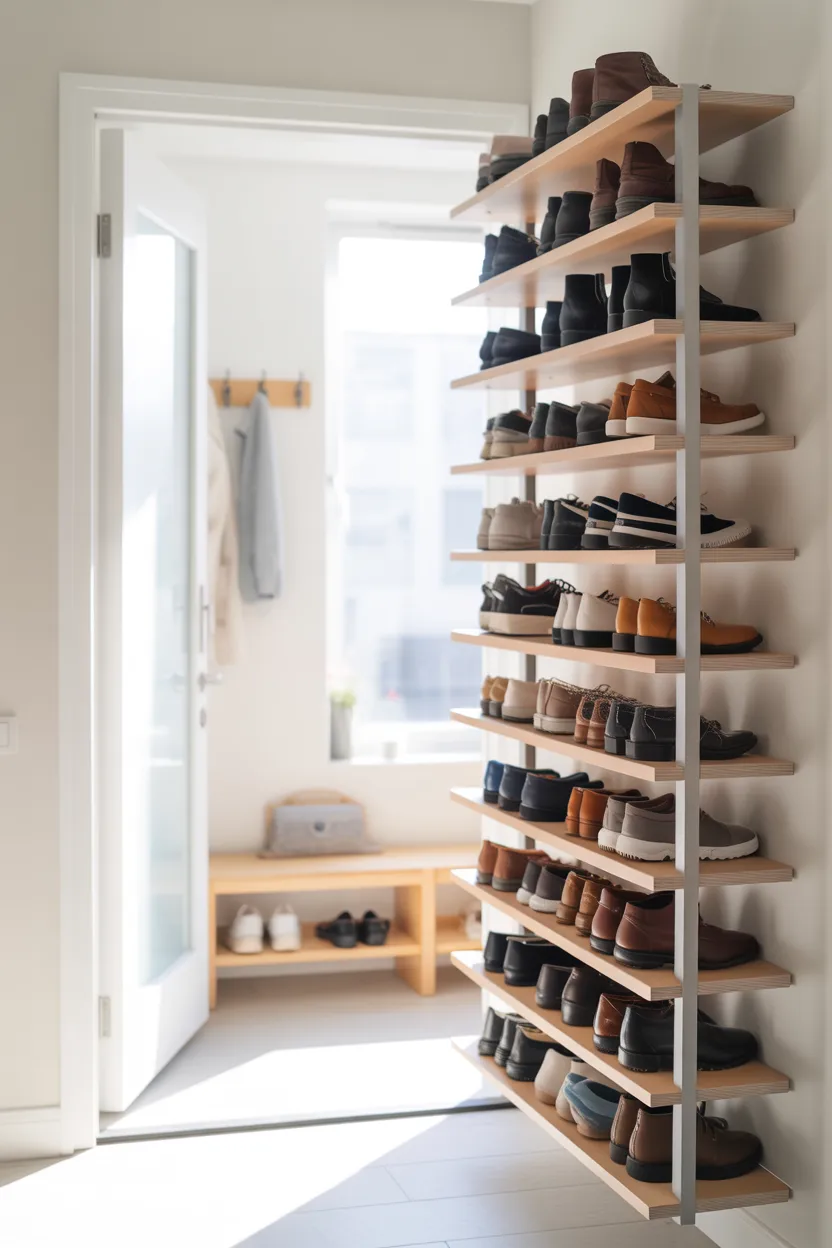
A dedicated shoe wall solves one of the biggest entryway problems—scattered footwear. Vertical shelves allow you to store more shoes without using extra floor space, while nearby hooks keep bags and coats organized in one place.
Pro Tip: Keep everyday shoes at lower levels for quick access.
Name Zones
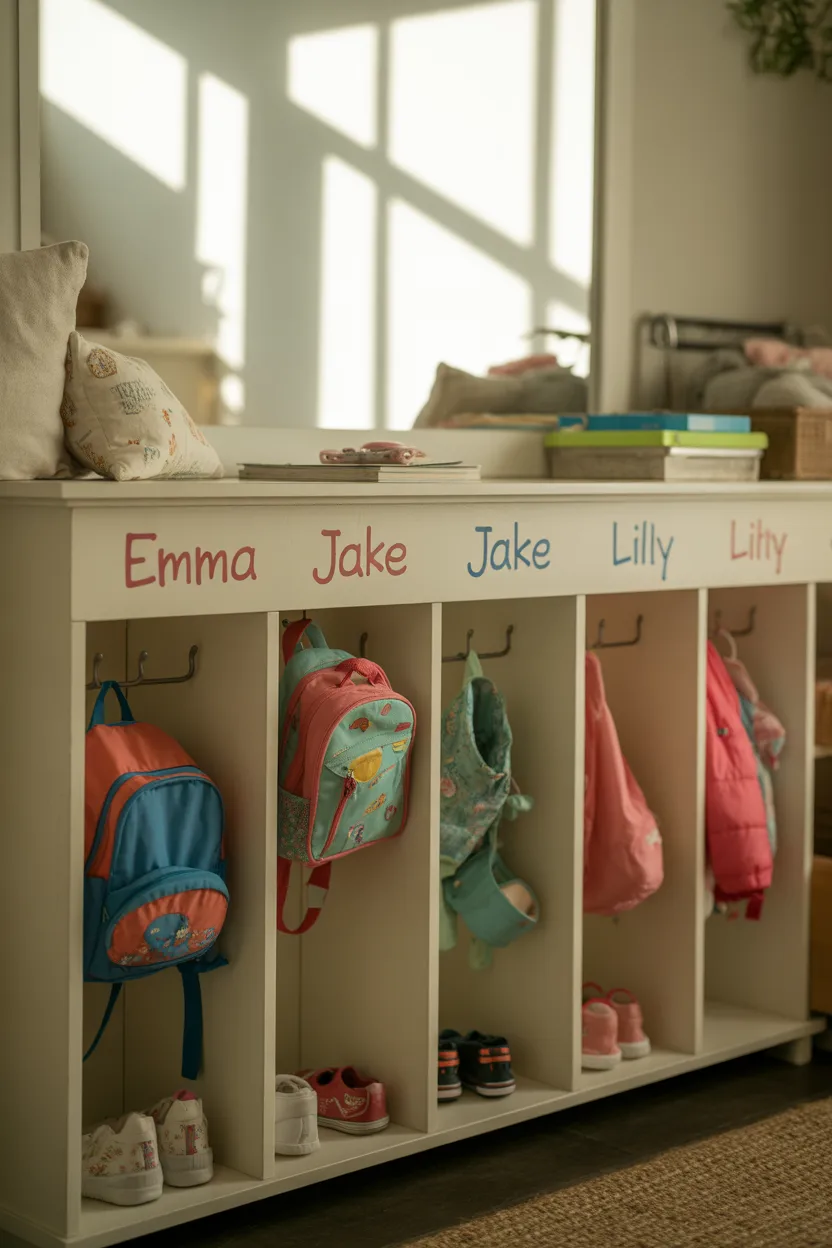
Adding name labels to each section creates clear ownership and reduces clutter instantly. Adjustable hooks and flexible storage options make it easy to adapt as needs change. Hidden drawers below keep less attractive items out of sight.
Pro Tip: Personalizing spaces increases the chances people will actually use them.
Hidden Drawers
Storage under a bench keeps clutter out of sight while maintaining a clean entryway. Drawers are perfect for shoes, accessories, and everyday extras. Pairing this with simple wall hooks keeps the setup practical and easy to maintain.
Pro Tip: Choose ventilated drawers to prevent odors from building up.
Stair Hooks
Wall space along the stairs can be turned into a simple and effective drop zone. Lower hooks make it easy for kids to stay organized, while baskets below handle items that don’t need to hang.
Pro Tip: Keep spacing between hooks to avoid tangling bags and jackets.
Storage Locker
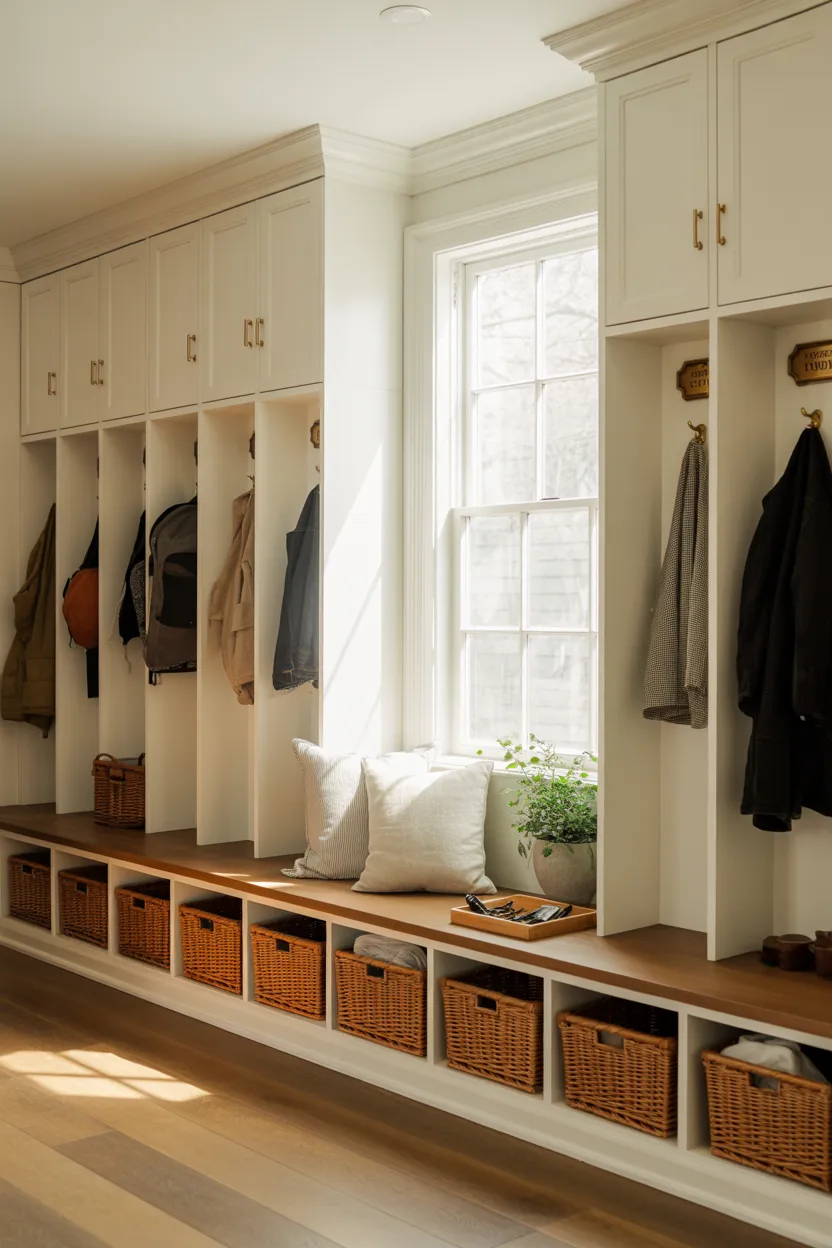
A locker-style setup combines cabinets, hooks, and seating into one organized system. It keeps clutter hidden while making daily items easy to access. This approach works especially well for busy households.
Pro Tip: Use closed cabinets to instantly make the space look cleaner.
Long Lockers
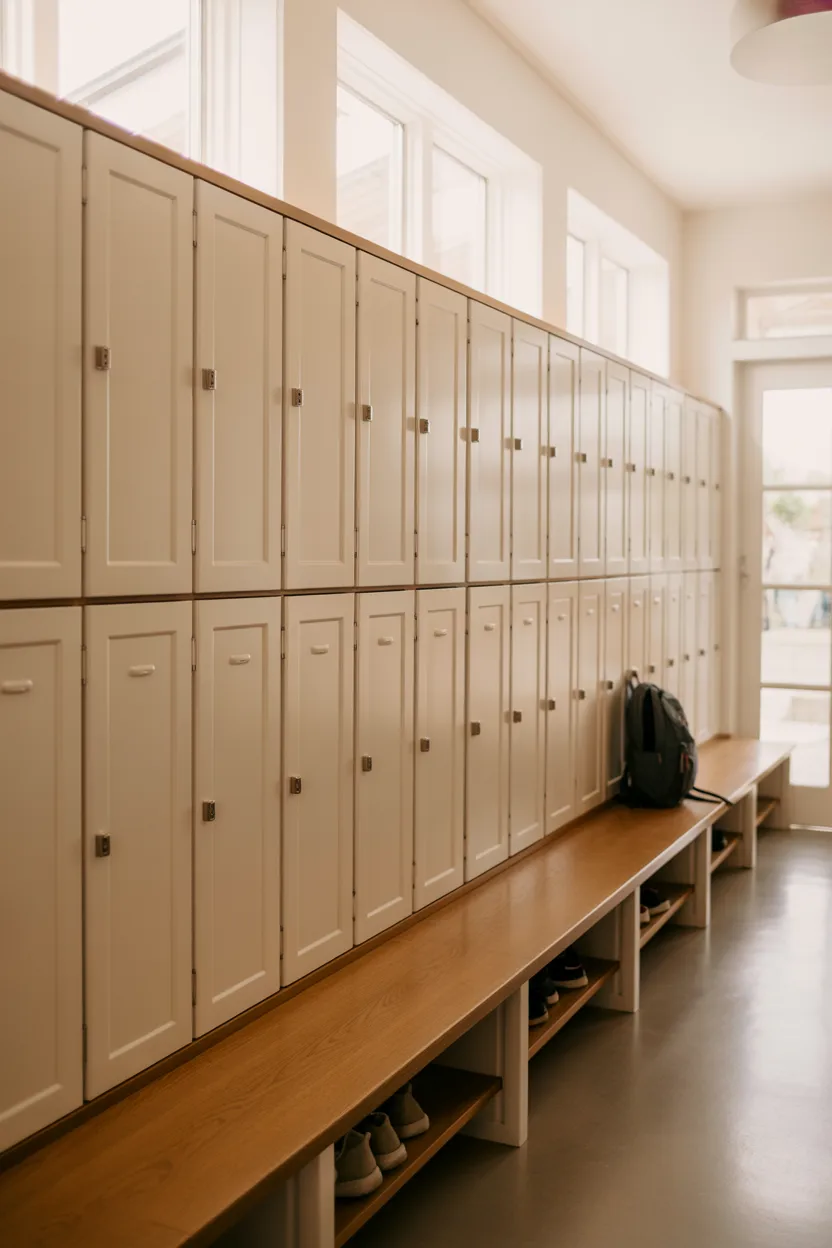
For larger families, long lockers provide enough space for everyone. Each section keeps belongings separate, while a continuous bench adds comfort. Storage baskets below help keep smaller items neatly contained.
Pro Tip: Consistency in design helps the space feel calm and organized.
Entry Console
A compact console is perfect for smaller entryways. It offers a surface for essentials like keys and mail, while hooks above and storage below keep everything organized without taking up too much space.
Pro Tip: Keep the surface clutter-free by limiting what stays on top.
Bench Nook
A bench nook creates a welcoming landing spot where everything naturally falls into place. Hooks above hold daily items, while drawers below keep clutter hidden. Adding a tall cabinet expands storage vertically.
Pro Tip: Combine seating and storage to maximize functionality.
Statement Wall
A feature wall with hooks can double as both storage and design. It keeps items off the floor while adding visual interest to your entryway. Hidden storage below maintains a clean and balanced look.
Pro Tip: Choose finishes that match your home style for a cohesive feel.
Entry Locker
A compact locker-style corner keeps essentials organized in one spot. Hooks handle daily items, while a bench and hidden storage below keep things tidy and easy to manage.
Pro Tip: Keep this area close to the main entrance for maximum use.
Arch Cubbies
Arched cubbies add a soft, built-in feel while staying highly practical. They create clear sections for storage while keeping the space visually appealing. Baskets and benches complete the setup without clutter.
Pro Tip: Mix style with function to create a space you enjoy using.
Coat Columns
Dividing the wall into vertical sections helps keep coats and bags organized. Each column acts as an individual storage area, preventing overcrowding and making it easier to find things quickly.
Pro Tip: Assign each column to a specific person or purpose.
Family Hooks
Multiple hook panels give each family member their own dedicated space. This setup reduces clutter and keeps the entryway looking calm even during busy times. A bench below adds convenience and storage.
Pro Tip: Keep hooks evenly spaced for a cleaner look.
Hook Rail
A simple hook rail provides a quick and effective solution for hanging everyday items. It keeps jackets, bags, and accessories organized without needing complex storage. Cabinets nearby can store items you don’t want on display.
Pro Tip: Pair a hook rail with hidden storage for the best balance.
FAQs
What should be included in a functional drop zone?
A well-functioning drop zone should include hooks for bags and coats, a surface for keys and small items, and storage for shoes. Adding a bench and baskets helps keep everything organized and easy to use daily.
Pro Tip: Focus on daily essentials only—avoid overloading the space.
Where is the best place to set up a drop zone?
The best location is near the main entrance, such as a mudroom, hallway, or garage entry. Placing it along a natural walkway ensures everyone uses it, helping prevent clutter from spreading through the home.
Pro Tip: Choose a spot people naturally pass through every day.