
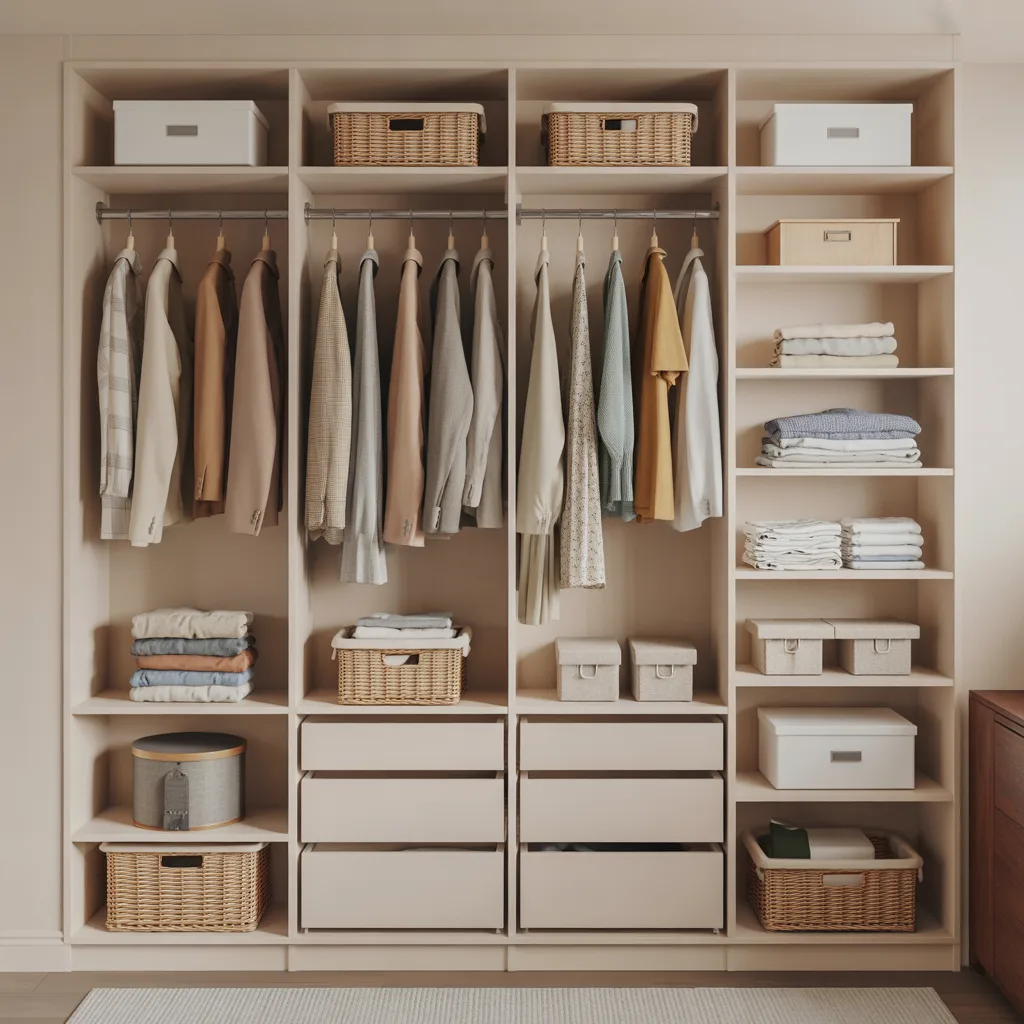


A junk drawer can quickly become one of the most frustrating places in your home. Pens, batteries, cords, receipts, and random household items seem to pile up overnight, making it harder to find what you actually need.
The good news is that a junk drawer doesn’t have to stay messy. With a simple system and a few practical organization strategies, you can turn it into a functional storage space that saves time instead of creating frustration.
These 22 junk drawer organization ideas will help you create order, improve accessibility, and make everyday items easier to find in 2026.
Key Takeaways
- Create dedicated zones for similar items.
- Use dividers and trays to prevent clutter.
- Store frequently used items near the front.
- Keep cords, batteries, and tools separated.
- Label sections when needed.
- Rotate seasonal items out of daily storage.
- Follow simple maintenance rules.
- Give every item a designated home.
How to Organize the Junk Drawer?

The easiest way to organize a junk drawer is to stop using it as a catch-all space and start treating it like a functional storage area. Begin by removing everything that doesn’t belong, grouping similar items together, and assigning each category a specific location. When every item has a designated place, putting things away becomes much easier and the drawer stays organized with less effort.
Pro Tip: Empty the entire drawer before organizing so you can create a system from scratch.
Zone by Function
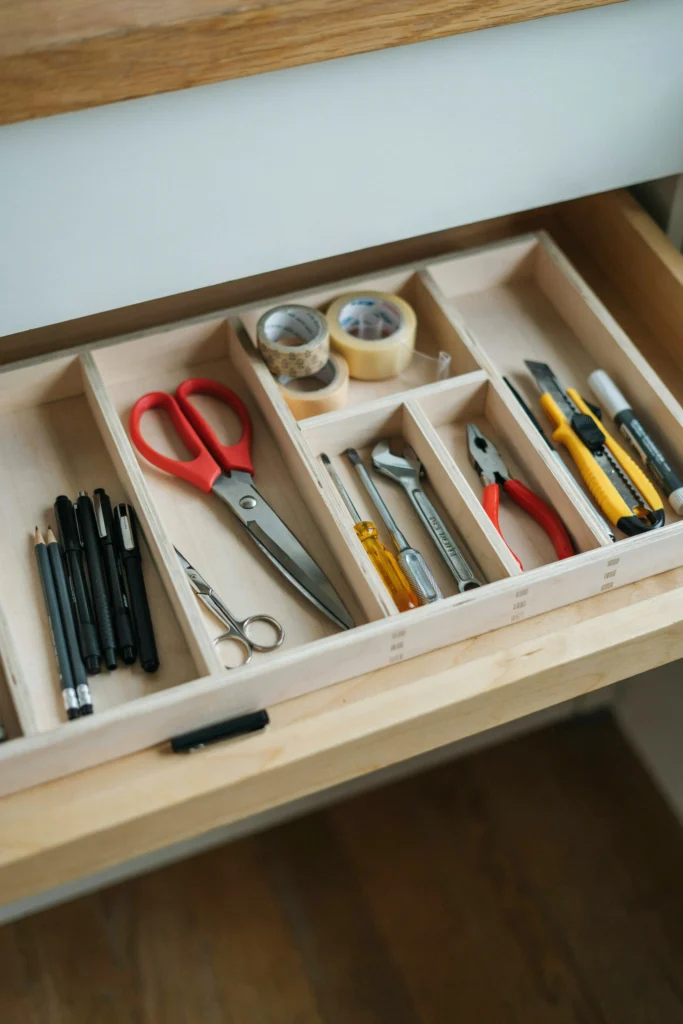
Grouping items according to their purpose makes a junk drawer much easier to use. Keep writing supplies together, store household tools in their own section, and create separate areas for office accessories. This approach helps you find what you need quickly without sorting through unrelated clutter.
Pro Tip: Organize based on how items are used rather than how many you own.
Clear Modular Trays
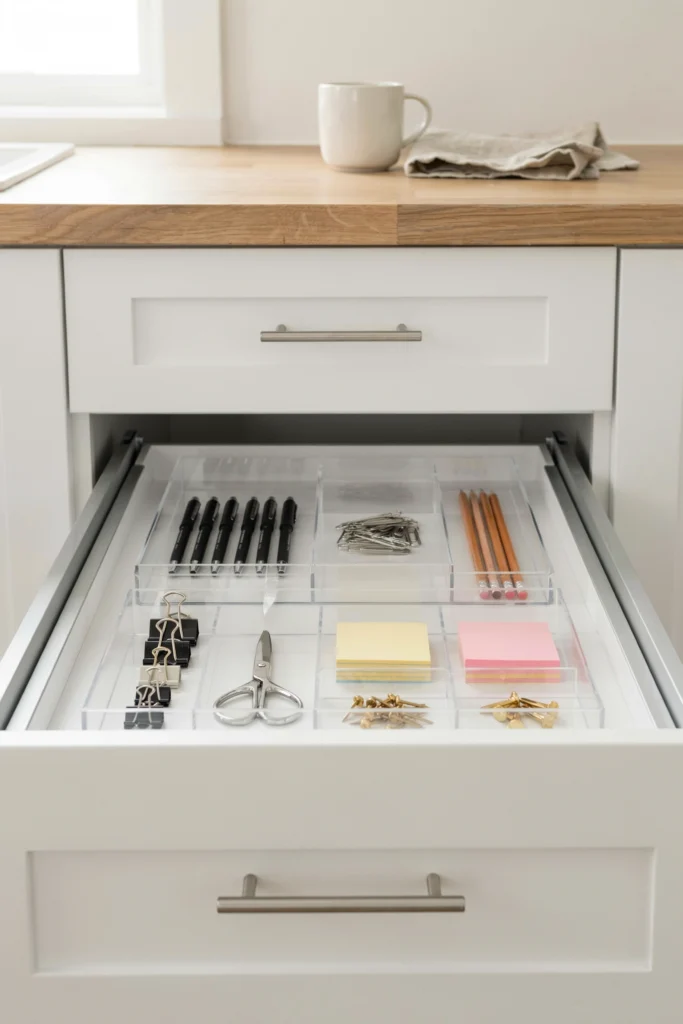
Clear trays allow you to see everything at a glance while keeping categories separated. Different tray sizes create flexibility for various items and prevent supplies from spreading throughout the drawer. The transparency also makes it easier to maintain the system over time.
Pro Tip: Assign a single purpose to each tray to prevent categories from mixing.
Everyday Tool Zones
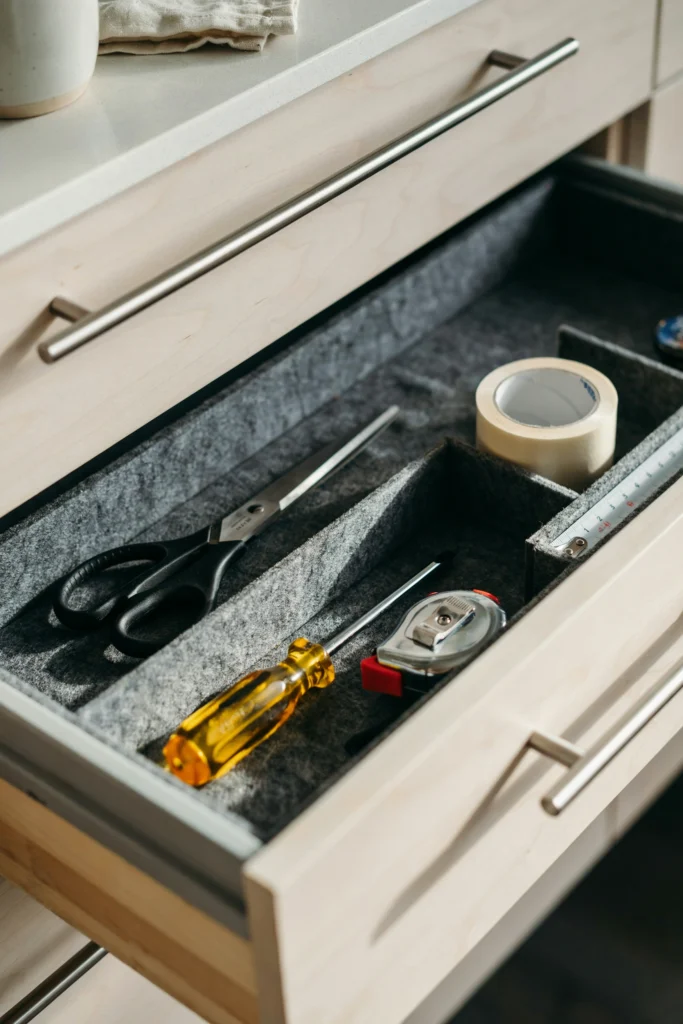
Frequently used tools deserve a dedicated spot within easy reach. Scissors, tape, utility knives, and measuring tools can stay organized when grouped together in larger compartments. This setup saves time and reduces the frustration of searching for everyday essentials.
Pro Tip: Place your most-used tools near the front of the drawer.
Contained Categories
Small containers create natural boundaries that keep clutter under control. Each category stays within its assigned space, preventing items from drifting into other sections. This method works especially well in high-traffic drawers that are opened several times a day.
Pro Tip: Use matching bins for a cleaner and more organized appearance.
Dedicated Item Lanes
Creating individual lanes for specific item types helps maintain order over time. Pens, markers, rulers, and small tools each receive their own space, making it easier to return items after use. The structured layout also prevents overcrowding.
Pro Tip: Keep similar items together from front to back for consistency.
Micro-Section Precision
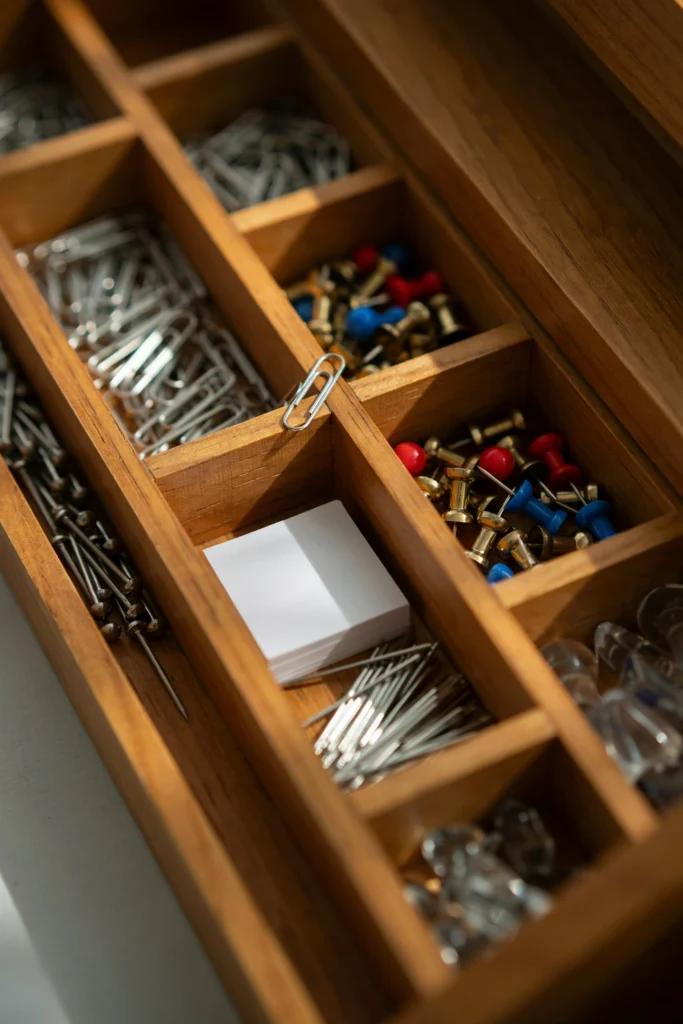
Small items often create the biggest mess. Dividing the drawer into compact sections gives every object a designated place and eliminates random clutter. This method works particularly well for paper clips, thumbtacks, hardware, and office supplies.
Pro Tip: Size compartments according to the item rather than using oversized organizers.
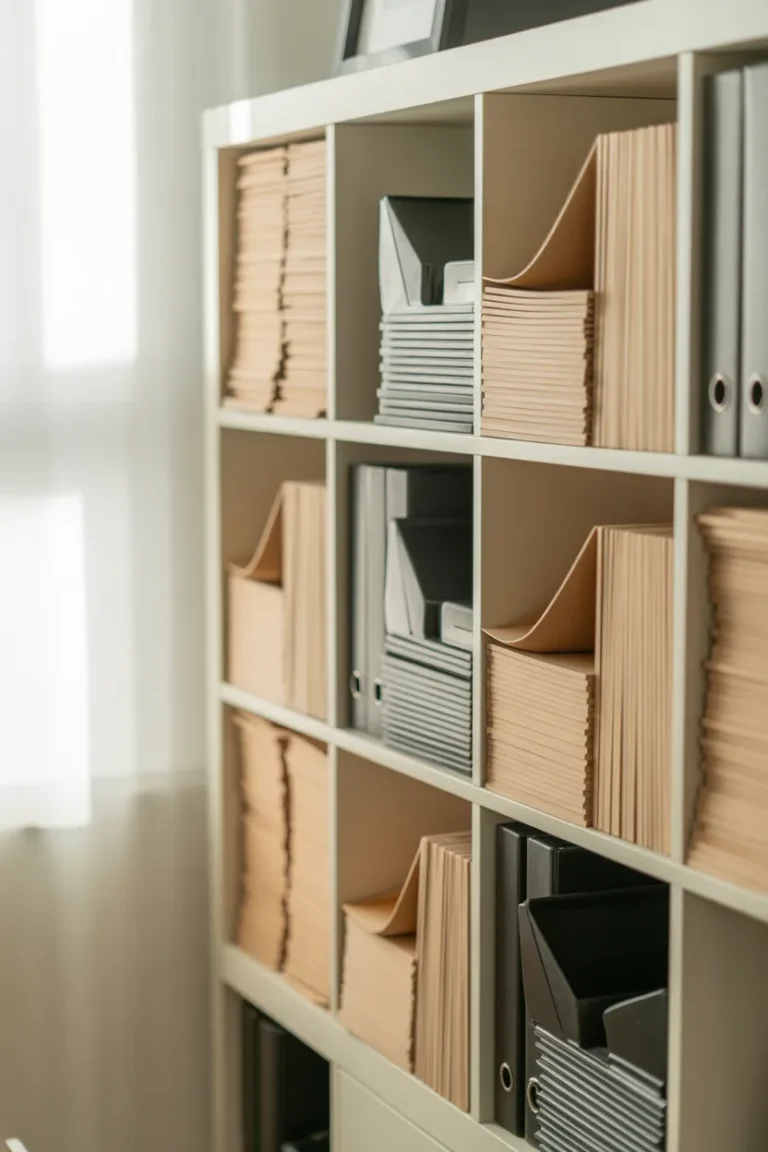
Vertical Packet Storage
Packets, envelopes, and small documents are easier to access when stored upright. Vertical storage allows you to see every item at once and prevents papers from becoming buried beneath other supplies. It also makes restocking much easier.
Pro Tip: Use file-style dividers to keep packets organized and visible.
Cord Control Zones
Loose charging cables and electronic accessories can quickly create tangles and clutter. Separating cords into dedicated sections keeps everything neat and easy to identify. Wrapping cables before storing them also reduces frustration later.
Pro Tip: Secure cords with reusable ties before placing them in storage.
Front-Load Essentials
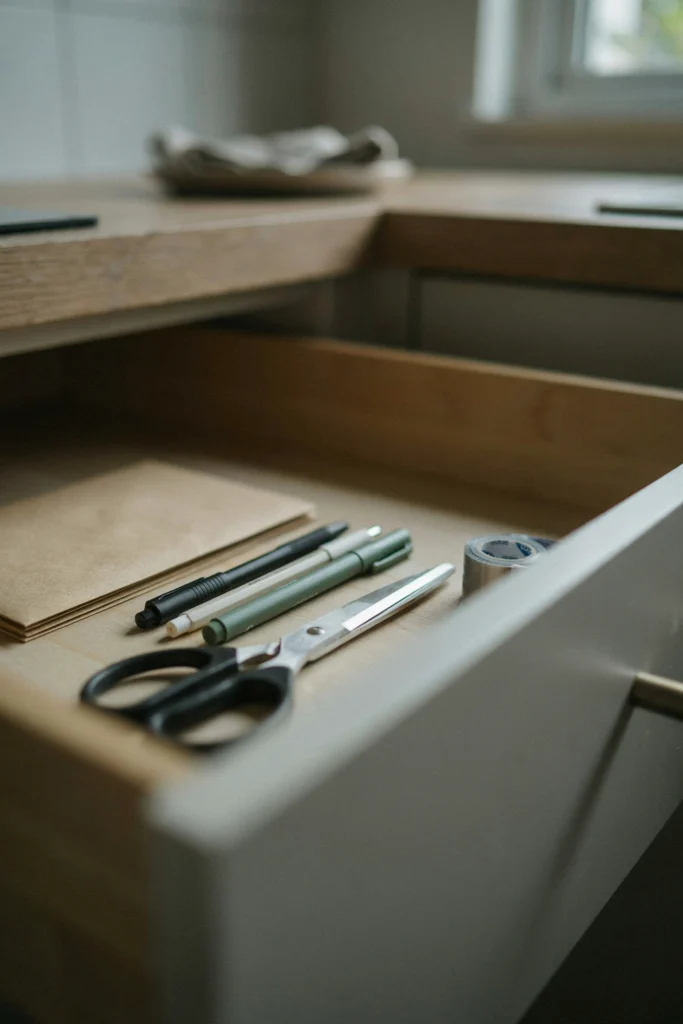
Items you use every day should be the easiest to reach. Storing scissors, pens, tape, and other essentials at the front of the drawer reduces searching time and improves convenience. A simple layout often works better than a complicated one.
Pro Tip: Review frequently used items every few months and adjust placement as needed.
Mixed-Use Balance
Many households rely on one drawer for multiple categories. The key is keeping each category contained within its own section rather than allowing everything to blend together. Clear boundaries create a more functional and manageable system.
Pro Tip: Leave small gaps between categories to create visual separation.
Portable Bin Grouping
Portable bins make it easy to remove entire categories when needed. Instead of sorting through loose items, you can simply lift out a bin containing travel supplies, personal items, or specialty tools. This setup simplifies both organization and cleanup.
Pro Tip: Choose lightweight containers that are easy to move around.
Flat-Lay Visibility
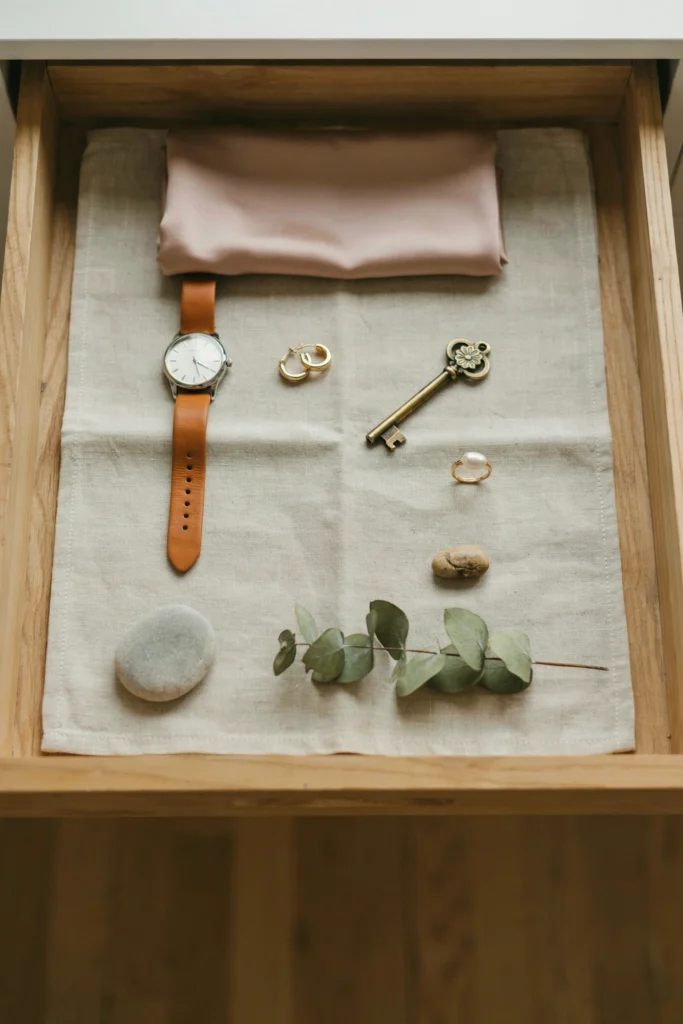
Keeping everything in a single visible layer prevents items from disappearing beneath clutter. Shallow organizers encourage better visibility and make it obvious when something is missing or out of place. This approach helps maintain order with minimal effort.
Pro Tip: Avoid stacking items whenever possible to maximize visibility.
Personal Item Dock
Everyday carry items like keys, wallets, sunglasses, and earbuds stay organized when they have a dedicated storage area. Creating a personal item dock keeps essentials together and reduces the chances of misplacing them.
Pro Tip: Reserve this section for personal essentials only.
Grid-Based Control
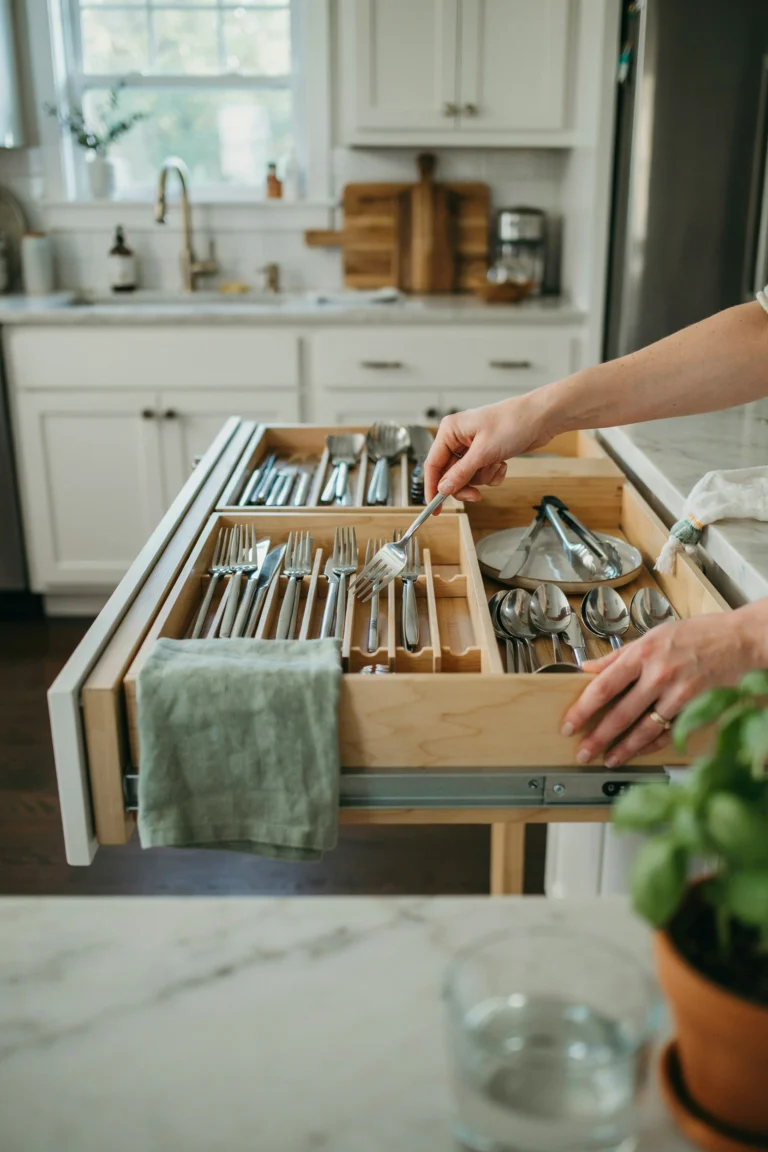
A grid organizer divides the drawer into individual compartments that naturally limit clutter. Each section has a specific purpose, making it easier to maintain organization and identify items that don’t belong.
Pro Tip: Give every compartment a clearly defined function.
Color-Coded Sorting
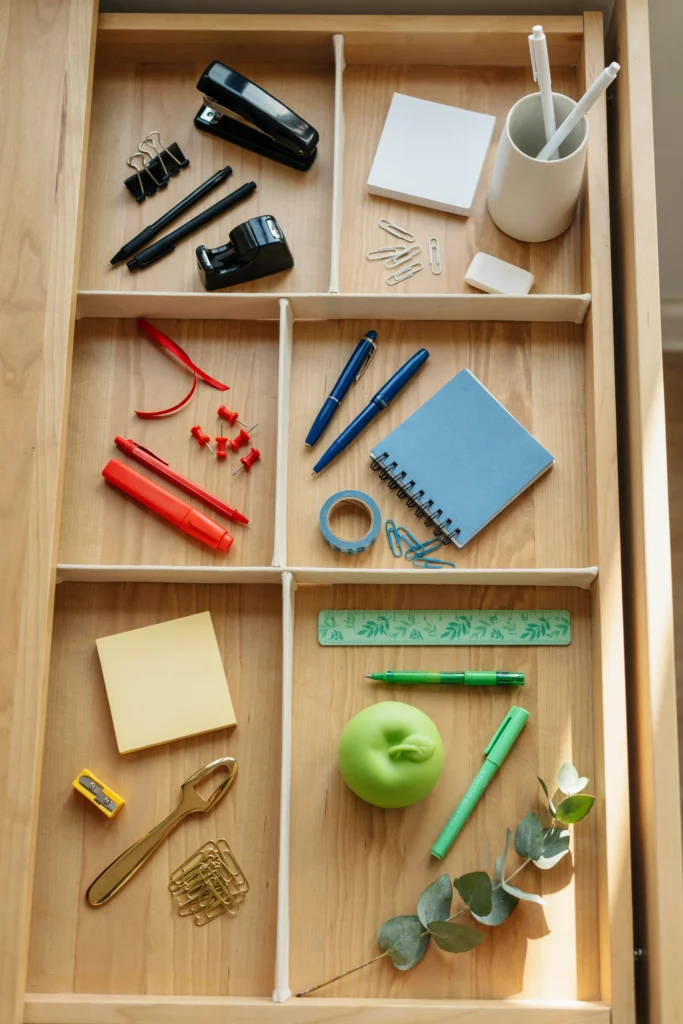
Color coding creates visual shortcuts that help you find items faster. Grouping similar colors together improves recognition and reduces the need to search through multiple sections. This method works especially well for office supplies and craft materials.
Pro Tip: Organize by category first and color second for the best results.
Split-Purpose Drawers
When possible, separate different functions into different drawers. Tools, office supplies, and household accessories are easier to manage when they aren’t competing for the same space. This approach reduces overcrowding and simplifies organization.
Pro Tip: Give each drawer one primary purpose whenever possible.
Battery Sorting Station
Batteries become much easier to manage when organized by size. Dedicated sections for AA, AAA, C, D, and specialty batteries help prevent confusion and ensure you always know what you have available.
Pro Tip: Remove expired batteries regularly to avoid clutter.
Vertical Tool Stand
Long tools take up less space when stored vertically instead of lying flat. Standing screwdrivers, pliers, and similar tools upright creates more usable drawer space and improves accessibility.
Pro Tip: Use sturdy containers that keep tools upright and stable.
Drop-Zone Rule
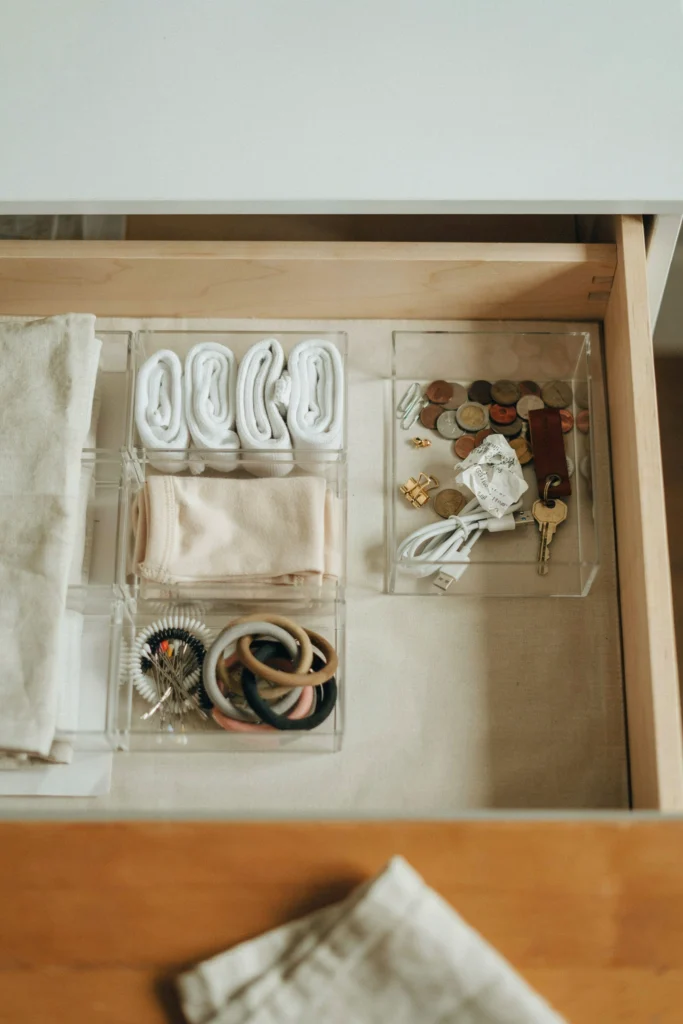
A designated drop zone prevents random items from taking over the entire drawer. Temporary items can stay in one controlled area until they are sorted, relocated, or discarded. This simple rule helps maintain long-term organization.
Pro Tip: Empty the drop zone once a week to prevent buildup.
Seasonal Rotation System
Not every item needs year-round access. Seasonal supplies, holiday tools, and occasional-use accessories can be rotated out of the drawer when not needed. This keeps daily essentials easy to reach and reduces unnecessary clutter.
Pro Tip: Review seasonal items every few months and remove what you no longer use.
One-In-One-Out Rule
One of the easiest ways to control clutter is by maintaining balance. Every time a new item enters the drawer, another item should leave. This prevents overcrowding and keeps storage limits under control.
Pro Tip: Apply this rule consistently to avoid future decluttering sessions.
Drawer Purpose Labeling
Clearly defining what belongs in a drawer helps everyone maintain the system. Whether the drawer stores office supplies, household tools, or daily essentials, a clear purpose reduces random dumping and improves organization.
Pro Tip: Add a simple label inside the drawer as a reminder of its purpose.
FAQs
What Is the Best Way to Organize Your Drawers?
The best way to organize drawers is to start with a clear purpose and eliminate anything that doesn’t support that purpose. Group similar items together, use dividers to create designated sections, and keep frequently used items easy to access. A simple system is often easier to maintain than an overly detailed one.
Pro Tip: Focus on function first and aesthetics second for long-term success.
How Do You Keep a Junk Drawer From Getting Messy Again?
Keeping a junk drawer organized requires clear boundaries and regular maintenance. Make sure every item has a designated home, avoid storing unrelated objects, and perform a quick reset every month. Small habits prevent clutter from becoming overwhelming.
Pro Tip: Schedule a five-minute monthly cleanup to maintain your system.