
A basement can either be your home’s most useful storage area or the place where clutter goes to disappear forever. I’ve found that the secret isn’t simply storing more things—it’s creating systems that keep everything accessible, protected, and easy to find. These basement storage ideas will help you maximize every square foot while keeping your belongings organized throughout the year.
Key Takeaways
- Use vertical storage to maximize available space.
- Keep belongings off the floor to reduce moisture risks.
- Label everything clearly to avoid wasted time searching.
- Choose storage solutions based on how often items are used.
- Combine open shelving and closed storage for the best results.
- Make use of under-stair and unused wall space.
- Add proper lighting to improve visibility and organization.
- Store seasonal items together for easier rotation.
What Do People Store in Basements?
Most homeowners use their basement to store items that aren’t needed every day. Seasonal decorations, sporting equipment, tools, luggage, holiday supplies, and extra household goods often end up downstairs. When space becomes tight upstairs, the basement naturally becomes the overflow zone.
I’ve noticed that the biggest challenge isn’t deciding what to store—it’s making sure those items stay protected. Basements can be prone to humidity, temperature fluctuations, and limited lighting. A smart storage system helps preserve belongings while making them easier to access whenever needed.
Clear Bin System
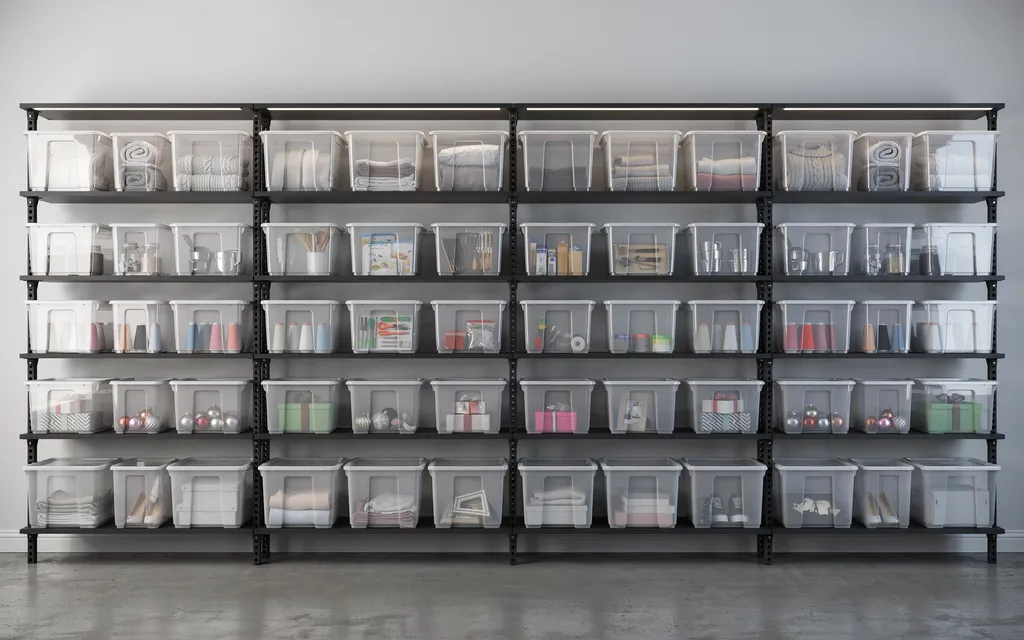
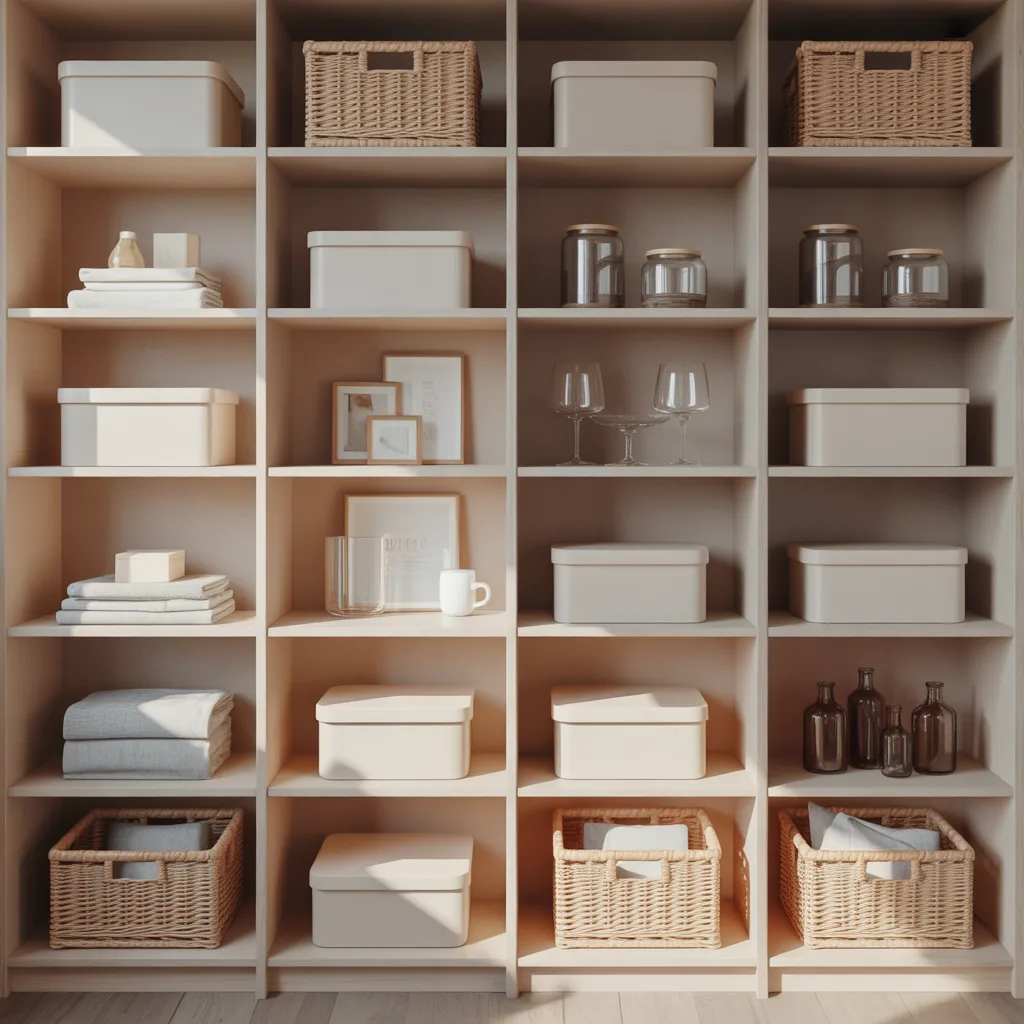
One of the easiest ways to organize a basement is by using clear storage bins on open shelving. Being able to see what’s inside each container eliminates guesswork and saves time when searching for specific items.
I like grouping similar items together, such as holiday decorations, camping gear, or cleaning supplies. Placing bins on sturdy shelving also keeps everything off the floor and reduces the risk of damage from moisture.
Pro Tip
Use waterproof labels on both the front and top of each bin so you can identify contents from any angle without pulling containers off the shelf.
Labeled Memory Bins
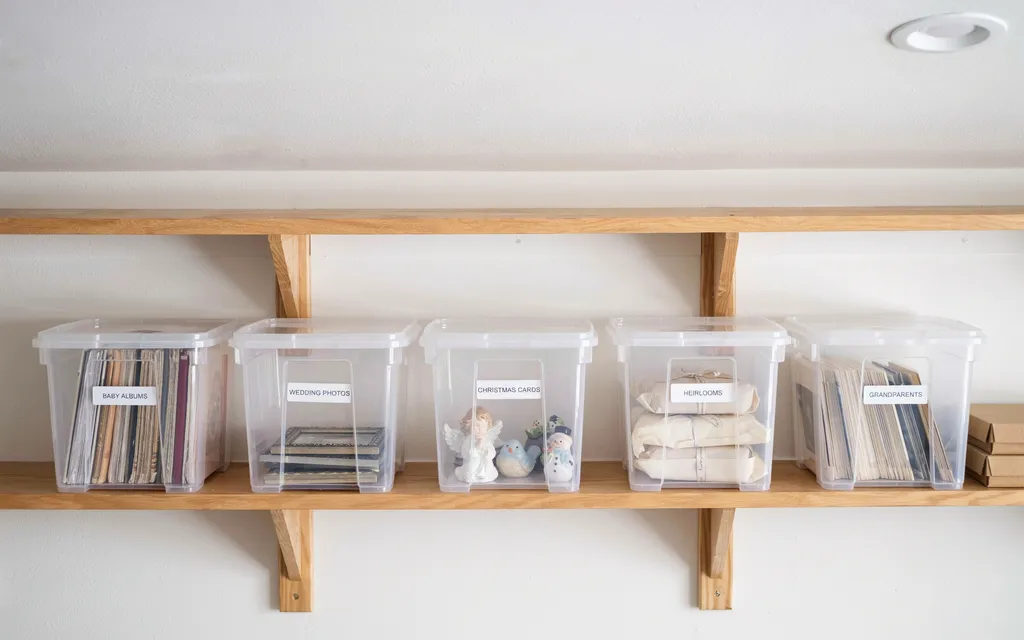
Keepsakes and sentimental belongings deserve better protection than old cardboard boxes. Dedicated memory bins help preserve photographs, childhood items, and family heirlooms while keeping them organized.
I recommend using matching containers with secure lids and creating simple labels that describe the contents. This prevents treasured items from getting buried behind years of accumulated storage.
Pro Tip
Add a printed photo to the outside of each memory bin so you can instantly recognize what’s inside without opening it.
Category Shelf Zones
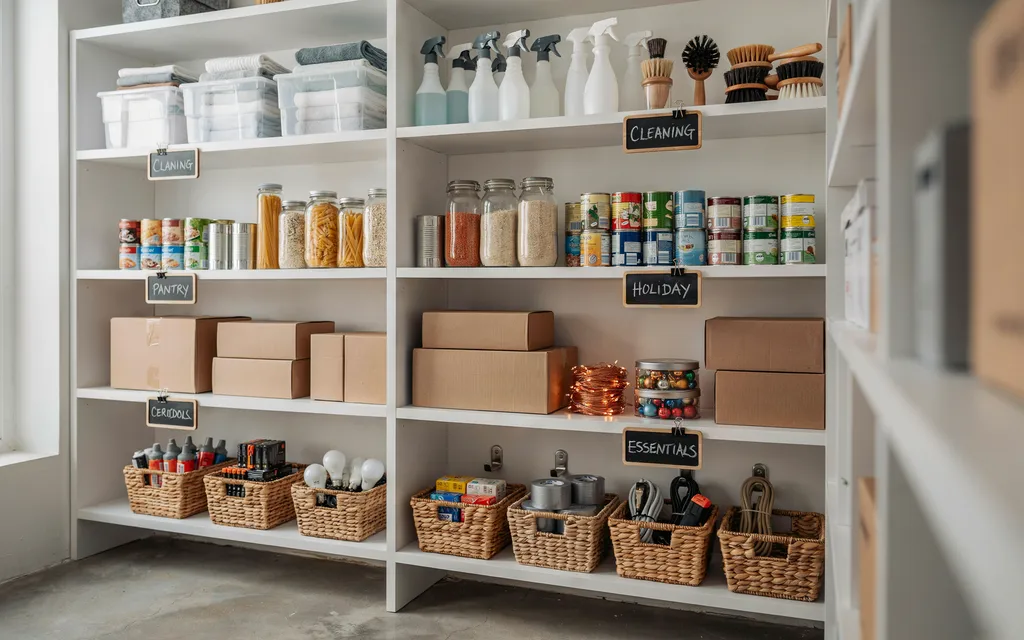
Creating designated zones for different categories makes basement organization much easier. Instead of mixing unrelated items together, dedicate specific shelves to holiday décor, tools, pantry supplies, or household extras.
This approach helps maintain order because everyone in the household knows exactly where things belong. It also simplifies future decluttering sessions.
Pro Tip
Leave one empty shelf in each zone to accommodate future purchases and prevent overcrowding.
Bulk Storage Wall
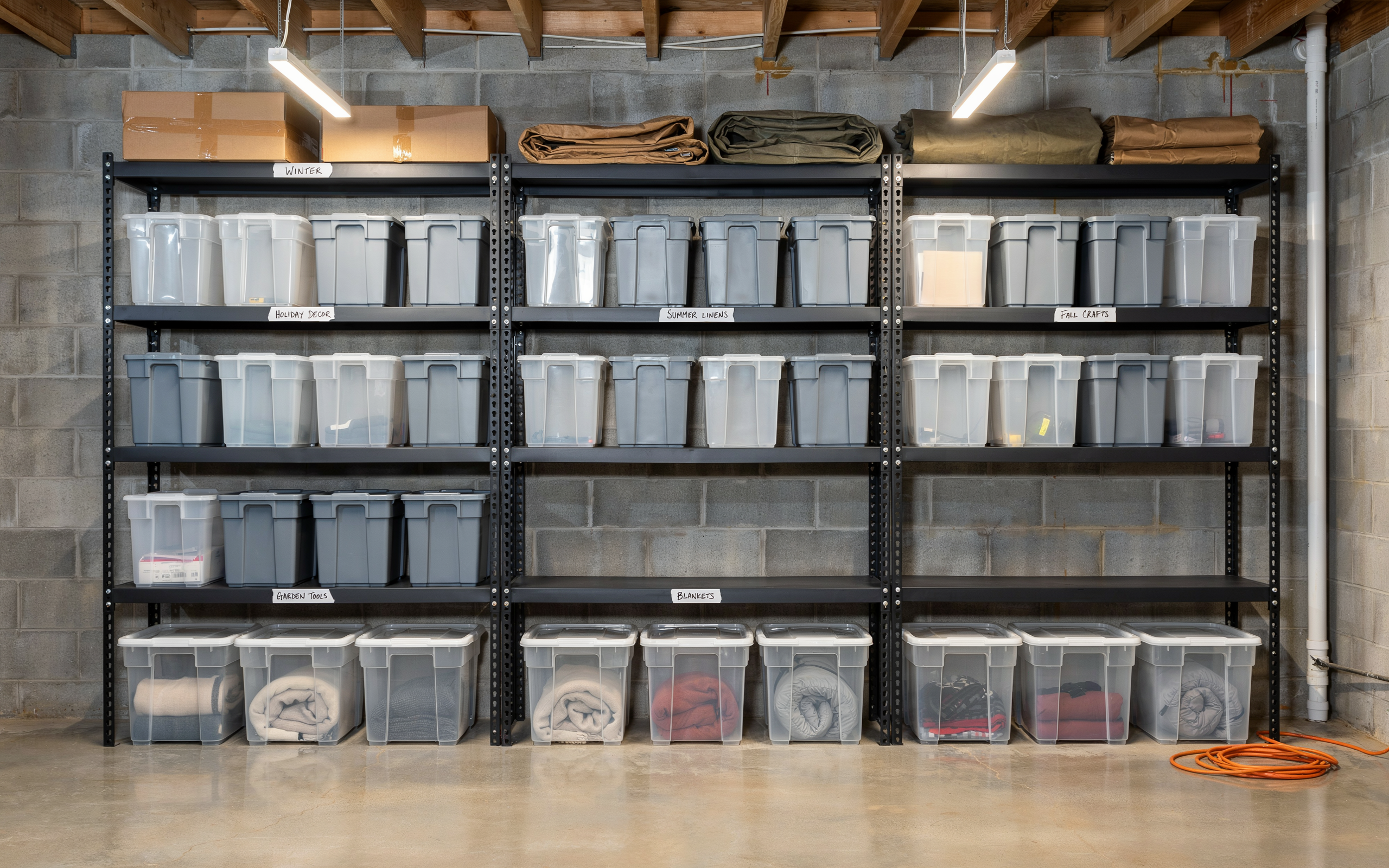
Long basement walls provide the perfect opportunity for large-scale storage. Installing heavy-duty shelving across an entire wall creates a dedicated area for seasonal items, bulk purchases, and infrequently used belongings.
I find that uniform containers make the space look cleaner while allowing for safer stacking. Consistency also helps maximize available storage capacity.
Pro Tip
Store the heaviest bins on lower shelves to improve stability and reduce the risk of accidents.
Built-In Cabinets
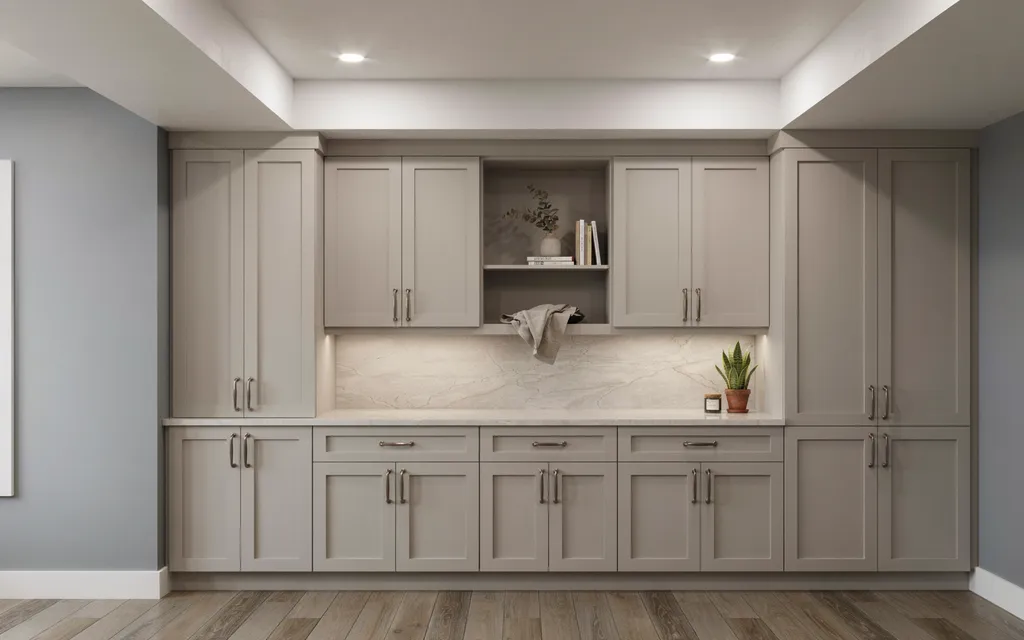
Built-in cabinets create a polished appearance while hiding visual clutter. They work especially well in finished basements where storage needs to blend with living spaces. Cabinets provide protection from dust and create a cleaner environment compared to fully open shelving. Adding countertops can also provide valuable workspace for hobbies or household projects.
Pro Tip
Choose adjustable shelves inside cabinets so the storage system can evolve as your needs change.
Kid-Safe Storage
If your basement doubles as a playroom, child-friendly storage solutions are essential. Low cabinets, cubbies, and accessible bins allow children to reach toys independently while making cleanup easier. I always recommend avoiding tall freestanding units that could tip over. Safety should remain the priority when designing family-friendly spaces.
Pro Tip
Use picture labels instead of text labels for younger children to encourage independent organization.
Hidden Display Storage
Storage doesn’t have to look purely functional. Combining closed cabinets with decorative shelves allows you to hide clutter while displaying books, collectibles, and personal décor. This setup works particularly well in finished basements used for entertaining or relaxing. It creates a balanced look without sacrificing valuable storage space.
Pro Tip
Reserve open shelves for attractive items only and keep everyday clutter behind closed doors.
Furniture Does Double
Multi-functional furniture can dramatically increase storage capacity without taking up extra floor space. Storage benches, ottomans, and coffee tables with hidden compartments provide convenient places to store blankets, games, and toys. I love this approach because it keeps frequently used items nearby while maintaining a tidy appearance.
Pro Tip
Choose furniture with soft-close lids to prevent injuries and protect stored belongings.
DIY Shelf Build
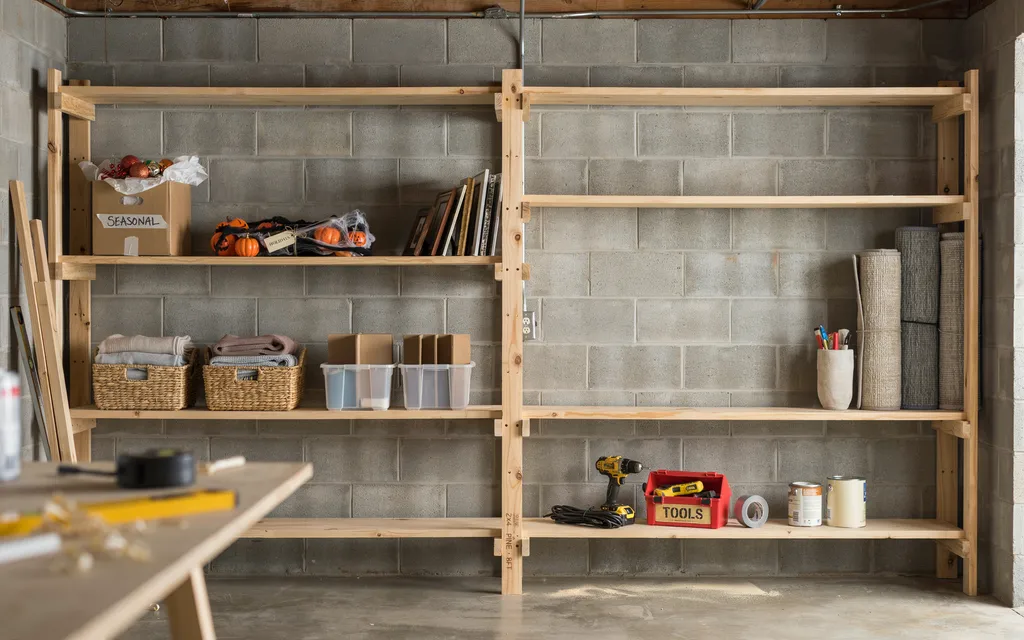
Custom-built shelving offers flexibility that store-bought solutions sometimes lack. You can design shelves to fit your exact basement dimensions and storage requirements. Basic lumber and proper wall anchoring can create durable storage that lasts for years. Open shelving also promotes airflow around stored items.
Pro Tip
Seal wooden shelves with a moisture-resistant finish to extend their lifespan in basement environments.
Wire Rack Rows
Wire shelving is one of the most practical choices for basements that experience humidity. The open design allows air to circulate freely, reducing moisture buildup around stored belongings. Adjustable wire racks can also be reconfigured as storage needs change, making them a flexible long-term investment.
Pro Tip
Add locking wheels to wire shelving units so you can easily move them for cleaning and maintenance.
Custom Wall Shelves
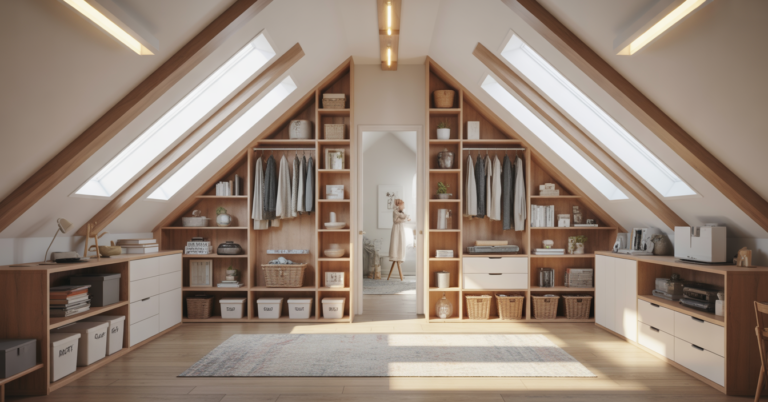
Built-in wall shelving maximizes vertical storage while creating a custom look. Unlike standard shelving units, custom shelves can be tailored to fit awkward corners and unusual basement layouts. Painting shelves the same color as surrounding walls helps them blend seamlessly into the room while still providing substantial storage capacity.
Pro Tip
Vary shelf heights to accommodate both small containers and oversized storage bins without wasting space.
Library-Style Storage
A basement can become much more functional when storage feels intentional rather than purely practical. Full-wall shelving creates a library-inspired look while providing room for books, board games, collectibles, and household essentials. I like this setup because it combines display and storage in one place. Adjustable shelves also make it easy to adapt the space as your collection grows over time.
Pro Tip
Keep frequently used items between waist and eye level, while rarely used belongings can be stored on higher shelves.
Media Wall Storage
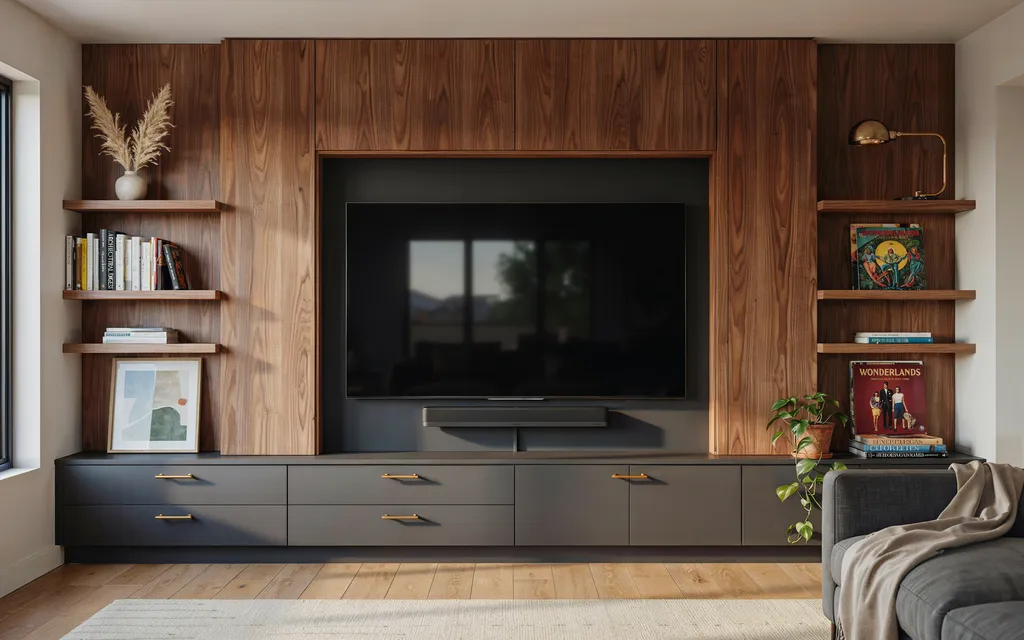
Entertainment spaces often become cluttered with remotes, gaming accessories, cables, and electronics. A media wall with integrated storage keeps everything organized while maintaining a clean appearance. Base cabinets work well for hiding equipment, while open shelving can showcase decorative items that make the room feel more welcoming.
Pro Tip
Use cable management boxes inside cabinets to eliminate tangled cords and create a cleaner setup.
Staircase Storage Nook
The area beneath basement stairs is often overlooked, but it can provide valuable storage space. Custom shelving or cabinets that follow the stair angle help maximize every inch. This solution works especially well for items you use regularly, such as cleaning supplies, shoes, or household tools.
Pro Tip
Install motion-sensor lighting under the stairs so items remain easy to find without adding extra switches.
Under-Stair Pantry
If your basement includes a kitchenette, guest area, or entertainment zone, under-stair storage can function as a compact pantry. Shelving and cabinets provide room for snacks, small appliances, and household supplies. I find that this setup makes use of otherwise wasted space while improving overall organization.
Pro Tip
Store heavier appliances on lower shelves and reserve upper shelves for lightweight pantry goods.
Playroom Wall Storage
Keeping toys organized becomes much easier when storage stays off the floor. Wall-mounted cubbies, shelves, and bins create designated homes for toys while preserving open play space. Children are more likely to clean up when storage is accessible and easy to understand.
Pro Tip
Rotate toys every few months to reduce clutter and keep playtime exciting for children.
Seasonal Swap Shelves
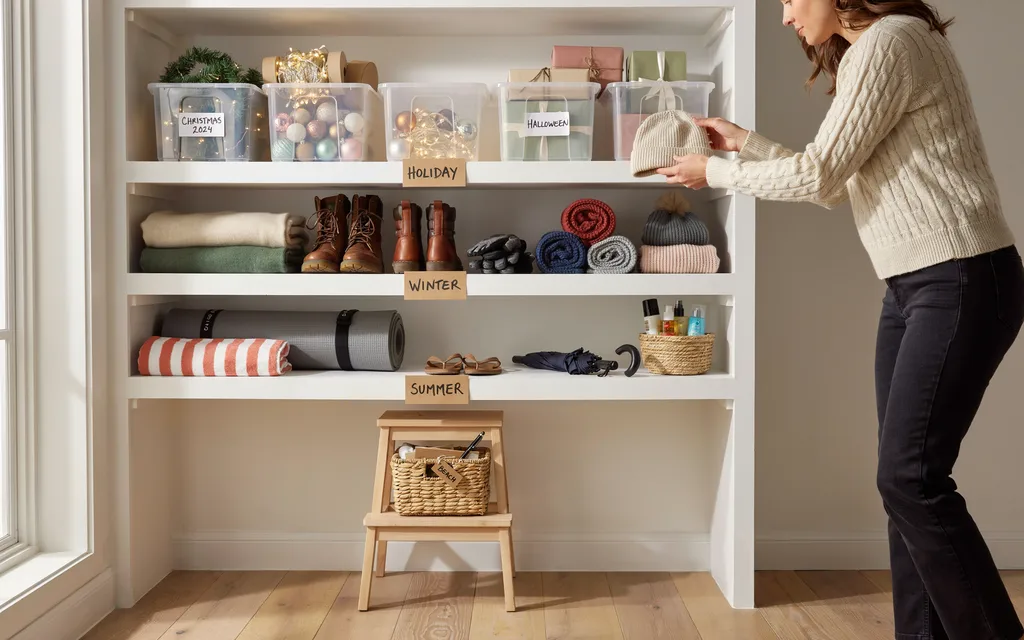
Seasonal items don’t need prime storage locations year-round. Dedicated shelves for holiday decorations, winter gear, and summer equipment simplify seasonal transitions. Keeping these items grouped together makes decorating and storage much faster when seasons change.
Pro Tip
Color-code storage bins by season so you can quickly identify what belongs where.
Labeled Zone Storage
One of the simplest ways to maintain organization is by assigning every shelf a purpose. Grouping similar items together prevents clutter from spreading throughout the basement. Clear labels create accountability and help every family member return items to their proper location.
Pro Tip
Review and update storage labels twice a year to ensure categories still match your household’s needs.
Framed Media Storage
When storage surrounds a television, the entire entertainment area feels more balanced and organized. Deep cabinets provide hidden storage while side shelving creates opportunities for display. This arrangement works especially well in finished basements that serve as family gathering spaces.
Pro Tip
Leave a few shelves partially empty to avoid a crowded appearance and allow room for future additions.
Pantry-Style Bins
A pantry-inspired organization system can transform basement storage. Clear bins, adjustable shelves, and categorized sections make it easy to locate supplies quickly. I prefer organizing items by purpose rather than size because it creates a more practical system for everyday use.
Pro Tip
Use stackable bins with front openings so you can access contents without removing the entire container.
Bookcase Base Storage
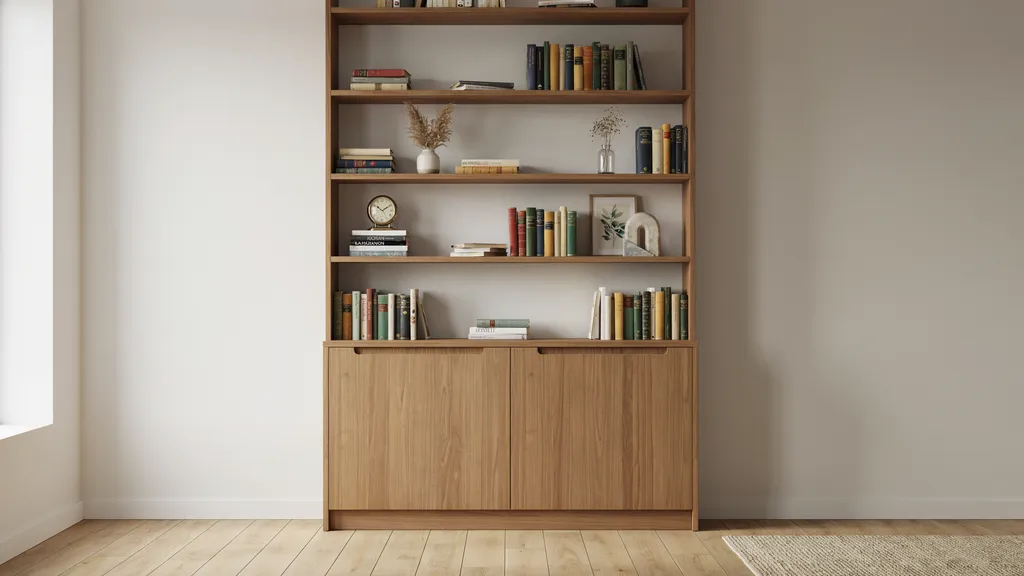
Combining open shelving with closed cabinets offers the best of both worlds. Books, décor, and collectibles stay visible, while less attractive items remain hidden below. This design creates a polished appearance while increasing overall storage capacity.
Pro Tip
Reserve lower cabinets for bulky items that don’t need to be accessed frequently.
Bench Locker Storage
A basement entry area can benefit from mudroom-style organization. Lockers, cabinets, and built-in benches provide dedicated places for coats, shoes, backpacks, and sports equipment. Having a designated drop zone helps prevent clutter from spreading into the rest of the home.
Pro Tip
Add removable baskets inside lockers to make cleaning and organizing much easier.
Low-Profile Built-Ins
Basements with lower ceilings can feel cramped when storage extends too high. Long, horizontal built-ins keep the room feeling open while still providing valuable storage space. This design works particularly well in family rooms, home theaters, and finished recreation areas.
Pro Tip
Choose lighter cabinet colors to make low-ceiling spaces feel larger and brighter.
Full-Wall Closets
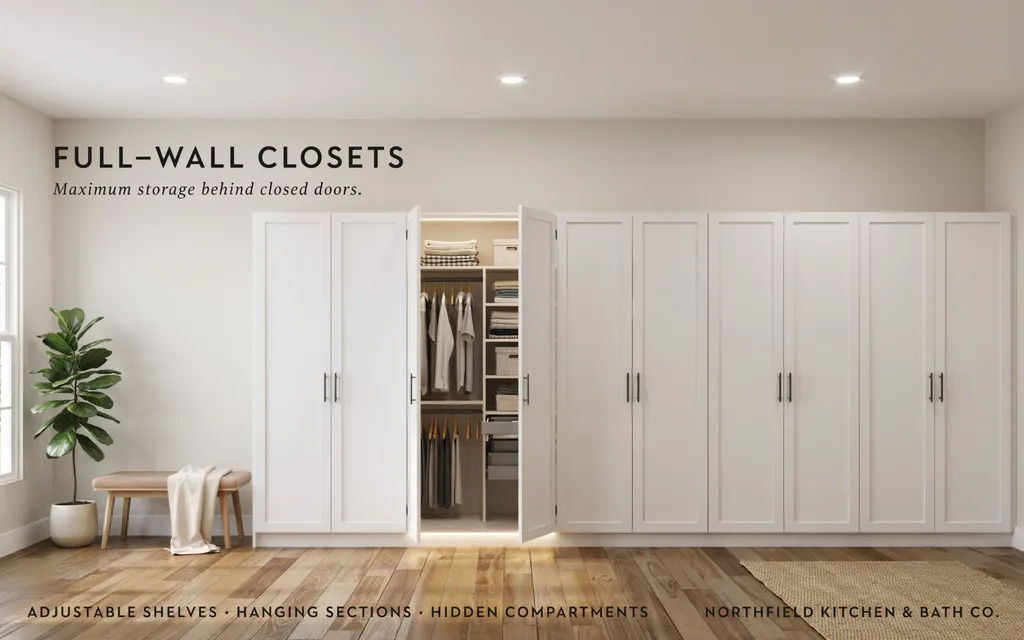
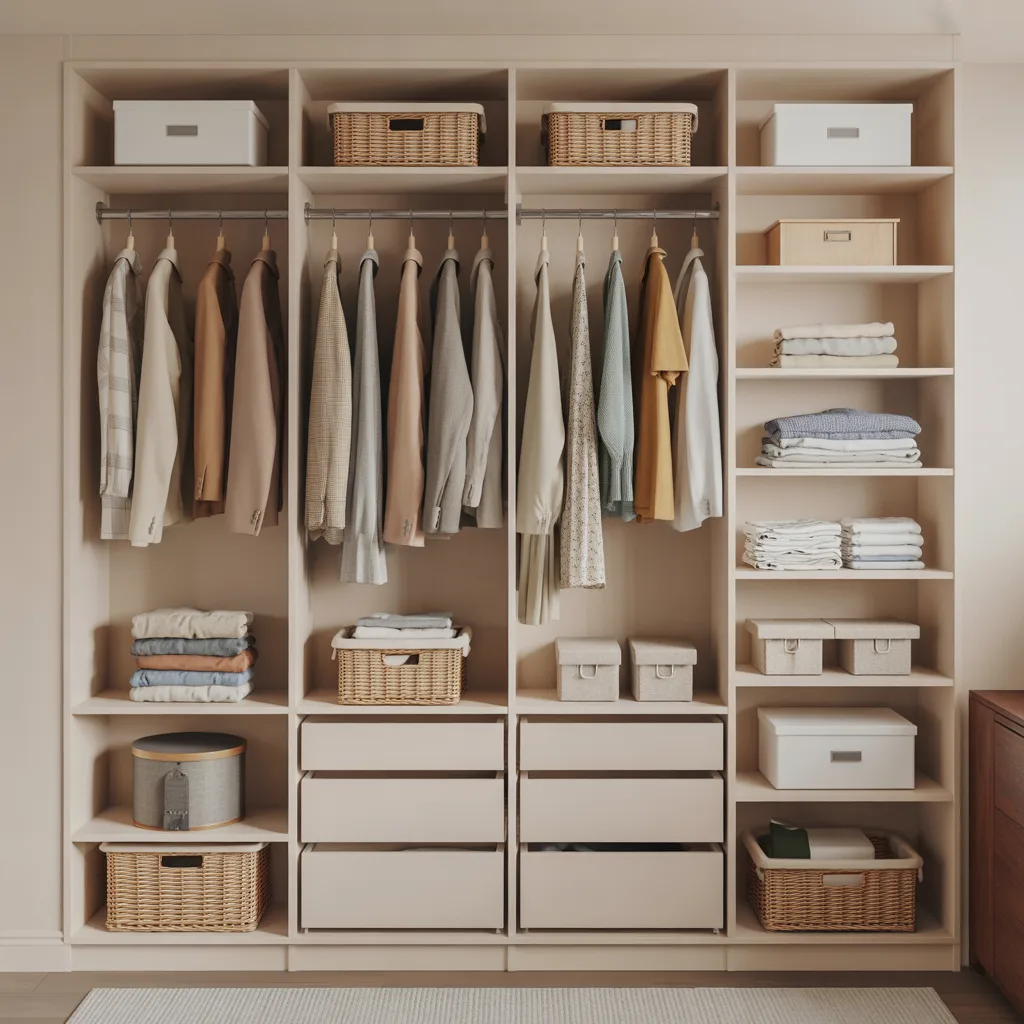
For homeowners who need maximum storage, full-wall closets provide an excellent solution. Adjustable shelves, hanging sections, and hidden compartments allow you to store a wide variety of belongings. Because everything stays behind closed doors, the basement maintains a clean and organized appearance regardless of what’s stored inside.
Pro Tip
Install adjustable closet systems so shelves can be reconfigured as storage needs change throughout the years.
FAQs
1. How do I create storage in a basement?
The first step is addressing moisture and lighting issues before adding any storage solutions. Once the environment is suitable, focus on vertical space with shelving, cabinets, and wall-mounted systems.
I recommend keeping items off the floor whenever possible and using labeled containers to make everything easy to locate. A combination of open shelving and closed storage usually provides the best results.
2. What adds the most value to a basement?
Built-in storage tends to add the most value because it improves both function and appearance. Custom cabinets, wall-to-wall shelving, and under-stair storage help maximize usable space.
Well-designed storage makes the basement feel like a purposeful extension of the home rather than a simple storage room.
3. Is it okay to store clothes in a basement?
Yes, but only if the basement is dry and climate-controlled. Clothing should be stored in sealed containers or garment bags to protect against moisture, dust, and pests. Adding a dehumidifier can provide additional protection for long-term clothing storage.
4. What should never be stored in a basement?
Important documents, irreplaceable photographs, electronics, and delicate fabrics should not be stored in damp basements. Extreme humidity and temperature changes can cause permanent damage. If these items must be stored downstairs, use waterproof containers and climate-control solutions.
5. How can I make a small basement feel organized?
Focus on vertical storage, wall-mounted shelves, and multi-functional furniture. Keeping the floor clear creates the illusion of more space while improving accessibility. Consistent labeling and regular decluttering also help maintain an organized appearance.
6. Are clear bins better than cardboard boxes?
In most cases, yes. Clear bins allow you to see contents instantly and provide better protection against moisture and pests. They are also more durable and easier to stack than traditional cardboard boxes.
7. How often should basement storage be reorganized?
I recommend reviewing your storage system at least twice a year. Seasonal changes provide a great opportunity to rotate items, donate unused belongings, and improve organization. Regular maintenance prevents clutter from building up over time.
Conclusion
A well-organized basement can give you hundreds of square feet of extra usable space without adding a single room to your home. The key is choosing storage solutions that fit both your layout and the types of items you store most often.
Whether you prefer simple clear-bin shelving, custom built-in cabinets, under-stair storage, or full-wall closets, the goal is to create a system that makes finding and putting away items effortless. I always recommend starting with the areas that create the most clutter and then expanding your storage system over time.
By combining smart organization, proper lighting, and moisture protection, your basement can become one of the most functional spaces in your house. With these 24 basement storage ideas, you’ll be able to maximize every inch while keeping your belongings safe, accessible, and organized throughout 2026 and beyond.