



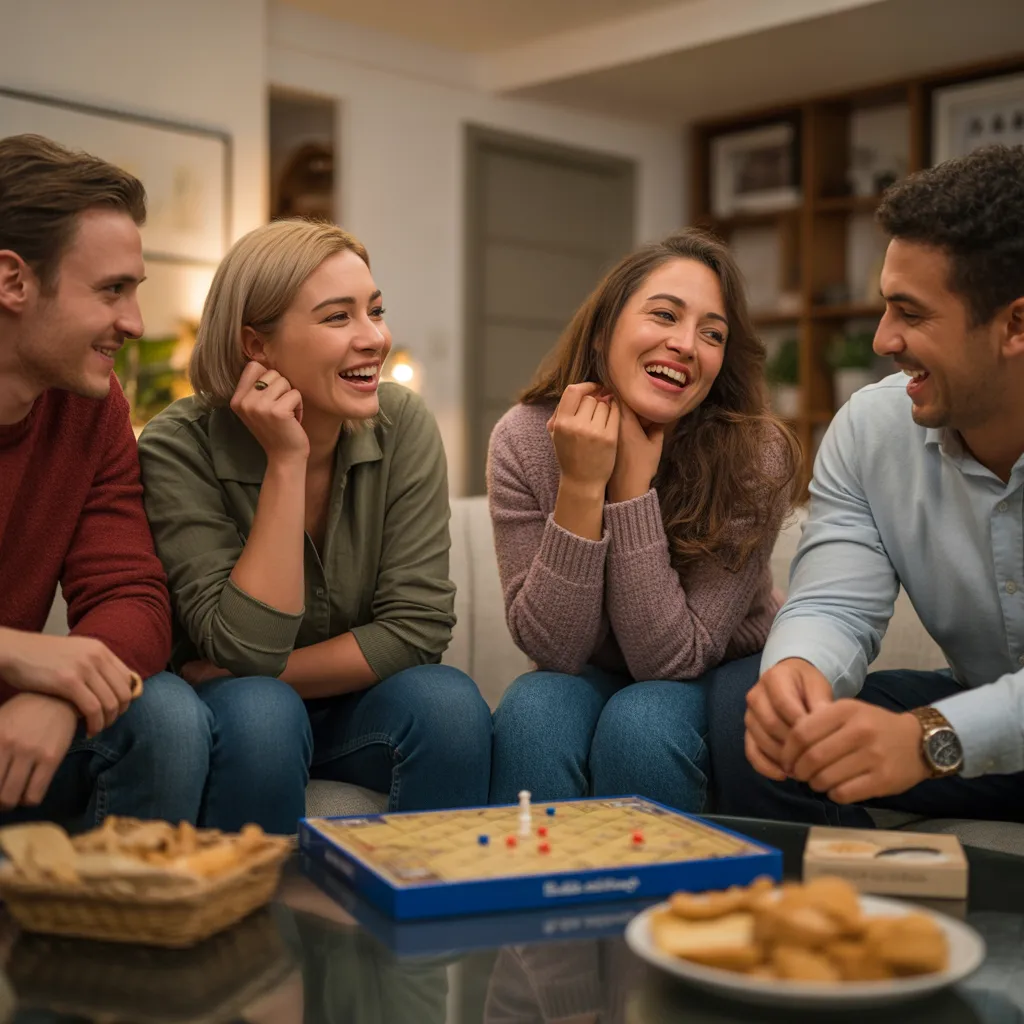
Planning a get-together with a large group of friends or family is something I really enjoy, but I’ve also learned it can get chaotic without proper activities. In my experience, when there are many people, conversations split into small groups unless you have structured games that keep everyone involved.
So in this article, I’m sharing 30 large group games that I personally find easy to set up and perfect for keeping energy high. These games work for parties, dinners, and casual hangouts, and most of them need very little preparation.

Key Takeaways
- These games are perfect for large groups of 8 to 30+ people
- Most games require simple items like paper, pens, or nothing at all
- A mix of fun, strategy, creativity, and physical movement
- Great for family gatherings, parties, and social events
- Best results come when rounds are kept short and fast-paced
1. Guess Who
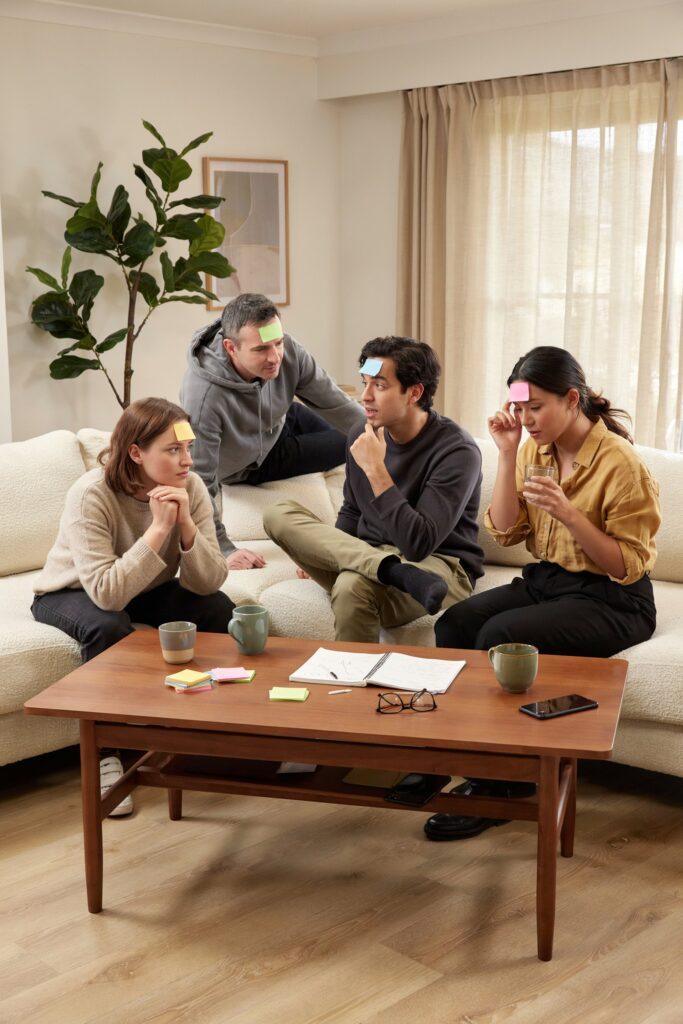
In Guess Who, I usually write character names on sticky notes and place one on each player’s forehead. Everyone has to ask yes or no questions to figure out their identity. I’ve noticed the game becomes much more fun when players avoid random guessing and think strategically. Starting with broad questions helps narrow things down quickly.
2. Murder Mystery Game
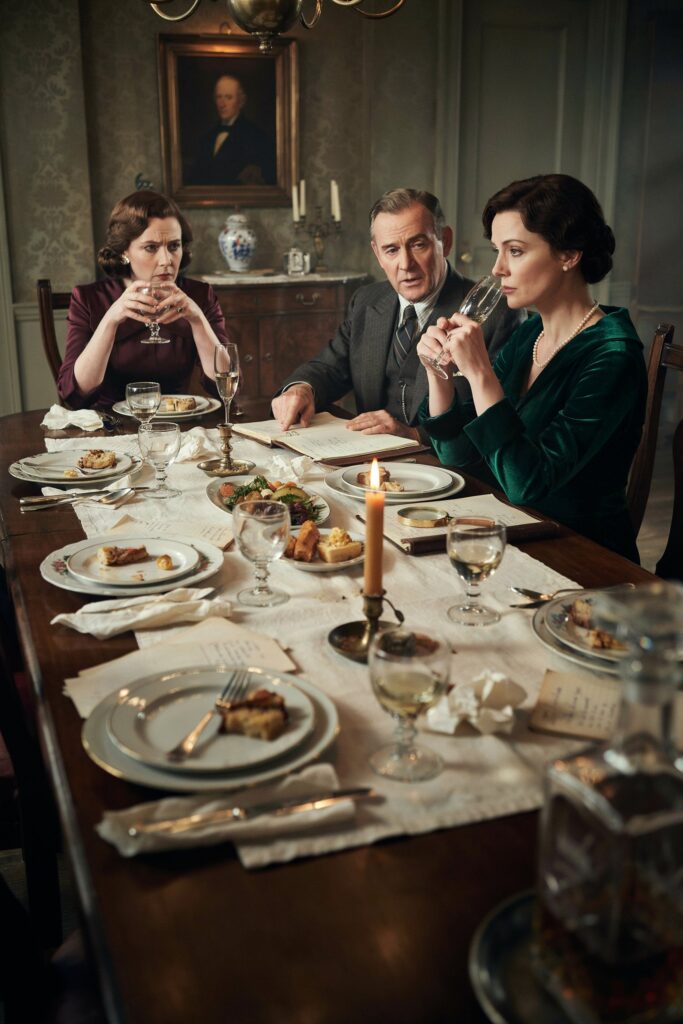
This is one of my favorite immersive games because everyone gets a role to play. One person is secretly assigned as the murderer while others try to solve the mystery through clues and conversation. I usually recommend using printable kits because they make the storyline more engaging and structured.
3. Cool Beans
Cool Beans works by placing hidden phrases under dinner plates before the game begins. Each player must naturally include their phrase in conversation without getting caught. It always creates laughter because people try to sound normal while secretly being strategic with their words.
4. Two Truths, One Lie

In this game, each person shares two true facts and one false statement about themselves. The group then guesses which one is the lie. I like using this as an icebreaker because it helps people learn surprising things about each other in a relaxed way.
5. Great Minds Think Alike

I divide players into teams and call out categories like “things in a kitchen” or “famous actors.” Everyone writes answers at the same time, and points are awarded for matching responses. It’s interesting to see how often people think alike without planning.
6. Trivia Night
Trivia Night is a classic group game where teams answer questions from different topics like history, sports, and pop culture. I usually adjust difficulty depending on the group so everyone can participate. It’s competitive but also educational, which keeps it engaging.
7. Salad Bowl
Salad Bowl combines elements of charades and guessing games. Players write names on paper, then act them out or describe them in different rounds. I like this game because each round changes the rules, which keeps it unpredictable and fun.
8. Dinner Pictionary

In Dinner Pictionary, players draw words while teammates try to guess them within a time limit. No talking or writing is allowed during drawing. From my experience, this game becomes hilarious when simple words turn into confusing sketches.
9. Drinking Jenga
This version of Jenga includes written challenges on each block, such as “take a truth” or “do a dare.” Players complete the task after pulling a block. I’ve seen this game completely change the energy of a party very quickly.
10. Make a Rule
In this game, one player creates a rule that everyone must follow during the event. If someone breaks it, there’s a penalty. I’ve found that simple but tricky rules work best because they keep people constantly alert.
11. Mafia
Mafia is a social deduction game where players are secretly assigned roles. The mafia tries to eliminate others while townspeople try to identify them. It works best in large groups because discussion and suspicion make it more exciting.
12. Telephone Pictionary

Players alternate between writing sentences and drawing what they see, passing the paper each round. By the end, the original message usually becomes completely different. I always find the final results the funniest part of this game.
13. Spoons
Spoons is a fast-paced card game where players try to collect four of a kind. Once someone succeeds, everyone rushes to grab a spoon from the center. I’ve noticed it gets very competitive very quickly, especially with larger groups.
14. Who Said That?
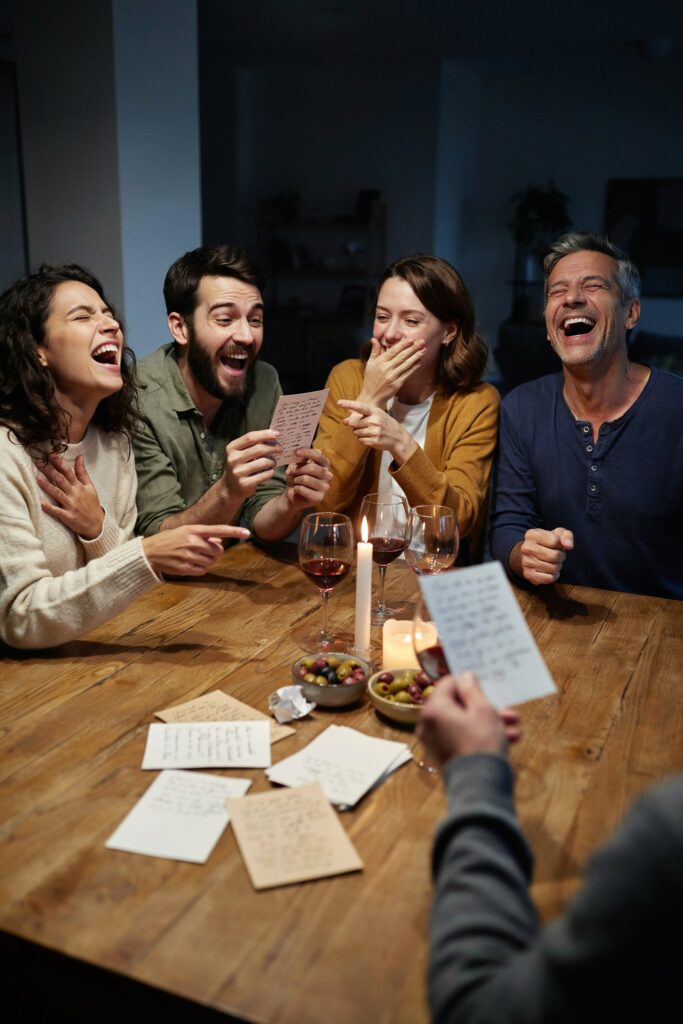
In this game, I collect old quotes or social media posts from participants and read them aloud anonymously. The group then guesses who said each one. It always leads to laughter and sometimes embarrassment in a friendly way.
15. Human Machine
Players build a “machine” using only body movements and sounds. Each person adds one part at a time. I like this game because it becomes more creative and chaotic as more players join in.
16. Red Ball
In Red Ball, players pass imaginary objects and act them out realistically. The object often changes as the game continues, making it more challenging. It’s a great creativity-based warm-up game.
17. The Viking
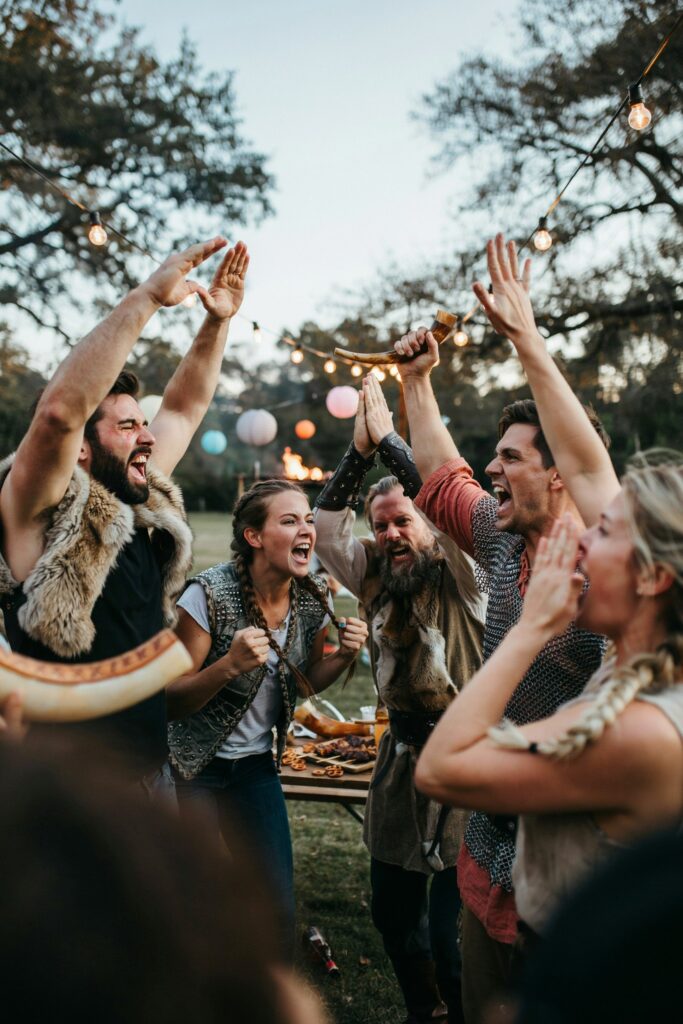
Players stand in a circle and pass Viking-style gestures and sounds quickly. Anyone who hesitates or makes a mistake is eliminated. It’s fast-paced and keeps everyone alert throughout the game.
18. Guess the Whistler’s Tune
One player whistles a tune while others try to guess it. It sounds simple, but it becomes tricky in large groups. I’ve seen this game create a lot of funny moments when guessing goes wrong.
19. Dinner Murder
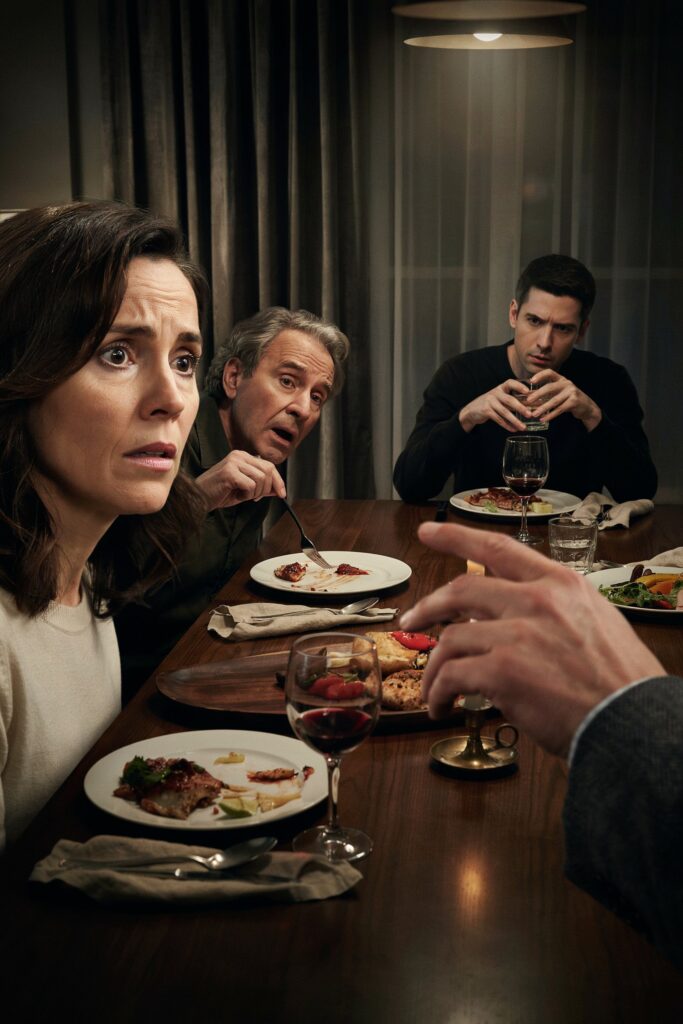
Dinner Murder is a mystery game where a murderer secretly eliminates players using signals. Others must observe carefully to identify the culprit. It’s a game that relies heavily on attention and observation.
20. Charades
Charades is a classic where players act out words without speaking. Their team must guess correctly within a time limit. It’s one of the most reliable games for large groups because it always gets people laughing.
21. Stop Walk Races
In this game, players move only when “walk” is called and freeze when “stop” is shouted. It sounds simple but becomes tricky at higher speed. I like it because it improves focus and reaction time.
22. Capture the Flag
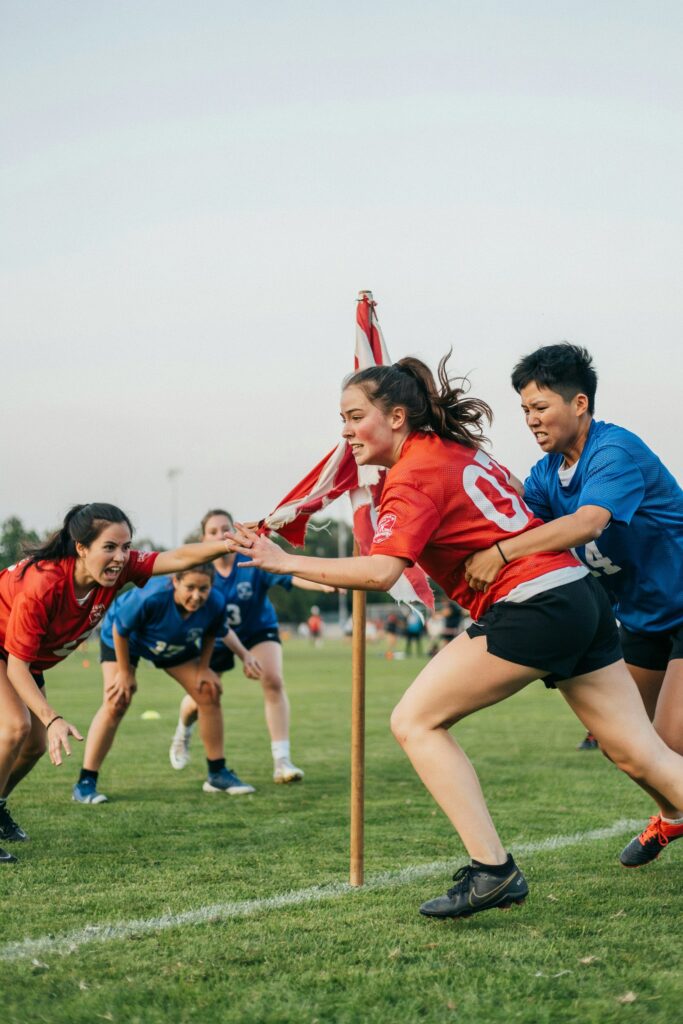
Two teams compete to capture each other’s flag while defending their own. It works best outdoors and involves strategy, teamwork, and speed. From my experience, planning matters more than running fast.
23. Jenga
Classic Jenga involves removing blocks without collapsing the tower. I often use it as a calm break between energetic games. It requires focus, patience, and a steady hand.
24. Spy
Spy is a creative game where players act out imaginary objects or actions together. Each person adds something new to the story. It’s great for teamwork and imagination.
25. Switch

Players switch seats when the host calls out names or commands. It creates movement and interaction across the group. I like how it mixes people randomly throughout the game.
26. Follow the Leader
One person leads actions while everyone else follows. It’s simple but very effective for group coordination. The leader role can rotate to keep things fresh.
27. Table Topics
This game uses question cards to spark conversations. Each player answers a question in turn. I’ve found it works really well for breaking awkward silence in new groups.
28. Memory Game
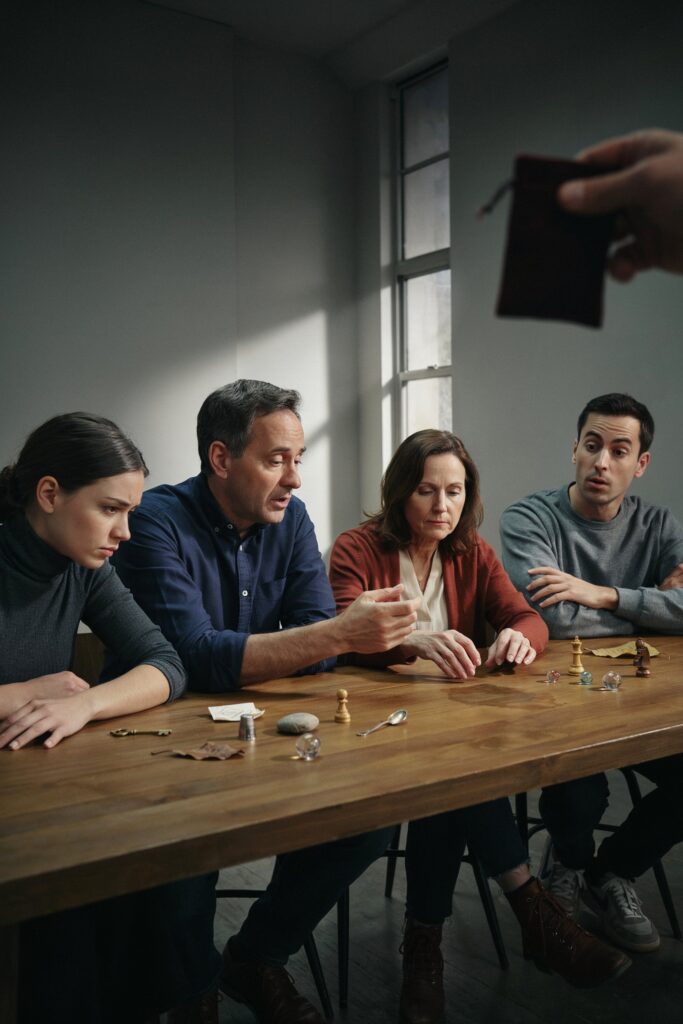
Players observe a tray of objects for a short time and then try to recall them. It tests focus and memory skills. Increasing difficulty makes it more competitive.
29. Categories
Players take turns naming items in a chosen category until someone fails. It becomes more difficult as the round continues. Quick thinking is the key to winning.
30. Hot Seat
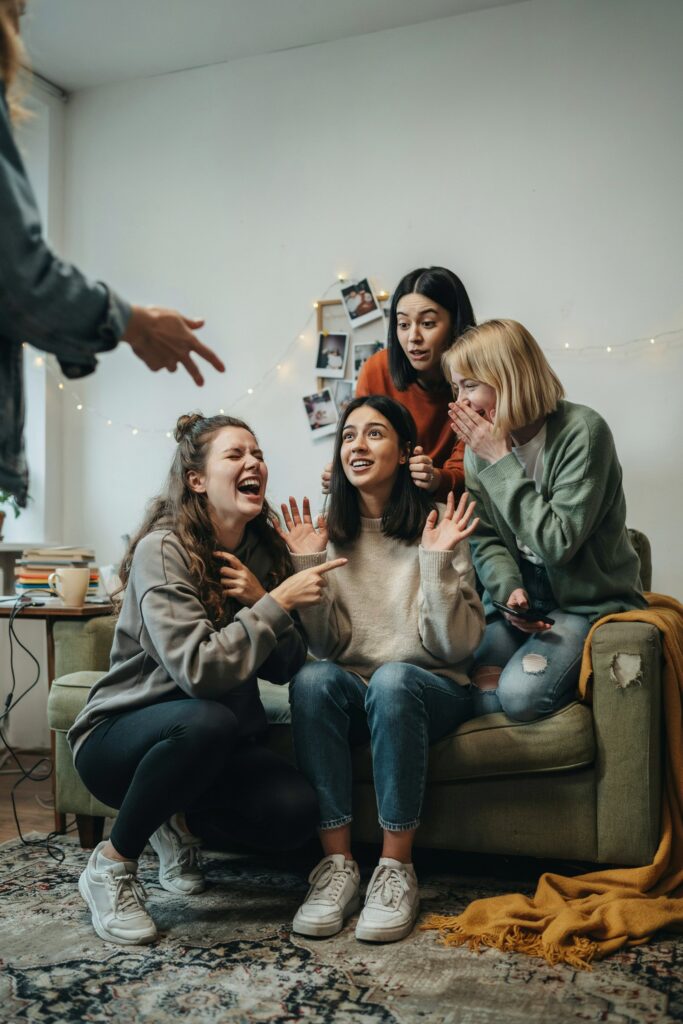
One player sits in the “hot seat” and answers rapid-fire questions from the group. It’s fast, funny, and sometimes revealing. I always keep questions light to maintain a fun atmosphere.