
Keeping children busy indoors is not always easy, especially when the weather keeps everyone inside. Over the years, I’ve tested dozens of indoor activities with kids of different ages, and the games in this list consistently get the best reactions.
The biggest advantage of indoor games is that they do more than just pass time. Many help improve memory, coordination, creativity, communication, and problem-solving skills. According to child development experts, active play supports physical and cognitive growth while reducing excessive screen time.
In this guide, I’m sharing 27 indoor games that are simple to set up, budget-friendly, and genuinely fun for the whole family. Most require little to no special equipment and can be played in almost any home.

Key Takeaways
- Most games use items already available at home.
- Indoor play can improve coordination, memory, and social skills.
- Many activities encourage creativity and imaginative thinking.
- Several games provide physical exercise without needing outdoor space.
- These activities work well for family game nights, rainy days, and school holidays.
1. Hunt Against The Timer
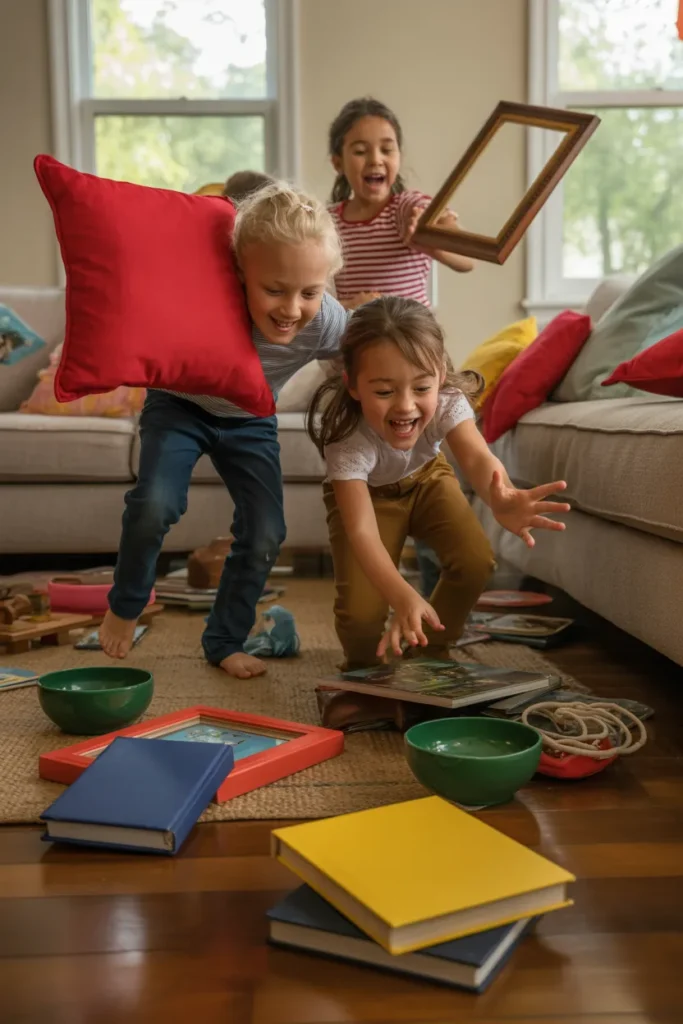
This is one of my favorite last-minute games because it requires almost no preparation. I simply choose a color, shape, or letter and set a timer. The kids then race around the house searching for matching items before time runs out.
To make it more challenging, I sometimes shorten the timer or choose difficult categories. Besides being exciting, this game encourages quick thinking, observation skills, and decision-making under pressure.
2. Grandma’s Footsteps
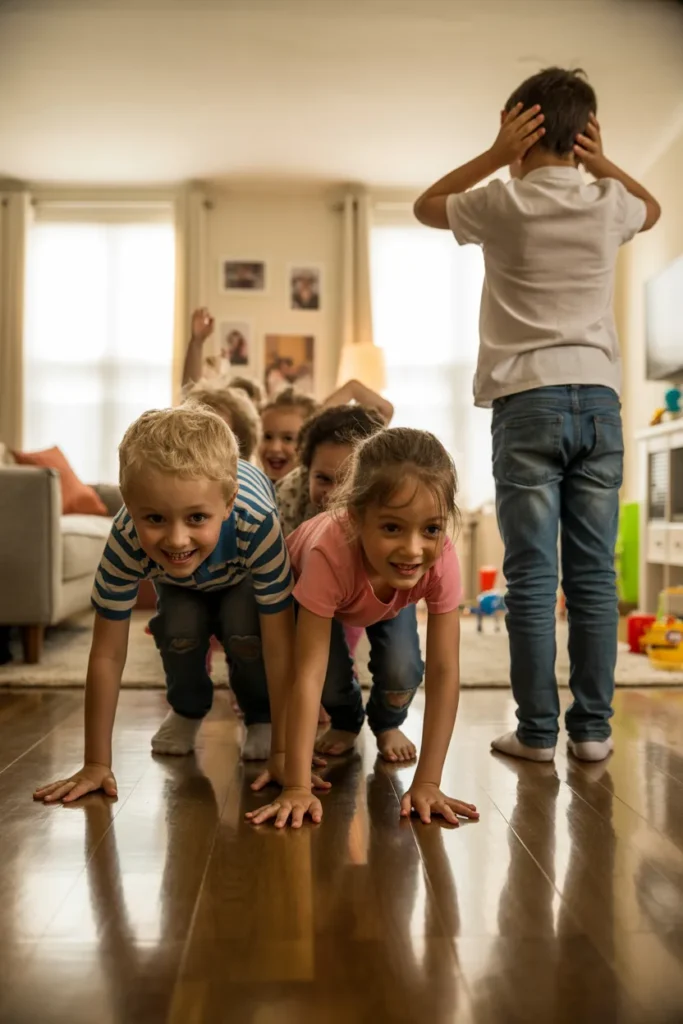
Grandma’s Footsteps has remained popular for generations because it combines patience, focus, and plenty of laughter. One child stands facing away from everyone else while the rest slowly move toward them.
Whenever “Grandma” turns around, everyone must freeze immediately. Any player caught moving returns to the starting line or leaves the round. I’ve noticed this game is especially good for improving self-control and concentration.
3. Egg Jousting
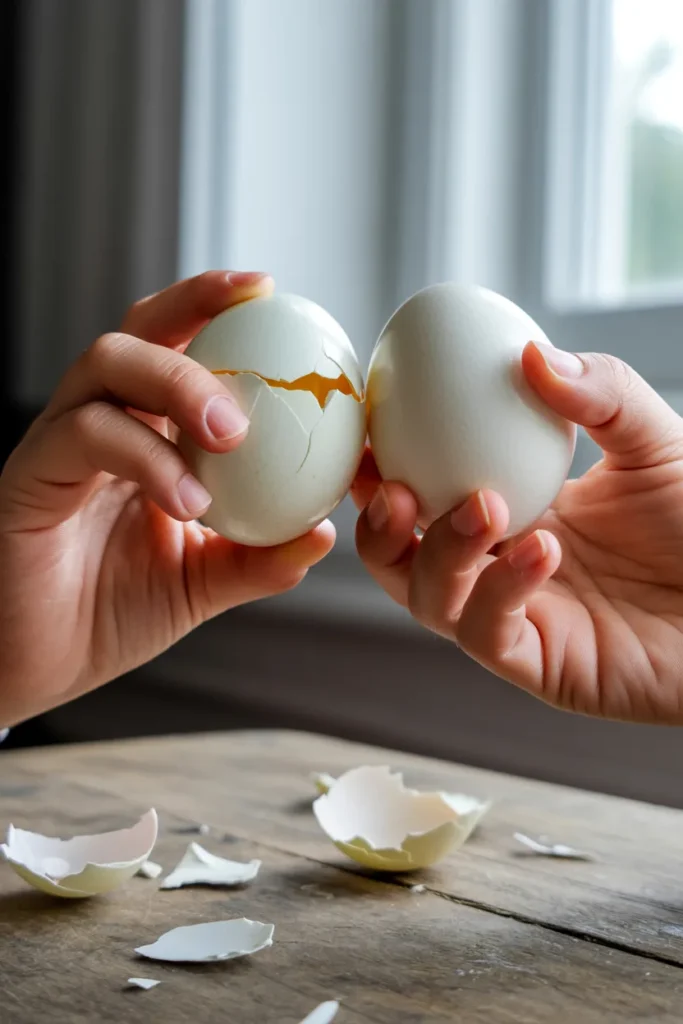
Whenever I have leftover hard-boiled eggs, this game becomes an instant hit. Each player chooses an egg and gently taps it against another player’s egg.
The goal is simple: keep your shell intact while cracking your opponent’s. The last player with an unbroken egg wins. As a bonus, the eggs can still be eaten afterward, making this a fun activity with very little waste.
4. Zingo
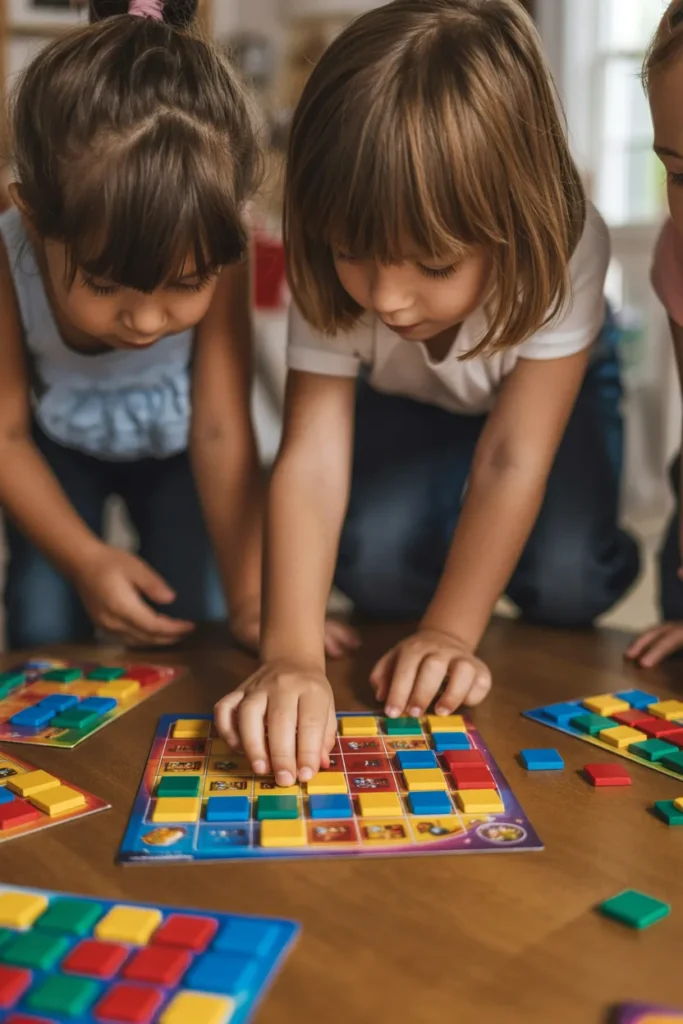
Zingo combines the excitement of bingo with fast-paced matching. Every player receives a card, and matching tiles are revealed throughout the game.
I’ve found that younger children especially enjoy the quick action. It also helps strengthen word recognition, visual matching, and attention skills while keeping everyone engaged.
5. What’s The Time, Mr. Wolf?

This game creates plenty of suspense and excitement. One child acts as Mr. Wolf while standing at the opposite side of the room.
Players ask for the time and move forward according to the answer they receive. The surprise comes when Mr. Wolf suddenly announces dinner time and begins chasing everyone. Kids love the unpredictable nature of this game.
6. Go Fish
Go Fish is one of the easiest card games for families to learn. Players collect matching pairs by asking each other for specific cards.
I often recommend this game because it teaches patience, memory, and basic strategy. Younger children also benefit from practicing communication and turn-taking during play.
7. Musical Chairs

Few games create as much energy as Musical Chairs. Arrange chairs in a circle with one fewer chair than the number of players.
As the music plays, everyone moves around the chairs. Once the music stops, players race to find a seat. Besides being entertaining, this activity improves reaction speed and listening skills.
8. Freeze Dance
Whenever kids have extra energy to burn, Freeze Dance works perfectly. I simply play music and let everyone dance however they like.
The challenge begins when the music suddenly stops. Anyone who keeps moving is out of the round. This game encourages physical movement while helping children practice focus and self-control.
9. Hopscotch
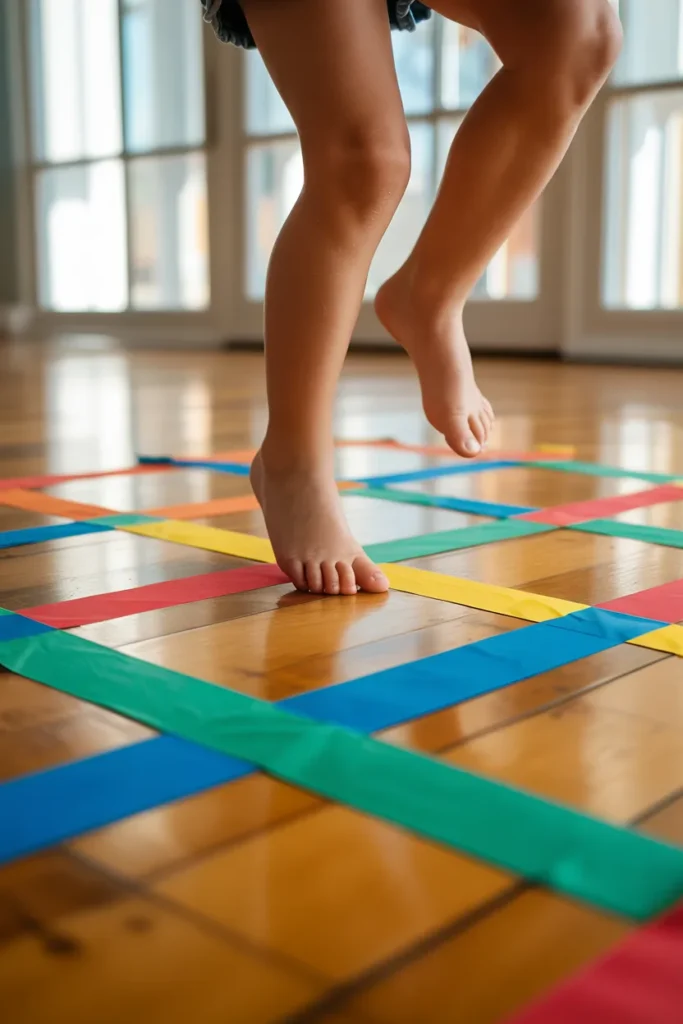
Indoor hopscotch is surprisingly easy to create using painter’s tape on the floor. Once the grid is ready, kids take turns hopping through the numbered spaces.
The activity helps develop balance, coordination, and lower-body strength. It also provides an excellent alternative to outdoor play when space is limited.
10. Play Pretend
Imaginative play remains one of the best ways for children to develop creativity. In this game, kids choose characters, professions, or situations and act them out.
I’ve seen children become chefs, astronauts, teachers, veterinarians, and superheroes within minutes. Pretend play encourages storytelling, communication skills, and creative problem-solving while making learning feel natural.
11. DIY Obstacle Course
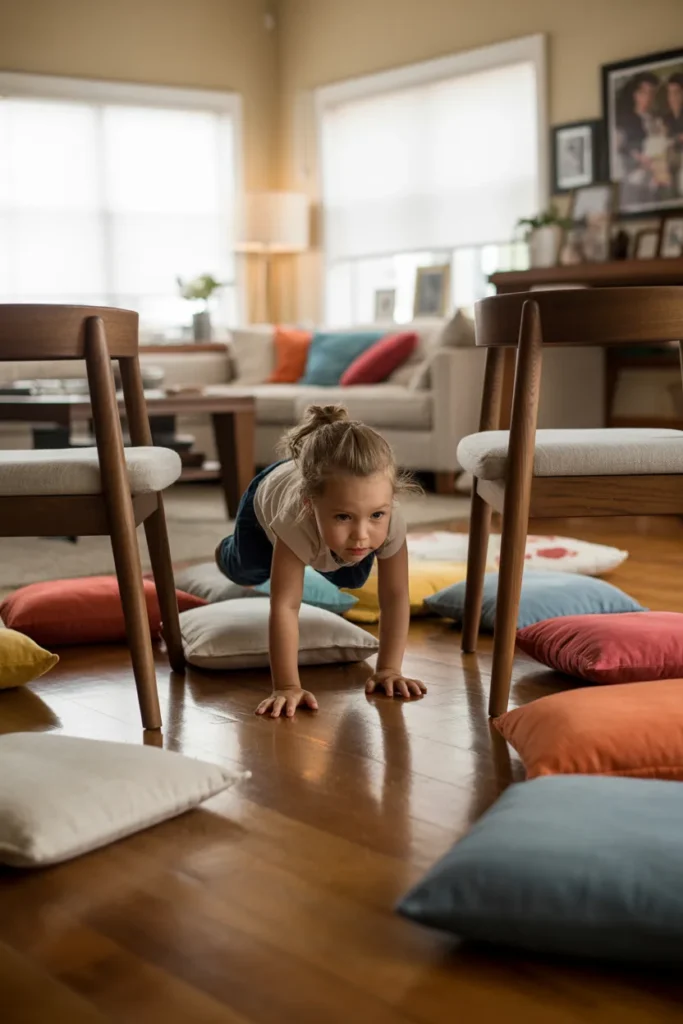
Whenever my kids start getting restless indoors, I build a simple obstacle course using items already around the house. Pillows become stepping stones, chairs become tunnels, and blankets create crawling zones.
This activity keeps children moving while improving balance, coordination, and problem-solving skills. I often add small challenges at each station to make the course more exciting and age-appropriate.
12. Race Paper Planes
Paper airplane races are one of the easiest indoor activities to organize. I let the kids fold and decorate their own planes before testing whose design flies the farthest.
Besides being fun, this game introduces basic concepts of design and aerodynamics. Children naturally learn through trial and error as they adjust folds and compare flight results.
13. Hot Potato
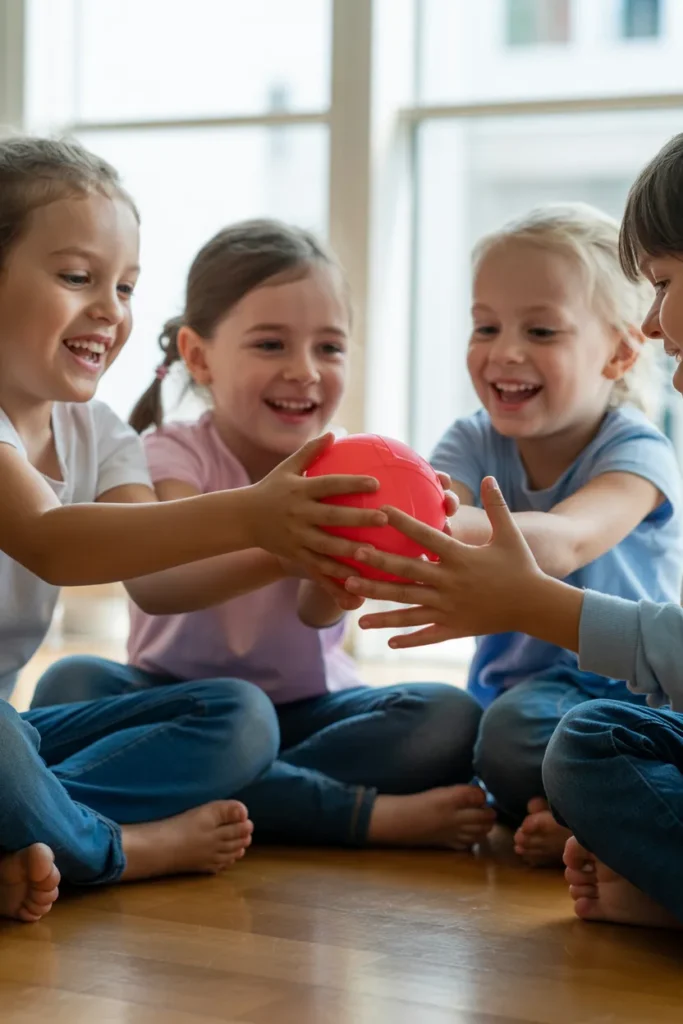
Hot Potato is a simple game that creates plenty of laughter. Players pass a small object around while music plays in the background.
When the music stops, the person holding the object leaves the round. I’ve found this game helps younger children improve reaction speed, focus, and listening skills while keeping everyone engaged.
14. Play Dough Art
Play dough never seems to lose its appeal. I encourage kids to create animals, vehicles, food items, or anything else they can imagine.
The activity strengthens hand muscles and fine motor skills, which are important for writing and everyday tasks. It also gives children a creative outlet without requiring expensive supplies.
15. Guess Who
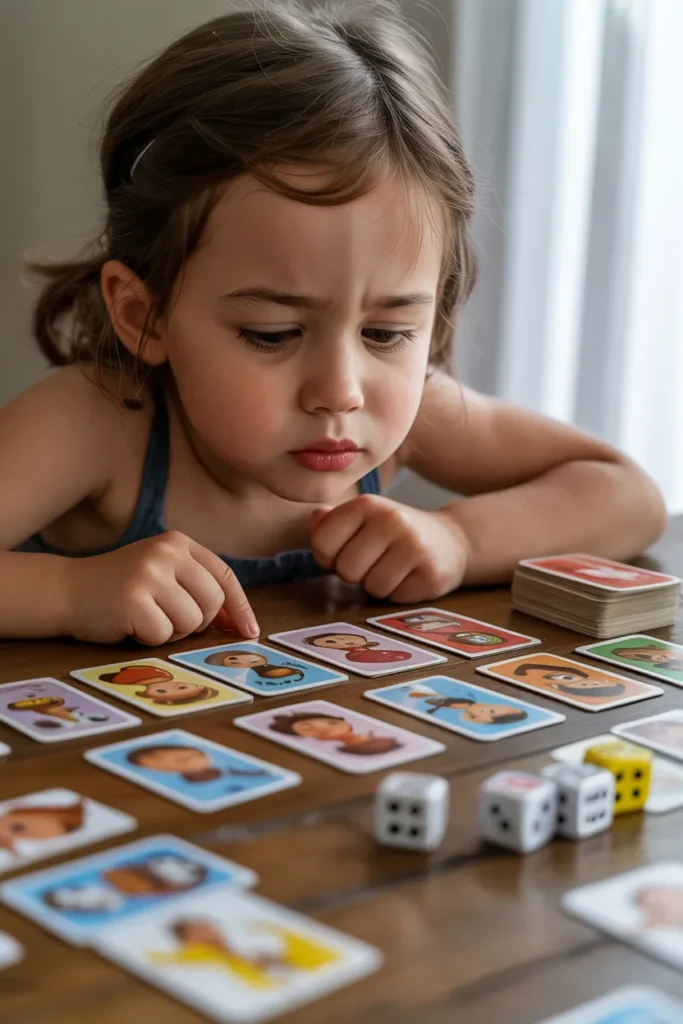
Guess Who is a fantastic game for building critical thinking skills. Players ask simple yes-or-no questions to narrow down possible answers and identify the mystery character.
I like using customized versions with family photos because they add a personal touch while helping younger children recognize relatives and remember names.
16. Paint Your Dreams
This activity allows children to express ideas visually. I usually ask them to paint something they would like to do, become, or achieve in the future.
The results are often surprising and provide a glimpse into their imagination. Painting also supports creativity, focus, and confidence as children proudly display their finished artwork.
17. Ping Pong
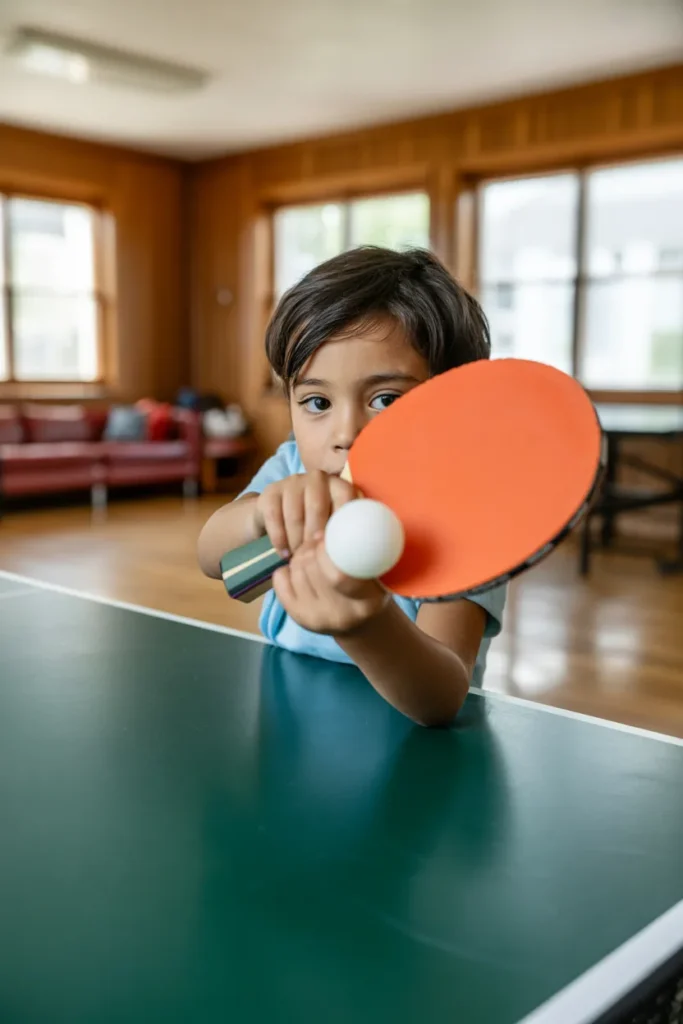
Ping Pong is one of the best indoor games for improving coordination. Even younger children can enjoy simplified versions using lightweight paddles and slower-paced rallies.
Regular play helps develop timing, concentration, and quick reflexes. It also provides healthy competition and encourages active movement indoors.
18. Memory Games
Memory games challenge children to remember the location of matching cards, objects, or pictures. I often rotate different themes to keep the activity fresh.
Research shows memory-based activities can help strengthen attention and recall skills. They are especially useful during quiet indoor play sessions.
19. Indoor Hockey
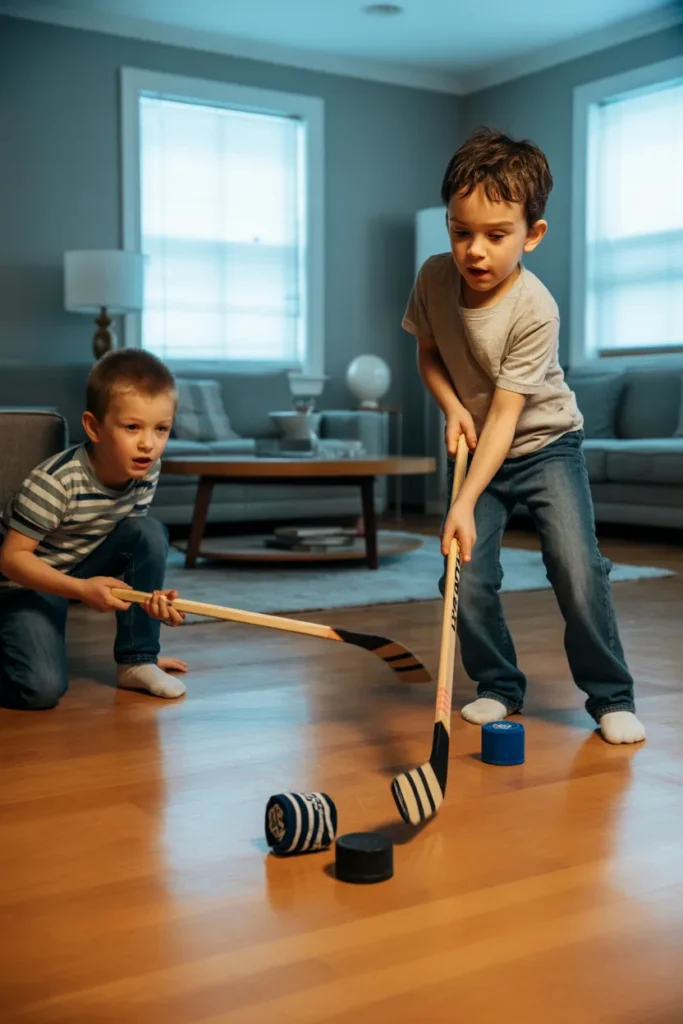
Indoor hockey turns everyday household items into sports equipment. Rolled-up socks work well as pucks, while cardboard tubes or soft sticks can serve as hockey sticks.
This game keeps kids active while teaching teamwork, coordination, and basic sportsmanship. It’s also a great way to burn energy on days when outdoor play isn’t possible.
20. Hula Hoop
A hula hoop provides a surprisingly effective workout for children. Keeping the hoop moving requires balance, timing, and core strength.
I like creating friendly competitions to see who can keep the hoop spinning the longest. Kids stay active without even realizing they’re exercising.
21. Start A Band
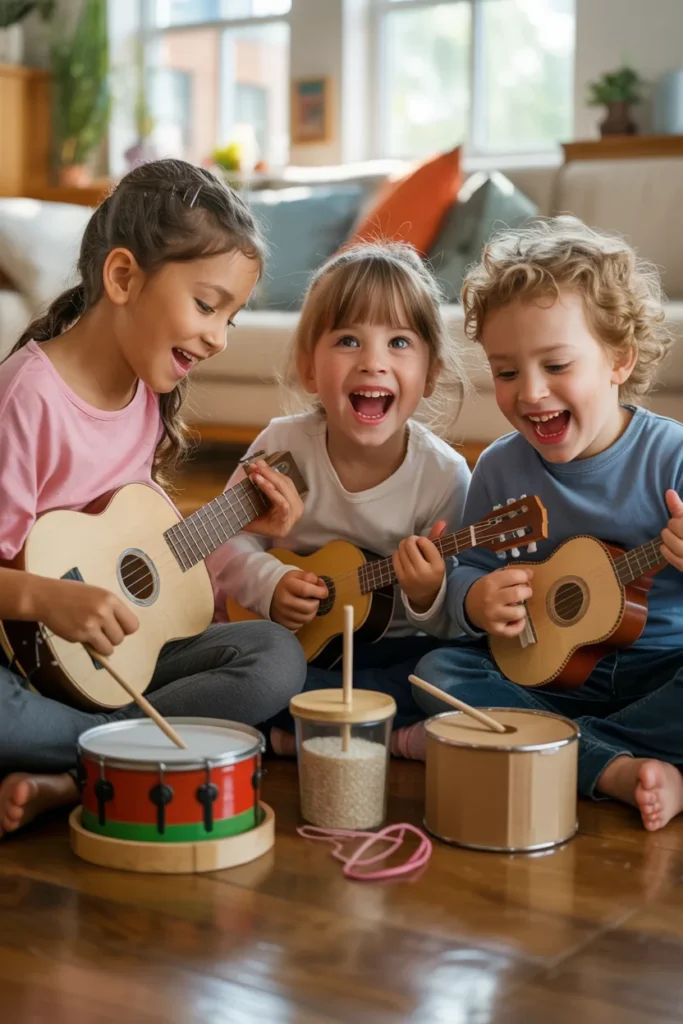
Children love making noise, and this game gives them a creative way to do it. Household items like pots, containers, and wooden spoons can quickly become musical instruments.
Playing together encourages teamwork, rhythm, and listening skills. It’s also a great opportunity for children to experiment with sounds and create their own music.
22. Make Bottle Hurricanes
Bottle hurricanes combine science and fun in one activity. I fill clear bottles with water, glitter, and small decorative items before sealing them securely.
When shaken, the contents swirl around and create a calming visual effect. This activity can also spark conversations about weather, motion, and simple science concepts.
23. Ring Toss
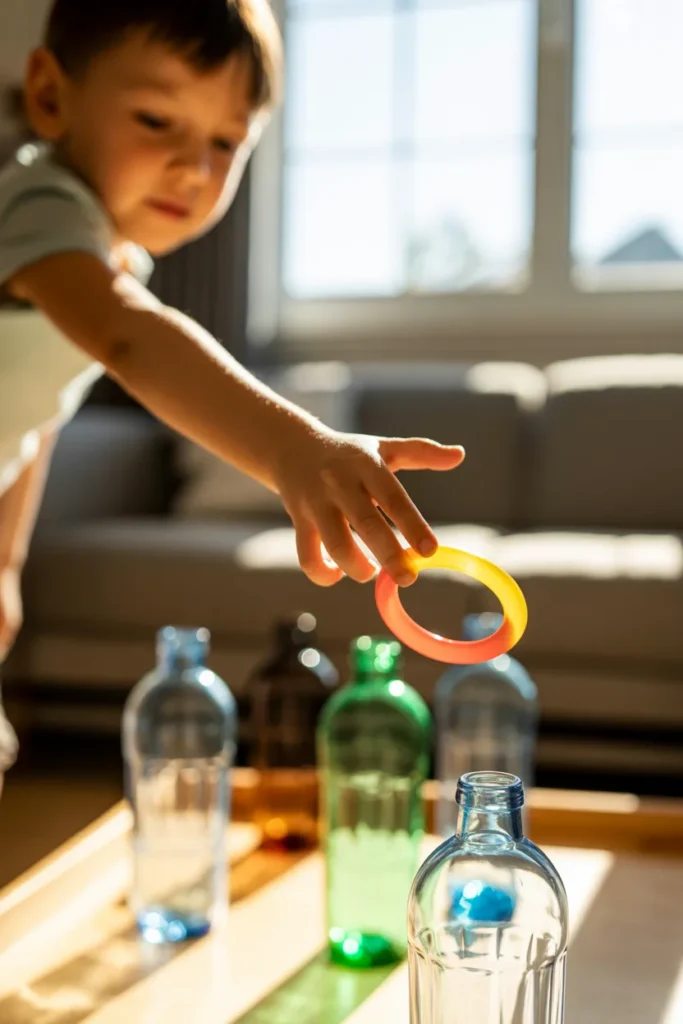
Ring Toss is a classic game that helps improve hand-eye coordination. Players aim rings toward a target from a designated distance.
I often adjust the difficulty level by moving the throwing line closer or farther away. This keeps the game challenging for different age groups and skill levels.
24. Marshmallow Tinkertoys
Using marshmallows and pretzel sticks, children can build almost anything they imagine. I’ve seen everything from towers and bridges to animals and castles.
This activity encourages creativity, engineering thinking, and problem-solving. Kids learn how structures stay balanced while having fun creating edible designs.
25. Family-Photo Bingo
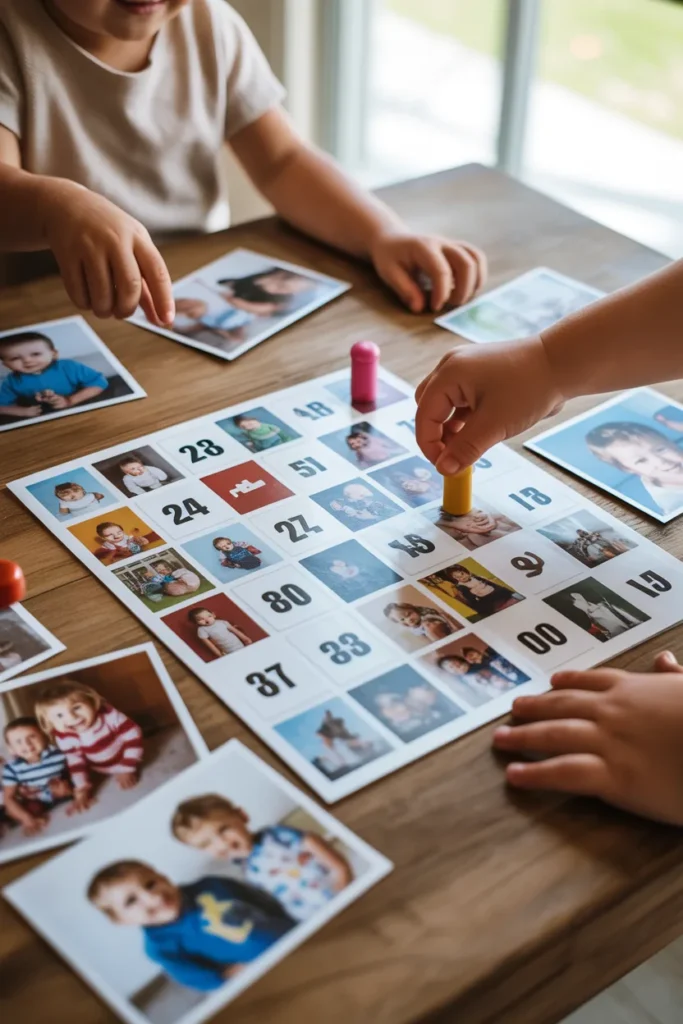
Family-Photo Bingo adds a personal twist to a traditional favorite. Instead of numbers, the bingo cards feature photos of family members.
As names are called, children cover the matching pictures. This game strengthens memory skills and helps younger children become more familiar with relatives and family connections.
26. Stop the Bus
Stop the Bus is a word game that challenges players to think quickly. After selecting a letter, everyone races to fill categories such as names, animals, foods, and places.
I enjoy this game because it naturally expands vocabulary and encourages creative thinking. Older children often become surprisingly competitive as they search for unique answers.
27. Indoor Treasure Hunt
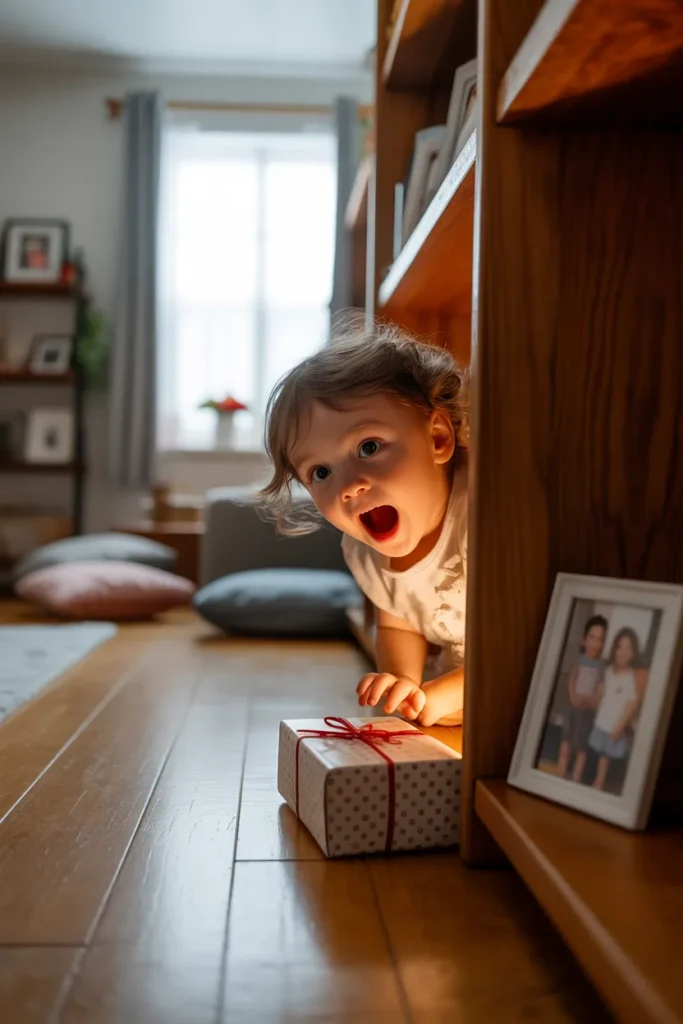
An indoor treasure hunt never fails to create excitement. I hide objects throughout the house and provide clues or a checklist for children to follow.
The game encourages observation, problem-solving, and persistence. For younger kids, simple picture clues work well, while older children usually enjoy more challenging riddles.
Frequently Asked Questions
What are the best indoor games for kids on rainy days?
Some of the most popular options include Indoor Treasure Hunt, Freeze Dance, DIY Obstacle Course, Musical Chairs, and Hunt Against The Timer because they keep children active and engaged without needing outdoor space.
Which indoor games help children learn?
Memory Games, Stop the Bus, Guess Who, Zingo, and Family-Photo Bingo help develop memory, vocabulary, critical thinking, and communication skills while still feeling like play.
What indoor games require little or no equipment?
Freeze Dance, Grandma’s Footsteps, Play Pretend, What’s The Time, Mr. Wolf?, and Hunt Against The Timer can all be played using items most families already have at home.
How can I reduce screen time with indoor activities?
Creating a daily rotation of games, crafts, movement activities, and family challenges gives children fun alternatives to screens while supporting healthy development.
Final Thoughts
Finding fun indoor activities doesn’t have to be complicated or expensive. Over the years, I’ve found that the simplest games are often the ones children ask to play again and again.
Whether you’re looking for active games, creative projects, educational activities, or family-friendly fun, these 27 indoor games can help keep kids entertained while supporting important developmental skills. With a little imagination and a few household items, any day indoors can become an exciting adventure.