

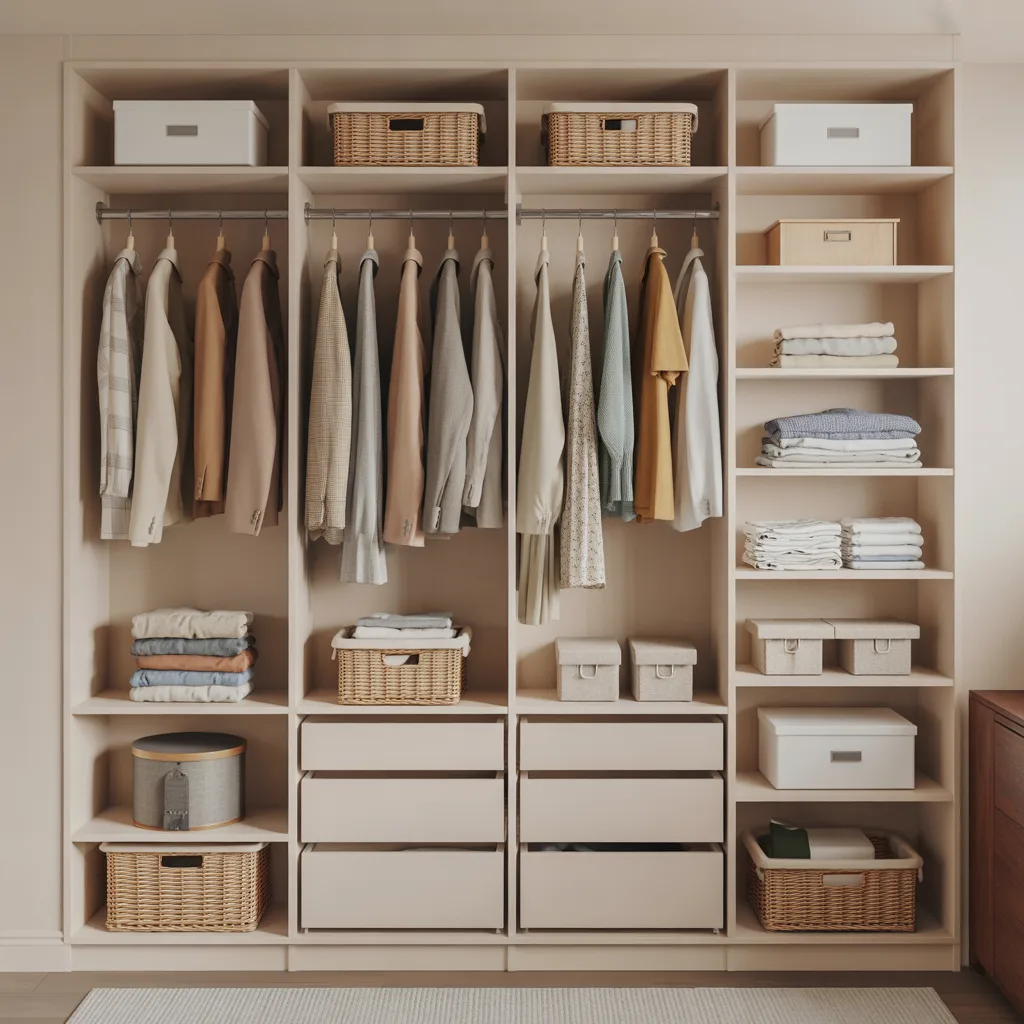


A hallway closet often becomes the dumping ground for coats, shoes, bags, cleaning supplies, and random household items. Before long, finding what you need feels impossible, and the space becomes more stressful than helpful.
The good news is that you don’t need a bigger closet to solve the problem. With the right storage strategies, even a small hallway closet can hold more while staying organized and easy to maintain.
These hallway closet organization ideas will help you create designated storage zones, improve accessibility, and make the most of every inch of space in 2026.
Key Takeaways
- Use vertical storage to maximize closet space.
- Create designated zones for every category.
- Install lower storage options for children.
- Utilize doors, walls, and unused corners.
- Store seasonal items separately.
- Label bins and baskets for easier maintenance.
- Keep daily-use items within easy reach.
- Follow simple systems that are easy to maintain.
How Can You Maximize Storage In A Small Hallway Closet?
Small hallway closets work best when every inch serves a purpose. Store everyday items at eye level, move seasonal belongings to higher shelves, and use the back of the door for additional storage. Creating specific zones prevents clutter from building up and helps every item have a permanent home.
Pro Tip: Empty space isn’t wasted space. Leaving a little room prevents your closet from becoming overcrowded again.
How Can You Organize A Hallway Closet For Both Adults And Kids?
A shared hallway closet works better when adults and children have separate storage areas. Install lower hooks and shelves that children can easily reach while keeping adult belongings higher up. Giving each family member a dedicated spot encourages everyone to put things away independently.
Pro Tip: Use picture labels for younger children who can’t read yet.
Door Storage
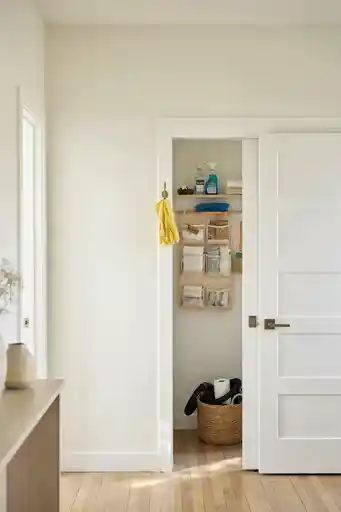
The back of a closet door offers valuable storage space that’s often ignored. Over-the-door organizers, slim racks, or hanging pockets provide a convenient place for small items like gloves, sunscreen, reusable bags, and cleaning supplies without taking up shelf space.
Pro Tip: Store lightweight items on door organizers to prevent strain on the hinges.
Clear Bins
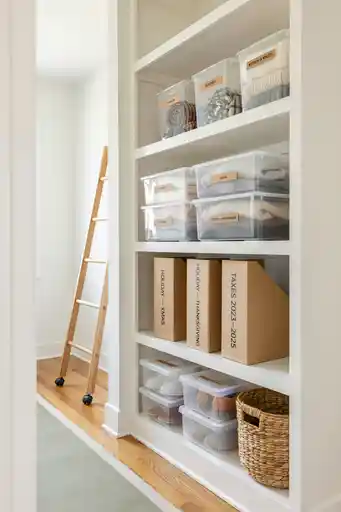
Clear storage containers make it easy to see what you have at a glance. They help prevent duplicate purchases and make organizing categories such as medications, toiletries, and seasonal accessories much simpler for the entire family.
Pro Tip: Choose stackable clear bins to maximize shelf space.
Zoned Shelving

Dividing shelves into dedicated categories creates instant organization. Assign separate sections for cleaning products, household supplies, seasonal items, and personal belongings so everything stays where it belongs.
Pro Tip: Keep frequently used categories on middle shelves for easier access.
Cubby Control
Cubby storage helps contain smaller items that usually create clutter. Gloves, scarves, hats, and reusable shopping bags stay organized when each category has its own basket or compartment.
Pro Tip: Use matching baskets to create a cleaner and more organized appearance.
Label Logic
Labels help maintain order long after the initial organizing session. When every basket and container is clearly marked, family members know exactly where items belong and are more likely to return them properly.
Pro Tip: Use large, easy-to-read labels for faster identification.
Vertical Balance
Tall items like vacuums, mops, and brooms can quickly take over a closet. Creating a dedicated vertical storage zone keeps these tools upright while allowing shelves and bins to stay organized around them.
Pro Tip: Install wall-mounted clips to secure long-handled tools.
Bench Storage
A storage bench combines seating and organization in one solution. It provides a comfortable place to put on shoes while hiding everyday clutter inside drawers, baskets, or cubbies underneath.
Pro Tip: Store the most-used shoes inside the bench for quick access.
Double Hanging
Adding a second hanging rod instantly doubles available hanging space. This setup works especially well for jackets, uniforms, and children’s clothing while keeping everything visible and easy to access.
Pro Tip: Use the upper rod for seasonal items and the lower rod for daily essentials.
Linen Cabinet

Hallway closets located near bedrooms or bathrooms can serve as excellent linen storage. Fold towels and bedding neatly on shelves and use drawers or bins to organize smaller household items.
Pro Tip: Store sheet sets inside one of their pillowcases to keep them together.
Family Lockers
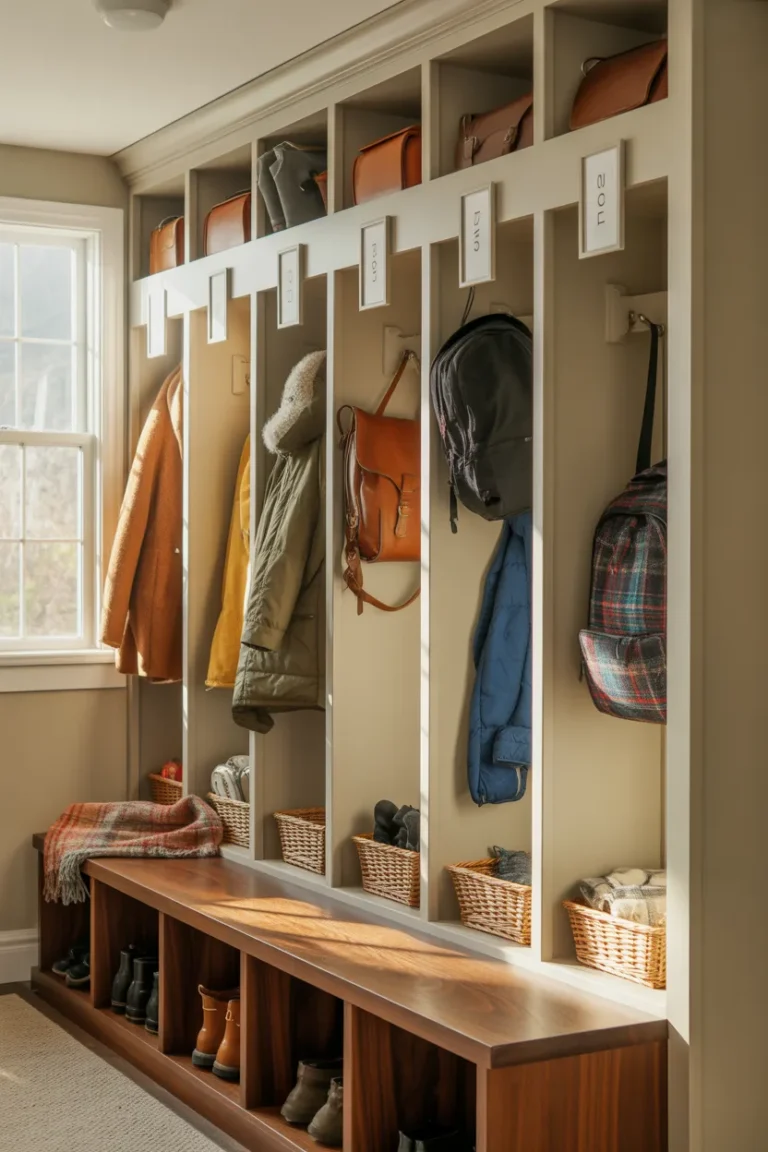
Creating individual storage sections for each family member reduces confusion and morning stress. Each person gets their own hooks, shelves, and baskets for shoes, coats, and personal belongings.
Pro Tip: Assign colors to each family member for easier organization.
Personal Sections
Shared closets stay organized when everyone has their own designated storage area. Separate sections help prevent belongings from becoming mixed together and encourage personal responsibility.
Pro Tip: Review each section monthly to remove items that no longer belong there.
Shoe Command
Shoes can quickly overwhelm a hallway closet if they aren’t properly stored. Adjustable shoe shelves, racks, or vertical organizers keep footwear visible, accessible, and off the floor.
Pro Tip: Store only current-season shoes in the closet and relocate the rest.
Drawer Wall

A drawer unit placed near the hallway closet creates additional storage for accessories, shoes, and seasonal gear. This solution works especially well when closet space alone isn’t enough.
Pro Tip: Use shallow drawers for smaller items that often get lost.
Cleaning Command
Hallway closets often double as cleaning supply storage. Group cleaning products together and use hooks, caddies, and bins to keep tools organized and easy to access.
Pro Tip: Keep frequently used cleaning supplies at waist height for convenience.
Assigned Spots
Giving every item a specific location helps eliminate daily clutter. When shoes, bags, coats, and accessories all have designated spots, keeping the closet tidy becomes much easier.
Pro Tip: If an item doesn’t have a home, create one before adding anything new.
Overflow Storage
When closets reach capacity, nearby storage furniture can help handle the overflow. Slim cabinets, shelves, or storage towers provide extra space without overwhelming the hallway.
Pro Tip: Reserve overflow storage for items that don’t need daily access.
Drop Station

A drop station creates a convenient place to unload keys, mail, wallets, and bags when entering the house. This simple setup prevents clutter from spreading throughout the home.
Pro Tip: Empty the drop station weekly to keep it under control.
Sliding Storage
Sliding storage systems help maximize tight spaces by providing easy access without requiring extra clearance. They work especially well in narrow hallways where traditional storage options may feel bulky.
Pro Tip: Choose smooth-gliding systems that are easy for everyone to use.
Pull-Out Pantry
Narrow pull-out storage units make use of slim spaces that would otherwise go unused. They are perfect for storing cleaning products, tools, reusable bags, and household supplies.
Pro Tip: Group similar items together inside pull-out organizers for faster access.
Rotation Shelf
Seasonal clutter becomes manageable when you dedicate one shelf to off-season items. Rotate coats, boots, holiday accessories, and other seasonal belongings throughout the year.
Pro Tip: Schedule seasonal closet updates every six months.
Exit Tray

A dedicated tray for keys, sunglasses, wallets, and important items prevents last-minute searches before leaving the house. Keeping essentials together saves time every day.
Pro Tip: Place the tray near eye level so it becomes part of your routine.
Soft Divider
Closet rods can become cluttered when different types of clothing mix together. Soft dividers create visual boundaries that help separate adult coats, children’s jackets, and seasonal outerwear.
Pro Tip: Use color-coded dividers for even faster organization.
Drop Basket
An open basket creates a temporary landing spot for items that don’t need immediate sorting. Scarves, gloves, hats, and sports gear can be tossed inside until you have time to organize them.
Pro Tip: Empty the basket once a week to prevent overflow.
Height Reset
Adjusting storage heights can dramatically improve accessibility. Store frequently used items where they can be reached comfortably and move rarely used belongings to upper shelves.
Pro Tip: Design your closet around daily habits, not just available space.
One Rule

One of the easiest ways to control closet clutter is by following the “one in, one out” rule. Every time a new coat, pair of shoes, or accessory enters the closet, another item should leave.
Pro Tip: Apply this rule consistently to prevent future overcrowding.
FAQs
Why Does My Hallway Closet Get Messy Even After I Organize It?
Most hallway closets become messy again because they lack a simple maintenance system. Without designated zones and clear storage rules, items gradually drift into random spaces and clutter returns. A successful organization system focuses on habits as much as storage solutions.
Pro Tip: Spend five minutes each week resetting the closet before clutter builds up.
Should Everything In A Hallway Closet Be Hidden?
No. Daily-use items should remain easy to see and access, while seasonal belongings and rarely used supplies can be stored out of sight. The goal is convenience, not hiding everything behind closed doors.
Pro Tip: Keep the items you use most often visible to simplify daily routines.