

A messy kitchen drawer can waste more time than most people realize. When utensils, spices, lids, and kitchen tools are mixed together, simple tasks take longer and frustration builds quickly. The good news is that you don’t need a complete kitchen remodel to fix the problem.
The most effective kitchen organization systems focus on accessibility, functionality, and daily habits. By creating dedicated storage zones and using the right organizers, you can turn cluttered drawers into efficient storage spaces that stay organized longer.
In this guide, you’ll find practical kitchen drawer organization ideas designed for modern homes in 2026. These solutions help maximize storage, improve workflow, and make cooking more enjoyable.
Key Takeaways
- Create dedicated zones for different kitchen activities.
- Use vertical storage to maximize drawer space.
- Choose adjustable organizers that adapt to your needs.
- Store frequently used items within easy reach.
- Deep drawers work best with dividers and peg systems.
- Labels help maintain organization long-term.
- Group items by function rather than appearance.
- Leave extra space to prevent overcrowding.
How Can You Organize Deep Kitchen Drawers Without Wasting Space?
Deep kitchen drawers often become cluttered because items are stacked on top of one another. A better approach is to store items vertically and use dividers, bins, or peg systems to keep everything separated. This allows you to see what you have immediately while making every inch of drawer space more useful.
Pro Tip: Studies show that visible storage systems reduce the time spent searching for items by up to 40%.
What Are The Latest Kitchen Drawer Organizer Trends?
Modern kitchen organization is shifting toward flexible storage solutions rather than fixed organizers. Adjustable dividers, modular trays, non-slip liners, and customized drawer zones are becoming more popular because they adapt as kitchen needs change. Homeowners are focusing on functionality rather than simply fitting more items into a drawer.
Pro Tip: Invest in expandable organizers that can grow with your storage needs instead of fixed-size inserts.
Pull-Out Spices
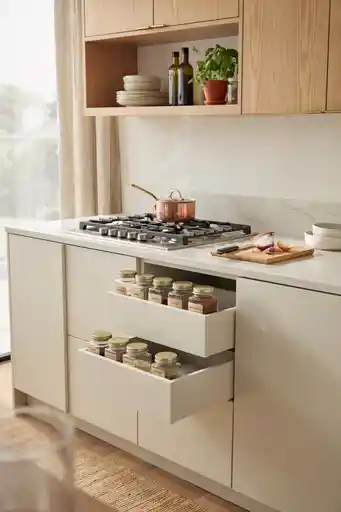
A pull-out spice drawer keeps seasonings organized and visible while cooking. Instead of digging through crowded cabinets, every spice remains upright and accessible. This setup works especially well in narrow spaces beside a range or cooktop where convenience matters most.
Pro Tip: Arrange spices by frequency of use rather than alphabetically for faster meal preparation.
Flat Spices

Storing spices flat inside shallow drawers makes labels easy to read at a glance. Wide drawers work particularly well for this setup because every container stays visible without stacking. This system reduces clutter while helping you find ingredients faster.
Pro Tip: Use matching spice containers to maximize space and create a cleaner appearance.
Bottle Zoning
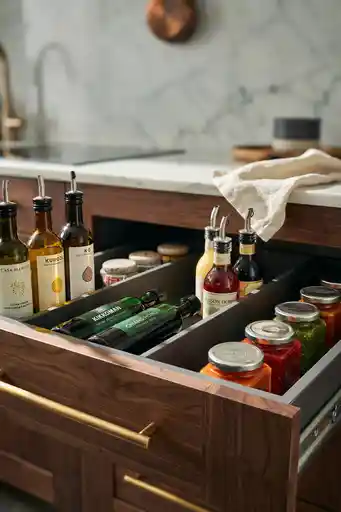
Cooking oils, vinegars, and sauces often create clutter when stored together without structure. Dividing deep drawers into bottle zones prevents spills and keeps containers upright. Grouping similar products together also improves efficiency while cooking.
Pro Tip: Place heavier bottles toward the back and everyday favorites near the front.
Double Layers
A double-layer drawer system effectively creates two storage levels within a single drawer. The top section can hold smaller utensils while the lower compartment stores bowls, containers, or cookware. This design significantly increases storage capacity.
Pro Tip: Sliding trays provide easier access than fixed upper layers.
Pantry Pullout
Pull-out pantry drawers eliminate wasted space inside tall cabinets. Every shelf becomes visible, making it easier to monitor inventory and prevent forgotten food items from expiring at the back.
Pro Tip: Store heavier items on lower pull-out shelves for better stability.
Spice Grid
A spice grid organizer gives every jar its own designated spot. This prevents containers from rolling around and keeps labels facing upward for quick identification during meal preparation.
Pro Tip: Standardize spice jar sizes before installing a grid organizer.
Peg Storage

Peg systems are one of the most effective ways to organize pots, pans, and lids in deep drawers. Adjustable pegs create custom compartments that prevent cookware from shifting or scratching.
Pro Tip: Design the layout around your largest cookware first.
Beverage Drawer
A dedicated beverage drawer keeps coffee pods, tea bags, filters, and drink accessories in one convenient location. This reduces countertop clutter while making morning routines more efficient.
Pro Tip: Place the beverage drawer near your coffee station to streamline preparation.
Narrow Spices
Slim vertical spice storage works perfectly in narrow kitchen drawers. Standing containers upright maximizes space while keeping labels visible and easy to read.
Pro Tip: Use uniform containers to maintain a neat and organized appearance.
Produce Baskets
Pull-out produce baskets provide better airflow than traditional cabinets, helping onions, potatoes, and similar items stay fresh longer. Visibility also encourages better food management.
Pro Tip: Use separate baskets for different produce categories to reduce spoilage.
Modular Cutlery
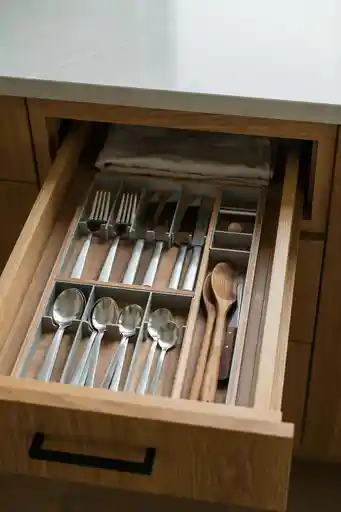
Modular cutlery trays create customized compartments for utensils of different sizes. This prevents overcrowding and helps every item stay in its proper place.
Pro Tip: Leave one small compartment available for miscellaneous kitchen tools.
Plate Pegs
Plate peg systems provide secure storage for dishes inside deep drawers. Plates remain stable while opening and closing drawers, reducing the risk of chips and damage.
Pro Tip: Keep everyday dishes closest to the dishwasher for faster unloading.
Corner Control
Corner drawers often become wasted storage space. Custom inserts and bins help utilize awkward corners while keeping smaller kitchen gadgets easy to access.
Pro Tip: Reserve corner storage for items used occasionally but still needed regularly.
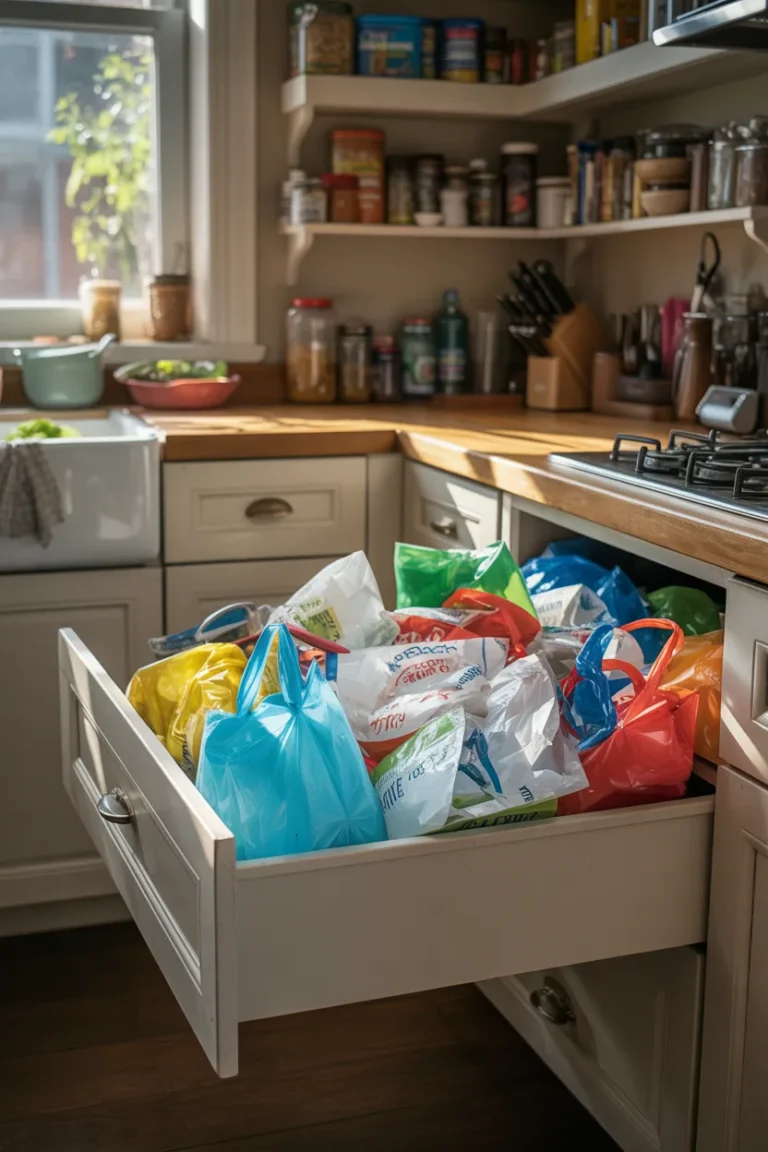
Wrap Station
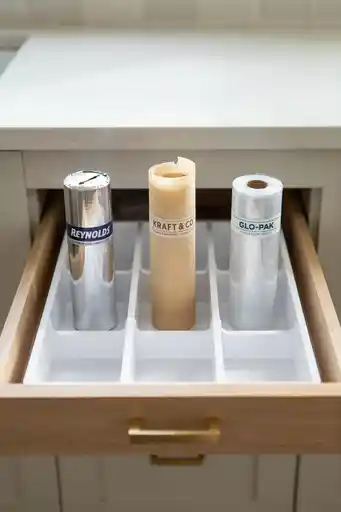
Plastic wrap, aluminum foil, parchment paper, and storage bags can create drawer clutter. A dedicated wrap station keeps these essentials organized and easy to grab.
Pro Tip: Label each section to simplify restocking.
Vertical Dishes
Vertical dish storage allows plates, lids, and trays to stand upright rather than stack. This reduces breakage while making each item easier to access.
Pro Tip: Use adjustable dividers to accommodate different dish sizes.
Cooking Stack
Organizing cooking tools and cookware together improves efficiency. Keeping spatulas, spoons, pots, and pans in the same area reduces unnecessary movement while preparing meals.
Pro Tip: Store items based on how they are used together during cooking.
Drink Sorting
Drink mixes, hot chocolate packets, coffee supplies, and tea varieties stay organized when divided into dedicated compartments. This prevents clutter and makes inventory easier to manage.
Pro Tip: Group beverages by category rather than brand.
Bamboo Zoning
Bamboo organizers create natural divisions inside drawers while adding durability and style. Separate compartments help prevent tools from overlapping and becoming tangled.
Pro Tip: Choose expandable bamboo organizers for greater flexibility.
Drink Hub
A drink hub combines all beverage-related items into one convenient storage area. This centralization improves workflow and reduces countertop clutter.
Pro Tip: Include extra space for future beverage additions.
Tool Zoning
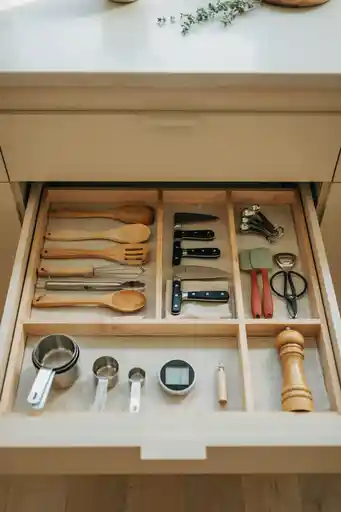
Grouping tools by function rather than appearance improves kitchen efficiency. Stirring tools, measuring tools, and serving utensils should each have dedicated zones.
Pro Tip: Organize according to your cooking routine rather than strict categories.
Reset Drawer
A reset drawer acts as a temporary holding space for utensils used during cooking. Instead of cluttering countertops, tools can be placed inside until cleanup is complete.
Pro Tip: Use a washable drawer liner for easy maintenance.
Zone Labels
Labels create consistency and help family members return items to the correct location. Clear labeling reduces confusion and maintains organization over time.
Pro Tip: Use simple, easy-to-read labels that describe activities rather than item names.
Height Sorting
Sorting items by height prevents drawer jams and maximizes vertical space. Taller tools fit comfortably in deeper drawers while flatter items remain in shallow storage.
Pro Tip: Measure drawer depth before purchasing organizers.
Prep Flow
Organizing drawers according to meal preparation steps creates a more efficient workflow. Store knives, cutting tools, mixing utensils, and cooking tools in sequence.
Pro Tip: Observe your cooking habits before redesigning drawer layouts.
Overflow Control
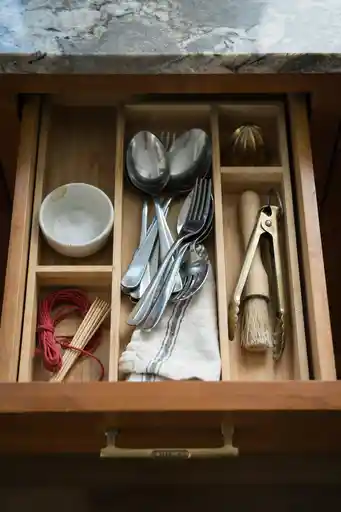
Every kitchen benefits from a designated overflow drawer. Storing duplicate or rarely used tools separately prevents primary drawers from becoming overcrowded.
Pro Tip: Review overflow storage every six months and remove unnecessary items.
Grip Zones
Non-slip liners placed in high-traffic drawer areas keep utensils from shifting while maintaining easy access. This small upgrade improves organization without adding bulk.
Pro Tip: Use textured liners only where movement is most common to preserve flexibility.
FAQs
Why Do Kitchen Drawers Get Messy Again Even After Organizing Them?
Kitchen drawers usually become messy because there isn’t a system that matches everyday habits. When items lack designated spaces or drawers become overfilled, clutter quickly returns. Long-term organization depends on creating storage solutions that are easy to maintain.
Pro Tip: Schedule a quick 10-minute drawer reset once each month.
Is It Better To Organize Kitchen Drawers By Item Type Or By How Often They’re Used?
For most households, organizing by frequency of use works better than organizing strictly by category. Frequently used items should always be easiest to reach, while occasional-use tools can be stored farther away.
Pro Tip: Place daily-use items within your primary cooking zone for maximum efficiency.