When I started creating sidewalk chalk games, I noticed something simple but frustrating—kids would lose interest very quickly or just walk away. At first, I thought it was my drawing skills or the chalk quality, but that wasn’t the real issue.
Most kids get bored when a game feels too easy, too repetitive, or has no clear goal. In my experience, once I added movement, challenges, and small rules, the same chalk games suddenly became more engaging and lasted much longer.
Today, I use a simple approach: every chalk game needs a purpose, a challenge, and a bit of surprise. Even small changes like adding a timer or a “do this action” rule can increase engagement time significantly. In fact, I’ve seen kids stay 2–3 times longer on the same game just by adding structure.
Key Takeaways
- Kids lose interest when chalk games feel too simple or repetitive
- Movement and challenges increase engagement time
- Adding rules, timers, or points makes games more exciting
- Different age groups need different difficulty levels
- Small changes can turn ignored games into favorites
In this article, I’m sharing 19 sidewalk chalk games I personally use to keep kids active, focused, and excited during outdoor play.
Why Do Some Sidewalk Chalk Games Get Ignored and How Can You Make Them More Exciting?
From my experience, chalk games get ignored mainly because they don’t give kids a clear goal or enough excitement. A simple hopscotch or random drawing might look fun at first, but kids quickly want action, competition, or variety.
I usually fix this by adding small upgrades like:
- Timed challenges
- Point scoring
- Funny movement rules (spin, jump, clap)
- Team play
- Levels or rounds
I’ve also noticed younger kids prefer color-based or movement-heavy games, while older kids stay longer when there is competition or strategy involved. Once I started adjusting games based on age, participation improved a lot.
Chalk Circle Fun
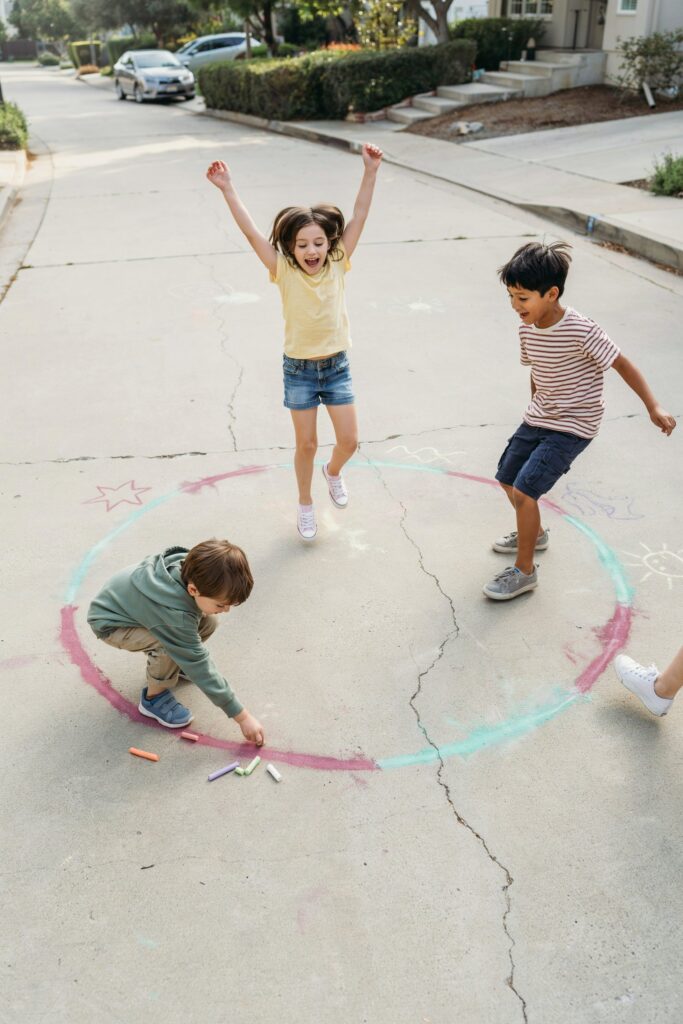
I like using a big chalk circle because it instantly turns an open space into a game zone. I divide the circle into sections and assign different actions like jumping, spinning, or answering simple questions.
This setup works well in schoolyards and backyards. I’ve found that adding small surprises inside the circle keeps kids from predicting the game too quickly, which helps them stay engaged longer.
Pro tip: I use soft chalk colors in shaded areas so the markings stay visible for a longer time.
Toss And Match
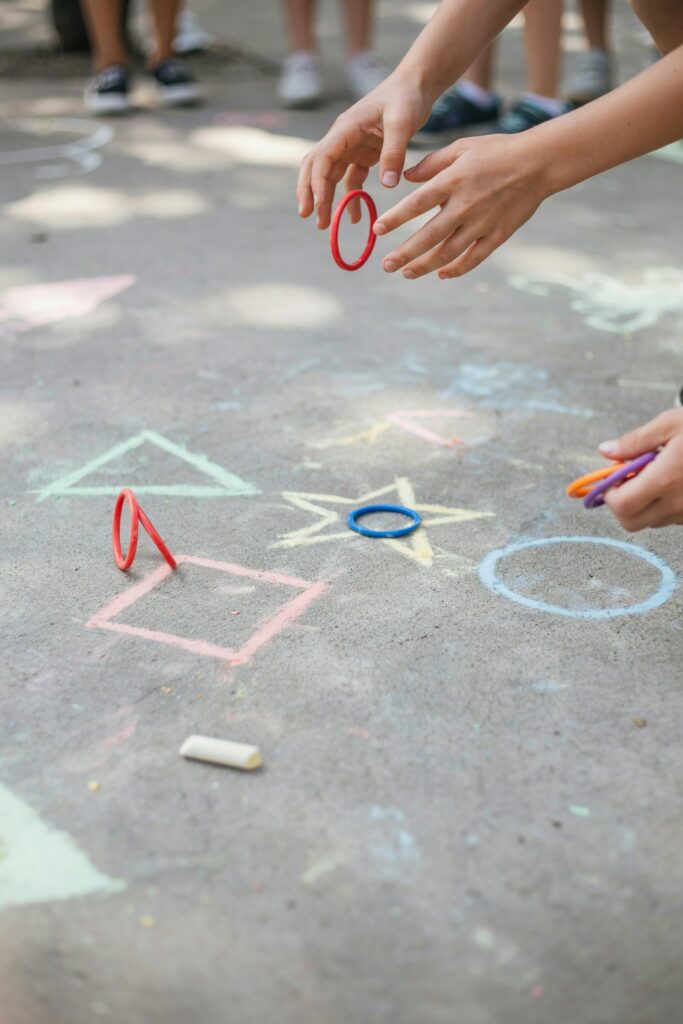
In this game, I draw shapes, colors, or numbers on the ground and let kids toss objects to match them. It works well for groups because everyone can take turns without waiting too long.
Younger kids focus on colors, while older ones enjoy timed challenges. I’ve seen this simple twist improve participation in mixed-age groups.
Pro tip: I increase difficulty by adding distance rules or time limits for older kids.
Cosmic Hop Path
I turn basic hopscotch into a space journey by adding themed steps like “moon jump” or “rocket spin.” Kids enjoy following a story instead of just hopping on numbers.
This works especially well in long driveways or school paths. I’ve noticed kids stay focused longer when each step feels like part of a mission.
Pro tip: I add movement commands between steps to keep energy high.
Chalk Word Challenge
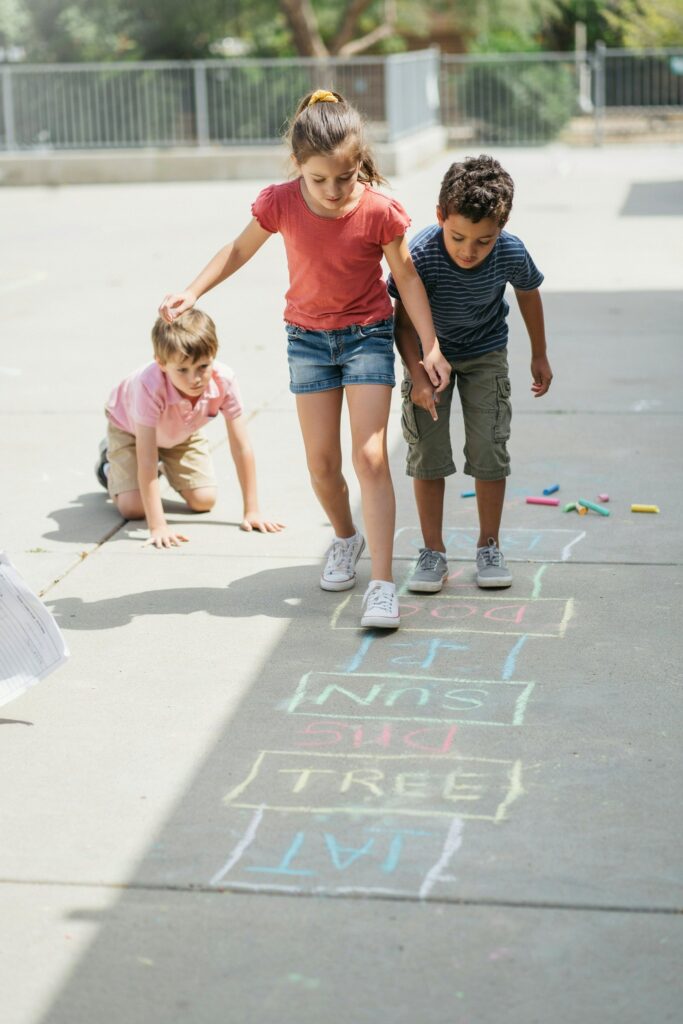
This game mixes learning with movement. I write simple words or letters on the ground and ask kids to jump or run to the correct answer.
It works well for both learning and play. Younger kids enjoy matching, while older kids like racing against time.
Pro tip: I often turn it into a relay race for group play to increase excitement.
Chalk Board Battle
I create a large board game on the ground using chalk grids. Kids use stones or small objects as pieces and move them across the board.
This is a slower game but keeps kids focused for longer periods. I usually use it when I want calm but engaging outdoor play.
Pro tip: I add silly rules like “hop before you move” to make it more fun.
Toss And Read
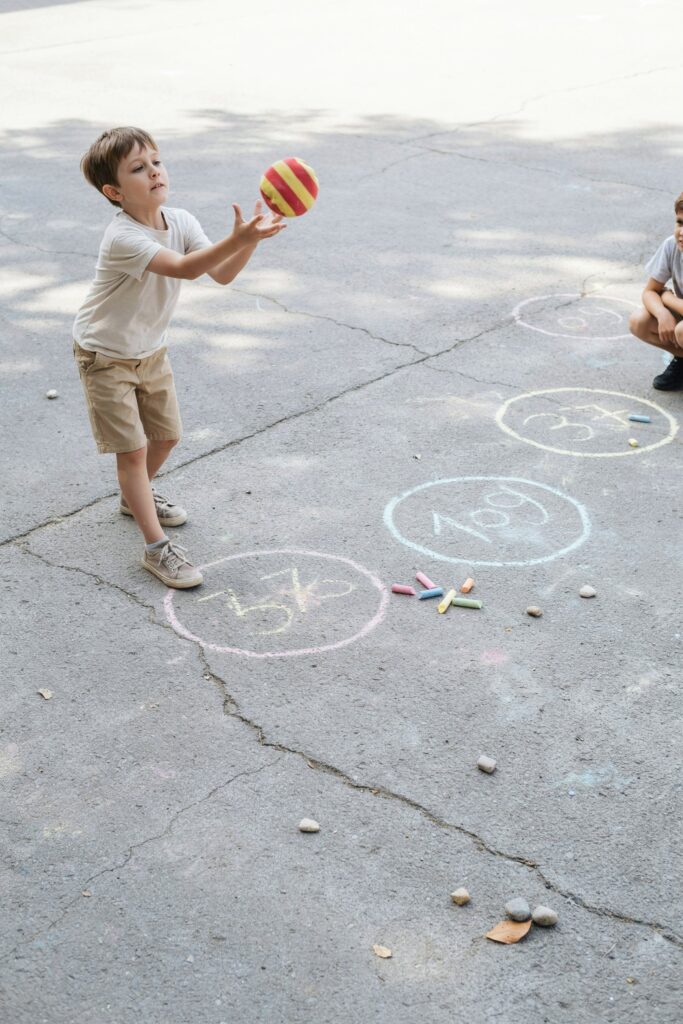
I write simple words inside circles and let kids toss a bean bag to pick what they read next. It combines movement with reading practice.
This works really well for preschoolers who struggle with sitting still. I’ve found movement makes learning easier for them.
Pro tip: I add clapping or jumping after each correct answer to keep energy up.
Follow The Path
I draw a path with different movement instructions like hop, tiptoe, or crab walk. Kids follow the path from start to finish.
This is one of my most effective energy-burning games. It keeps kids moving constantly without getting bored.
Pro tip: I change movement rules every round to keep it fresh.
Chalk Adventure Trail
I turn sidewalks into story-based trails where each stop has a mini challenge. Kids follow clues from start to finish like a mini adventure.
This works especially well for events like birthdays or holidays. Kids stay engaged because they want to complete the story.
Pro tip: I mix puzzles with movement tasks to keep variety high.
Rainbow Walk Path
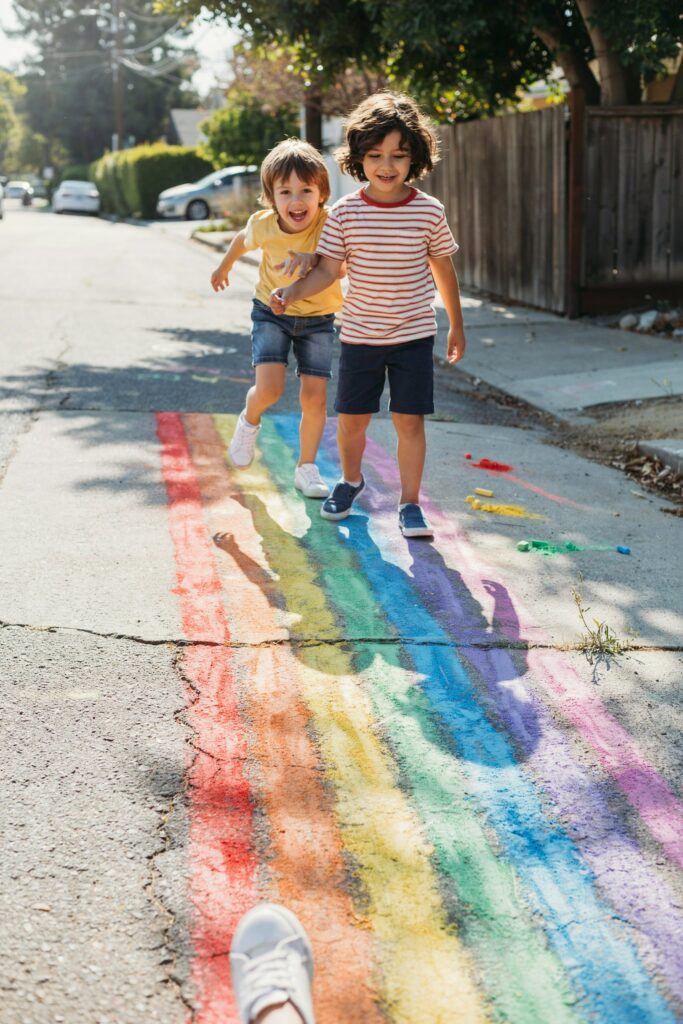
I draw colorful winding paths and assign actions like “hop here” or “balance here.” Kids physically follow the colors.
This works great in open outdoor spaces. I’ve noticed it keeps younger kids active for much longer than normal drawing games.
Pro tip: I use bright color transitions to guide attention naturally.
Giant Group Grid
I create a large grid where kids follow instructions in each box like jump, freeze, or race. It works best for group play.
It encourages teamwork and quick reactions. I often use it during school breaks or family gatherings.
Pro tip: I rotate leaders so every child gets a turn giving commands.
Jumping Circle Race
I draw multiple circles and assign actions to each one. Kids race through them following instructions.
This game is simple but highly energetic. I use it when I want fast-paced outdoor activity.
Pro tip: I vary circle sizes to adjust difficulty levels.
Chalk Tic Battle
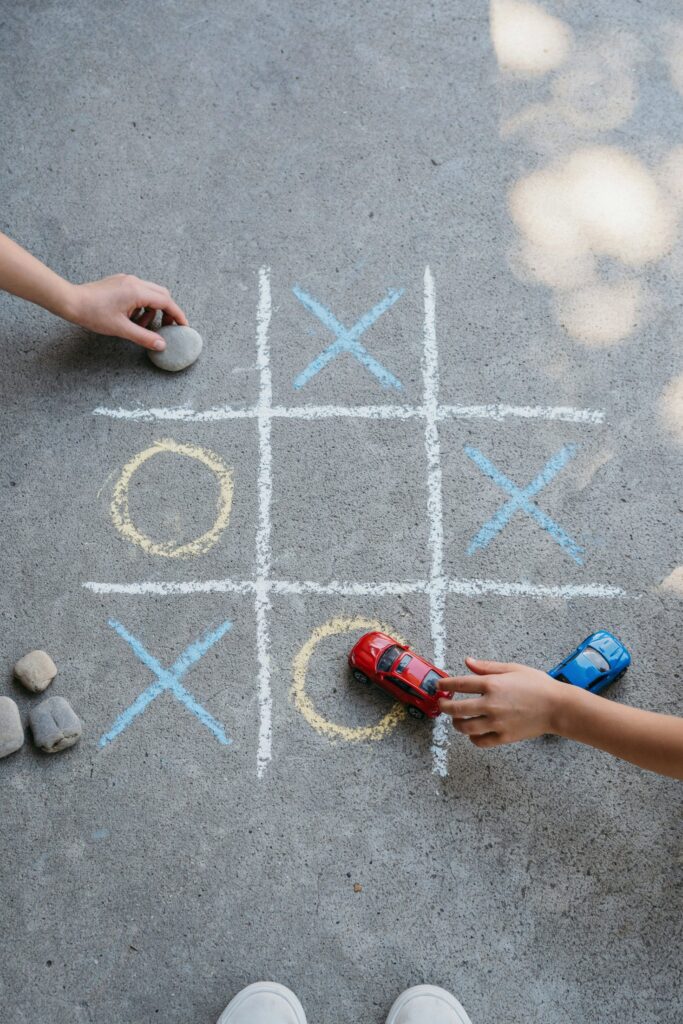
I enlarge tic-tac-toe on the ground and let kids use chalk or objects to play. It becomes more active than the table version.
Kids enjoy the physical movement between turns. It’s great for short, quick games.
Pro tip: I add movement rules between moves to avoid slow gameplay.
Color Circle Quest
I divide a big circle into color zones and call out actions like “jump on red.” Kids move quickly between colors.
This is great for younger children learning colors. It keeps their attention through movement.
Pro tip: I mix in scavenger items like leaves for extra fun.
Space Mission Trail
I design a path with space themes like planets and rockets. Kids follow the route step by step.
It feels like a story-based mission, which keeps them engaged longer than standard games.
Pro tip: I add random events like “meteor jump” for surprise elements.
Mini Chalk Town
I draw a small town with roads, houses, and stops. Kids use toy cars or their imagination to explore.
This works best for toddlers who enjoy pretend play. It keeps them occupied without needing strict rules.
Pro tip: I let kids build parts of the town themselves.
Number Hop Race
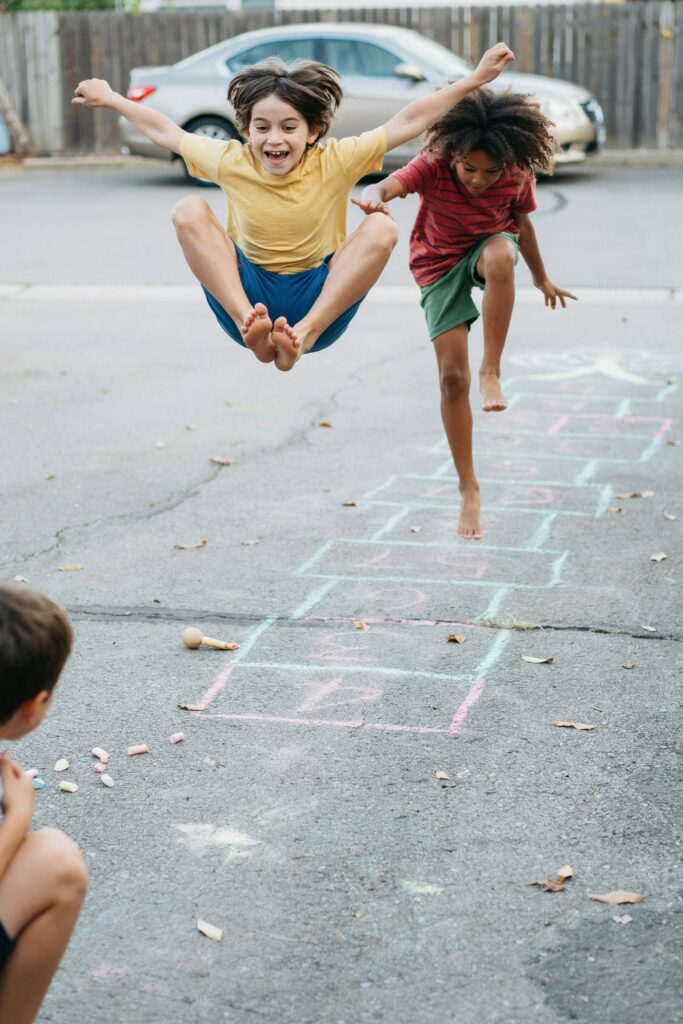
I turn numbers into a hopping path and add challenges like skipping or reverse jumps.
Kids enjoy the mix of counting and movement. It’s a good learning-based game.
Pro tip: I add speed rounds for older kids to increase challenge.
Sidewalk Action Course
I create a full obstacle-style course using chalk instructions like jump, spin, or balance.
This is one of my go-to energy-burning games. It works well for large groups.
Pro tip: I change stations often to avoid repetition.
Move And Groove
I combine dance and movement tasks like clap, spin, or jump. Kids follow the rhythm freely.
This works well for parties or active breaks. It keeps energy levels high.
Pro tip: I let kids lead rounds to boost creativity.
Chalk Game Corner
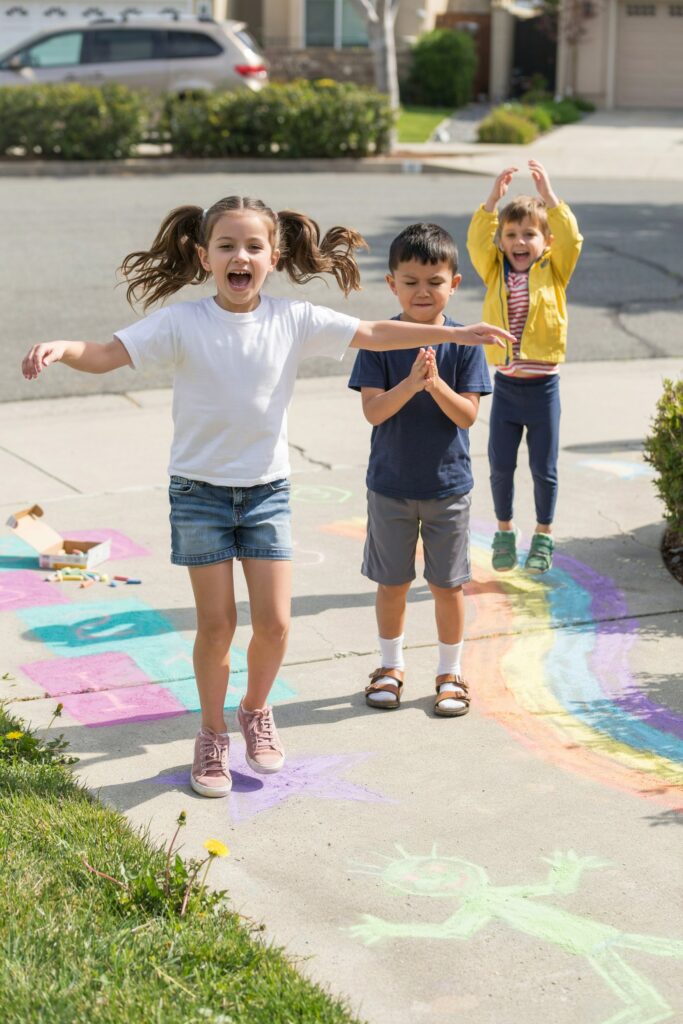
I set up multiple small chalk games in one area so kids can switch between them.
This prevents boredom because they are not stuck in one activity. I often use this for mixed-age groups.
Pro tip: I rotate games every 10–15 minutes for best results.
FAQs
How Do You Make Sidewalk Chalk Games More Fun?
I make chalk games more fun by adding structure and movement. Timers, points, silly actions, and group challenges work best. I also let kids help design rules, which increases their interest a lot.
What Are The Best Chalk Games For Different Ages?
From my experience, younger kids enjoy color matching, simple hopping, and movement games. Older kids prefer challenges, races, and strategy-based games. Matching difficulty to age makes a big difference in engagement.