
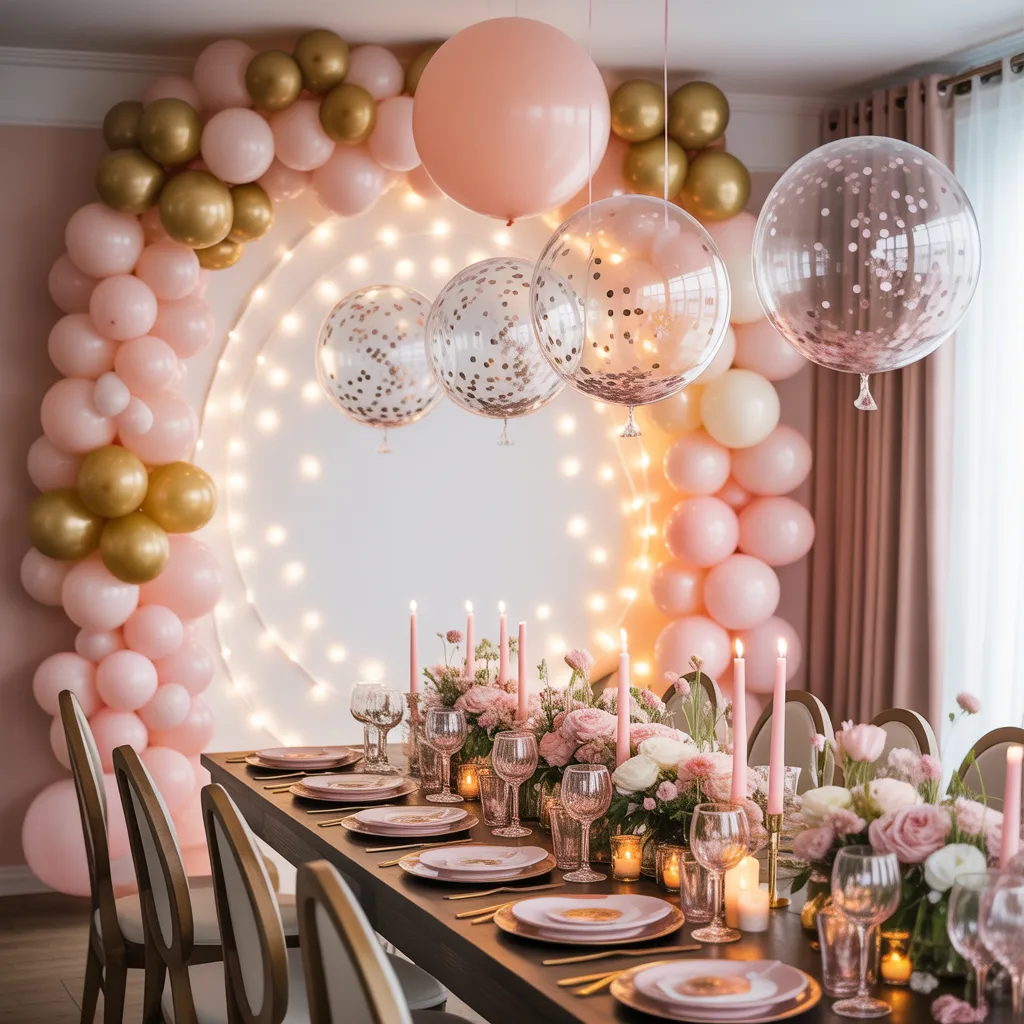

I always find that a dinner party becomes more memorable when I add simple games that get people talking and laughing. In this guide, I’ve shared 25 dinner party game ideas I personally find effective for breaking the ice, improving interaction, and keeping guests engaged throughout the evening.
These games include storytelling activities, food-based challenges, classic board games, and creative group competitions that suit both small and large gatherings. Most of them need little setup and can be adjusted based on the type of guests I’m hosting.
Key Takeaways
- I use games to break awkward silence and build comfort between guests
- Most games require no special setup or only basic household items
- Food-based and storytelling games work best for mixed groups
- Competitive games increase energy, while casual ones build connection
- I mix 2–3 games per dinner party to avoid overload
1. Murder Mystery

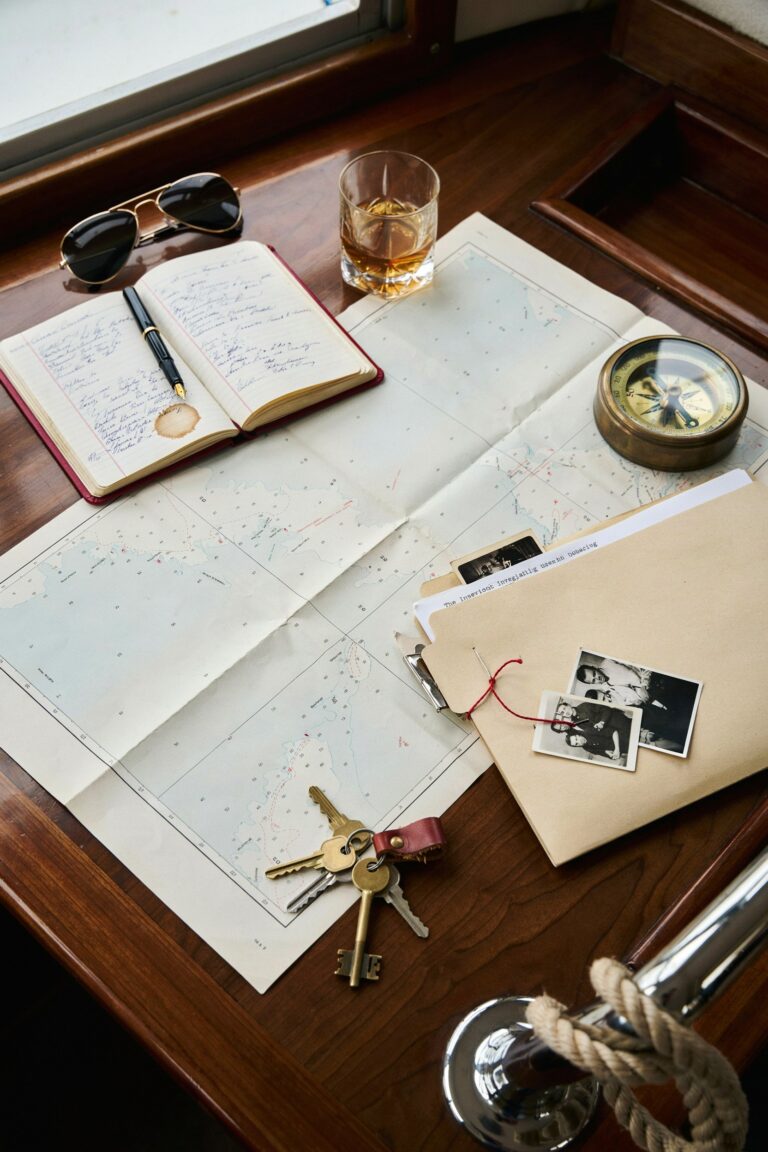
I like using murder mystery games because they instantly turn a normal dinner into an interactive experience. Each guest gets a character role with clues, secrets, and motives, which keeps everyone involved throughout the night.
In my experience, this game works best when the host prepares a clear storyline or uses a ready-made kit. It naturally increases conversation because guests must ask questions and analyze clues.
Pro Tip: I always assign simpler roles to shy guests so they feel comfortable participating without pressure.
2. Two Truths and a Lie

This is one of the easiest games I use when guests don’t know each other well. Each person shares two true facts and one fake statement about themselves.
I’ve noticed it quickly breaks the ice because people enjoy guessing and hearing surprising personal stories. It creates laughter without needing any setup or materials.
Pro Tip: I encourage guests to include unusual but believable facts to make the game more fun.
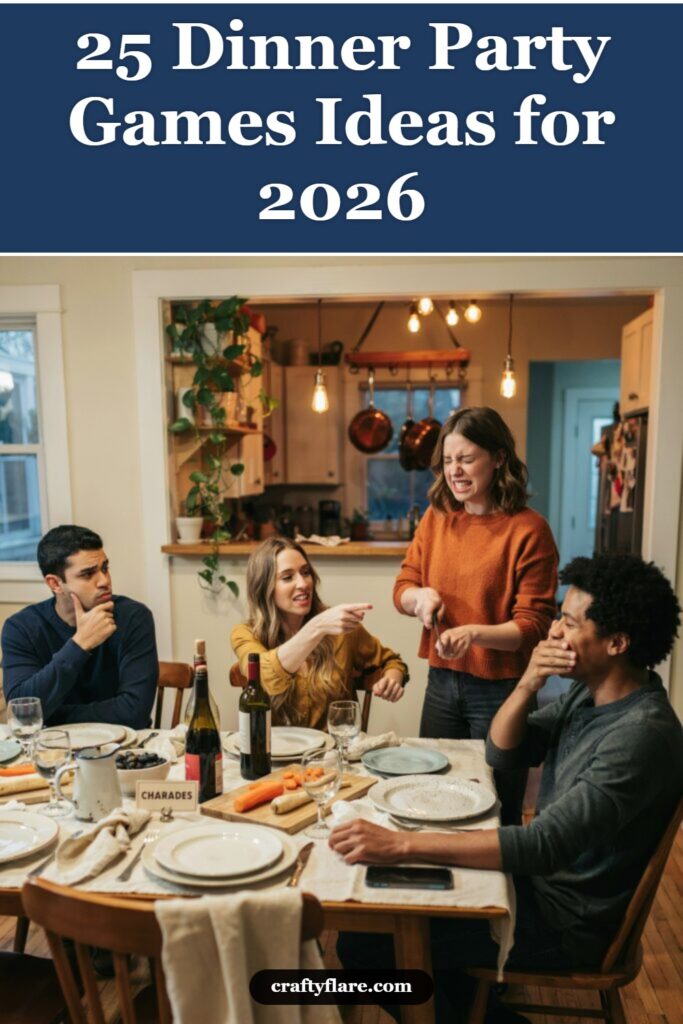
3. Charades

Charades is my go-to game when I want instant energy at the table. One player acts out a word or phrase while others guess without speaking.
It works well for mixed-age groups because it requires no equipment and can be themed around movies, songs, or daily life.
Pro Tip: I set a 60-second timer per round to keep the game fast and exciting.
4. Pictionary
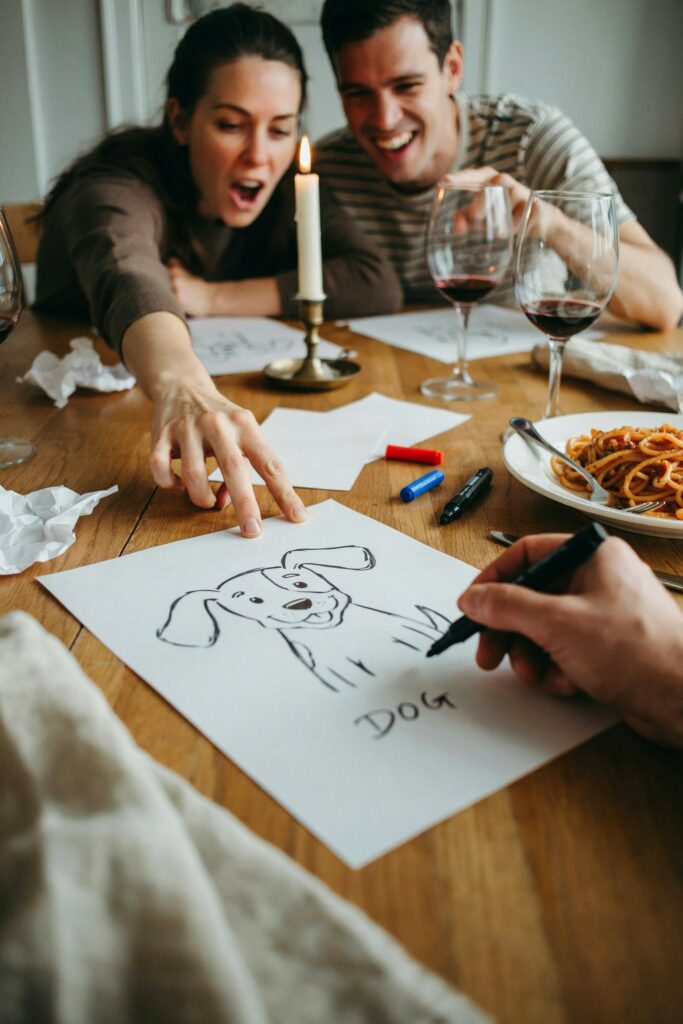
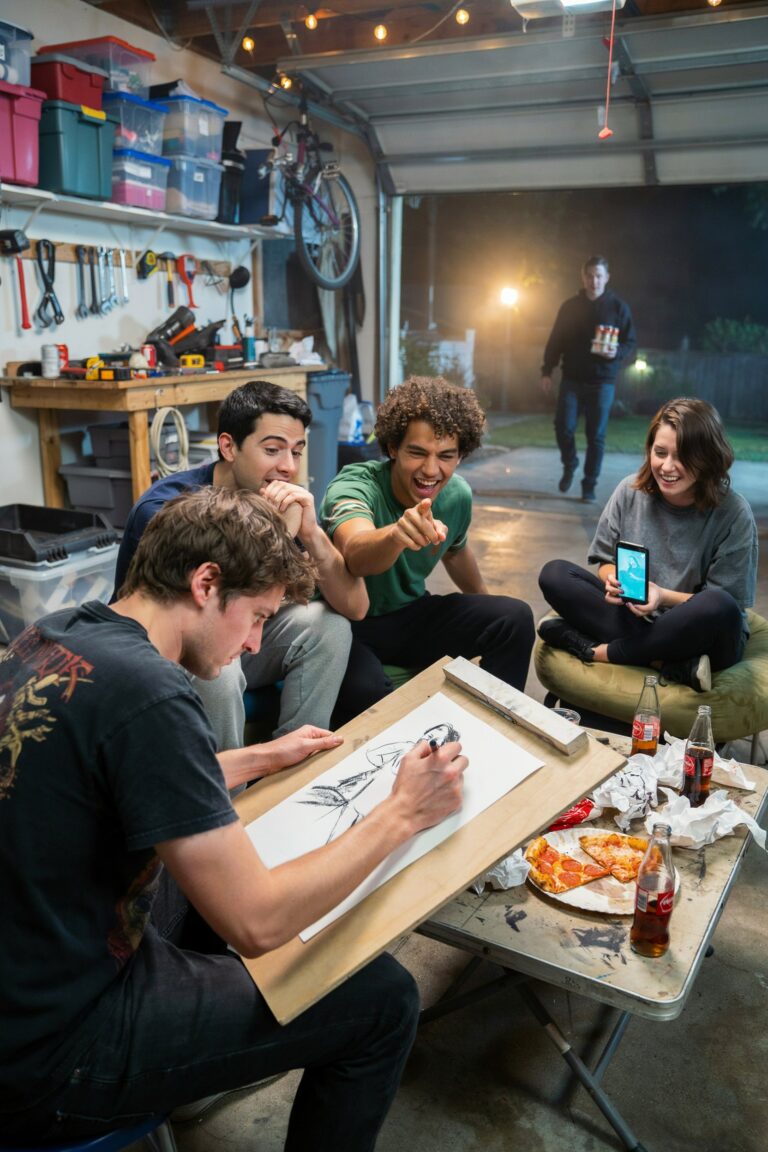
I often use Pictionary because it brings out creativity and humor even from simple drawings. Teams draw a word while others try to guess it within a time limit.
In my experience, the funniest moments happen when drawings are completely unclear but still somehow guessed correctly.
Pro Tip: I use simple word lists so beginners can also participate easily.
5. Name That Tune

This game works great when I want background music to become part of the party. Guests guess songs or artists from short clips.
It encourages nostalgia and conversation around music preferences, which helps guests connect naturally.
Pro Tip: I mix old and new songs to keep all age groups engaged.
6. Recipe Relay
I enjoy this game at foodie gatherings because it turns cooking into teamwork. Each group builds a recipe by adding ingredients step by step.
It creates surprising dishes and a lot of laughter during tasting.
Pro Tip: I always set a basic recipe theme so teams don’t get too chaotic.
7. Wine Whisperer
This game works best for relaxed dinner parties. Guests taste different wines and try to identify flavors or types.
It becomes both educational and social as people share personal taste preferences.
Pro Tip: I keep tasting notes simple so beginners don’t feel overwhelmed.
8. Foodie Photo Contest
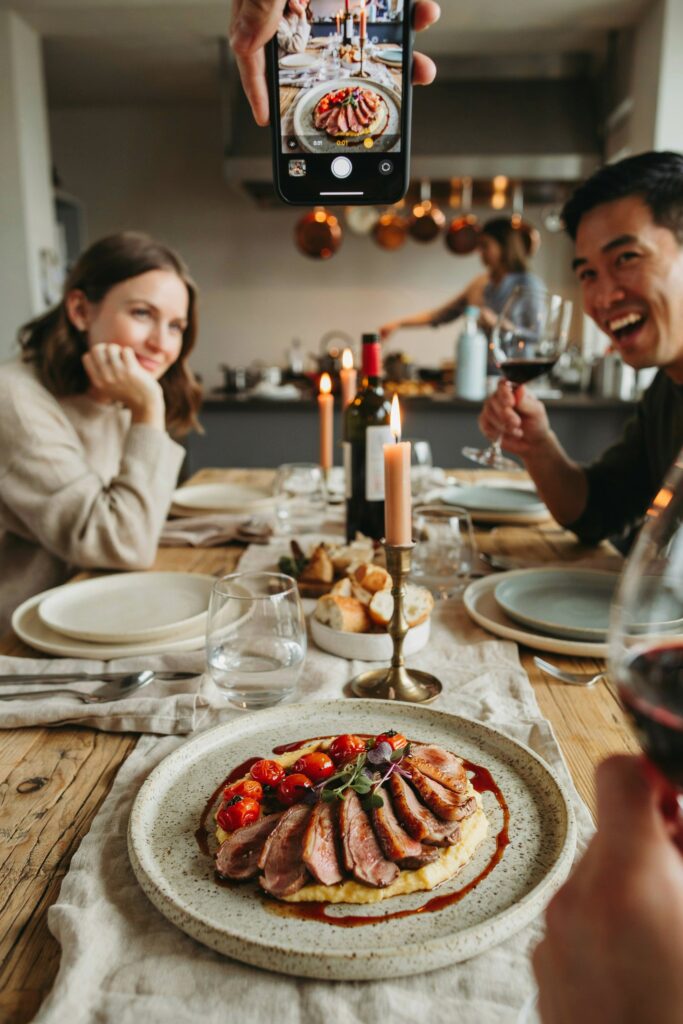
I use this when guests enjoy social media or photography. Everyone takes creative food photos and votes on the best one.
It adds a modern and visual element to the dinner experience.
Pro Tip: I suggest natural lighting for better food photography results.
9. Ingredient Inspector
This game adds mystery to food by hiding one ingredient in each dish. Guests try to identify it while eating.
It keeps attention on flavors and improves observation skills.
Pro Tip: I choose subtle ingredients like spices instead of obvious ones.
10. Joking Hazard
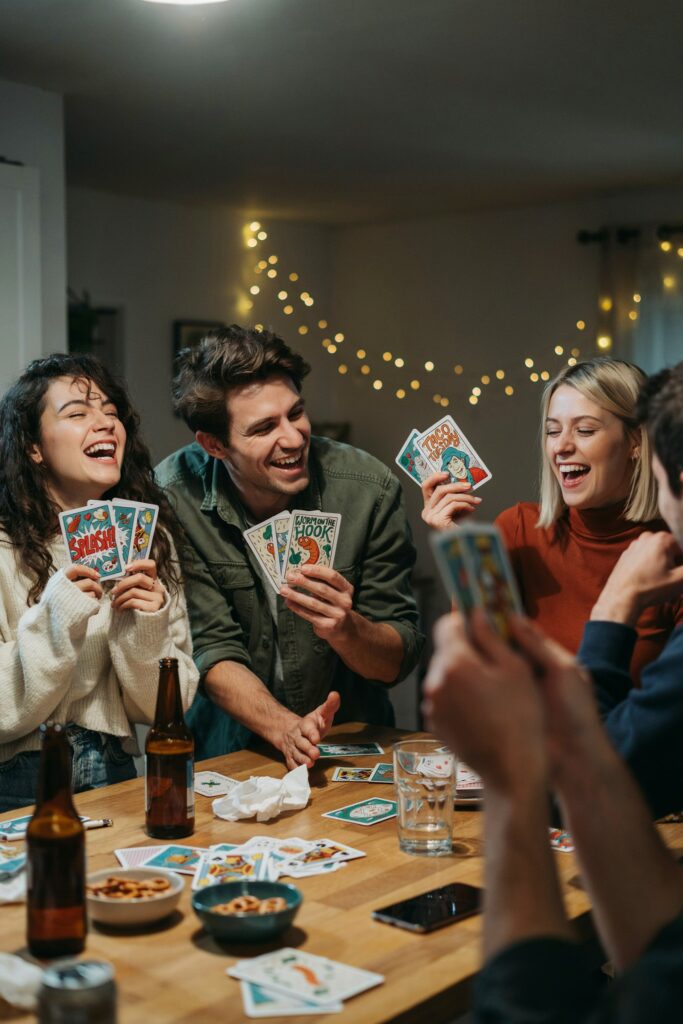
This is a humor-based card game where players build funny comic strips. Each round becomes unpredictable and often hilarious.
It works best with close friends who enjoy casual humor.
Pro Tip: I keep the game short to avoid slowing down dinner flow.
11. Codenames
I like Codenames for strategic thinking during dinner. Teams guess words based on one-word clues from a spymaster.
It encourages communication and teamwork without needing physical movement.
Pro Tip: I limit rounds to avoid overthinking fatigue.
12. Battleship
Battleship is a quiet but engaging game I use for pairs. Players guess coordinates to sink ships hidden on a grid.
It fits dinner parties because it doesn’t interrupt conversation much.
Pro Tip: I pre-draw grids to save time during setup.
13. Connect Four
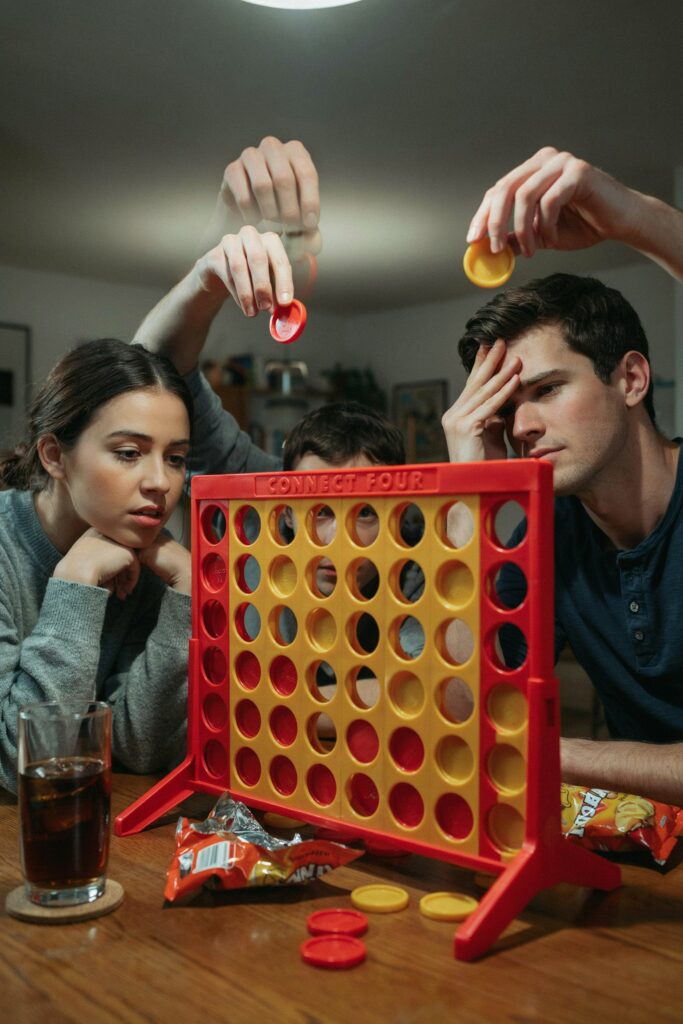
This is a quick, competitive game I often place on side tables. Players aim to connect four discs in a row.
It’s simple but keeps guests entertained between meals.
Pro Tip: I rotate players frequently so everyone gets a turn.
14. Trivial Pursuit
I use this when guests enjoy general knowledge challenges. Players answer questions from different categories to win wedges.
It works well for mixed groups with different interests.
Pro Tip: I skip overly difficult questions to keep the mood light.
15. Scattergories
This fast-thinking game challenges guests to list unique answers under a letter constraint.
It creates a lot of pressure but also laughter when answers match.
Pro Tip: I keep categories simple for faster rounds.
16. Catchphrase
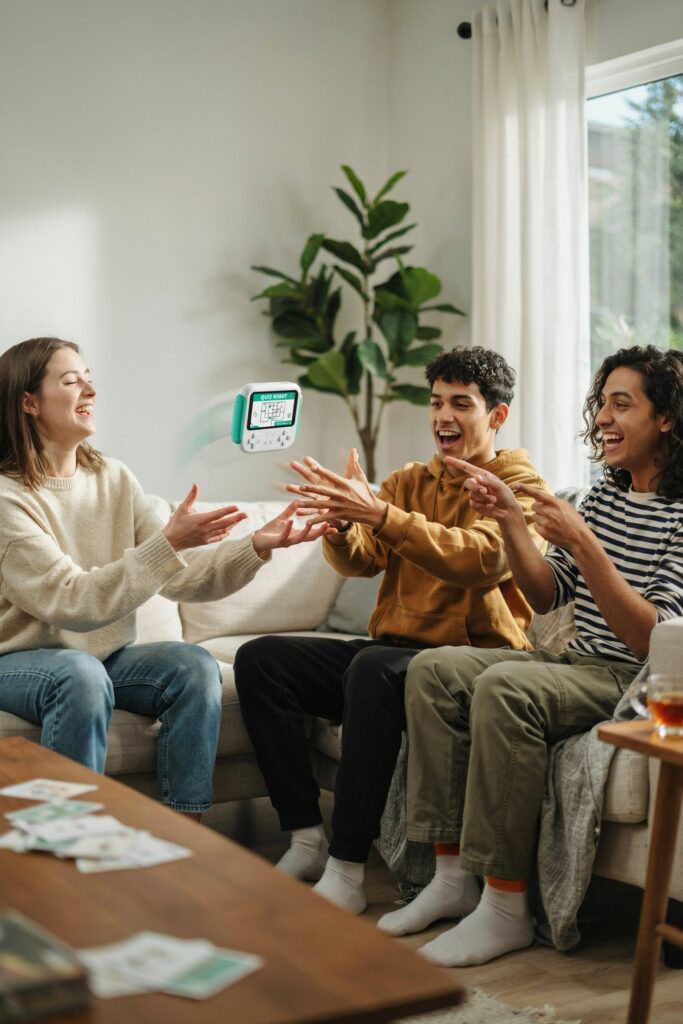
Catchphrase is one of my favorite high-energy games. Players describe a word without saying it while teammates guess.
It improves quick thinking and communication.
Pro Tip: I pass the device quickly to maintain excitement.
17. TableTopics
I use TableTopics when guests don’t know each other well. It includes conversation prompts that guide discussions.
It helps reduce awkward silence at the table.
Pro Tip: I pick light questions to keep the mood comfortable.
18. What Do You Meme?
This is a fun card game where players create meme captions. It works best for relaxed and informal groups.
It brings humor and creativity into the dinner setting.
Pro Tip: I avoid playing it too long to keep attention balanced.
19. Culinary Charades

This food-themed charades game involves acting out cooking actions or food items.
It fits perfectly into dinner parties because of its culinary focus.
Pro Tip: I include simple cooking actions so everyone can guess easily.
20. Dinner Detective
I use this immersive mystery game when I want a themed dinner experience. Guests solve clues to uncover a fictional case.
It adds structure and excitement to the whole evening.
Pro Tip: I prepare clues in advance to keep flow smooth.
21. Epicurean Expedition
This game turns dinner into a global food journey. Each dish represents a different country and includes quiz questions.
It makes the meal educational and interactive.
Pro Tip: I keep questions light so guests focus on enjoyment.
22. Name That Chef
I use this quiz-style game for food lovers. Guests identify famous chefs based on clues.
It works well for culinary enthusiasts.
Pro Tip: I mix well-known and lesser-known chefs for balance.
23. Yahtzee
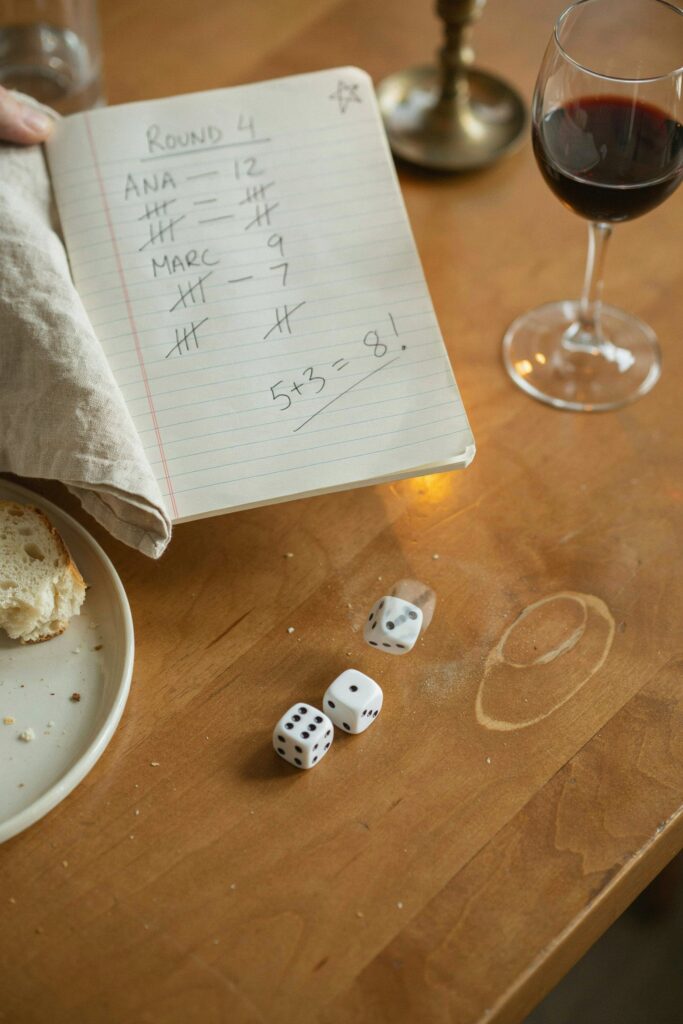
Yahtzee is a simple dice game I use for casual entertainment. Players roll for scoring combinations.
It’s easy to understand and suitable for all ages.
Pro Tip: I provide a quick scoring guide for beginners.
24. Scrabble
Scrabble is a classic word game I enjoy for quieter dinner moments. Players build words to earn points.
It engages vocabulary and strategy skills.
Pro Tip: I allow shorter time limits to keep pace steady.
25. Karaoke

Karaoke is my final go-to for ending dinner parties on a high note. Guests sing popular songs and enjoy performances.
It creates laughter and memorable moments.
Pro Tip: I encourage group singing to reduce performance pressure.
Final Thoughts
I’ve found that the best dinner parties are not about the food alone but about how connected the guests feel. These games help me create a relaxed environment where people naturally interact, laugh, and enjoy themselves without pressure.