

I’ve seen that trampoline placement changes everything about how safe and fun kids feel while playing. In this guide, I explain where I personally recommend placing a trampoline for safer use, including flat ground, open space, and shaded areas when possible. I also share 14 trampoline game ideas that turn normal bouncing into structured, active play.
From my experience, avoiding fences, trees, hard surfaces, and uneven ground reduces most safety risks. I also found that too much direct sun or tight spaces can make kids stop playing quickly. Along with placement tips, I’ve included fun trampoline games like Foam Fort Maze, Bounce Soccer Match, Glow Jump Party, and Backyard Bounce Zone that help keep children active and engaged.
Key Takeaways
- I always choose flat, level ground for trampoline setup
- I avoid placing it near fences, walls, trees, or hard objects
- Shade matters because extreme heat reduces playtime
- Safety nets and open space improve supervision and reduce risk
- Simple rule-based games keep kids more active and focused
- Changing game styles prevents boredom during long play sessions
Where Should I Place a Trampoline for Safer and More Comfortable Gameplay?
From my experience, the safest trampoline setup always starts with location. I prefer placing it on flat, even ground with enough clearance on all sides. This reduces the chance of injuries and makes it easier to supervise kids while they play.
I avoid tight corners, fences, trees, and garden furniture because kids naturally bounce toward the edges during energetic games. Even a small mistake in placement can turn playtime into a safety risk.
Comfort also matters more than people think. If a trampoline is placed under harsh afternoon sun, kids often lose interest faster because the surface gets too hot. I try to place it where there is partial shade during peak hours while still keeping open sky above.
Uneven or sloped ground is something I never recommend. It affects balance and makes jumping feel unstable, especially for younger children. A stable base keeps the bouncing experience consistent and safer overall.
Foam Fort Maze
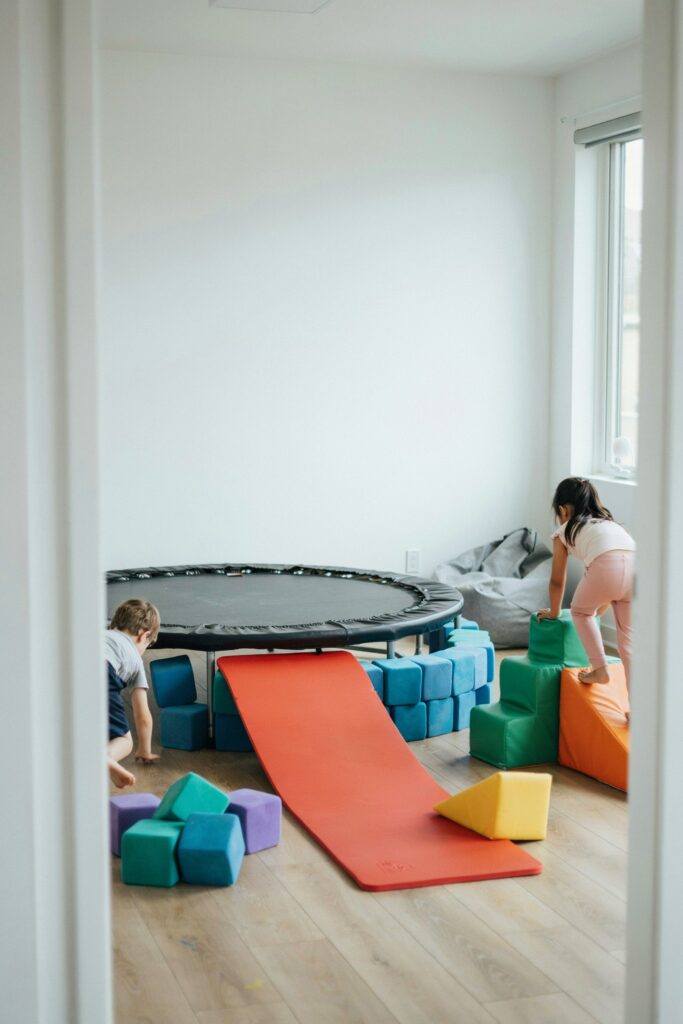
I like turning trampoline time into a soft obstacle adventure using gym mats and foam blocks. Kids crawl, jump, and move through tunnels, which makes it more than just bouncing.
This setup works best indoors or on rainy days. Bright colored mats also help children visually follow the course while playing.
Bounce Soccer Match
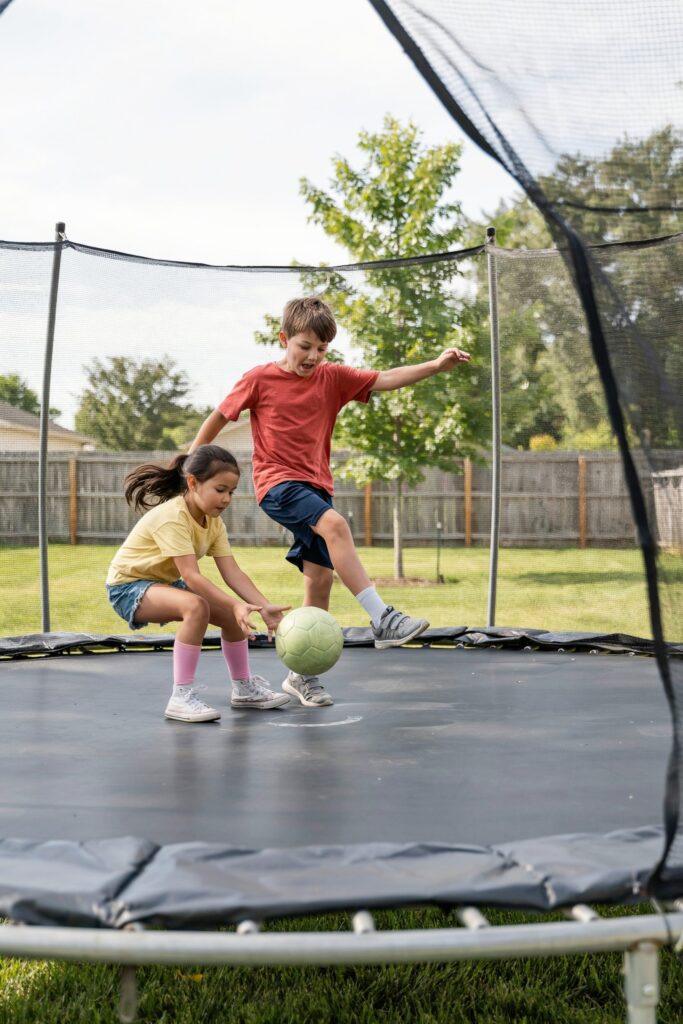
In my setup, I use a soft foam ball and simple targets to create a soccer-style bouncing game. Kids compete in small teams and try to score while jumping.
This works best in open outdoor spaces where movement is unrestricted and safe.
Trampoline Dodge Zone
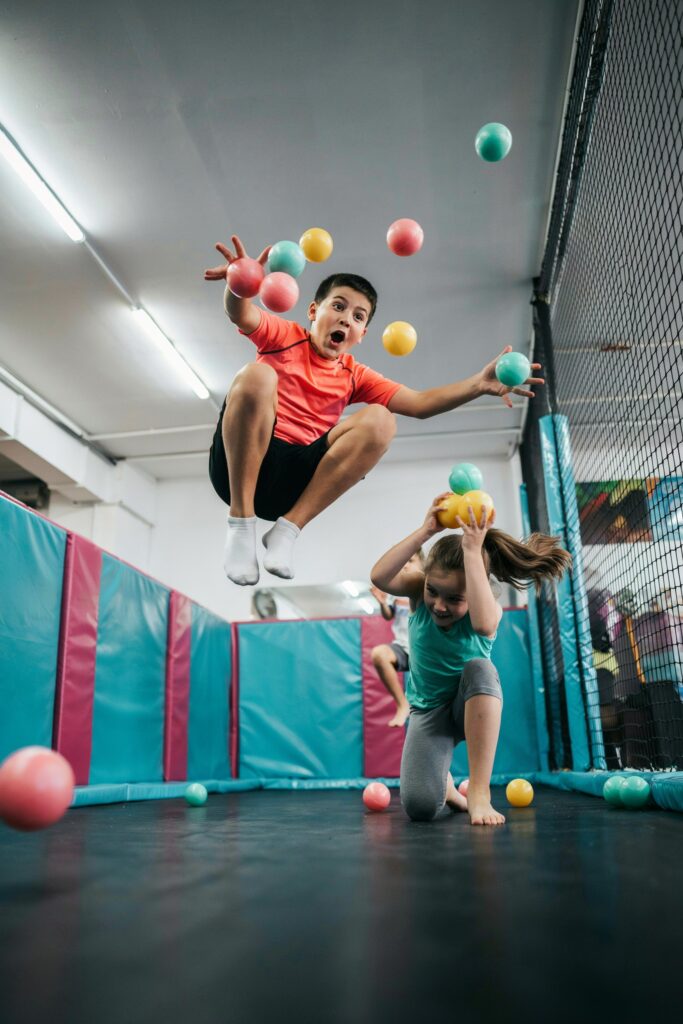
I’ve found trampoline dodge games work best in controlled indoor trampoline parks. Soft balls and padded lanes make fast movement safer.
Kids stay active while learning to dodge, jump, and react quickly during team rounds.
Bounce Ball Battle
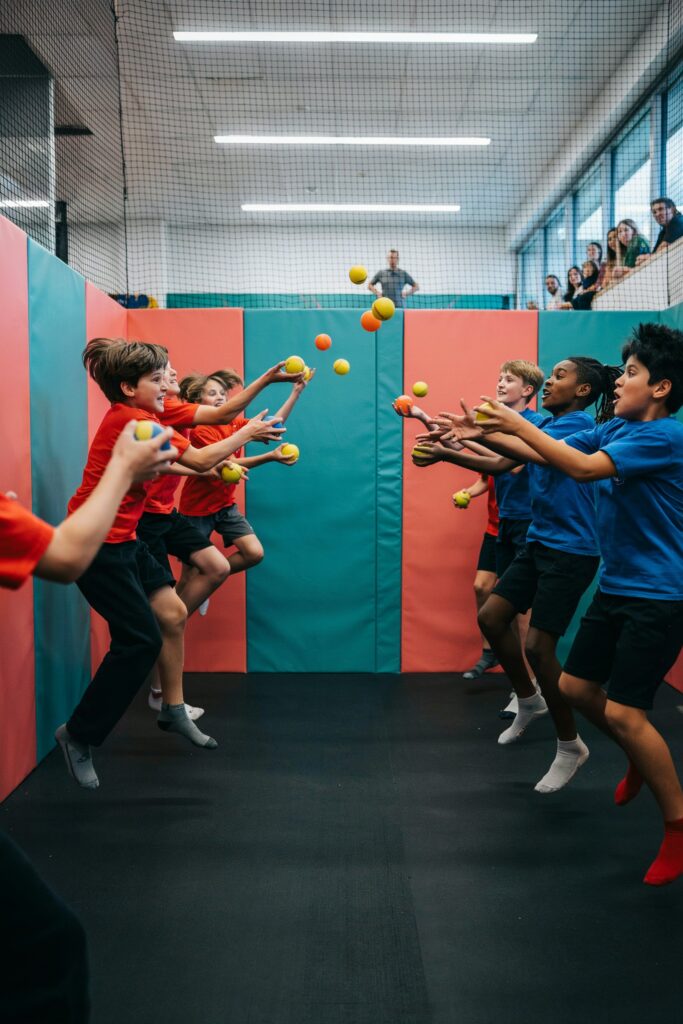
This is a fast team game where I divide players and use foam balls for short competitive rounds. It keeps kids moving constantly without long pauses.
Indoor trampoline setups with padded walls make this game safer and more structured.
Target Toss Jump
I like adding hanging targets or buckets to turn bouncing into a scoring challenge. Kids aim while jumping, which improves focus and coordination.
Backyard fences or simple DIY setups work well for this game style.
Sports Bounce Arena
I use this idea during parties where multiple sports are combined. Basketball throws, soccer kicks, and bounce challenges keep the energy high.
Large open yards work best because kids need space to move safely.
Glow Jump Party
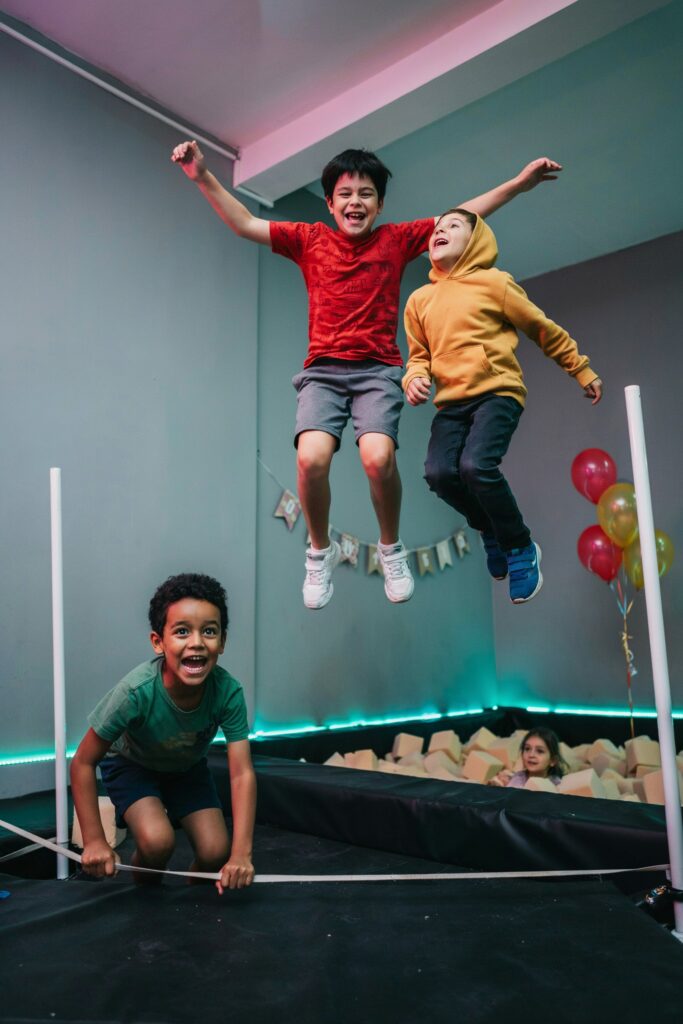
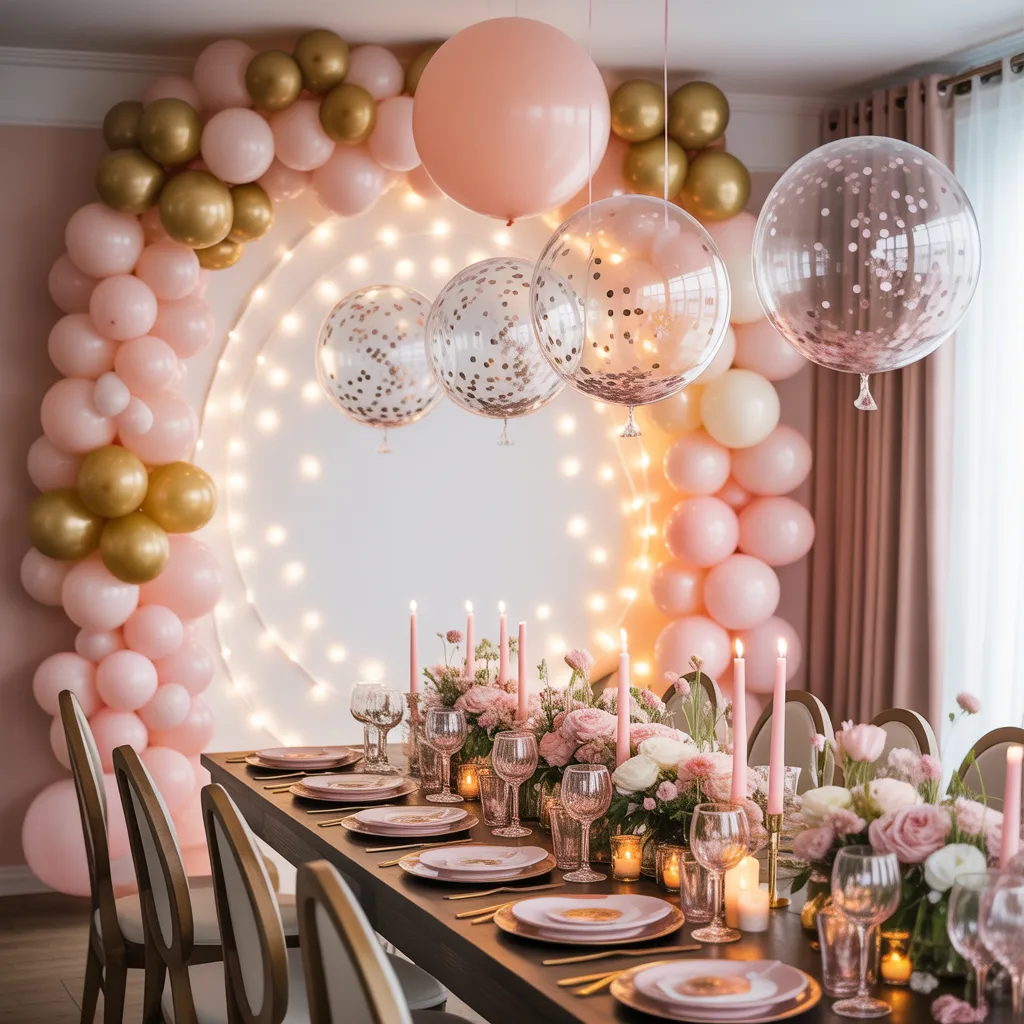
At night or indoors, I add LED lights and glow objects to create a party-style trampoline experience. Games like glow tag or color chase keep kids engaged longer.
This setup is especially popular for birthdays and sleepovers.
Team Bounce Challenge
I usually design simple team games where kids pass a soft ball while bouncing. It builds coordination and teamwork in a fun way.
Indoor trampoline parks work best because they provide safe boundaries for group play.
Hoop Bounce Game
I often attach a basketball hoop to turn jumping into a scoring challenge. Kids enjoy trying trick shots while bouncing.
Larger trampolines are better because they allow more movement between turns.
Ball Pit Bounce
For younger kids, I convert the trampoline into a soft ball pit-style game. It reduces impact and adds sensory fun.
Bright colors and soft lighting make it more engaging for small children.
Jump Catch Race
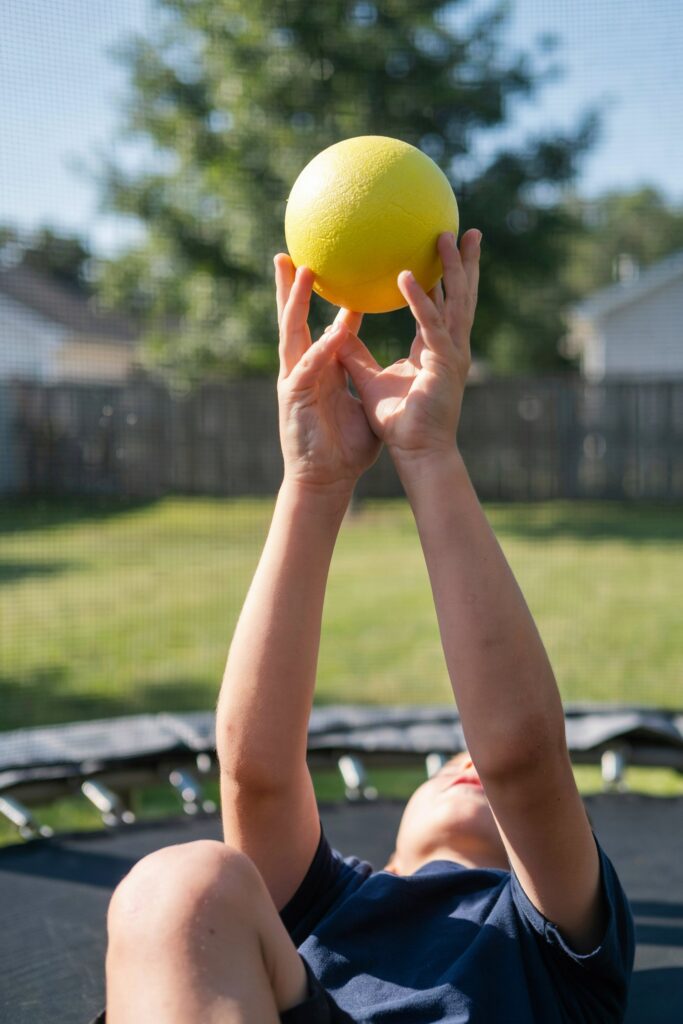
This is one of my favorite active games where kids pass and catch a ball while jumping. It keeps everyone moving and improves timing skills.
Safety nets help make this game suitable for mixed age groups.
Soccer Bounce Fun
I use a soft soccer ball to turn trampoline time into mini matches and passing games. It’s simple but keeps kids active for long sessions.
Small teams make the game easier to manage and less crowded.
Neon Jump Night
I like using LED lights and glow effects to turn trampoline time into a night event. Kids play games like freeze bounce or dodge challenges.
Dark surroundings with neon colors make the experience more exciting.
Backyard Bounce Zone
In my experience, open backyard setups are the safest and most comfortable. Kids enjoy free movement without feeling restricted.
Simple games like Simon Says and bounce-and-freeze work best here.
FAQs
What Are The Safest Trampoline Games For Kids?
From what I’ve observed, simple structured games like freeze bounce, Simon Says, and soft ball catch are safest. They keep kids active without too much physical contact.
How Do I Make Trampoline Games More Fun?
I usually add simple tools like hoops, soft balls, or glow lights. Rotating games also helps prevent boredom and keeps energy levels high.