
Plastic bags have a way of taking over cabinets, drawers, and the space under the sink before you even notice it. One day everything looks manageable, and the next, bags are falling out every time you open a door.
The good news is that organizing plastic bags does not require expensive storage systems or a huge kitchen makeover. A simple setup that matches your daily habits can completely change how your space feels and functions.
These smart plastic bag organization ideas for 2026 will help you reduce clutter, improve access, and keep reusable storage solutions looking neat all year long.
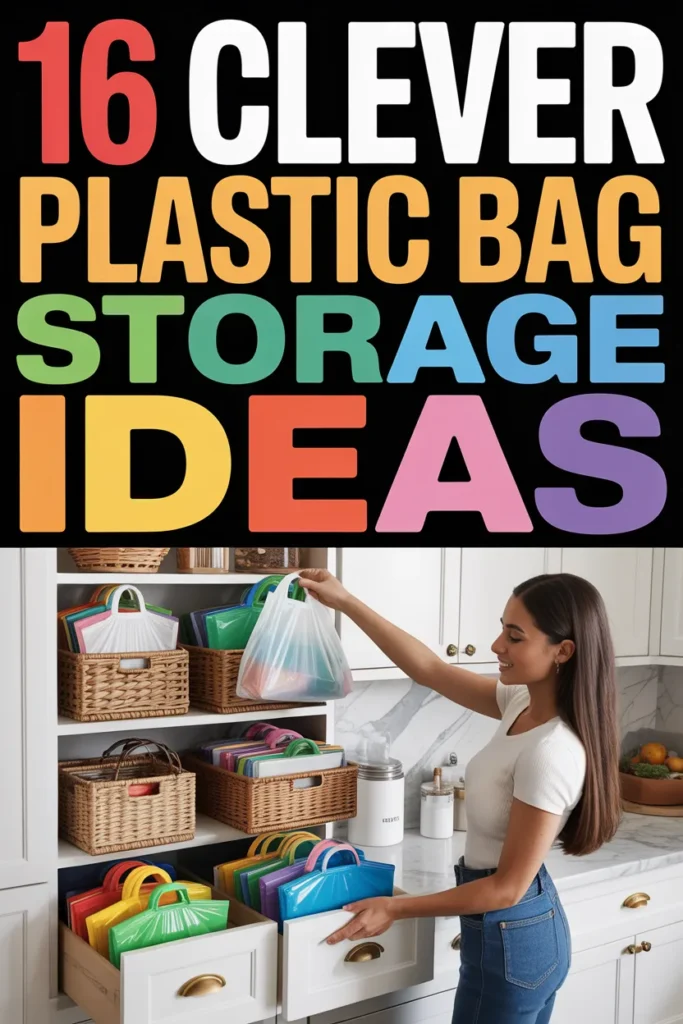
key takeaway
- Store plastic bags vertically to save cabinet space
- Use wall-mounted systems for quick daily access
- Keep only the amount of bags you actually use
- Separate bags by size or purpose for easier storage
- Reduce drawer clutter with compact organizers
- Make use of unused cabinet doors and wall space
- Prevent overflow with simple decluttering habits
- Choose storage options that fit your lifestyle and kitchen layout
How Often Should You Declutter Plastic Bags?
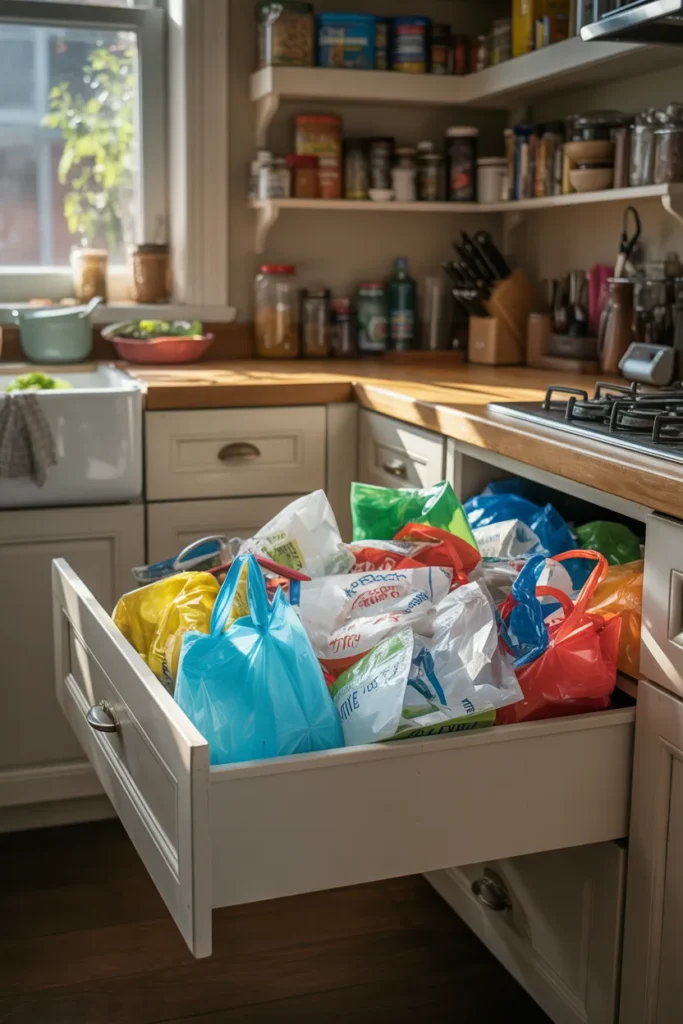
Plastic bags pile up quickly when they are ignored for too long, so regular decluttering makes a huge difference. Checking your storage every one to three months usually keeps things under control, especially if you shop often or order takeout regularly. Once bags start overflowing or become difficult to pull out, it is usually a sign that it is time to remove extras.
Pro Tip: Tie bag decluttering to another cleaning task like organizing under the sink so it becomes part of your routine.
Hanging Mesh Dispenser
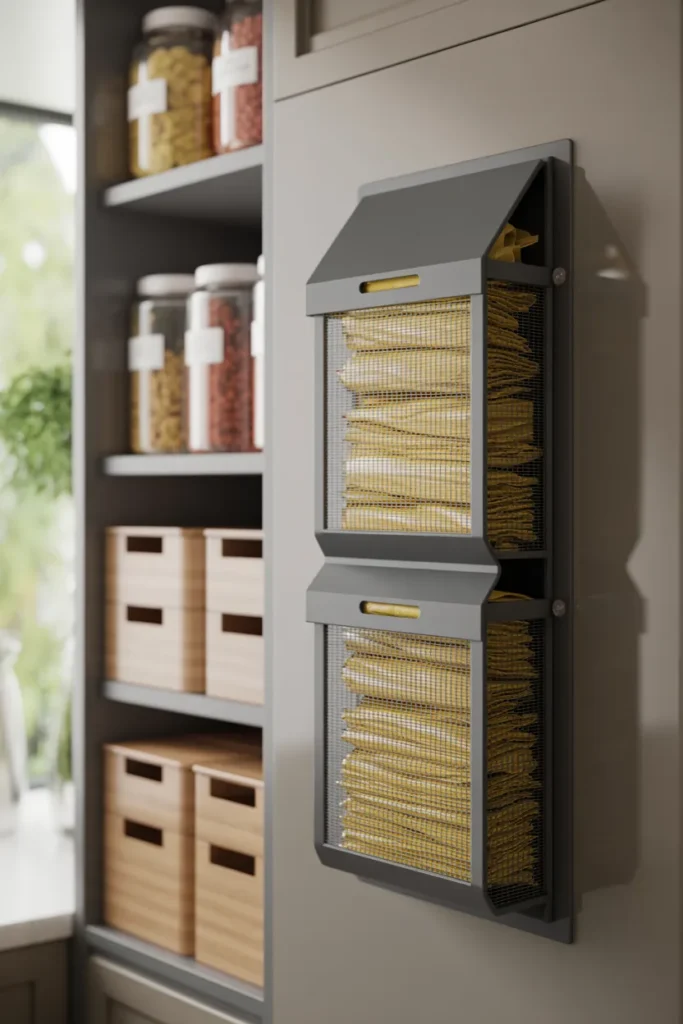
A hanging mesh dispenser helps reduce cabinet clutter by storing bags vertically instead of stuffing them into drawers. You can load bags from the top and pull them out neatly from the bottom opening whenever needed. This setup works especially well inside pantry doors, laundry rooms, or under-sink storage areas.
Pro Tip: Choose breathable mesh material to prevent trapped moisture and keep bags fresh over time.
Wall-Mounted Dispensers
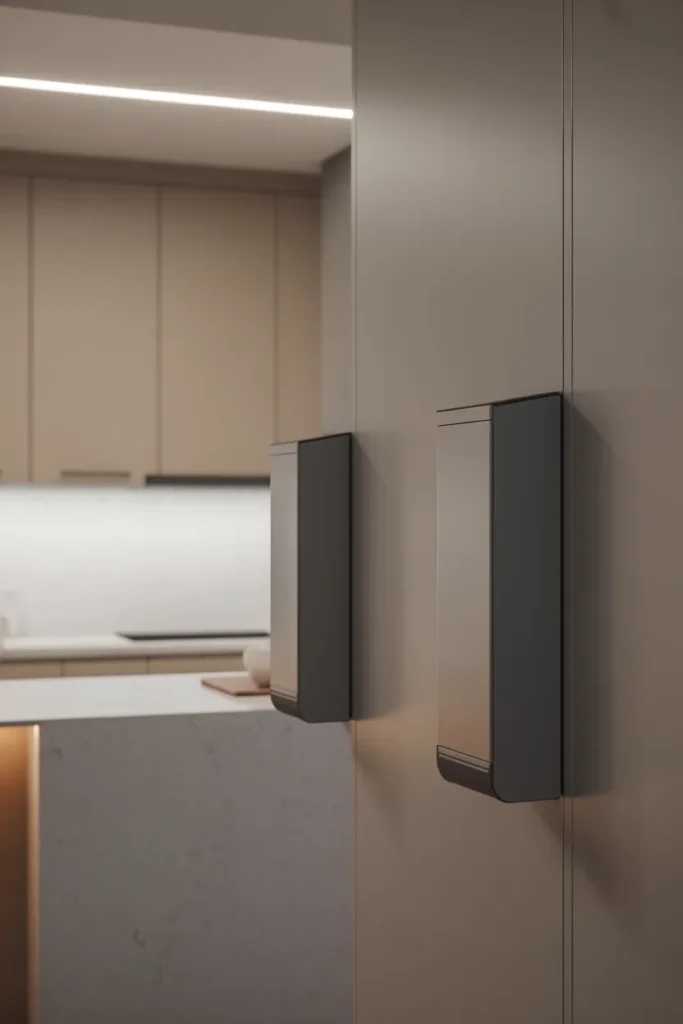
Wall-mounted dispensers keep plastic bags hidden while making them easy to grab during busy kitchen moments. Slim designs work perfectly in small kitchens, utility rooms, or near trash bins where bags get used daily. Neutral colors and clean finishes also help the storage blend naturally into modern spaces.
Pro Tip: Install the dispenser at arm height for faster access during cooking or cleaning tasks.
Countertop Bag Tower
A countertop bag tower keeps folded bags stacked neatly instead of turning into a tangled mess. Simply fold bags into rectangles, place them through the top opening, and pull one out from the bottom when needed. This storage style works best on pantry shelves or unused kitchen counter corners.
Pro Tip: Stick to neutral-toned organizers so countertop storage feels tidy rather than bulky.
Inside-Cabinet Rolls
Inside-cabinet storage works well when kitchen space feels limited and clutter builds quickly. Rolled bags stay compact inside wall-mounted holders that fit neatly behind cabinet doors or pantry walls. The organized layout also makes it easier to separate shopping bags by size or purpose.
Pro Tip: Label each roll section for grocery bags, trash liners, and reusable bags to stay more organized.
Door Basket Storage
Over-the-door baskets instantly create extra storage space without requiring major changes to your kitchen. Loosely folded plastic bags can be dropped into wire baskets for easy visibility and quick access. This setup works especially well under sinks where unused cabinet doors often go to waste.
Pro Tip: Use sturdy metal baskets instead of plastic ones for better durability and long-term use.
Color-Coded Tubes
Color-coded storage tubes make it easier to sort plastic bags based on their purpose or size. Hanging tubes work well in garages, mudrooms, and laundry spaces where organization needs to stay practical and visible. The mesh design also helps you see when one category starts getting overfilled.
Pro Tip: Assign one color for grocery bags and another for recycling or trash-use bags to simplify sorting.
High-Use Bag Dispenser
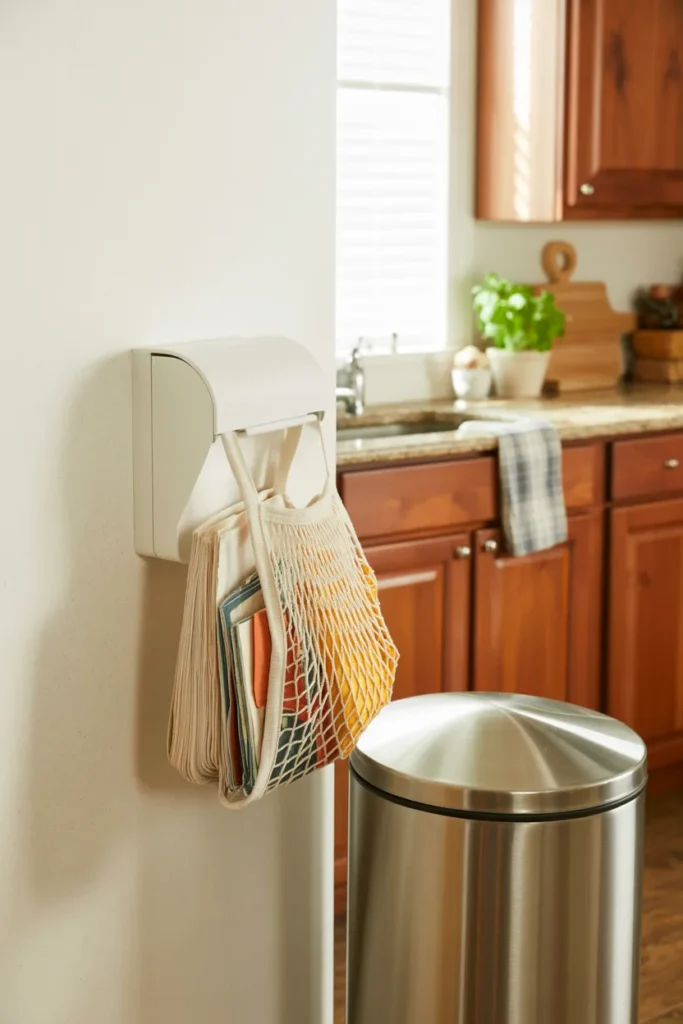
Daily-use plastic bags need a storage system that allows quick access without creating extra mess. A hanging dispenser near the pantry or trash area makes grabbing bags simple while preventing overstuffed drawers. Loose loading also helps bags slide out smoothly instead of jamming.
Pro Tip: Avoid overfilling the dispenser so bags pull out one at a time without tearing.
Crocheted Bag Sleeve
A crocheted storage sleeve adds texture and warmth while keeping plastic bags neatly contained. Bags are pushed in through the top and removed from the bottom opening whenever needed. This type of organizer works especially well in open kitchens or apartments where storage stays visible.
Pro Tip: Choose thicker yarn materials to help the sleeve maintain its shape over time.
Drawstring Fabric Sack
A drawstring fabric sack works well when you want flexible storage that can easily adapt to changing bag amounts. Hang it behind pantry doors or utility room walls and simply tighten the drawstring to keep everything contained. Soft fabric also prevents the storage from looking too bulky or harsh.
Pro Tip: Wash the fabric sack regularly to prevent dust buildup and kitchen odors.
Peg Hook Hang
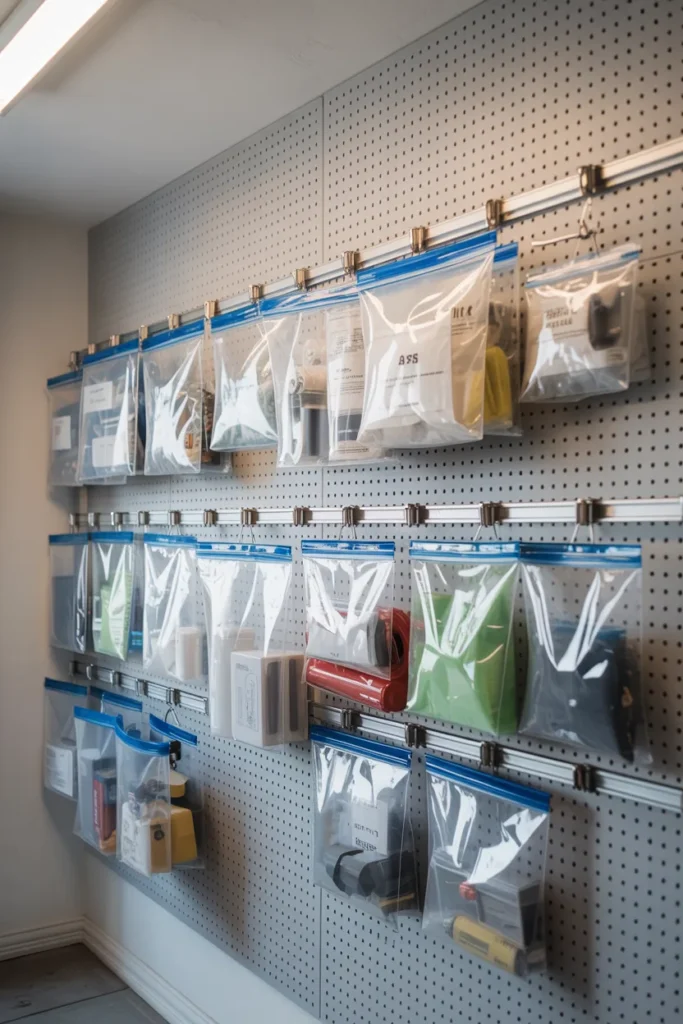
Sometimes the simplest storage ideas work best, especially in garages or utility rooms where convenience matters more than appearance. Hanging bags from a single peg hook keeps them visible, easy to grab, and completely off the floor. Grouping similar bag sizes together also improves organization.
Pro Tip: Use heavy-duty wall hooks so larger groups of bags stay secure without falling.
Cabinet Door Cylinder
A slim cabinet door cylinder keeps bags hidden while maintaining easy access near trash or recycling areas. Load bags loosely from the top and pull them out individually through the circular opening. The compact design works especially well in kitchens where storage space is limited.
Pro Tip: Install the cylinder on the inside edge of the cabinet door so it does not interfere with shelving.
Slim Wall Slots
Slim wall slots provide flat storage solutions for tight spaces where bulky organizers do not fit well. Fold bags neatly and slide them sideways into narrow openings for quick and organized access. These low-profile systems work perfectly beside appliances, trash bins, or inside narrow cabinets.
Pro Tip: Store frequently used bags in the front slots for easier daily access.
Drawer Bag Sorting
Drawer sorting systems help control clutter by giving every type of bag its own section. Shallow compartments allow you to stack folded bags neatly by size, purpose, or material. Organized drawer layouts also make it easier to grab the right bag without unfolding the entire pile.
Pro Tip: Use adjustable drawer dividers so the layout can change as your storage needs shift.
Clear Drawer Inserts
Clear drawer inserts make organizing plastic bags feel more manageable because everything stays visible at a glance. Deep drawers work especially well for this setup since bags can be folded flat and separated into different sections. Transparent inserts also help maintain a cleaner and more polished appearance.
Pro Tip: Keep only frequently used bags in drawer inserts and recycle excess extras regularly.
Tube Grid Wall
A tube grid wall turns unused vertical space into a practical bag organization system. Rolled bags slide neatly into separate tubes, making it easy to sort them by size, color, or purpose. This setup works particularly well in utility rooms, pantries, or laundry areas with open wall space.
Pro Tip: Mount the grid near recycling bins so extra bags can be sorted immediately after unloading groceries.
Open Mesh Pocket
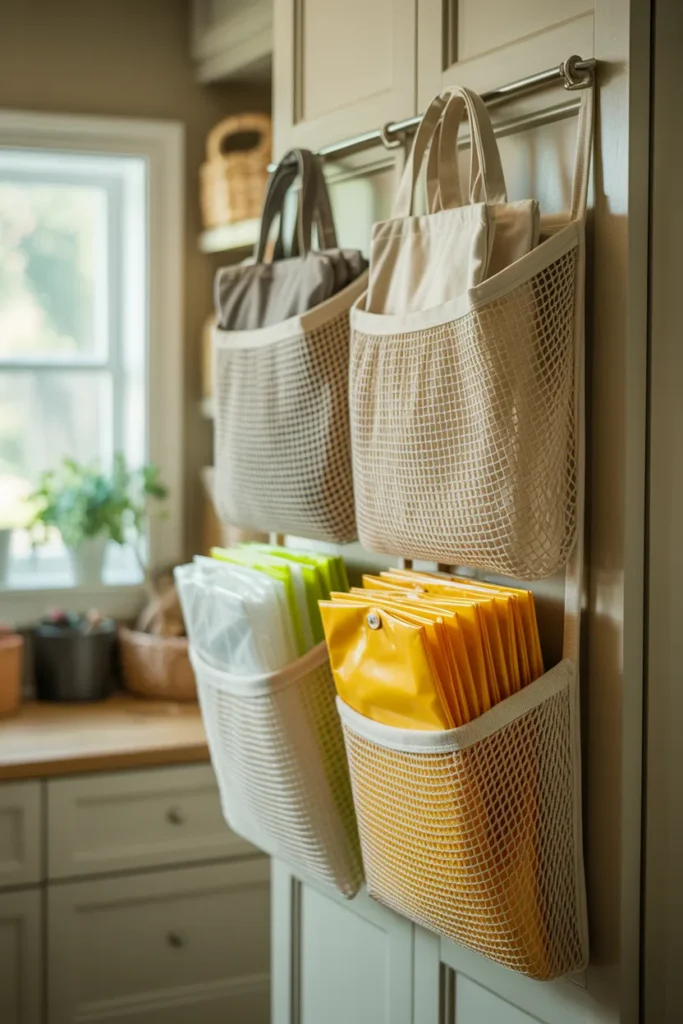
An open mesh pocket works best for quick-access storage when folding bags feels unnecessary or time-consuming. Simply drop bags in loosely from the top and pull them out as needed throughout the day. Flexible mesh material also expands naturally as storage needs change.
Pro Tip: Install the pocket near your recycling station so reusable bags stay easy to grab before shopping trips.
FAQs
How Many Plastic Bags Should You Keep?
Keeping too many plastic bags usually creates more clutter than convenience. A good rule is to store only the amount that comfortably fits inside your chosen organizer without stuffing or overflowing. Once bags stop sliding out easily, it is usually time to recycle the extras.
Pro Tip: Set a storage limit and remove excess bags immediately once the organizer becomes overcrowded.
Should Plastic Bags Be Cleaned Before Storage?
Plastic bags used for food, wet groceries, or messy items should be cleaned and fully dried before storage. Damp bags can trap moisture, develop odors, and stick together over time, making them harder to use later. Clean and dry bags also stay in better condition for reuse.
Pro Tip: Air-dry washed bags completely before folding to prevent mildew or unpleasant smells.