

Homework time can quickly become stressful when supplies disappear, distractions take over, and kids struggle to stay seated. Even a nice desk setup won’t help much if the space doesn’t support focus and daily routines.
The right homework station should make studying feel easier, calmer, and more consistent. Small organization changes often have a bigger impact than buying more furniture or storage bins.
These homework station ideas are designed to help families create practical spaces that fit real homes, busy schedules, and different learning styles without making the room feel overcrowded.
key takeaway
- Choose homework station locations with fewer distractions
- Use vertical storage to free up desk space
- Keep supplies easy to reach and simple to organize
- Add lighting that supports focus without glare
- Create separate zones for shared study spaces
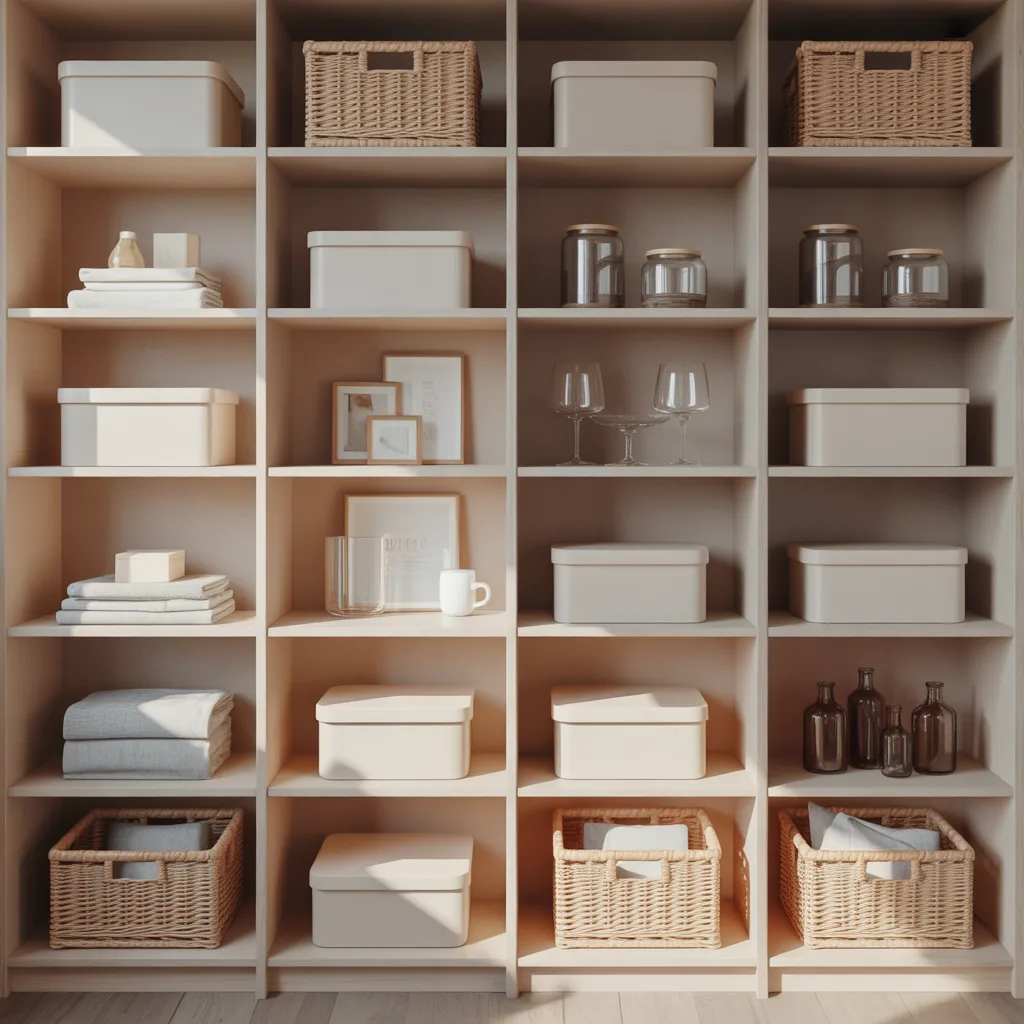
- Use closed storage to reduce visual clutter
- Build routines that make cleanup easier every day
What Is the Best Place in the House for a Homework Station?
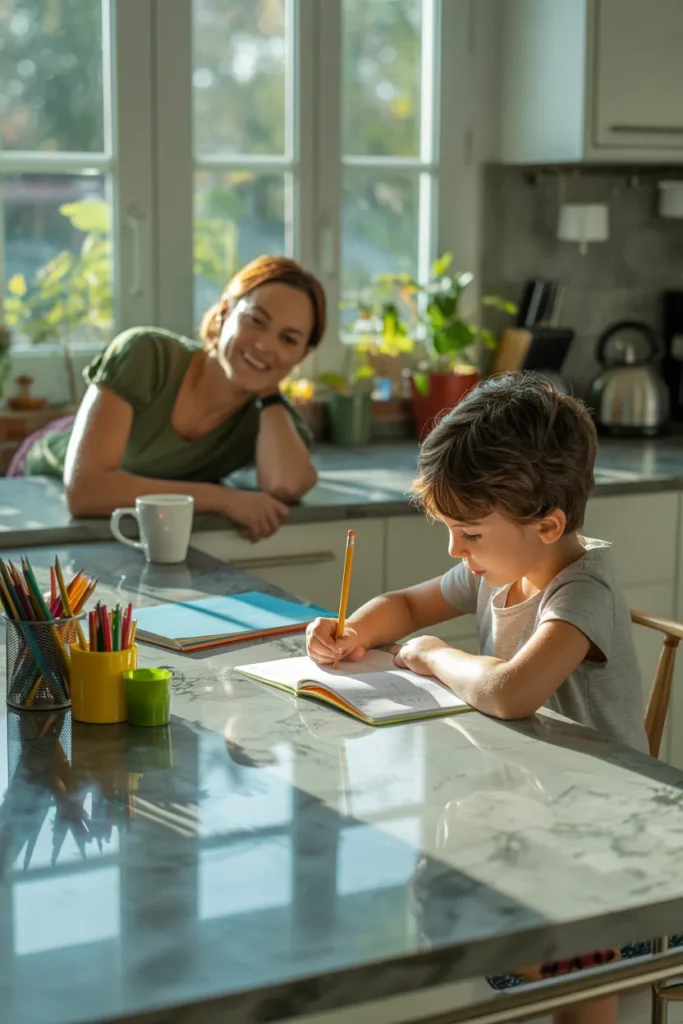
The best homework station is one that fits naturally into your family’s daily routine instead of feeling isolated from the rest of the house. Kids usually stay more focused when parents can casually supervise without hovering nearby. Shared areas like kitchens, dining spaces, and family rooms often work better because supplies stay accessible and homework becomes part of the normal daily flow.
Pro Tip: Pick a location with natural light and minimal TV noise to make concentration easier during homework sessions.
Floating Shelf Focus
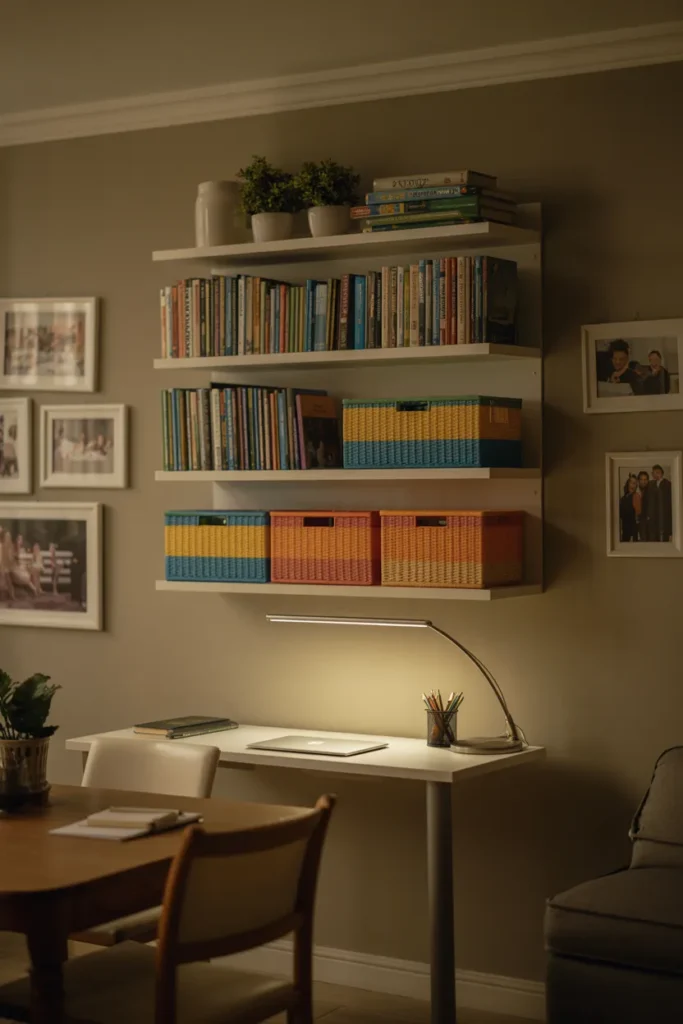
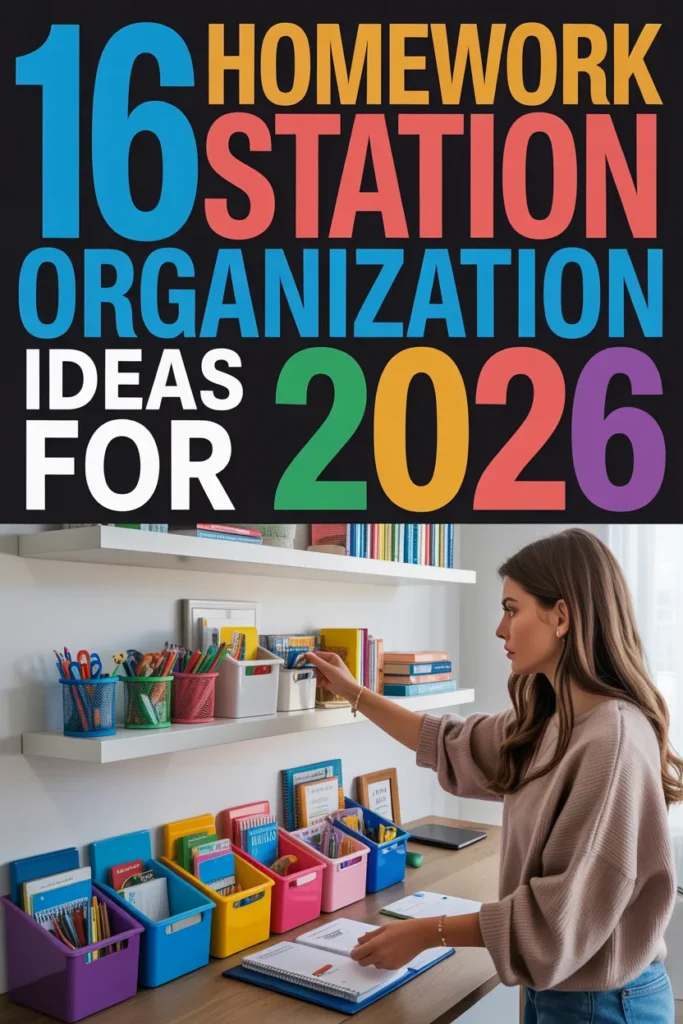
Floating shelves help keep the desk surface clean while still giving kids easy access to books, baskets, and school supplies. This setup works especially well in dining rooms or multipurpose spaces where floor space is limited. Keeping only daily essentials on the desk helps reduce distractions and makes cleanup much faster after homework time ends.
Pro Tip: Use deeper floating shelves so larger bins and folders stay organized without overcrowding the workspace.
Color-Sorted Supplies
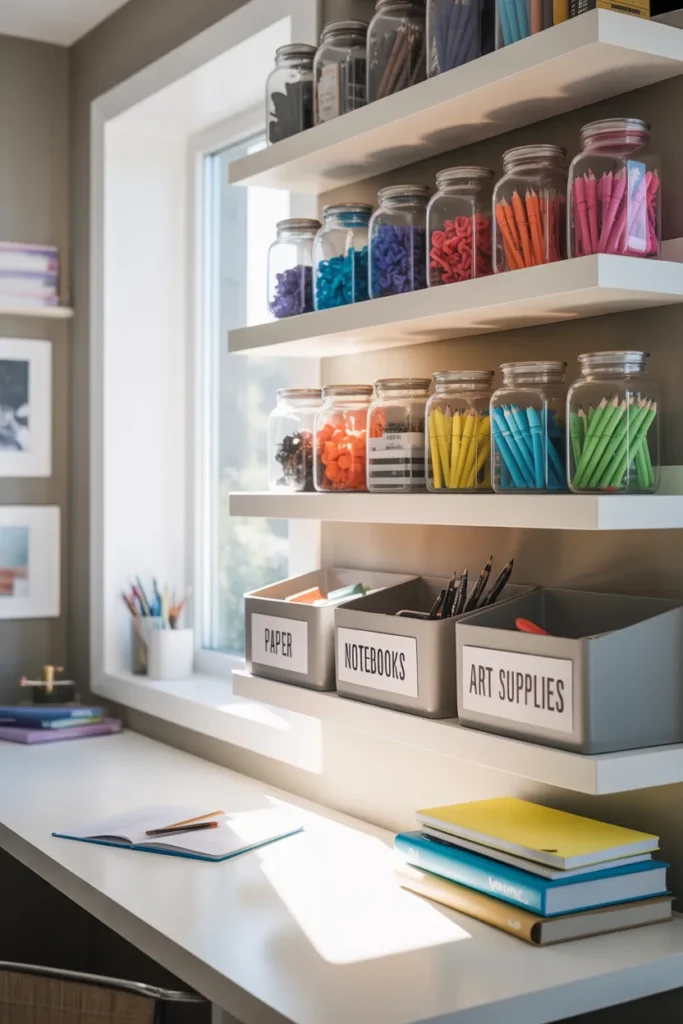
Color-coded organization makes it easier for
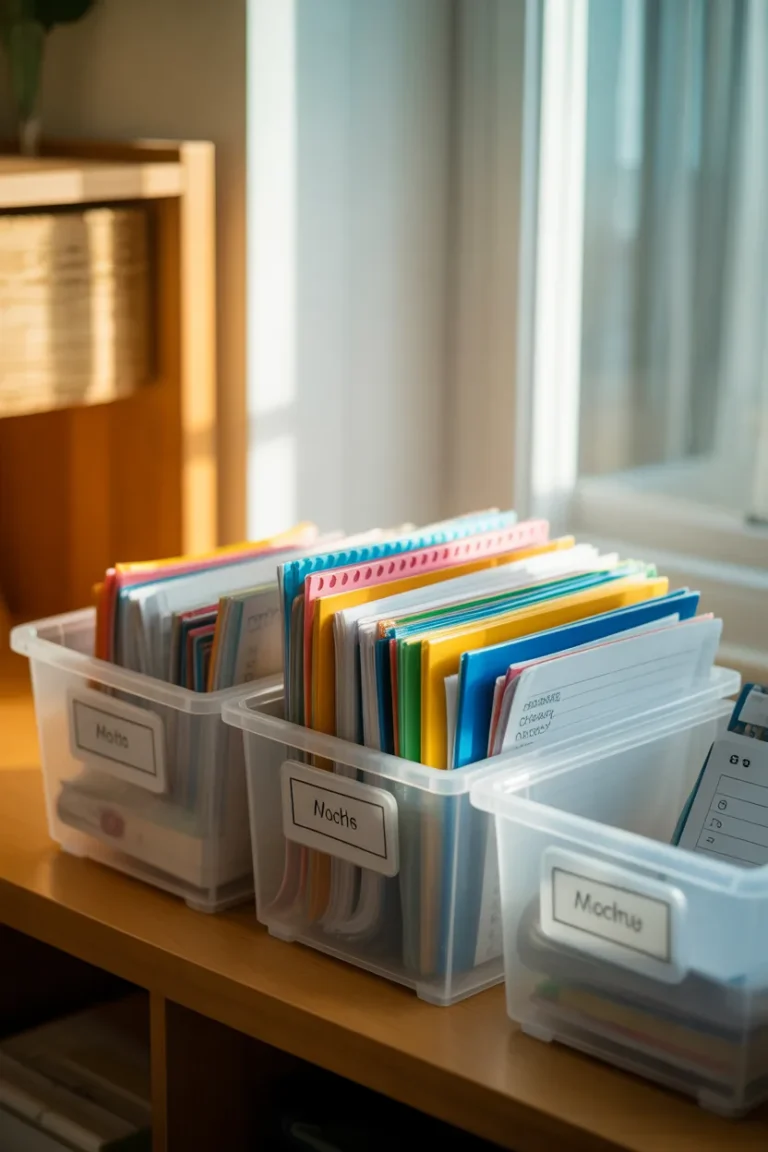
kids to quickly find what they need without wasting time searching through clutter. Store markers, pencils, pens, and notebooks in separate clear containers or labeled bins to create visual order. Open shelving works best because everything stays visible and easy to maintain during busy school weeks.
Pro Tip: Assign one color per child or subject to make organizing supplies faster and more consistent.
Built-In Calm
A built-in homework station creates a quieter and more focused environment by limiting visual distractions around the desk area. Closed cabinets, simple storage, and minimal decor help kids stay mentally organized while working. This style fits especially well in bedrooms, office corners, or study areas where concentration matters most.
Pro Tip: Keep only one or two frequently used supplies on the desktop to maintain a calm and distraction-free setup.
Shared Study Zones
Shared homework stations can work smoothly when each child has a clearly defined area for supplies and personal items. Long desks paired with divided shelving help reduce arguments while giving everyone enough room to focus comfortably. This setup works well in bonus rooms, hallway spaces, or larger family areas.
Pro Tip: Give each child their own labeled bin or drawer to prevent supplies from getting mixed together.
Pegboard Control Center
Pegboards make organizing school supplies much easier because tools stay visible and easy to grab during homework sessions. Hanging containers, mini shelves, and clips help maximize vertical space while keeping the desk clear. This idea works especially well in kids’ bedrooms, playrooms, or compact study corners.
Pro Tip: Rearrange pegboard accessories every few months to match changing school needs and routines.
Closet Study Nook
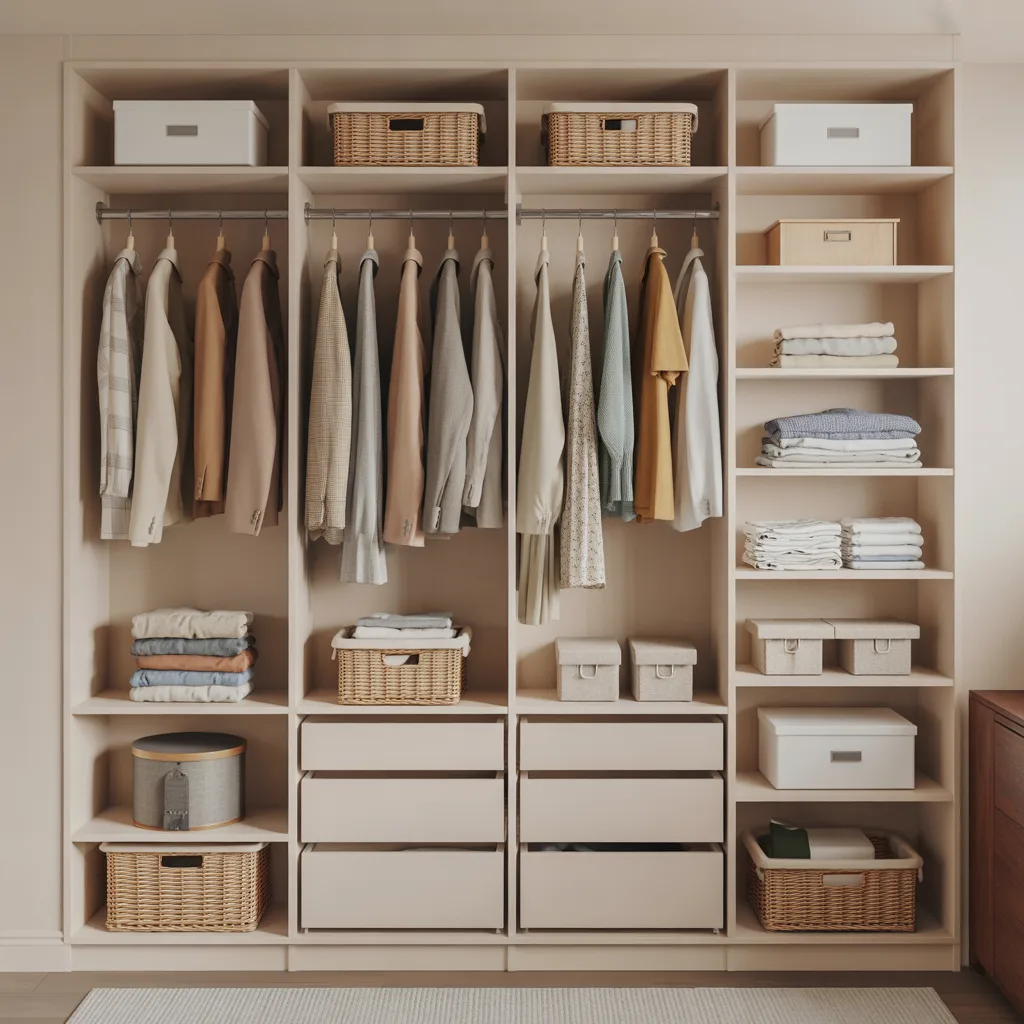
Unused closets can become highly effective homework stations when designed with smart storage and good lighting. A compact desk, adjustable shelving, and rolling drawers help maximize every inch without making the space feel cramped. Closing the closet doors after homework also helps reduce visual clutter in smaller rooms.
Pro Tip: Add a corkboard or calendar inside the closet wall to keep assignments and reminders organized.
Window-Lit Workspace
Natural light helps improve focus and makes homework spaces feel more comfortable during long study sessions. Positioning a desk near a window creates a brighter environment while reducing the need for harsh artificial lighting during the day. Simple organizers and shallow drawers help maintain a clean and functional workspace.
Pro Tip: Use light-filtering curtains to reduce screen glare while still keeping the space bright and airy.
Personalized Study Nook
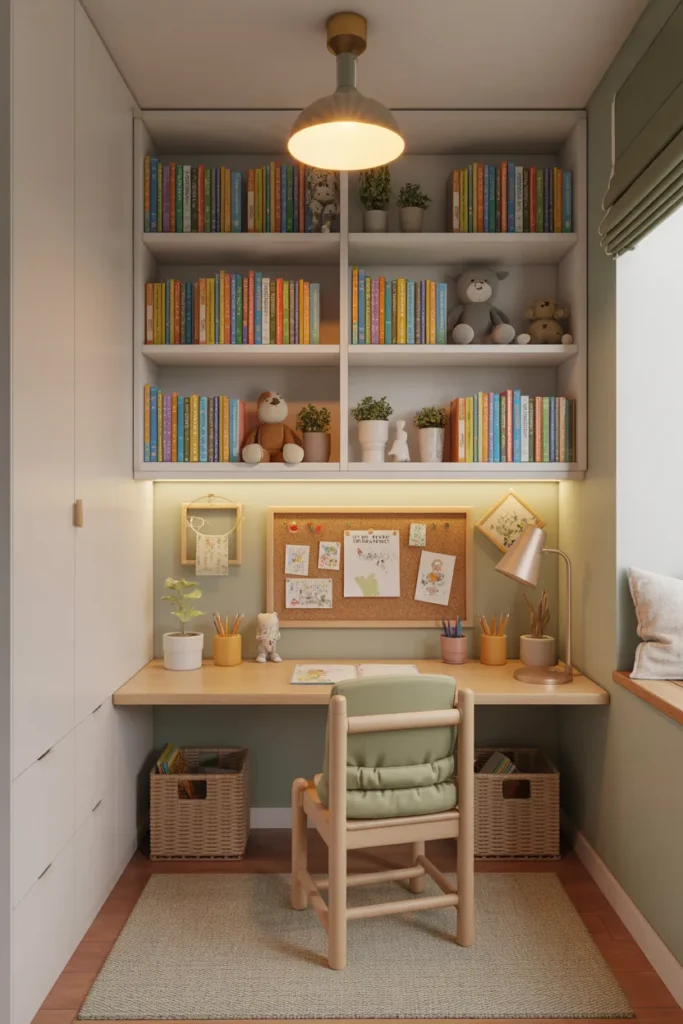
Kids often stay more motivated when the homework area feels personal and designed specifically for them. Small shelves for favorite books, simple decor, and customized storage can help create a stronger sense of ownership. Keeping distractions limited while adding personality creates a balanced and practical setup.
Pro Tip: Let your child choose a few decorative items so the workspace feels inviting without becoming distracting.
Cabinet-Closed Station
Cabinet-style homework stations help busy family spaces feel cleaner because supplies can quickly disappear behind closed doors after use. Shallow drawers, baskets, and hidden compartments make organization easier while keeping countertops less chaotic. This setup works especially well in kitchens and multipurpose living areas.
Pro Tip: Store extra school supplies in labeled bins inside lower cabinets for faster access during busy mornings.
Under-Stair Nook
The empty space under stairs can become a surprisingly useful homework station with the right layout and storage solutions. Slim desks, vertical shelves, and compact drawer units help maximize awkward angles without wasting space. Good task lighting is especially important in these smaller tucked-away areas.
Pro Tip: Choose lighter paint colors and compact furniture to keep the nook from feeling too enclosed.
Minimal Wall Setup
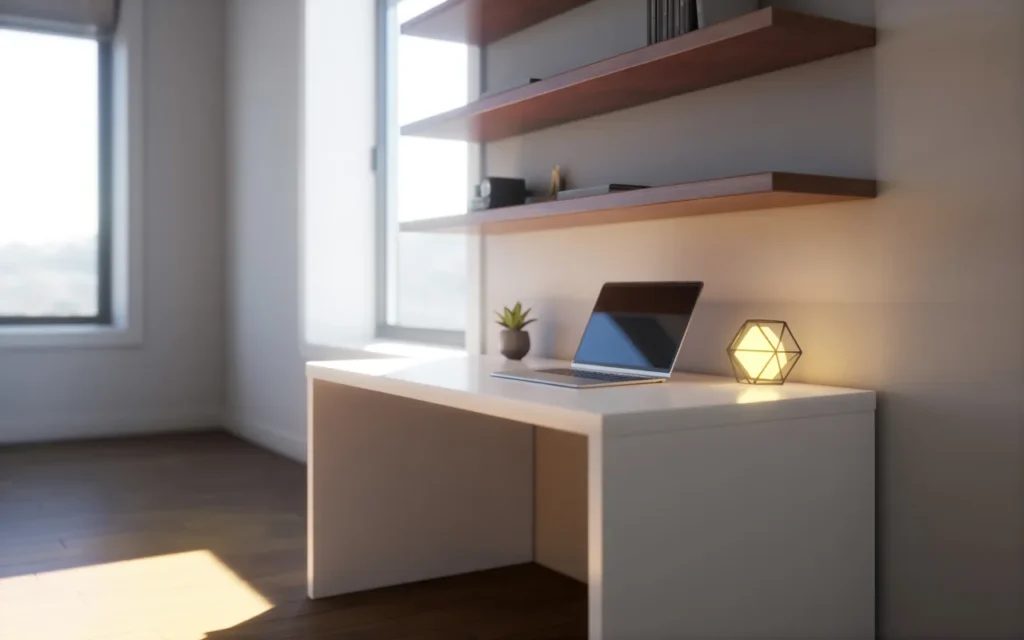
A simple homework setup often feels less overwhelming for kids who get distracted easily. Floating shelves, a compact desk, and limited daily supplies help create a clean environment that encourages focus. This design works especially well in small bedrooms, apartments, or flexible family spaces.
Pro Tip: Rotate supplies seasonally so the desk only holds items currently needed for schoolwork.
Dual-Desk Balance
Dual homework stations help shared rooms feel more organized by giving each child a separate and clearly defined workspace. Matching desks and vertical shelving create visual balance while helping both students stay focused independently. Strong dividers like shelving or wall panels can also reduce distractions.
Pro Tip: Use matching storage systems for both desks to keep the overall room looking clean and coordinated.
Symmetry Keeps Order
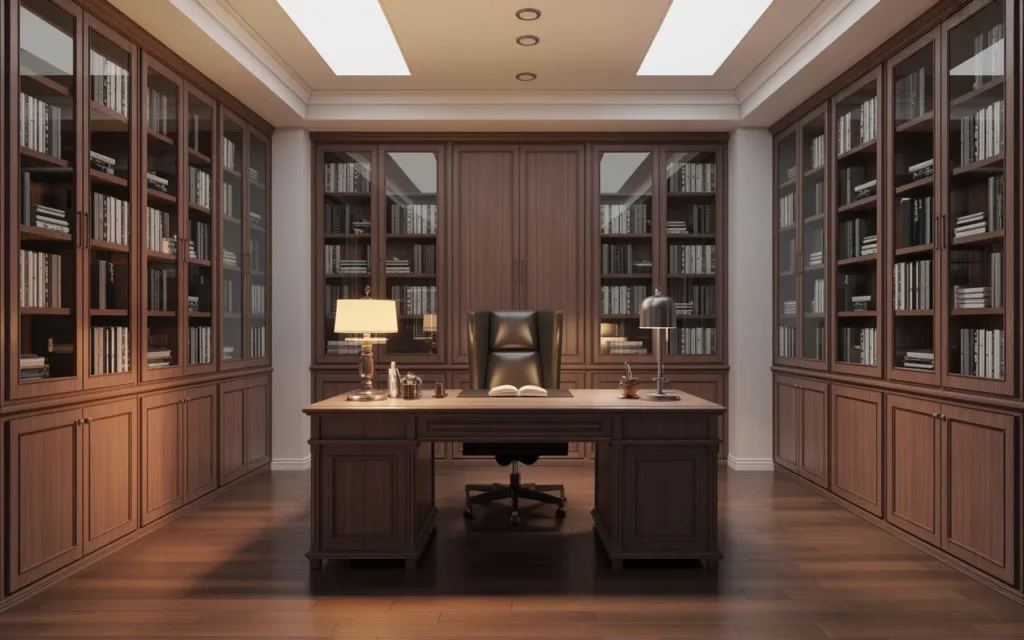
Symmetrical layouts naturally create a calmer and more organized feeling in homework spaces. Matching cabinets, centered desks, and balanced storage make cleanup routines easier because everything has a predictable place. This setup works particularly well in larger study rooms or shared office spaces.
Pro Tip: Keep drawer organizers identical on both sides to simplify daily organization habits.
Resettable Kitchen Desk
Kitchen homework stations work best when the setup can quickly transition back to regular family use after studying ends. Limiting visible supplies to only a few essentials helps prevent counters from becoming cluttered throughout the day. Hidden storage below keeps everything accessible without creating visual chaos.
Pro Tip: Use one portable supply caddy so kids can quickly set up and reset the workspace each day.
Vertical Shelf Flow
Vertical shelving helps maximize storage in smaller homework stations where floor space is limited. Floating shelves above the desk keep books, bins, and supplies organized while leaving the work surface open for studying. This layout works especially well in bedrooms, offices, and narrow wall spaces.
Pro Tip: Store rarely used supplies on higher shelves and keep everyday items within easy reach.
Defined Work Zones
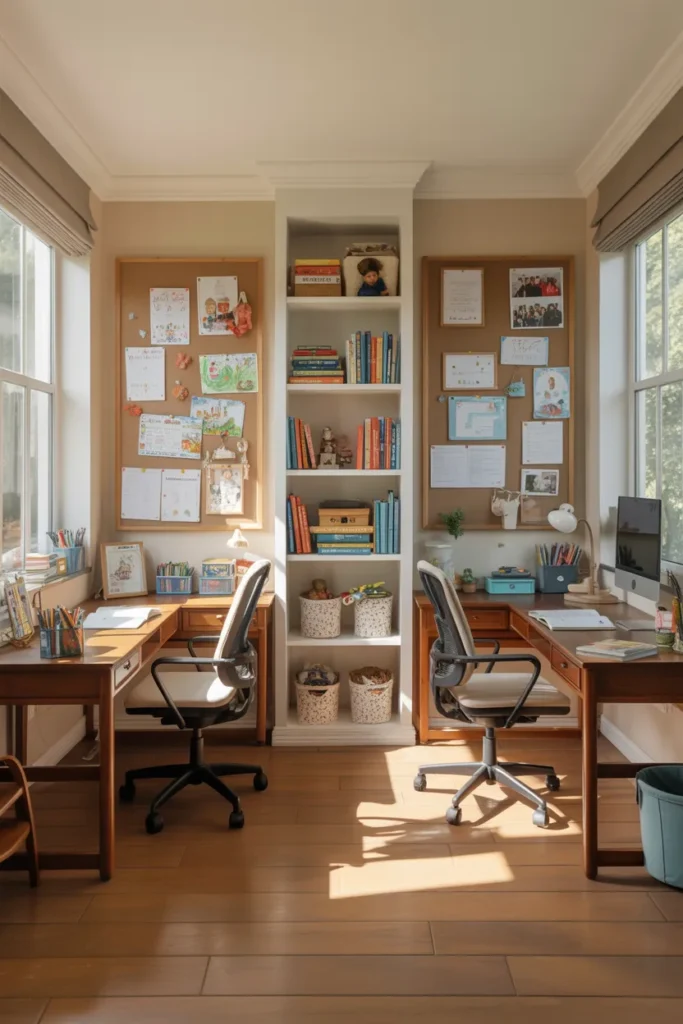
Separate work zones help multiple children stay organized and avoid distractions while sharing the same room. Individual desks, personal pinboards, and divided storage create clear boundaries that improve focus during homework time. Shared shelving between stations helps maintain balance without wasting space.
Pro Tip: Use different desk accessories or colors for each child to create easy visual separation between work areas.
FAQs
Should Homework Stations Be in Bedrooms?
Bedrooms can sometimes create extra distractions because kids associate the space with relaxing, sleeping, or playing instead of studying. Younger children usually focus better in shared family spaces where parents can casually supervise homework routines. Older kids may work well in bedrooms if the space stays organized and distractions are controlled.
Pro Tip: If using a bedroom setup, keep the homework desk away from TVs, gaming systems, and beds whenever possible.
How Do I Keep the Homework Station From Getting Messy Again?
The easiest way to prevent clutter is by creating a quick daily reset routine instead of relying only on storage products. Keep active papers in one tray, store extra supplies out of sight, and spend a few minutes clearing the desk each evening. Small habits consistently work better than large organizing projects done occasionally.
Pro Tip: Set a five-minute cleanup timer after homework each day to make tidying feel simple and manageable.