
I’ve dealt with a messy playroom where toys kept spreading everywhere no matter how often I cleaned. From my experience, the real issue is not too many toys but the lack of proper storage systems. When kids don’t know where things belong, cleanup becomes stressful and repetitive.
In this guide, I share 22 simple playroom organization ideas that I personally find effective for creating order using shelves, bins, zones, and wall storage. Each idea focuses on giving toys a clear “home” so kids can easily play and clean up without confusion. These methods work well even in small spaces and don’t require throwing toys away.
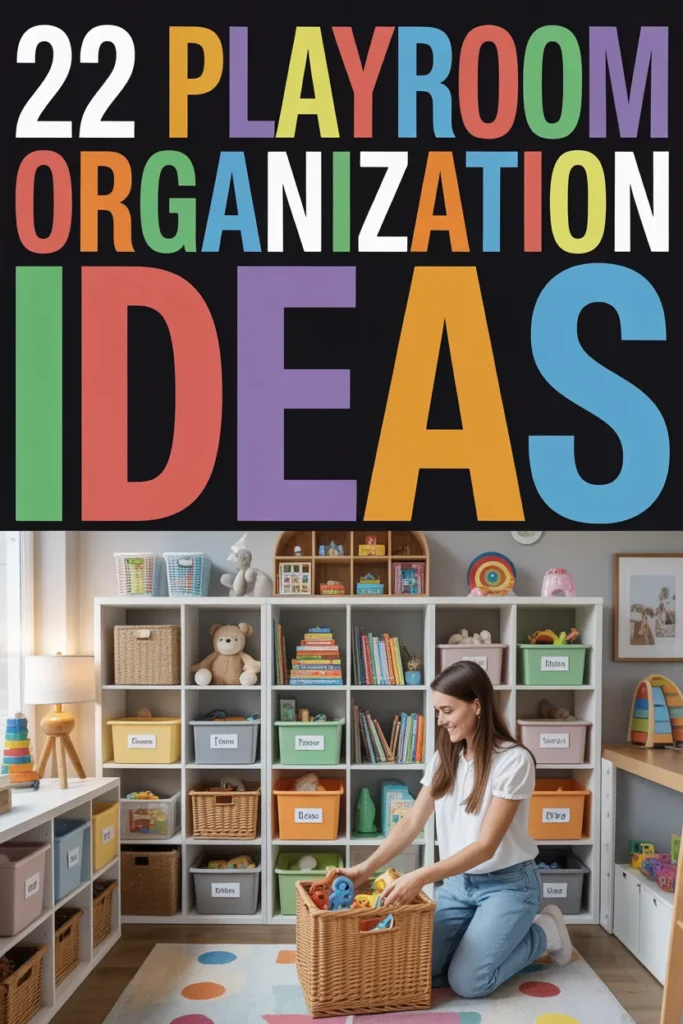
Key Takeaways
Most toy mess happens due to poor storage systems, not excess toys
Assigning a “home” for each toy category improves cleanup habits
Low shelves and labeled bins make it easier for kids to stay organized
Zoning the playroom improves structure and reduces clutter
Wall and vertical storage help save floor space
How Do You Organize a Messy Playroom Without Throwing Toys Away?
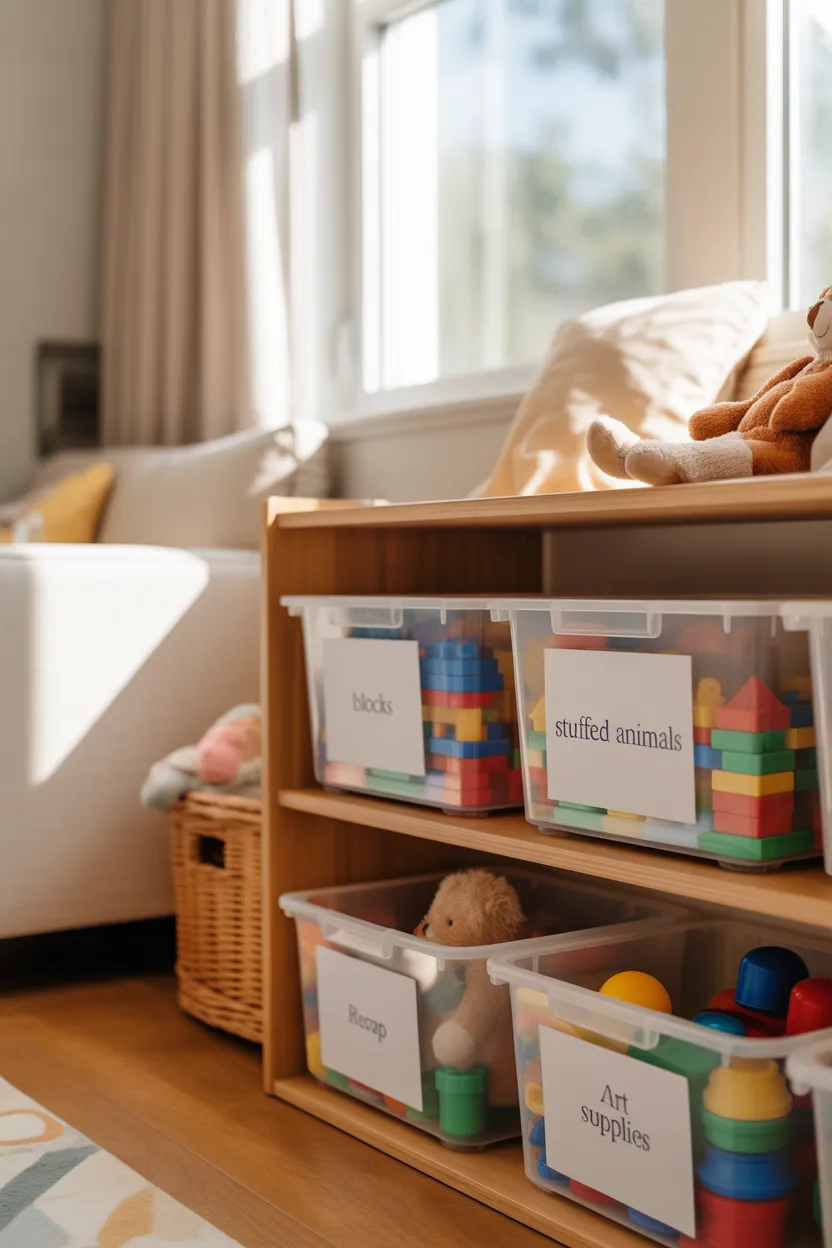
I’ve learned that a messy playroom usually comes from unclear storage, not too many toys. When everything is mixed together, kids don’t know where to put things back, so the mess keeps repeating.
From my experience, the best fix is grouping similar toys and giving each group a clear storage space. I use bins, shelves, and baskets that are easy for kids to reach. When every toy has a fixed spot, cleanup becomes faster and less frustrating.
Rainbow Decor
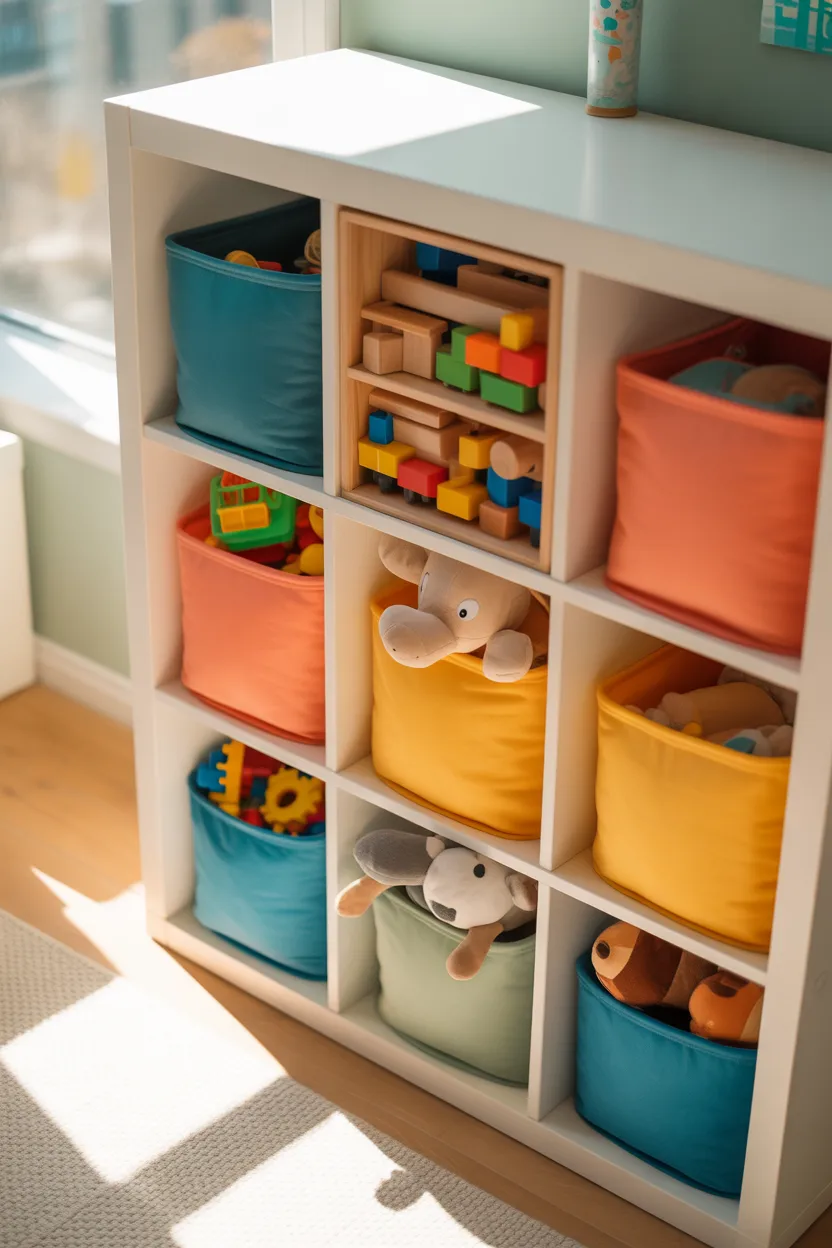
I use color-based storage to make organizing more engaging for kids. Bright cube shelves help separate toys into categories like blocks, cars, and puzzles.
Clear or patterned bins make toys easier to identify. I also place shelves at child height so kids can manage cleanup on their own. Wall shelves above are useful for books and light decor, which keeps floor space free.
Wooden Zones
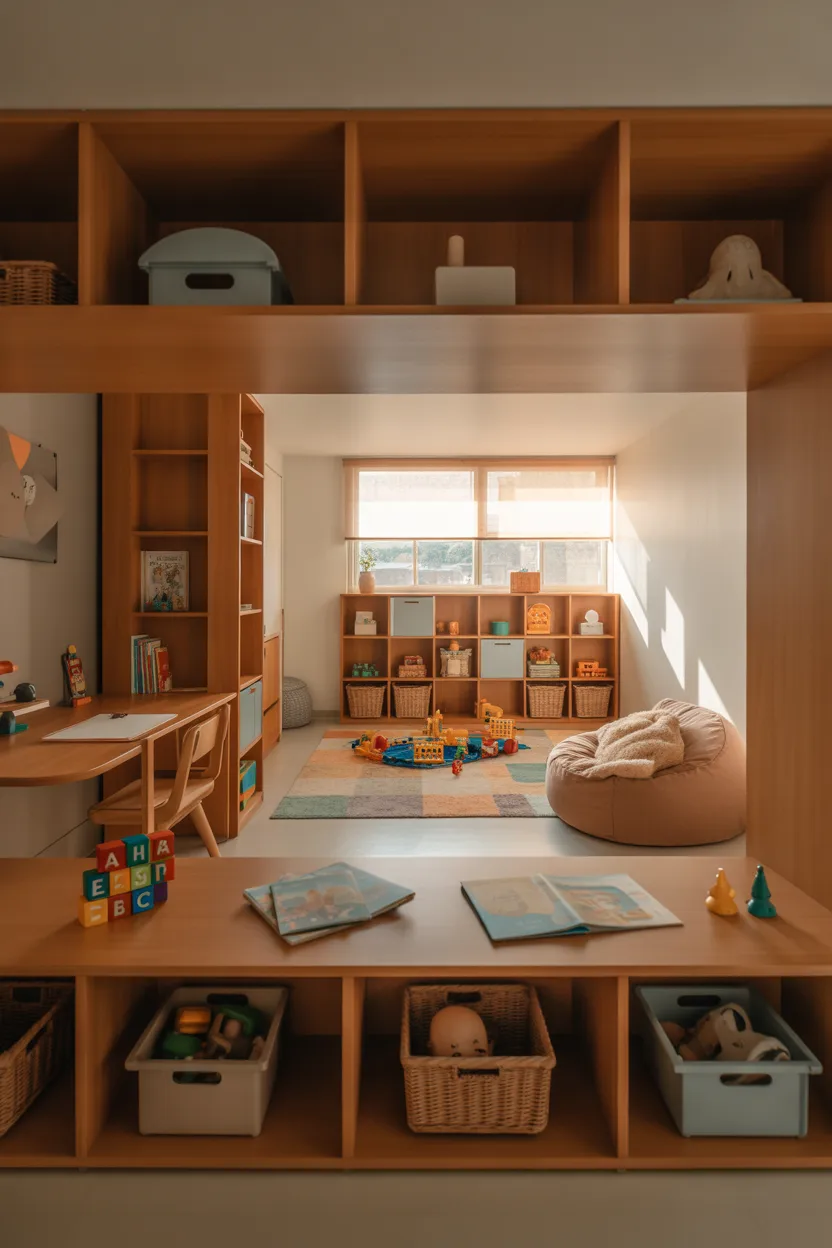
I prefer dividing the playroom into activity zones instead of mixing everything. One area can be for learning, another for creative play, and another for building toys.
In my setup, frequently used toys stay at child level, while decorative items are placed higher. Wooden shelves give a natural, clean look and help structure the space clearly.
Cube Sorting
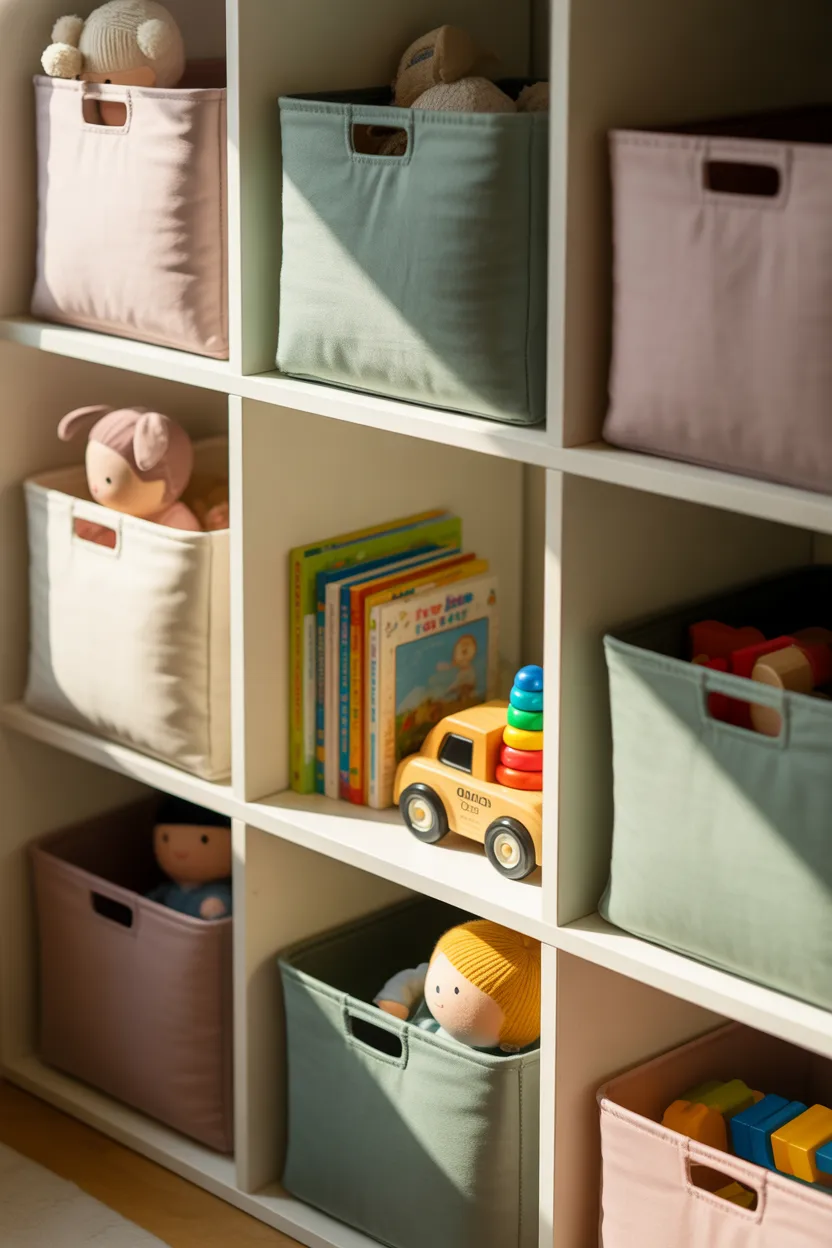
I use cube shelves because they naturally separate toy categories. Each cube can store a different type of toy like dolls, cars, or books.
Fabric bins inside cubes help hide small items and reduce visual clutter. This system keeps the room organized while allowing kids to find what they need quickly.
Grid Shelves
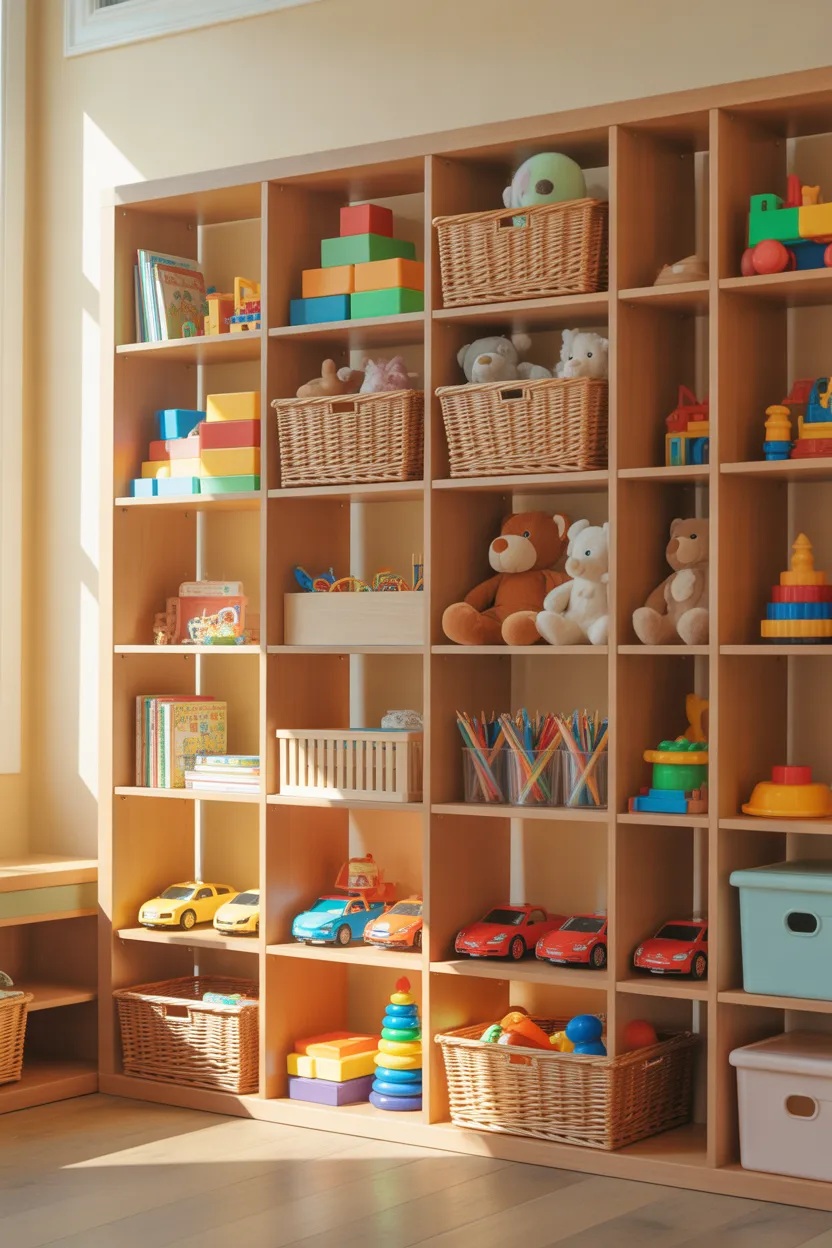
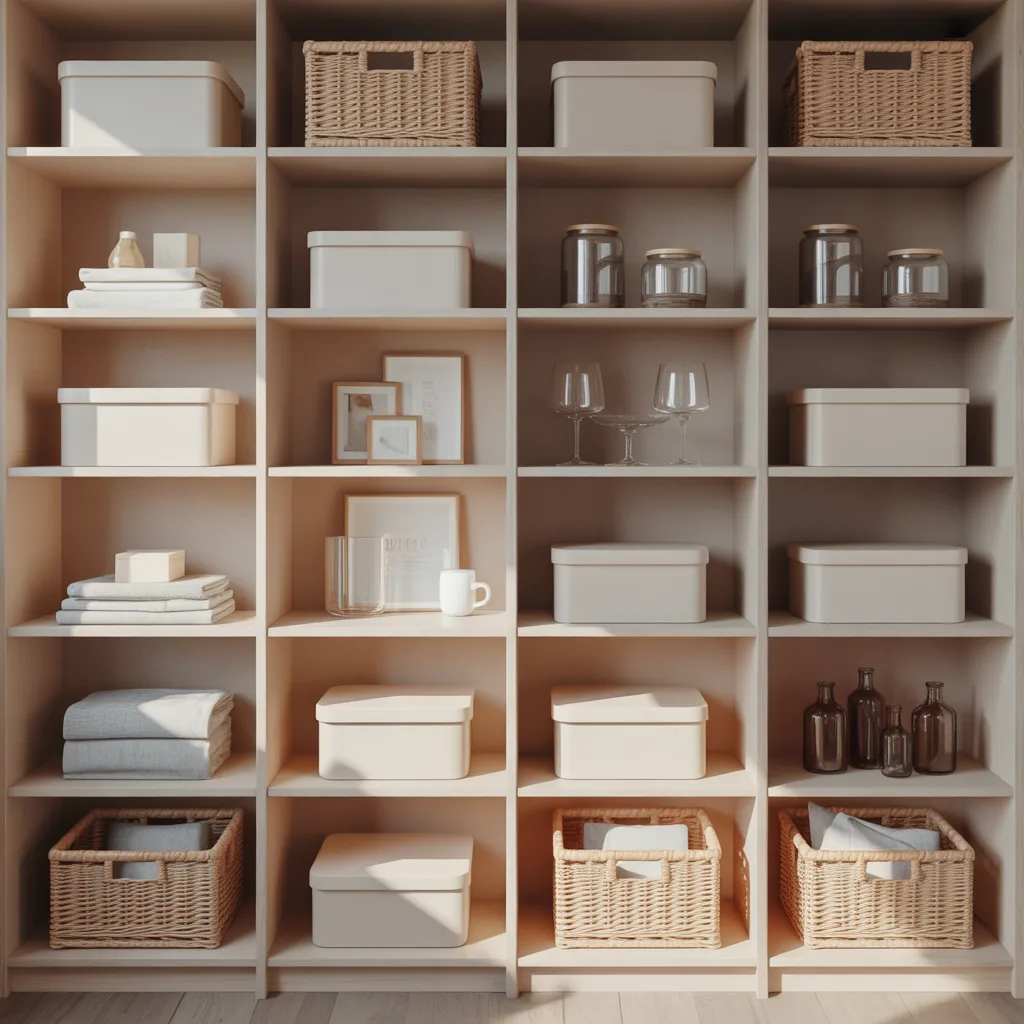
From my experience, grid shelving works well for larger toy collections. Each section can hold a different category so nothing gets mixed.
I keep everyday toys in middle sections for easy access and store less-used items on top. This setup makes cleanup faster because everything already has a fixed space.
Play Stations
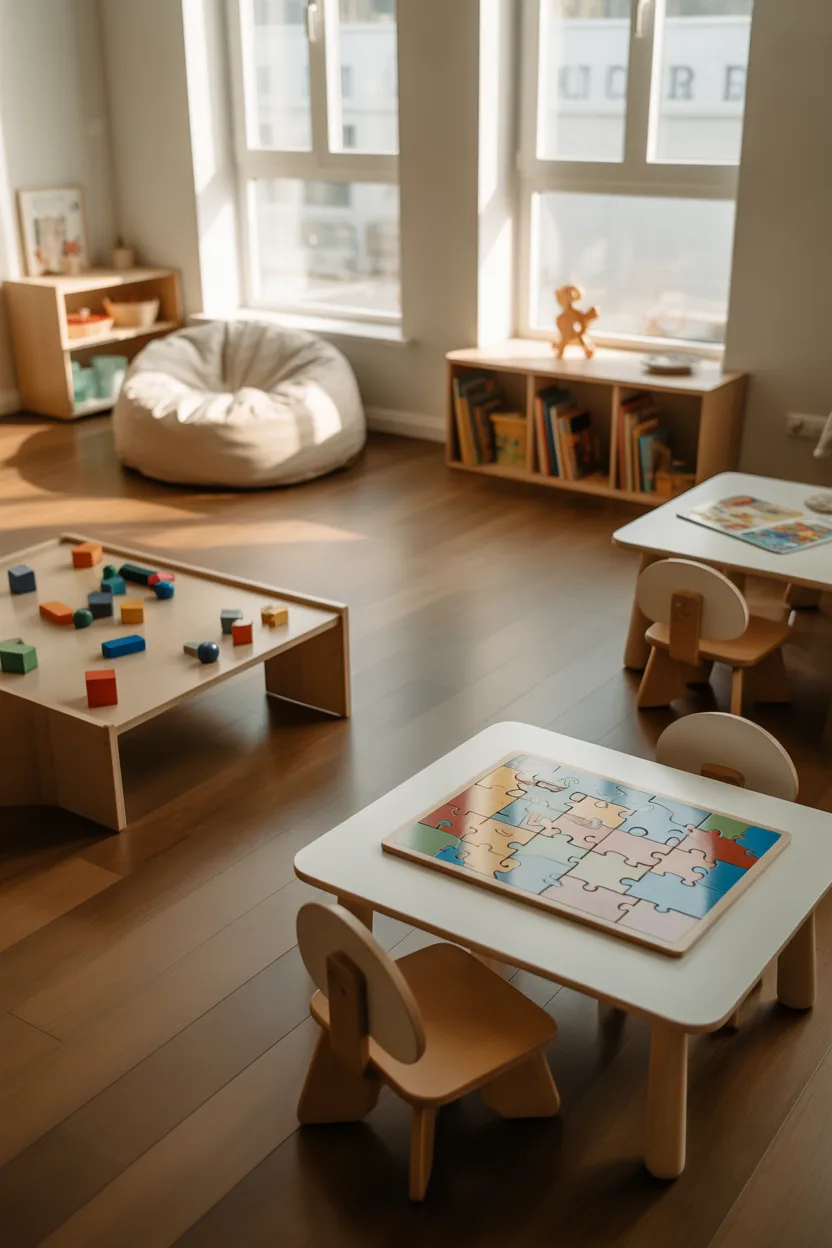
I like dividing the room into play stations instead of one big toy area. Each station has a purpose like building, learning, or puzzles.
This method reduces mess spread and helps kids focus on one activity at a time. It also makes cleanup easier because each station has a clear function.
Closet Storage
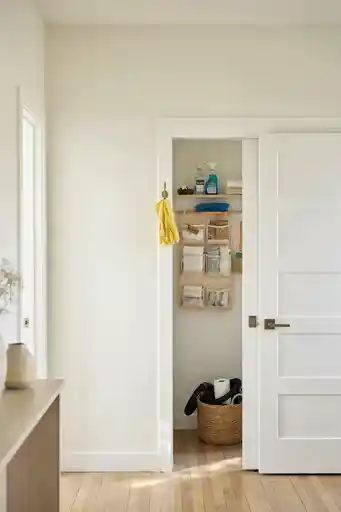
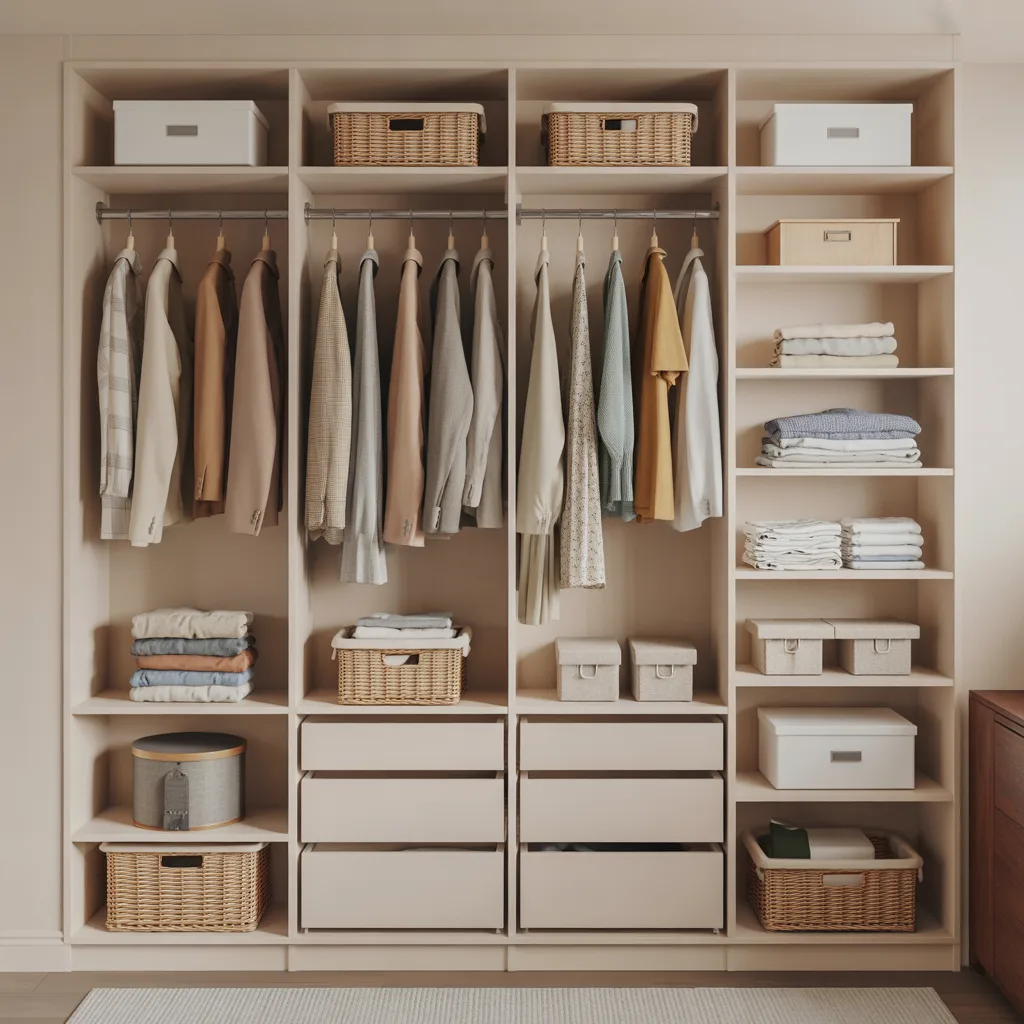
I often convert closets into toy storage because it hides clutter effectively. Dress-up clothes hang neatly while boxes store craft or board games.
Clear containers help me quickly see what’s inside. This system works well for shared or small playrooms where space is limited.
Wall Cubes
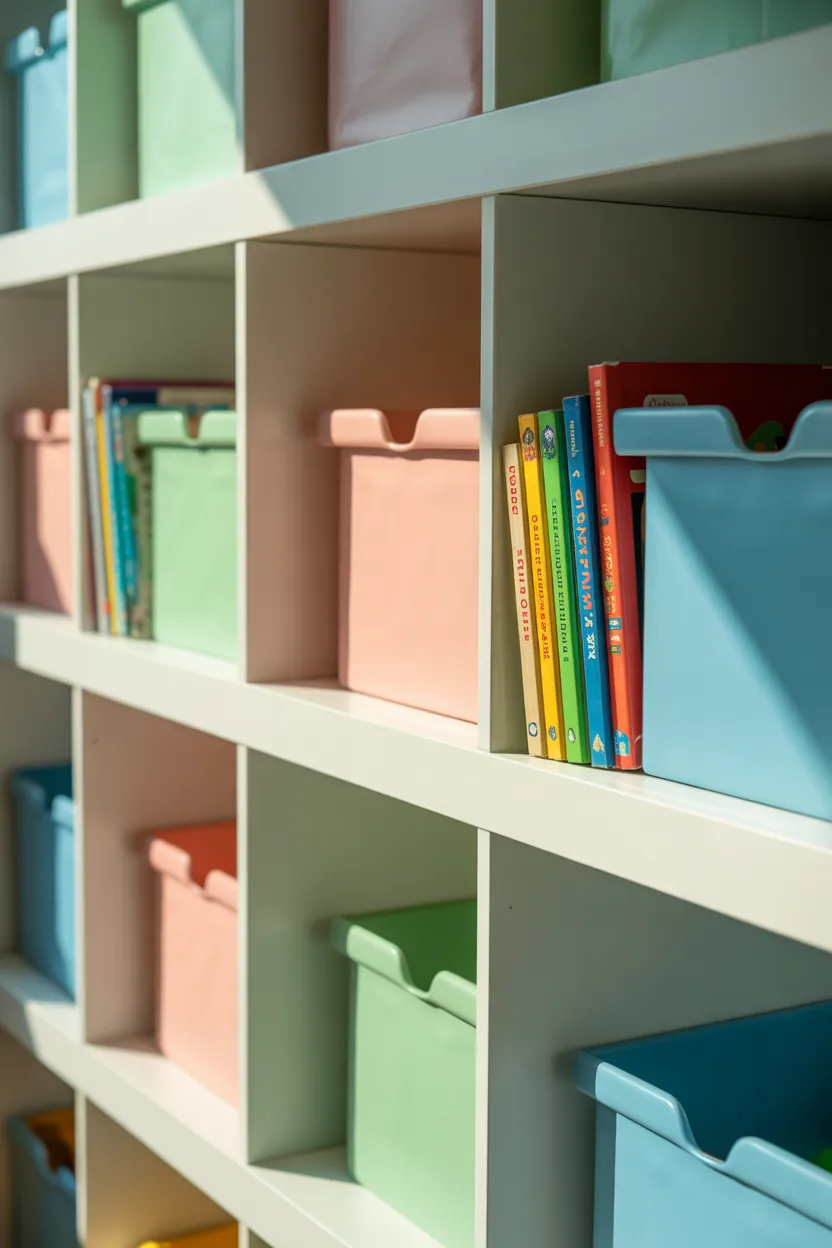
I use wall-mounted cubes to save floor space. These cubes store smaller toys like blocks and craft items neatly.
Placing them at different heights helps separate daily-use toys from display items. This keeps the room open for play activities.
Bin Labels
In my experience, labeling bins is one of the simplest improvements. Kids quickly learn where everything belongs when each bin has a clear label.
I use this method for books, cars, and building sets. It reduces confusion and speeds up cleanup.
Display Shelves
I prefer open display shelves for books and small toys because visibility matters. Kids are more likely to use items they can see.
Books placed facing outward encourage reading. This also keeps toys from getting buried in deep bins.
Glass Cabinets
Glass cabinets help reduce visual clutter while still keeping toys visible. I use them for books, plush toys, and puzzles.
They protect items from dust and make the room look cleaner instantly. It’s a good balance between storage and display.
Drawer System
I use shallow drawers to separate small toys. Each drawer holds a specific category like blocks or figures.
This prevents items from mixing and makes it easier for kids to access what they need without spilling everything.
Category Wall
A category wall helps me assign clear zones for each toy type. Each shelf or bin has a defined purpose.
This structure makes cleanup predictable because kids always return items to the same place.
Activity Corner
I like setting up a dedicated activity corner for learning and creativity. Everything like crayons, books, and puzzles stays in one area.
This reduces mess spread and keeps learning materials organized and easy to reach.
Dress Rack
I use dress racks for costume play because it keeps outfits visible and accessible. Kids enjoy picking costumes when they can see them clearly.
Baskets underneath store accessories like masks and crowns, keeping everything in one place.
Basket Cubes
I prefer woven baskets inside cube shelves because they hide clutter while staying easy to use.
Each basket holds a toy category, which keeps the room visually calm and organized.
Open Shelves
Open shelves help kids see all their toys without dumping bins. I keep frequently used items at lower levels for easy access.
This setup also helps reduce overloading because only a few items are visible at once.
Corner Storage
I use corners for extra storage space that is often wasted. Cube units fit well and increase storage without crowding the room.
This is useful for storing dolls, blocks, or pretend-play sets.
Built-ins
Built-in shelves give maximum storage in one structured wall. I use them to separate books, toys, and decorative items.
Closed drawers at the bottom hide larger items and keep the room looking clean.
Book Cubes
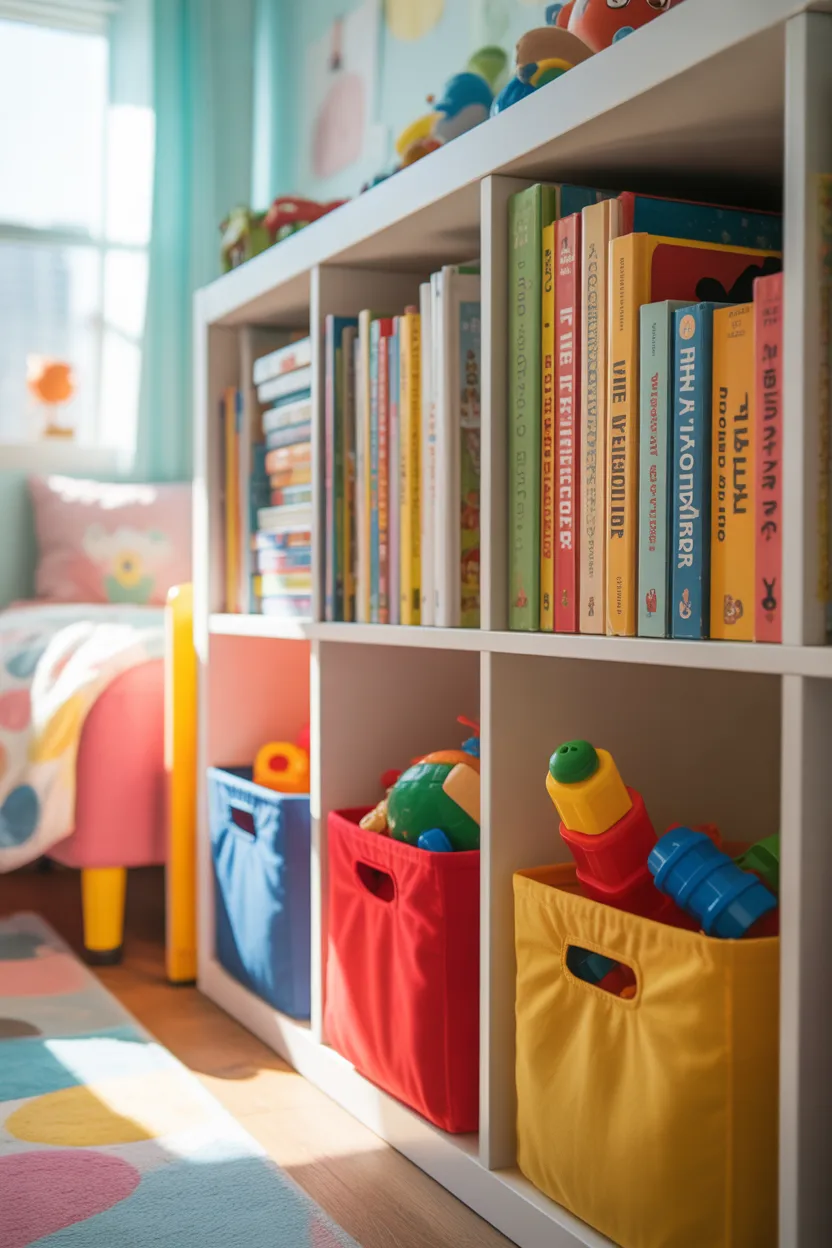
I use cube shelves for books because stacking them randomly creates clutter. Organized cubes keep reading materials easy to find.
Fabric drawers below help store puzzles and smaller toys neatly.
Number Bins
Numbered bins help create a simple system kids can remember. Each number represents a toy category.
This reduces confusion and makes cleanup faster because children follow a clear pattern.
Basket Cubby
I use cubby systems with baskets to group similar toys together. Kids can pull baskets out during play and return them easily.
This keeps the floor clear and reduces scattered toys.
Library Wall
A library wall combines books and toy storage in one system. I organize books on open shelves and store toys in closed sections.
This keeps reading materials visible while hiding clutter in lower storage.
FAQs
How do you organize a playroom so kids actually keep it clean?
From my experience, kids maintain cleanliness when storage is simple. I use low shelves, clear labels, and easy-access bins so they can manage everything themselves.
What is the best way to organize toys when you have too many?
I group toys into categories and assign each category its own bin. I also rotate toys sometimes to reduce clutter and keep interest high.