How to Style 20 DIY Solar Garden Lights Ideas for 2026
DIY solar garden lights are a simple way to make your backyard, patio, or garden more inviting after sunset. From softly lit pathways to glowing flower beds, you can create different effects without relying on outdoor electrical outlets.
The best setup depends on where you want the light, how much sunlight your garden receives, and whether you prefer a subtle glow or brighter lighting for everyday use. You can use ready-made solar lights in creative ways or build a custom arrangement with suitable solar components.
Key Takeaways
- Use solar pathway lights to make garden routes and steps easier to see at night.
- Combine overhead lighting, lanterns, and ground-level lights for balanced outdoor lighting.
- Place solar panels where they receive several hours of direct sunlight.
- Choose weather-resistant fixtures designed for outdoor use.
- Keep walkways clear and avoid placing lights where they could create glare.
How to Make Solar-Powered Garden Lights?
Solar-powered garden lights collect sunlight through a small solar panel and store the energy in a rechargeable battery. When it gets dark, a built-in sensor usually switches the light on automatically. This makes them useful for gardens, balconies, patios, and walkways where running electrical wiring would be inconvenient.
For a simple project, you can repurpose suitable solar garden lights by placing them inside lanterns, attaching them to outdoor structures, or arranging them around plants. If you want to build a light from individual components, choose a compatible solar panel, rechargeable battery, LED, and charging controller. A complete solar lighting kit is often easier for beginners because its components are designed to work together.
Pro Tip: Check that your solar panel receives direct sunlight during the day, and use rechargeable batteries of the type recommended by the light’s manufacturer.
1. Recessed Path Lighting
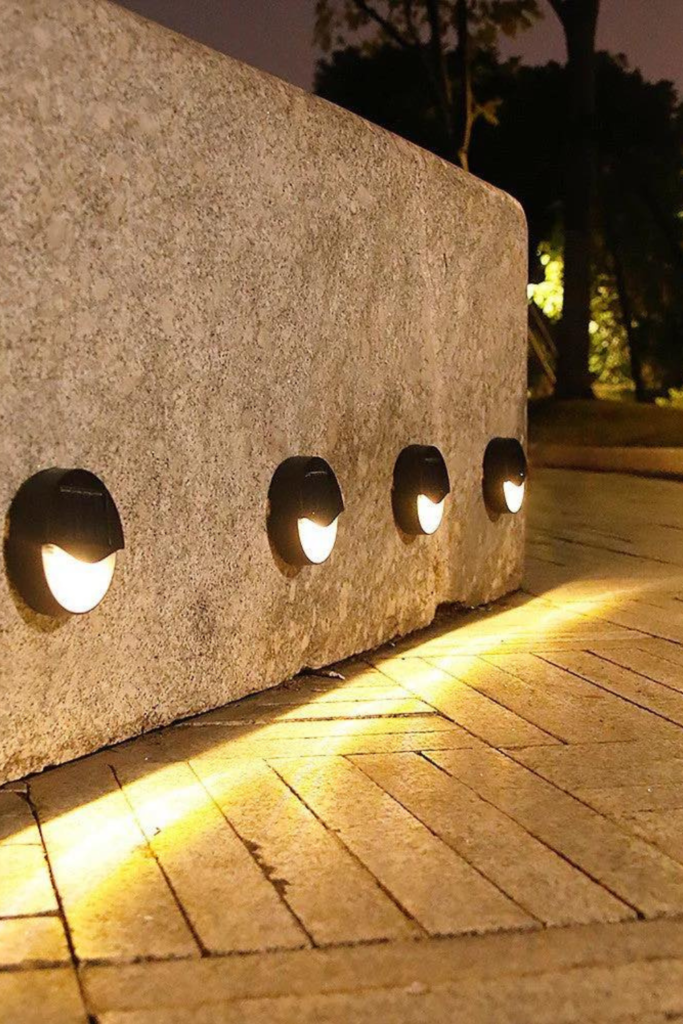
Recessed solar path lighting creates a soft glow along garden paths, raised borders, and low retaining walls without making the fixtures the main attraction. You can use compact solar wall lights or suitable recessed fixtures positioned to shine downward across the walking surface. The low placement keeps the light out of people’s eyes while making a pathway easier to follow.
This idea works especially well in modern gardens with stone paving, concrete borders, or simple landscaping. You can also pair the lighting with a raised planting area or a wooden garden feature from these DIY wooden project ideas to create a coordinated outdoor design.
Pro Tip: Test the light direction after dark before permanently mounting the fixtures so the beam falls on the path rather than into people’s eyes.
2. Fence Wall Wash
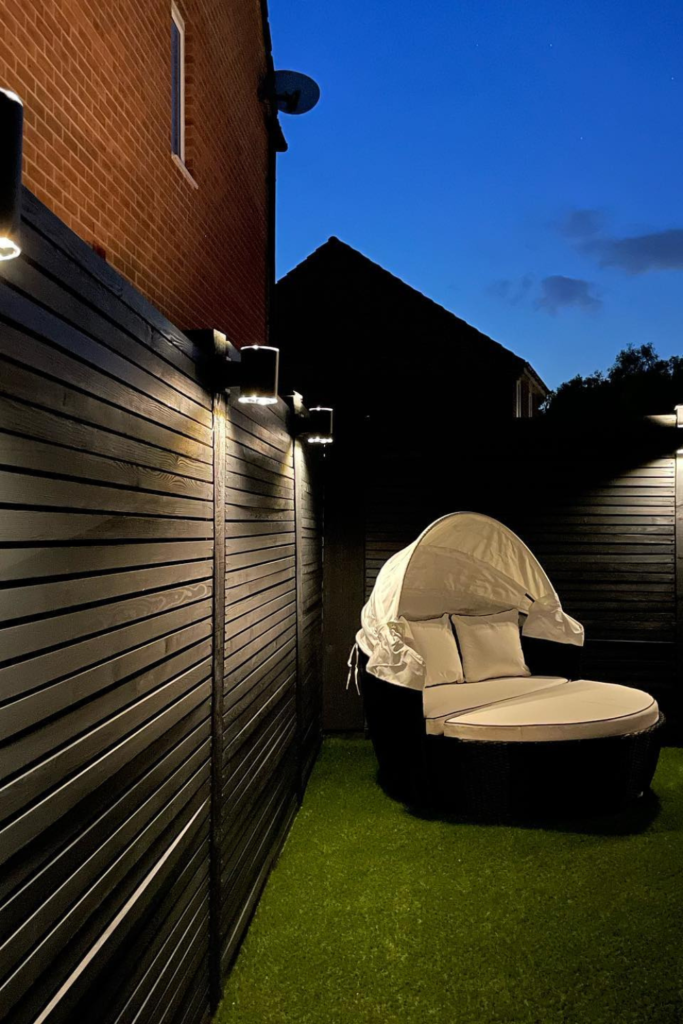
A fence wall wash uses solar lights to spread a gentle layer of illumination across a fence or garden wall. Install outdoor solar wall lights at regular intervals, or choose fixtures with diffused covers that soften the light. The repeated glow adds depth to a plain wooden fence and helps create a more comfortable atmosphere around outdoor seating.
Warm white lights work well with timber fences, brick walls, and natural stone. If you want to add more greenery, use the fence as a backdrop for climbing plants or explore these DIY planter box ideas for ways to bring plants into the same space.
Pro Tip: Keep the lights evenly spaced and check the fence for shadows before fixing them in place.
3. Solar String Canopy
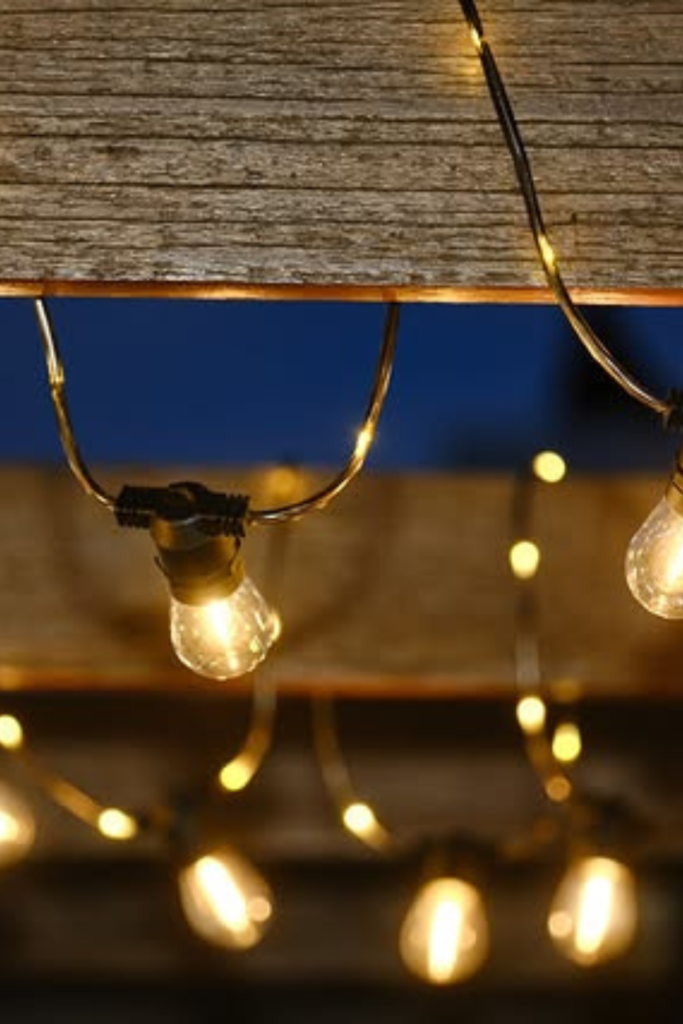
Solar string lights can turn a pergola, patio, or outdoor lounge into a comfortable spot for evening meals. Drape the strings in gentle curves across the overhead structure instead of pulling them completely taut. The overlapping lines spread light across the seating area and create a relaxed setting for family dinners or casual gatherings.
Warm white bulbs suit wooden pergolas and natural garden furniture, while clear bulbs can work well in contemporary outdoor spaces. For a celebration or outdoor reception, the same lighting approach can complement these DIY wedding decoration ideas.
Pro Tip: Place the solar panel in a sunny spot away from the shaded canopy if the hanging lights themselves receive little direct sunlight.
4. Solar Globe Accents
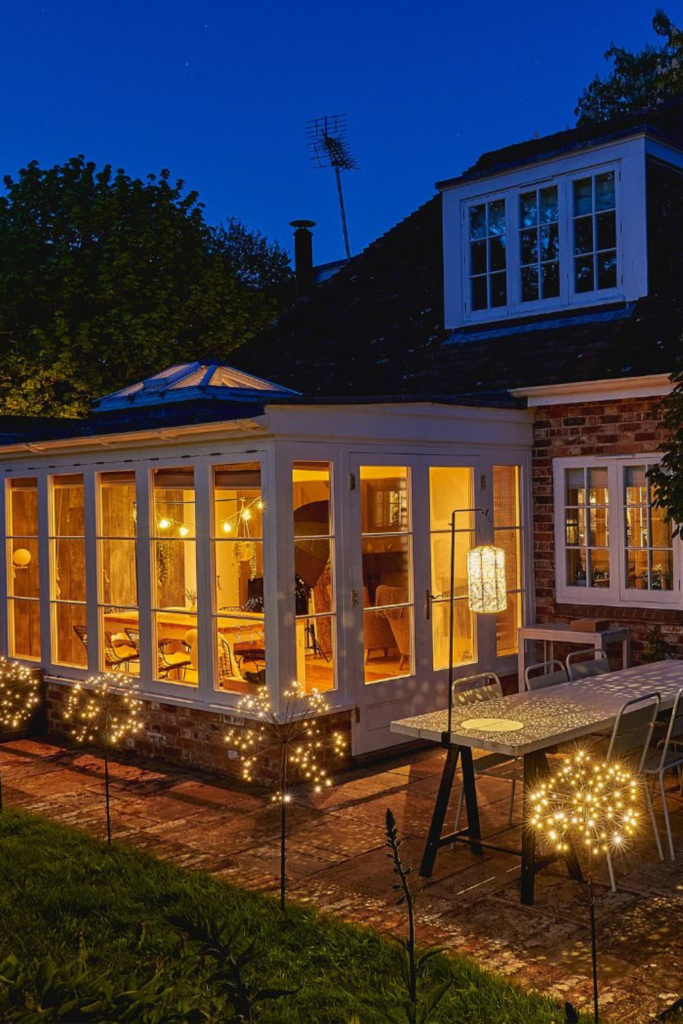
Solar globe lights add rounded points of light around patios, garden borders, and outdoor dining areas. Arrange a few along the edge of a seating space or place them beside large planters to define the area after dark. Their soft, diffused glow is usually less harsh than a bare LED, making them suitable for relaxed evenings outdoors.
Choose globe sizes that suit the surrounding space. Larger globes can stand out in an open lawn, while smaller ones are easier to fit beside a balcony table or narrow garden path. Pairing them with raised pots or a simple plant display can help tie the lighting into the rest of your garden.
Pro Tip: Group globes in small clusters or repeat them at regular intervals instead of scattering them randomly across the entire garden.
5. Layered Patio Lighting
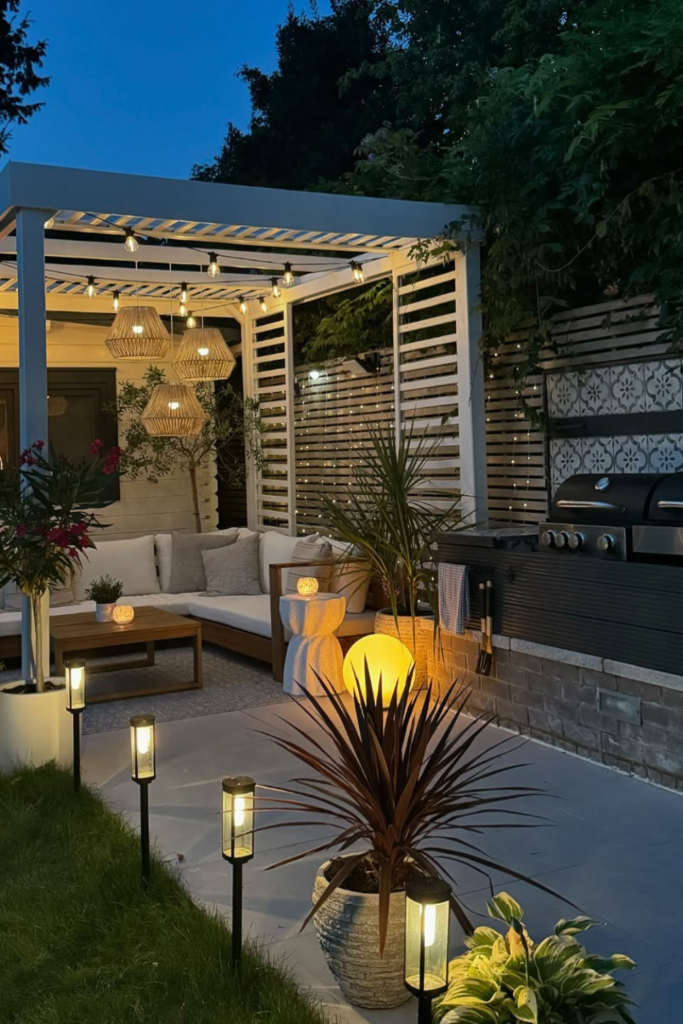
Layered patio lighting combines different types of solar lights so one area can serve several purposes. Hang string lights overhead, place lanterns beside chairs, and use low pathway lights to mark the route between the patio and the garden. Each light has a separate job, giving you useful visibility without depending on one bright fixture.
This arrangement is especially helpful when your patio is used for dining, relaxing, and entertaining. If you are planning a dedicated outdoor gathering space, these DIY backyard firepit ideas can provide additional inspiration for arranging seating and creating a comfortable evening setting.
Pro Tip: Use brighter task lighting near steps and entrances, then keep decorative lights around seating areas softer to reduce glare.
6. Firefly Garden Lights
Firefly garden lights create the look of tiny glowing points scattered through flowers and ornamental grasses. Use slim solar stake lights with small warm LEDs and position them at different heights among the plants. The varied placement gives the garden a more natural appearance than a row of identical lights along the edge.
This idea works well in cottage gardens, flower beds, and informal planting areas. Choose narrow fixtures that do not take up much visual space during the day, and leave enough room around the stems so you can water, weed, and care for the plants.
Pro Tip: Place the lights where they will remain visible as plants grow, but avoid pushing stakes into areas where they could damage roots.
7. Solar Firefly Lights for an Easy Garden Glow
If you want the scattered look of firefly lights without building a lighting setup from separate components, ready-made solar firefly lights are a practical alternative. Many designs have flexible stems or small light heads that move slightly in the breeze, making them suitable for flower beds, lawn edges, and large outdoor pots.
Choose a set with a solar panel that can be positioned in direct sunlight, even if the lights themselves sit in a shaded planting area. If you are arranging several pots together, DIY plant stand ideas can help you create different heights and make the illuminated plants easier to see.
Pro Tip: Arrange the lights in groups of three or five at varying heights to create a more natural display.
8. Hanging Solar Bulbs
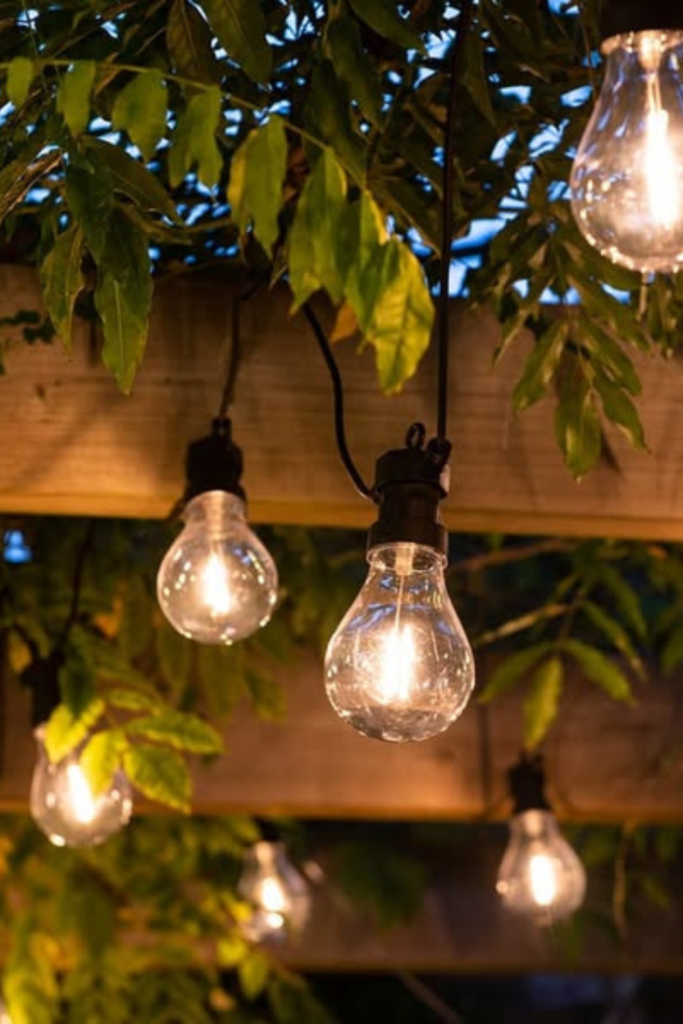
Individual hanging solar bulbs are useful when you want decorative lighting beneath a pergola, a sturdy tree branch, or a covered outdoor seating area. Hang them at slightly different heights to create a relaxed arrangement rather than a perfectly straight line. This works particularly well with simple wooden furniture, outdoor cushions, and neutral garden colors.
Choose bulbs with built-in solar panels or models connected to a separate solar panel. Before hanging them, confirm that the mounting points can support the fixtures and that the lights will not swing into people when the wind picks up.
Pro Tip: Leave enough headroom beneath every bulb, especially above dining tables and busy walkways.
9. Café String Lighting
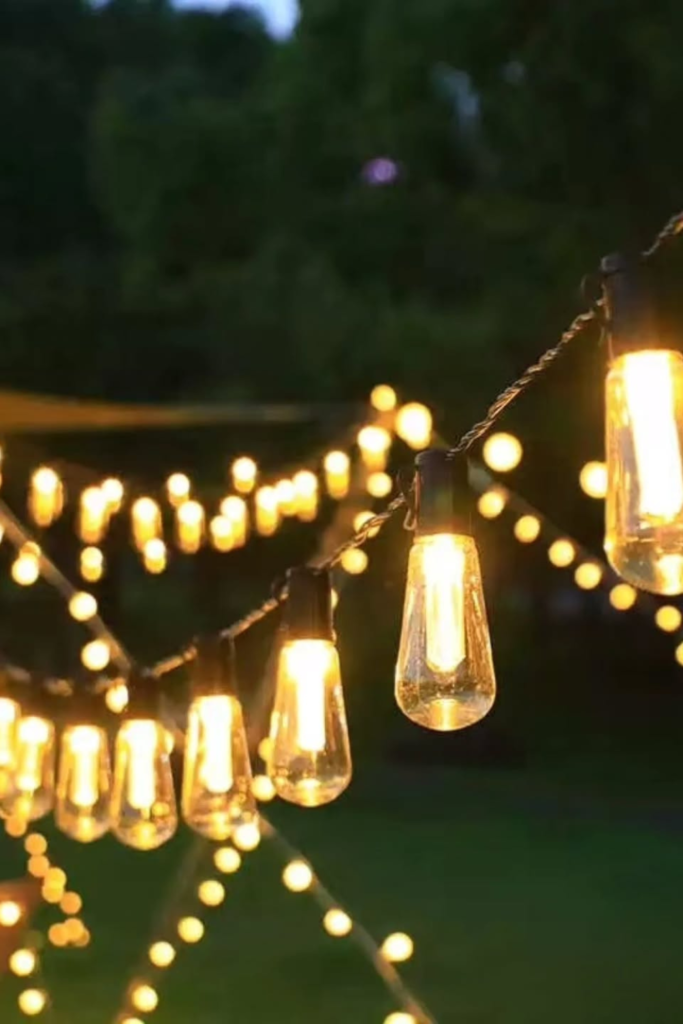
Café-style solar string lights are a good choice for outdoor dining areas, open yards, and patios where several people gather. Suspend them between sturdy posts, walls, or suitable tree supports to form a gentle canopy over the space. Exposed bulbs give the arrangement a simple café feel without requiring a complicated lighting design.
For a small yard, one string running along the seating area may be enough. Larger patios can use two or more lines, provided the supports and cable layout are secure. These lights can also work well above an outdoor celebration table when combined with the ideas in this DIY wedding decoration guide.
Pro Tip: Avoid attaching heavy light strings directly to weak branches or loose fence panels; use secure supports that can handle their weight and movement.
10. Solar Lantern Clusters
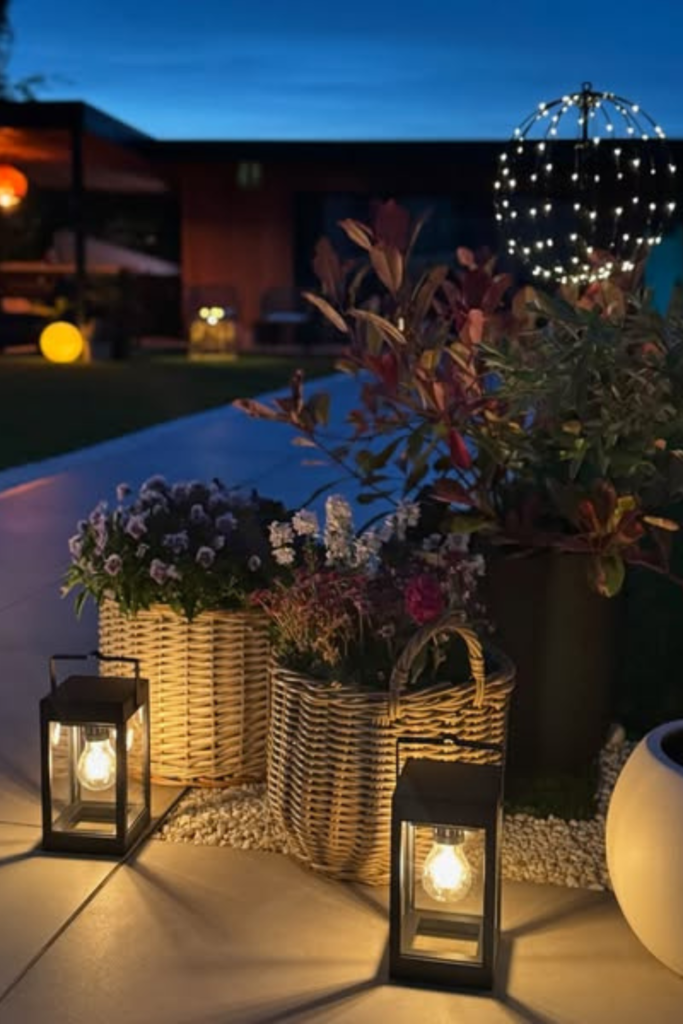
Solar lantern clusters create a warm focal point beside outdoor sofas, garden benches, or large plant pots. Instead of spreading lanterns across the whole patio, group two or three together using different heights and sizes. Metal lanterns suit traditional gardens, while simple black or neutral designs fit modern patios.
You can also mix lanterns with real potted plants to soften a bare corner. If you are refreshing an older backyard, consider combining the lanterns with a seating area inspired by these DIY backyard firepit ideas, keeping the lights at a safe distance from open flames.
Pro Tip: Choose lanterns with similar light colors so the cluster looks coordinated rather than uneven.
11. Glowing Floor Orbs
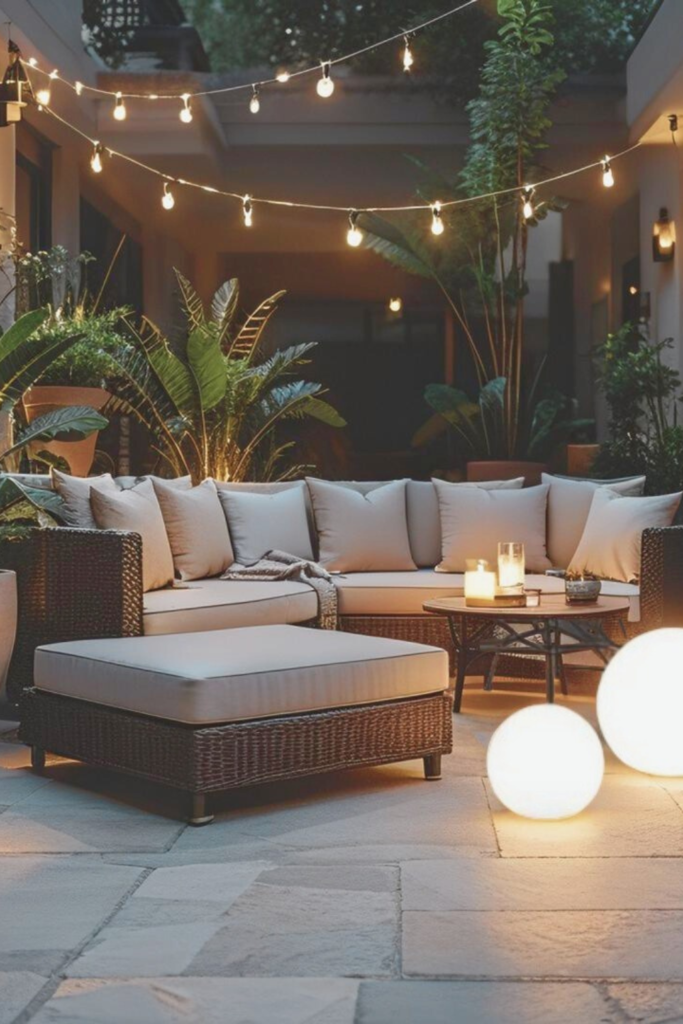
Glowing floor orbs bring light down to ground level around an outdoor lounge or patio seating arrangement. Position solar globe lamps beside a sofa, near the corners of a deck, or along the edge of a conversation area. Their rounded shapes add visual interest, particularly when paired with simple furniture and overhead string lights.
Use weather-resistant globes intended for outdoor placement, and check whether each model is designed to sit directly on the ground. For a compact patio, a pair of small orbs can provide a decorative accent without taking up too much room.
Pro Tip: Leave clear space between the globes and chair legs so people can move around comfortably without knocking them over.
12. Poolside Lantern Glow
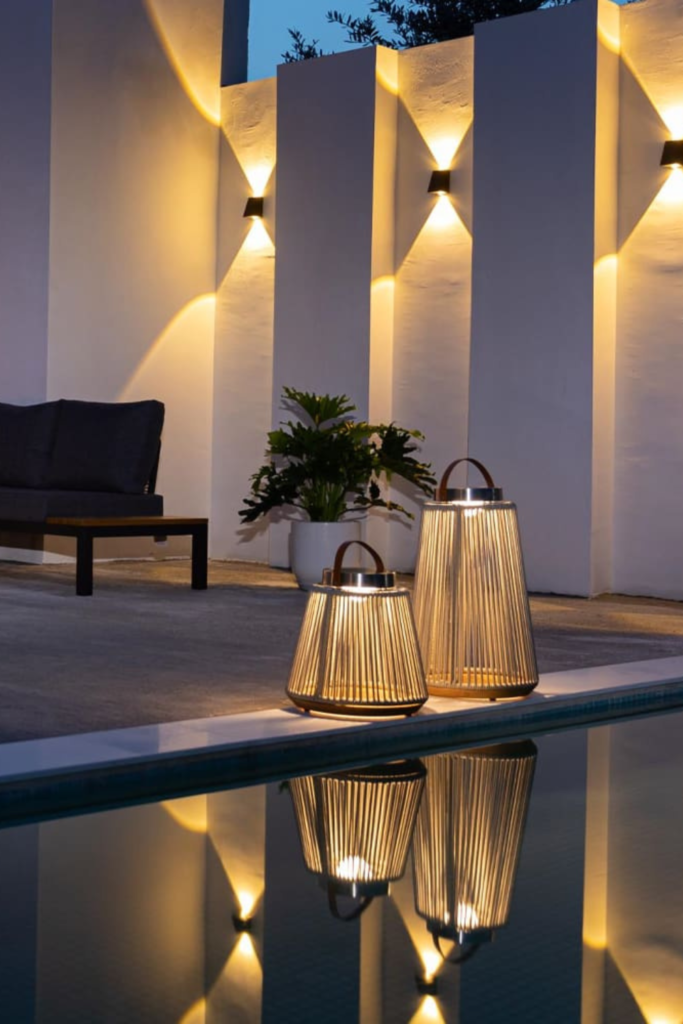
Solar lanterns can add gentle illumination around a poolside seating area or contemporary patio. Choose stable, outdoor-rated fixtures with slatted or diffused covers, then place them around the perimeter of the lounge rather than directly in the main walking route. Light reflected from nearby paving can help define the space without creating a harsh beam.
Safety matters especially around water. Keep ordinary solar lanterns away from the pool’s edge unless they are specifically suitable for that location, and never use standard garden lights in the water. Follow local pool-safety requirements and the manufacturer’s placement instructions.
Pro Tip: Use low-glare lighting around seating areas and separate, appropriately rated fixtures wherever stronger visibility is needed.
13. Backyard String Glow
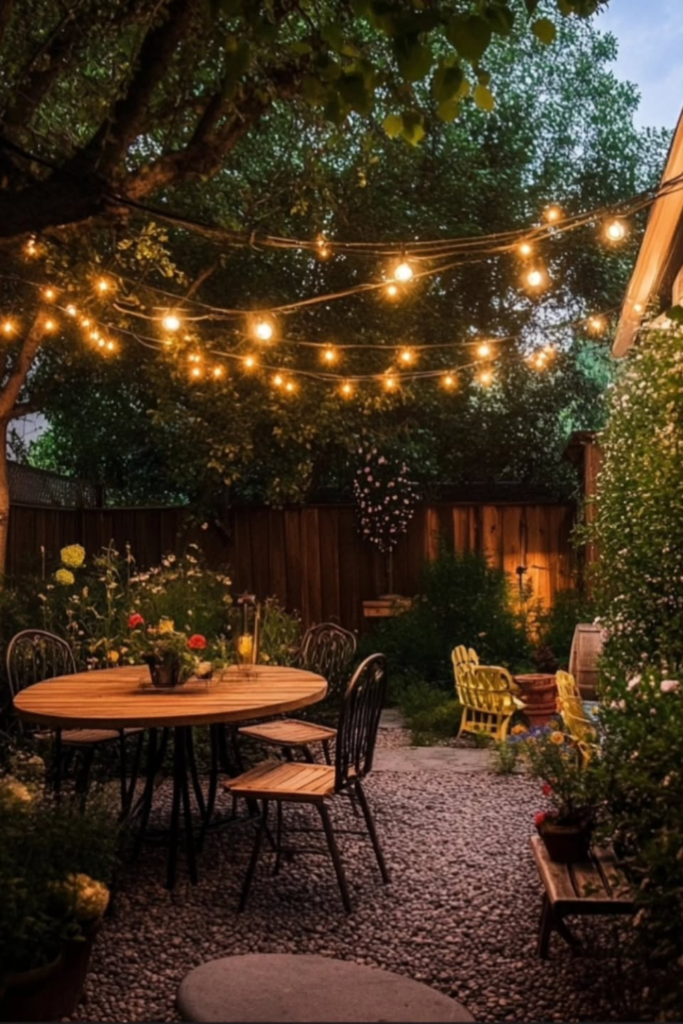
Backyard string lighting works well over outdoor dining tables, small lawns, and garden seating corners. Run solar string lights between suitable supports, allowing a slight curve instead of stretching the cable tightly. The overhead line visually marks the area as an outdoor room, making it feel separate from the rest of the yard.
Warm white bulbs complement wood, rattan, and neutral outdoor fabrics. If the yard has a fence or house wall nearby, use those structures only when they can safely support the installation.
Pro Tip: Position the solar panel where it gets good sunlight, and check that the cable does not cross a doorway or create a tripping hazard.
14. Pergola Path Lighting
Pergola path lighting combines overhead lights with small solar fixtures along the walkway leading into or through the structure. The overhead lights define the seating area, while low lights help guide people between the patio, garden, and house. This arrangement is useful when your pergola sits at the end of a path or connects two outdoor areas.
Keep the path lights relatively low and direct their beams toward the ground. If you are building a garden around raised planters, these DIY planter box ideas offer options for adding greenery beside the walkway without blocking the route.
Pro Tip: Space the path lights evenly and leave enough room for doors, garden gates, and furniture to open or move freely.
15. Pathway Globe Lights
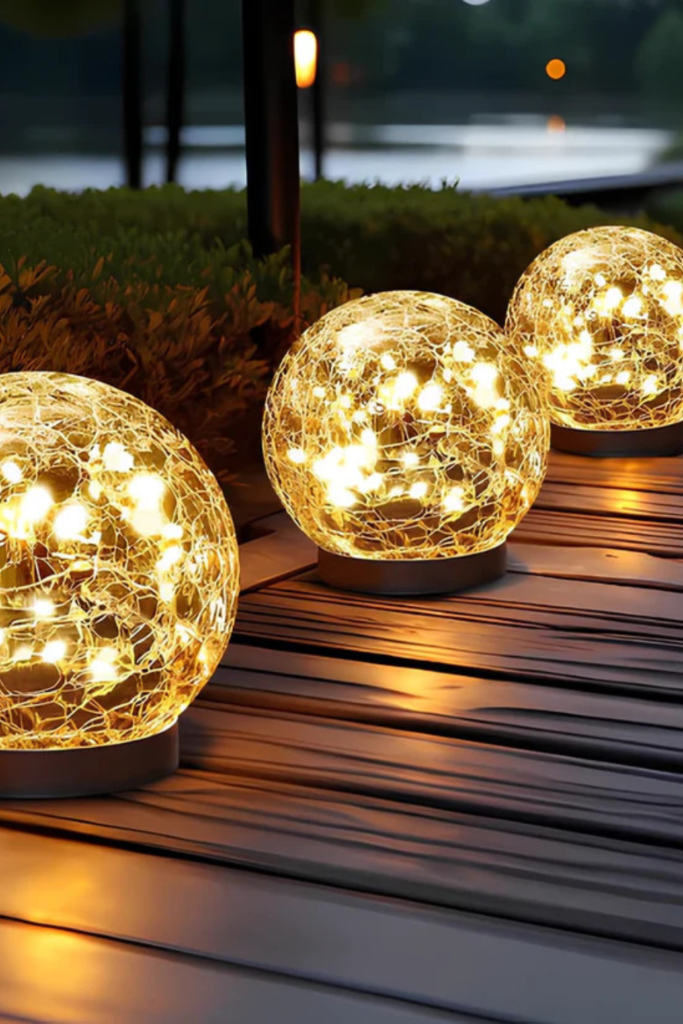
Pathway globe lights offer a decorative alternative to narrow stake lights. Place them along the sides of a garden walkway, beside a deck, or near the entrance to an outdoor dining area. The round fixtures add shape to the landscape during the day and provide a repeating line of light at night.
For a contemporary look, choose globes with simple white diffusers and understated supports. If the path is narrow, use smaller fixtures or place lights on only one side to avoid making the route feel cramped.
Pro Tip: Keep the lights outside the main walking surface and choose fixtures that provide enough illumination to identify changes in the path.
16. Solar Step Markers
Solar step markers help make outdoor stairs easier to see after sunset. Install suitable solar lights along the sides of the steps or use fixtures specifically designed to mount on stair risers. Downward-facing lights are useful because they illuminate the tread without shining directly into someone’s eyes.
This setup is helpful on garden steps, deck stairs, and changes in elevation between a patio and lawn. Choose weather-resistant fixtures that can be securely mounted, and make sure the solar panels receive adequate daylight.
Pro Tip: Light every step consistently rather than illuminating only the top and bottom, and keep the treads free of cables and loose fixtures.
17. Planter Edge Lighting
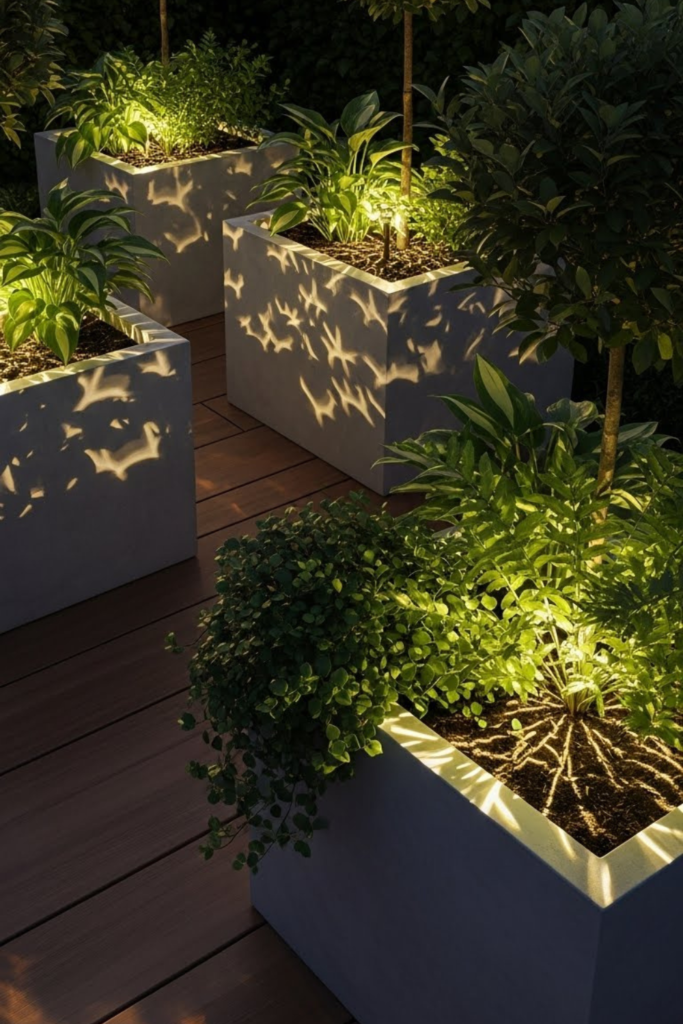
Planter edge lighting adds a subtle glow around large outdoor pots and raised planters. You can place small solar lights along the outside rim or use outdoor-rated solar lighting designed for the planter’s shape. The light catches the leaves and soil surface, creating a gentle accent without needing a tall fixture beside every plant.
This idea is particularly useful on balconies and compact patios where floor space is limited. If you want to build a more coordinated planting area, browse these DIY planter box ideas for different ways to arrange containers around a garden or outdoor seating space.
Pro Tip: Use lighting around the outer edge of the planter rather than covering the soil with fixtures, leaving plenty of room for watering and plant growth.
18. Solar Bollard Lines
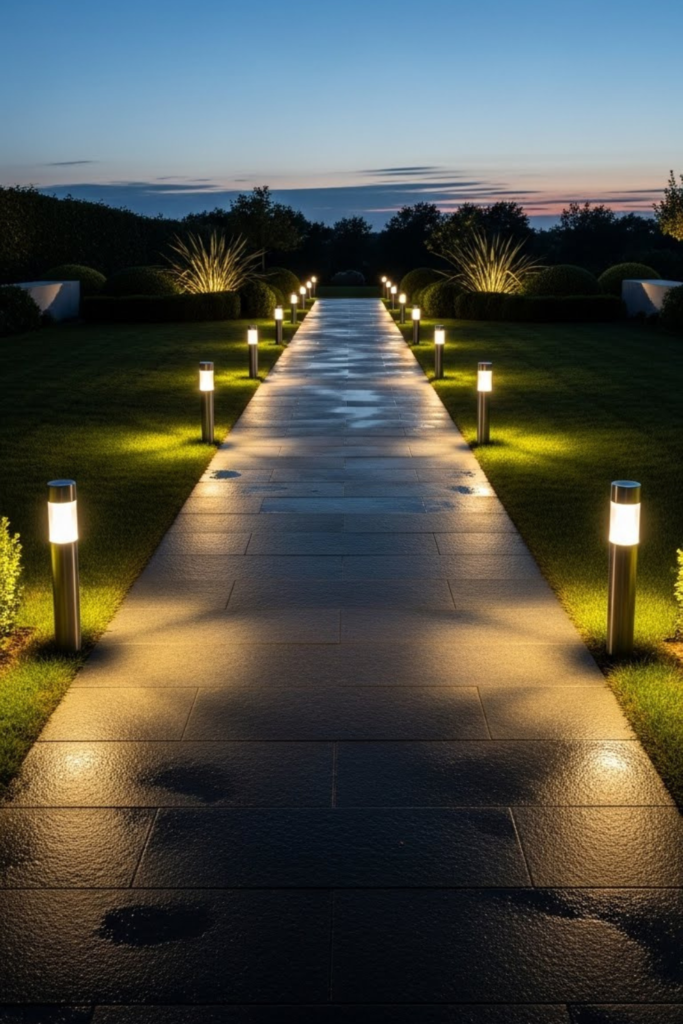
Solar bollard lights are short, upright fixtures that can make a walkway or lawn border look neat and clearly defined. Arrange them in a straight line along a garden path, driveway edge, or the boundary of a patio. Their consistent height and spacing give the landscape a more structured appearance.
Choose a bollard style that matches your outdoor space. Black or charcoal fixtures work well with modern paving, while simple metal finishes can complement traditional gardens. Pair them with well-arranged outdoor plants or a simple wooden feature to keep the overall design consistent.
Pro Tip: Mark the planned positions with small temporary stakes before installation to check the spacing from both ends of the path.
19. Tree Uplight Glow
Tree uplighting draws attention to a large tree, textured trunk, or distinctive canopy. Place a solar spotlight near the base of the tree and angle its beam upward to highlight the bark and lower branches. One carefully positioned light can create depth in a garden without lighting every part of the lawn.
This works well with mature trees and plants that have interesting shapes. You can build a small garden display around the tree using ideas from these DIY wooden projects, but keep the spotlight clear of roots and avoid aiming it toward neighboring windows or passing drivers.
Pro Tip: Adjust the spotlight after dark and keep the beam focused on the tree rather than pointing it straight into the surrounding space.
20. Railing Accent Lights
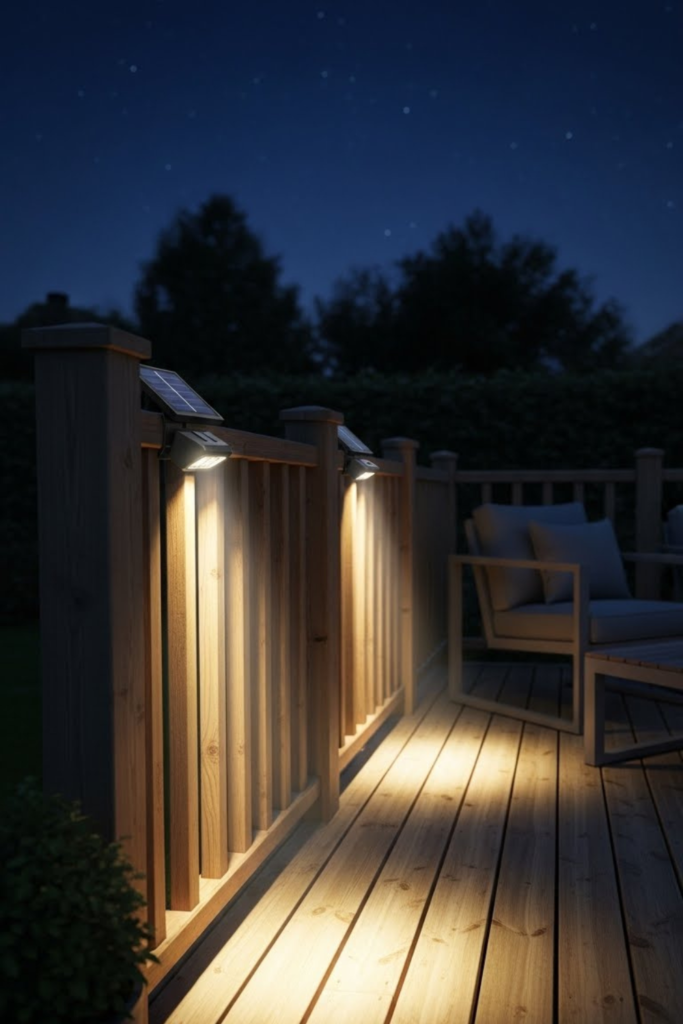
Railing accent lights are useful on decks, balconies, and narrow outdoor spaces where there is little room for floor lamps. Mount small solar fixtures along the inner side of the railing or beneath the top rail, following the manufacturer’s installation instructions. This placement keeps the ground clear while providing a soft glow around the deck’s edge.
Choose compact fixtures that do not interfere with gripping the handrail or opening gates. On balconies, confirm that the solar panel receives sufficient sunlight, since a shaded railing may limit charging.
Pro Tip: Keep fixtures and cables away from the part of the railing people use for support, and make sure every light is securely attached.
21. Rock Bed Illumination
Rock bed illumination works well in gravel gardens, dry landscaping, and borders filled with decorative stones. Use low-profile solar lights designed for outdoor ground placement and position them between rocks so the fixtures blend into the landscape. At night, the light picks up the shapes and textures of the stones without requiring tall stakes.
This style suits minimalist gardens and spaces with limited flowering plants. You can also combine the stones with carefully arranged containers or a small plant display, using these DIY plant stand ideas for inspiration when adding height to nearby greenery.
Pro Tip: Test each light’s position before rearranging the rocks around it, and leave enough access to clean the panel and replace the battery when needed.