




Dice games have always been one of my favorite ways to bring people together without spending hours learning complicated rules. Most of these games take only a few minutes to set up, work for both kids and adults, and create the kind of fun that keeps everyone at the table longer than planned.
I’ve played many of these during family nights, birthday parties, road trips, and even classroom activities. Some are fast and loud, while others need a bit more strategy and planning. That mix is what makes dice games so popular even today.
In this list, I’m sharing the best dice games for families, kids, adults, parties, and casual game nights. You’ll find classic favorites, educational games, quick party games, and strategy-based options that are still highly popular in 2026.
Key Takeaways
- Dice games are affordable, portable, and easy to learn
- Most games work well for both kids and adults
- Strategy and luck together make gameplay more exciting
- Educational dice games can improve math and decision-making skills
- Party dice games help large groups stay engaged without screens
- Many games only need basic dice and score sheets to play
1. Yahtzee
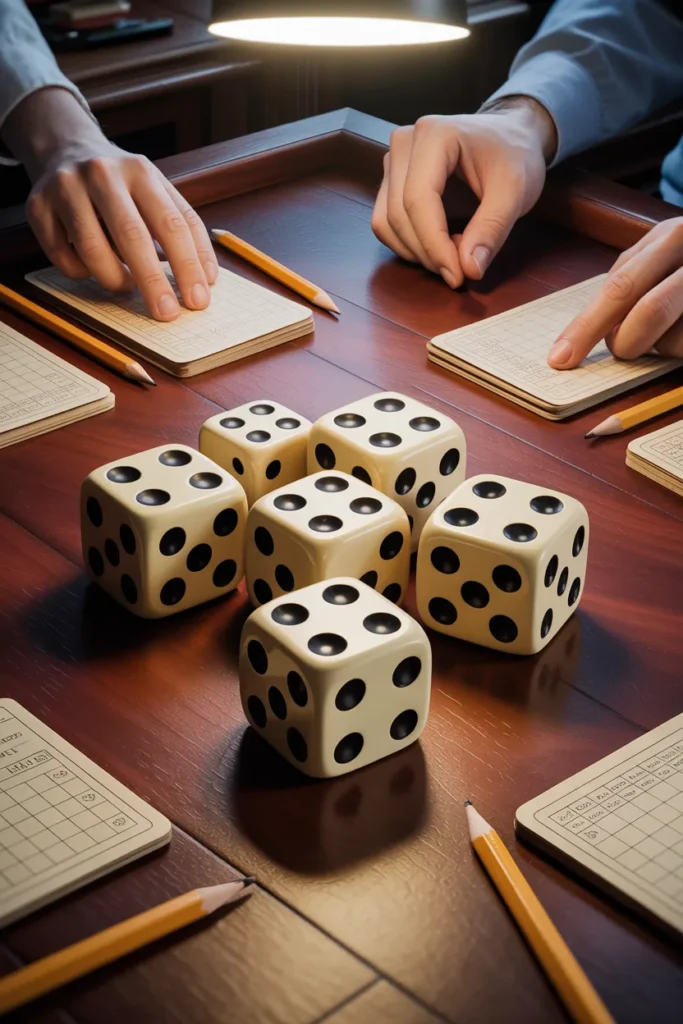
Yahtzee is still one of the most played family dice games for a reason. I like it because the rules are simple, but every turn still feels competitive. Players roll five dice and try to build combinations like straights, full houses, or five matching numbers.
Each player gets three chances per turn, which adds strategy to every roll. I’ve noticed younger kids learn scoring patterns quickly after a few rounds. A full game usually takes around 30 minutes, making it perfect for family game nights.
2. Bunco

Bunco works best when you have a large group and want something social instead of overly competitive. I’ve played it during family gatherings, and the fast pace keeps everyone involved.
The game is played in rounds where players try to roll matching numbers using three dice. Since teams rotate often, people stay active and engaged the whole time. Bunco nights are especially popular among adults because the game focuses more on fun and conversation than serious strategy.
3. Tenzi

Tenzi is one of the fastest dice games I’ve ever played. Every player rolls at the same time, trying to get all ten dice to show the same number before everyone else.
What I like most is how energetic the game feels. Rounds usually last less than a minute, which makes it great for parties and kids. Many families also create custom rules to make gameplay more challenging over time.
4. Qwixx
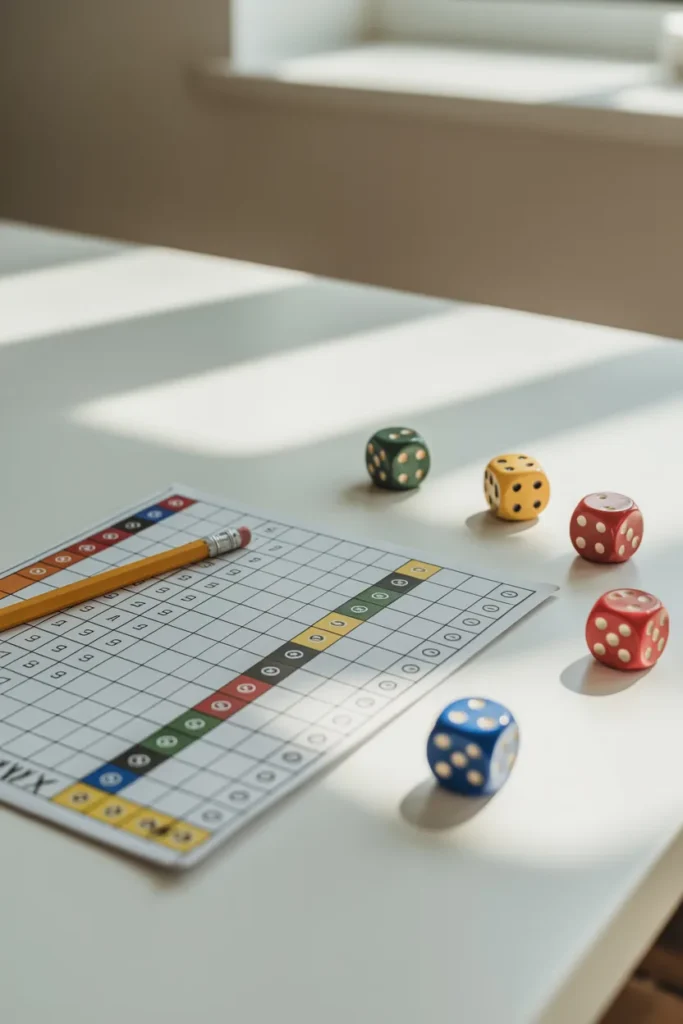
Qwixx is a smart choice if you enjoy quick games with strategy mixed in. Every player marks numbers on a score sheet while trying to avoid mistakes that can block future moves.
I personally enjoy how every roll matters, even during another player’s turn. That keeps the game moving with almost no downtime. It’s easy to learn but still rewards careful decisions, which is why many board game fans keep coming back to it.
5. Farkle
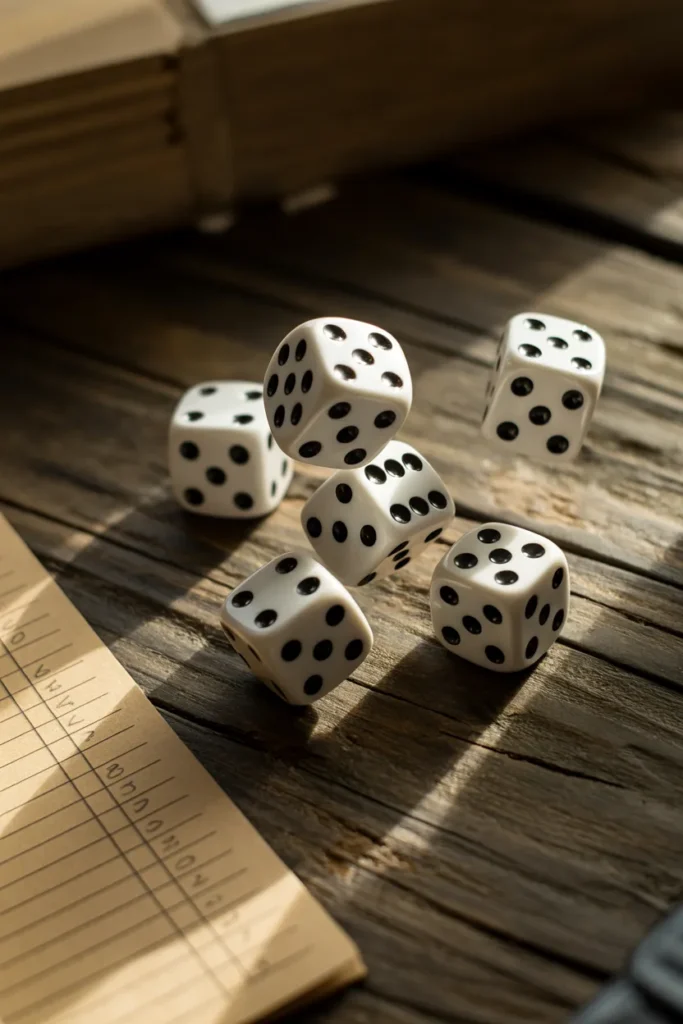
Farkle is all about balancing risk and reward. Players roll six dice to score points, but one bad roll can wipe out everything earned during that turn.
That pressure is what makes the game exciting for me. You constantly decide whether to stop safely or gamble for more points. According to many gaming communities, Farkle remains one of the top classic dice games because of its replay value.
6. Left, Center, Right (LCR)
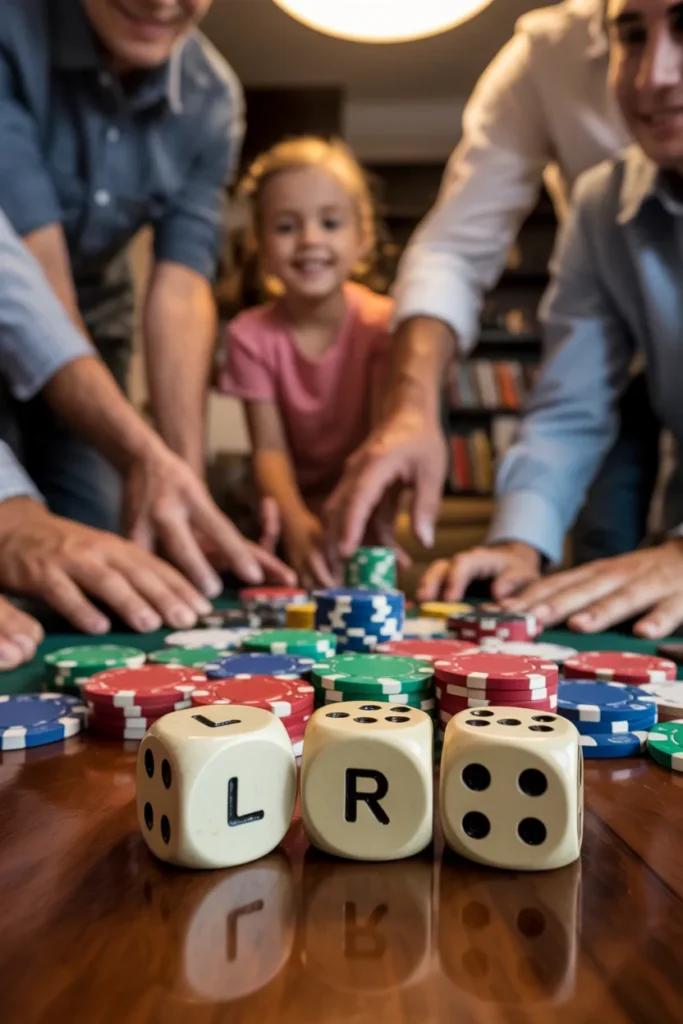
LCR is one of the easiest dice games for beginners. I usually recommend it for family gatherings because anyone can understand the rules in just a few minutes.
Players pass chips left, center, or right based on what the dice show. Since luck controls most of the gameplay, kids and adults have an equal chance to win. That makes the game feel fair and entertaining for all ages.
7. Pig
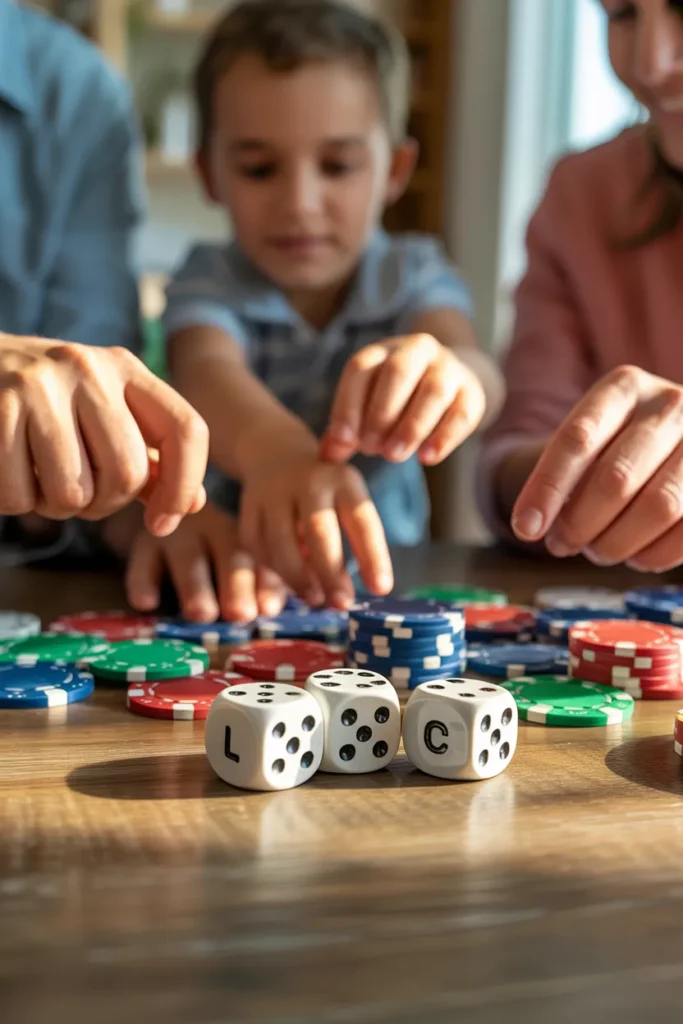
Pig proves that even a single die can create a really fun game. Players keep rolling to build points, but rolling a one ends the turn immediately.
I’ve used this game many times with kids because it teaches simple math and decision-making at the same time. It also works well during travel since you only need one die and something to track scores.
8. Knock Out
Knock Out is a simple dice game that mixes luck with basic math skills. Players choose a target number, and if their dice total hits that number, they’re eliminated.
I think this game works especially well for younger children because it helps them practice addition naturally while having fun. Older players can increase the challenge by multiplying dice values instead.
9. Math Dice

Math Dice is one of the few educational games that still feels genuinely entertaining. Players use rolled numbers to solve math problems and match a target number.
I’ve seen teachers and parents use this game to make arithmetic practice less stressful. Studies often show game-based learning improves engagement, and this game is a good example of that in action.
10. Dragonwood
Dragonwood combines cards, dice, and fantasy themes into one adventure-style game. Players collect cards and roll dice to defeat creatures like trolls, goblins, and dragons.
I like that the game rewards planning instead of pure luck. Deciding when to attack and which cards to save adds more depth than most casual dice games.
11. Flash!
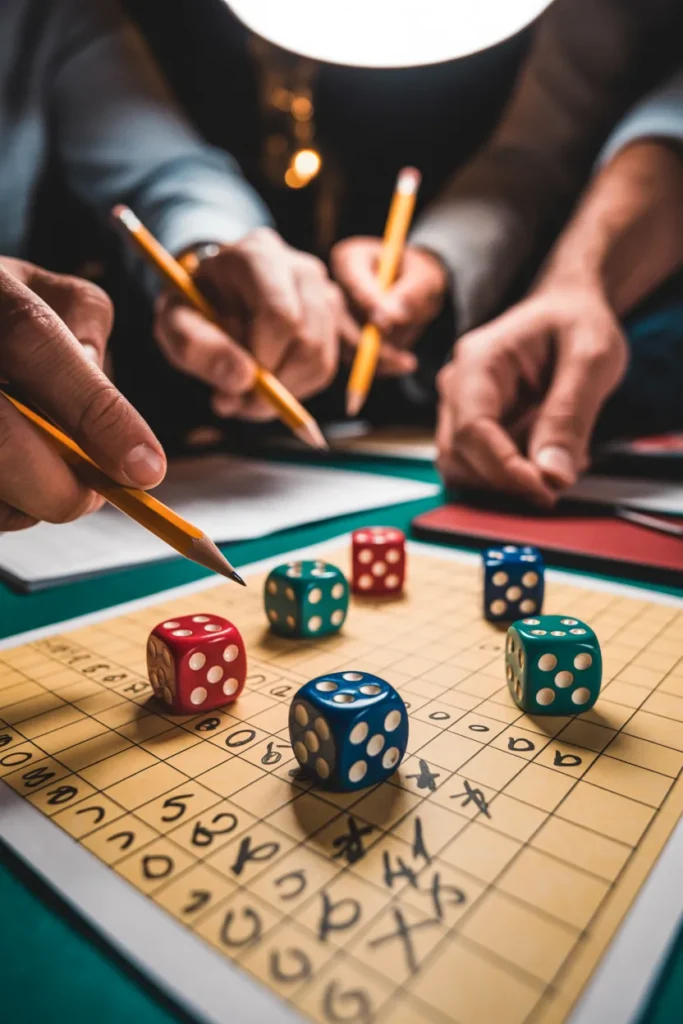
Flash! is designed for speed and quick thinking. Players race to complete different dice challenges before everyone else at the table.
The game becomes surprisingly intense during close rounds. I’ve noticed it works best with energetic groups because players stay fully focused from start to finish.
12. Liar’s Dice
Liar’s Dice is perfect for players who enjoy bluffing and reading people. Everyone hides their dice rolls and makes guesses about the total numbers showing around the table.
The real fun comes from trying to figure out who is lying. I enjoy how social the game feels because confidence and timing matter just as much as luck.
13. Roll For It!
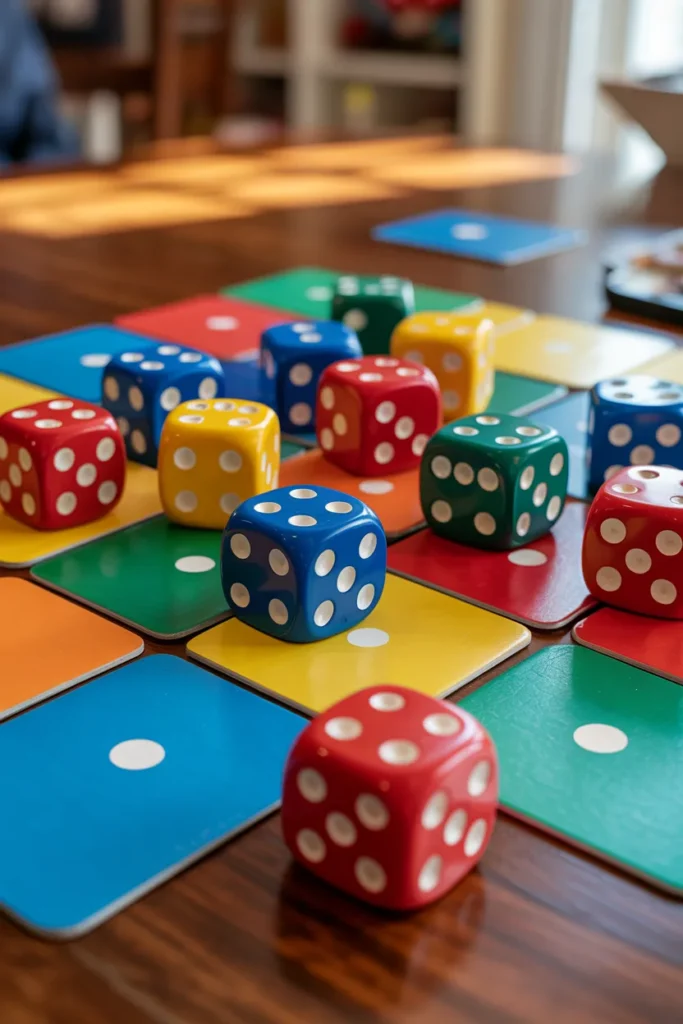
Roll For It! is simple enough for kids but still enjoyable for adults. Players roll dice to match combinations shown on scoring cards.
I like using this game when introducing new people to tabletop games because rounds move quickly and the rules are easy to explain. Most games finish within 20 minutes.
14. Even Steven’s Odd
Even Steven’s Odd turns math practice into a competitive challenge. Players roll dice and solve problems using addition, subtraction, multiplication, or division.
This is one of the better educational dice games I’ve tried because it keeps kids thinking without making learning feel forced. Parents often use it for homeschooling and family study time.
15. Jinx
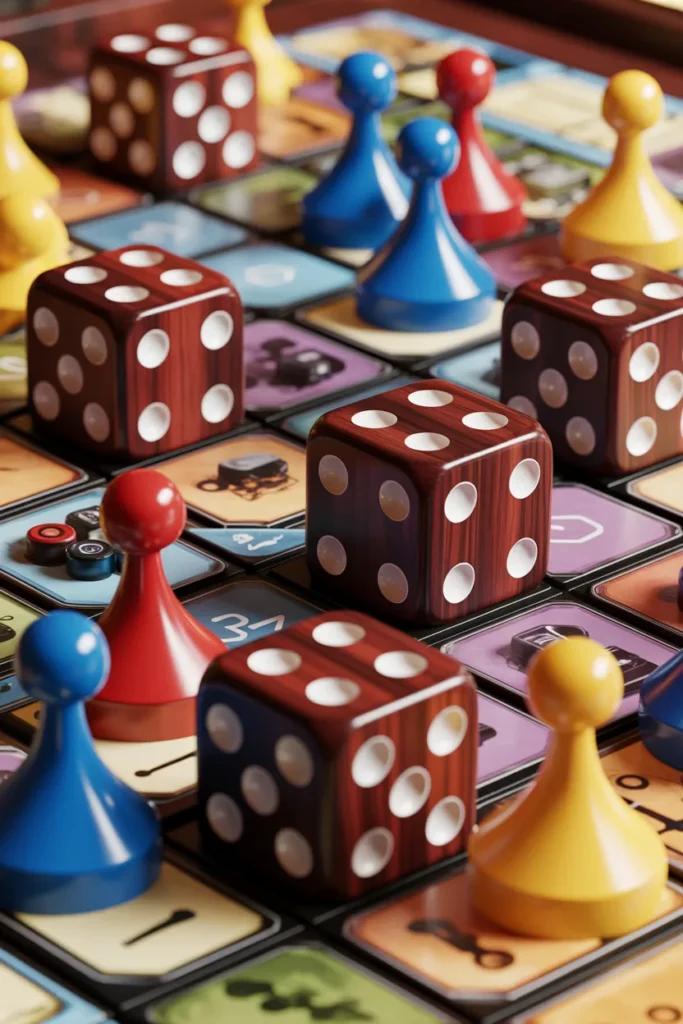
Jinx mixes dice rolling with board strategy. Players place pieces based on dice results while trying to block opponents from creating rows.
I enjoy games that combine luck and planning equally, and Jinx does that well. Every move can completely change the board, which keeps matches unpredictable.
16. Bluffaneer
Bluffaneer adds pirate themes and deception into a dice game format. Players bluff, steal treasure, and accuse each other during gameplay.
The social side of the game is what makes it memorable for me. It works especially well during parties where people enjoy loud reactions and playful competition.
17. That’s Pretty Clever
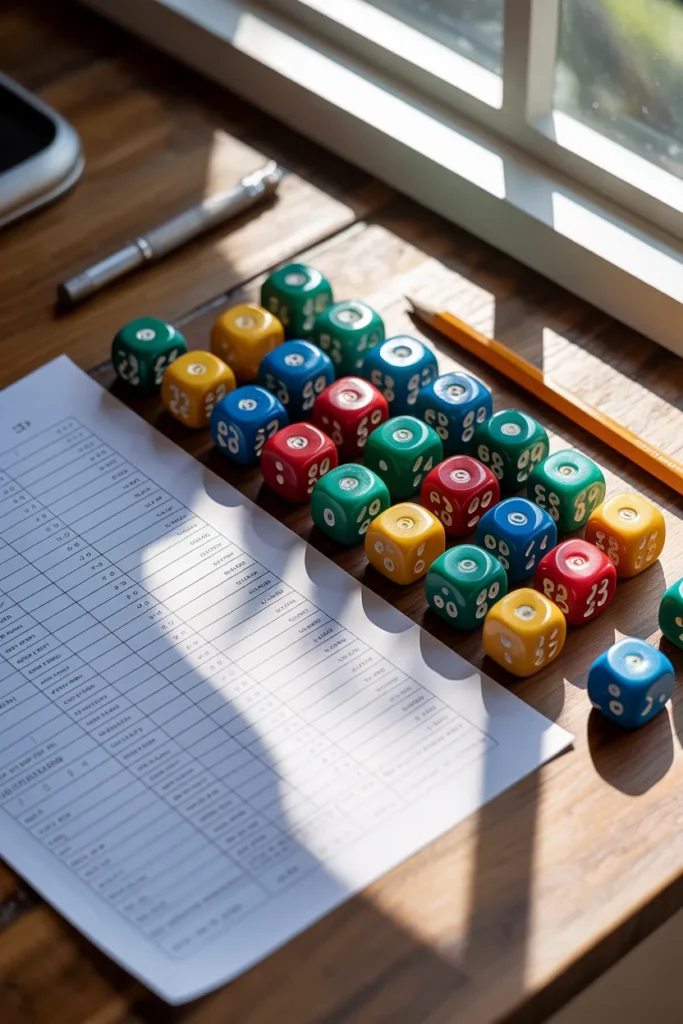
That’s Pretty Clever is more strategic than most casual dice games. Players carefully choose dice combinations to score points across different sections.
I’ve noticed experienced players improve significantly over time because smart planning matters a lot. If you enjoy puzzle-style scoring systems, this game is worth trying.
18. Yamslam
Yamslam feels similar to Yahtzee but adds chips and faster scoring. Players roll dice to create combinations and collect scoring tokens.
I like how quick each round feels compared to traditional scorecard games. It keeps the energy high without sacrificing strategy completely.
19. Pizza Party
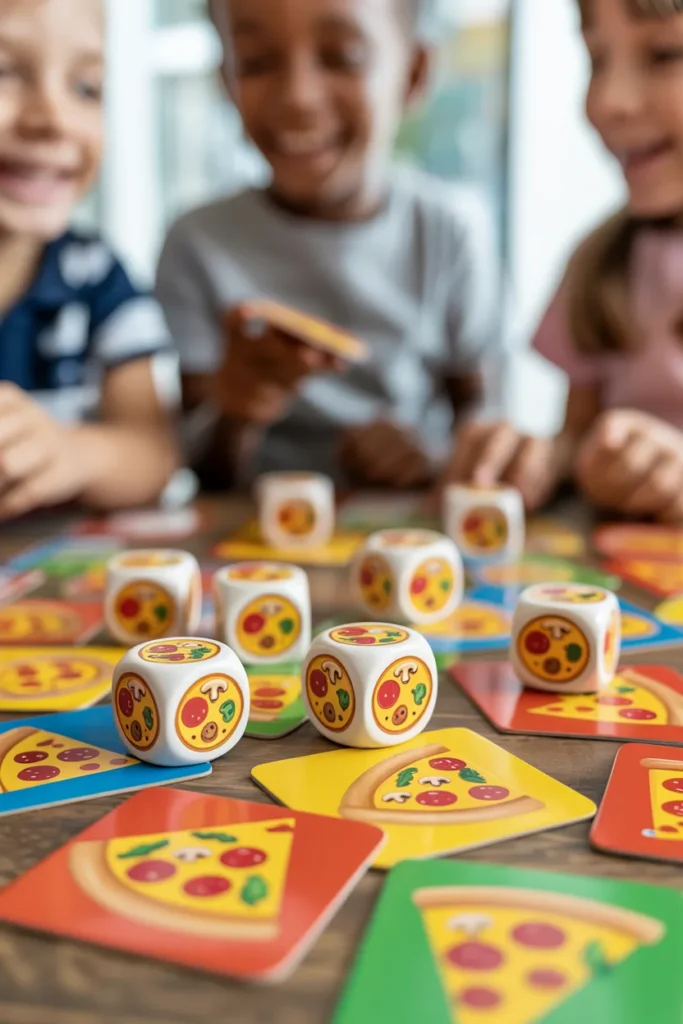
Pizza Party is one of the best dice games for younger kids. Players roll topping dice to complete pizza slices before anyone else.
The pizza theme makes the game visually fun, which helps keep children interested. I’ve found it useful for short family game sessions since rounds move very quickly.
20. Strike
Strike stands out because players physically throw dice into an arena instead of simply rolling them on a table. That small difference makes the game feel far more active.
I’ve played this at parties where people instantly became competitive after the first round. The mix of chaos and timing creates hilarious moments.
21. Sequence Dice
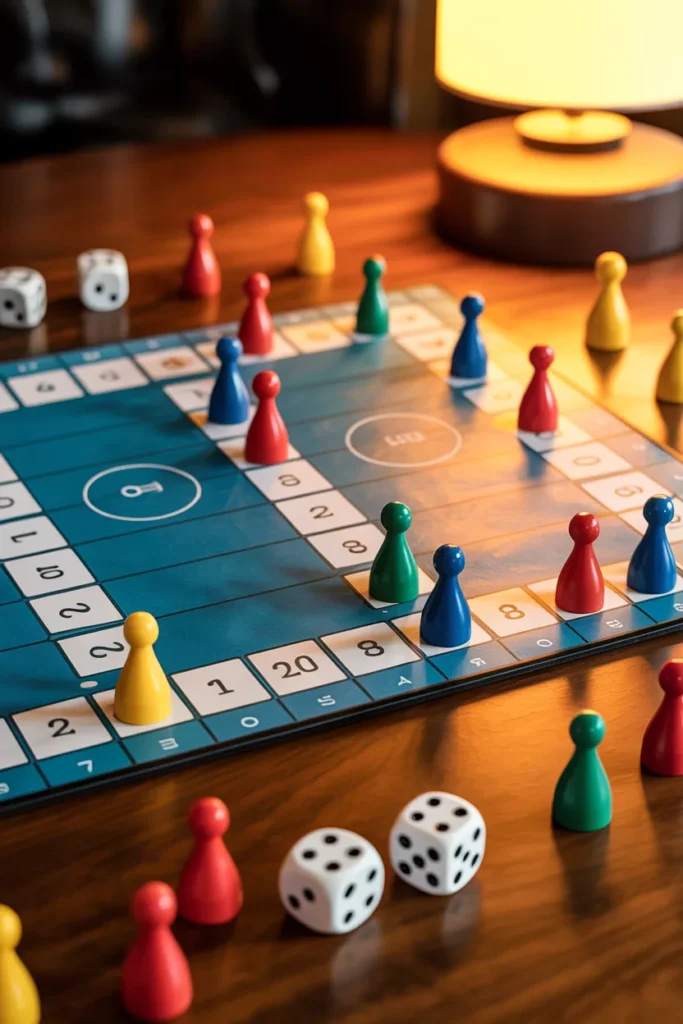
Sequence Dice combines classic sequence-building gameplay with dice rolling mechanics. Players place chips on numbered spaces after rolling dice totals.
I enjoy the teamwork option because it makes larger groups easier to manage. Strategy becomes more important as the board fills up.
22. Bang! The Dice Game
Bang! The Dice Game mixes hidden roles with dice combat. Players secretly become sheriffs, outlaws, deputies, or renegades with different goals.
This game creates a lot of tension because nobody fully trusts each other early on. I think it works best with groups that enjoy social deduction games.
23. Railroad Ink
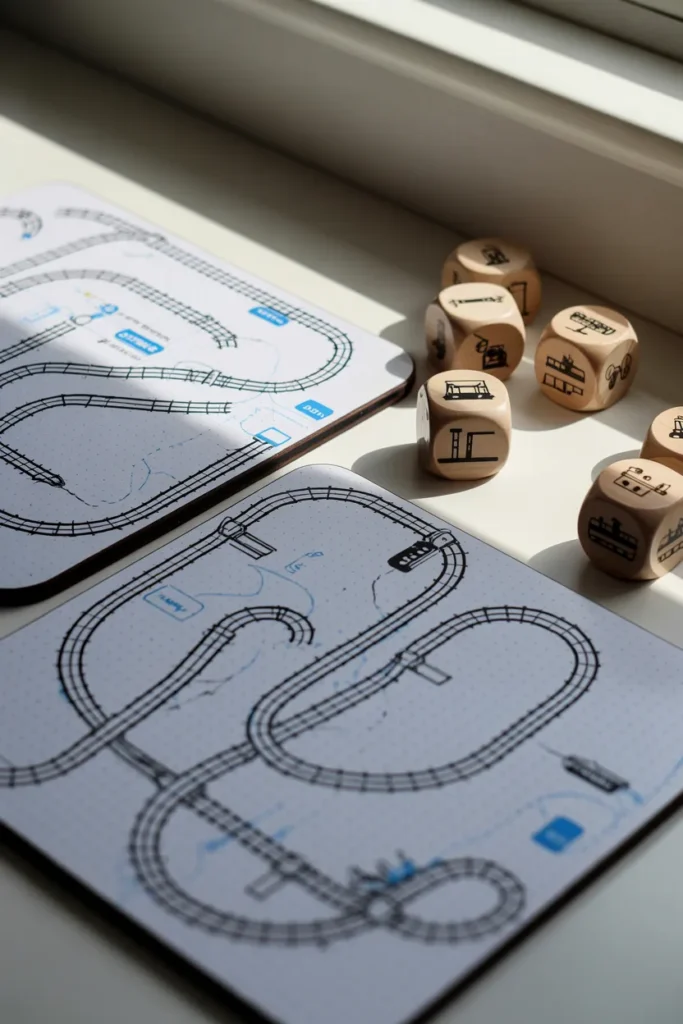
Railroad Ink is a relaxing strategy game where players build road and railway networks using dice results.
I personally enjoy how calm the gameplay feels compared to louder party games. Planning efficient routes becomes surprisingly satisfying after a few rounds.
24. Sagrada
Sagrada is one of the most visually impressive dice games I’ve played. Players use colorful dice to design stained-glass style window patterns.
The placement restrictions make every decision important. I appreciate that the game rewards careful planning more than luck, especially during later rounds.
25. Shut the Box
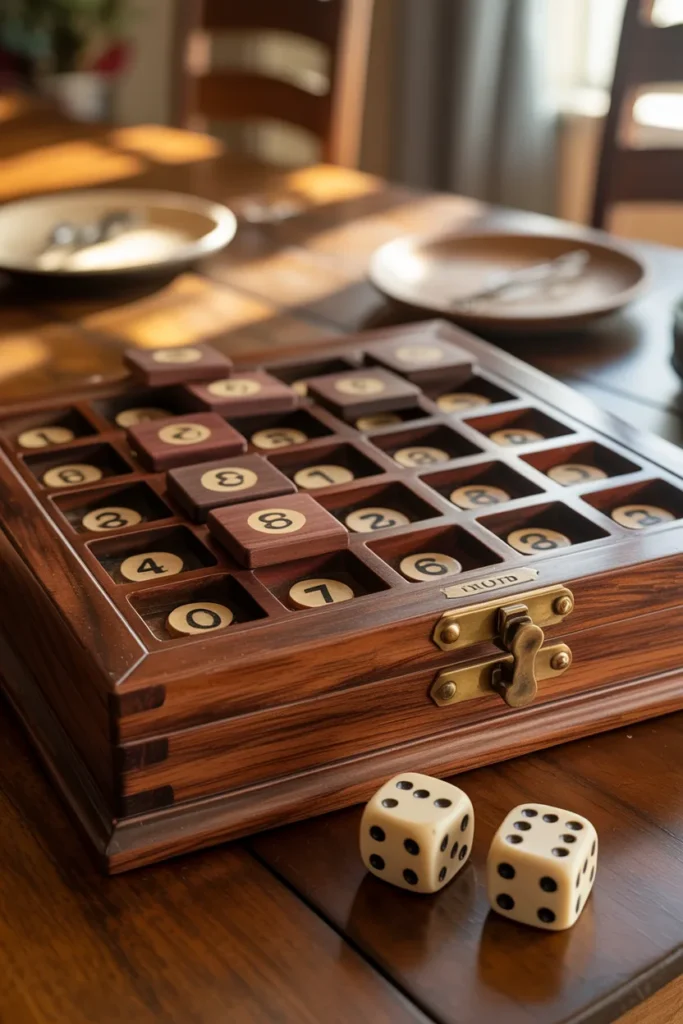
Shut the Box is a timeless dice game that has stayed popular for decades. Players roll dice and flip numbered tiles matching the total rolled.
I like how easy it is to teach new players. Even though the rules are simple, deciding which numbers to close adds enough strategy to keep the game interesting.
Final Thoughts
Dice games continue to stay popular because they’re easy to learn, affordable, and genuinely fun for all ages. I’ve found that the best games are the ones that get people talking, laughing, and asking for “just one more round.”
Whether you want a fast party game, a strategic challenge, or an educational activity for kids, there’s a dice game here that fits perfectly. Adding a few of these to your next family game night can make screen-free time much more enjoyable.