

I used to waste time every morning digging through a messy drawer just to find a matching pair of socks, and honestly, it added unnecessary stress to my routine. The real issue wasn’t having too many socks, it was not having a proper system to keep them organized. Once I applied a few simple storage ideas, everything became easier to manage and quicker to access. In this guide, I’m sharing practical sock storage solutions that actually work in real homes.
Socks might seem like a small part of your wardrobe, but when they’re not organized, they quickly turn into daily frustration. I’ve experienced drawers full of mixed pairs, missing socks after laundry, and clutter that keeps building over time. It’s a common issue that many people deal with.
The good thing is, you don’t need complicated systems to fix it. Once I started using simple storage methods and built the habit of keeping pairs together, the problem became much easier to handle.
In this article, I’ll walk you through 20 easy sock storage ideas that help keep your drawer, closet, and daily routine organized.

Key Takeaways
Keeping pairs together from the start prevents socks from getting lost
Using compartments makes it easier to see and grab what you need
Vertical and space-saving solutions work best for small closets
Sorting socks by type or color improves daily efficiency
Consistent habits are more important than complex systems
How Can You Keep Socks From Getting Lost or Mixed Up?
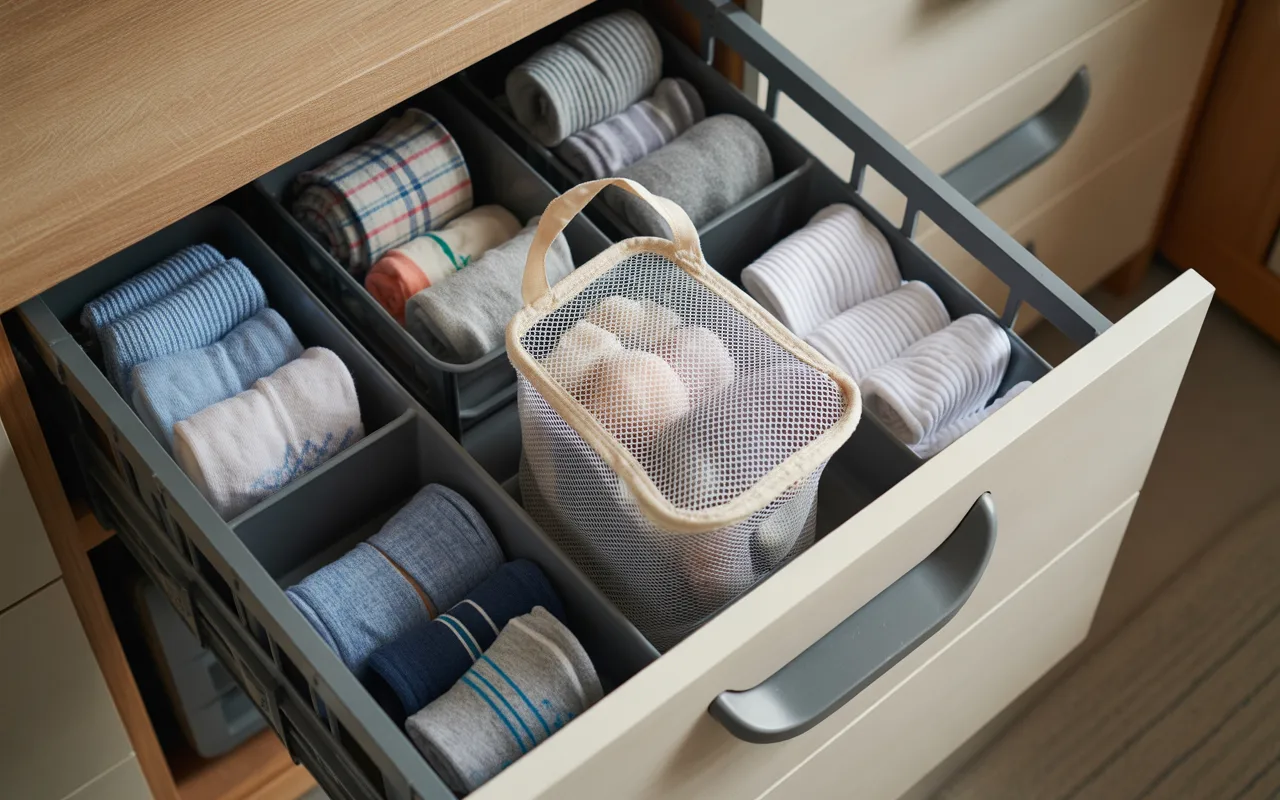
From my experience, socks usually get lost during laundry or when they’re thrown loosely into drawers without any system. The easiest fix is to keep each pair together right from the moment you take them off instead of tossing them separately into the basket.
I also recommend using a small laundry bag just for socks because it keeps them contained during washing and prevents them from disappearing between other clothes. This simple step alone can reduce missing pairs significantly.
Once the socks are clean, placing them into compartments or bins helps keep everything sorted and visible instead of turning into a pile.
Pro tip: Always pair your socks before putting them in the laundry to avoid mismatches later.
Grid Organizer
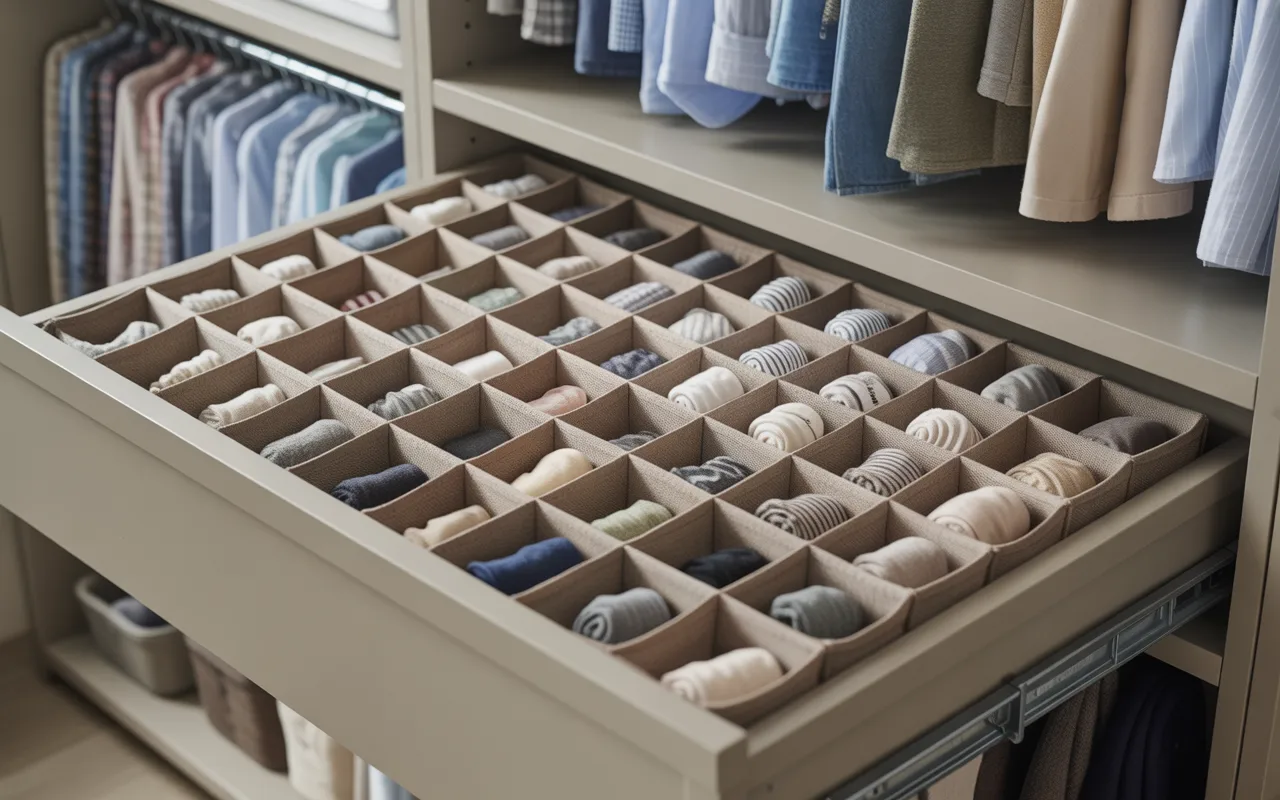
I’ve found grid organizers to be one of the easiest ways to bring order to a messy sock collection because each pair gets its own dedicated space. Instead of stacking socks on top of each other, you can roll them and place them neatly into individual compartments.
This setup makes it simple to see everything at once, which saves time when you’re getting ready. It also prevents socks from mixing with other items like underwear or accessories.
Grid organizers work especially well in drawers or on closet shelves where structure is needed.
Pro tip: Roll socks tightly before placing them in each slot to maximize space.
Clip Hanger
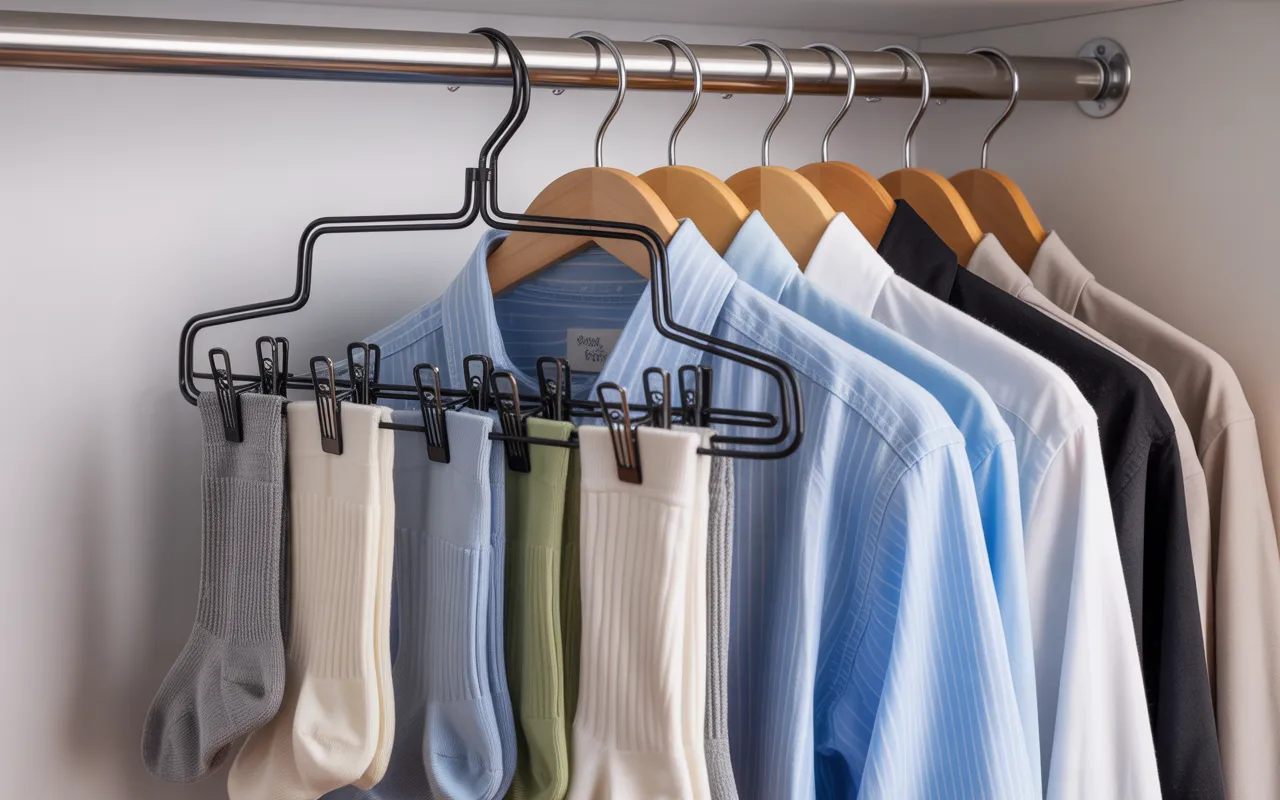
Using a clip hanger is a smart way to take advantage of vertical space in your closet, especially when drawers are already full. I like this method because it keeps every pair visible and easy to grab.
Clipping socks together also ensures they stay paired at all times, which eliminates the frustration of searching for matches. It’s a simple but effective solution.
This works best in narrow wardrobes where shelf space is limited.
Pro tip: Group socks by type or color on the hanger for quicker selection.
Sock Dispenser
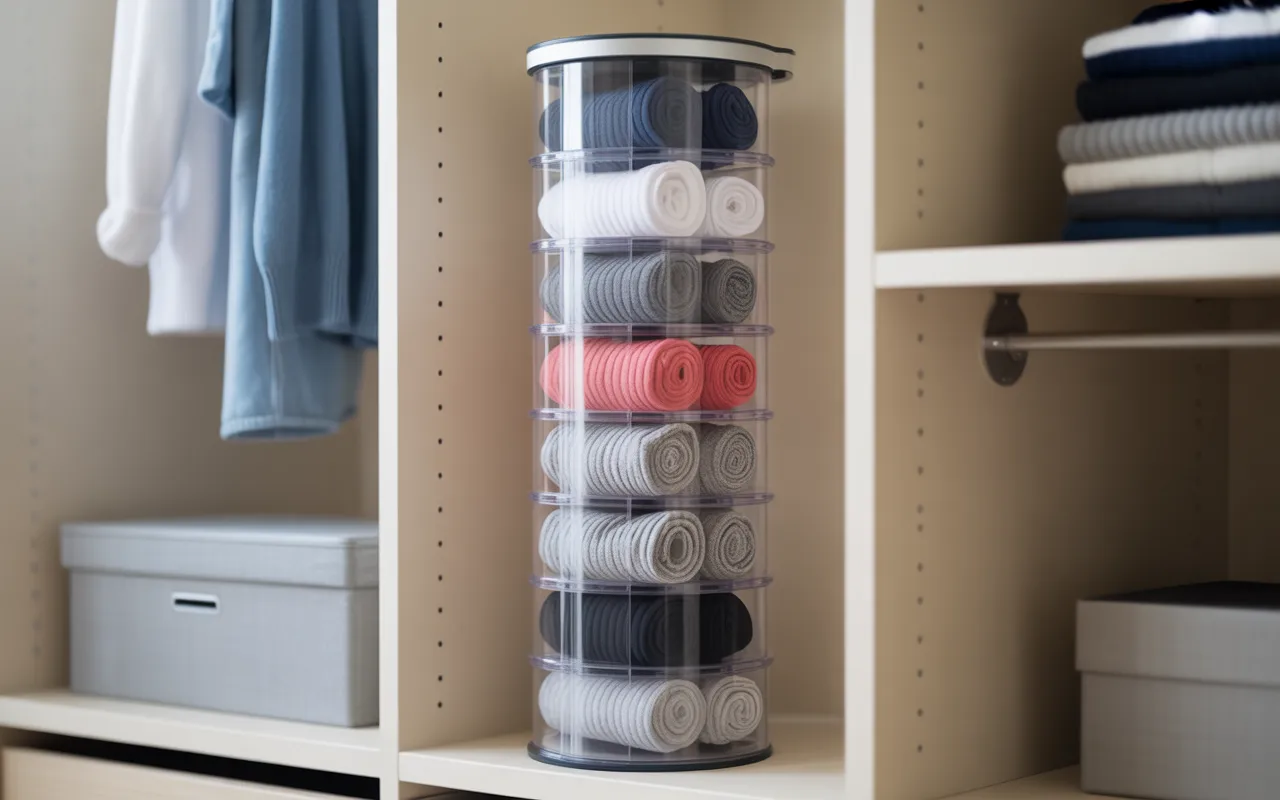
A sock dispenser is perfect if you want a grab-and-go system that keeps everything neat. I’ve used this approach to store everyday socks, and it makes mornings much faster.
Rolling socks and stacking them inside the dispenser keeps them organized while allowing you to pull out one pair without disturbing the rest. It’s efficient and space-saving.
This works well in small spaces like apartments or dorm rooms.
Pro tip: Use clear dispensers so you can quickly see when you’re running low.
Drawer Trays
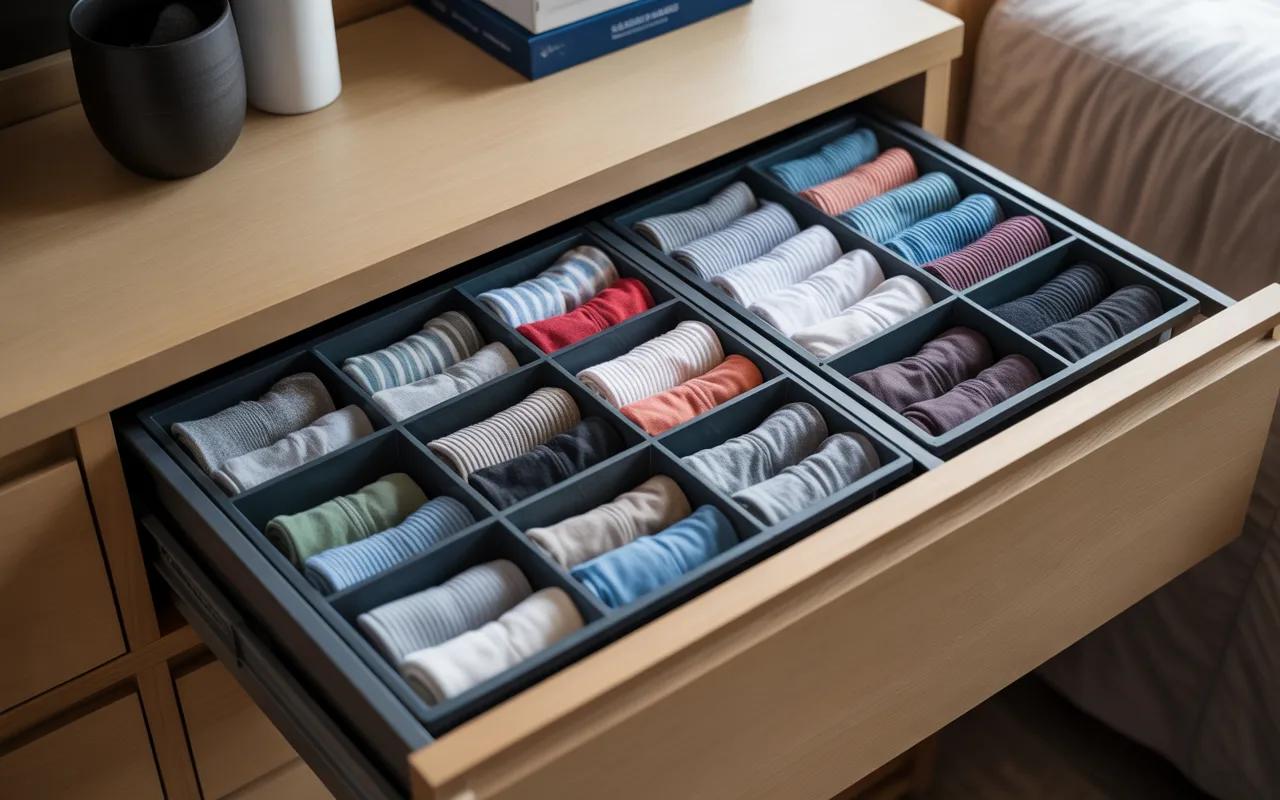
Drawer trays help turn a cluttered drawer into a well-organized system by dividing space into sections. I like using them because they keep socks upright and easy to see. When each pair has its own spot, you don’t need to dig through layers to find what you want. This keeps the drawer tidy over time.
They’re especially useful for deep drawers where items tend to shift around.
Pro tip: Use multiple trays to separate daily, sports, and seasonal socks.
Rotating Rack
A rotating rack is a great option for managing socks during and after laundry. I’ve found it useful because it keeps pairs together while allowing them to air dry properly. The rotating feature makes it easy to access any pair without removing others, which saves time and effort. It’s practical for everyday use.
This setup works well in laundry rooms or small balconies.
Pro tip: Clip socks in pairs to keep them matched after drying.
Labeled Bins
Labeled bins simplify organization by giving each type of sock its own category. I like using them because they make it clear where everything belongs. This system works especially well in shared households where multiple people use the same storage space. It keeps things consistent and organized.
Clear bins make it even easier to identify contents at a glance.
Pro tip: Label bins by type like daily, sports, or winter socks.
Fabric Boxes
Fabric boxes are a flexible storage option that works well in drawers and closets. I prefer them because they’re lightweight and easy to adjust based on space. They help create sections inside a drawer so socks don’t pile up randomly. This keeps everything neat and accessible.
They’re ideal for larger drawers where extra structure is needed.
Pro tip: Use different boxes for different categories to stay organized.
Honeycomb Divider
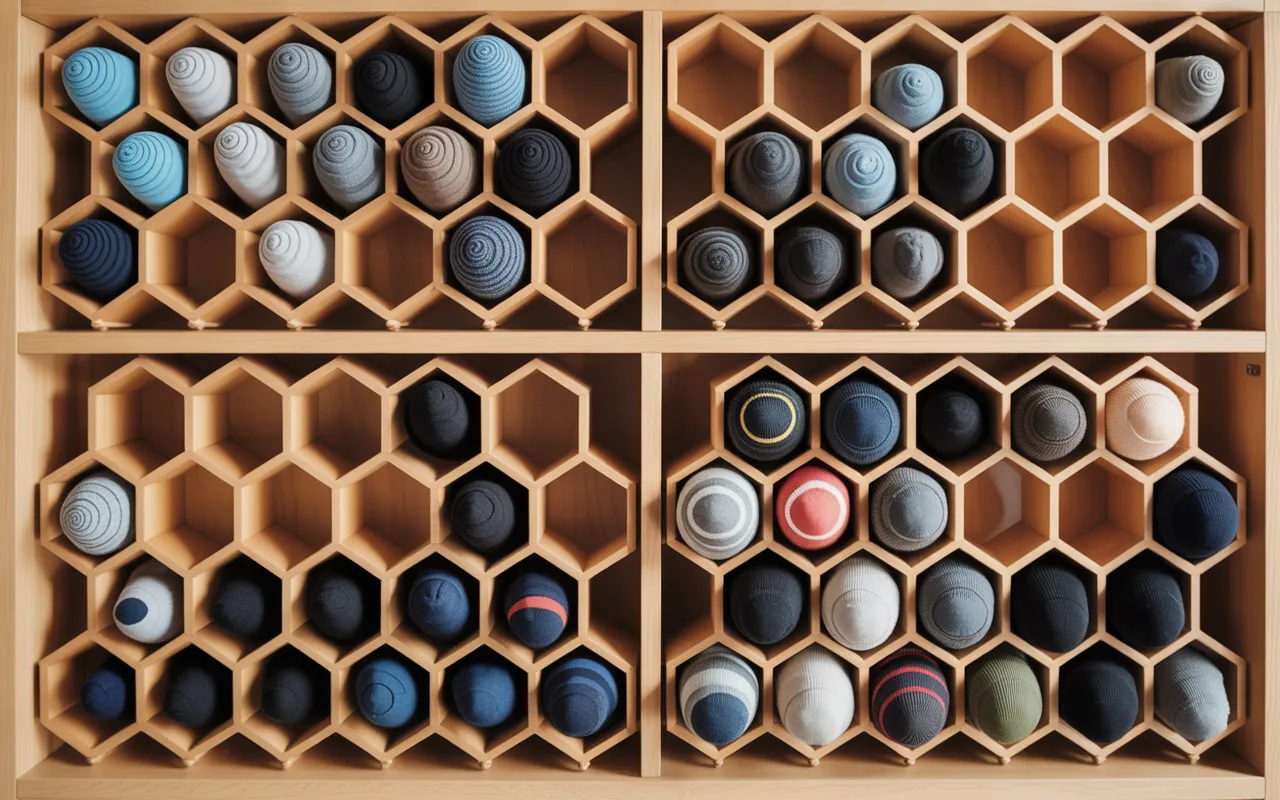
Honeycomb dividers create small compartments that keep each pair separated and visible. I’ve found this especially useful for maintaining long-term organization. The design prevents socks from mixing and makes it easy to pick the pair you need without disturbing others. It’s simple but highly effective.
It works well for both small and large sock collections.
Pro tip: Adjust the divider size to fit different sock types.
Shelf Bins
Shelf bins are a great solution when drawer space is limited. I use them to move sock storage onto open shelves while keeping everything tidy. They allow you to organize socks into categories without cluttering drawers. This makes access easier and faster.
This method works best in larger closets.
Pro tip: Use clear bins to quickly identify contents.
Drawer Channels
Drawer channels create long sections that keep socks aligned and organized. I like using them for separating different categories. This setup makes it easy to scan through options without digging through piles. It keeps everything neat and structured.
They’re ideal for wide drawers.
Pro tip: Assign each channel to a specific type of sock.
Color Rows
Arranging socks by color is both practical and visually satisfying. I’ve found that it makes selecting socks faster and more enjoyable. This method allows you to see all options at once without searching through clutter. It also keeps drawers looking neat.
It works best in deep drawers.
Pro tip: Keep light and dark colors separated for clarity.
Vertical Slots
Vertical slots help prevent socks from stacking on top of each other. I use this method to keep everything visible and easy to access. Each pair stands upright, which maintains order even after regular use. It’s a simple but effective solution.
This works well for larger collections.
Pro tip: Roll socks uniformly for a cleaner look.
Minimal Drawer
Sometimes, keeping things simple works best. I’ve used a minimal drawer setup without organizers, just by grouping socks neatly. This approach reduces clutter while still keeping everything accessible. It’s easy to maintain with consistent habits.
It’s ideal for those who prefer simplicity.
Pro tip: Always return socks to the same spot after use.
Door Pockets
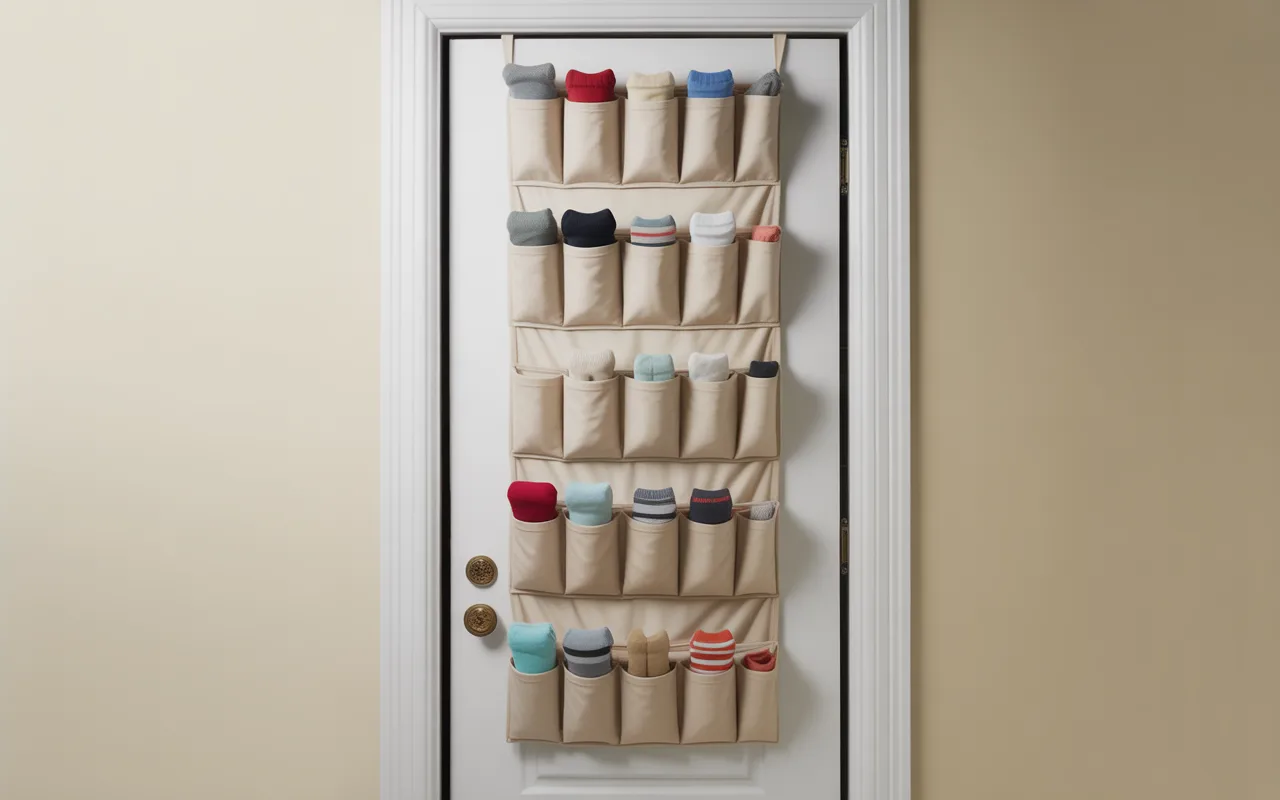
Door pockets turn unused closet space into functional storage. I like using them because they don’t take up drawer or shelf space. Each pocket can hold a pair of socks, keeping them separated and easy to find. It’s efficient and practical.
This is perfect for small closets.
Pro tip: Assign rows for different sock types.
Wall Dispenser
A wall dispenser keeps socks organized vertically while saving space. I’ve found it useful for maintaining a clean and clutter-free setup. It allows you to grab a pair quickly without disturbing the rest. This improves daily efficiency.
It’s great for compact living spaces.
Pro tip: Load socks tightly so they dispense smoothly.
Peg Board
Peg boards offer a creative way to store socks while keeping them visible. I like this method because it adds a decorative touch. It also makes it easy to access and organize socks in a unique way. It’s both functional and stylish.
This works well in modern setups.
Pro tip: Arrange socks neatly for a visually pleasing display.
Mesh Dividers
Mesh dividers create breathable compartments that keep socks organized and fresh. I prefer them for better airflow. They help maintain structure while allowing socks to dry properly if slightly damp. This prevents odor.
They’re suitable for closets and drawers.
Pro tip: Use them for freshly washed socks.
Grid Boxes
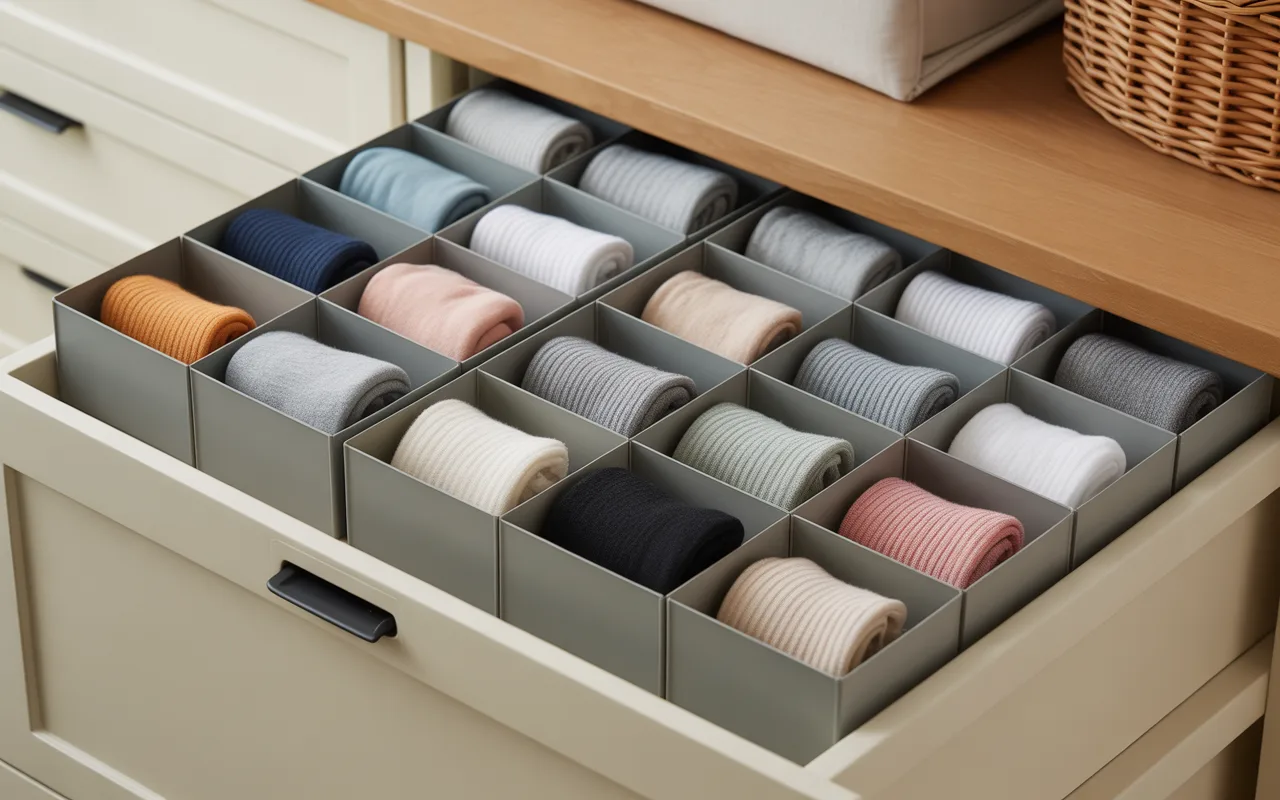
Grid boxes divide storage into small sections, making organization simple and effective. I’ve used them to keep everything in place. Each pair has its own spot, which prevents clutter and confusion. It’s easy to maintain over time.
They fit well in drawers and shelves.
Pro tip: Fold socks neatly before storing.
Box Sections
Box sections allow you to group socks by type or usage. I like this method because it keeps everything categorized. It also makes it easier to maintain organization after laundry. Each section has a purpose.
This works well for medium to large drawers.
Pro tip: Assign sections to family members if sharing space.
Sock Basket
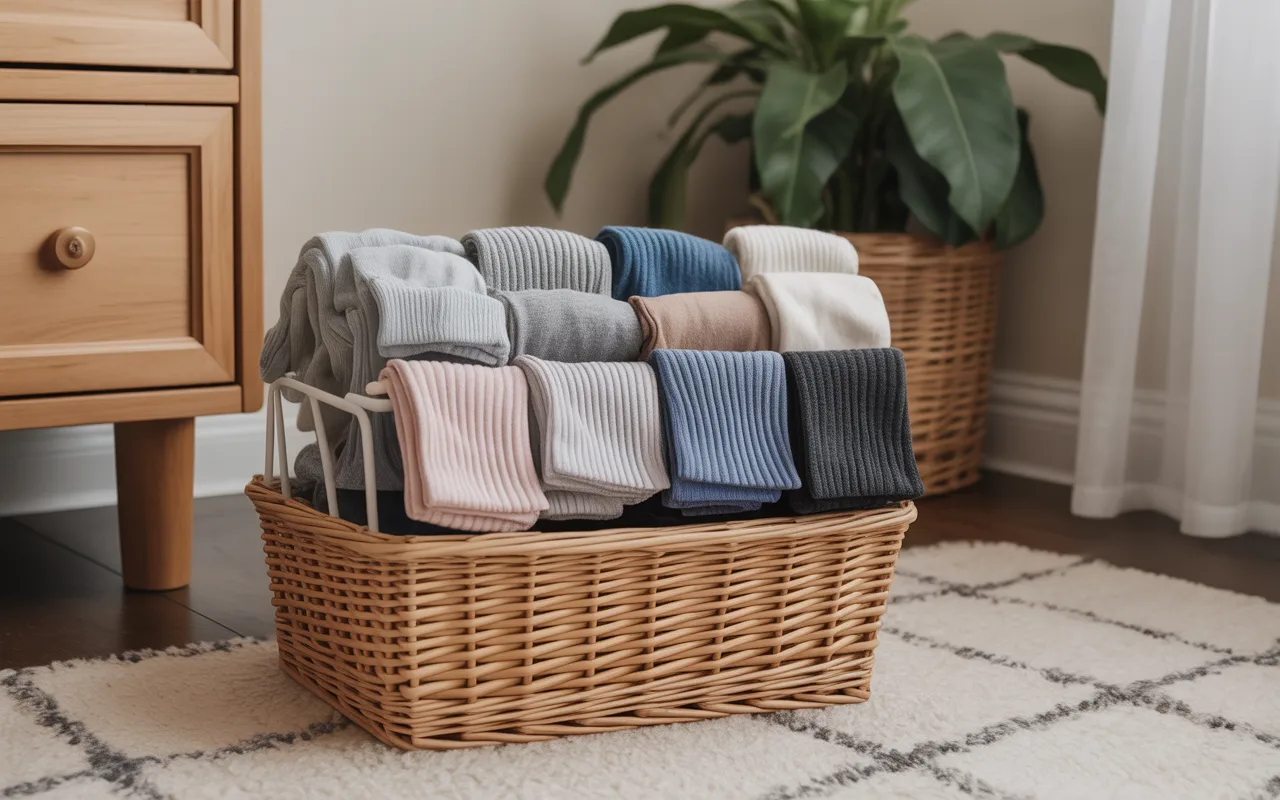
A sock basket is a simple and flexible solution for storing frequently used pairs. I use it for quick access, especially in colder seasons. It keeps socks visible and easy to grab without opening drawers. It also adds a cozy touch to the room.
This works well in bedrooms or near dressing areas.
Pro tip: Fold socks before placing them in the basket to avoid clutter.
FAQs
1. How often should you reorganize your sock drawer?
I usually recommend doing a quick reorganization every few weeks because socks naturally get mixed up over time. Refolding pairs and removing worn-out ones keeps everything in order and easy to manage.
2. What is the best way to store seasonal socks?
From my experience, it’s best to store off-season socks in separate boxes or baskets so your main drawer doesn’t get overcrowded. This keeps everyday socks easy to access while maintaining a clean setup.
Conclusion
Keeping your socks organized doesn’t require complicated systems, it just requires a simple approach that you can stick to consistently. From my experience, once you create a designated space and follow a routine, the problem of lost or mixed-up socks disappears.
The ideas shared here are practical, easy to implement, and suitable for different types of spaces. Whether you prefer drawer organizers, hanging solutions, or baskets, the key is to choose a method that fits your lifestyle.
Start with one or two ideas and build the habit of maintaining them. Over time, your storage system will become effortless, and your daily routine will feel much smoother.