
26 DIY Yard Decor Ideas for 2026 to Transform Your Outdoor Space on a Budget
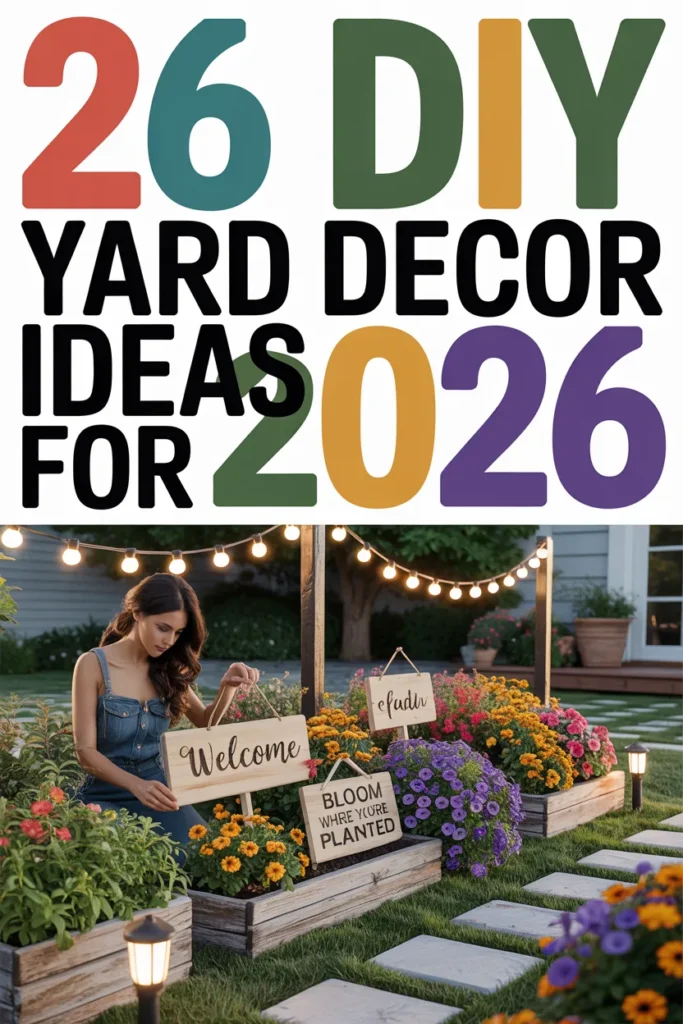
You don’t need an expensive garden makeover to make your outdoor space feel more inviting. A few handmade decorations, repurposed items, and practical garden projects can add color and personality while keeping costs under control.
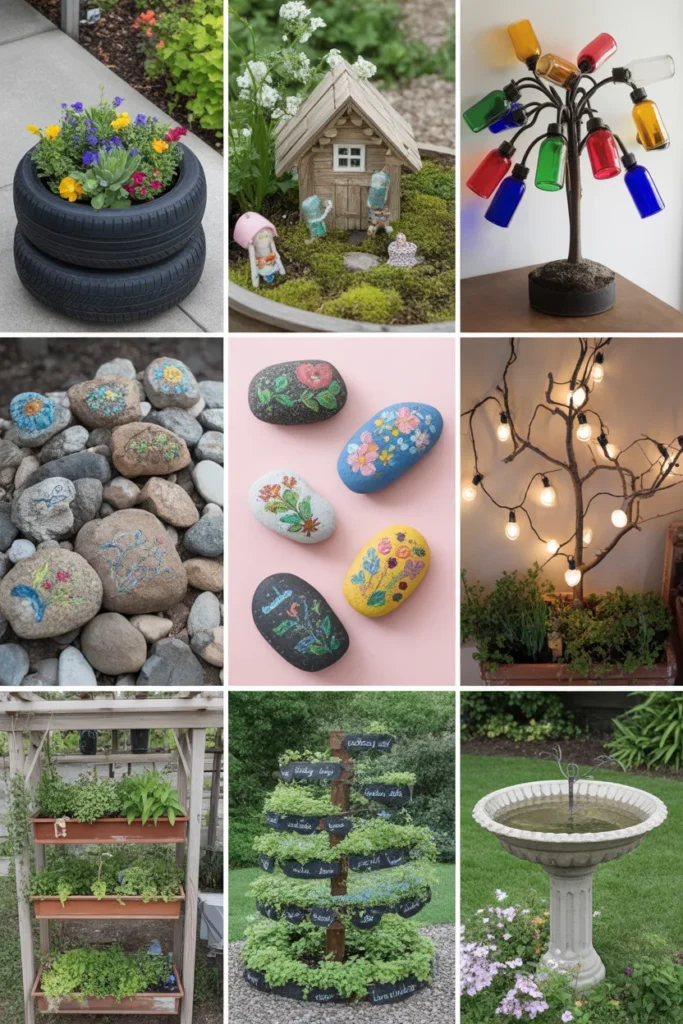
These DIY yard decor ideas include painted rocks, bird feeders, lanterns, herb gardens, fairy cottages, and creative planters. Whether you’re decorating a small patio or a spacious backyard, choose projects that suit your available space, materials, and gardening experience.
Many ideas also work well alongside other outdoor projects, such as DIY flower beds in front of the house or simple patio improvements. Start with one feature you like, then add complementary decorations as your garden takes shape.
Key Takeaways
- Reuse wood, jars, pots, stones, and old furniture for affordable outdoor decorations.
- Combine planters, garden art, and lighting to give your yard more character.
- Choose outdoor-safe materials and finishes that can handle changing weather.
- Try small projects first and build a consistent color scheme across the garden.
- Make space for both decorative features and practical uses, such as seating and gardening.
Upcycled Yard Projects
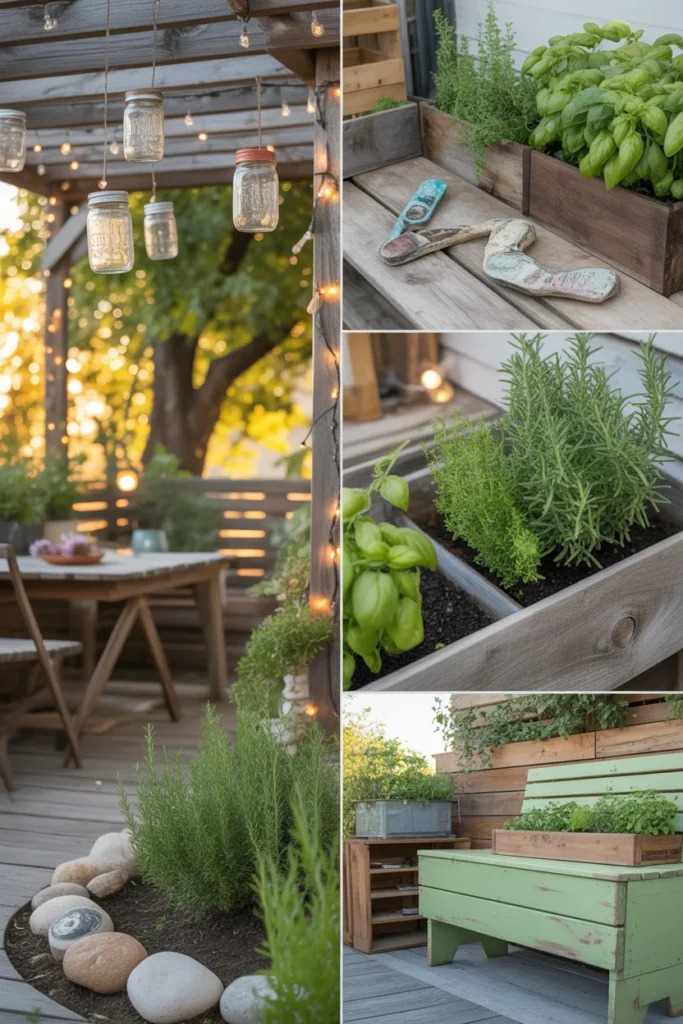
Upcycling is a useful way to decorate your yard without buying everything new. Old containers, scrap wood, glass bottles, and unused furniture can become planters, garden signs, or decorative features. Choose materials that are still sturdy, clean them properly, and consider how they will hold up in sunlight and rain.
If you’re collecting ideas for a larger garden refresh, CraftyFlare’s planter box DIY ideas can help you plan useful planting areas alongside smaller recycled decorations. Drainage, stable construction, and weather-resistant finishes will make a bigger difference to the life of a project than extra decorative details.
Pro Tip: Check what you already own before buying supplies, and choose one or two materials to repeat throughout the yard.
DIY Yard Decor
Halloween Scene
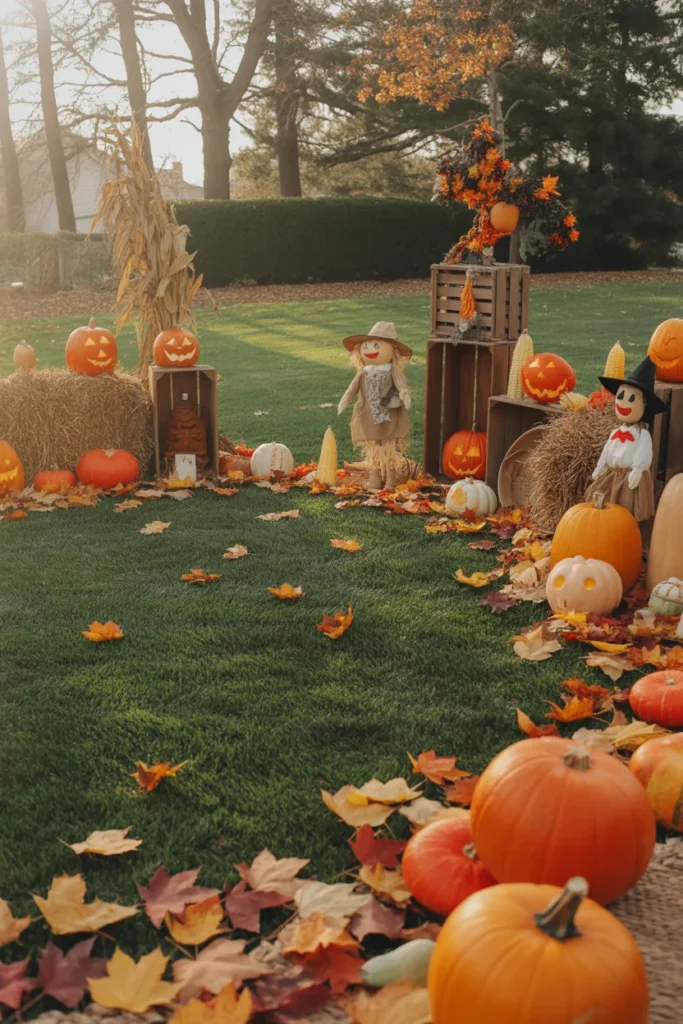
A Halloween yard display can bring seasonal character to a front lawn or garden entrance. Arrange pumpkins, themed figures, handmade signs, and LED lanterns together so the decorations feel connected. A pumpkin patch theme suits natural materials and warm colors, while a spooky scene can use black silhouettes and darker accents.
Reuse sturdy containers as stands and choose decorations that can be secured against wind. Keep paths clear, avoid open flames near dry leaves, and store delicate pieces indoors when the weather turns rough.
Pro Tip: Place larger decorations at the back and smaller pumpkins near the front so the whole display is easy to see.
Penguin Planters
Penguin planters add a playful touch to patios, flower beds, and family gardens. Paint a suitable pot with black-and-white markings, then add orange details for the beak and feet. White flowers can create a winter-inspired look, while colorful blooms make the planter cheerful throughout the growing season.
Use paint suited to the pot’s material and make sure the container has drainage holes. You can create a matching pair in different sizes or place one beside a group of ordinary flowerpots for contrast.
Pro Tip: Draw the penguin’s outline lightly on the pot before painting to keep the face and body proportions consistent.
Wicker Bike Display
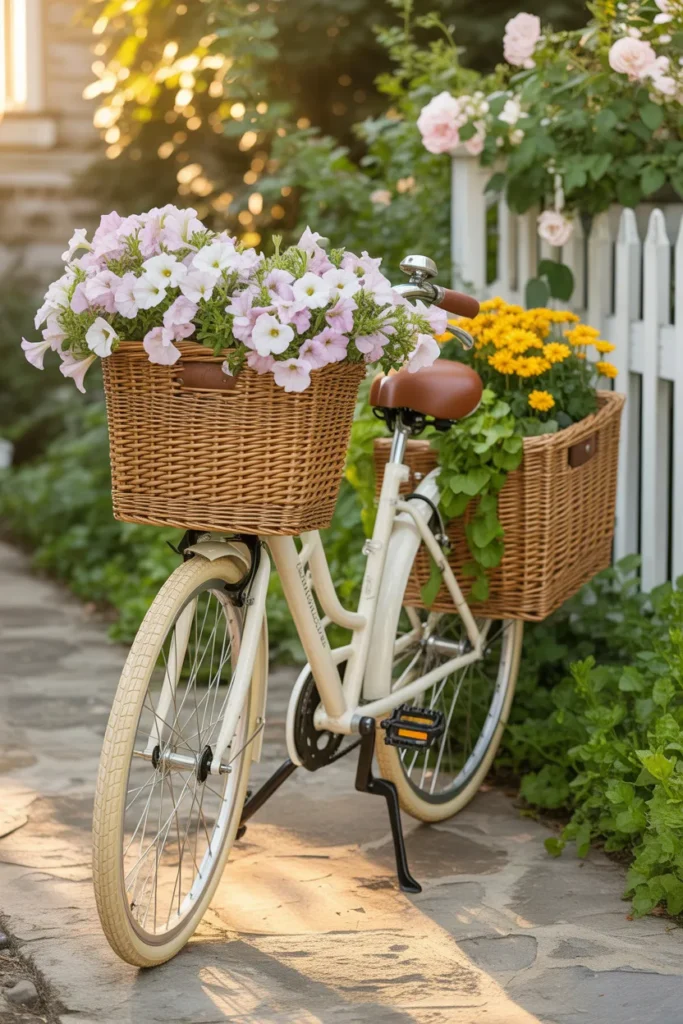
An old wicker bicycle or decorative tricycle can become a garden focal point when its baskets are filled with flowers. Position it near a gate, fence, or flower bed where the shape can stand out. Soft pinks and lavender create a gentle cottage-garden palette, while yellow flowers add a brighter seasonal accent.
Check that the frame is stable and the wicker is not falling apart before adding plants. Removable pots make watering and changing flowers easier, and they help protect the basket from constant moisture.
Pro Tip: Repeat one of the flower colors elsewhere in the garden to connect the bicycle display with the surrounding plants.
Colorful Birdbaths
A colorful birdbath adds a decorative feature while providing visiting birds with access to water. Choose a stable basin with shallow areas, and use a suitable outdoor finish if you want to add color. Position it where birds have nearby cover but enough open space to watch for danger.
Refresh the water regularly and clean the basin to prevent dirt and algae from building up. If you’re considering other bird-friendly features, CraftyFlare’s DIY bird bath ideas offer more ways to incorporate water features into a garden.
Pro Tip: Add a few clean stones to create shallower standing spots, and make sure the basin remains easy to empty and clean.
Teacup Feeders
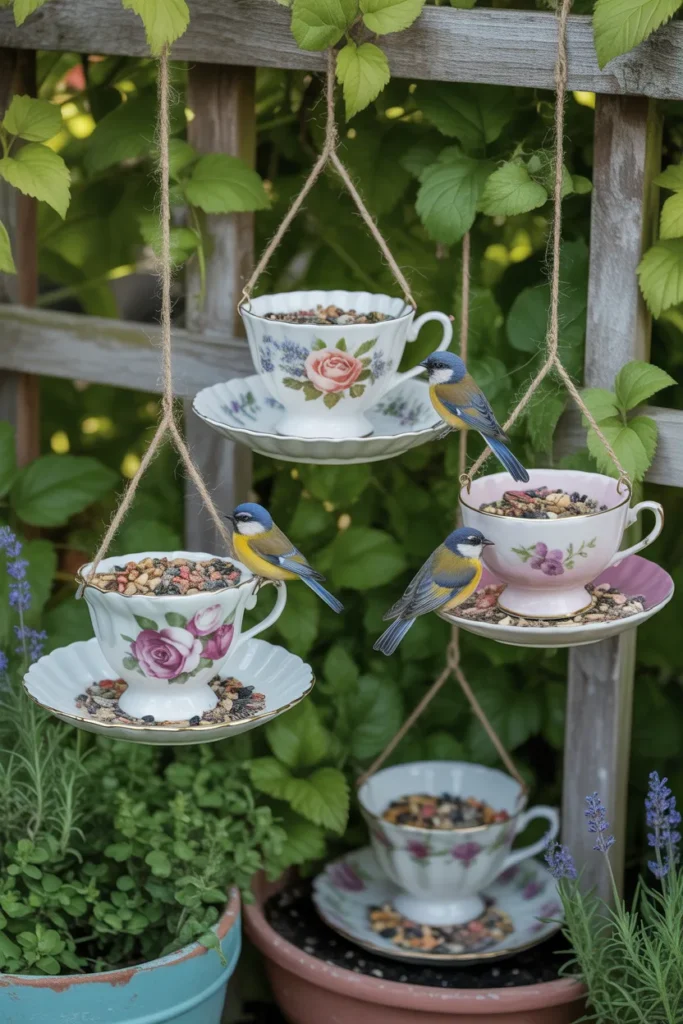
Old teacups and saucers can become decorative bird feeders for a cottage-style garden. Secure the cup to a sturdy base or suitable hanging support, then add an appropriate amount of birdseed. Floral patterns add color, while plain white cups suit gardens with a more understated design.
Check the attachment regularly and place the feeder where it will not swing into windows or obstruct a walkway. Clean it often and use food suitable for local birds. Cups with sharp chips or cracks are better kept for decoration.
Pro Tip: Hang the feeder where you can refill and clean it easily without stepping through flower beds.
Skull Planters
Skull planters work well in Halloween displays, gothic garden corners, or outdoor spaces with an artistic theme. Choose a sturdy planter with drainage and finish it in matte black, weathered gray, or metallic silver. Small succulents or trailing plants can soften the shape, provided the container has enough room for their roots.
Place the planter on a stable surface where it contrasts with nearby greenery. If you’re using a decorative skull without drainage, keep the plant in a removable nursery pot instead of letting water collect inside.
Pro Tip: Pair dark planters with pale flowers or bright green foliage to make the shapes stand out.
Clay Pot Bells
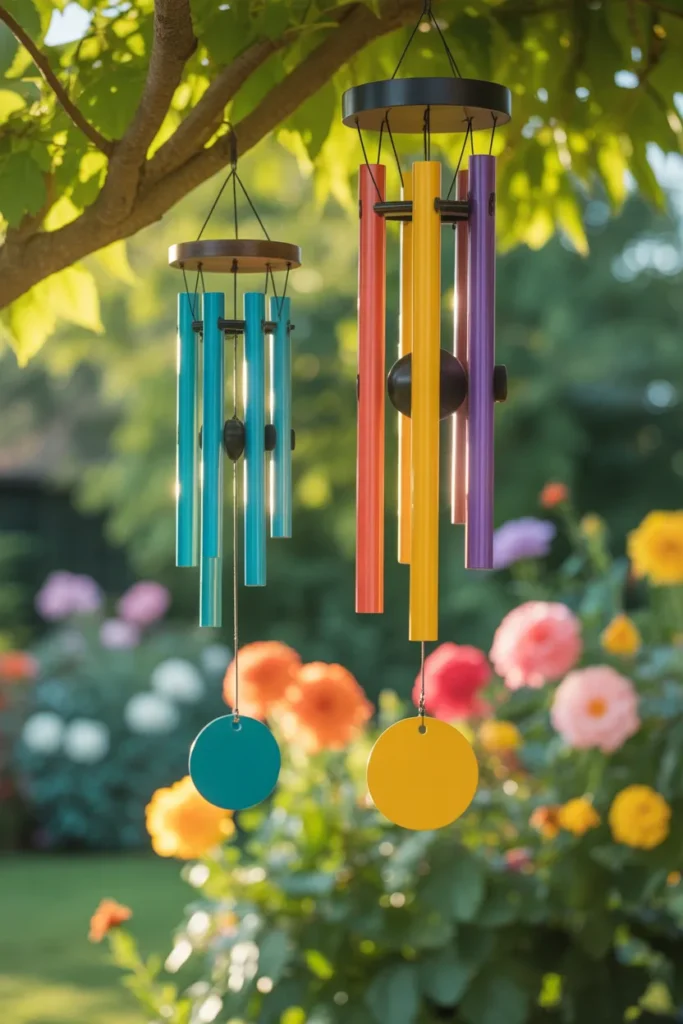
Clay pot bells add gentle sound and movement to a garden when the wind blows. Thread small pots, beads, and other suitable hanging pieces onto a sturdy cord or chain, leaving enough space for them to move. Painted pots can match your flowers or other handmade garden decorations.
Hang the arrangement from a secure hook or sheltered branch. Clay can crack if dropped or exposed to harsh conditions, so inspect the pieces occasionally and bring delicate decorations indoors during severe weather.
Pro Tip: Test the spacing and sound before hanging the bells permanently, and keep them clear of busy walkways.
Painted Rocks
Painted rocks are an easy way to add color to garden paths, flower beds, and planter edges. Try flowers, ladybugs, mushrooms, geometric patterns, or small plant labels. Smooth stones are easier to paint, and a compatible outdoor sealer can help protect the design from weather.
You can use them to mark herbs, decorate the base of a tree, or add small details beside a flower bed. For more designs and painting inspiration, see CraftyFlare’s painted rocks DIY ideas. Keep small stones away from areas where young children or pets might swallow them.
Pro Tip: Paint the background first and let it dry completely before adding lettering, outlines, or small patterns.
Kids Wind Chimes
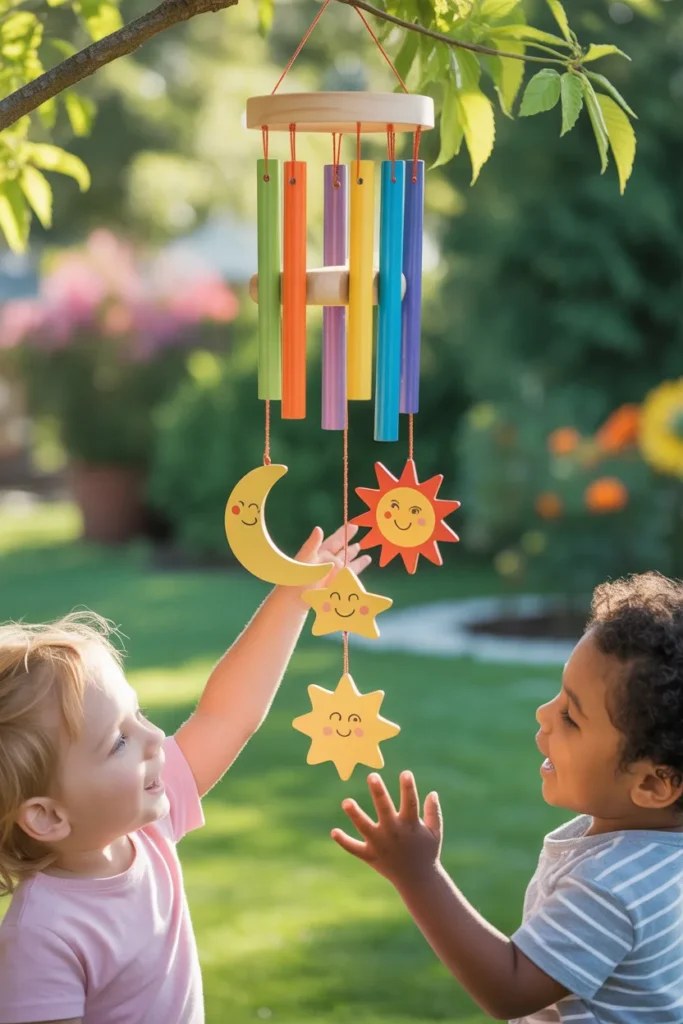
Homemade wind chimes are a fun project for children when an adult handles any cutting, drilling, or sharp tools. Use prepared wooden shapes, large beads, or suitable lightweight chime pieces, and attach them securely to a sturdy base. Bright colors work well near a play area or family patio.
Avoid sharp edges, brittle materials, and tiny loose parts around young children. Hang the finished chime where it can move freely without hitting windows or people, and check the attachments after windy weather.
Pro Tip: Let children decorate prepared pieces with their chosen colors before an adult assembles the wind chime.
Wheelbarrow Planter
An old wheelbarrow can become a rustic flower display beside a patio, lawn, or garden entrance. Fill it with suitable potting mix and combine plants that share similar sunlight and watering needs. Trailing flowers soften the edges, while taller plants in the center add height.
Check the wheelbarrow’s stability and drainage before planting. If you prefer to change the display seasonally, place removable pots inside rather than planting directly into the wheelbarrow.
Pro Tip: Arrange the plants in their nursery pots first so you can check their heights and spacing before adding soil.
Cap Art Mural
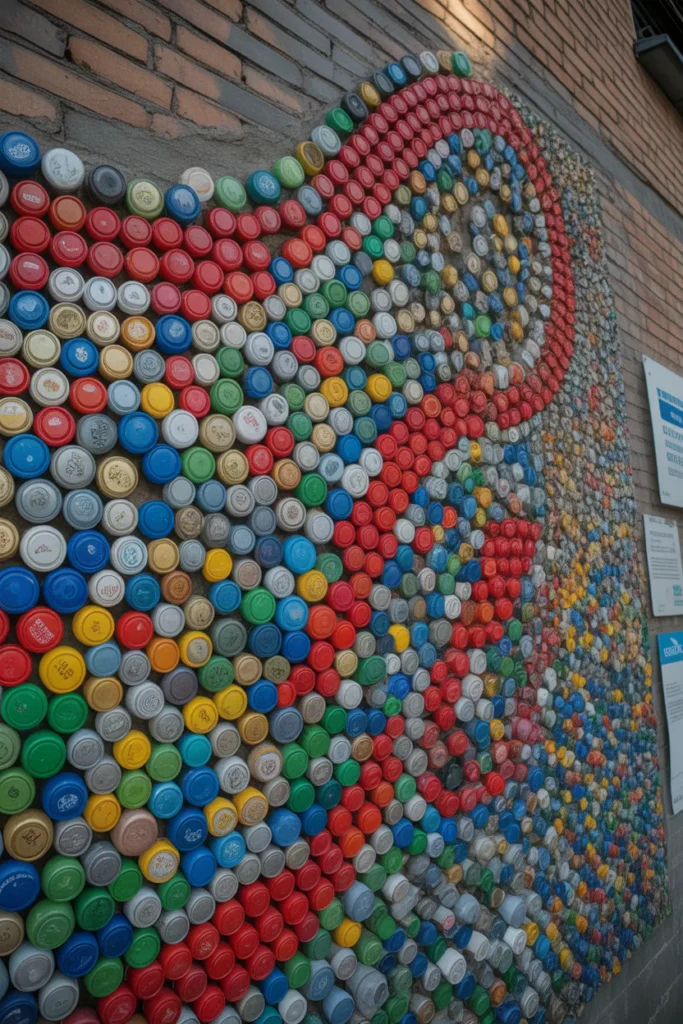
Bottle-cap art turns saved caps into colorful patterns for a garden fence, shed wall, or outdoor panel. Arrange the caps into flowers, leaves, geometric shapes, or a larger picture before attaching them to a suitable backing. A planned color scheme helps the finished design look intentional.
Use fasteners that suit the backing and the location, and make sure every piece is secure. Keep small parts away from young children and pets, and bring the panel indoors if strong wind could loosen it.
Pro Tip: Lay out the full design and take a photo before attaching the caps so you can follow the pattern as you work.
Lantern Trees
A lantern tree creates a warm focal point near outdoor seating or a garden gathering area. Hang lanterns at different heights from a sturdy branch or purpose-built support, using outdoor-rated LED lights. Matching lantern finishes help the arrangement look coordinated without making it feel too uniform.
Use secure hangers and avoid damaging the tree with tight wires or heavy attachments. For more ways to light a yard, can provide inspiration for paths, patios, and garden features. The specific article URL should be inserted once confirmed.
Pro Tip: Use warm-white LED lights and leave enough space between lanterns so the display does not feel crowded.
Tin Can Lanterns
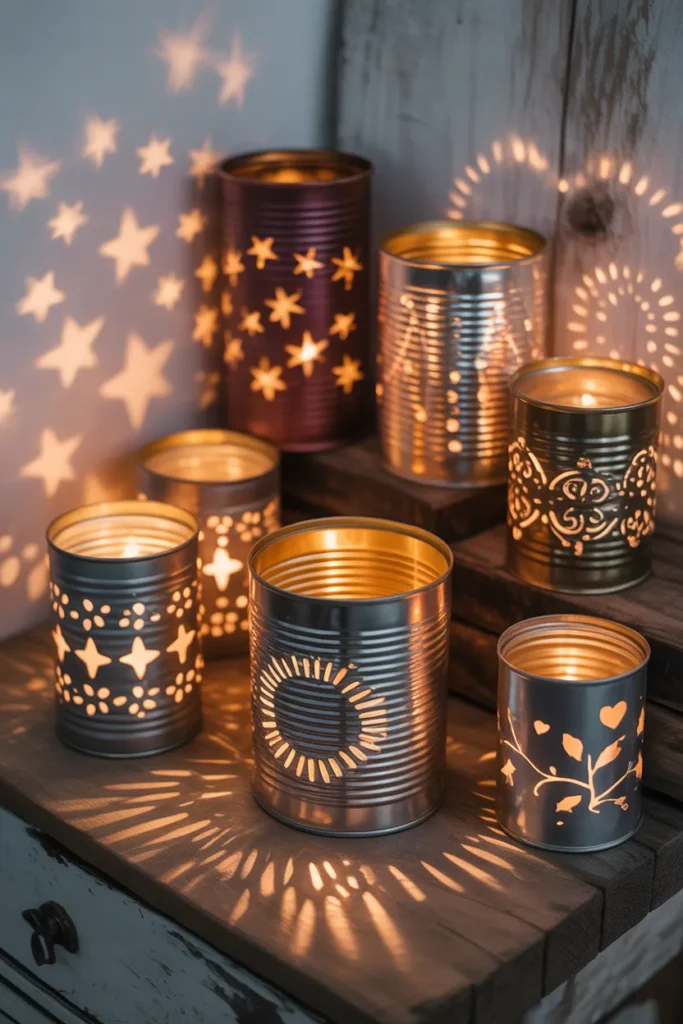
Tin can lanterns are an inexpensive way to create patterned light for a patio or garden table. Clean the cans thoroughly, remove sharp edges, and have an adult make the decorative holes using suitable tools. Once the can is safe to handle, paint it with an outdoor-compatible finish and place an LED candle inside.
Group a few lanterns together for a coordinated display, but keep them stable and away from dry leaves or flammable materials. Avoid real flames, especially around children, painted surfaces, and outdoor decorations.
Pro Tip: Freezing water inside the can before making holes can help support the sides while an adult works on the pattern.
Jar String Lights
Glass jars and string lights can create a cozy atmosphere around a patio table or sheltered garden corner. Place battery-powered LED lights inside clean jars or arrange the jars along a stable outdoor shelf. Clear glass keeps the look simple, while colored jars add a decorative accent.
Use lights designed for the conditions where they will be placed, and keep indoor-only lights and non-weatherproof battery packs away from rain. Avoid enclosing lights that produce heat inside a sealed jar.
Pro Tip: Use jars in different heights but repeat the same glass color or light tone for a more coordinated display.
Spiral Herb Garden
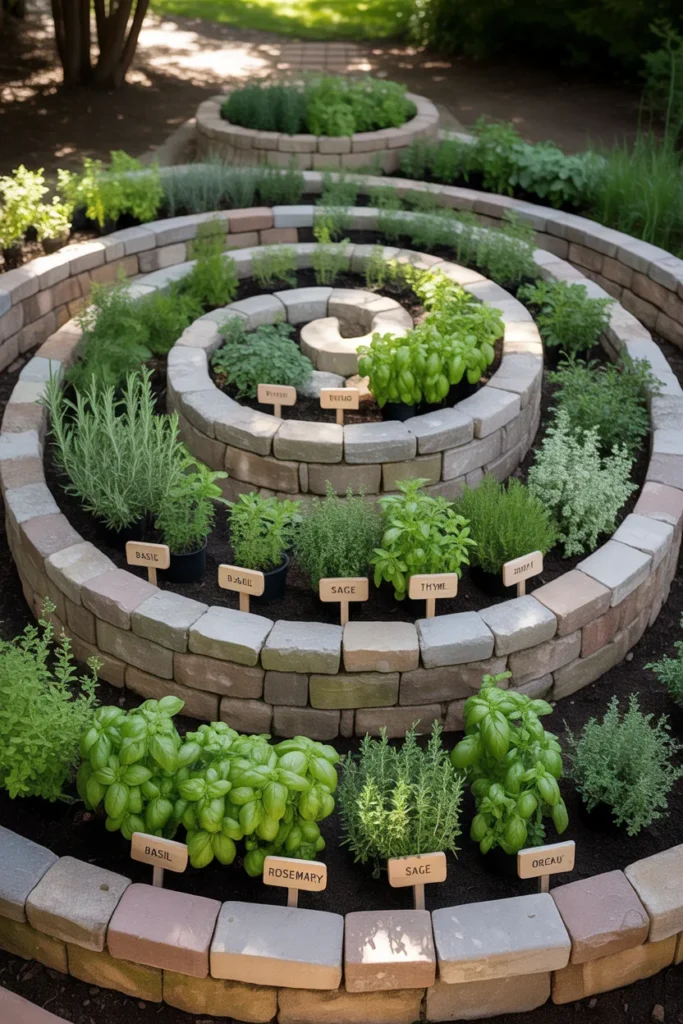
A spiral herb garden combines a decorative shape with a practical growing area. Build a curved arrangement of stones or bricks, then position herbs according to their sunlight, drainage, and watering needs. Rosemary and thyme generally prefer sunny spots and well-drained soil, while other herbs may need more moisture or partial shade.
Choose a stable base and leave enough room to reach every planting pocket. If you’re planning a larger edible garden, you can also explore CraftyFlare’s tomato cage DIY ideas for ways to support climbing or taller plants in nearby beds.
Pro Tip: Label each planting section and group herbs with similar care requirements together.
Wine Bottle Torch
Glass bottles can be reused as decorative garden features, but fuel-burning torches require careful handling. If you want the look without an open flame, use colored bottles as vases or as part of a stable garden display. Sunlight shining through the glass can add color near a patio or flower bed.
If you choose a flame-based torch, use a purpose-made outdoor product and follow its instructions for fuel, installation, and clearance. Never improvise a burning device from an ordinary bottle or place flames near dry plants, wooden fences, or busy walkways.
Pro Tip: For a lower-maintenance option, group colored bottles in a stable spot where sunlight can shine through them.
Twig Message Board
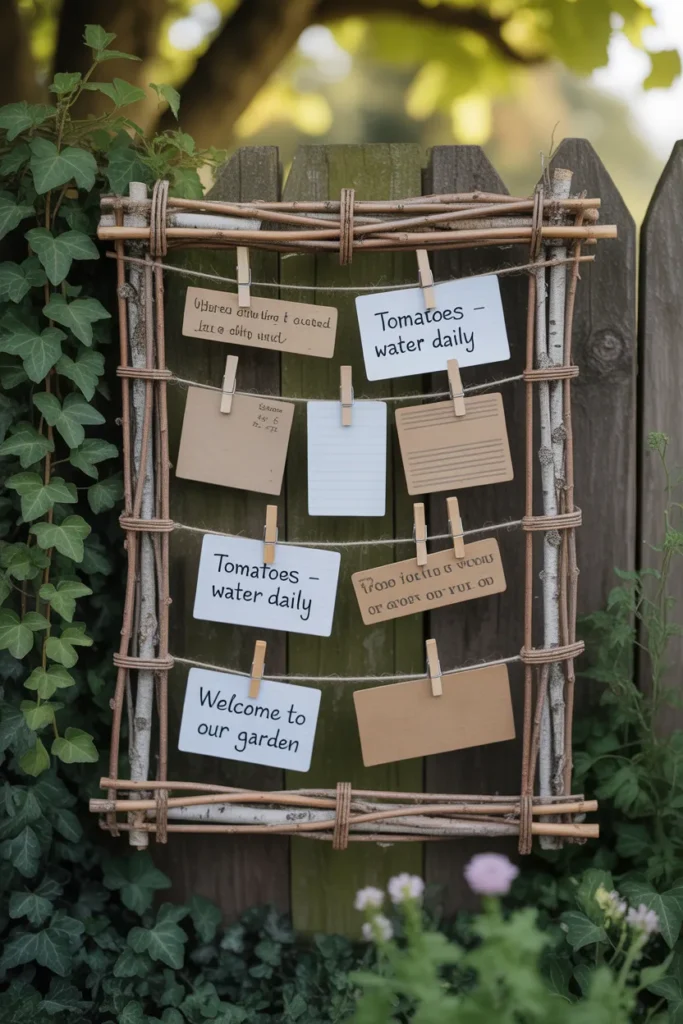
A twig message board adds a natural detail to a garden shed, covered patio, or family outdoor area. Arrange clean twigs around a sturdy backing to create a rustic frame, then add a weather-suitable writing surface or clips for garden notes. It pairs well with wooden planters and other natural materials.
Use dry, sound twigs and secure them firmly so they do not loosen in the wind. Choose a backing that can handle moisture, and place the board under shelter if you plan to write on it regularly.
Pro Tip: Keep the frame simple and leave enough clear space in the center for notes to remain readable.
Rain Chains
Rain chains offer a decorative alternative to a conventional downspout when the drainage setup is suitable. Water moves through a series of cups or linked shapes, creating a visual feature during rainfall. Copper-colored metal and dark links can suit different garden styles.
Make sure the chain connects to a suitable roof outlet and drains safely away from foundations and walkways. A basin or drainage bed beneath it can reduce splashing, and regular checks help keep the fittings secure during windy weather.
Pro Tip: Place a properly drained basin or a bed of smooth stones beneath the chain to control splashing.
Bottle Tree
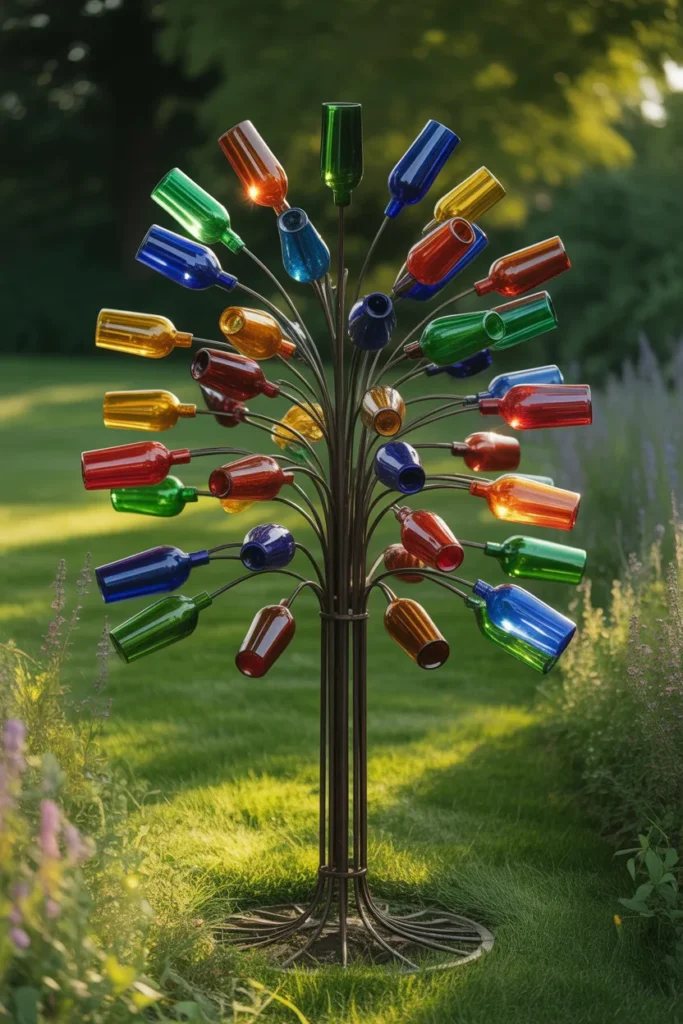
A bottle tree uses glass bottles arranged on a sturdy frame to create a colorful garden sculpture. Choose a coordinated palette of blues and greens or mix colors for a brighter display. Position it where sunlight can pass through the glass and create reflections.
Use a stable frame designed to hold the bottles securely, and check for cracks or loose pieces after bad weather. In a busy family garden, durable plastic bottles may be a safer alternative to glass.
Pro Tip: Repeat two or three bottle colors if you want the sculpture to coordinate with nearby flowers and planters.
Fairy Cottage
A fairy cottage creates a small imaginative feature beneath a tree, beside a planter, or in a sheltered garden corner. Build a simple structure from bark, twigs, stones, and other suitable materials, then add a miniature path or doorway. Moss and small plants can help it blend into the garden when the location supports their growth.
Keep the structure stable and avoid collecting materials from protected natural areas. If children help, use larger safe pieces and check the cottage regularly for mold, loose decorations, or weather damage. For more miniature garden inspiration, see CraftyFlare’s outdoor fairy garden DIY ideas.
Pro Tip: Place the cottage where it can be seen easily without getting in the way of mowing, watering, or foot traffic.
Driftwood Giraffe
A driftwood giraffe can become a distinctive handmade sculpture in a larger garden or natural-style landscape. Arrange pieces of driftwood to suggest the body, long neck, and legs, then secure them to a sturdy base with suitable outdoor fasteners. The natural wood grain gives the sculpture character without needing much paint.
Choose sound, dry wood and make sure the finished structure cannot tip over in wind. Sand rough areas that could cause splinters and avoid pieces that are rotten or unstable. A smaller sculpture can work beside a patio or flower bed where a large one would take up too much space.
Pro Tip: Assemble and test the sculpture on a flat surface before moving it into its final position.
Log Planters
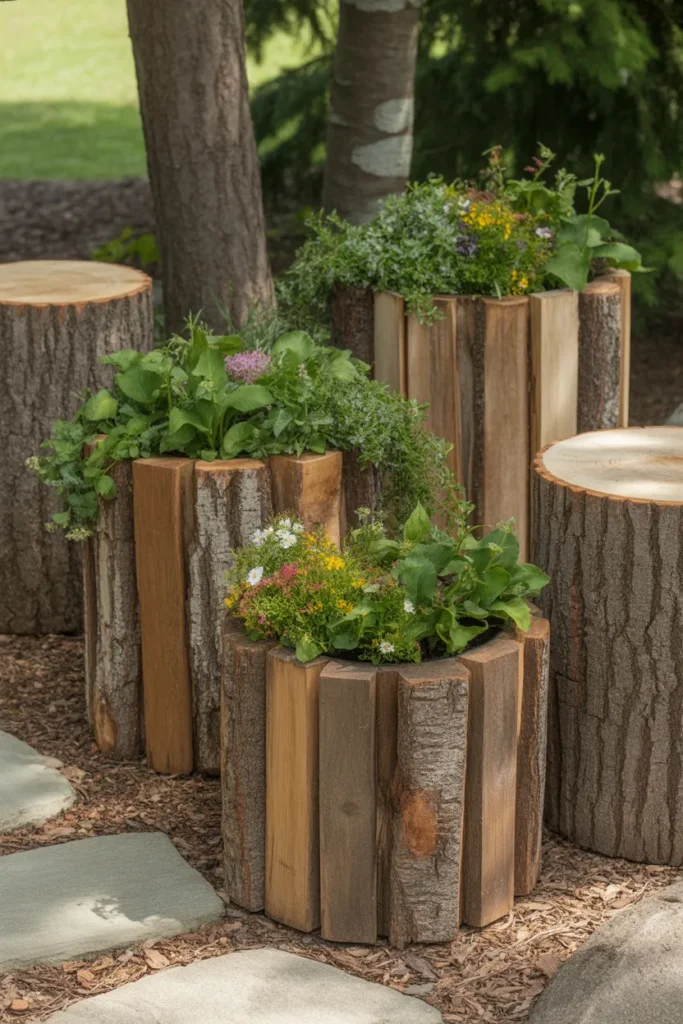
Log planters bring natural texture to woodland-style gardens and shaded corners. Use a sound log with a hollowed center or suitable cutout, then provide drainage and a planting medium that suits your chosen plants. Ferns and other shade-tolerant plants can work in sheltered spots, while seasonal flowers suit brighter locations.
Logs naturally break down outdoors, so expect the planter to change over time. Avoid rotten or unstable wood and place the planter where its weight will not damage a deck or patio. A removable nursery pot inside the log can make watering and maintenance easier.
Pro Tip: Choose plants based on the actual sunlight and moisture around the log rather than appearance alone.
Backyard Games
A backyard can serve as a play and gathering area as well as a decorative space. Simple games such as ring toss, beanbag targets, or homemade outdoor bowling give family members and guests something to do. Reuse suitable wood or containers where possible, but make sure every piece is stable and safe to handle.
Leave enough open space for throwing, running, and retrieving equipment. Keep games away from glass decorations, garden tools, and fragile plants, and store the pieces when they’re not being used.
Pro Tip: Set up games on a level patch of lawn or patio and keep a storage box nearby to prevent pieces from getting lost.
Chair Planter
An old wooden or metal chair can become a decorative planter for a porch, patio, or garden corner. Adapt the seat to hold a pot securely, then choose flowers or trailing greenery that suit the available sunlight. A painted chair adds a bright accent, while a weathered finish fits a rustic garden.
Check the chair’s stability and make sure the pot cannot slide off. Use a container with drainage and protect the chair with a suitable outdoor finish if needed. If the chair is still useful for seating, a separate plant stand may be a better choice.
Pro Tip: Choose a pot that fits securely in the seat opening so it will not wobble during watering.
Mosaic Path Stones
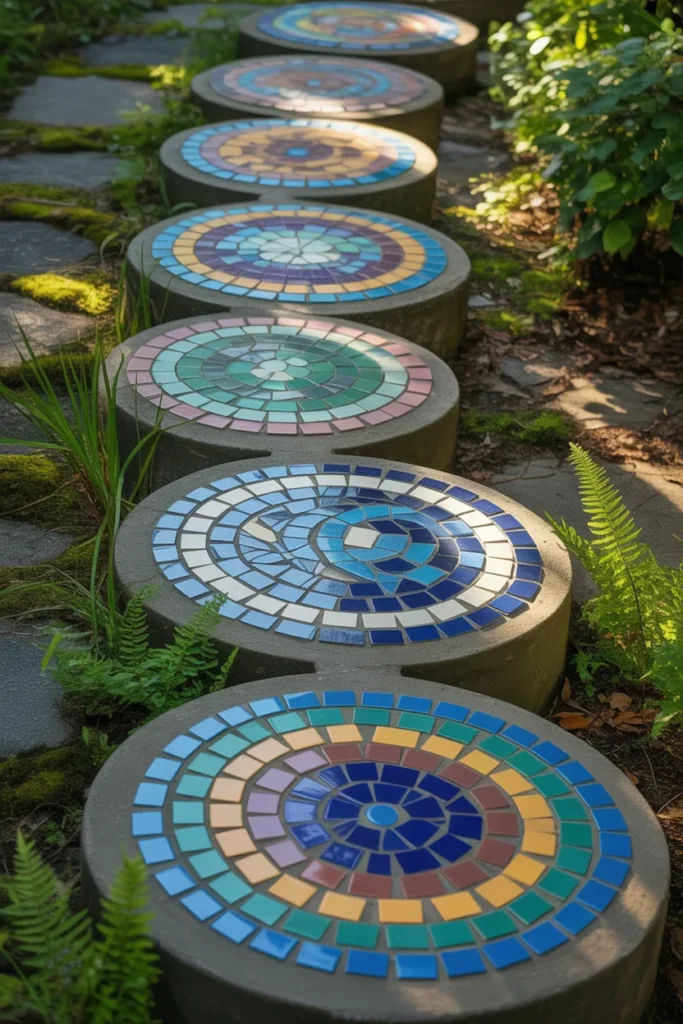
Mosaic path stones let you add personal patterns to a garden walkway. Decorate suitable stepping stones with outdoor-rated mosaic pieces, tiles, or stones arranged into flowers and geometric designs. Choose colors that complement nearby plants and paving so the path feels connected to the rest of the garden.
Use outdoor-suitable adhesive and make sure every piece is firmly embedded rather than sticking up where it could catch a shoe. Keep the walking surface stable and avoid slippery glass in areas that become wet.
Pro Tip: Test the pattern before attaching the pieces and keep the finished walking surface as even as possible.
Bee-Friendly Sign
A bee-friendly sign adds a handmade touch to a pollinator garden while reminding visitors why flowering plants matter. Paint a short message on a weather-resistant board and decorate it with bees, flowers, or leaves. Position it near nectar-rich plants where it can be seen without blocking the garden.
For a more useful display, combine the sign with flowers that bloom at different times of the year and avoid spraying pesticides on plants visited by pollinators. Secure the sign firmly and use an outdoor finish to protect the lettering.
Pro Tip: Keep the message short and the lettering large enough to read from the garden path.
FAQs
What materials are commonly used in DIY yard decor?
Wood, glass jars, tin cans, stones, old pots, metal items, driftwood, and unused furniture are common choices. Select items that are structurally sound and suitable for outdoor exposure, then use compatible paint, fasteners, or protective finishes when needed.
Pro Tip: Inspect and clean reused materials before starting, especially items with sharp edges, cracked glass, or signs of rot.
How does DIY yard decor help the environment?
DIY yard decor can reduce waste when you reuse items that might otherwise be thrown away. Turning containers into planters or using scrap wood for garden signs can also reduce the need to purchase new decorations. The environmental benefit depends on the materials and products involved.
Pro Tip: Prioritize durable materials you already own rather than buying lots of new supplies for an upcycling project.
What is the easiest DIY yard decor idea?
Painted rocks are among the easiest options because they require only suitable stones, paint, brushes, and an appropriate outdoor sealer. Simple jar displays and basic planters are also beginner-friendly projects.
Pro Tip: Try one small design first to see how the paint and sealer hold up before making several matching decorations.
How can I make my yard look more creative?
Combine a few types of decor, such as planters, handmade art, and lighting, rather than filling every available space. Repeating colors and materials helps the yard feel coordinated, while varying heights and textures keeps the design interesting.
Pro Tip: Choose two or three main colors and repeat them in different areas of the yard.
Can DIY yard decor increase home value?
A well-maintained outdoor space can improve curb appeal and make a home more inviting. However, decorative projects do not guarantee an increase in property value, which depends on the home’s overall condition and local market.
Pro Tip: Prioritize tidy paths, healthy plants, and safe outdoor features before adding extra decorations.
What are some eco-friendly yard decor ideas?
Upcycled planters, reclaimed-wood signs, bottle displays, painted stones, and reused furniture can all be eco-friendly options when made from suitable materials. Growing herbs and pollinator-friendly flowers can also add useful greenery to the space.
Pro Tip: Choose durable materials and finishes that are suitable for outdoor use so the decorations do not need frequent replacement.
How long do DIY yard decorations last?
Their lifespan depends on the material, weather exposure, construction quality, and maintenance. Glass and stone may last for years when installed safely, while untreated wood and delicate natural materials can deteriorate more quickly outdoors.
Pro Tip: Inspect decorations at the start of each season and repair loose parts before bad weather causes further damage.
Do I need special tools for DIY yard decor?
Many simple projects use basic supplies such as brushes, paint, scissors, and hand tools. Projects involving metal, glass, heavy wood, or electrical lighting may need specialized tools or adult assistance.
Pro Tip: Read the instructions for paint, adhesive, hardware, and lights before starting to make sure they are suitable for your project.
Can I involve kids in DIY yard projects?
Yes. Children can help paint rocks, decorate prepared pots, choose colors, and arrange larger decorative pieces. Adults should handle cutting, drilling, heavy lifting, electrical connections, and materials with sharp edges or small parts.
Pro Tip: Prepare a washable work area and have the materials ready so children can focus on the creative steps.
What is the best DIY lighting idea for a yard?
Jar string lights and lanterns with outdoor-rated LED lights work well around patios and garden seating areas. Solar garden lights can also be useful where their panels receive enough direct sunlight. Choose lighting based on the location, weather exposure, and amount of illumination you need.
Pro Tip: Check the outdoor rating and charging requirements before choosing where to install your lights.
How can I decorate a small yard?
Use vertical space with wall planters, hanging lights, compact containers, and narrow garden features. A few coordinated decorations can add interest without reducing the space available for walking or seating.
Pro Tip: Measure the area before adding planters or furniture and keep the main route through the yard clear.
What plants work best in DIY yard decor?
Flowers, herbs, succulents, ferns, and small shrubs can all work well, depending on the planter and growing conditions. Consider sunlight, drainage, mature size, and local climate before choosing what to grow.
Pro Tip: Check the plant’s mature size before planting so roots and leaves have enough room to grow.
Final Thoughts
DIY yard decor is a practical way to make an outdoor space feel more personal without replacing everything or spending heavily. Painted rocks, repurposed furniture, handmade lanterns, and creative planters each add something different, whether you want a colorful garden, a cozy patio, or a family-friendly yard.
Start with projects that suit your time, materials, and outdoor conditions. If you’re planning a broader refresh, combine your decorations with ideas for DIY patio furniture or outdoor benches to make the space more useful as well as attractive. A few thoughtful changes can help your yard feel more welcoming throughout the year.