
I used to underestimate how messy umbrellas can make an entryway until I started noticing water trails and clutter near my door after every rainy day. The problem wasn’t the umbrellas themselves, it was not having a proper place to store them. Once I created a simple system, my entryway stayed clean, dry, and organized. In this guide, I’m sharing practical umbrella storage ideas that help you manage wet umbrellas efficiently without needing a large space.
Umbrellas can quickly turn a clean entryway into a messy and slippery area if they don’t have a proper place. I’ve experienced this firsthand when wet umbrellas were left leaning against walls or dropped on the floor, leaving behind puddles and stains. It might seem like a small issue, but it adds up quickly.
The main reason this happens is that most homes don’t have a dedicated spot for umbrellas, especially in smaller entryways. Once I added a simple storage solution near my door, it made a noticeable difference in both cleanliness and convenience.
In this article, I’ll walk you through 22 practical umbrella storage ideas that are easy to implement and work well in real homes. These ideas will help you keep your entryway tidy, dry, and more functional.

Key Takeaways
Keeping umbrellas near the door prevents water from spreading inside
Vertical and wall-mounted storage works best for small entryways
Airflow is essential for proper drying and preventing odors
Slim and multi-purpose designs save space and reduce clutter
Having a designated spot builds a consistent organization habit
Where Should You Place Umbrellas In a Small Entryway?
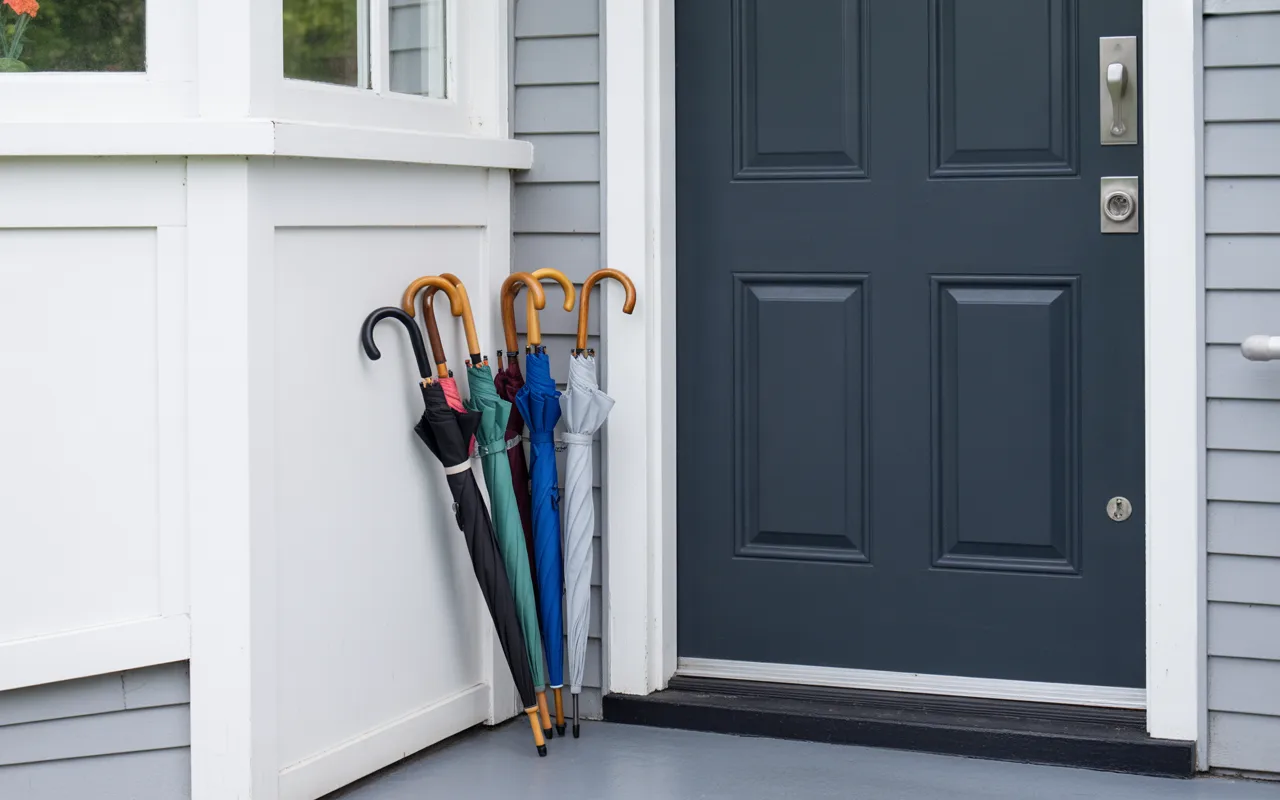
In small entryways, every inch of space matters, so placing umbrellas correctly is essential to avoid clutter and water damage. I’ve found that the best spot is right next to the main door because it allows you to drop the umbrella immediately after entering without carrying water through the house.
Corners near the entrance also work well because they keep umbrellas out of the walking path while still being easy to access. This setup helps maintain a clean and organized flow in tight spaces.
If floor space is limited, wall-mounted storage is a great alternative because it keeps umbrellas off the ground. You can also store foldable umbrellas in drawers or cabinets to keep them hidden but accessible.
Pro tip: Always place your umbrella storage within one step of your door to prevent water from spreading inside.
Wall Rack
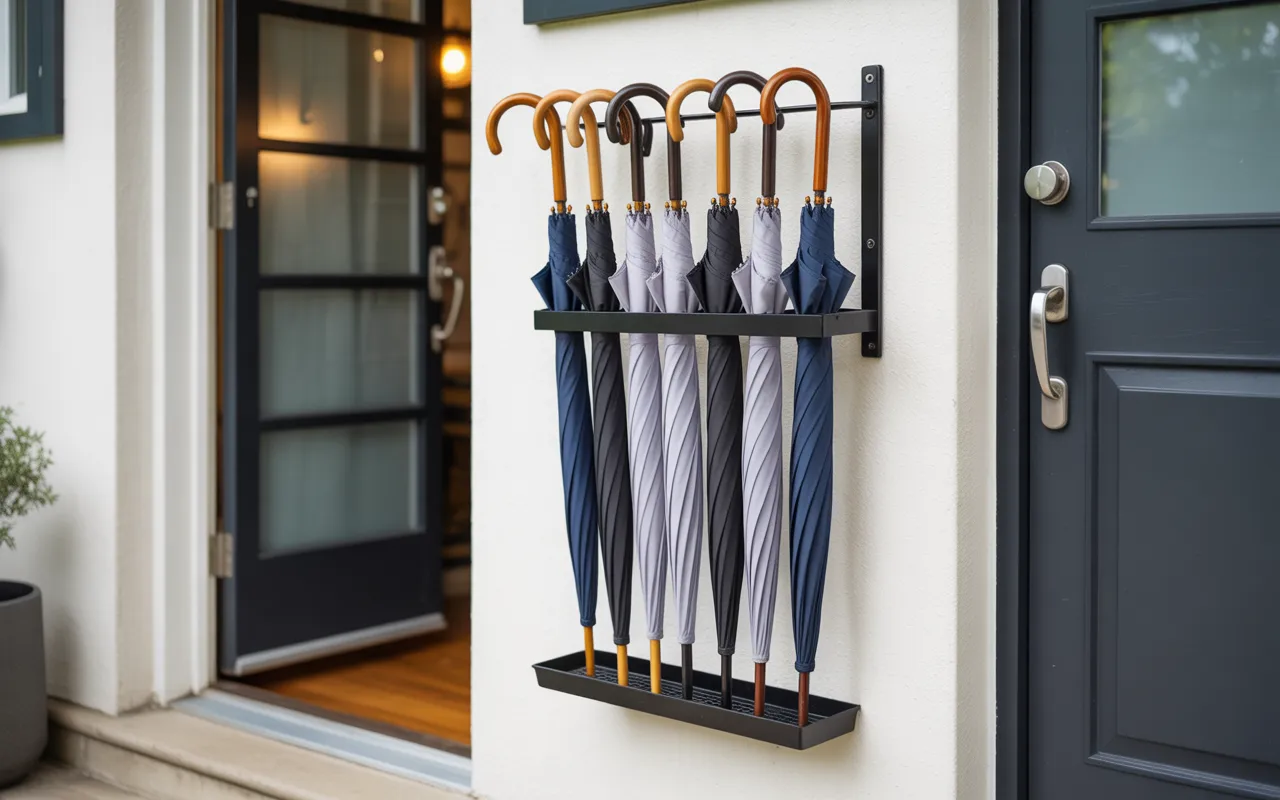
I’ve found that wall racks are one of the most efficient ways to store umbrellas because they use vertical space without taking up any floor area. This makes them ideal for narrow entryways or small apartments where space is limited.
The design usually holds umbrella handles at the top while the tips rest in a tray below, which helps keep everything organized and prevents dripping water from reaching the floor. It also keeps umbrellas upright and easy to access.
Installing it near the door ensures that using it becomes a natural habit every time you come home.
Pro tip: Add a small drip tray at the bottom to catch water and keep your floor dry.
Mesh Stand
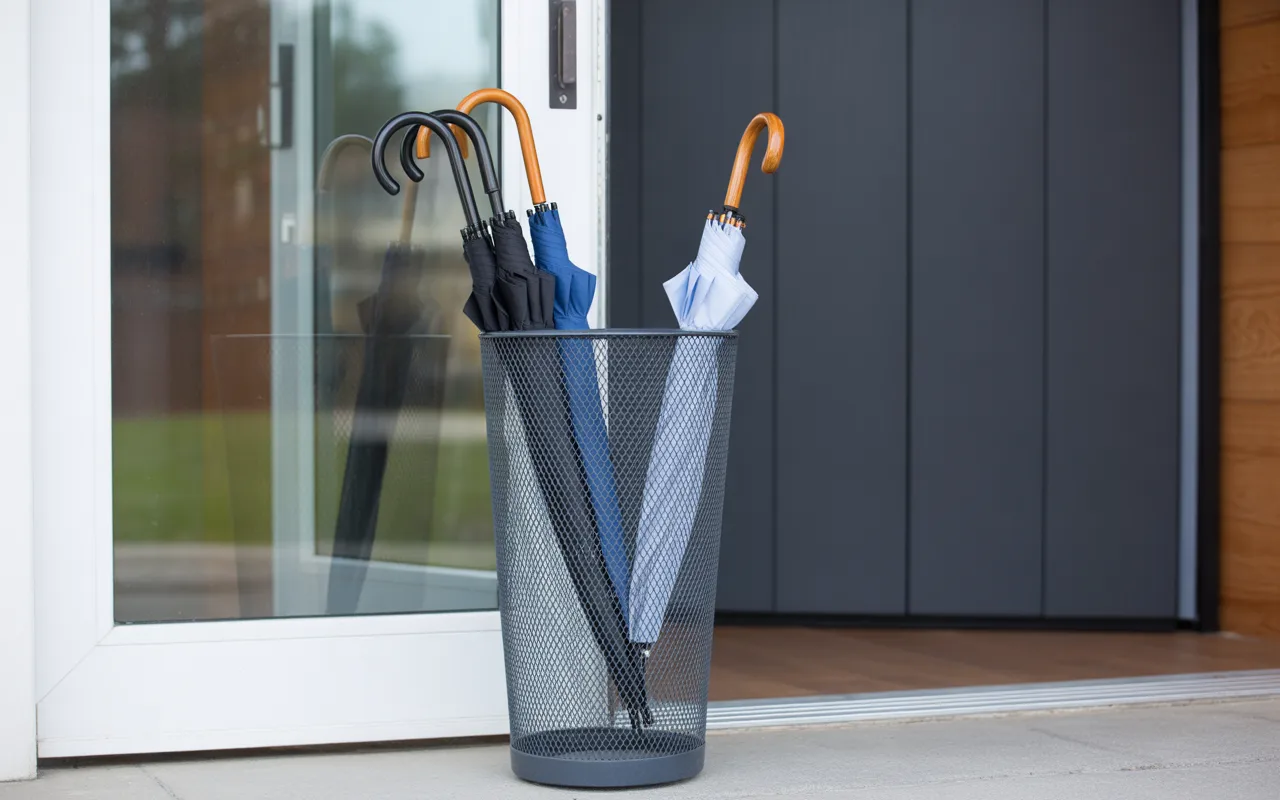
A mesh stand works well because it allows air to circulate freely around wet umbrellas, helping them dry faster. I prefer this option when I want a simple yet effective solution that doesn’t trap moisture inside. The open design prevents water buildup and reduces the chances of odor or mildew, which can happen with closed containers. It also keeps umbrellas upright and neatly contained.
Placing it near the entry ensures easy access while keeping the space organized.
Pro tip: Choose a stand with a removable base tray for easy cleaning.
Entry Rack
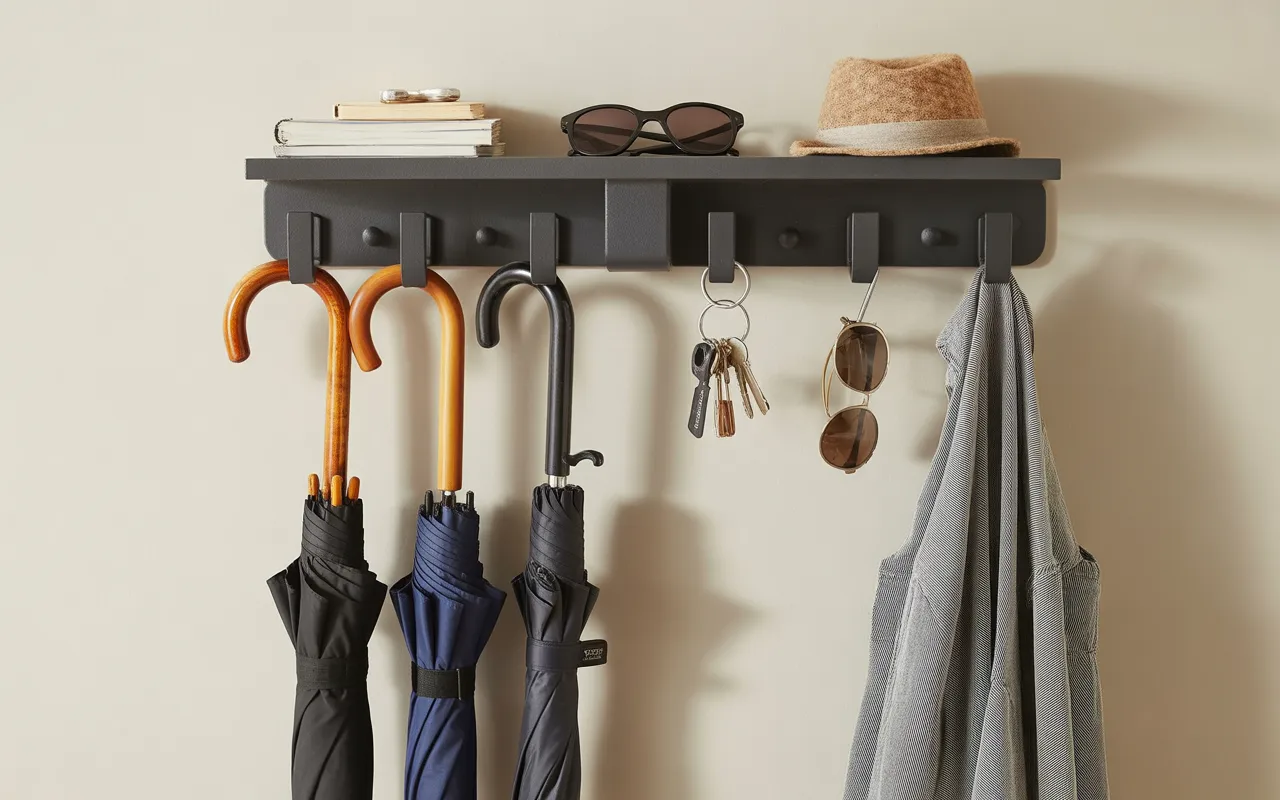
An entry rack gives umbrellas a defined place instead of letting them lean against walls. I like this option because it keeps everything visible and easy to grab before heading out. The hooks hold umbrella handles securely while keeping them off the ground, which helps maintain cleanliness. Some designs also include a small shelf for additional storage.
This setup works especially well in narrow spaces where floor storage isn’t practical.
Pro tip: Install the rack at arm height so grabbing umbrellas feels natural.
Wave Rack
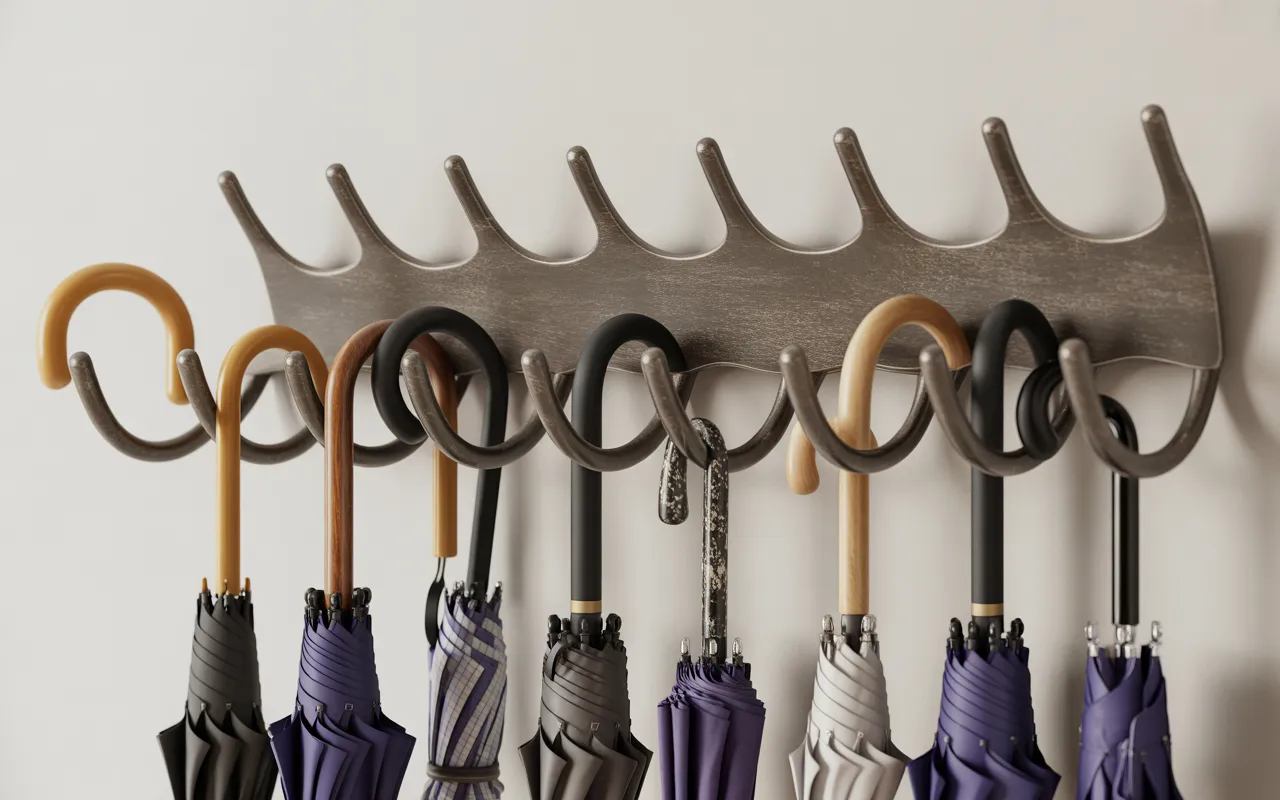
I enjoy using storage that also enhances the look of the entryway, and a wave rack does exactly that. It turns umbrella storage into a decorative feature while keeping everything organized. The curved hooks hold umbrellas securely, allowing them to hang and dry properly. It also provides space for smaller items like keys or compact umbrellas. Placed along a wall near the entrance, it becomes both functional and visually appealing.
Pro tip: Use strong wall anchors to support multiple umbrellas safely.
Hook Stand
A hook stand is perfect for tight spaces because it provides vertical storage without requiring wall installation. I’ve used this in areas where drilling isn’t an option. The hooks allow you to hang different types of umbrellas, while the base keeps them stable. This setup helps prevent clutter and keeps everything in one place. It’s easy to move and works well in corners or beside furniture.
Pro tip: Keep a small mat under the stand to catch excess water.
Slat Holder
Slat holders are great for keeping umbrellas upright and separated, which helps them dry faster. I like how the open design allows air to circulate freely. Each umbrella has its own slot, which prevents them from leaning or falling over. This keeps the entryway looking neat and organized. It fits well in narrow spaces and blends easily with modern interiors.
Pro tip: Choose materials like metal or treated wood to resist moisture.
Ring Stand
A ring stand keeps umbrellas organized by holding them in place at both the top and bottom. This prevents them from piling up or falling over. I find this especially useful in households with multiple umbrellas because it keeps everything separated and easy to access. The bottom tray also helps manage dripping water. Placing it near the entry ensures convenience and efficiency.
Pro tip: Empty the drip tray regularly to avoid water buildup.
Pocket Rack
Pocket racks are ideal for storing both full-size and foldable umbrellas in one place. I like how they keep everything visible and easy to grab. Each slot holds an umbrella separately, which prevents tangling and clutter. This makes it easier to stay organized. Mounted on the wall, it saves floor space while maximizing storage.
Pro tip: Use lower hooks for compact umbrellas or straps.
Sleeve Cover
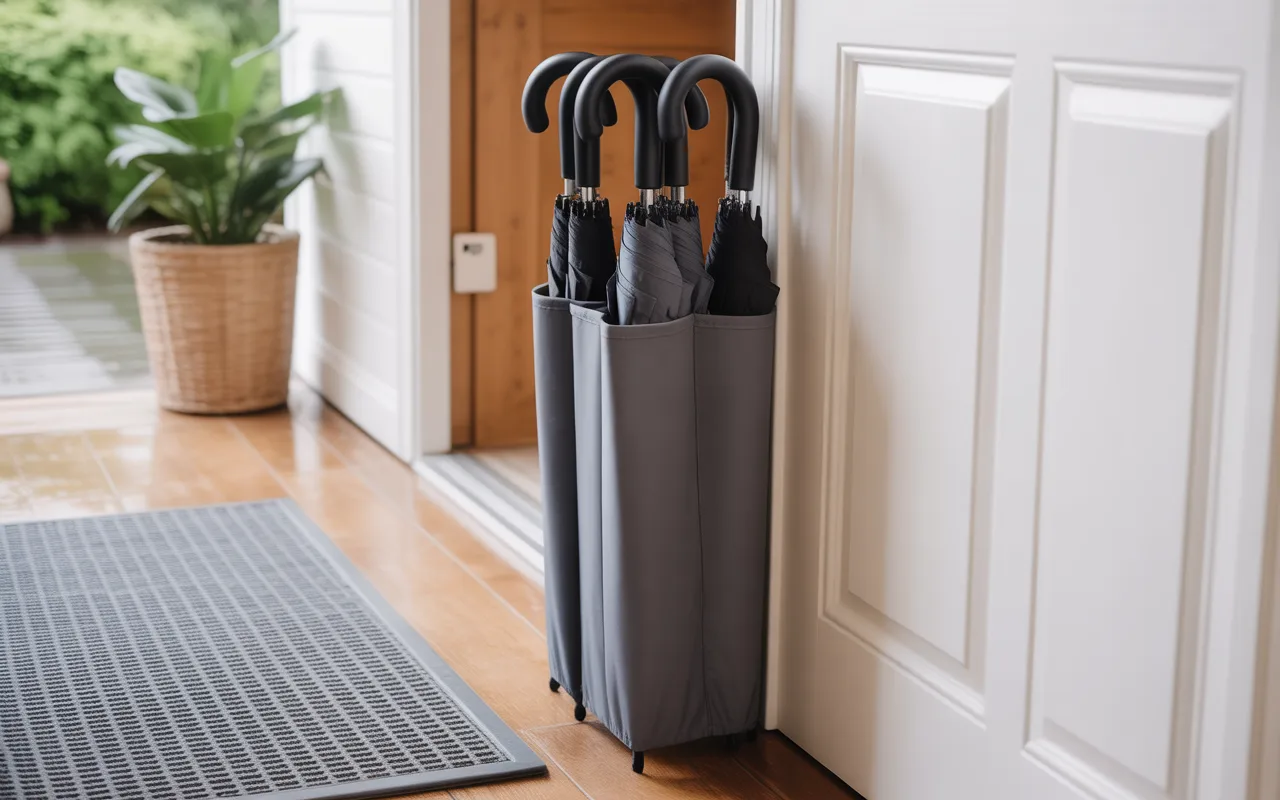
Using a sleeve cover is one of the simplest ways to manage wet umbrellas, especially when you don’t have a dedicated storage spot. It prevents water from dripping onto the floor. I use it when I need to carry umbrellas inside without making a mess. It’s a practical solution for small spaces. It works well alongside other storage methods.
Pro tip: Keep a few extra sleeves near the door for convenience.
Loop Stand
Loop stands keep umbrellas upright and separated, which helps prevent clutter and allows proper drying. I like how stable and organized they keep everything. The open design ensures airflow, reducing moisture buildup. It’s a simple yet effective solution. Placed near the door, it becomes easy to use daily.
Pro tip: Position it in a well-ventilated area for faster drying.
Color Stand
Adding a colorful stand can make storage feel more intentional and stylish. I like how it adds personality while still being functional. The design keeps umbrellas upright and easy to access. It also brightens up the entryway. It’s a great option for those who want both style and practicality.
Pro tip: Choose a color that complements your existing decor.
Sculptural Stand
A sculptural stand turns storage into a design feature. I like how it adds visual interest while serving a practical purpose. The open structure allows airflow, which helps umbrellas dry efficiently. It’s both functional and decorative. It works well in modern interiors where aesthetics matter.
Pro tip: Place it where it can act as both decor and storage.
Wall Pocket
Wall pockets are a great solution when floor space is limited because they keep umbrellas off the ground. I use them to maintain a clean and organized look. The angled design helps guide water downward, preventing mess. It also keeps umbrellas easily accessible. Installed near the door, it becomes part of the daily routine.
Pro tip: Install at a slight angle to improve water drainage.
Slim Holder
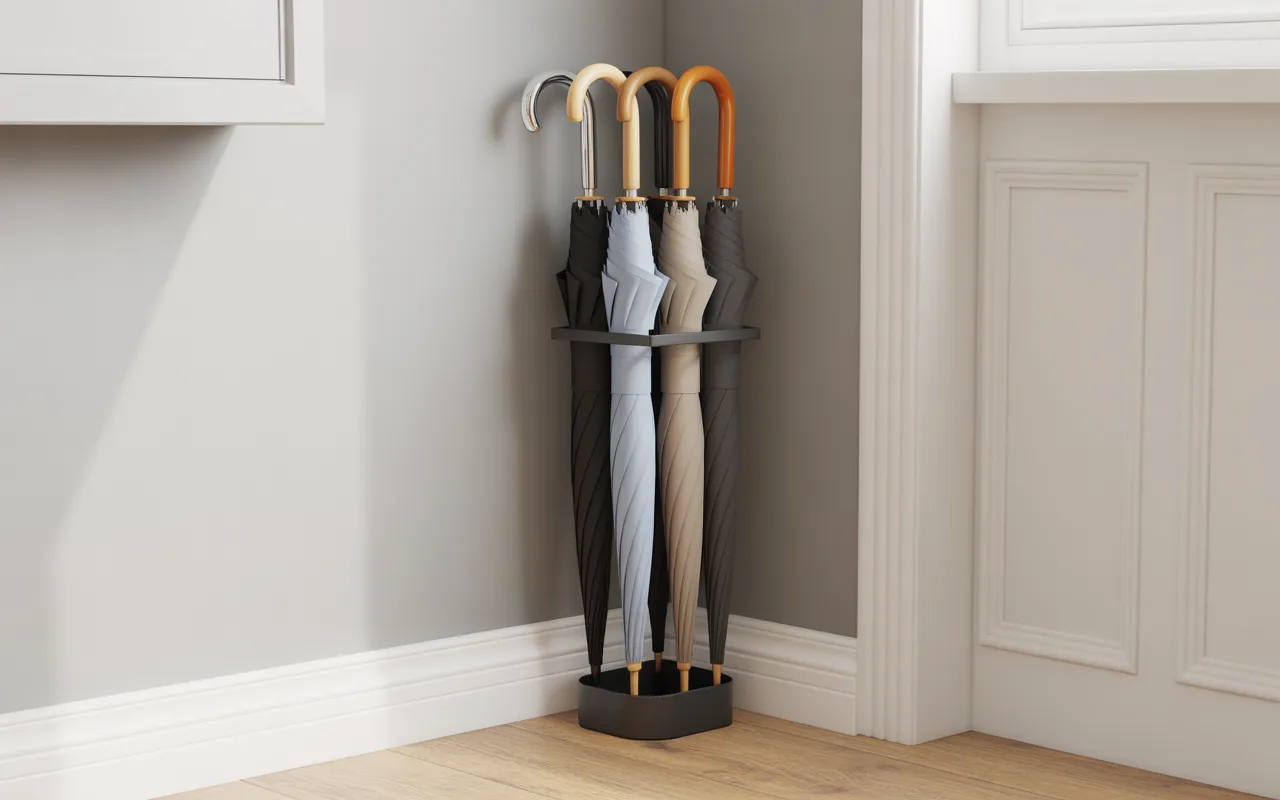
Slim holders are perfect for tight spaces because they fit neatly into narrow corners. I like using them where space is limited. They keep umbrellas upright and separated, which improves organization and drying. This design works well in modern and minimal interiors.
Pro tip: Place it in unused corners to maximize space.
Cabinet Rack
A cabinet rack keeps umbrellas hidden while still being organized. I prefer this option when I want a clean and clutter-free look. Inside storage allows umbrellas to dry while staying out of sight. It’s ideal for maintaining a tidy entryway. It works best in cabinets near the entrance.
Pro tip: Add a waterproof mat inside to catch drips.
Slot Cabinet
Slot cabinets keep each umbrella in its own compartment, which prevents clutter. I find this useful in busy households. The structured design improves organization and drying efficiency. It also adds storage space on top. Placed near the door, it offers easy access.
Pro tip: Use separate slots for each family member.
Drying Rack
A drying rack helps umbrellas dry properly before storage. I use it when umbrellas are very wet. It allows airflow and collects water at the base, keeping floors clean. This is especially useful during heavy rain seasons.
Pro tip: Place it near a window or airflow source for faster drying.
Entry Shelf
An entry shelf with umbrella storage combines multiple functions in one unit. I like using it to keep everything organized in one place. It stores umbrellas, keys, and small items together, making it highly practical. This works well in compact spaces.
Pro tip: Choose one with wheels for flexibility.
Cone Stand
Cone stands naturally guide umbrellas into place while keeping them upright. I like how simple and effective they are. They take up minimal space and keep things organized. Placed near the door, they’re easy to use.
Pro tip: Use near entrances to prevent water spread.
Wood Block
Wood block stands add a natural touch while keeping umbrellas organized. I like how they blend with home decor. Each slot holds umbrellas separately, preventing clutter. They’re stable and durable for daily use.
Pro tip: Use sealed wood to prevent water damage.
Woven Basket
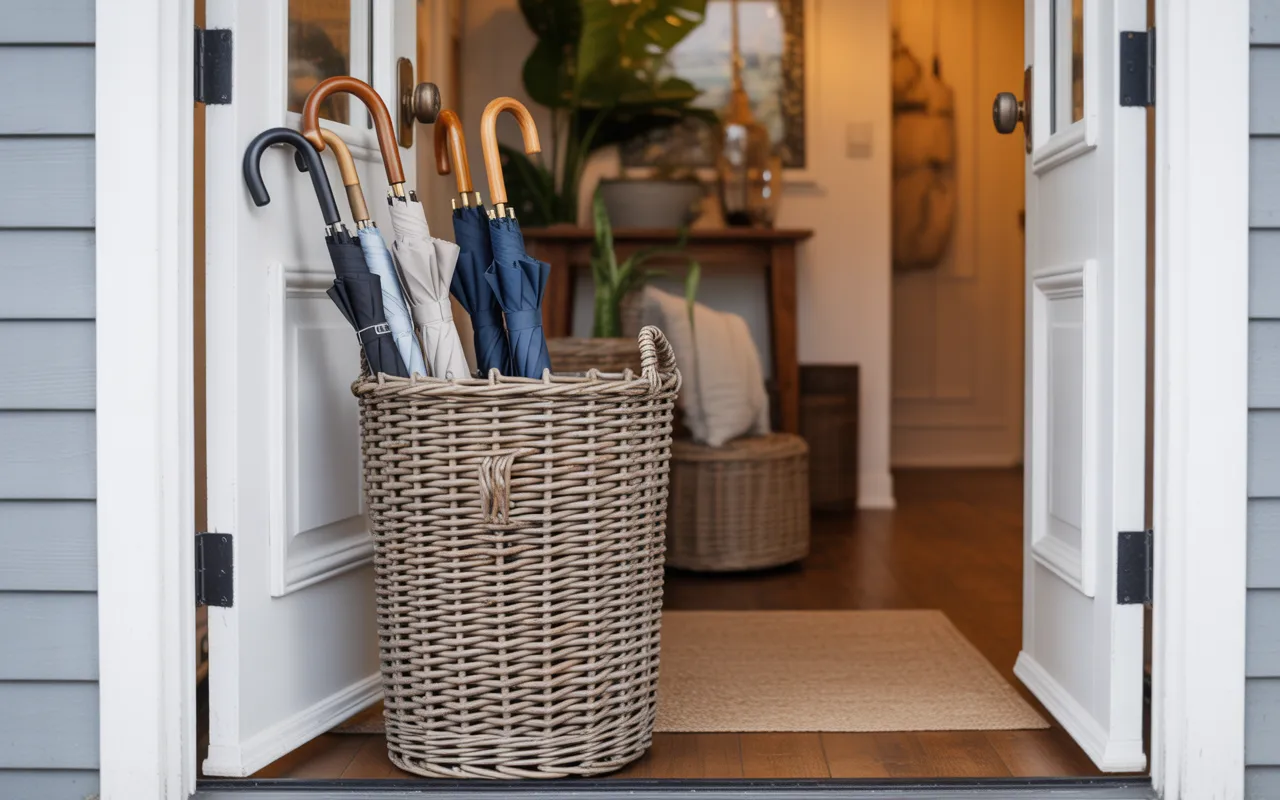
Woven baskets offer a soft and natural look while keeping umbrellas contained. I like using them in cozy interiors. They allow airflow, which helps umbrellas dry gradually. Placed near the door, they’re convenient and stylish.
Pro tip: Add a liner inside to protect the basket from moisture.
Gold Frame
Gold frame stands combine storage with decorative appeal. I like how they elevate the look of the entryway. The open design allows airflow and prevents moisture buildup. They work well in both modern and classic interiors.
Pro tip: Pair with matching decor accents for a cohesive look.
FAQs
1. How do you store umbrellas so they dry properly?
I’ve found that proper airflow is the key to drying umbrellas effectively because it prevents moisture buildup and odors. Using open or ventilated storage like mesh stands or racks allows air to circulate freely. Keeping umbrellas upright also helps water drip down naturally.
2. What is the best umbrella storage option for small entryways?
In small spaces, wall-mounted racks and slim vertical stands work best because they don’t take up much floor space. These options keep umbrellas organized and accessible without blocking movement. Vertical storage is the most efficient solution for tight entryways.
Conclusion
Keeping umbrellas organized doesn’t require a large space or complicated setup, it just requires a dedicated spot that fits your routine. From my experience, once you assign a proper place near the entryway, the mess and water issues quickly disappear. The ideas shared here are designed to be practical, space-saving, and easy to implement in real homes. Whether you choose a simple stand, wall rack, or multi-purpose unit, consistency is what makes it work.
Start with one solution that fits your space and make it a habit to use it every time you come home. This small change can keep your entryway clean, dry, and stress-free.