

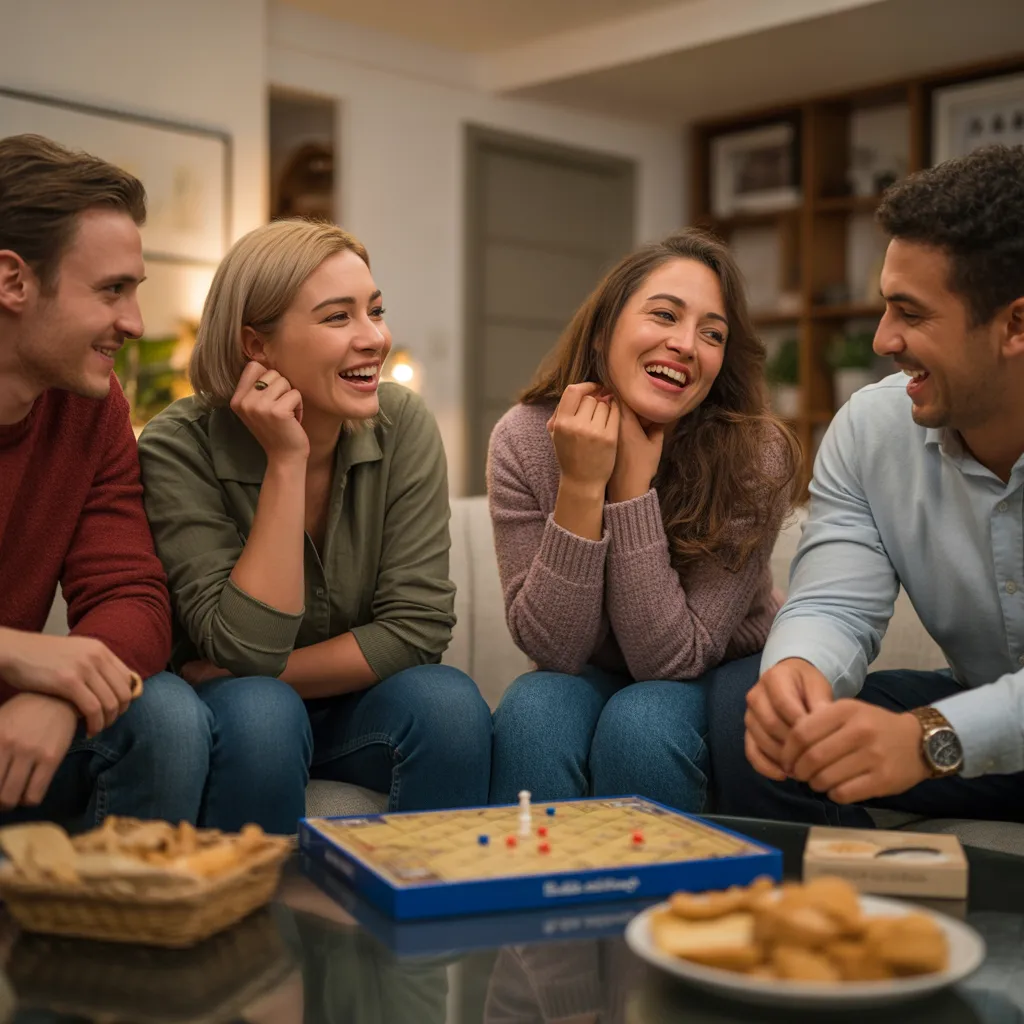
Group games have always been one of my favorite ways to keep kids active, social, and entertained without relying on screens. I’ve noticed that simple games often create the best memories because they encourage kids to laugh, move around, and work together naturally.
According to child development experts, active group play helps children improve communication skills, confidence, coordination, and emotional bonding. Even short group activities can help reduce boredom and improve teamwork among kids of different ages.
In this article, I’m sharing 27 fun group games for kids that work well for birthday parties, classrooms, family gatherings, summer camps, and indoor play days. Some games focus on movement, while others encourage creativity, problem-solving, or teamwork.
Whether you need games for small groups or large gatherings, these ideas are easy to organize and enjoyable for both younger and older children.
Key Takeaways
- Group games help kids improve teamwork and communication skills
- Most games require little to no expensive equipment
- These activities work for parties, schools, camps, and family events
- Active games help kids burn energy in a healthy way
- Many games can be adjusted for different age groups
1. Animal Charades
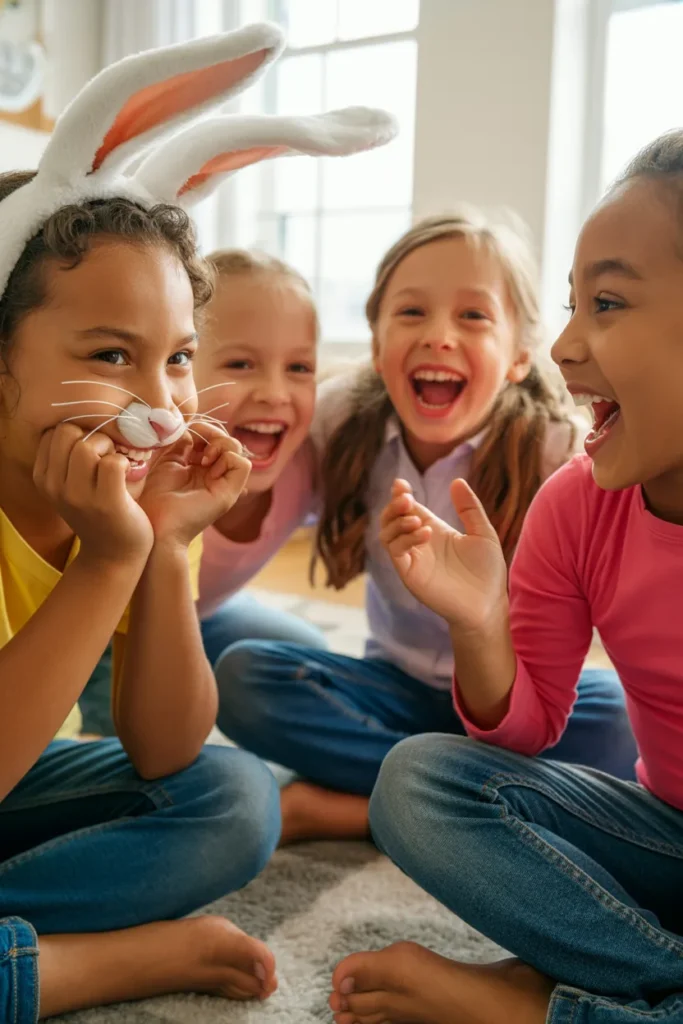
Animal Charades is one of the easiest games to set up, and kids usually start laughing within minutes. I like this game because it pushes children to use imagination and body language without needing any supplies.
One child acts like an animal silently while the others guess what it is. Kids can hop like rabbits, swing like monkeys, or waddle like penguins. The child who guesses correctly gets the next turn.
This activity helps improve confidence, creativity, and observation skills. It also works well for shy children because they can participate without speaking much.
Pro Tip: Create small animal cards before starting the game to make turns quicker and more organized.
2. Musical Chairs
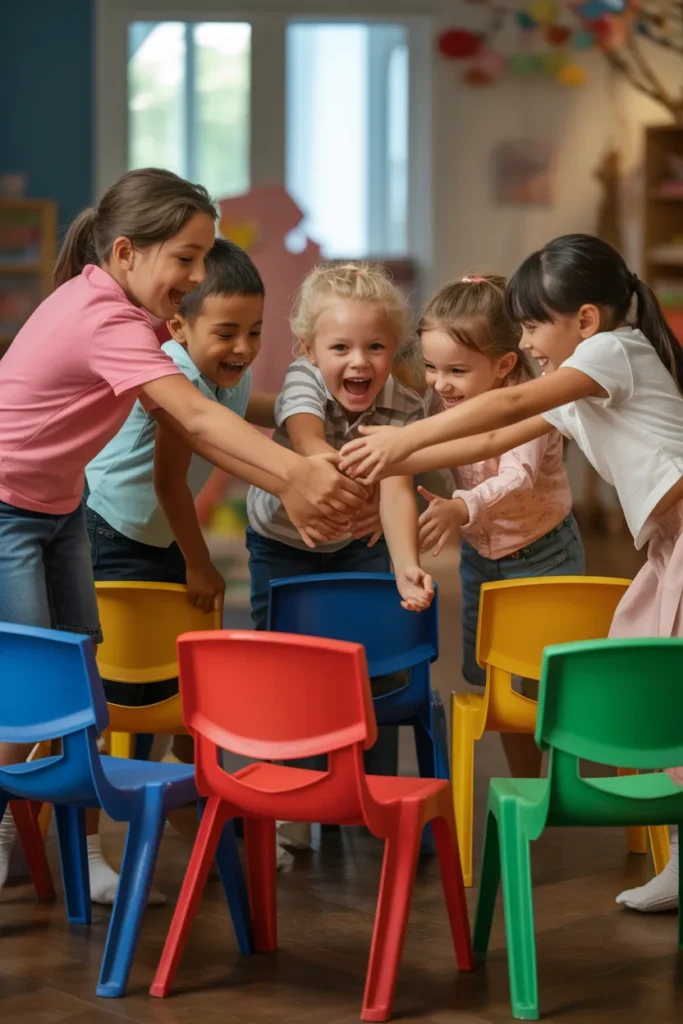
Musical Chairs remains a classic party game because kids enjoy the excitement and fast pace. I usually set up chairs in a circle with one fewer chair than the number of players.
When the music plays, everyone walks around the chairs. As soon as the music stops, kids race to sit down. The child left standing is out, and one chair is removed after each round.
Besides being entertaining, this game improves listening skills, reaction speed, and focus.
Pro Tip: Use fun upbeat songs to keep energy levels high during the game.
3. Duck Duck Goose
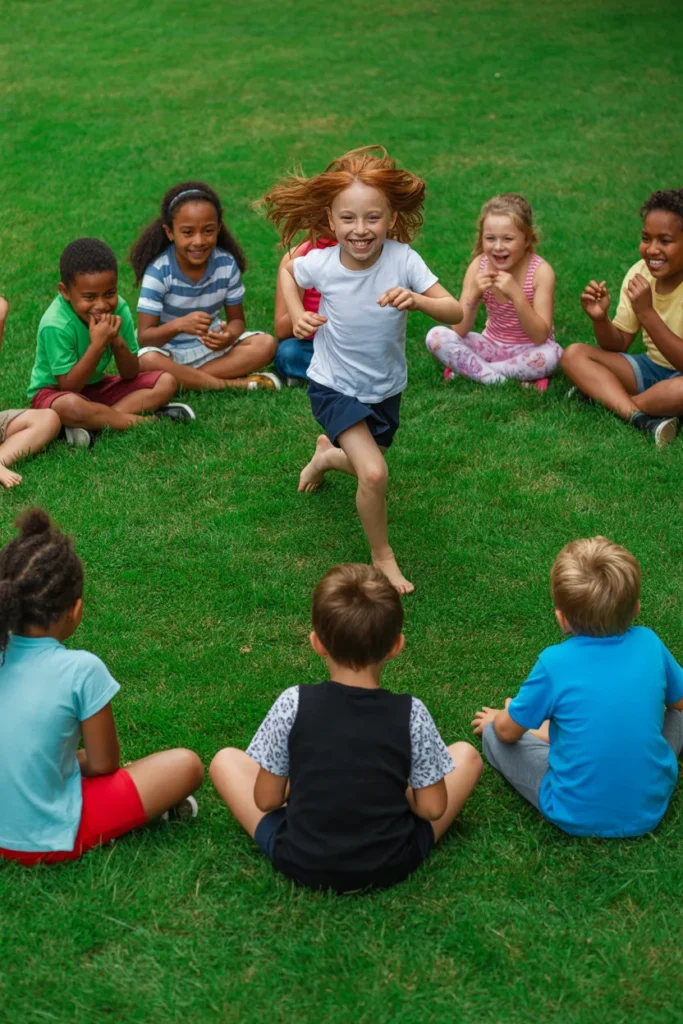
Duck Duck Goose is perfect for younger children because the rules are simple and easy to follow. Kids sit in a circle while one player walks around tapping heads and saying “duck.”
At some point, the player says “goose,” and the chosen child jumps up to chase them around the circle. The goal is to reach the empty spot before getting tagged.
This game encourages movement and helps children stay active without complicated instructions.
4. Capture the Flag
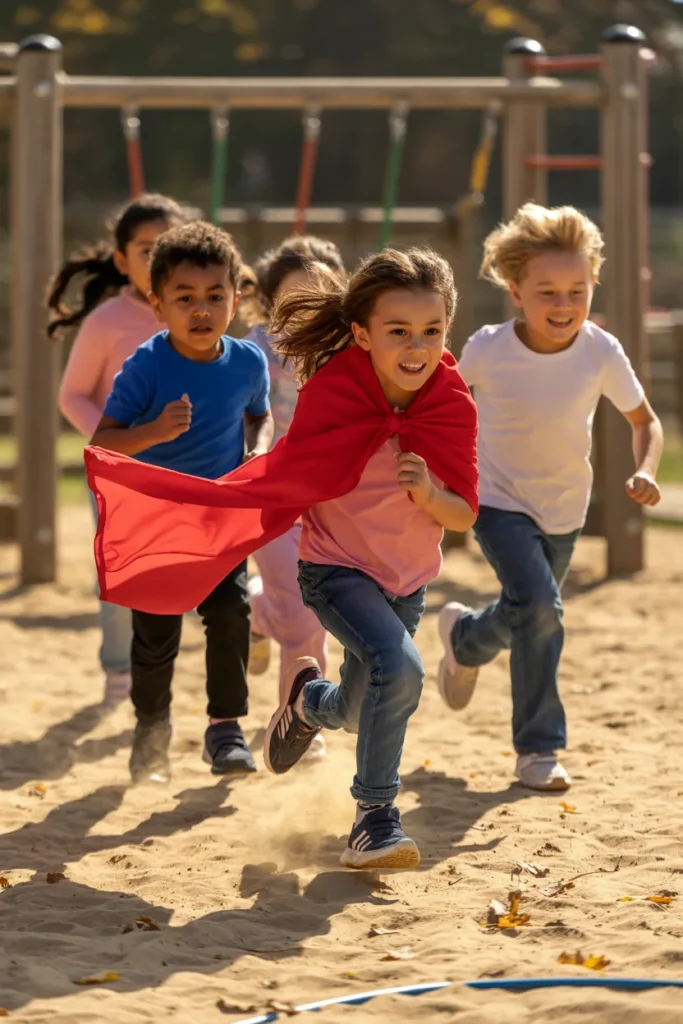
Capture the Flag is one of the best outdoor group games for larger teams. I’ve seen kids stay engaged in this game for hours because it combines teamwork, strategy, and running.
Players split into two teams and try to steal the opposing team’s flag without getting tagged. If tagged in enemy territory, players go to jail until teammates rescue them.
This game helps children practice leadership, communication, and decision-making while staying physically active.
Pro Tip: Use bright-colored cloths or bandanas as flags so kids can easily spot them outdoors.
5. Relay Race
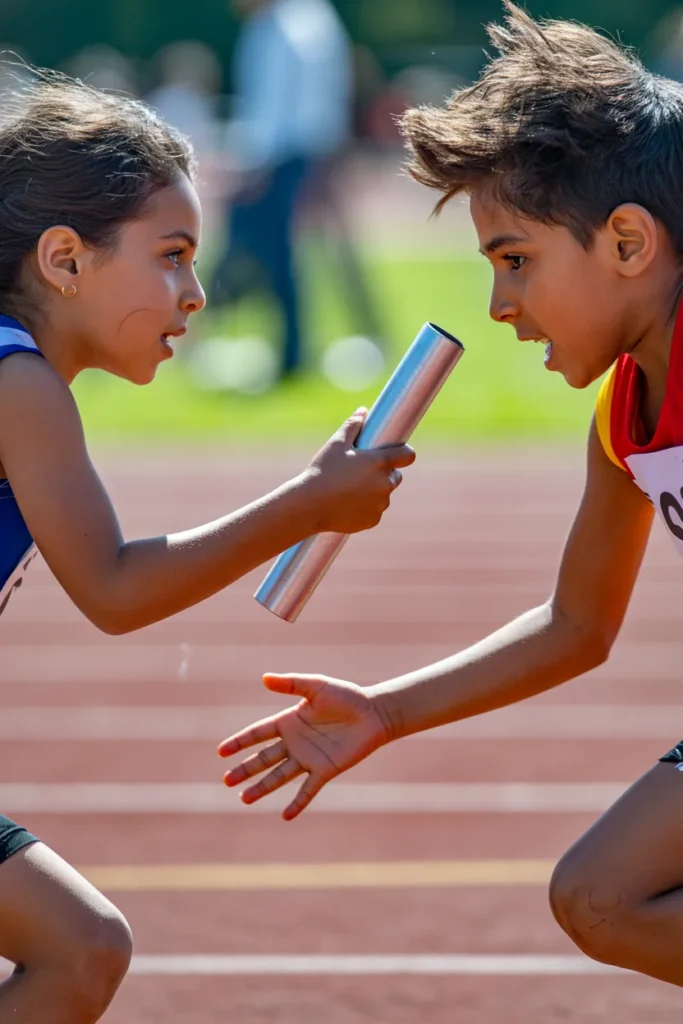
Relay races are great for school events, outdoor parties, and sports days. I like using relay races because they teach kids how to support teammates while having fun competing.
Children run a short distance and pass a baton or object to the next teammate. The first team to finish wins the race.
Research shows physical games like relay races can improve coordination and cardiovascular fitness in children.
Pro Tip: Add fun twists like hopping, crawling, or balancing objects to make the race more exciting.
6. Parachute Game
Parachute games are always a hit with younger kids because the colorful parachute creates movement and excitement instantly.
Children hold the edges and work together to make waves, bounce balls, or lift the parachute high into the air. Some versions even include games underneath the parachute.
This activity teaches cooperation and timing while helping kids stay active together.
7. Four Square
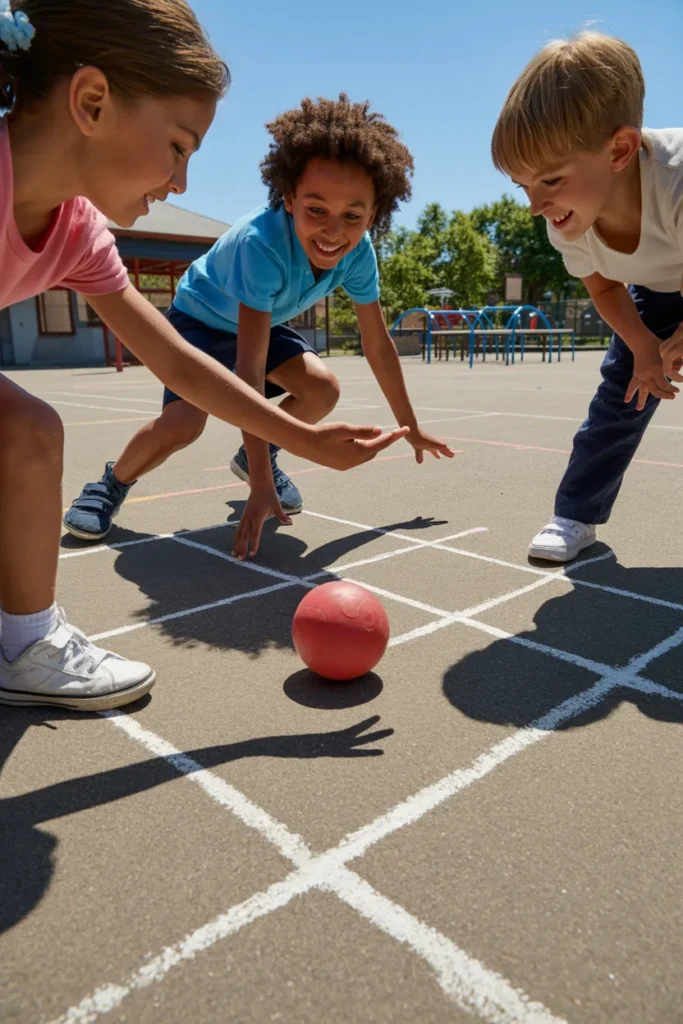
Four Square is a playground favorite that helps kids improve reflexes and coordination. The game uses four connected squares and a bouncing ball.
Each player stands in one square and hits the ball into another player’s square after one bounce. If someone misses or breaks the rules, they rotate out.
I like this game because kids quickly learn focus, movement control, and healthy competition.
8. Sticky Popcorn
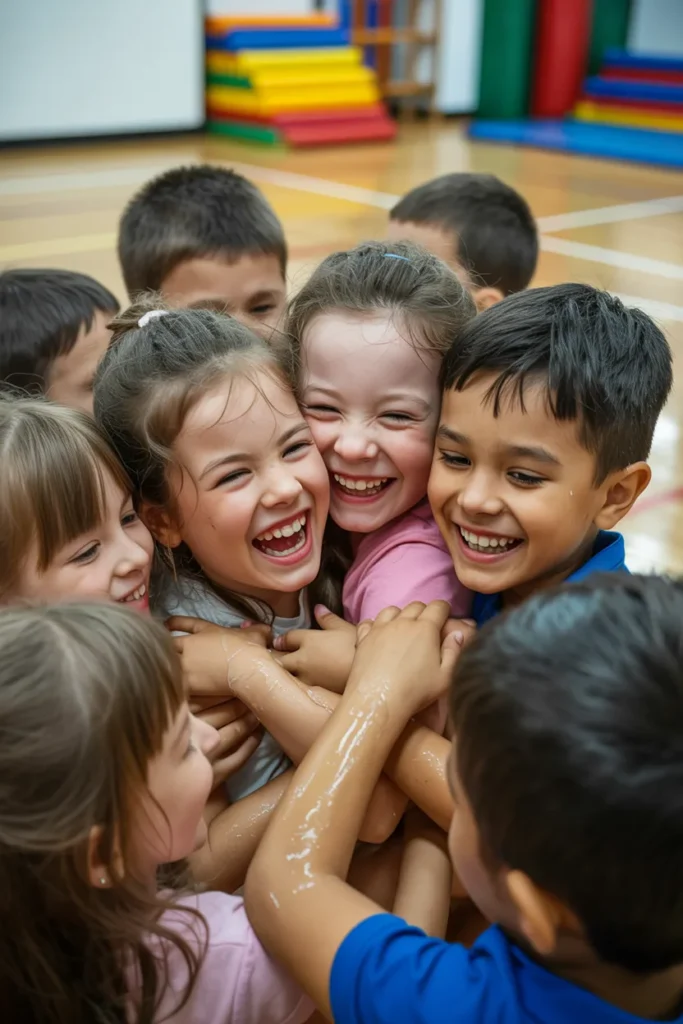
Sticky Popcorn is simple but surprisingly funny for kids of all ages. Children move around freely pretending to pop like popcorn kernels.
Whenever two players touch, they must stick together and continue moving as one group. Eventually, everyone becomes part of one giant popcorn ball.
This game encourages teamwork, social interaction, and lots of laughter.
9. The Quiet Olympics
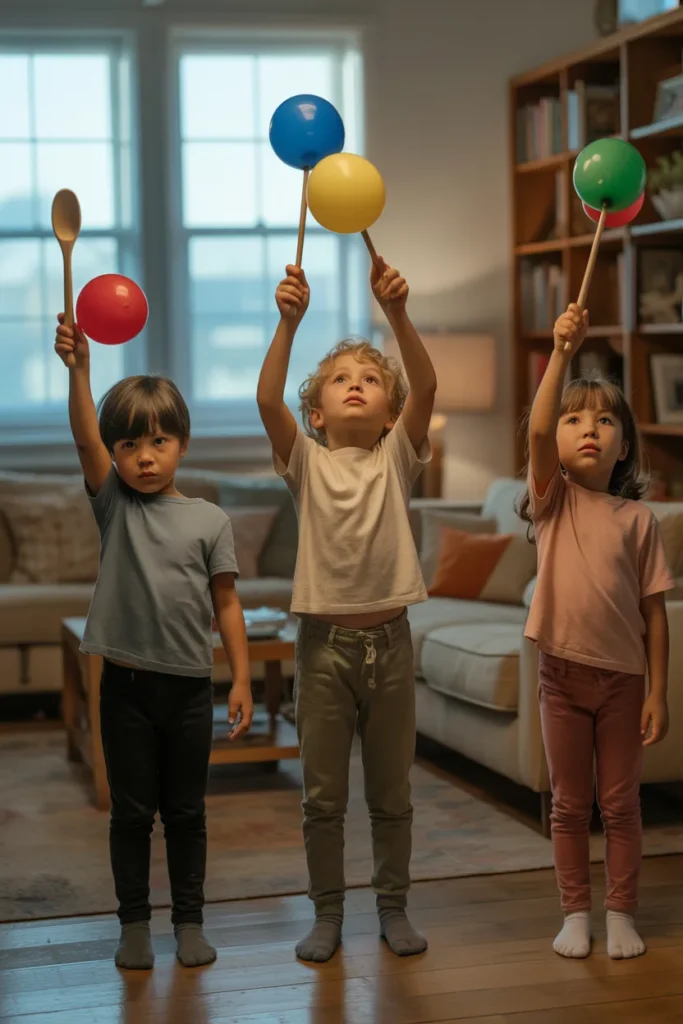
The Quiet Olympics works especially well indoors when you need lower-noise activities. I’ve used this game during rainy days and classroom breaks successfully.
Kids compete in quiet challenges like balloon balancing, paper plate tossing, or slow-motion races. The goal is to stay controlled and quiet while completing tasks.
This activity helps improve concentration, patience, and balance.
10. Feather Blow
Feather Blow is one of the easiest low-cost games you can organize in minutes. Each child receives a feather and tries to keep it in the air using only their breath.
The player who keeps their feather floating the longest wins. Even though the game looks simple, kids usually become very competitive.
This activity supports breath control, focus, and hand-eye coordination.
11. Hula-Hoop Pass
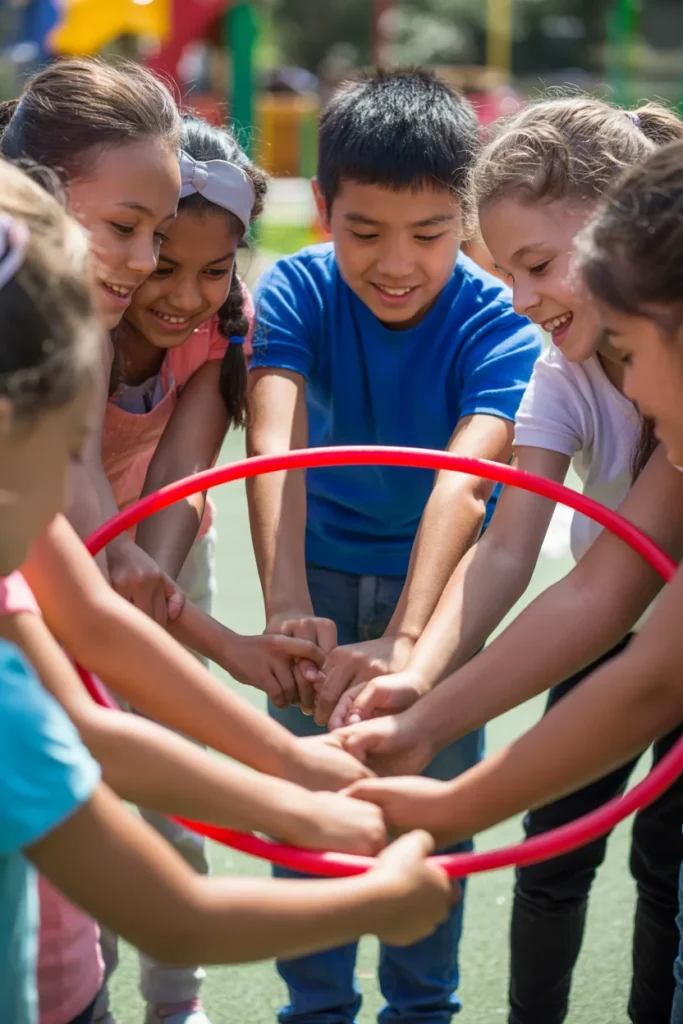
Hula-Hoop Pass is excellent for team bonding and communication. Kids stand in a circle holding hands while passing a hula hoop around without letting go.
Children must carefully move their bodies through the hoop while staying connected to the group.
I like this game because it naturally encourages teamwork and problem-solving.
12. Obstacle Course
Obstacle courses are one of the best ways to keep energetic kids busy. I usually create simple challenges using cones, ropes, pillows, chairs, or hoops.
Kids may crawl under tables, jump over objects, or zigzag through cones to reach the finish line.
Obstacle games help improve agility, balance, coordination, and confidence.
Pro Tip: Create separate difficulty levels for younger and older children to keep everyone included.
13. Treasure Hunt
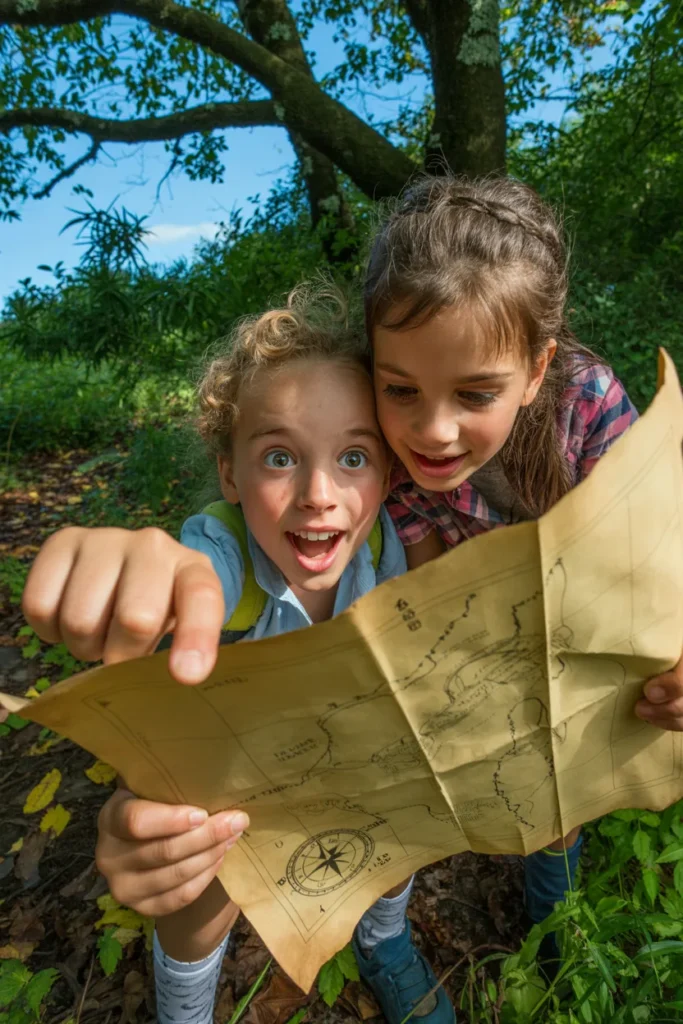
Treasure Hunts are perfect for birthdays and outdoor gatherings because kids love solving clues and searching for hidden prizes.
Players follow riddles, maps, or hints that lead them from one location to another until they discover the treasure.
This game develops critical thinking, teamwork, and observation skills.
14. Tug-of-War
Tug-of-War is a timeless outdoor game that builds strength and teamwork. Two teams pull opposite ends of a rope while trying to drag the other side across a marked line.
The excitement usually comes from teams learning how to pull together at the same time instead of relying on one strong player.
This game improves coordination, teamwork, and physical endurance.
15. Bob the Weasel
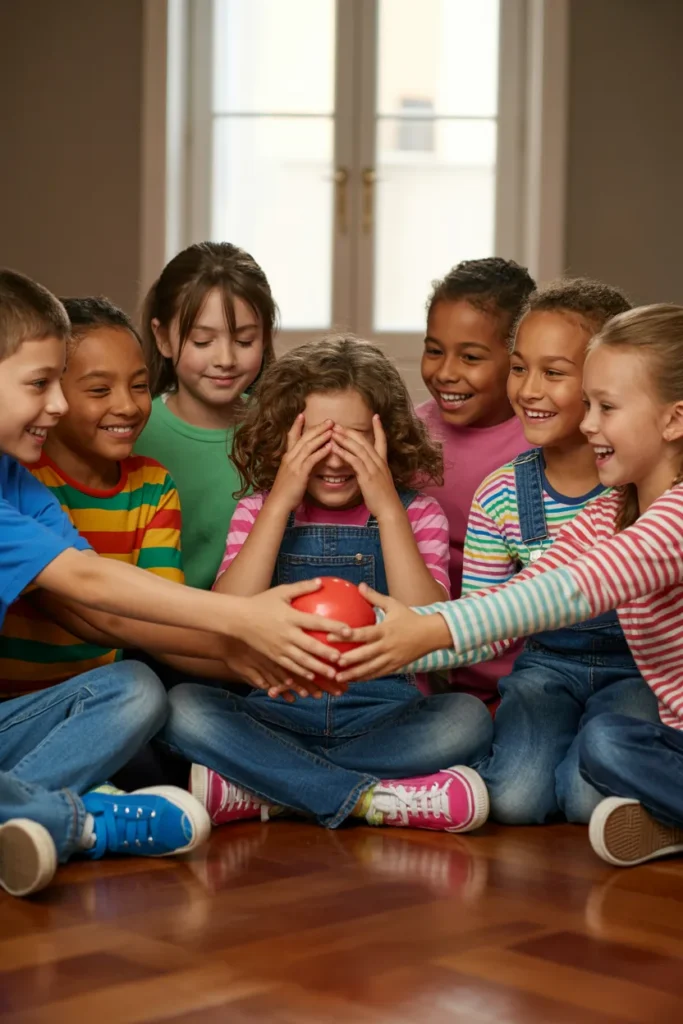
Bob the Weasel is a fun guessing game that helps children improve observation skills. One child stands in the center while the others secretly pass an object behind their backs.
The child in the middle must figure out who currently has the hidden item.
I’ve noticed this game works especially well with medium-sized groups because everyone stays alert and involved.
16. Three Things Theater
Three Things Theater encourages creativity and imagination in a really fun way. Small groups receive three random objects and must create a short skit or song using them.
Kids often come up with hilarious performances when given unusual combinations of items.
This activity helps children practice teamwork, communication, and public speaking naturally.
17. Hot and Cold
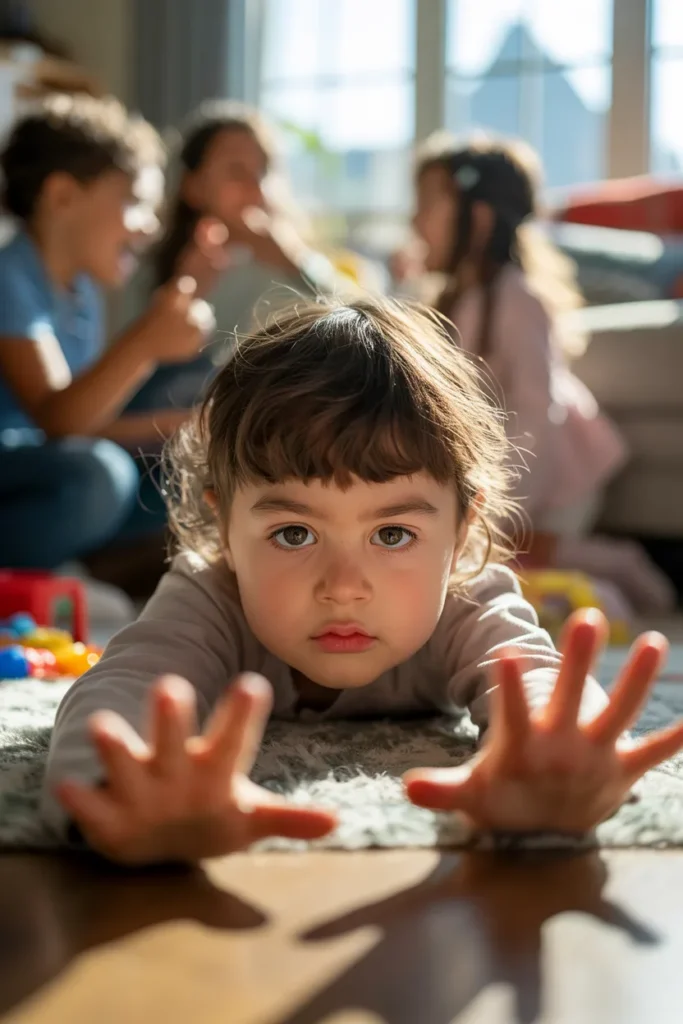
Hot and Cold is one of the simplest games to organize, yet kids rarely get bored of it. One player hides an object while another searches for it.
The group gives clues by saying “hot” when the finder gets closer and “cold” when they move farther away.
This game helps improve listening skills and spatial awareness.
18. Get to Know You Balloons
This game works really well for classrooms, camps, and new social groups. Kids place questions inside balloons, blow them up, and toss them around.
Each child pops a balloon and answers the question inside. Questions can include favorite foods, hobbies, or dream vacations.
I like this activity because it helps children feel comfortable talking and making new friends.
19. Flower Finding
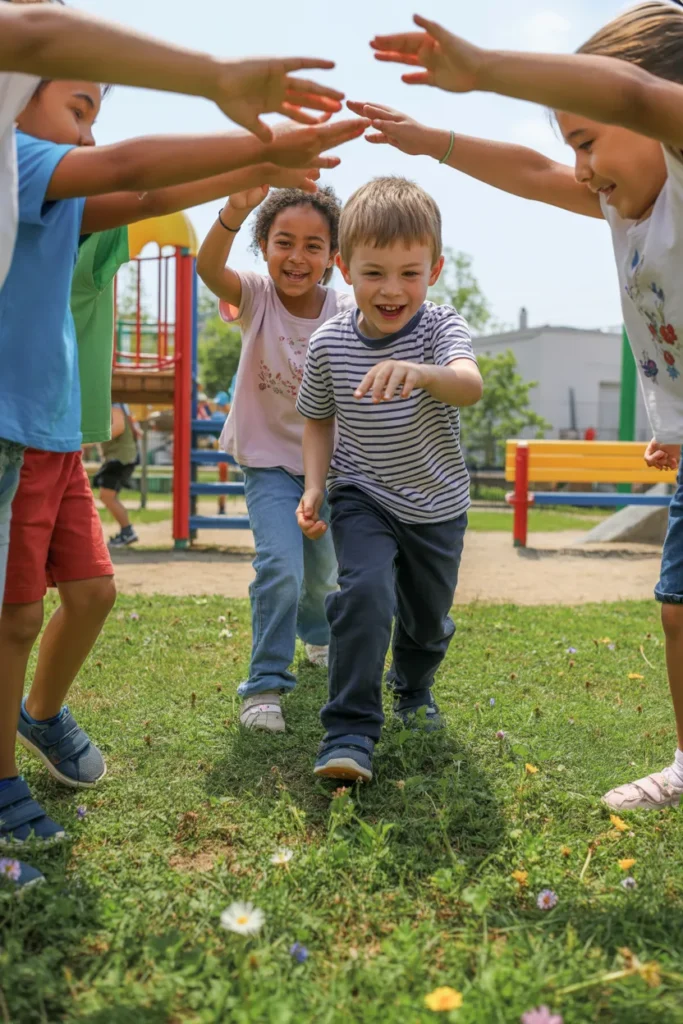
Flower Finding combines movement, rhythm, and teamwork. Two children create an arch using their arms while the rest walk underneath singing together.
When the song stops, the arch lowers and catches one player, who joins the game.
This game encourages coordination and social interaction in a playful way.
20. Wheelbarrow Race
Wheelbarrow races are physically active and usually create plenty of laughter. One child walks on their hands while their partner holds their legs and guides them forward.
The pair races toward the finish line while trying to stay balanced.
This activity strengthens coordination, teamwork, and upper body muscles.
21. Cartwheel Race
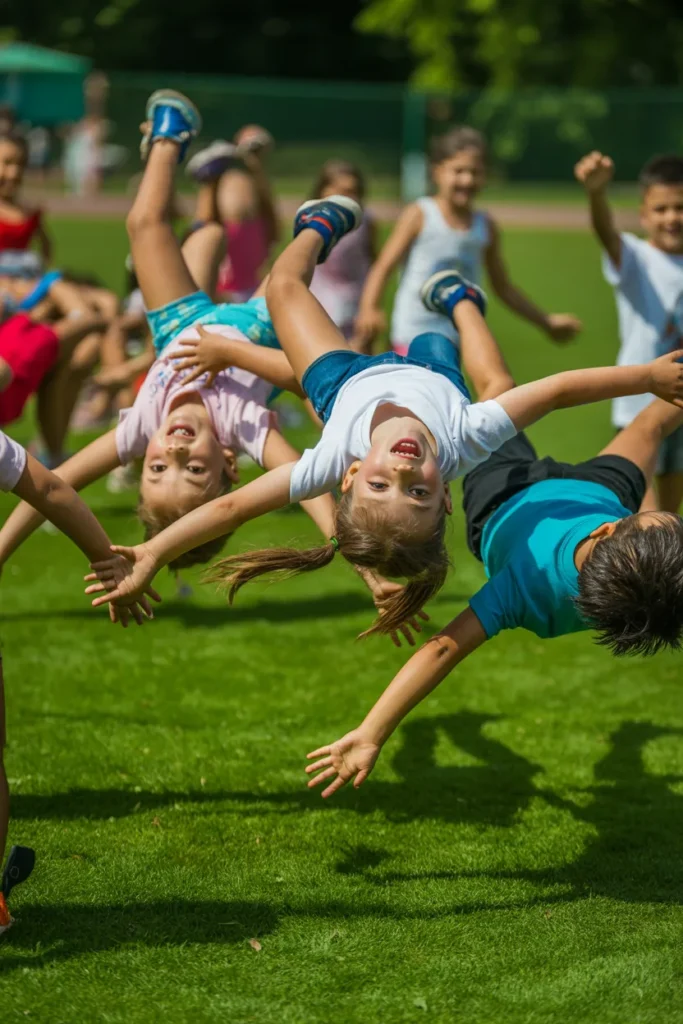
Cartwheel races are ideal for active kids who enjoy gymnastics-style movement. Players perform cartwheels from the start line to the finish line as quickly as possible.
Besides being fun, this game helps improve flexibility, balance, and body control.
For safety, I recommend playing on grass or soft surfaces whenever possible.
22. No Hands Get Up
No Hands Get Up looks simple at first, but kids quickly realize it takes balance and strategy. Players lie on the ground with folded arms and must stand up without using their hands.
After standing, they race back to the starting point.
This activity improves core strength, coordination, and problem-solving skills.
23. Cotton Ball Race
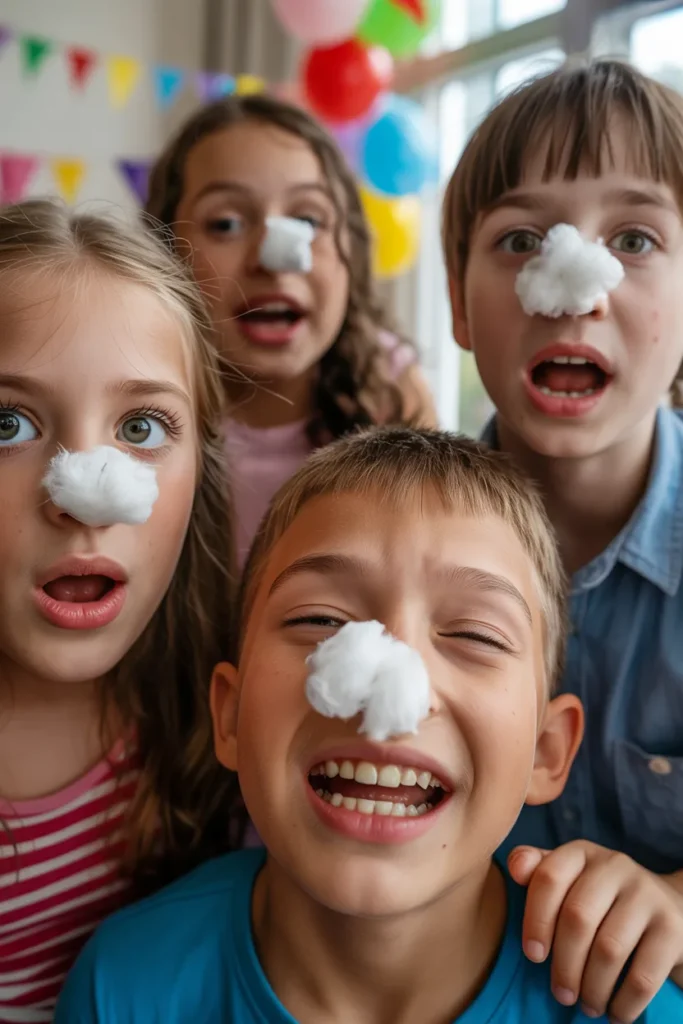
The Cotton Ball Race is one of those silly games kids never forget. Children place Vaseline on their noses and try carrying cotton balls from one bowl to another without using their hands.
The challenge usually leads to funny moments and lots of laughter.
This game improves focus, coordination, and patience.
24. Snakes
Snakes is a trust-based activity where most players wear blindfolds and form a line by holding the shoulders of the person in front.
The last player guides the group silently using taps or gentle movements while collecting objects around the area.
I like this game because it encourages trust, communication, and teamwork in a unique way.
25. Pop a Bag Race
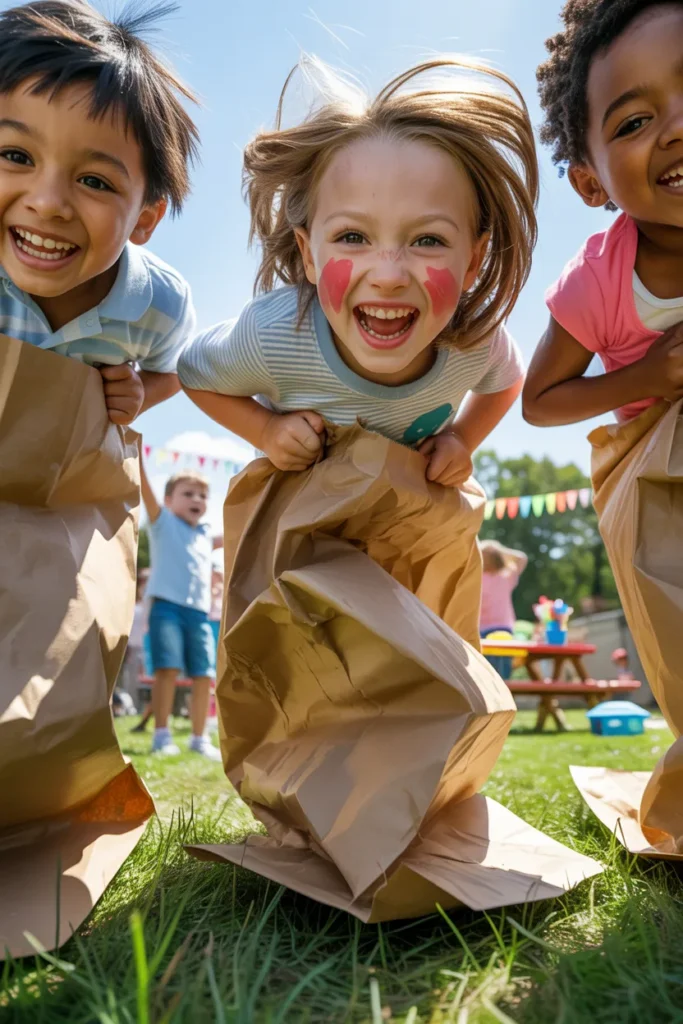
Pop a Bag Race is loud, funny, and perfect for energetic groups. Kids race to sit on paper bags and pop them as quickly as possible.
The first player to pop their bag wins the round. Team relay versions make the game even more exciting.
This activity works especially well at birthday parties and school fun days.
26. Consecutive Jumps
Consecutive Jumps helps kids improve rhythm and coordination while staying active. Players complete jump patterns like hopscotch, jumping jacks, or two-foot jumps without stopping.
You can turn it into a timed challenge or group competition depending on the age group.
This game supports physical fitness and balance development.
27. The 100 Inch Dash
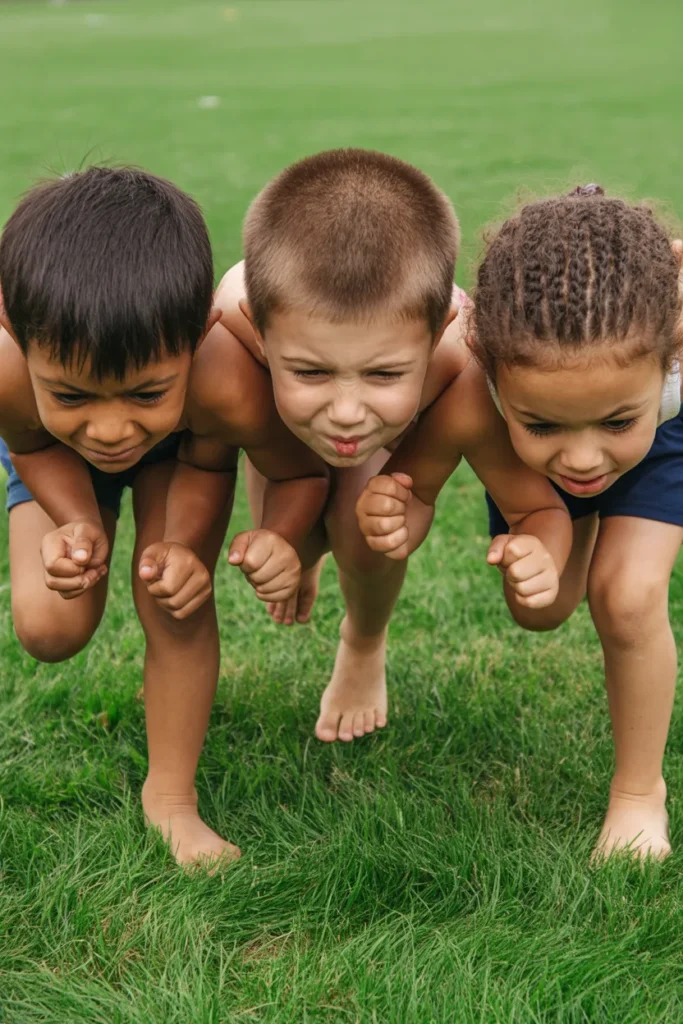
The 100 Inch Dash is a creative race that tests patience more than speed. Kids must move exactly one inch at a time while racing toward the finish line.
The tiny steps make the game surprisingly funny and challenging for children.
I’ve found this game works especially well during family gatherings because both kids and adults enjoy watching it.
Conclusion
Group games are one of the easiest ways to keep kids entertained while helping them build confidence, teamwork, and social skills. I’ve noticed that even simple activities can create lasting memories when kids are laughing and playing together.
The best part is that most of these games require very little setup or equipment, making them perfect for homes, schools, camps, and parties. Whether you need indoor activities for rainy days or outdoor games for large groups, these ideas can help keep children active and engaged.