
Fruit always seems to spoil faster than expected, especially when everything gets tossed into one bowl or drawer. I used to waste strawberries, bananas, and apples every single week without realizing my storage habits were the real problem.
The truth is that every fruit needs different conditions to stay fresh. Some fruits need airflow, others need cooler temperatures, and many should never be stored together because of ethylene gas.
After testing different storage setups in my own kitchen, I found simple ways to keep fruit fresher longer while making the kitchen feel cleaner and more organized. These fruit storage ideas are practical, easy to copy, and work well in kitchens of every size.
Key Takeaways
- Separate fruits that release ethylene gas
- Use open airflow storage whenever possible
- Keep berries dry to reduce mold growth
- Store ripe fruit where it stays visible
- Vertical storage helps save counter space
- Refrigerate prepared fruit in sealed containers
- Avoid overcrowding fruit baskets or drawers
- Rotate older fruit forward to reduce waste
How Should Different Fruits be Stored to Stay Fresh Longer?
One thing I learned quickly is that fruit storage is not one-size-fits-all. Apples, bananas, berries, citrus, and avocados all react differently depending on temperature, airflow, and nearby produce. Some fruits naturally release ethylene gas while ripening. When those fruits sit beside sensitive produce, everything ripens and spoils much faster than it should.
Moisture also plays a huge role. Too much trapped humidity creates mold, while poor airflow causes soft spots and bruising. Using breathable storage solutions keeps fruit in better condition for longer periods. Once I started separating fruit properly and improving ventilation, my produce lasted longer, tasted fresher, and looked more appealing throughout the week.
Tiered Counter Baskets
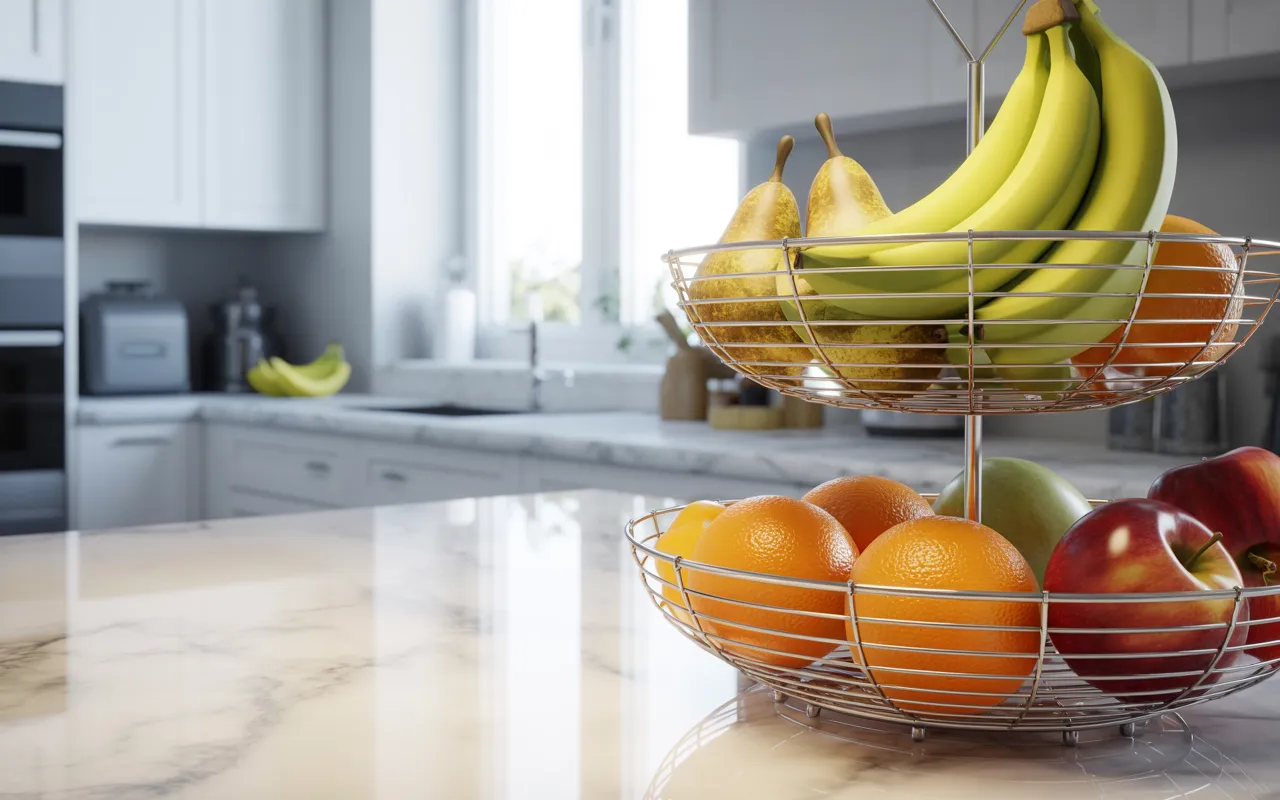
Tiered baskets are one of the easiest ways I organize fruit without taking up too much counter space. Vertical storage instantly makes the kitchen feel less cluttered. I usually place heavier fruits like oranges or apples on the lower basket while softer fruits stay on top. This prevents bruising and keeps everything easier to reach.
Keeping the basket near indirect natural light also helps remind everyone to eat the fruit before it overripens.
Pro Tip
Rotate the fruit every couple of days so older pieces stay visible and get eaten first instead of hiding underneath fresh produce.
Rolling Produce Tower
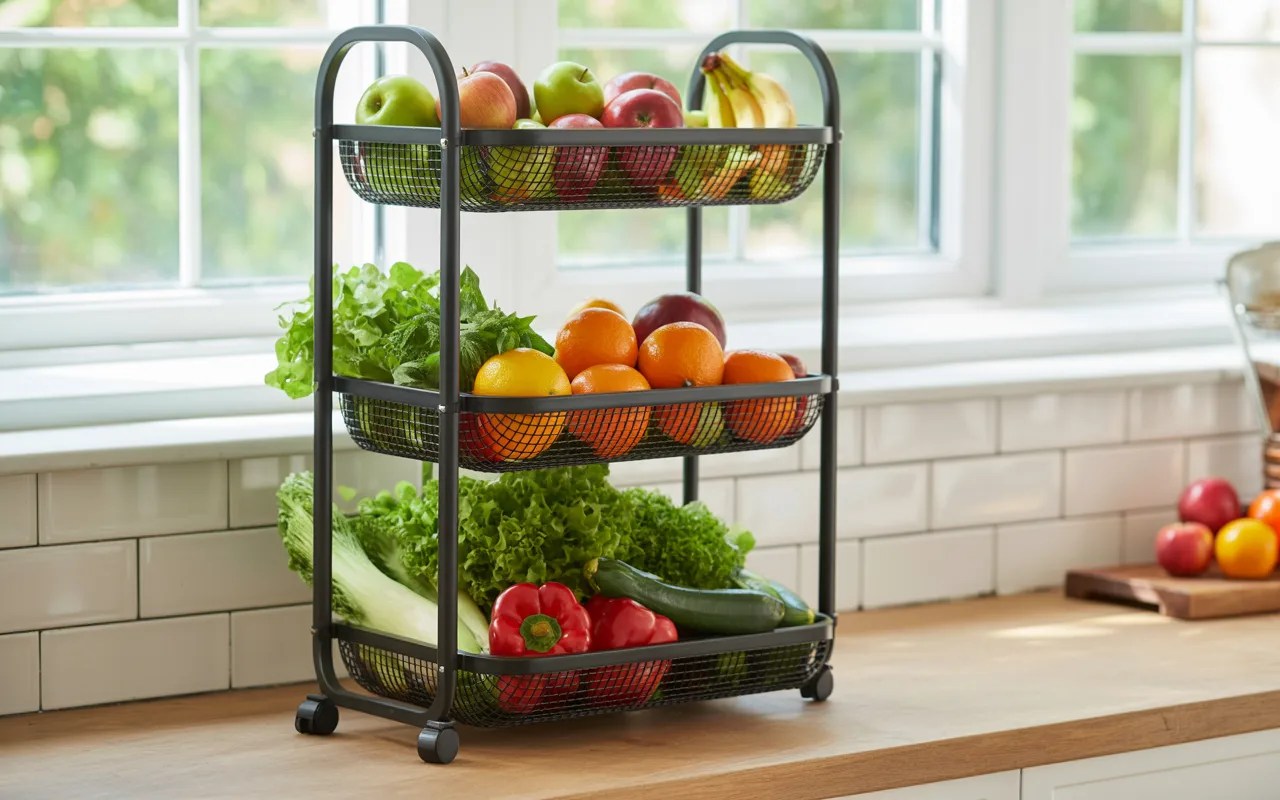
A rolling produce tower works perfectly when kitchen storage feels limited. I like using separate levels for fruits and vegetables to prevent faster spoilage. The vertical design keeps produce organized while using very little floor space. Wheels also make the cart easy to move while cleaning or cooking.
This setup works especially well in apartments or compact kitchens where counter space disappears quickly.
Pro Tip
Choose mesh or wire baskets because solid plastic bins trap moisture and reduce airflow around fresh fruit.
Wooden Crate Stack
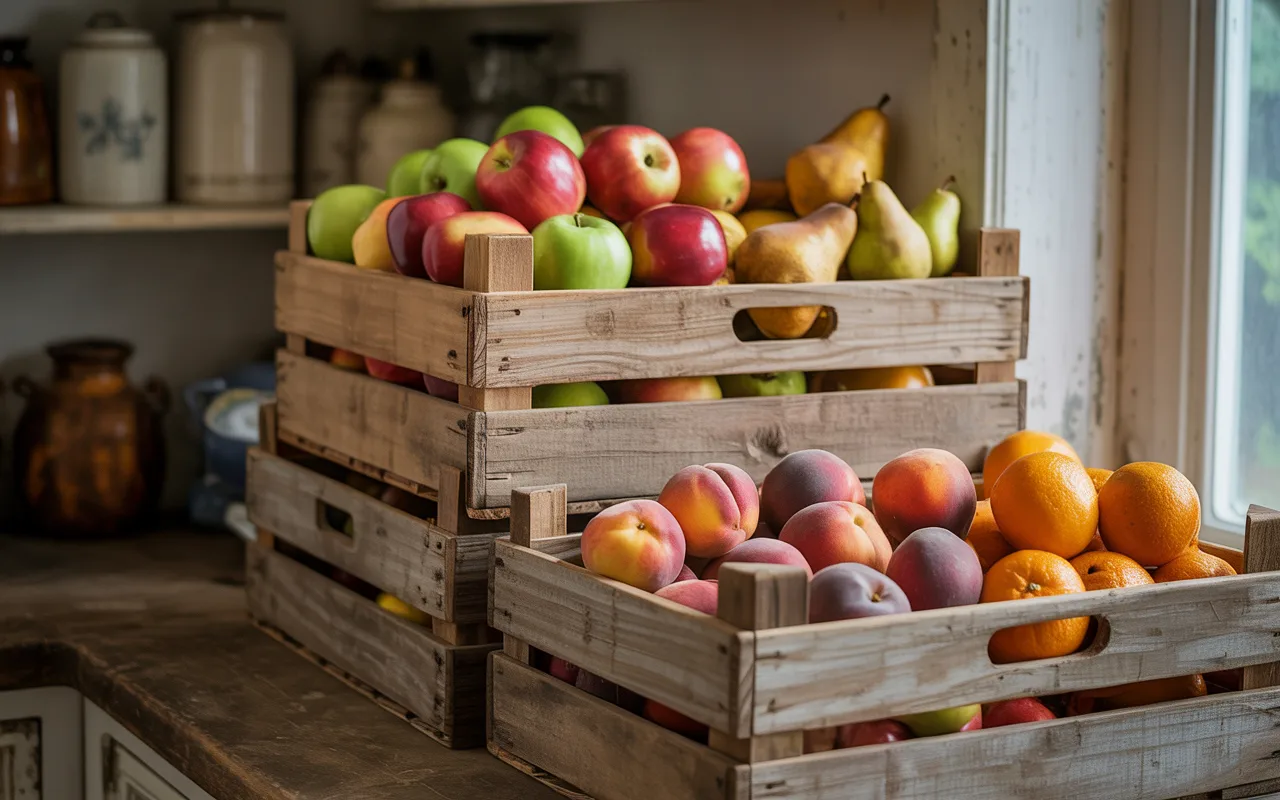
Wooden crates give fruit storage a warm and natural look while keeping everything breathable and organized. I usually separate fruit by ripeness instead of type. Ready-to-eat fruits stay in one crate while slower-ripening produce stays in another.
The open slats improve airflow naturally and help reduce moisture buildup around the fruit.
Pro Tip
Place a washable liner underneath the crates to protect counters from hidden moisture or sticky fruit residue.
Pantry Crate Rack
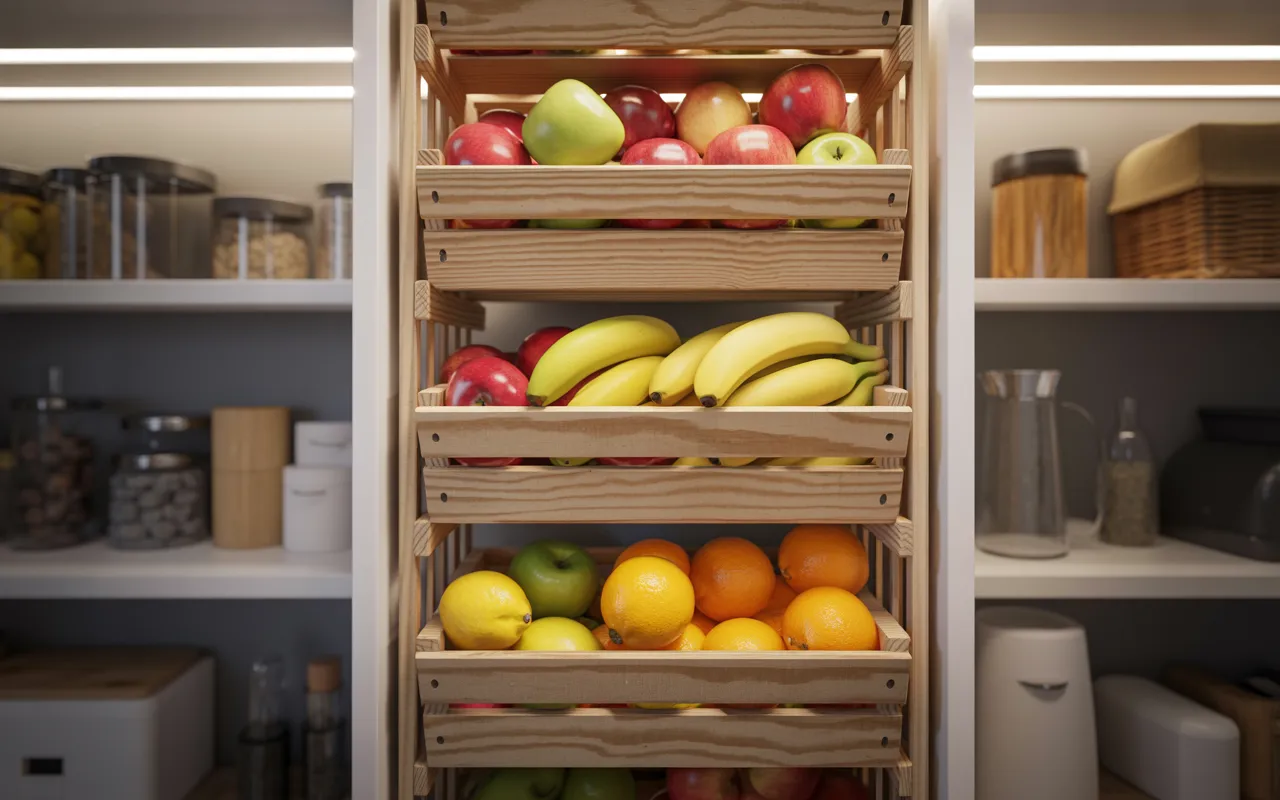
When counters feel overcrowded, pantry crate racks create extra storage without hiding the fruit completely. Open crates allow steady airflow, which helps fruits stay dry and fresh longer. I avoid sealed containers inside the pantry because they trap humidity.
This setup works really well along empty pantry walls or unused shelving areas.
Pro Tip
Keep bananas and apples on higher shelves so their ethylene gas does not affect nearby sensitive fruits.
Split Level Cart
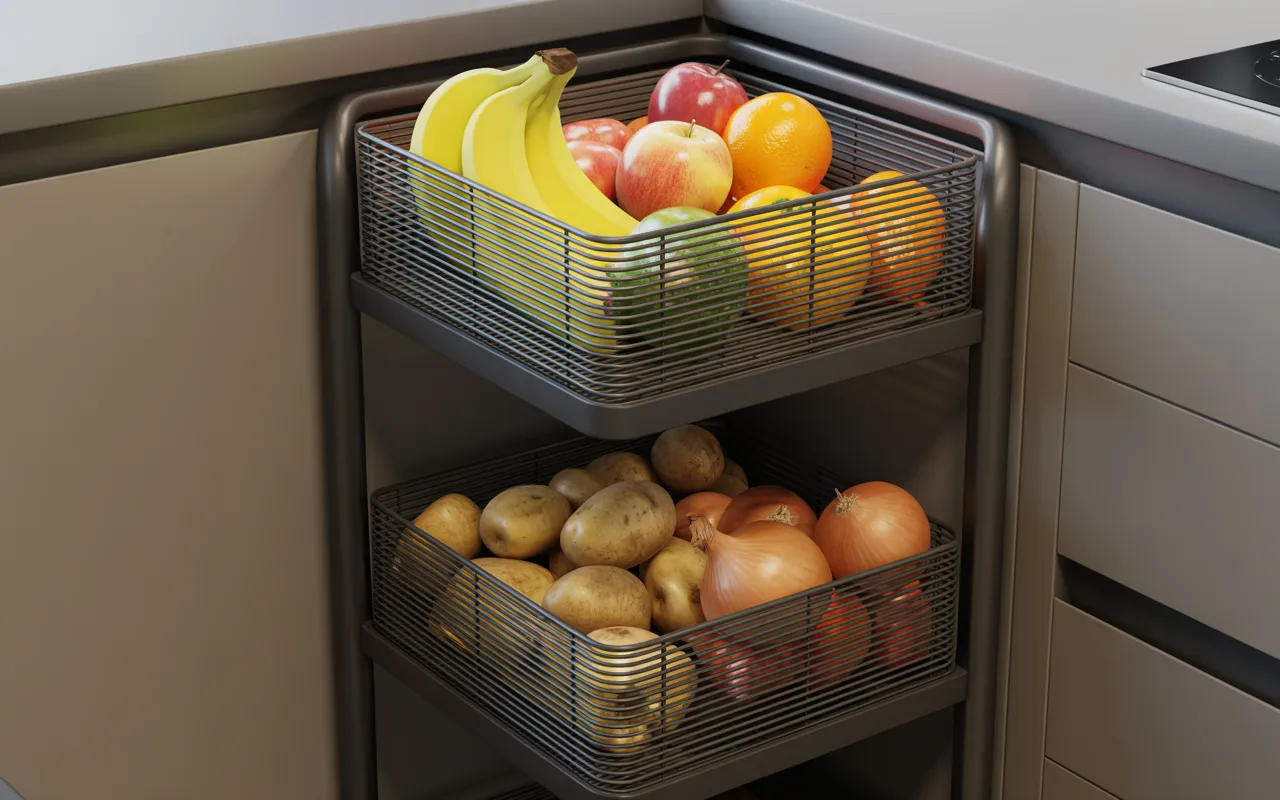
Split level carts help separate fruits and vegetables while keeping everything easy to access during meal prep. I like assigning one side for fruit and the other side for vegetables. This reduces ripening problems caused by mixed produce storage.
Open shelves also improve ventilation and reduce moisture buildup inside the baskets.
Pro Tip
Avoid overloading the cart because crowded fruit bruises faster and blocks proper airflow.
Angled Bin Rack
Angled bins make it much easier to see what fruit needs to be eaten first. Hidden produce usually becomes wasted produce. The slanted design keeps fruit visible from every angle while creating a cleaner and more organized display.
I use the upper bins for ripe fruit and lower bins for produce that still needs time to ripen.
Pro Tip
Check the front bins daily since visible fruit tends to ripen faster in warmer kitchen areas.
Lined Crate Storage
Soft crate liners help absorb extra moisture while protecting delicate fruits from bruising. I prefer cotton or linen liners because they allow airflow without trapping humidity around the fruit.
This setup works especially well for peaches, pears, apples, and plums stored on open shelving.
Pro Tip
Wash the liners weekly to prevent bacteria or mold from spreading onto fresh produce.
Corner Cart Setup
Unused kitchen corners can easily become practical fruit storage areas with a compact rolling cart. I like using open baskets because they improve airflow and make fruit easy to grab throughout the day.
This idea works especially well in small kitchens where storage space feels limited.
Pro Tip
Use labels on each basket so everyone knows where different fruits belong after grocery shopping.
Mixed Tier Stand
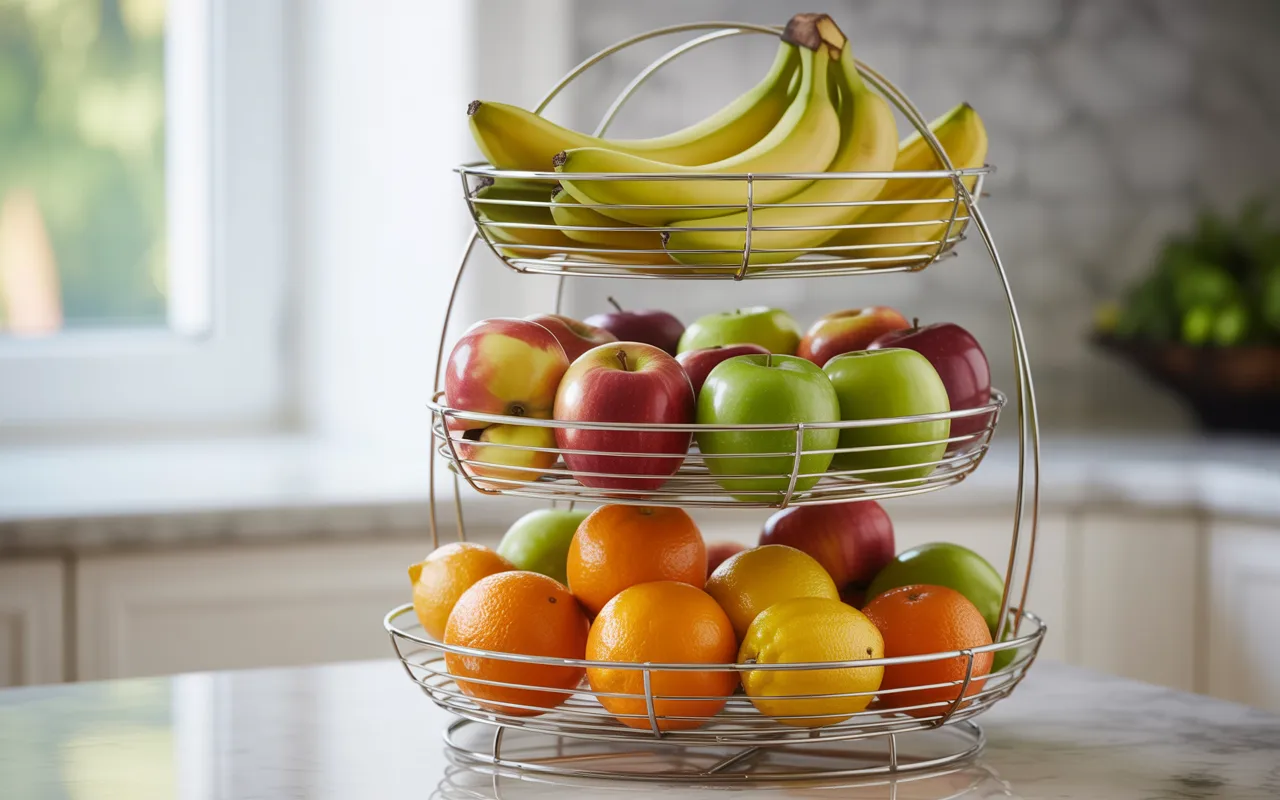
Mixed tier stands help organize multiple fruits without making the kitchen counter feel crowded. I separate bananas from apples and citrus fruits because ethylene gas spreads ripening much faster when they sit together.
Open wire shelving also helps reduce moisture buildup around the fruit.
Pro Tip
Keep softer fruits on higher tiers so heavier produce does not accidentally bruise them.
Pull-Out Drawers
Pull-out fruit drawers create hidden storage that still feels practical and organized. I use divided baskets inside the drawers to separate citrus fruits, apples, and bananas properly.
Ventilated inserts improve airflow and prevent condensation from building inside closed cabinets.
Pro Tip
Add paper towel sheets underneath the baskets to absorb excess moisture during humid weather.
Open Wire Bowl
Open wire bowls work beautifully for citrus fruits because they allow steady airflow from every direction. I avoid stacking too much fruit together because deep piles create pressure and trap moisture underneath.
This storage method also looks clean and decorative on kitchen islands or dining tables.
Pro Tip
Keep the bowl away from direct heat sources like ovens or sunny windows to prevent fruit from drying out.
Mobile Wood Crates
Mobile wood crates combine storage flexibility with strong airflow and natural texture. I like assigning one fruit type per crate because mixed produce tends to ripen unevenly and spoil faster.
The movable design also makes cleaning around the kitchen much easier.
Pro Tip
Choose crates with wide slats for maximum ventilation around fresh fruit.
Counter Crate Layers
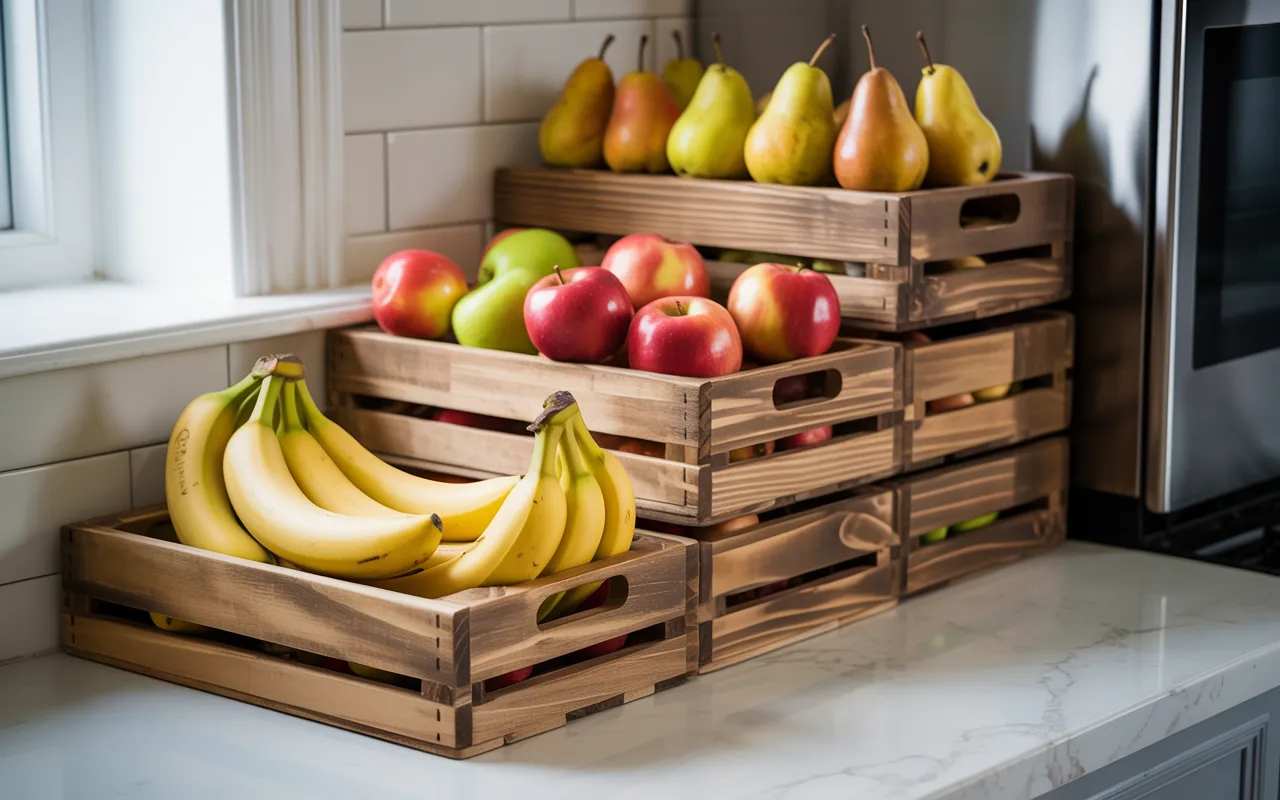
Layered crates help maximize vertical counter storage without overwhelming the kitchen visually. I separate bananas, apples, and pears onto different levels to control ripening more effectively.
The open-top design keeps air circulating while the sturdy sides protect delicate fruit.
Pro Tip
Store the heaviest fruits on the bottom layers to avoid damaging softer produce above.
Citrus Sorting Grid
Citrus fruits stay fresher longer when they have their own designated storage sections. I like using separate compartments for lemons, limes, oranges, and grapefruits to reduce moisture buildup.
This setup keeps the pantry or counter looking neat while improving airflow around each fruit.
Pro Tip
Remove any citrus with soft spots immediately because mold spreads surprisingly fast between fruits.
Drawer Fruit Zone
Dedicated fruit drawers help keep kitchens looking clean while making produce easy to organize. I usually place slower-ripening fruits in upper drawers while bananas and avocados stay lower.
Wood slats or ventilated trays improve airflow and reduce trapped humidity inside the drawer.
Pro Tip
Never overcrowd the drawer because tight storage increases bruising and shortens freshness.
Hanging Net Storage
Hanging nets free up valuable counter space while keeping fruit visible and ventilated. I often use them for bananas, apples, and oranges because the open weave allows excellent airflow.
This storage style also adds a relaxed and practical look to smaller kitchens.
Pro Tip
Hang the nets at eye level so ripe fruit stays visible and gets eaten before spoiling.
Vented Berry Boxes
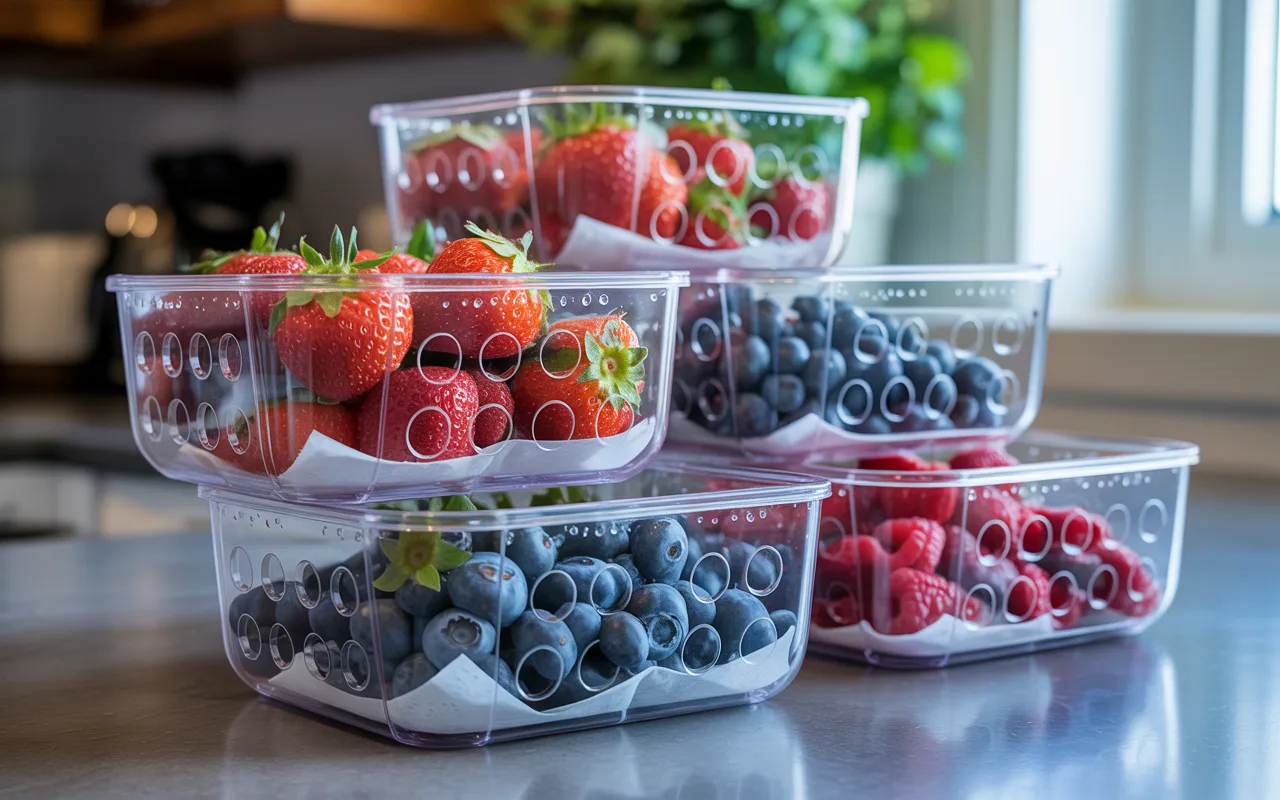
Berries spoil quickly when moisture gets trapped around them. Vented containers solve this problem by improving airflow. I always place paper towels at the bottom of the container to absorb extra moisture and condensation.
Clear containers also help track which berries should be eaten first.
Pro Tip
Wait to wash berries until right before eating because excess moisture speeds up mold growth.
Prepped Fruit Boxes
Prepared fruit boxes make healthy snacking easier because everything is already cleaned and portioned. I store cut fruit separately in airtight glass containers to keep flavors fresh and prevent odor transfer.
This system saves time during busy mornings and encourages healthier eating habits.
Pro Tip
Fill containers almost completely so less air exposure slows oxidation and keeps fruit fresher longer.
Lined Display Bowl
Decorative fruit bowls can still work for storage when moisture is managed properly. I use soft cloth liners because they cushion delicate fruits while absorbing excess humidity underneath.
This setup works best for ready-to-eat fruit displayed on dining tables or kitchen islands.
Pro Tip
Replace damp liners quickly because hidden moisture causes soft spots underneath the fruit.
Labeled Storage Zones
Labeled storage zones completely changed how organized my kitchen feels during busy weeks. Each fruit category gets its own basket, which helps prevent mixing produce that ripens differently.
This setup also makes unpacking groceries faster and more efficient.
Pro Tip
Use waterproof labels so they stay readable even in humid kitchen conditions.
Tiered Serve Bowls
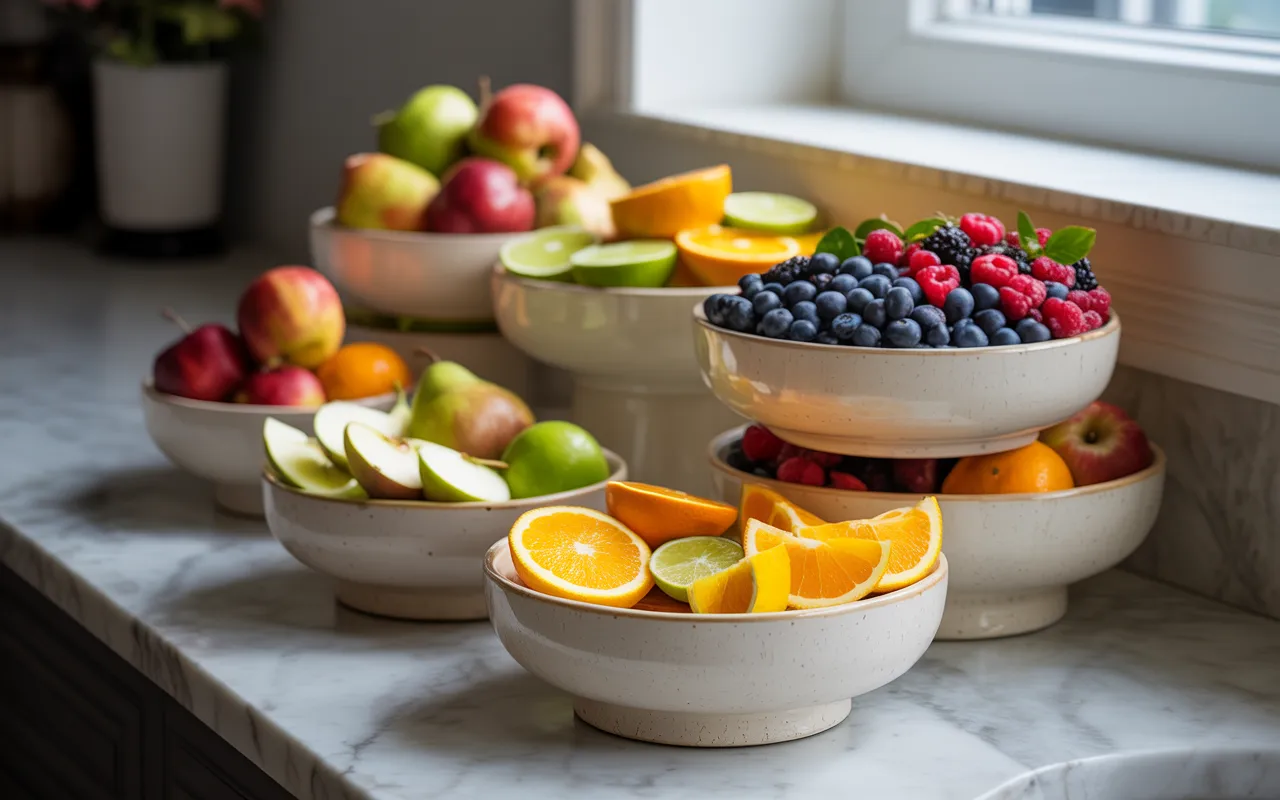
Tiered serving bowls make fruit feel more inviting and easier to snack on throughout the day. I separate berries, citrus slices, and whole fruits onto different levels to reduce moisture transfer.
Smaller portions work best because fruit stays fresher when rotated regularly.
Pro Tip
Remove overripe pieces daily so the entire display continues looking fresh and appealing.
Hanging Basket Stack
Hanging basket stacks use empty wall space while keeping fruit separated and ventilated. I place bananas, oranges, and apples in separate baskets to slow down ethylene-related spoilage.
This setup works especially well near pantry walls or breakfast corners.
Pro Tip
Use strong wall hooks because fully loaded fruit baskets can become surprisingly heavy.
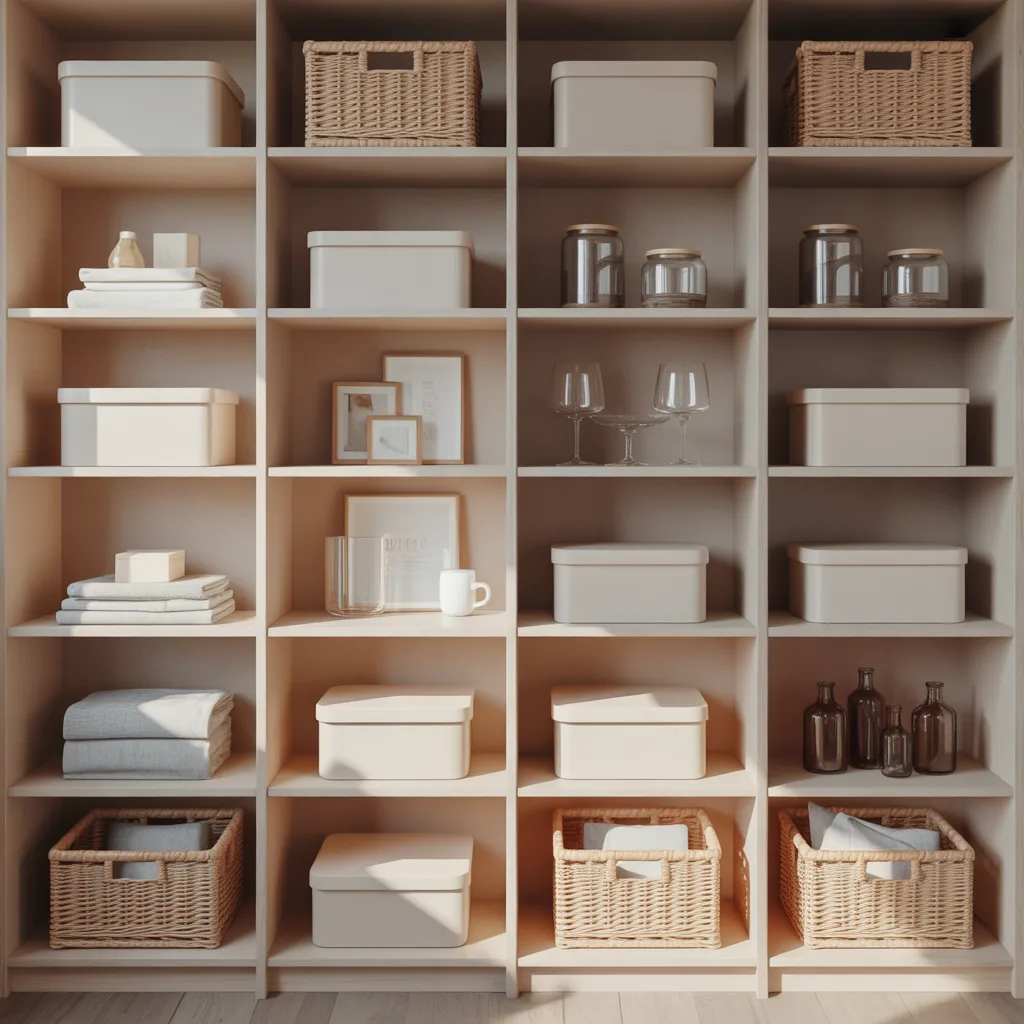
Cubby Shelf Sorting
Cubby shelf storage keeps each fruit type organized in its own dedicated section. Open cubbies improve visibility, which helps reduce forgotten produce and unnecessary waste.
This setup works especially well for families who buy larger amounts of fruit weekly.
Pro Tip
Keep only one fruit variety per cubby so different ripening speeds do not clash together.
Sectioned Wood Boxes
Sectioned wood boxes make it easy to organize fruit neatly without mixing everything together. I like using separate compartments for apples, pears, citrus fruits, and peaches.
The open-top design improves airflow while the wooden dividers help prevent bruising.
Pro Tip
Add cork pads underneath the boxes to improve airflow and protect counters from moisture damage.
Built-In Produce Bays
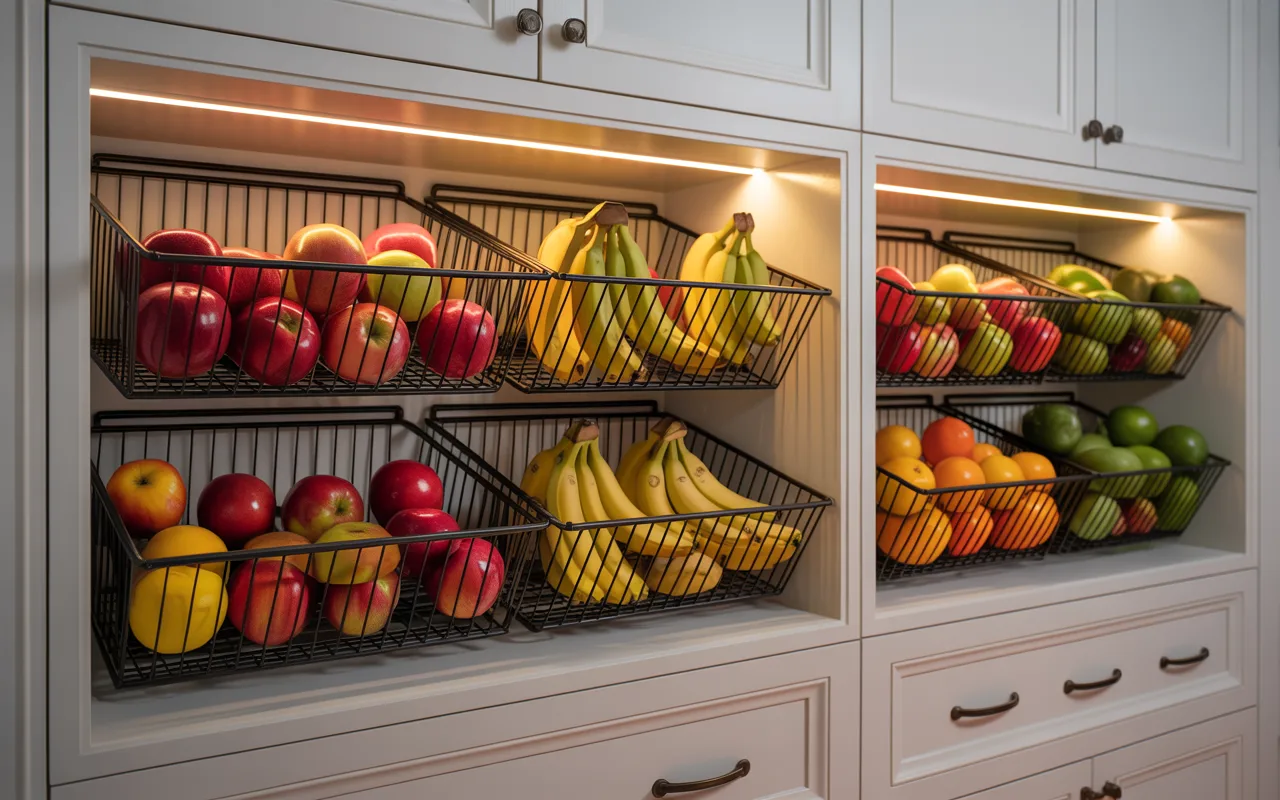
Built-in produce bays create a permanent fruit storage system that blends beautifully into kitchen cabinetry. Each wire section holds one fruit type, which helps reduce ethylene exposure and moisture buildup.
Open fronts keep air moving while making the fruit easy to see and access daily.
Pro Tip
Install soft under-shelf lighting so fruit stays visible without adding excess heat to the storage area.
FAQs
1. Do fruits really need to be stored separately?
Yes, they absolutely do. Many fruits release ethylene gas naturally as they ripen, and that gas causes nearby fruits to spoil faster. Separating fruits helps maintain better texture, flavor, and freshness while reducing unnecessary waste in the kitchen.
2. Is countertop storage bad for fruit?
Countertop storage works well for fruits that need to ripen naturally or will be eaten within a few days. Problems usually happen when ripe fruit sits too long in direct sunlight or near heat sources. Once fruit becomes fully ripe, refrigeration often helps extend freshness.
Conclusion
Keeping fruit fresh longer does not require a huge kitchen makeover. I’ve found that small storage changes like improving airflow, separating ethylene-producing fruits, and using vertical organizers can make a massive difference in reducing waste.
The best fruit storage setup is the one that fits naturally into your daily routine. Whether you use hanging baskets, vented berry boxes, wooden crates, or pull-out drawers, the goal is to keep fruit visible, organized, and easy to access.
Once I started storing fruit properly, I noticed fewer spoiled groceries, less wasted money, and a kitchen that felt much cleaner overall. Even one or two of these fruit storage ideas can completely change how long your produce lasts.