


Keeping a rolling cart organized can completely change how you use a space. Whether it’s holding craft supplies, pantry items, office essentials, or cleaning products, a well-planned cart makes everyday tasks easier and more efficient.
The problem isn’t usually the cart itself. Most carts become messy because items are tossed in without a clear system. Once every shelf has a purpose and every item has a designated spot, a rolling cart becomes one of the most useful storage solutions in the home.
These rolling cart organization ideas will help you create a setup that stays functional, easy to maintain, and visually tidy.
Key Takeaways
- Assign a specific purpose to every cart.
- Give each shelf a dedicated role.
- Keep frequently used items within easy reach.
- Use bins and containers to prevent clutter.
- Store heavier items on lower shelves.
- Label categories to make maintenance easier.
- Regularly remove items that no longer belong.
How Should a Rolling Cart Be Organized?
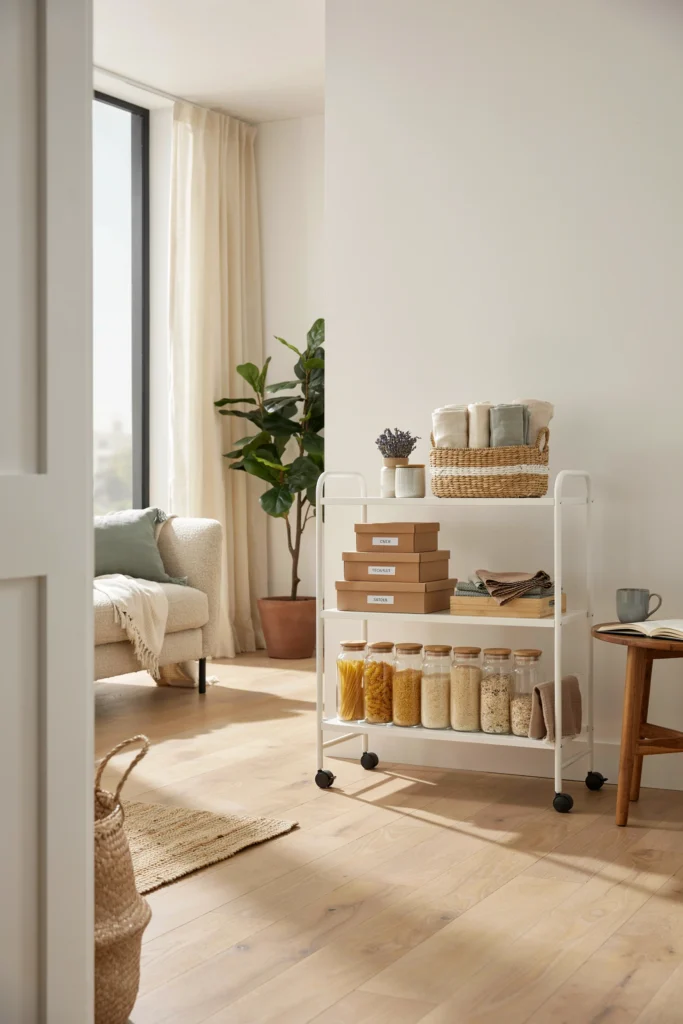
The best way to organize a rolling cart is to build the setup around a single purpose. Whether it’s for crafts, office supplies, pantry storage, or household essentials, every shelf should have a clear function. Frequently used items belong on upper levels, while backup supplies and heavier items should stay lower. A simple system makes the cart easier to use and prevents clutter from returning.
Pro Tip: Limit each shelf to one category to keep maintenance quick and effortless.
Purpose-Based Tiers
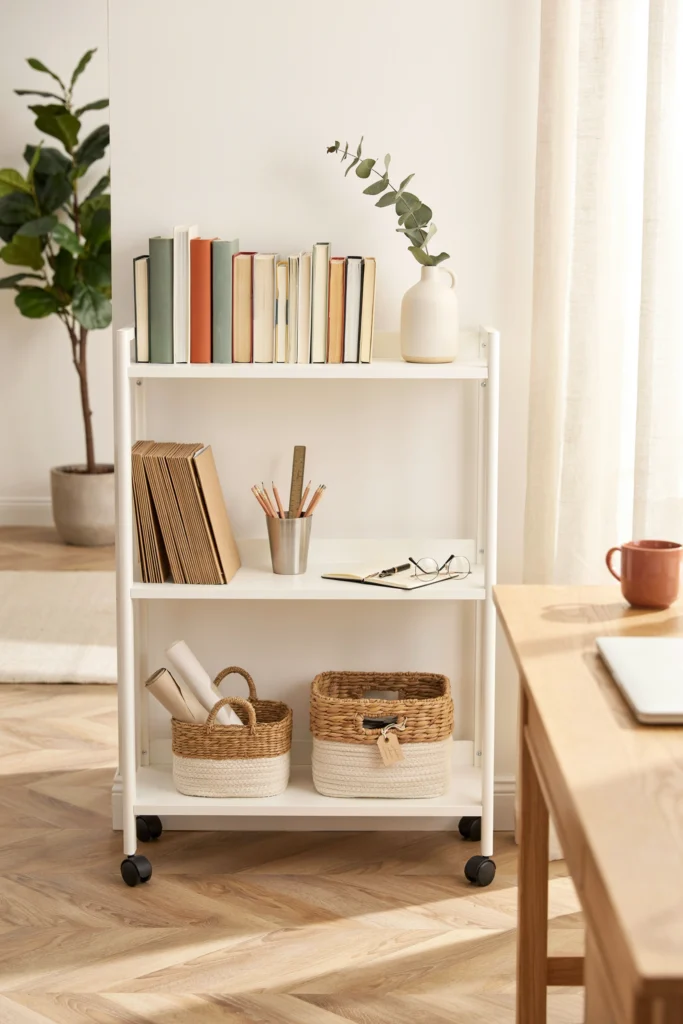
Giving each shelf a specific purpose instantly improves organization. For example, one tier can hold supplies, another can store tools, and the bottom can contain heavier items. This approach creates structure and helps you find things faster without digging through mixed categories.
Pro Tip: Label each tier so everyone knows where items belong.
Vertical Supply Sorting
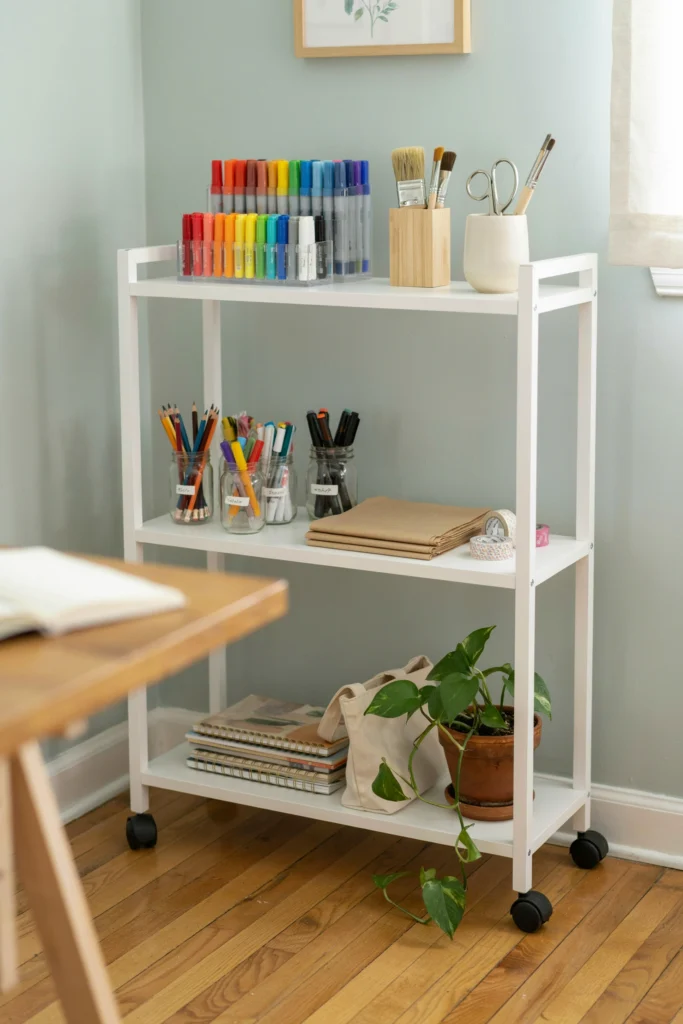
Storing supplies upright makes them easier to see and grab. Brushes, scissors, markers, and similar tools stay organized when placed vertically in containers rather than piled together. This method also saves shelf space and improves visibility.
Pro Tip: Use side-mounted cups or bins to maximize vertical storage.
Yarn Ready Cart
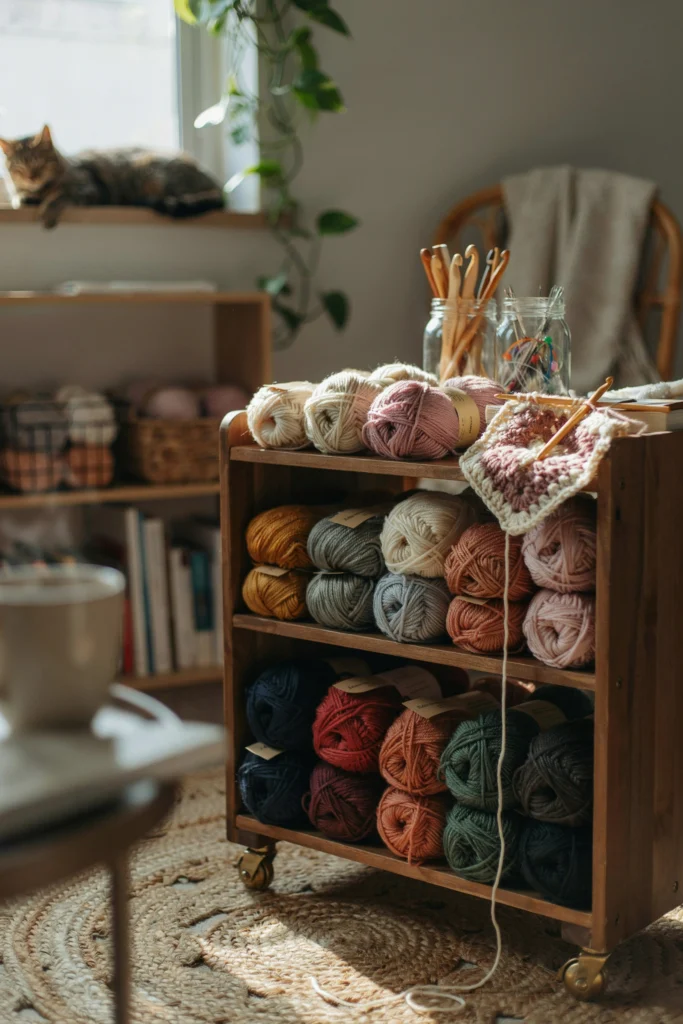
A rolling cart is perfect for yarn storage because skeins stay visible and accessible. Organize yarn by color or project, keep tools in jars, and store unfinished work on the top shelf. This prevents tangles and makes crafting sessions more enjoyable.
Pro Tip: Reserve one shelf exclusively for current projects.
Clear Kitchen Station
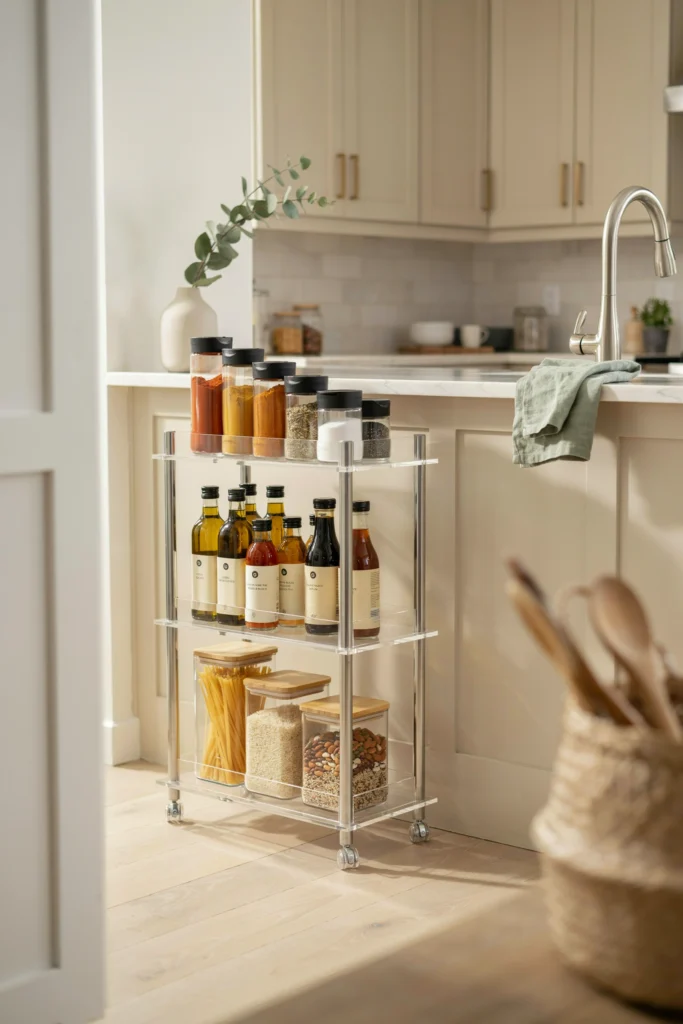
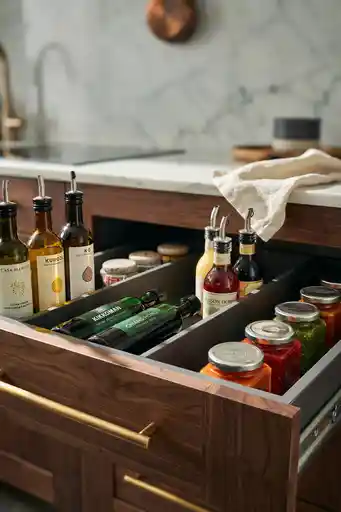
Rolling carts work beautifully as mobile kitchen organizers. Store cooking oils, spices, condiments, and frequently used ingredients together so they are always within reach. Clear containers help you see inventory levels while keeping everything neat.
Pro Tip: Use turntables on shelves for easier access to small bottles.
Color-Coded Crafting
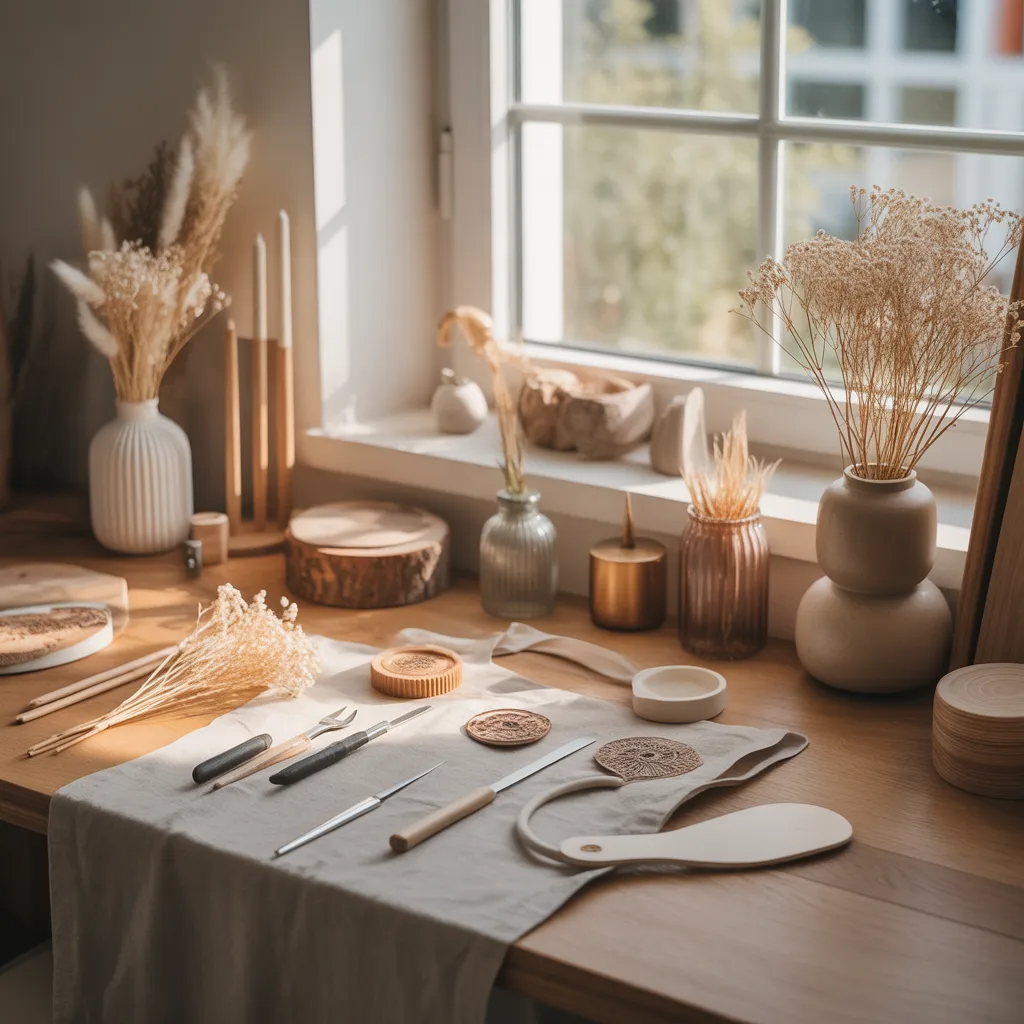
Craft supplies multiply quickly, making color-based organization highly effective. Group markers, paper, paint, and tools into separate containers while arranging similar colors together. This creates visual order and speeds up creative projects.
Pro Tip: Use transparent bins so colors remain visible at a glance.
Desk-Side Storage
Transform a rolling cart into an extension of your workspace by storing office supplies, notebooks, planners, and project materials nearby. This keeps your desk clear while ensuring essential items remain easy to access.
Pro Tip: Keep current projects on the middle shelf for maximum convenience.
Nursery Essentials Cart
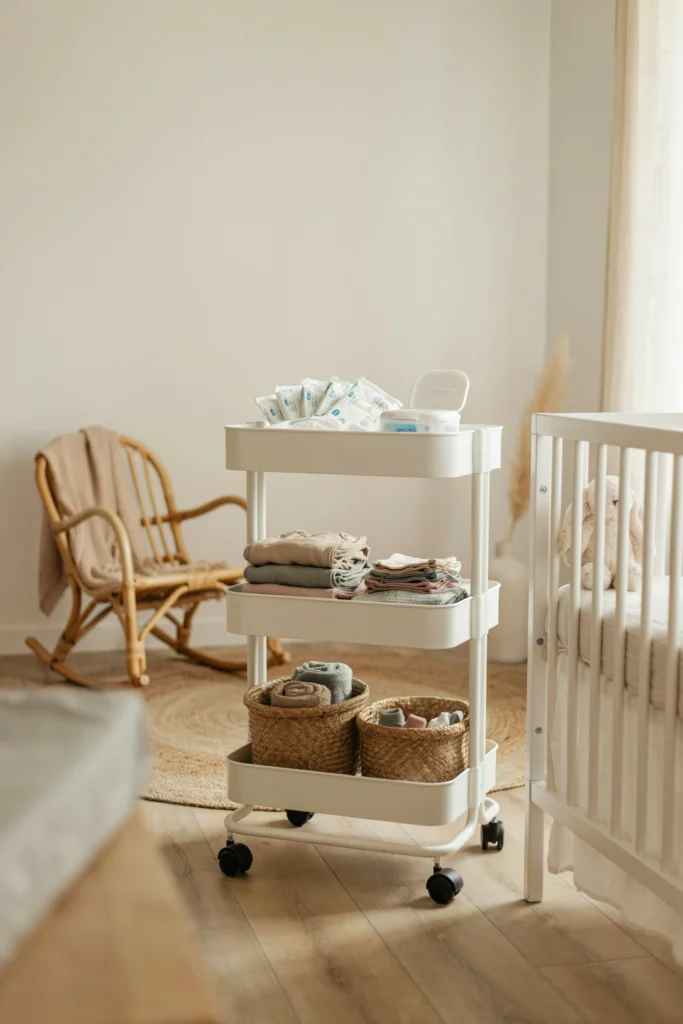
A nursery cart keeps diapering and baby-care supplies organized in one portable location. Store diapers, wipes, creams, and spare clothing in separate baskets so late-night changes become quicker and less stressful.
Pro Tip: Place the cart beside the changing station for easier access.
Classroom Rotation Cart
Teachers can use rolling carts to organize learning stations and rotating activities. Assign each shelf or bin to a specific lesson or subject, making transitions smoother and reducing setup time.
Pro Tip: Use labeled bins so students can independently return materials.
Pantry Refill Cart
Bulk groceries and pantry refills often take up valuable shelf space. A rolling cart provides a convenient place to store backup snacks, canned goods, and dry foods while keeping them easy to access during meal preparation.
Pro Tip: Store heavier food items on the bottom shelf for stability.
Lunch Prep Station
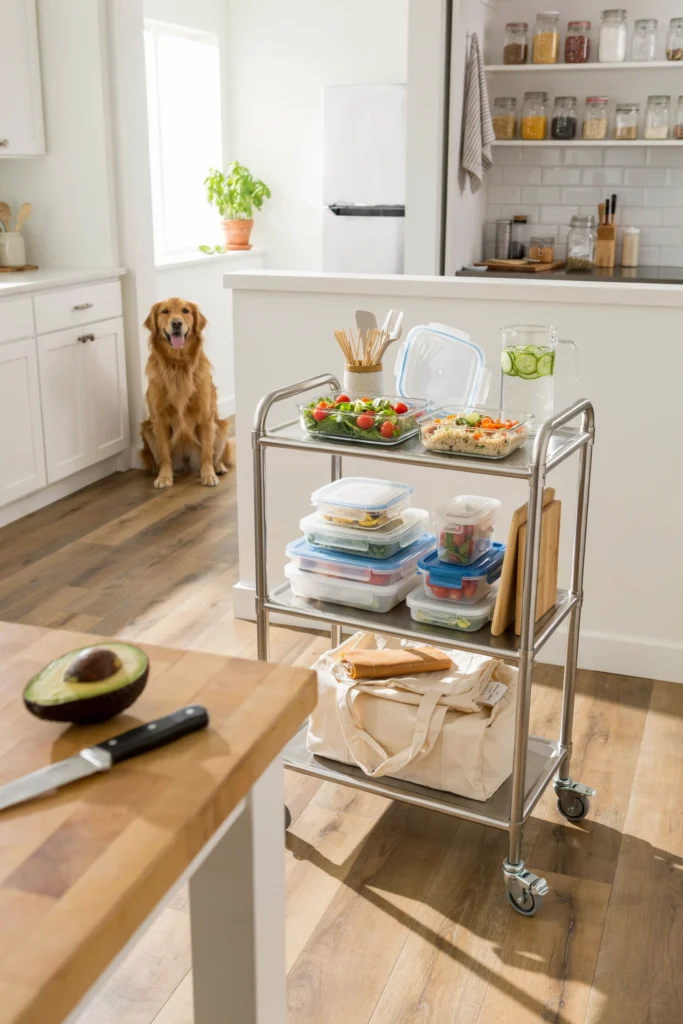
Designating a cart for lunch-making supplies simplifies busy mornings. Group snacks, containers, wraps, and drink options together so everything needed for packing lunches is located in one place.
Pro Tip: Restock the cart after grocery shopping to maintain efficiency.
Marker Reset Zone
Markers, dry-erase supplies, and classroom tools stay manageable when given a dedicated home. Organizing them by condition and purpose makes inventory checks easier and reduces waste.
Pro Tip: Separate working markers from replacements to avoid confusion.
Home Gym Cart
Workout equipment often ends up scattered throughout the house. A rolling cart provides organized storage for resistance bands, towels, water bottles, and small fitness accessories while keeping everything portable.
Pro Tip: Place heavier weights on the lowest shelf.
Paint Supply Flow

Artists benefit from organizing paint supplies according to workflow. Store paints and brushes on top, paper and tools in the middle, and backup supplies on lower shelves to create a logical system.
Pro Tip: Use spill-proof containers for liquid paints.
Category Split Carts
When one cart isn’t enough, assigning separate carts to different categories prevents overcrowding. One cart might hold crafts while another stores office supplies or educational materials.
Pro Tip: Use matching carts to create a cohesive look.
Living Room Planner
Planning supplies often create paper clutter around the home. A dedicated rolling cart can store planners, notebooks, stationery, and project materials while remaining easy to move when needed.
Pro Tip: Keep frequently used pens in containers attached to the side.
Bathroom Care Cart
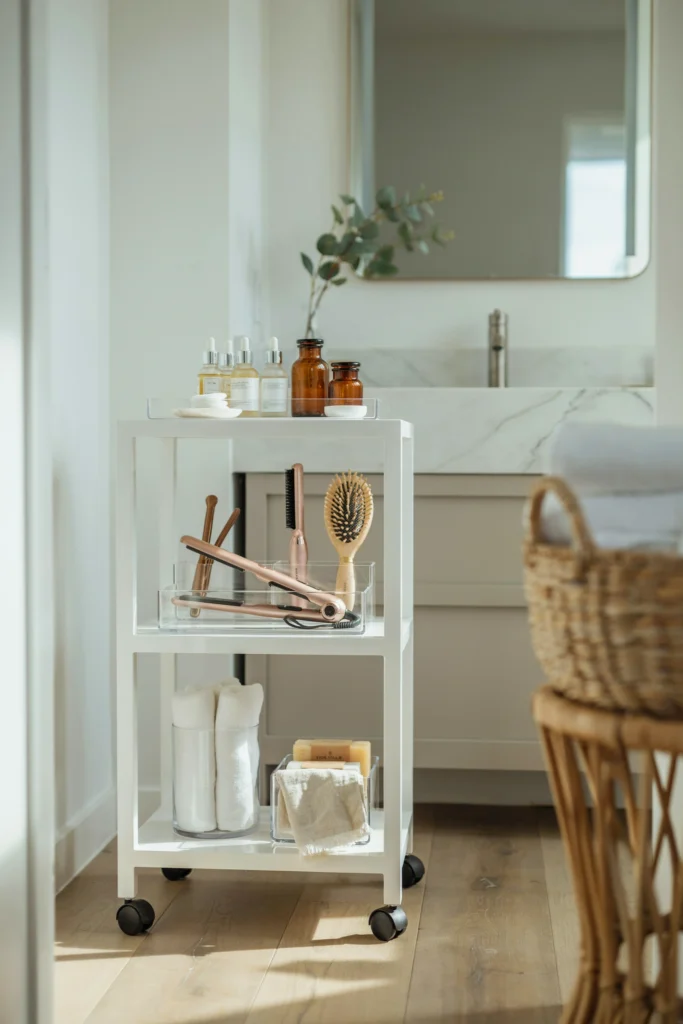
Bathrooms often lack storage space. A rolling cart provides room for skincare products, hair tools, toiletries, and extra supplies while keeping counters clear and organized.
Pro Tip: Choose moisture-resistant containers for better durability.
Kids Activity Cart
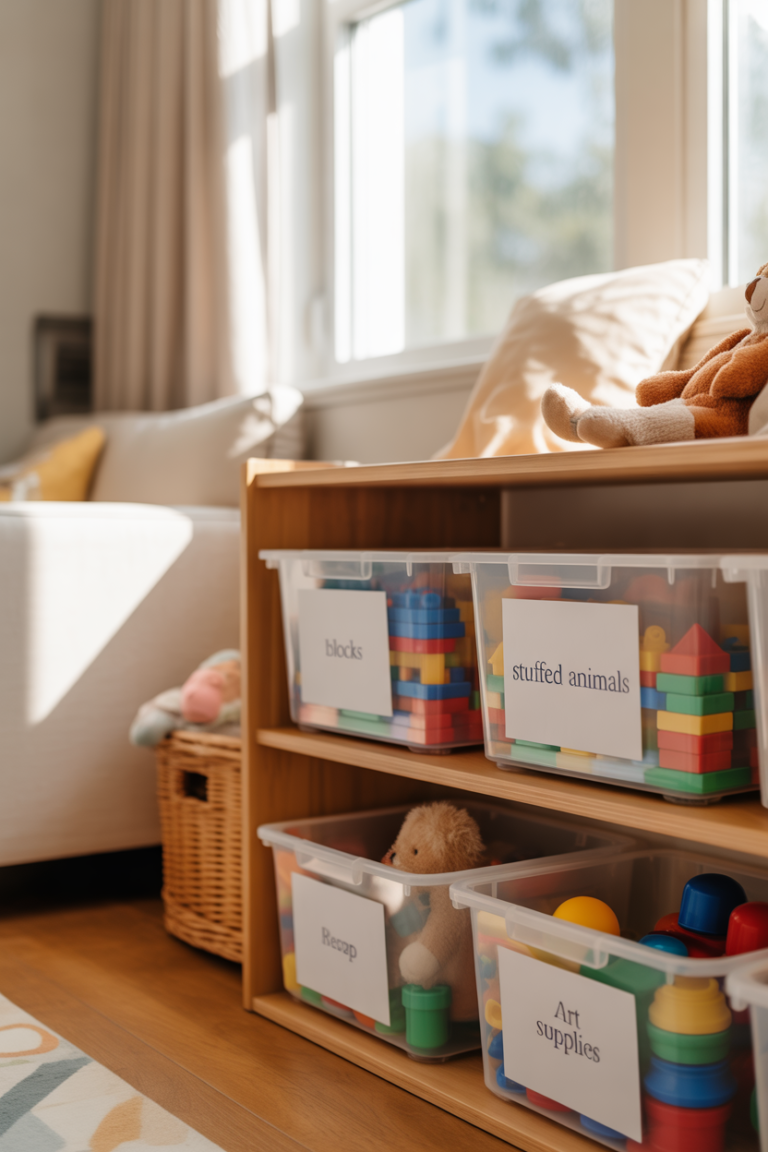
A dedicated activity cart encourages creativity while simplifying cleanup. Store art supplies, books, games, and educational materials on separate shelves so children can easily access and return items.
Pro Tip: Keep heavier toys on lower shelves for safety.
Device Charging Cart
Charging stations become far more organized when devices have designated spaces. Use separate shelves for tablets, laptops, chargers, and accessories while keeping cables neatly managed.
Pro Tip: Label charging slots for shared households or classrooms.
Classroom Workflow Cart
Managing paperwork becomes easier when assignments and materials follow a structured path. Organize trays according to workflow stages so students and teachers know exactly where items belong.
Pro Tip: Use color-coded labels to identify each stage quickly.
Makeup Routine Cart
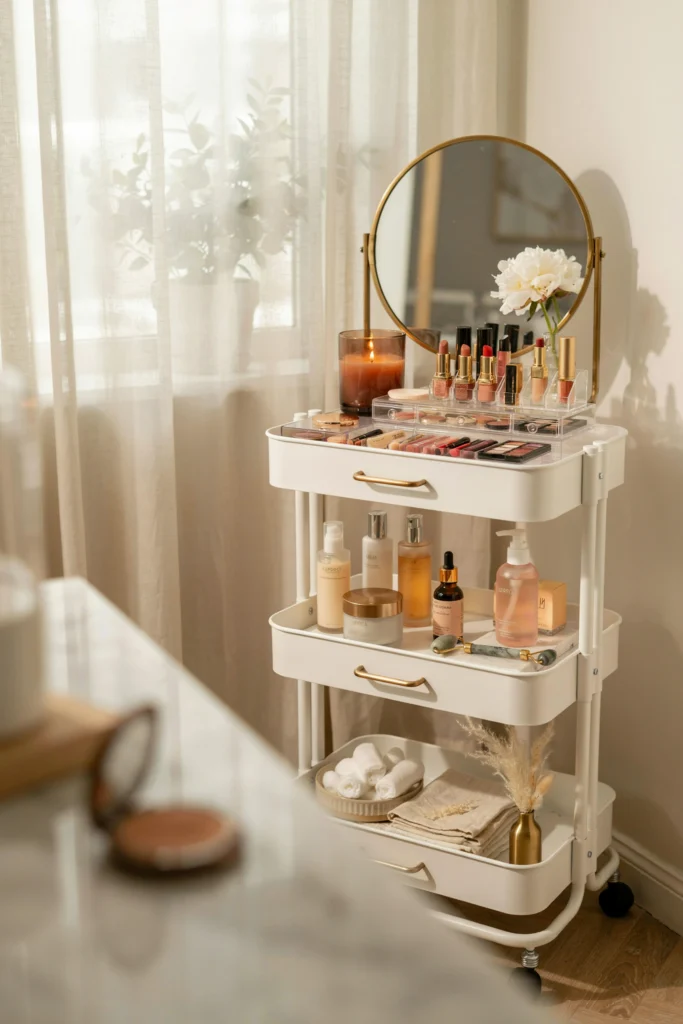
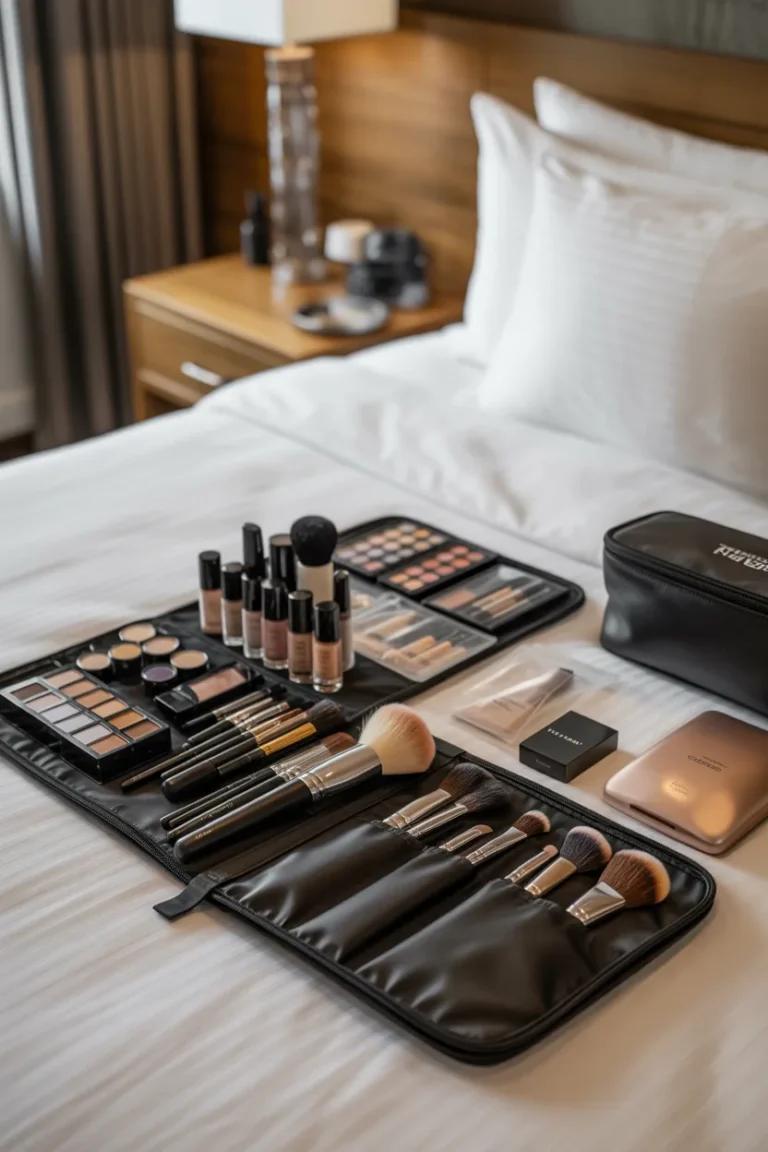
Beauty products stay organized when grouped according to daily routines. Keep everyday makeup on top shelves and store backups below to create a streamlined getting-ready process.
Pro Tip: Clear organizers make it easier to track products before purchasing duplicates.
Laundry Supply Cart
A rolling cart keeps laundry essentials together and easy to transport. Store detergent, stain removers, dryer sheets, and cleaning tools in separate sections to simplify laundry day.
Pro Tip: Use a slim cart that fits comfortably beside appliances.
Coffee Bar Cart
Creating a mobile coffee station keeps mugs, coffee pods, syrups, and accessories organized in one location. This setup frees valuable counter space while making morning routines more efficient.
Pro Tip: Store frequently used coffee supplies on the top shelf.
Cleaning Caddy Cart
Cleaning becomes more efficient when supplies travel with you. Keep sprays, cloths, gloves, brushes, and refills organized on a rolling cart so everything is available room to room.
Pro Tip: Separate cleaning products by room or task.
Sewing Project Cart
Sewing projects stay manageable when fabrics, tools, and patterns remain visible and organized. A rolling cart keeps current work accessible while reducing clutter around your workspace.
Pro Tip: Dedicate one shelf to active projects only.
Entryway Drop Cart
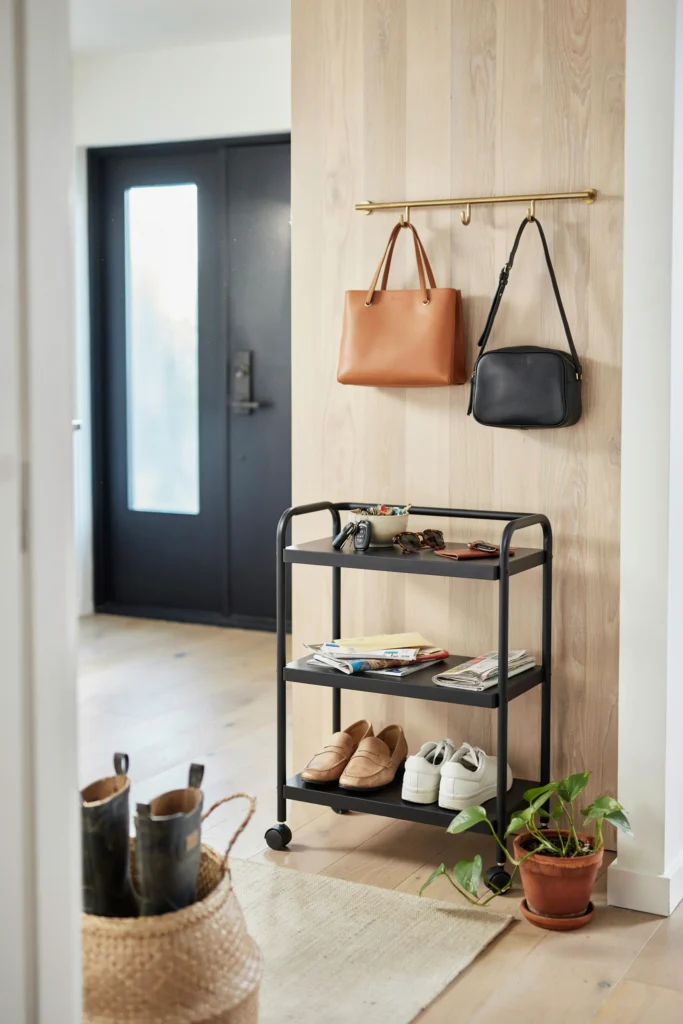
An entryway cart creates a landing zone for everyday essentials. Keys, wallets, mail, bags, and shoes each receive a designated area, reducing clutter around the front door.
Pro Tip: Add a small tray on top for keys and loose items.
FAQs
What can I store in a rolling cart?
Rolling carts can store almost anything that belongs to a single category or purpose. Popular options include office supplies, craft materials, pantry items, makeup, cleaning products, workout gear, baby essentials, and household tools. The most successful setups focus on storing related items together rather than mixing unrelated categories.
How do I stop a rolling cart from getting messy?
The easiest way to prevent clutter is by assigning every shelf a specific role and using containers to create boundaries. Avoid overfilling shelves and take a few minutes each day to return items to their designated spots. A simple reset habit keeps the cart functional and organized long-term.
I prefer this response