
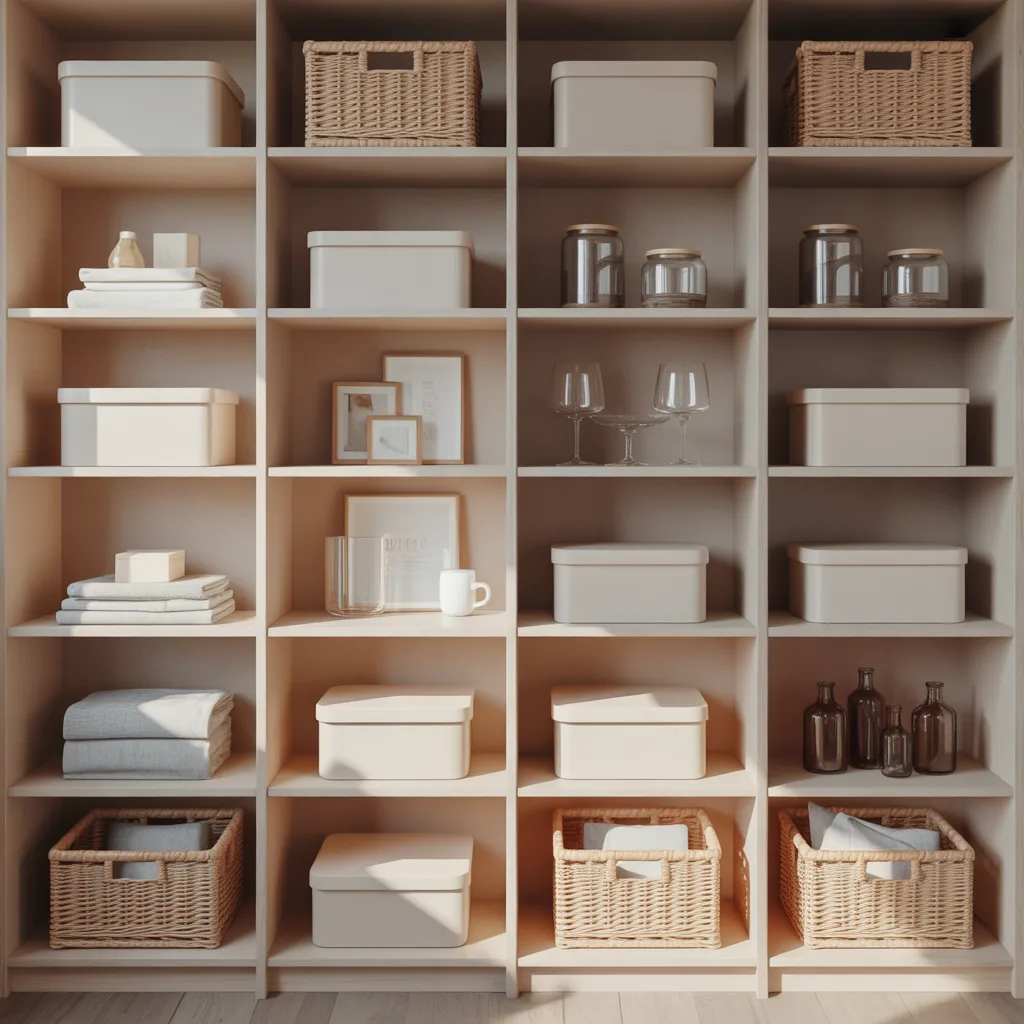
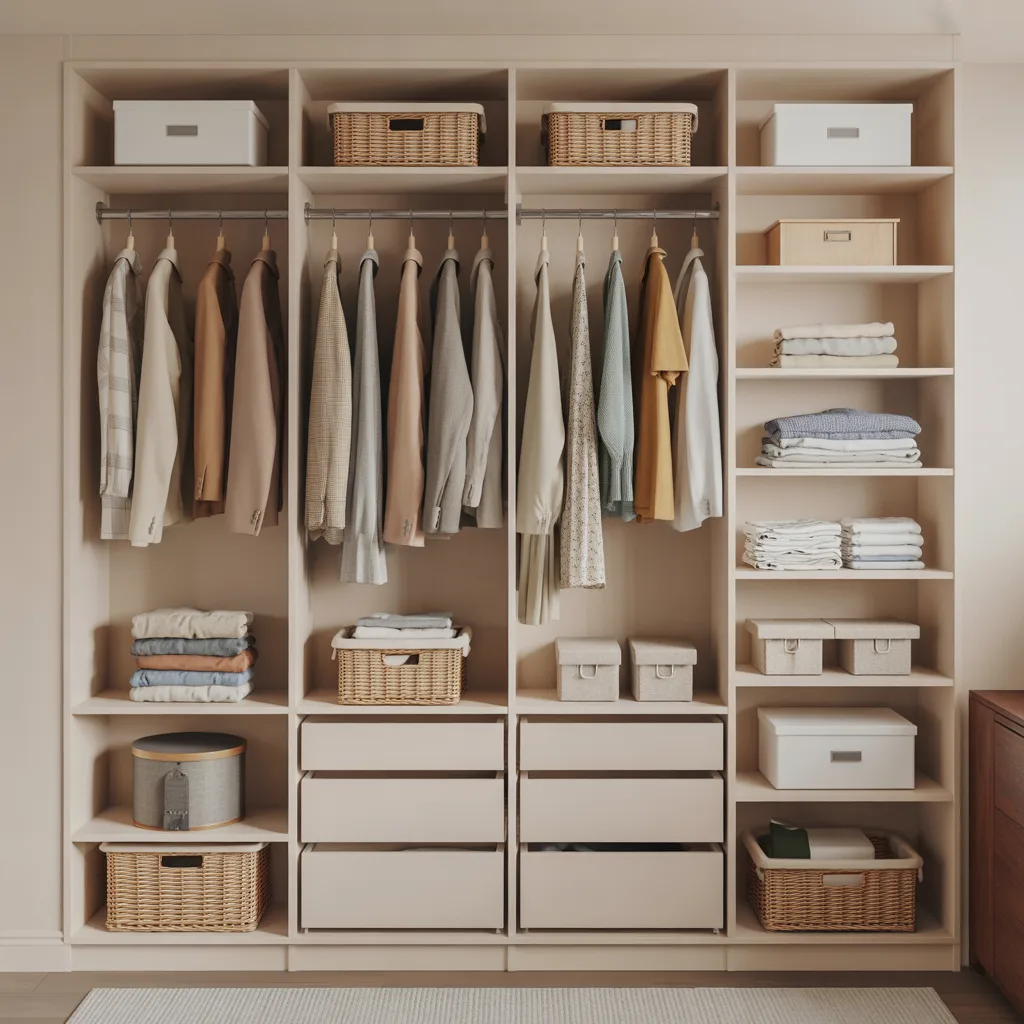


Keeping cleaning supplies organized can make everyday chores feel much simpler. When sprays, brushes, and cloths all have a designated place, you spend less time searching and more time getting things done.
Many cleaning cabinets become cluttered because products are stored randomly or hidden behind one another. A simple system can help you keep everything visible, accessible, and easy to maintain.
Whether you have a small apartment or a large home, these cleaning supplies organization ideas can help create a cleaner and more functional storage setup in 2026.
Key Takeaways
- Group cleaning products by purpose for faster access.
- Use vertical storage to maximize limited space.
- Keep daily-use supplies within easy reach.
- Store backup products separately from everyday cleaners.
- Use bins, shelves, and hooks to prevent clutter.
- Create simple systems that are easy to maintain long term.
How to Organize Cleaning Supplies?
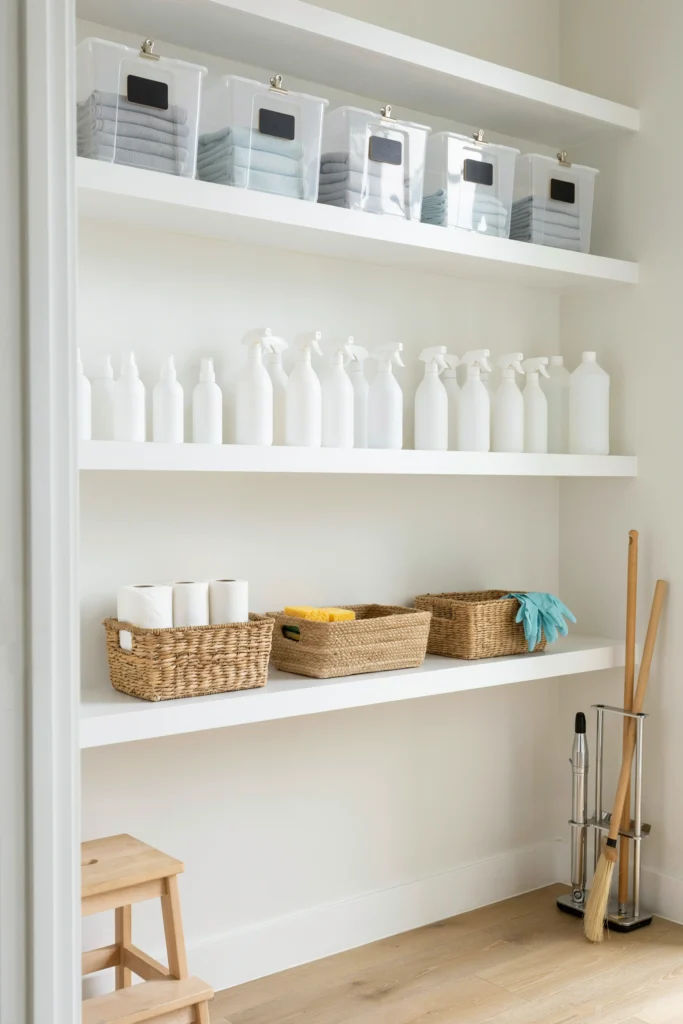
Organizing cleaning supplies starts with creating a system that makes sense for your daily routine. Instead of storing products wherever they fit, group similar items together and place them close to where they’re used most often. Keeping supplies visible and accessible helps prevent clutter from building up over time.
Pro Tip: Start by removing expired or unused products before setting up any organization system.
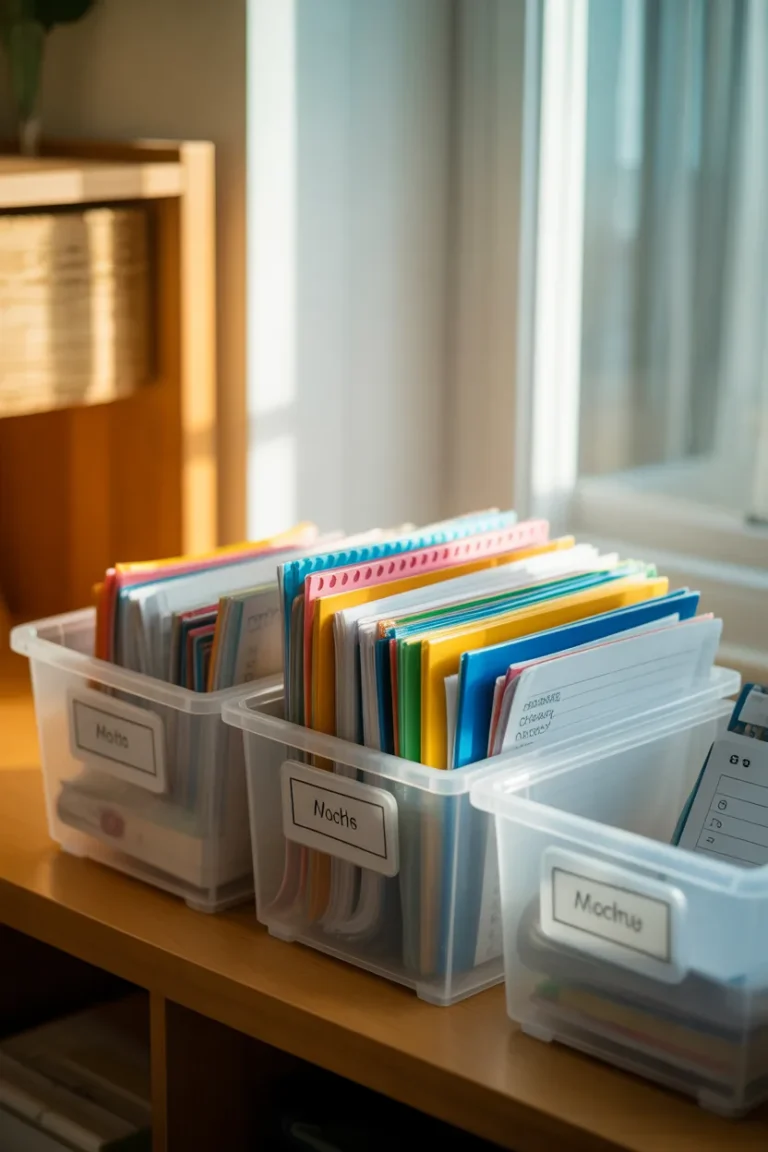
Labeled Clear Bins
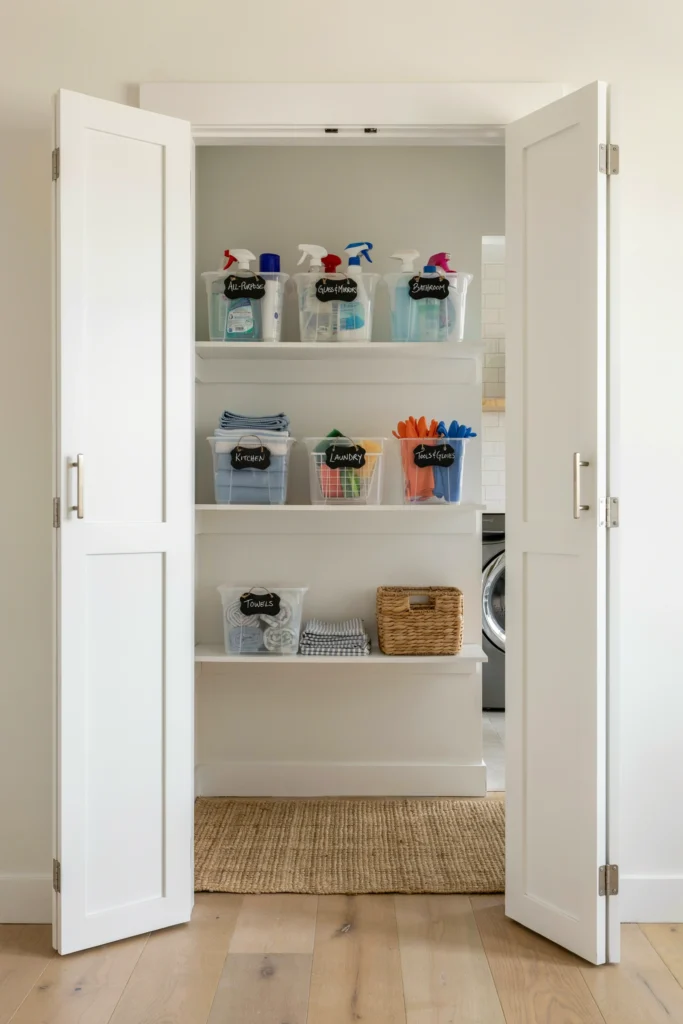
Clear bins make it easy to see exactly what you have without digging through shelves. Separate products into categories such as bathroom cleaners, glass cleaners, disinfectants, and supplies. Labels help everyone in the household know where items belong, making it easier to maintain order.
Pro Tip: Use waterproof labels so they stay readable even in humid storage areas.
Pull-Out Shelving
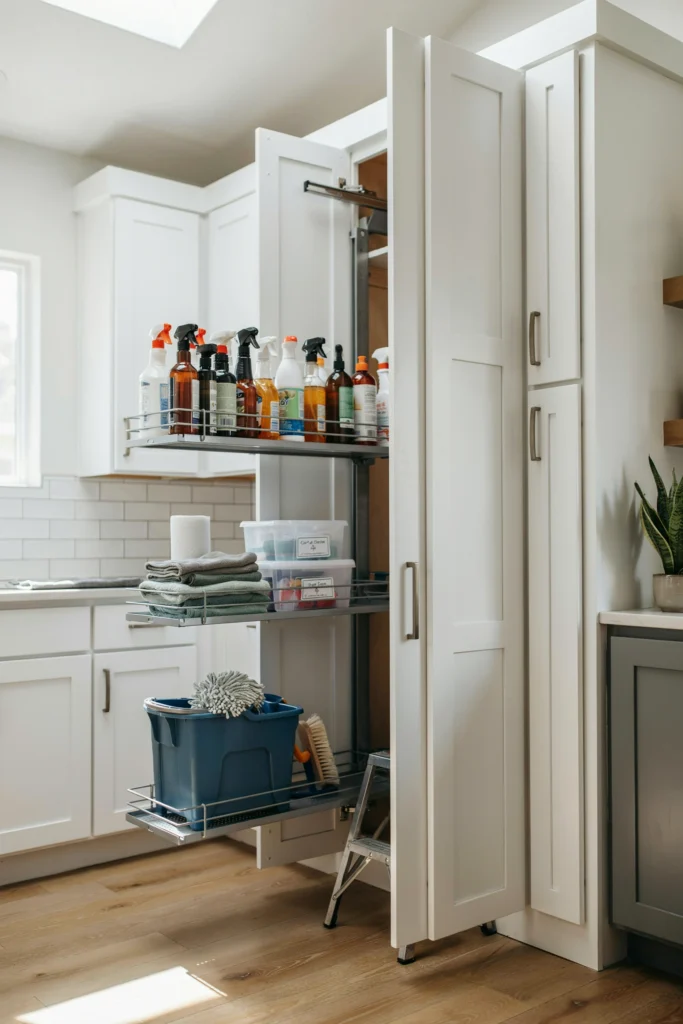
Deep cabinets often waste valuable space because items get lost in the back. Pull-out shelves bring everything forward, allowing you to reach products easily. This setup works especially well for storing heavier bottles and bulky cleaning supplies.
Pro Tip: Place frequently used products on the most accessible pull-out shelf.
Vertical Tool Zone
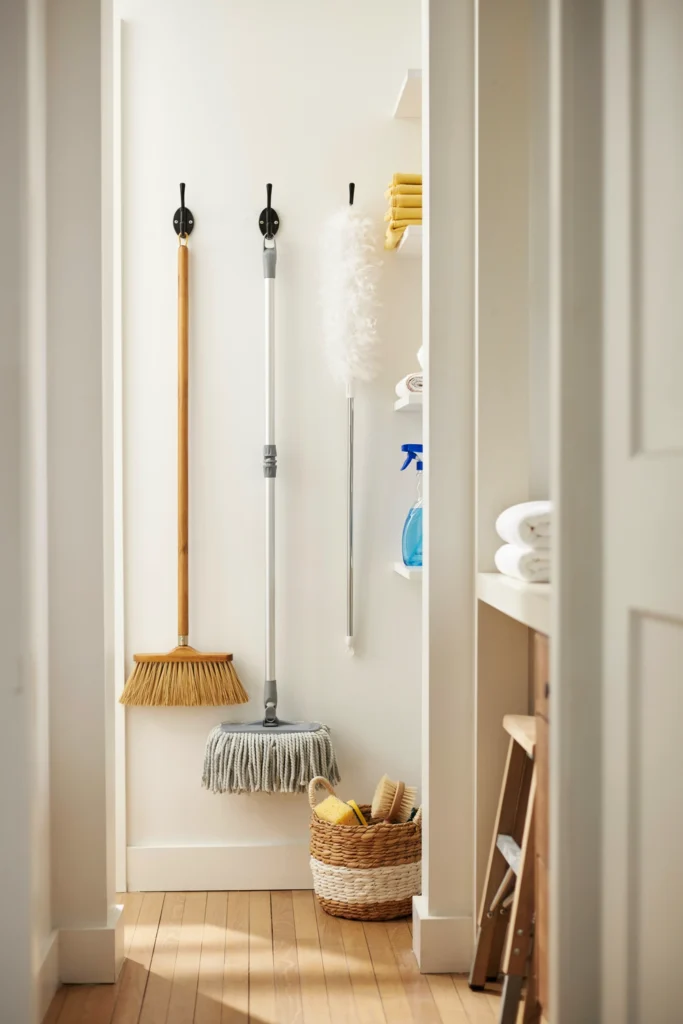
Mops, brooms, dusters, and similar tools can quickly create clutter when left leaning against walls. A vertical storage zone keeps everything upright, organized, and easy to grab when needed. Wall-mounted holders help maximize floor space while keeping tools in good condition.
Pro Tip: Store tools according to frequency of use, with daily items closest to reach.
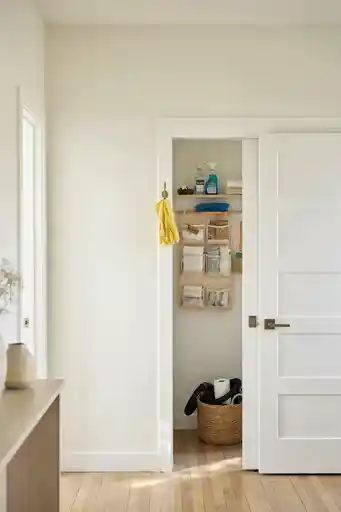
Zoned Closet Storage
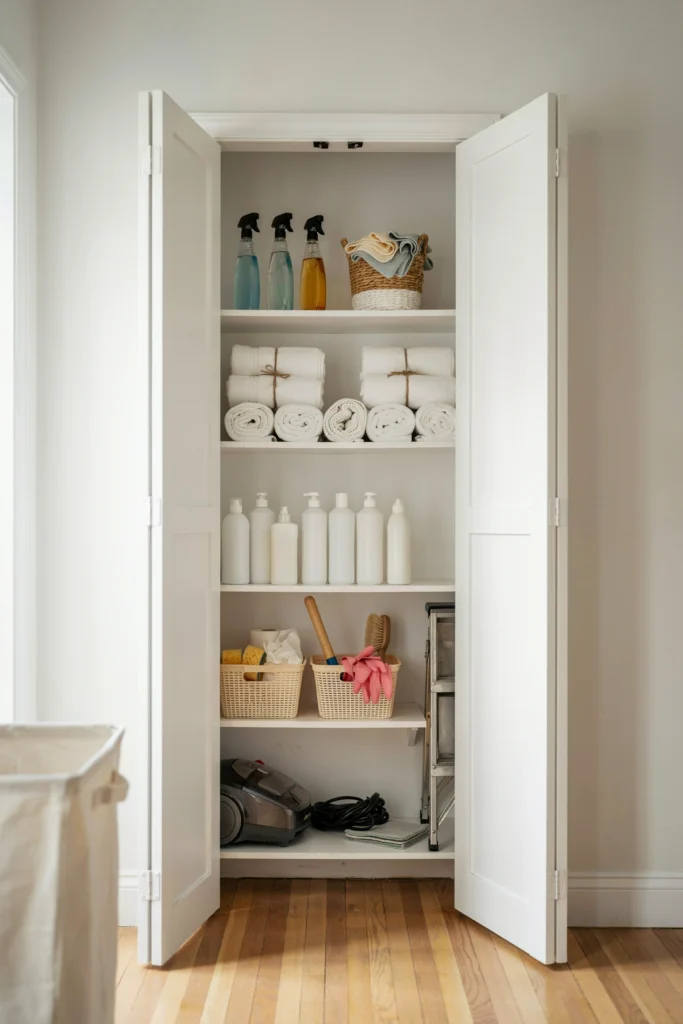
Creating dedicated sections inside a cleaning closet helps prevent products from getting mixed together. Assign individual shelves for daily cleaners, cleaning cloths, tools, and backup supplies. This makes it easier to find what you need without disrupting the entire space.
Pro Tip: Keep heavier products on lower shelves for safety and stability.
Slim Cabinet Pullout
Narrow spaces between cabinets can become valuable storage areas with a slim pullout organizer. Tall cleaning bottles fit perfectly in these narrow compartments while remaining easy to access. It’s an excellent solution for making use of otherwise wasted space.
Pro Tip: Use pullouts for frequently used sprays and cleaners for maximum convenience.
Door-Mounted Storage
Cabinet doors offer extra storage opportunities that often go unused. Install racks, baskets, or hooks to hold smaller supplies, gloves, brushes, or refill products. This frees up shelf space while keeping essential items within easy reach.
Pro Tip: Store lightweight items on door organizers to prevent unnecessary strain on hinges.
Tool Wall Rack
A wall-mounted rack creates a dedicated home for long-handled cleaning tools. Instead of piling tools into corners, each item stays separated and accessible. This setup also helps prevent damage caused by tools falling over.
Pro Tip: Group similar tools together to create a more organized appearance.
Hanging Tool Station
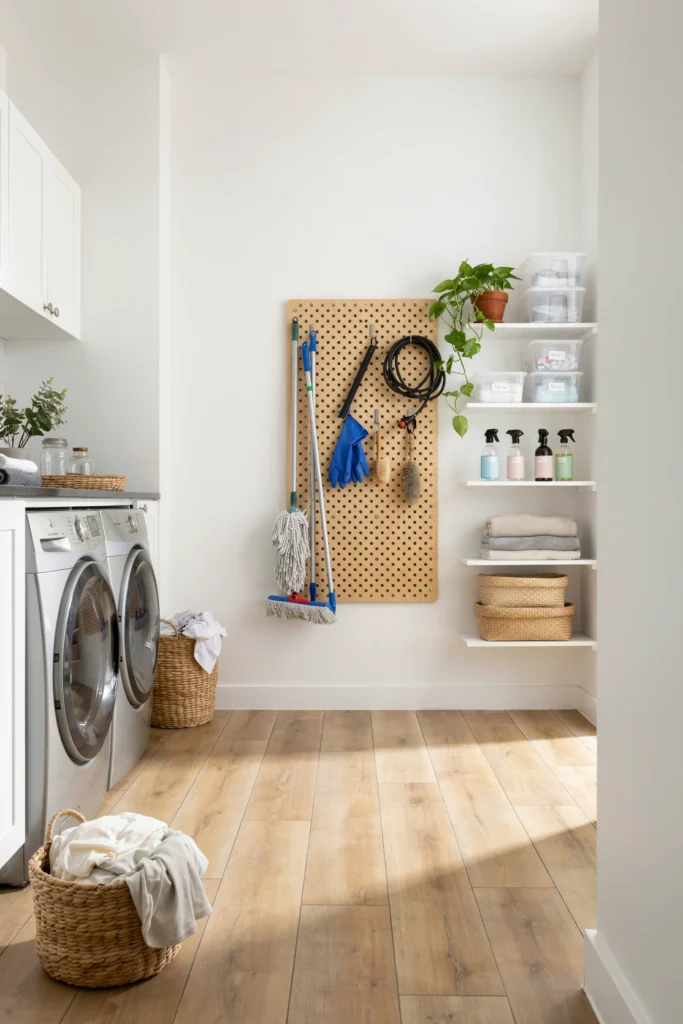
A hanging station works well in laundry rooms, garages, or utility closets where floor space is limited. By hanging cleaning tools vertically, you keep the area tidy while making tools easier to access and return after use.
Pro Tip: Install the station at a comfortable height to encourage consistent use.
Wire Shelf Zones
Wire shelving provides flexibility and visibility for storing cleaning products. Assign each shelf a specific purpose, such as sprays, paper goods, refills, or cleaning accessories. Open shelving makes inventory checks much easier.
Pro Tip: Use clear bins on wire shelves to keep smaller items contained.
Category-Based Bins
Separating products by task helps reduce confusion during cleaning sessions. Create bins for kitchen cleaning, bathroom cleaning, glass care, floor care, and disinfecting products. Organized categories save time and eliminate guesswork.
Pro Tip: Review categories every few months and remove products you no longer use.
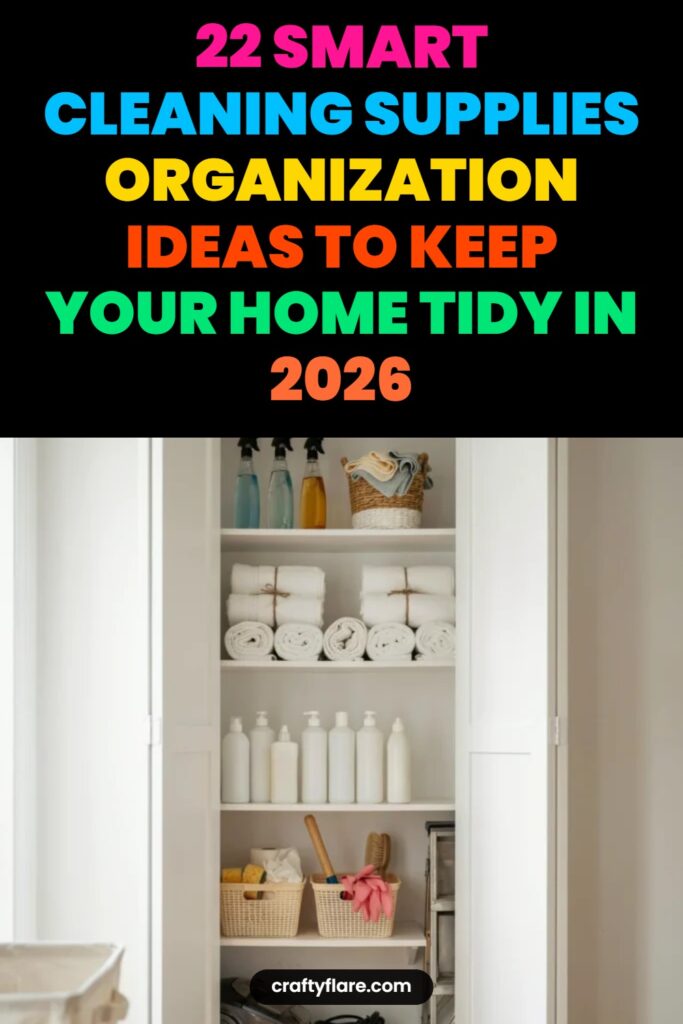
Full Utility Cabinet
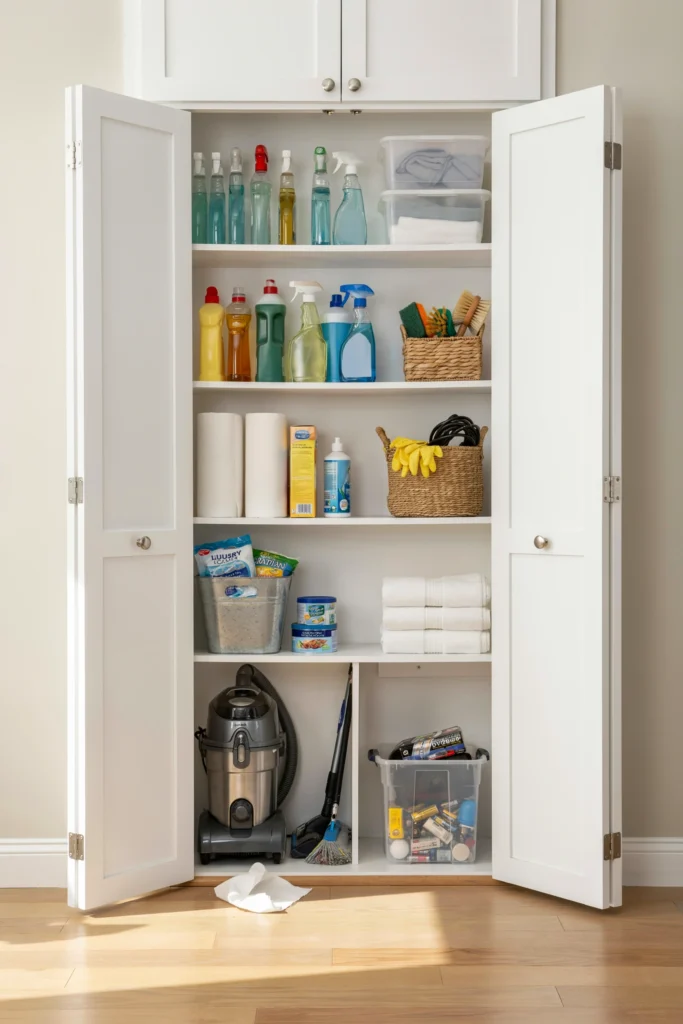
A dedicated utility cabinet provides a centralized location for all cleaning essentials. Assign each shelf a specific role so every item has a designated place. This system keeps supplies organized and prevents products from being scattered throughout the house.
Pro Tip: Reserve one shelf specifically for backup supplies and refills.
Pegboard Cabinet Setup
A pegboard adds flexible storage inside cabinets or utility spaces. Hooks and small containers can hold brushes, gloves, cloths, and frequently used cleaning tools. Adjustable layouts allow the setup to evolve as your needs change.
Pro Tip: Arrange items based on how often you use them for better efficiency.
Drawer-Style Storage
Pull-out drawers make it easier to access supplies without reaching into deep cabinets. Separate drawers can be used for cleaners, cloths, tools, and refills. The organized layout keeps everything visible and easy to maintain.
Pro Tip: Use drawer dividers to prevent products from shifting around.
Shelf Bin System
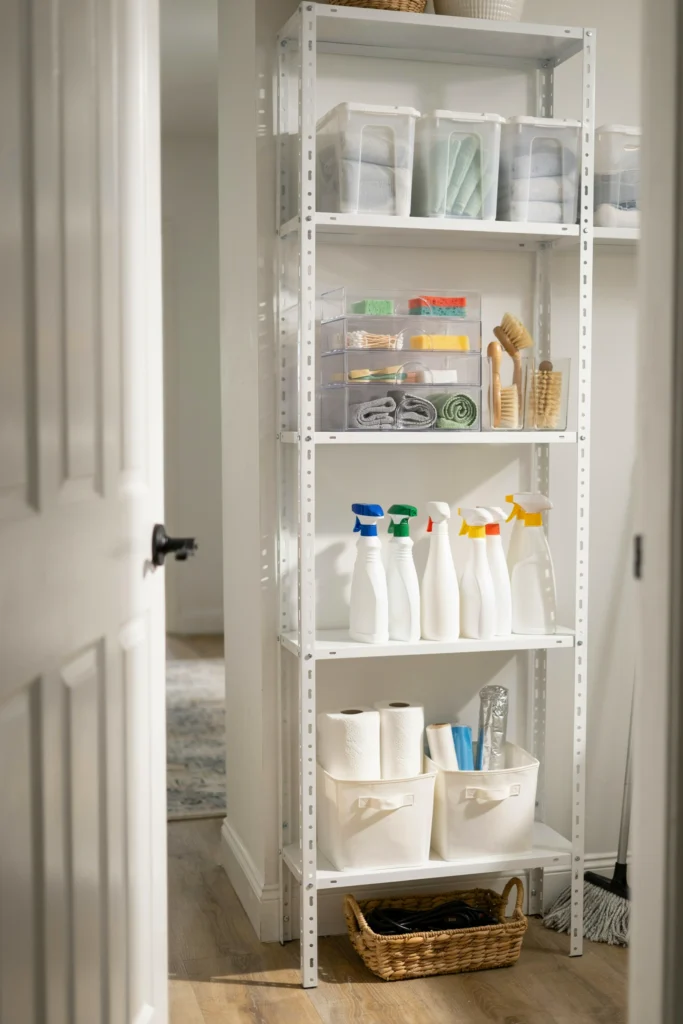
Bins help transform ordinary shelves into highly organized storage areas. Assign one bin to each cleaning category so products stay grouped together. Pulling out a single bin is often easier than searching through an entire shelf.
Pro Tip: Choose bins with handles for quick access and portability.
Under-Sink Spray Bar
Hanging spray bottles from a tension rod or metal bar frees up valuable cabinet space underneath sinks. Bottles stay upright and visible while leaving room below for additional supplies. It’s a simple solution that works in both kitchens and bathrooms.
Pro Tip: Pair the spray bar with a small bin underneath for sponges and gloves.
Cleaning Caddy Kits
Creating room-specific cleaning caddies keeps everything needed for each area together. A bathroom caddy, kitchen caddy, or upstairs cleaning kit reduces trips back and forth while cleaning. Portable caddies make tasks more efficient.
Pro Tip: Restock caddies immediately after use to keep them ready for the next cleaning session.
Open Bucket Station
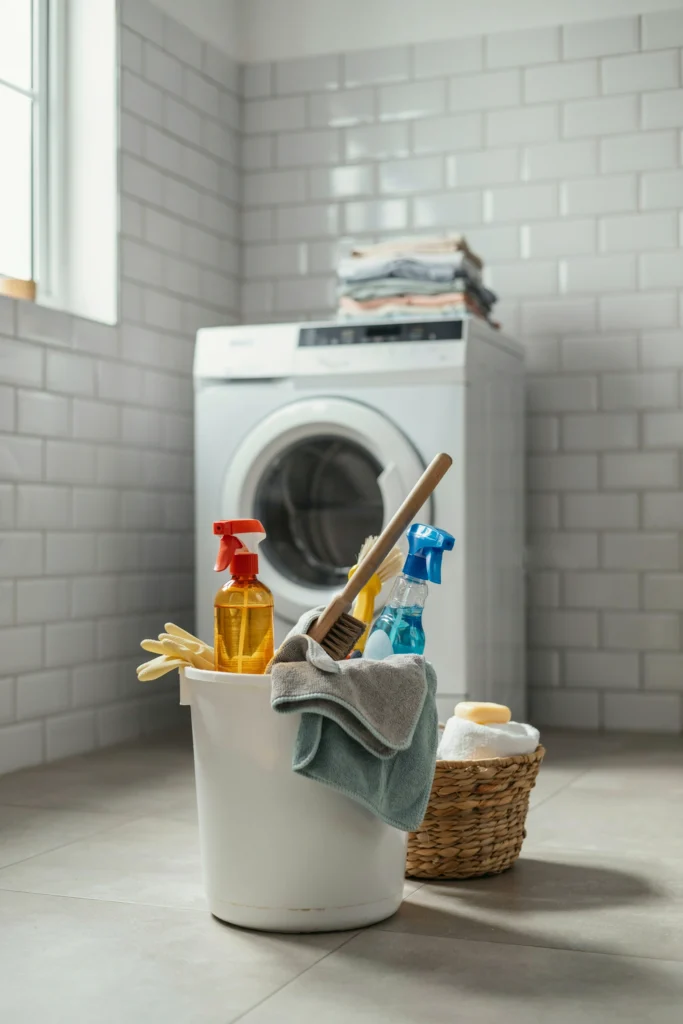
An open bucket station is ideal for frequently used cleaning supplies. Daily-use products remain visible and easy to grab, making quick cleanups more convenient. This setup works especially well in laundry rooms and utility areas.
Pro Tip: Choose a sturdy bucket with a comfortable handle for portability.
Slim Floor Caddy
Small gaps beside appliances or cabinets can become useful storage areas with a slim floor caddy. Tall bottles and refill products stay organized while remaining easy to access. It’s a smart solution for compact spaces.
Pro Tip: Use vertical storage to maximize every inch of available space.
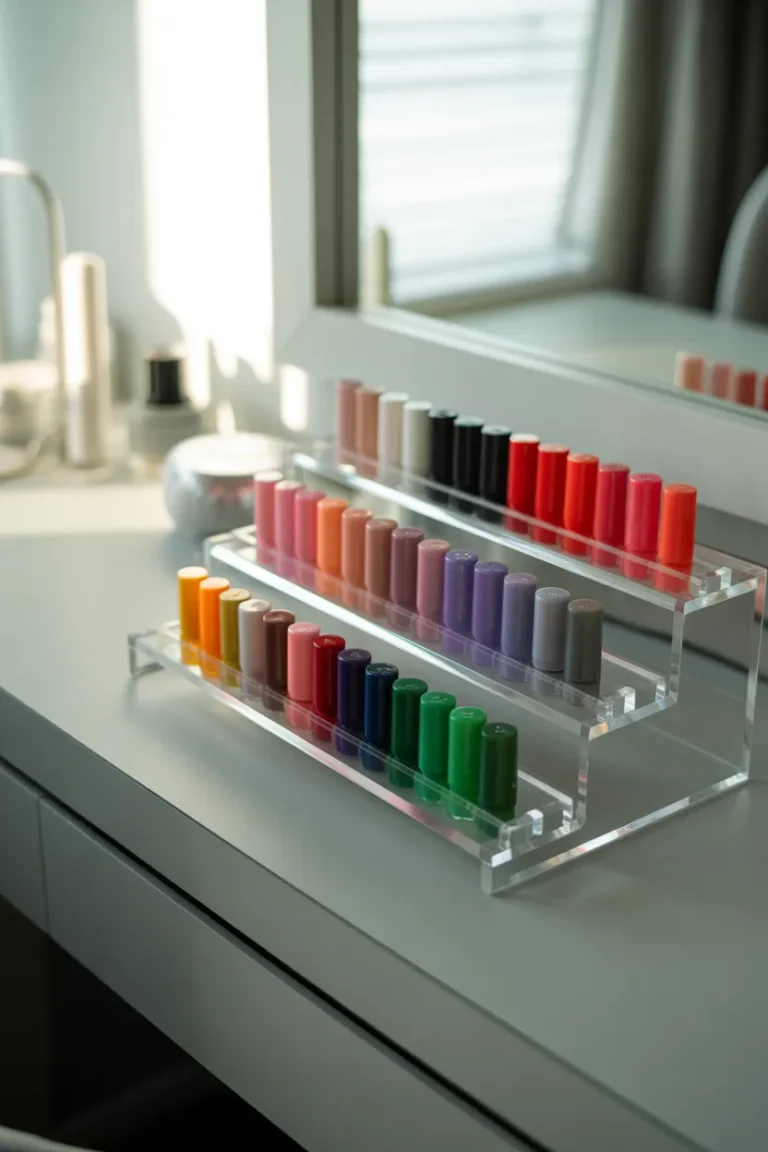
Label-Free Color Coding
Color coding offers a visual way to organize cleaning products without relying on labels. Assign specific colors to different cleaning tasks and match cloths or accessories accordingly. This system works particularly well in busy households.
Pro Tip: Keep the color system simple so it’s easy for everyone to remember.
Refill-Only Shelf
Keeping refills separate from daily-use products prevents overcrowding in primary storage areas. A dedicated refill shelf also makes it easier to track inventory and avoid unnecessary purchases. Everything stays organized and easy to monitor.
Pro Tip: Place newest refills at the back and older products at the front.
Under-Shelf Hanging Hooks
The space underneath shelves often goes unused. Adding hooks creates convenient storage for gloves, brushes, dusters, and other lightweight tools. This simple upgrade increases storage capacity without taking up additional room.
Pro Tip: Use rust-resistant hooks in humid environments.
Daily vs Deep Clean Split
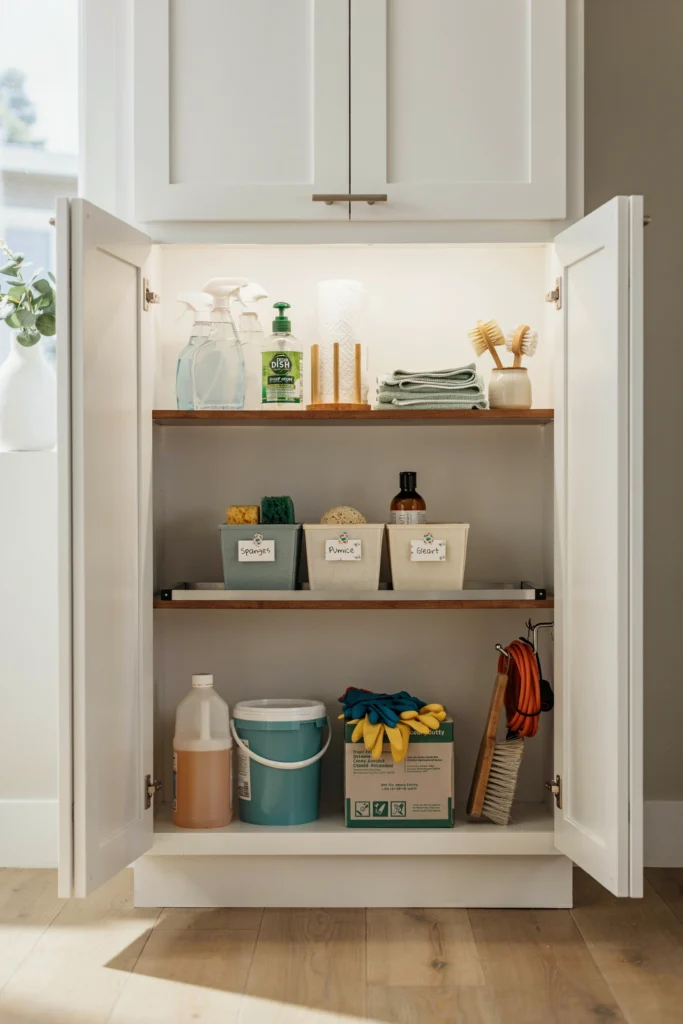
Organizing products by frequency of use helps reduce clutter and improve efficiency. Keep daily cleaners at eye level and store specialty or deep-cleaning products in less accessible areas. This approach simplifies everyday cleaning routines.
Pro Tip: Review your daily-use products regularly to keep the system efficient.
FAQs
How many cleaning products should you actually keep?
Most households only need a small collection of essential cleaning products. Focus on versatile cleaners that handle multiple tasks rather than storing dozens of specialized products. Keeping fewer items makes organization easier and reduces clutter.
Pro Tip: If a product hasn’t been used in several months, consider removing it from your collection.
How do you keep cleaning supplies organized long-term?
Long-term organization comes from creating a system that is simple to follow. Store supplies close to where they’re used, keep categories clearly separated, and avoid overcrowding shelves or bins. Regularly returning items to their designated spots helps maintain order.
Pro Tip: Schedule a quick monthly reset to keep your organization system working smoothly.