
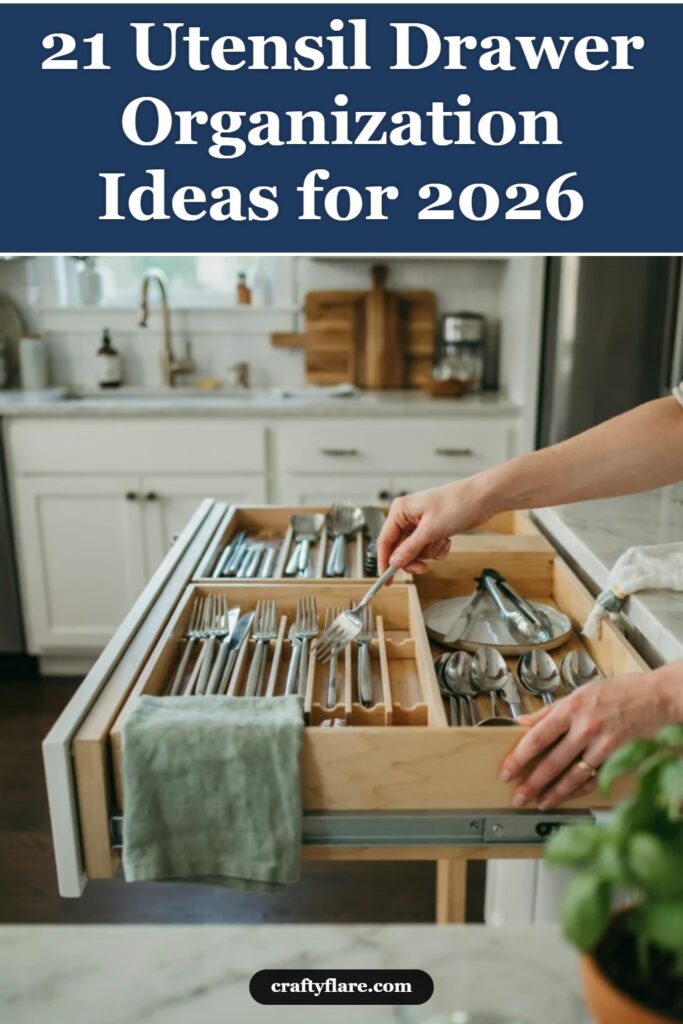
Messy utensil drawers can quickly turn cooking into a frustrating task. Forks pile up, kitchen tools slide around, and finding the right item suddenly takes longer than it should. A cluttered drawer often happens because there is no proper system in place.
The good news is that organizing utensil drawers does not have to be difficult. With the right layout and smart storage methods, you can create a system that stays organized and works for your daily routine.
Whether you have a small kitchen or large drawers filled with tools, these utensil drawer organization ideas can help you keep everything neat and easy to find in 2026.
key take away
- Create clear zones for different utensils
- Separate tools by material or purpose
- Keep daily-use items within easy reach
- Use dividers and trays to reduce clutter
- Prevent sliding with non-slip liners
- Declutter regularly to keep drawers functional
How Do You Organize Your Drawers?
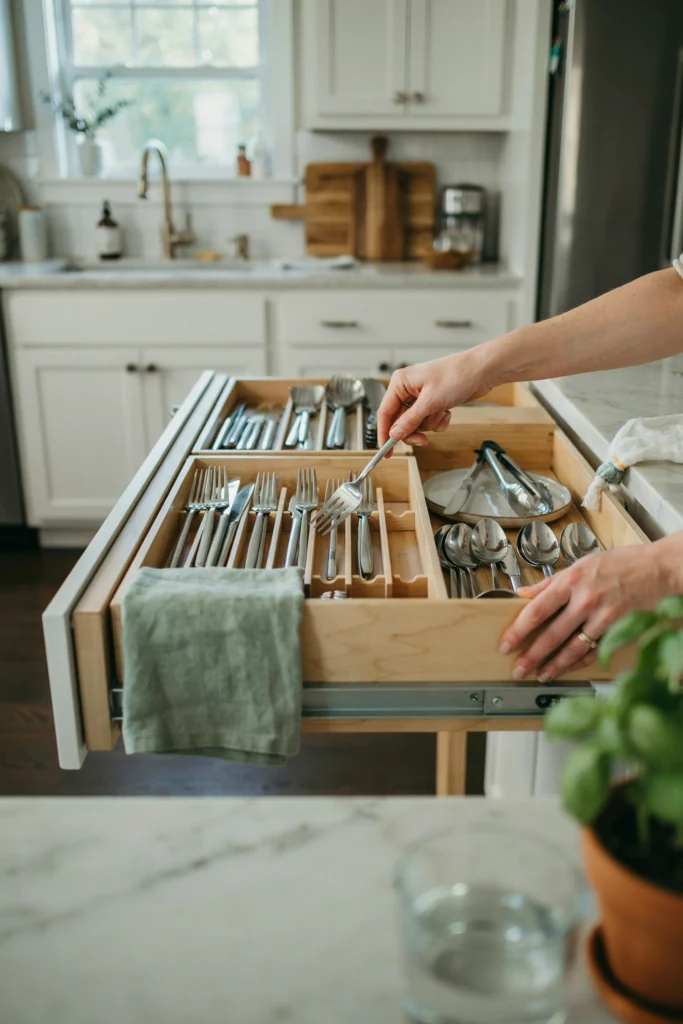
Start by removing everything from your drawer and deciding what truly belongs there. Group similar utensils together and get rid of duplicates or tools you rarely use. Once categories are clear, choose organizers that fit the drawer size and prevent utensils from shifting around.
Placing frequently used items near the front makes cooking easier, while less-used tools can stay toward the back. A practical system matters more than a perfect-looking drawer because easy maintenance keeps things organized long term.
Pro Tip: Empty and reset your drawer every few months to stop clutter from building up again.
Tool-By-Tool Zones
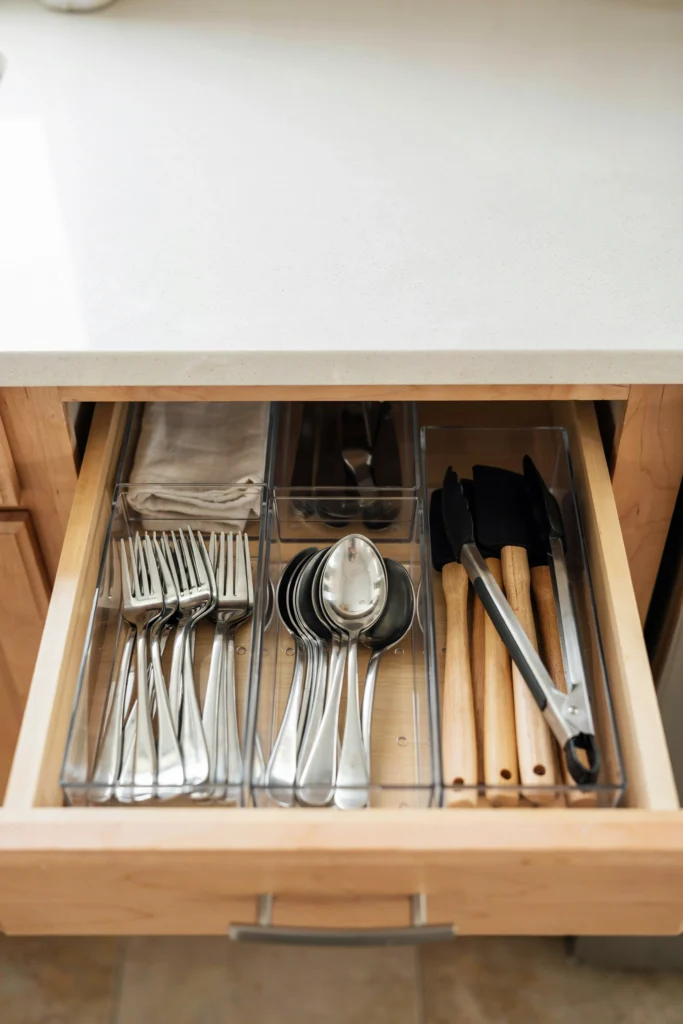
Kitchen drawers work better when every utensil has its own designated place. Creating separate zones for forks, spoons, spatulas, and serving tools helps reduce clutter and makes grabbing what you need feel automatic.
Clear trays or modular organizers help keep everything visible while preventing utensils from mixing together after daily use.
Pro Tip: Measure your drawer before buying organizers for a cleaner fit.
Material-Based Sorting
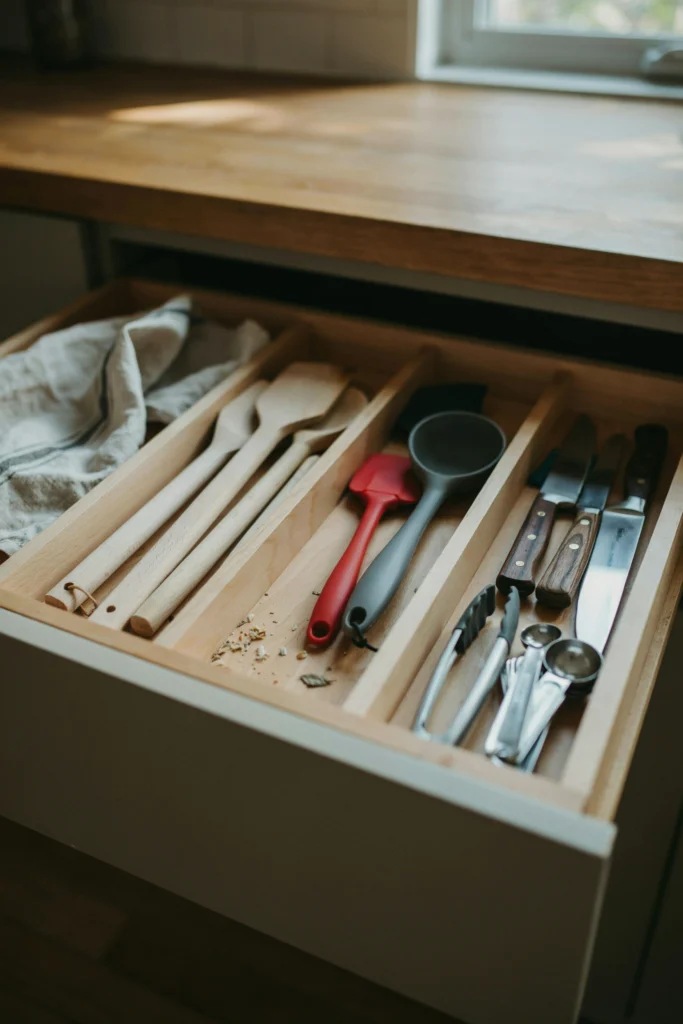
Keeping wooden, silicone, and metal utensils separated can make drawers feel cleaner and easier to manage. Different materials often serve different purposes, so sorting them helps reduce clutter and keeps tools in better condition.
Using slim dividers or narrow trays makes organization simpler while helping prevent scratches and unnecessary mess.
Pro Tip: Group similar materials together to make cleaning and storage easier.
Full-Drawer Zoning
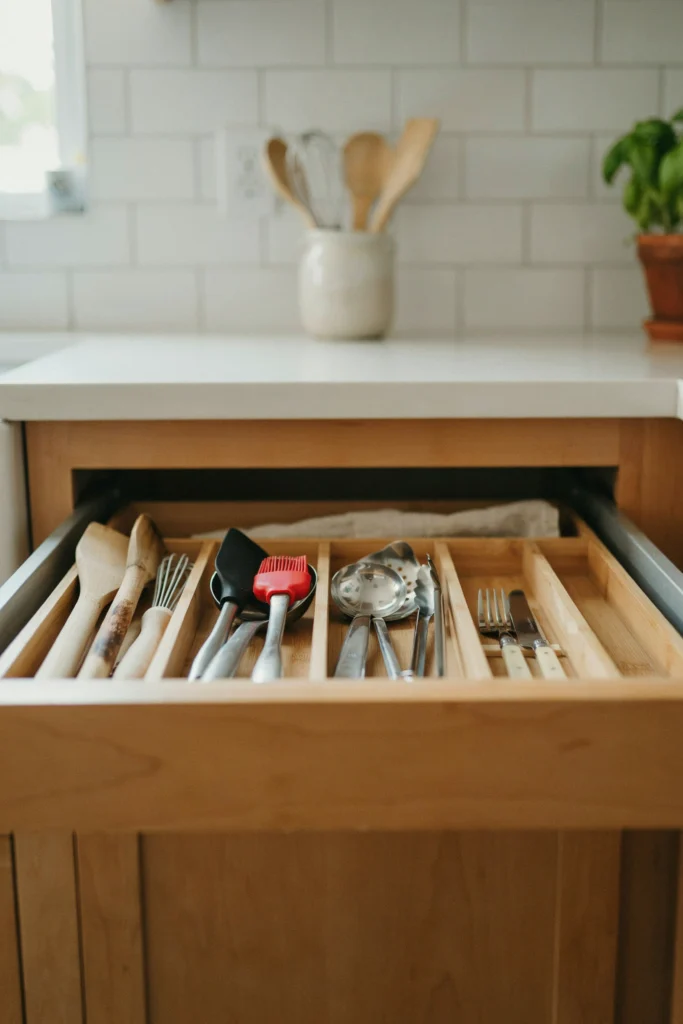
A cluttered utensil drawer becomes easier to manage when every section has a purpose. Divide the drawer into clear zones for flatware, cooking tools, and smaller kitchen gadgets so nothing gets lost.
Using sturdy dividers creates boundaries that stop utensils from sliding around and keeps the setup easy to maintain.
Pro Tip: Assign one section per category to speed up cleanup after cooking.
Two-Level Storage
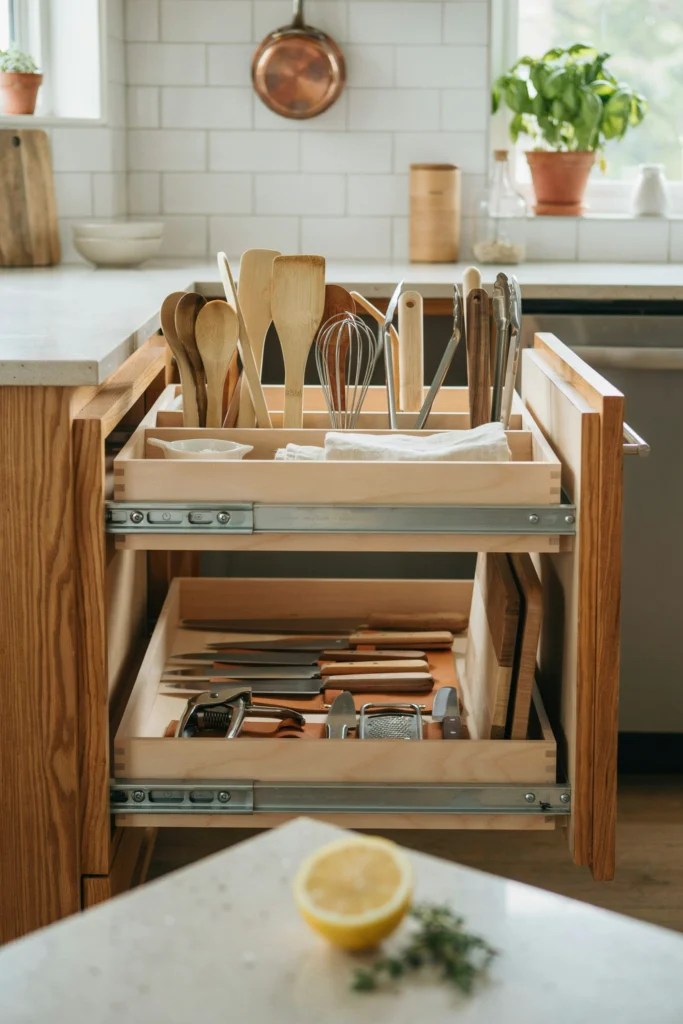
Deep drawers often waste valuable space when everything gets stacked together. Adding a second level with a lift-out tray creates extra room while keeping daily utensils easy to access.
Frequently used tools can stay on top, while backup items and specialty utensils remain organized underneath.
Pro Tip: Use shallow top trays for everyday items you grab most often.
Vertical Tool Rows
Long kitchen tools fit better when stored vertically instead of piled together. Arranging utensils in rows keeps handles easy to reach and helps reduce shifting whenever the drawer opens or closes.
Slim bins and dividers make the layout look cleaner while keeping everything visible at a glance.
Pro Tip: Group utensils by size to stop longer tools from covering smaller ones.
Length-Based Sections
Sorting utensils by length can instantly improve drawer organization. Long spatulas, serving spoons, and tongs fit better in larger spaces, while shorter tools stay organized in smaller compartments.
This setup prevents overcrowding and makes it easier to find exactly what you need during busy cooking sessions.
Pro Tip: Reserve longer sections for oversized kitchen tools to avoid overlap.
Gadget-Specific Lanes
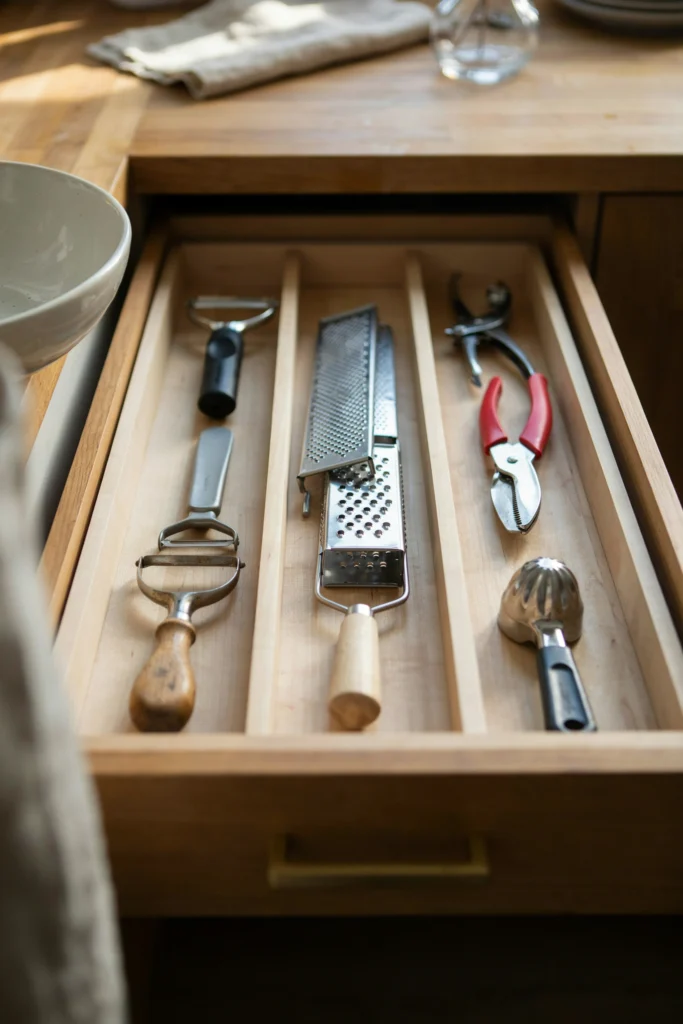
Kitchen gadgets quickly create mess when stored randomly. Giving peelers, graters, cutters, and measuring tools their own dedicated lanes makes drawers easier to manage and reduces wasted time searching.
Small compartments help everything stay visible while making cleanup much faster after meal prep.
Pro Tip: Store bulky gadgets separately to stop smaller tools from getting buried.
Flatware First Layout
Everyday dining utensils deserve priority space because they get used most often. Keeping forks, spoons, and knives in long trays helps maintain order while making unloading dishes faster.
Smaller sections nearby can hold serving utensils or extra tools without overcrowding the drawer.
Pro Tip: Keep matching flatware together for quicker table setup.
Neutral Tool Grouping
Drawers often feel calmer and cleaner when utensils follow a consistent style or color theme. Grouping tools with similar finishes into matching sections creates a more organized and visually balanced setup.
Open spacing also makes returning utensils easier after washing dishes.
Pro Tip: Avoid overcrowding to keep the drawer looking neat longer.
Mixed-Use Separation
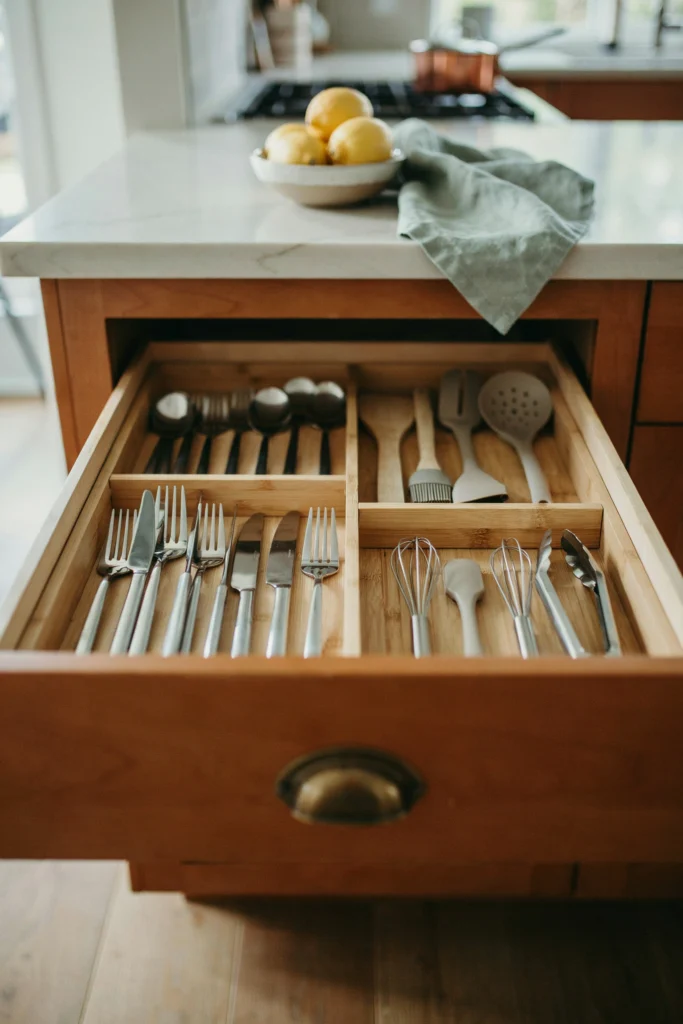
Combining eating utensils and cooking tools in the same space often creates clutter. Keeping flatware on one side and cooking tools on another makes the drawer easier to navigate during busy kitchen routines.
Clear dividers help prevent overlap and keep everything in its proper section.
Pro Tip: Store serving utensils separately to reduce drawer confusion.
Modular Grid Control
Small utensils and kitchen gadgets become easier to manage when drawers follow a grid system. Matching organizer bins help create sections that stay neat and stop smaller items from floating around.
This setup works especially well in larger or deeper kitchen drawers.
Pro Tip: Choose stackable organizers for better flexibility later.
Vertical Pull-Out Storage
When drawers feel overcrowded, vertical storage can solve the problem. Pull-out compartments let utensils stand upright, making everything easier to see and access without stacking.
This method works especially well in narrow cabinets or smaller kitchens with limited drawer space.
Pro Tip: Place heavier utensils at the bottom for better balance.
Entertaining-Ready Storage
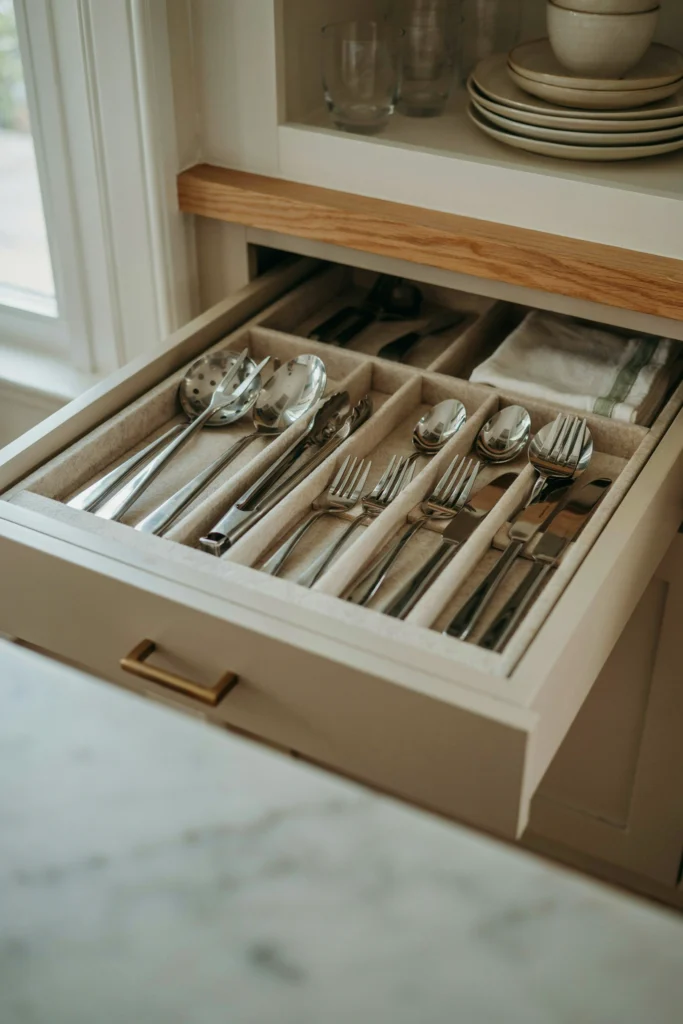
Special serving utensils and guest flatware stay in better shape when stored separately from everyday tools. Clear organizers help prevent scratches while keeping matching sets together.
This setup works well for households that entertain guests often or use special utensils occasionally.
Pro Tip: Use soft liners to protect polished serving pieces from scratches.
Built-In Dividers
Fixed dividers can create a cleaner and more permanent organization system. Built-in sections help every utensil stay in place while reducing movement and drawer clutter.
This method works especially well for kitchens with custom cabinetry or larger storage spaces.
Pro Tip: Choose divider sizes based on the utensils you use most often.
Upright Canister Storage
Large utensils often take up unnecessary drawer space when stored flat. Standing spatulas, ladles, and cooking spoons upright in containers makes them easier to grab and keeps drawers less crowded.
This setup works particularly well in deep drawers near cooking areas.
Pro Tip: Keep heavier tools toward the back for better stability.
Daily-Use Front Row
Frequently used utensils should always stay closest to reach. Placing your everyday spoons, spatulas, or forks at the front helps speed up cooking and keeps kitchen routines smoother.
Backup tools can stay organized toward the back without getting in the way.
Pro Tip: Review your front row every few months to match changing habits.
Deep Drawer Decluttering
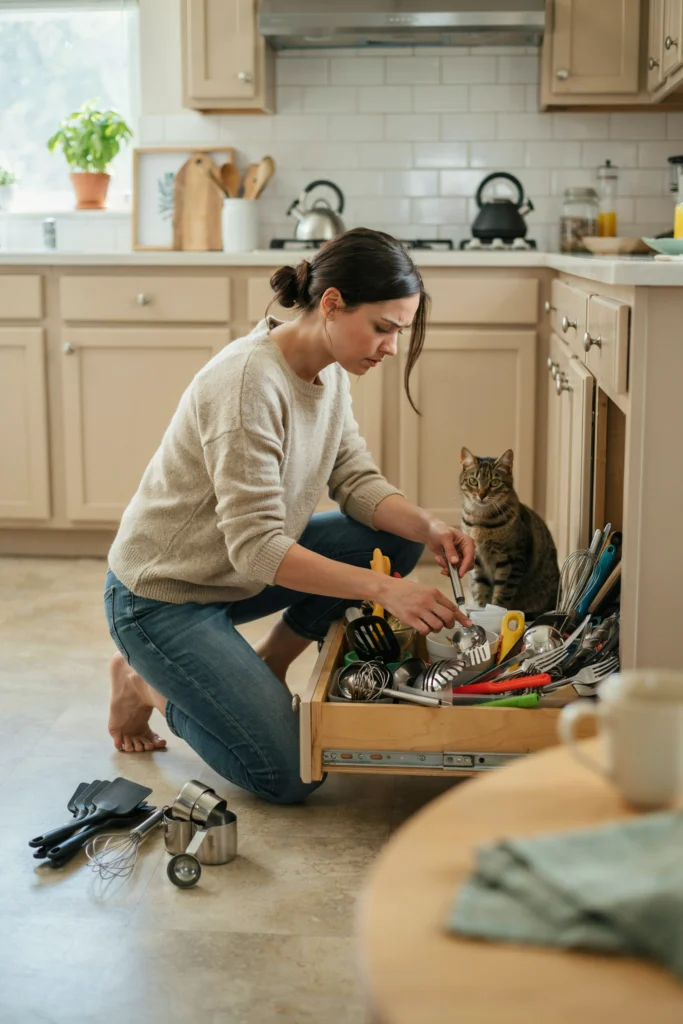
Overfilled drawers quickly become frustrating to use. Removing broken tools, duplicates, and rarely used utensils creates more space and makes the drawer easier to maintain.
Less clutter also means better visibility and faster access to everyday essentials.
Pro Tip: If you haven’t used a utensil in months, consider storing it elsewhere.
Adjustable Divider Flex
Not every drawer fits standard organizers perfectly. Adjustable dividers create flexible sections that can change based on your kitchen tools and storage needs.
This option works especially well for renters or families whose utensil collections change over time.
Pro Tip: Expandable dividers help maximize awkward drawer spaces.
Non-Slip Base Layer
Drawer organizers often slide around during daily use, creating unnecessary mess. Adding a non-slip liner underneath helps trays stay secure and keeps the layout looking tidy.
It also reduces constant rearranging, making maintenance much easier.
Pro Tip: Cut liners exactly to drawer size for the best results.
Backup Tool Zone
Extra utensils can create clutter when mixed with daily-use items. Setting aside one small section for backup tools helps keep the main drawer cleaner and easier to manage.
This also makes replacements easier to find when needed.
Pro Tip: Limit backups to tools you actually use regularly.
Category-Only Sections
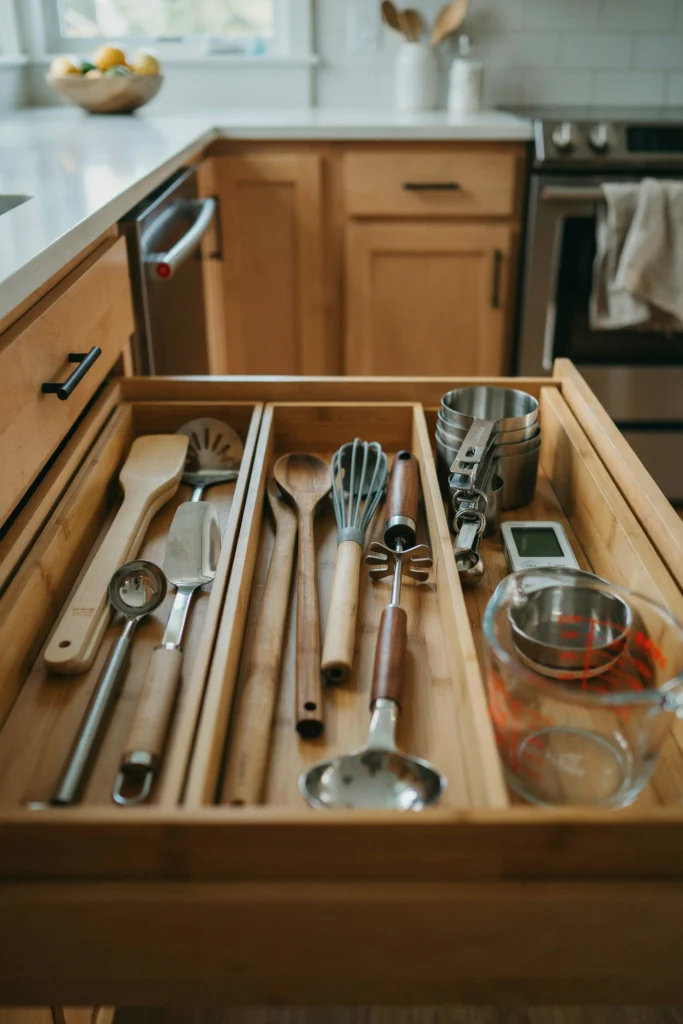
The easiest way to keep a drawer organized is by assigning each section one clear purpose. Measuring tools, serving utensils, and cooking tools should all have separate categories.
This approach reduces confusion and makes putting items back feel more natural.
Pro Tip: Keep categories simple so the system stays easy to follow.
FAQs
What Is the Order of Utensils in a Drawer?
The best utensil order depends on how often you use each item. Everyday utensils should stay in the easiest-to-reach spots, usually near the front or center of the drawer. Longer tools can be placed along the sides or back to reduce overlap and keep everything easy to grab.
Pro Tip: Place your most-used utensils closest to your hand to speed up meal prep and cleanup.
What Is the Correct Arrangement of Utensils?
The right utensil arrangement focuses on function before appearance. Group similar tools together, such as cooking utensils, eating utensils, and serving tools, so everything has a clear place. Keeping tools in consistent sections makes drawers easier to maintain every day.
Pro Tip: If putting utensils back feels effortless, your system will stay organized much longer.