27 DIY Cat Tree Ideas for 2026
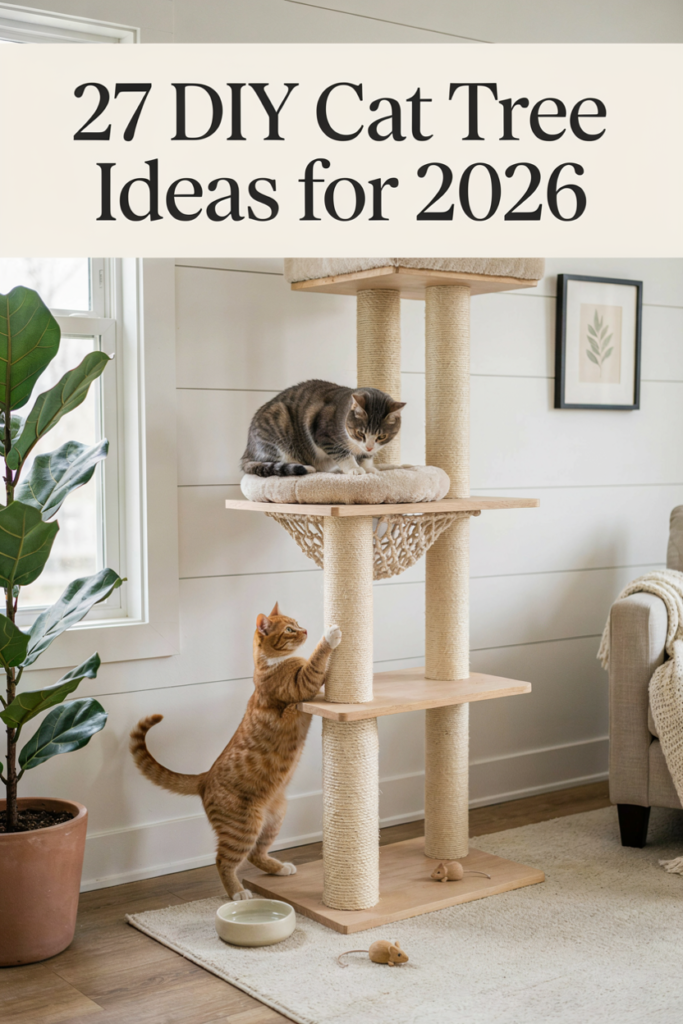
I’ve found that a good cat tree does not have to be expensive or take up half of a room. When I plan one, I focus on three things first: stability, useful climbing space, and a layout that matches how my cat actually uses the home. A narrow tower, wall shelves, a window perch, or even a reinforced bookcase can all become useful cat furniture when they are built properly.
Above the Fold
In this guide, I’m sharing 27 DIY cat tree ideas for 2026, from simple crate towers and natural branches to wall-mounted paths and compact furniture hybrids. I’ll also explain which materials I would choose, where each design works best, and what I would check before letting a cat climb on it.
Vertical space is especially useful for indoor cats. The Feline Veterinary Medical Association notes that safe territory with vertical space is an important part of meeting indoor cats’ environmental needs.
Key Takeaways
How Can You Build a Cat Tree in a Small Space?
When I have limited floor space, I look upward before I look outward. Cats naturally use elevated areas for climbing, resting, observing, and feeling secure, so a narrow vertical structure can provide useful territory without taking over the room.
I usually start with the corner that is already underused. From there, I can build upward with platforms, scratching posts, boxes, or wall shelves instead of creating a wide base.
The most important part is the foundation. I would rather make a shorter cat tree with a heavy, stable base than build a tall tower that shakes every time the cat jumps.
For wall-mounted designs, I would locate studs or use an appropriate structural fixing system before adding any weight. A cat tree should never depend on decorative wall panels or weak anchors alone.
Pro Tip: Before cutting wood, I measure the available floor and wall area and mark the planned platforms with painter’s tape. This lets me test the size before spending money on materials.
What Materials Are Used To Make a Cat Tree?
I usually keep the material list simple. Plywood or solid wood works well for bases and platforms because it can provide a rigid structure when properly assembled.
For scratching areas, sisal rope is a practical choice, but I also consider cardboard, wood, carpet, or other surfaces because individual cats can have different scratching preferences. The Feline Veterinary Medical Association notes that cats may prefer vertical, horizontal, or angled scratching surfaces.
For comfort, I like removable cushions or washable fabric rather than permanently gluing soft material everywhere. That makes cleaning and inspection much easier.
I also avoid materials with loose threads, sharp edges, unstable joints, or easily detachable small parts. If I can move a platform by hand after assembly, I treat that as a warning sign rather than assuming the cat will be fine.
Plush Fantasy
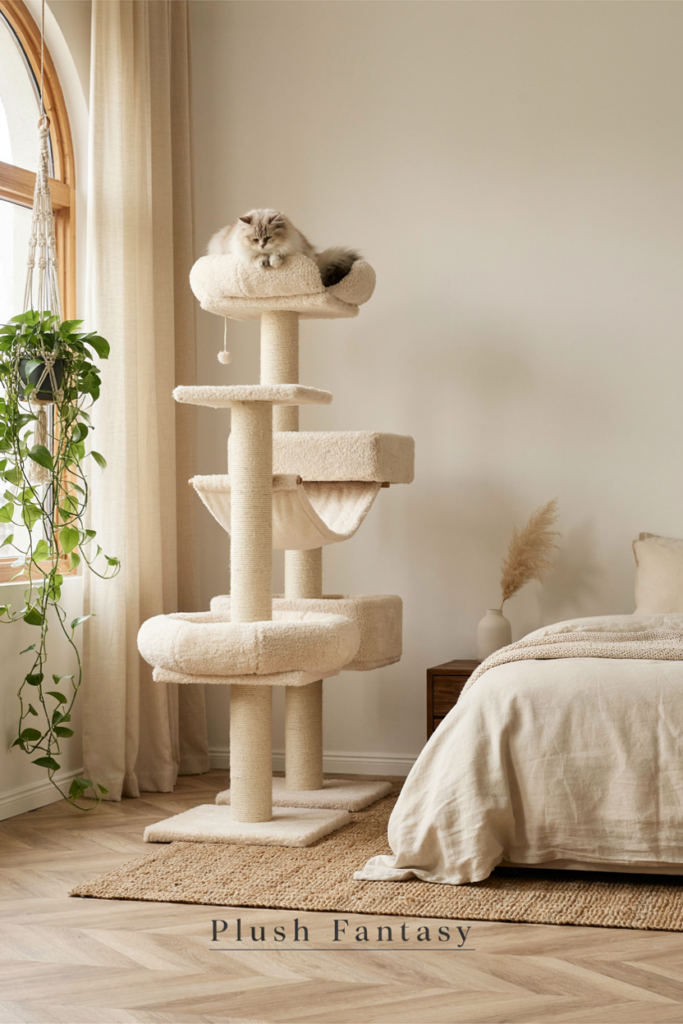
I like this idea when I want the cat tree to look more like part of the room than pet furniture. Soft upholstery, rounded platforms, and neutral fabric can make the structure feel comfortable without looking bulky.
I would start with a strong wooden frame and then add padded platforms where the cat is most likely to rest. I would keep the scratching areas separate so the cat still has a firm surface for scratching.
For a cleaner setup, I prefer removable covers that can be washed. This is especially useful when the cat tree sits in a bedroom or living room where fur and dust can build up quickly.
Natural Branches
Natural branches can give a DIY cat tree a completely different appearance. I like this option for homes with rustic, earthy, or nature-inspired décor.
Before using any branch, I would make sure it is dry, structurally sound, clean, and free from sharp splinters or questionable coatings. I would sand rough areas and remove anything that could break loose during climbing.
I would then attach the branches to a wide, heavy base and test the structure before allowing the cat to use it. The natural shape can provide different climbing routes without needing many separate pieces.
Corner Tower
A corner is one of my favorite places for a compact cat tree because two walls already help define the available space. A tall, narrow design can give a cat several levels while leaving most of the floor open.
I would build the tower with plywood boxes, platforms, or cubbies connected to strong vertical supports. I like adding a scratching post between levels because it gives the cat another reason to use the structure.
For smaller rooms, I would keep each platform large enough for comfortable standing and turning without making the overall tower unnecessarily wide.
Vertical Habitat
This design works especially well when I need to provide several elevated areas without creating a huge footprint. I would arrange platforms at different heights so the cat can climb progressively rather than making one large leap.
For a multi-cat home, I would provide more than one usable resting location. Vertical space can help cats choose where they want to spend time, and current feline guidance emphasizes safe territory, vertical space, and separated resources in multi-cat environments.
I would also include scratching sections along the vertical supports. That lets the structure serve more than one purpose.
Modular Stacking
I like modular designs because I can change them later. Wooden crates or sturdy boxes can be arranged into sleeping areas, tunnels, and climbing levels.
I would secure every module instead of simply stacking loose boxes. A cat jumping from one level to another can shift a poorly connected structure very quickly.
Soft pads can turn the upper sections into resting areas, while lower sections can remain open for hiding or passing through.
Twin Perches
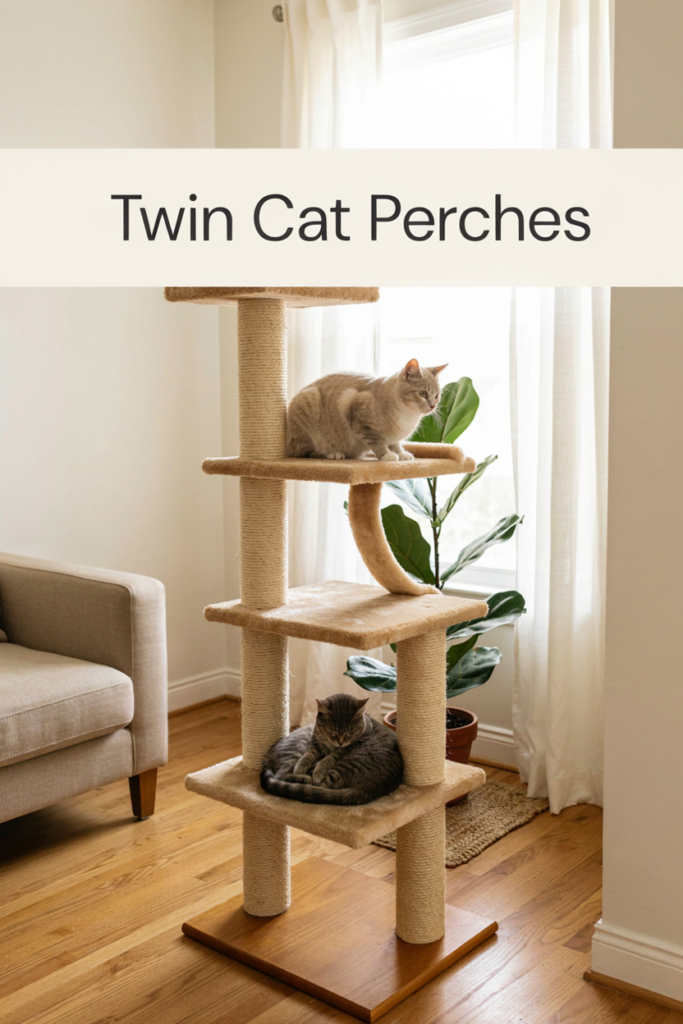
Twin perches are useful when two cats regularly want the same high spot. Instead of making them compete for one platform, I would create two separate resting areas.
I prefer placing the perches at slightly different heights or on opposite sides of the structure. This gives each cat a choice and can reduce crowding around one favorite location.
For the base, I would use a broad, weighted platform and make sure the vertical supports are securely fastened before adding the upper levels.
Compact Condo
A compact condo combines climbing and hiding in one small structure. I like this option for apartments, bedrooms, and other rooms where every inch matters.
I would use a narrow frame with two or three platforms and one enclosed cubby. The cubby gives the cat a quieter place to retreat while the upper platform provides a lookout.
I would keep the design simple rather than adding too many levels. A smaller cat tree can still be useful when each section has a clear purpose.
Wall Ladder
A wall ladder gives a cat a climbing route without using much floor space. I would install sturdy horizontal platforms or steps in a gradual arrangement rather than making the cat jump between widely separated shelves.
Before drilling, I would locate suitable structural points and choose brackets rated for the intended load. I would also check the shelves after installation by applying controlled pressure before allowing the cat to climb.
This design can work particularly well in narrow rooms where a traditional tower would block walking space.
Multi-Level Play
When I want climbing, scratching, and play in one place, I like a multi-level arrangement. I can combine platforms with a scratching post, a small tunnel, and a hanging toy.
I would keep the climbing route easy to follow and avoid placing dangling toys where they could become tangled. Toys should also be checked regularly for loose pieces.
The goal is not to fill every inch with features. I find that a few well-placed areas often work better than a complicated structure that becomes difficult to clean.
Window Bench
A window bench can turn an unused area into one of the most attractive spots in the room. Cats often enjoy elevated places where they can watch what is happening around them, so I like pairing the perch with a safe window location.
I would build a sturdy bench frame and add a removable cushion on top. A vertical scratching surface on the side can add another useful feature.
I would also make sure the window itself is secure. A cat perch should never create an easy route through an unsafe or unsecured window.
Sculpted Wood
I like sculpted wood when the cat tree needs to look polished enough for a main living area. Rounded edges and carefully shaped supports can make a practical structure feel more like furniture.
I would use strong wood and sand every exposed edge thoroughly. The platforms should still be functional, even if the overall design is decorative.
I prefer several moderate-height levels instead of relying on one very high jump. That gives the cat more opportunities to climb and rest.
Sculptural Stack
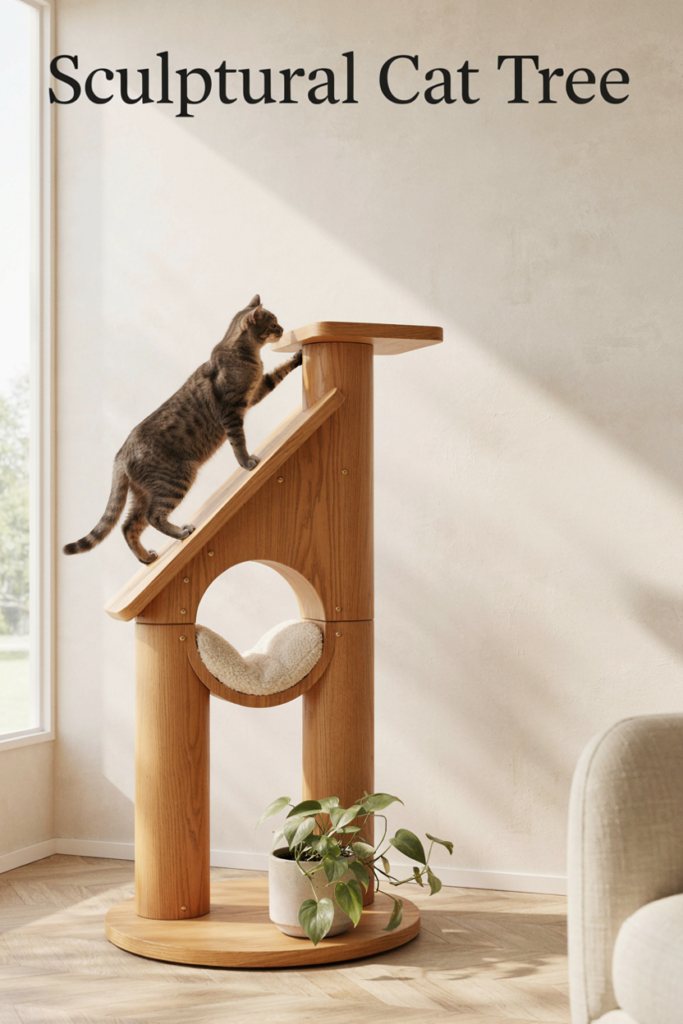
A sculptural stack is a good choice when I want the cat tree to become part of the room’s visual design. Geometric platforms can be arranged vertically to create a modern appearance.
I would never sacrifice structural strength for appearance. Every box or platform needs to be secured so it cannot rotate, slide, or collapse when the cat moves quickly.
For the resting areas, I would add removable pads rather than covering every surface permanently.
Basket Towers
Basket towers offer a softer look than a traditional wooden cat tree. I like using sturdy baskets as sleeping areas while keeping the central structure rigid.
The baskets need to be securely attached because a loose basket can shift when a cat jumps inside. I would also inspect woven material regularly for broken strands.
A scratching post underneath the basket levels makes the tower more useful and gives the cat a firm surface for normal scratching behavior. Scratching is a normal feline behavior that can help maintain claw health and leave scent and visual marks.
Play Cabinet
An old cabinet or shelving unit can become a useful cat play zone when its structure is strong enough. I like this idea because it can reuse furniture that might otherwise be thrown away.
I would first inspect the cabinet for weak shelves, loose joints, sharp hardware, and unstable feet. Then I would reinforce it before adding platforms or cushions.
I would leave enough open space for the cat to move comfortably and avoid creating enclosed areas that are difficult to access or clean.
Wall Trunk
A vertical wall trunk is useful when I want to turn an empty wall into a climbing route. I would use one strong vertical backing board with several platforms attached at different heights.
The key is distributing the platforms rather than placing them in one straight line. That creates a more interesting route while keeping the structure compact.
I would secure the backing structure properly before adding the platforms. For a heavy build, I would not rely on decorative wall anchors alone.
Climbing Ramp
A climbing ramp is a good option for cats that prefer gradual movement rather than repeated jumps. I would make the ramp wide enough for comfortable footing and cover it with a suitable scratching surface.
The angle should be practical rather than extremely steep. I would also add a resting platform at the end so the cat has somewhere to stop.
For older cats or cats with mobility concerns, I would be especially careful about the height, slope, surface grip, and jumping distance. Individual needs can vary, so veterinary advice is appropriate when mobility is already a concern.
Lean Ladder
I like a lean ladder because it uses vertical space while keeping the floor footprint relatively small. It can combine climbing steps with scratching material.
I would not simply lean an unsecured ladder against the wall and assume it is safe. The frame needs a stable base and a secure connection where appropriate.
Adding small resting shelves along the ladder can turn a basic climbing structure into a more useful cat station.
Floating Path
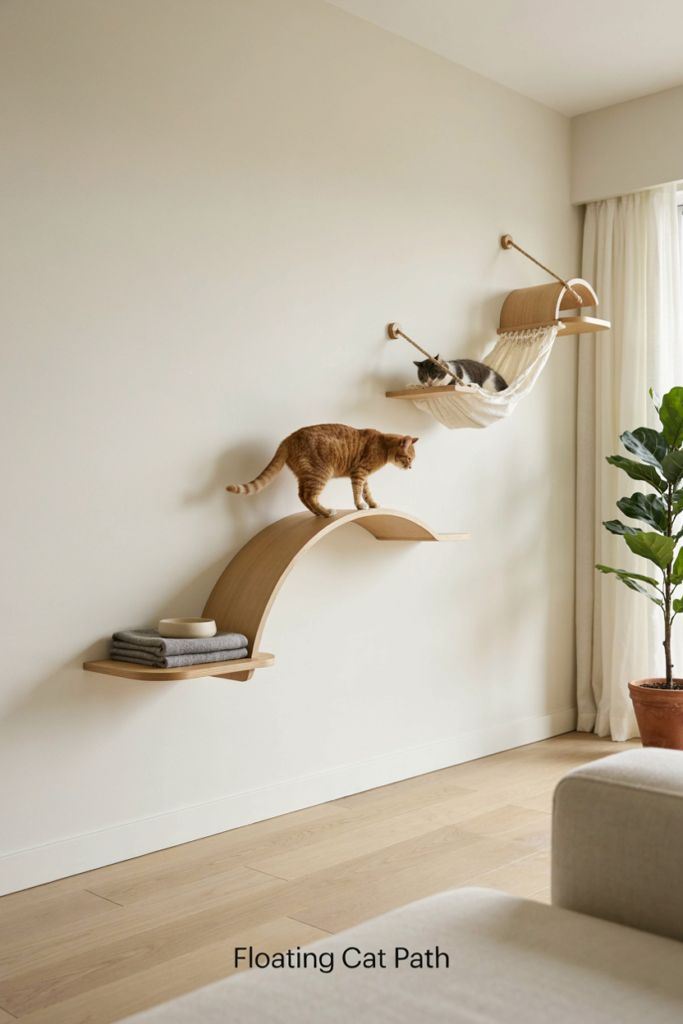
A floating path gives the cat a route across the wall instead of forcing everything into one tower. I like this layout when the floor is already crowded with furniture.
I would install several strong platforms with enough space for comfortable movement. A hammock or soft resting section can break up the climbing route.
The main thing I would watch is the transition between platforms. I want the cat to move naturally from one section to the next without making awkward or excessive jumps.
Wall Panel
A wall panel gives me a single backing surface where I can organize multiple cat features. I can add shelves, a scratching strip, and a small resting area without drilling each feature into a different part of the wall.
I would cut the panel from sturdy material and anchor the panel securely to appropriate structural points. Then I would attach the individual platforms to the panel.
This setup also makes future changes easier because I can modify the layout without rebuilding the entire cat tree.
Cube Loft
Cube shelves can create a combination of hiding spaces and elevated perches. I like this design for cats that enjoy switching between being visible and having a private spot.
I would reinforce the shelving unit before adding any weight. Each cube should be free from sharp edges, loose backing, or unstable panels.
I would also make sure the openings are large enough for the cat to enter and turn comfortably. A cozy space should not become a difficult-to-access space.
Cozy Basket
A cozy basket can work as the top resting point of a small cat tree. I like pairing it with a rope-wrapped post so the same structure provides both comfort and scratching space.
The basket needs to be attached firmly to the support. I would test it from different directions before letting the cat climb onto it.
For the entrance, I prefer an opening that is easy for the cat to access without requiring an awkward jump.
Ceiling Pole
A floor-to-ceiling design makes strong use of vertical space. I like the concept for apartments because it can provide height without needing a wide floor base.
However, I would be cautious with tension-mounted structures. The pole must be appropriate for the ceiling and floor surfaces, installed according to its design, and checked regularly for movement.
I would add platforms at different heights and make sure none of the upper sections can rotate unexpectedly.
Bookshelf Hybrid
I think this is one of the most practical ideas when I already have a sturdy bookshelf. Instead of bringing another piece of furniture into the room, I can adapt an existing unit.
I would first make sure the bookshelf is anchored against tipping. Then I could add grip surfaces, resting pads, and a few climbing routes.
I would never assume an ordinary decorative bookshelf is automatically strong enough for cats. Its construction and condition matter more than how attractive it looks.
Staircase Side
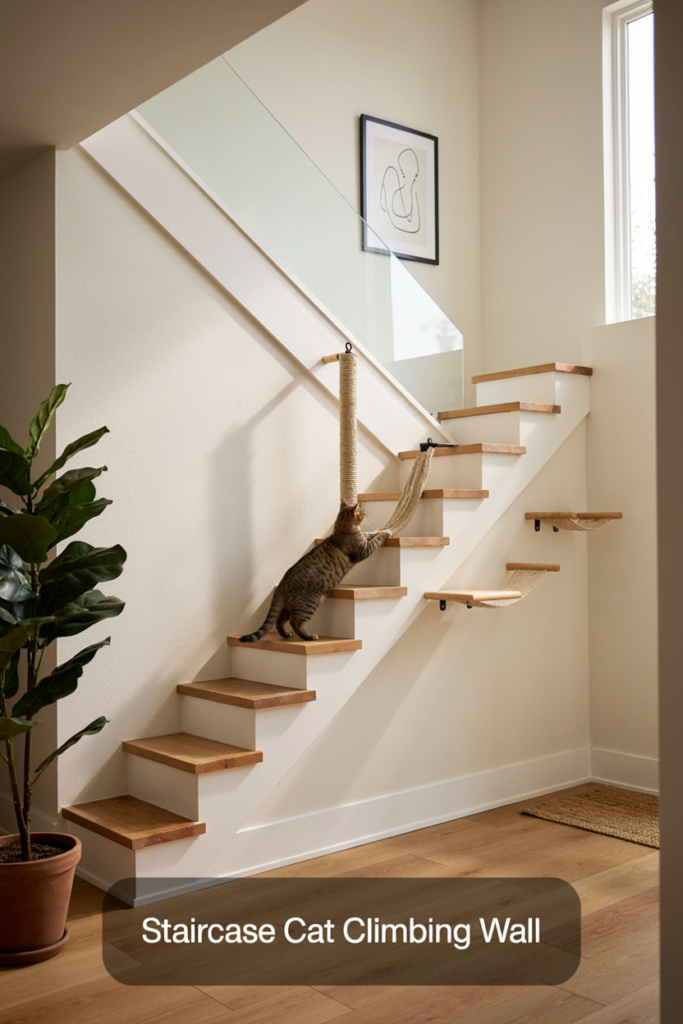
The wall beside a staircase can become useful climbing territory when it is planned carefully. I like the idea of placing platforms along the stair route so the cat can use an area that might otherwise remain empty.
I would keep the platforms securely mounted and avoid creating obstacles for people using the stairs. The cat route should never interfere with handrails, steps, or normal household movement.
This idea is best when both the cat and human traffic patterns are considered before installation.
Radiator Lounge
A warm perch can become a favorite resting place during colder weather. I would use this idea only after checking that the materials and mounting arrangement are safe around the specific heating system.
I would avoid placing fabric directly against a hot surface and would leave proper airflow around the radiator according to the manufacturer’s requirements.
A removable cushion makes cleaning easier, and the platform should be securely fixed so it cannot shift when the cat jumps onto it.
Closet Climber
A closet can provide a quiet vertical retreat if there is enough safe space inside. I like this idea for cats that prefer calm areas away from busy household activity.
I would clear the climbing zone of cleaning products, chemicals, loose cords, sharp objects, and anything the cat could knock over. The door should also remain usable without trapping the cat inside.
A few small shelves and a scratching panel can turn the unused vertical area into a simple private climbing route.
Sliding Panels
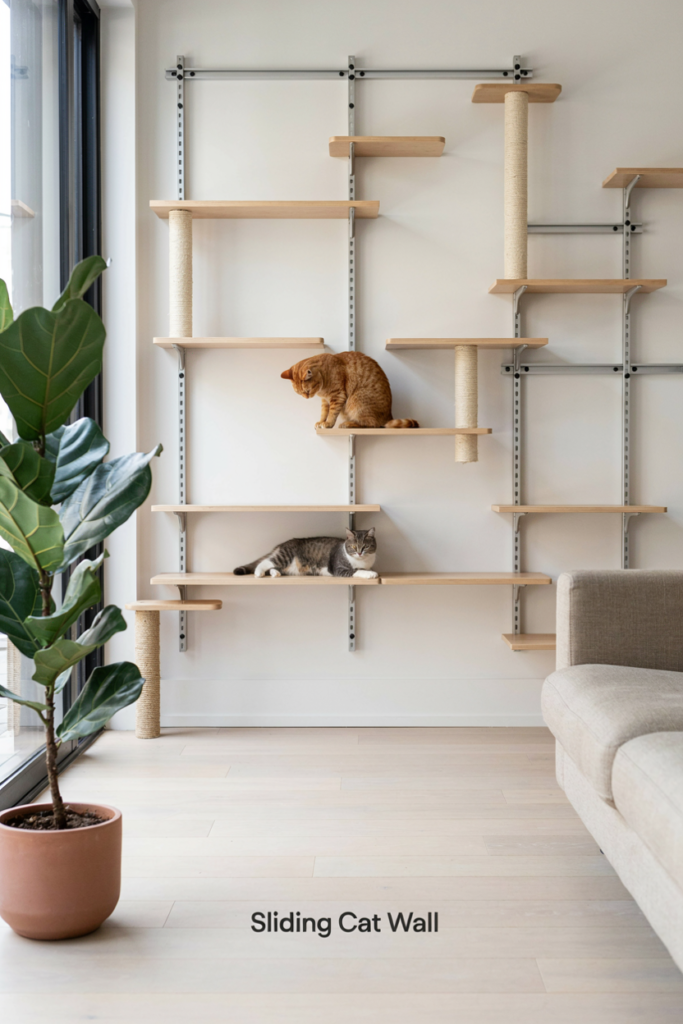
Sliding panels offer a flexible approach when I want to change the climbing route later. Instead of rebuilding the whole structure, I can adjust selected shelves or modules.
I would make sure the sliding hardware is designed to carry the expected load and cannot unexpectedly release while the cat is climbing.
I would also keep moving parts away from areas where paws or tails could become trapped. In this design, simplicity and reliable hardware are more important to me than having lots of movable features.