How Can You Build a Goat Pen? 16 Easy DIY Goat Pen Ideas for 2026
Building a goat pen on a budget is possible when you choose the right materials and plan the space carefully. You don’t need an elaborate barn to create a useful enclosure, but you do need sturdy fencing, a dry resting area, and enough room for your goats to move around comfortably.
These 16 DIY goat pen ideas include simple wooden enclosures, covered shelters, movable dividers, and layouts that make feeding and daily care easier. Some work well for small properties, while others are better suited to larger pastures.
Before choosing a design, consider how many goats you have, the weather in your area, and how much time the animals will spend inside the pen. A practical layout should be easy to clean, secure, and comfortable throughout the year.
Key Takeaways
- Choose a pen size based on the number of goats and their daily needs.
- Use sturdy fencing and check for gaps, loose boards, and weak gates.
- Provide shade, dry bedding, and protection from rain and wind.
- Keep feeding and watering areas easy to reach.
- Consider movable dividers if you need to separate goats occasionally.
How Big Should a Goat Pen Be for One or More Goats?
The size of your goat pen depends on the number of animals, their size, and whether they have access to a larger grazing area. Around 20–25 square feet per adult goat may serve as a starting point for some confined spaces, but more room is usually needed when goats spend much of their time in the enclosure. Make sure they have space to rest, move around, and keep away from one another when needed.
Remember to leave room for feeders, water containers, and a covered resting area. If you’re keeping several goats together, a larger pen can make feeding and movement easier, especially when some animals tend to push others away from food.
Pro Tip: Draw a simple plan before building and mark the gates, shelter, and feeding areas so you can see how much open space will remain.
Can You Build a Goat Pen Using Pallets or Scrap Wood?
Yes, pallets and leftover lumber can help you build a low-cost goat pen. The important thing is to check the condition of the materials before using them. Broken boards, exposed nails, splinters, and wide gaps can cause injuries or give goats a way to escape. Avoid wood with unknown chemical treatments, especially where goats may chew it.
For a stronger setup, use a solid frame and secure livestock fencing or metal panels. Pallets can form part of the enclosure, but don’t rely on loose or weak boards to hold back goats that push against the fence.
Pro Tip: Check every board and connection before letting your goats into the finished pen, and repair loose sections as soon as you notice them.
1. Barn Pen
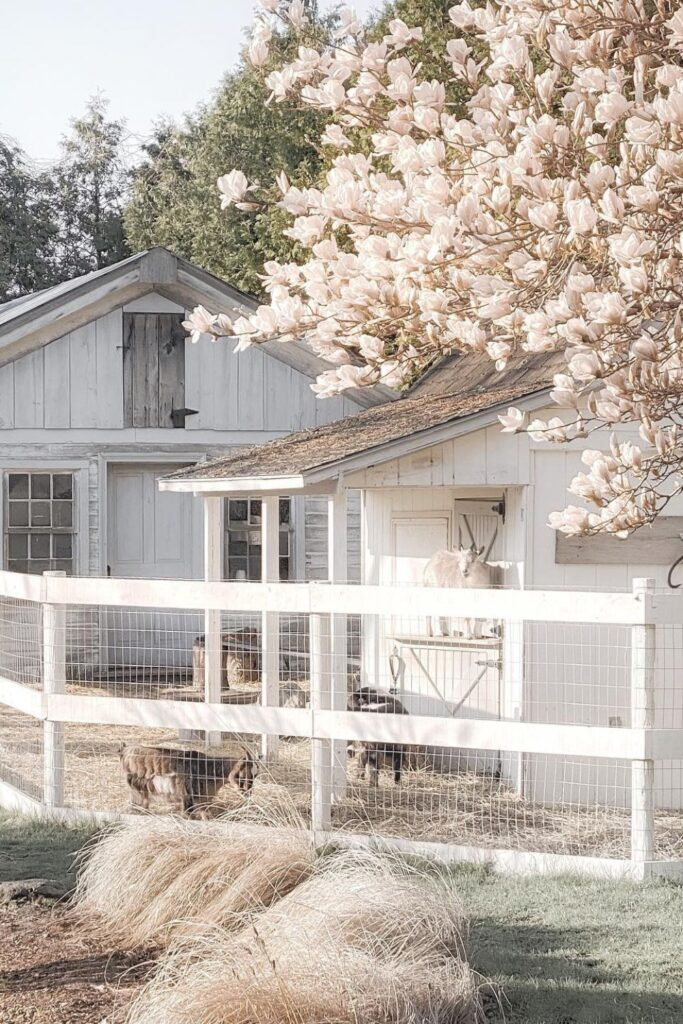
A barn pen combines a covered shelter with a fenced outdoor area. Wooden posts and wire mesh can form the enclosure, while the roof gives goats a place to get out of the rain and sun. This setup works well if you have enough space for permanent posts and want a dedicated area for feeding, resting, and daily care.
Keep the entrance clear so goats can move between the shelter and the outdoor pen without crowding. The covered section should have good airflow, dry bedding, and enough room for the animals to lie down comfortably.
Pro Tip: Make the gate wide enough for a wheelbarrow so you can remove bedding and clean the pen without difficulty.
2. Stall Layout
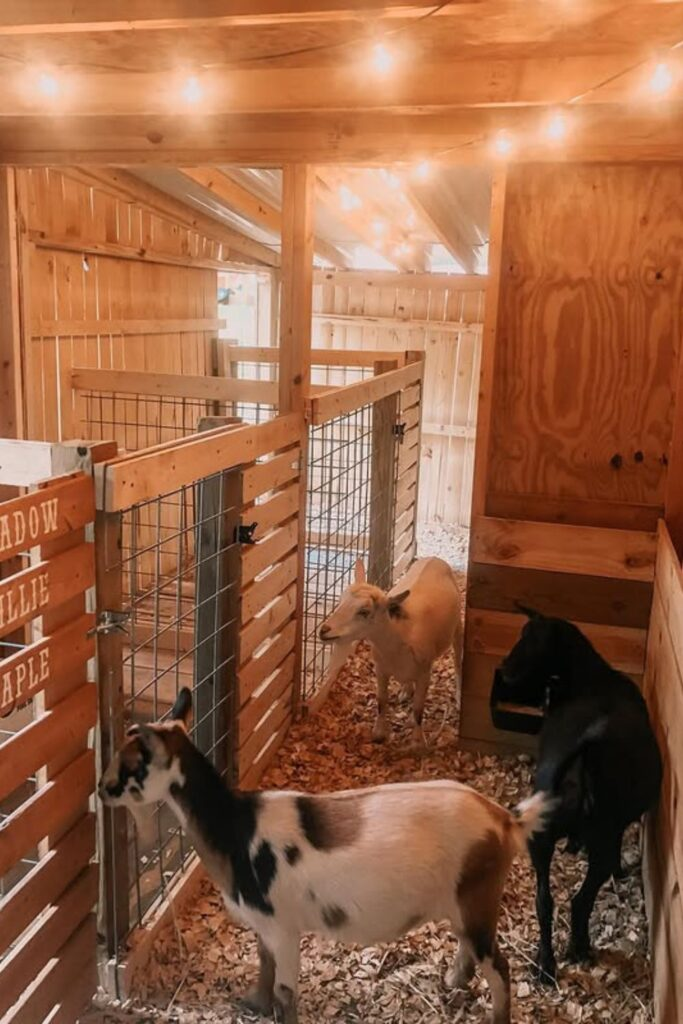
A stall layout is useful when you need to keep certain goats apart for feeding, kidding, or temporary care. You can divide an existing barn or shed with sturdy wooden partitions and livestock-panel gates instead of building separate shelters. Each section should be easy to access and clean.
Leave enough space for goats to stand, turn around, and lie down comfortably. The partitions should be secure, but the overall layout must still allow fresh air to circulate.
Pro Tip: Include a stall that can be used for temporary separation when you need to monitor an animal more closely.
3. Modular Stalls
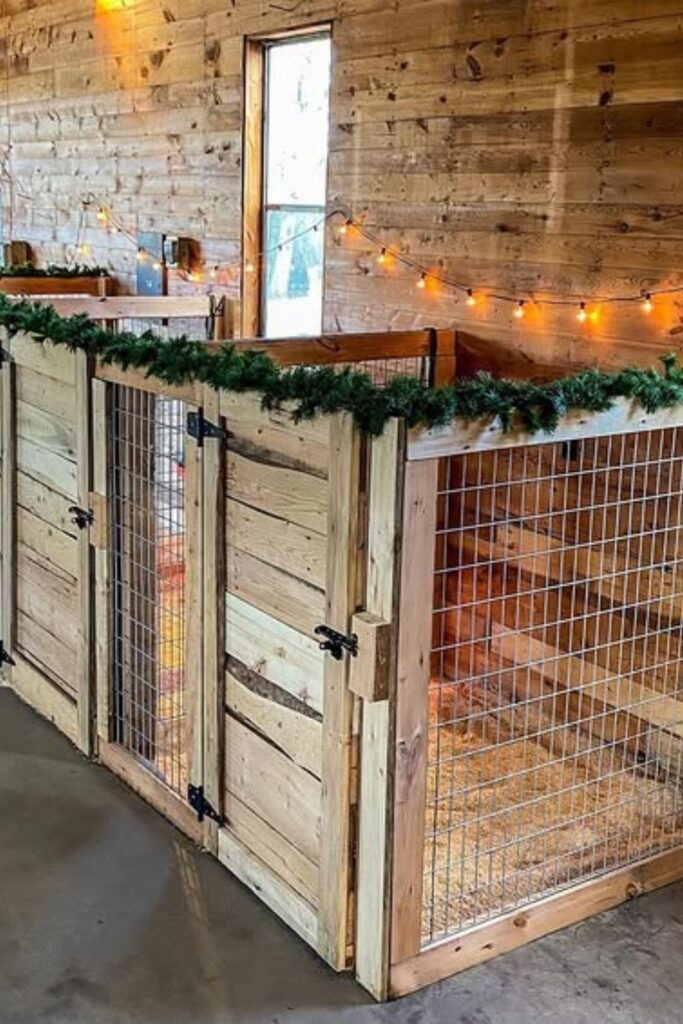
Modular stalls use movable panels to change the layout whenever your needs change. You can open the sections to give goats more shared space or close them to separate animals during feeding and routine care. This design is especially useful in a barn where permanent walls would make future changes difficult.
Choose strong panels with secure connections that won’t tip over when goats lean against them. Check that every section has enough room and that the gates close properly.
Pro Tip: Use panels that fit together easily so you can rearrange the stalls without rebuilding the enclosure.
4. Field Shelter

A field shelter gives goats a covered place to rest while they spend time in an open pasture. A sloping roof helps rainwater run off, and an open front makes it easy for the animals to enter and leave. The design can be simple, using sturdy posts, weather-resistant siding, and a secure roof.
Choose a well-drained location and position the opening to reduce exposure to strong winds and driving rain. The shelter should remain stable in bad weather and provide enough covered space for the goats using it.
Pro Tip: Direct roof runoff away from the entrance to help keep the ground around the shelter from becoming muddy.
5. Raised Shelter

A raised shelter can be helpful when rain leaves the ground wet for long periods. Lifting the resting area above the surrounding soil may help keep bedding away from surface water. However, the structure needs a stable base and a safe way for goats to climb in and out.
Use strong supports and a non-slip floor, and keep the ramp or steps gentle enough for the animals to use comfortably. Avoid unstable blocks, excessive height, or openings where a hoof could become trapped.
Pro Tip: Check the platform, supports, and access ramp for movement before allowing goats to use the shelter.
6. Barrel Shelter
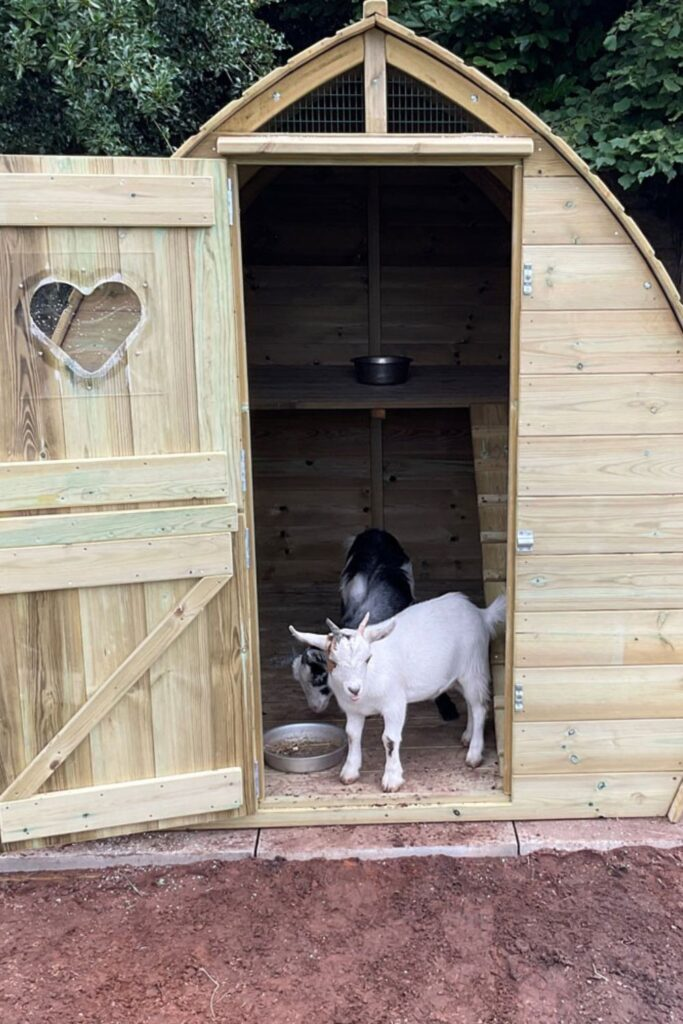
A curved shelter is another option for a small goat pen. Its rounded roof can help shed rain, while the enclosed sides provide some protection from wind. You can build a curved frame or use a purpose-made livestock shelter, depending on your space and materials.
Make sure the entrance is wide enough for goats to pass through easily. The shelter should be anchored securely, have adequate ventilation, and provide enough room for the animals to rest without crowding.
Pro Tip: Check the inside temperature on hot days, especially if the shelter is made from metal or another material that heats up quickly.
7. Play Pen
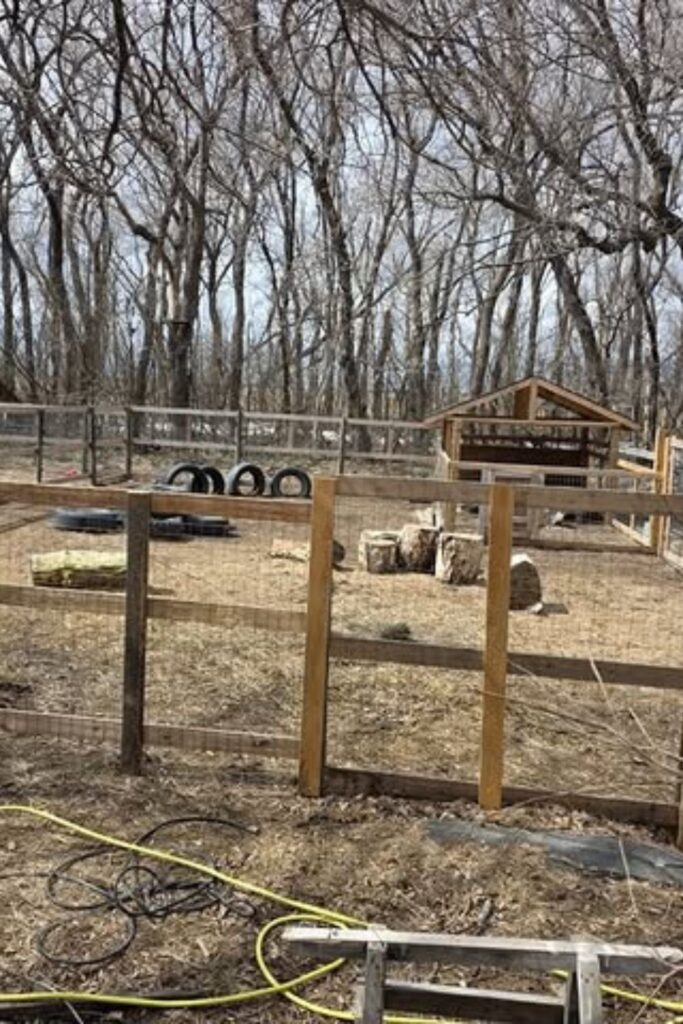
A play pen gives goats room to move and explore. You can add stable logs, low platforms, and sturdy climbing features to make the enclosure more interesting. This works best when the pen has enough open space for goats to move around rather than crowding together around the climbing area.
Choose features that suit the size of your goats and make sure they cannot roll, tip over, or trap a leg. Keep the resting shelter, feeder, and water supply easy to reach.
Pro Tip: Start with low climbing features and watch how your goats use them before adding anything taller.
8. Half Shelter
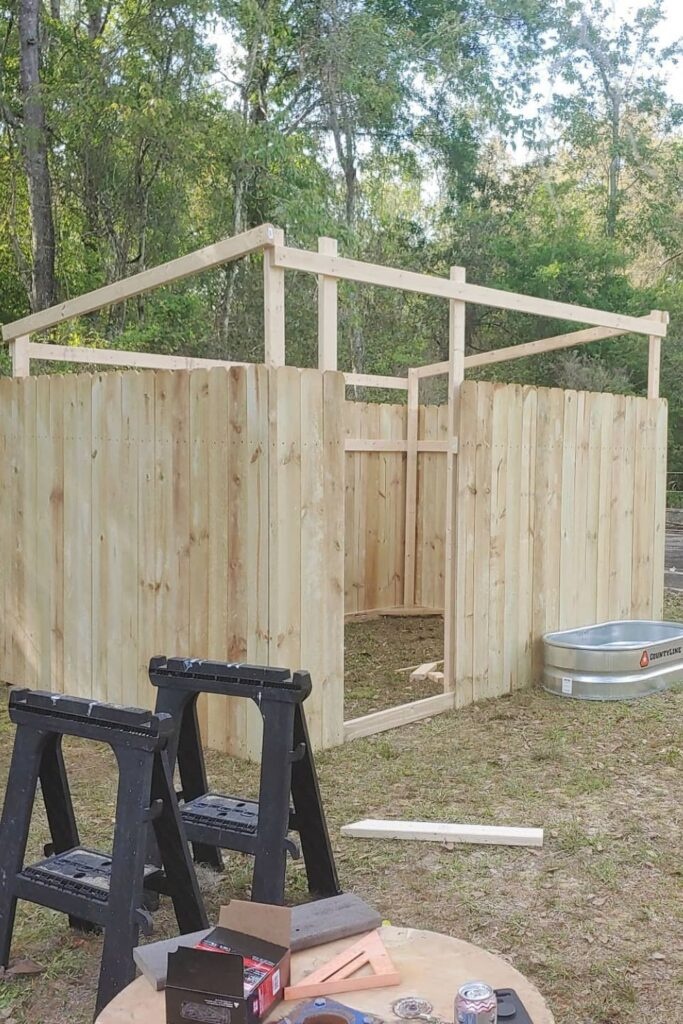
A half shelter provides some protection from wind and rain while leaving part of the structure open for airflow. Lower wooden walls can block direct drafts, making this a practical option in milder weather. You can start with a simple frame and add more roof coverage if the shelter needs improvement.
Use strong corner posts and secure boards, and position the enclosed sides to protect the resting area from the prevailing wind. The shelter should still offer enough cover when the weather changes.
Pro Tip: Build the shelter around the weather conditions in your area rather than leaving the goats exposed to save on materials.
9. Shade Zone
A separate shade zone gives goats another place to rest during hot weather. An open-sided roof can provide relief from direct sunlight without closing off the entire area. You can also add a stable resting platform nearby, provided it has a safe surface and doesn’t block movement.
Choose a spot where the shade lasts through the hotter part of the day. Keep fresh water nearby and make sure the ground beneath the roof doesn’t become muddy.
Pro Tip: Check the shade at different times of day before deciding where to build the roof.
10. Mobile Shelter
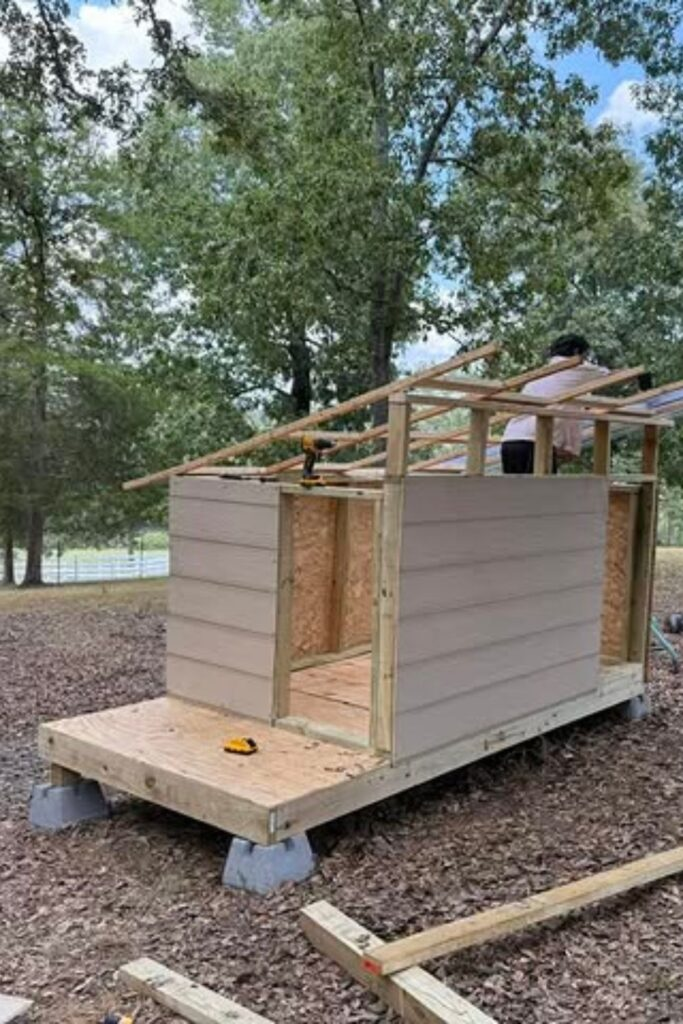
A mobile shelter is useful if you move goats between grazing areas or want to shift the resting space away from wet ground. A simple wooden structure built on sturdy skids may be easier to relocate than a permanent shed. Keeping the design compact can also make moving it more manageable.
The base, walls, and roof must remain secure when the shelter is moved. Before relocating it, move the goats to a safe area and check the route for soft ground or obstacles that could cause the structure to tip.
Pro Tip: Choose a shelter size and weight that your available equipment can move safely.
11. Feed-First Pen
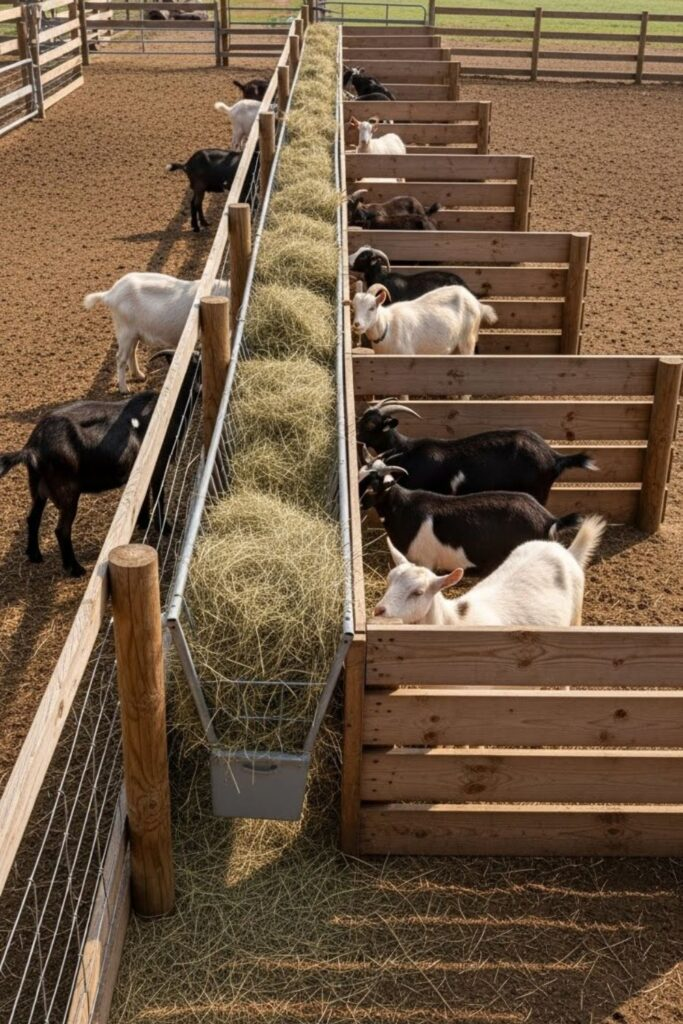
A feed-first pen is arranged around the feeding area to make mealtimes less crowded. A long hay feeder along one side can give several goats room to eat, while separate feeding spaces help prevent stronger animals from pushing others away. This layout can be especially useful when goats regularly compete for food.
Leave enough room for animals to pass behind the feeders without getting trapped. Secure the feeding equipment and check that there are no openings where a goat could catch its head or legs.
Pro Tip: Watch the goats during feeding time and add or reposition feeding stations if some animals struggle to get their share.
12. Dry-Core Pen
A dry-core pen focuses on keeping the main resting and feeding areas from becoming muddy. Start by choosing a well-drained location and correcting low spots where rainwater collects. Gravel and compacted soil may help in busy areas, provided the surface is safe and comfortable for the goats.
Place the shelter and feeders where water is less likely to collect. Keep roof runoff away from the enclosure and check the ground regularly after heavy rain.
Pro Tip: Fix the drainage problem first instead of simply adding more gravel on top of wet ground.
13. Quiet Corner Pen
A quiet corner pen gives goats a place away from busy walkways, noisy equipment, or constant movement. Partial solid walls can block some wind and reduce visual distractions while the open sides allow airflow. This type of enclosure can also be useful when an animal needs a calmer place to rest.
Choose a location where you can still check the goats regularly. Make sure the pen has enough room, clean water, and suitable shelter rather than closing it off completely from the rest of the property.
Pro Tip: If a goat seems unusually restless, check for possible causes before assuming that moving it to a quieter area will solve the problem.
14. Split-Use Pen
A split-use pen can be divided into two areas whenever you need to separate goats. A removable center panel lets the animals share the enclosure during normal routines and creates separate sections when needed for feeding or temporary care. It’s a useful option if you don’t have space for two permanent pens.
Use a sturdy divider that locks securely and doesn’t leave gaps where goats can squeeze through. Both sections should have enough room and access to the resources the animals need.
Pro Tip: Test the divider before you need it so you know how to secure it quickly and safely.
15. Wind-Channel Pen
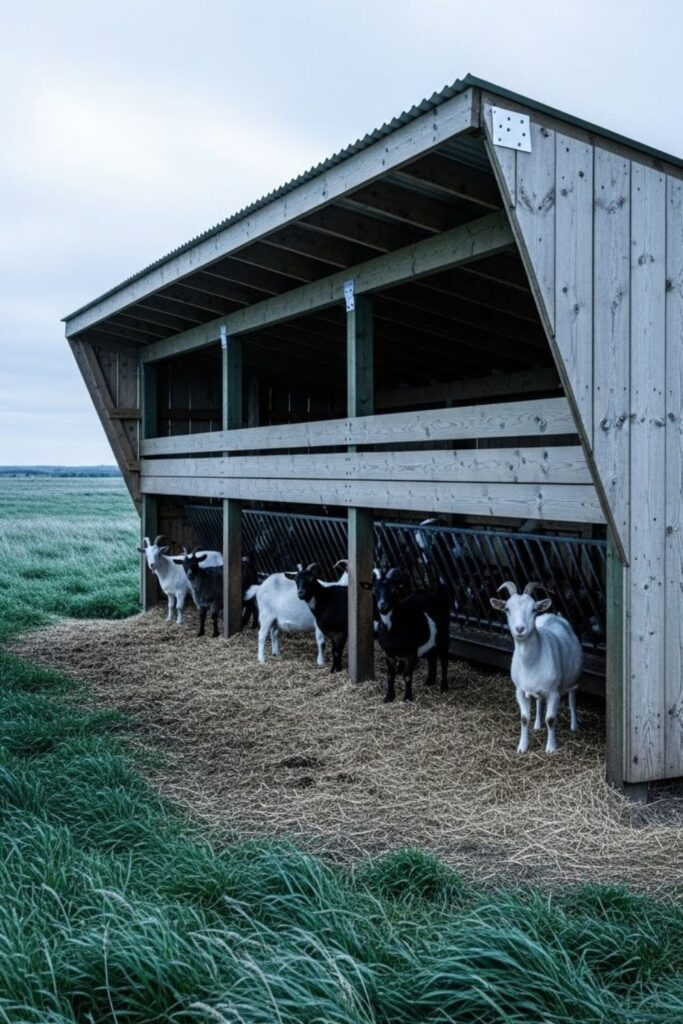
A wind-channel pen uses strategically placed walls to reduce direct exposure to cold winds. Solid or closely spaced boards can protect the resting area, while open sections allow fresh air to circulate. This approach can be useful when you want to provide wind protection without completely enclosing the shelter.
Pay attention to the direction of the prevailing wind before deciding where to place the walls. Secure the structure properly and make sure rain isn’t blown into the area where the goats sleep.
Pro Tip: Check the shelter during windy weather to see whether the resting area needs additional protection.
16. Routine Path Pen
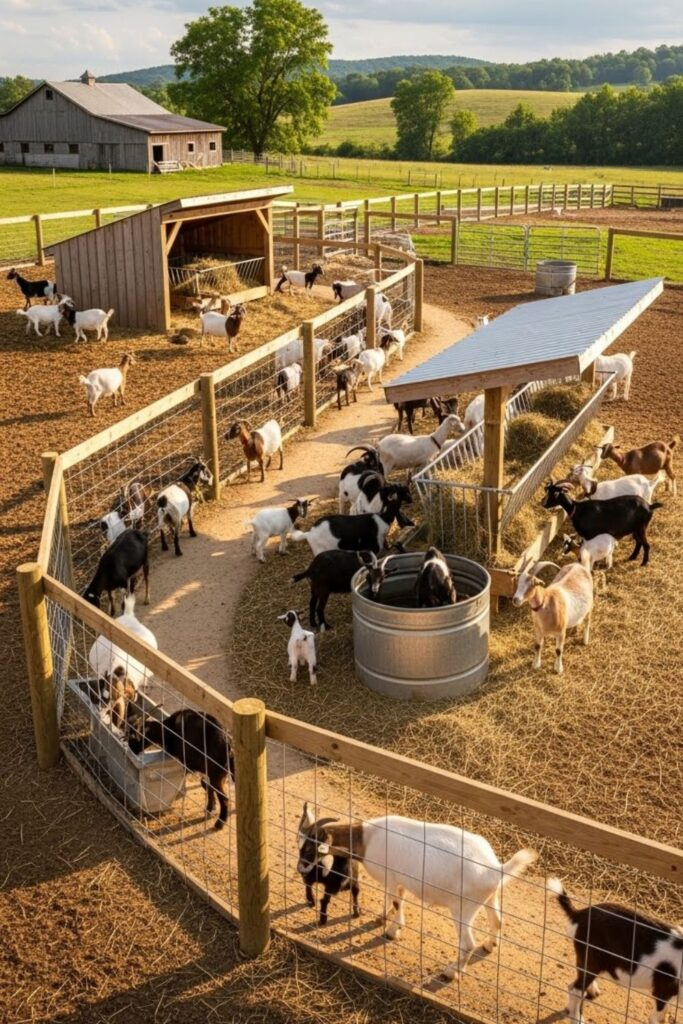
A routine-path pen arranges the shelter, feeder, and water point so goats can move between them without unnecessary crowding. Instead of placing everything in one corner, spread the resources across the enclosure and use gates or short fence sections to guide movement. This can also make daily feeding and cleaning more convenient.
Keep the paths wide enough for goats to pass comfortably, and avoid narrow corners where one animal can block another. The layout should give every goat reasonable access to food, water, and shelter.
Pro Tip: Observe where the goats tend to gather and adjust the placement of gates or feeders if one area becomes too crowded.
FAQs
Can Goats Stay in the Same Pen All Year, or Do They Need Changes by Season?
Goats can use the same pen throughout the year if it provides suitable protection in different weather conditions. During hot months, shade, ventilation, and fresh water are important. In colder or wetter weather, goats need a dry resting area, clean bedding, and protection from strong winds.
You don’t have to rebuild the enclosure whenever the season changes. Improving drainage, replacing wet bedding, repairing windbreaks, and moving feeders away from muddy areas may be enough to make the existing pen more comfortable.
Pro Tip: Check the shelter and ground conditions before the start of each season so you can deal with problems early.
Why Do Goats Keep Testing Fences Even When the Pen Looks Secure?
Goats may push against fences or look for gaps when they have limited space, little to do, or competition around food. Sometimes the problem is simpler: a loose board, weak gate, or opening near the ground gives them a chance to get out.
Check the entire fence, including the corners and gate latches. Then look at the available space, feeding arrangements, and resting area. A better layout may reduce restless behavior, but the fence still needs to be strong and secure.
Pro Tip: Pay attention to the exact spot where a goat repeatedly pushes or climbs, and check that area for loose fittings or gaps.