
Looking for practical belt storage ideas that keep your collection organized and easy to access? Whether you own a few everyday belts or a large collection of leather, designer, and dress belts, the right storage solution can prevent damage while making your closet look more organized. From wall displays and drawer organizers to luxury storage trays and pull-out racks, these belt storage ideas will help you protect your belts, save space, and simplify your daily routine.
Belts are one of those accessories that often get overlooked when it comes to organization. I’ve noticed that many people simply toss them into a drawer, hang them over a chair, or pile them on a closet shelf. While this might seem harmless, poor storage can eventually cause leather belts to lose their shape, develop creases, or show signs of wear much sooner than expected.
The good news is that keeping belts organized doesn’t require expensive systems or a complete closet makeover. A few smart storage solutions can help you protect the leather, maintain the buckle finish, and make every belt easier to find. Whether your goal is saving space or creating a more polished closet, these storage ideas offer practical solutions for every home.

Key Takeaways
- Store leather belts in a way that prevents sharp bends and creases.
- Use vertical storage whenever possible to save drawer space.
- Keep belts visible to make outfit planning easier.
- Separate belts to avoid scratches and buckle damage.
- Utilize drawers, hooks, racks, and organizers based on your available space.
- Protect premium belts with enclosed storage solutions.
- Organized storage helps extend the lifespan of leather accessories.
How Do You Keep Leather Belts in Good Shape During Storage?
Leather is a durable material, but it requires proper care if you want it to maintain its appearance over the years. One of the most common mistakes people make is folding belts tightly or stuffing them into overcrowded drawers. These habits place unnecessary pressure on the leather, which can eventually cause cracks, wrinkles, and permanent creases that are difficult to remove.
The best approach is to keep belts supported, dry, and free from excessive tension. Hanging belts by the buckle, loosely rolling them, or storing them in dedicated organizers allows the leather to maintain its natural shape. Avoid damp environments and direct sunlight whenever possible, as both can shorten the life of leather accessories. With the right storage habits, a quality belt can continue looking stylish for many years.
Pro Tip
Before storing leather belts, wipe them with a soft cloth every few weeks to remove dust and oils that can gradually affect the leather’s condition.
Belt Tower
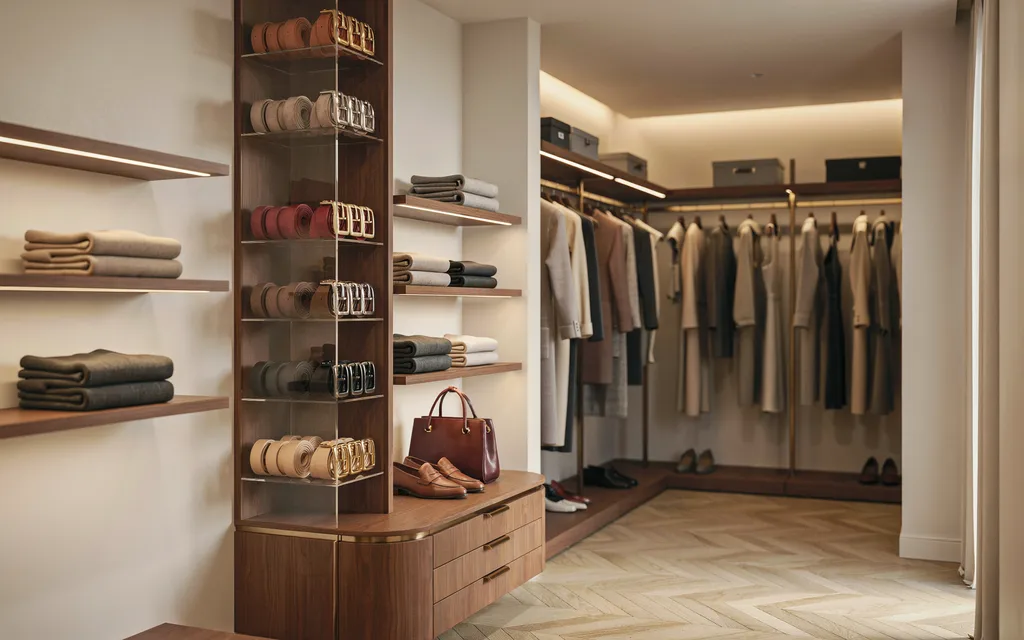
When closet shelves start filling up, belts often become tangled piles that are difficult to sort through. A belt tower provides a smart vertical storage solution that keeps every belt organized and visible. By storing each belt in its own compartment, you eliminate clutter while creating a display that feels both practical and stylish.
This storage method works particularly well for people who own multiple belts in different colors and styles. Since every belt has a dedicated space, selecting the right accessory becomes much faster. Rolling belts loosely inside clear compartments also helps preserve their shape and prevents unnecessary stress on the leather.
Pro Tip
Group belts by color or occasion within the tower so you can quickly find the right option when getting dressed.
Drawer Grid
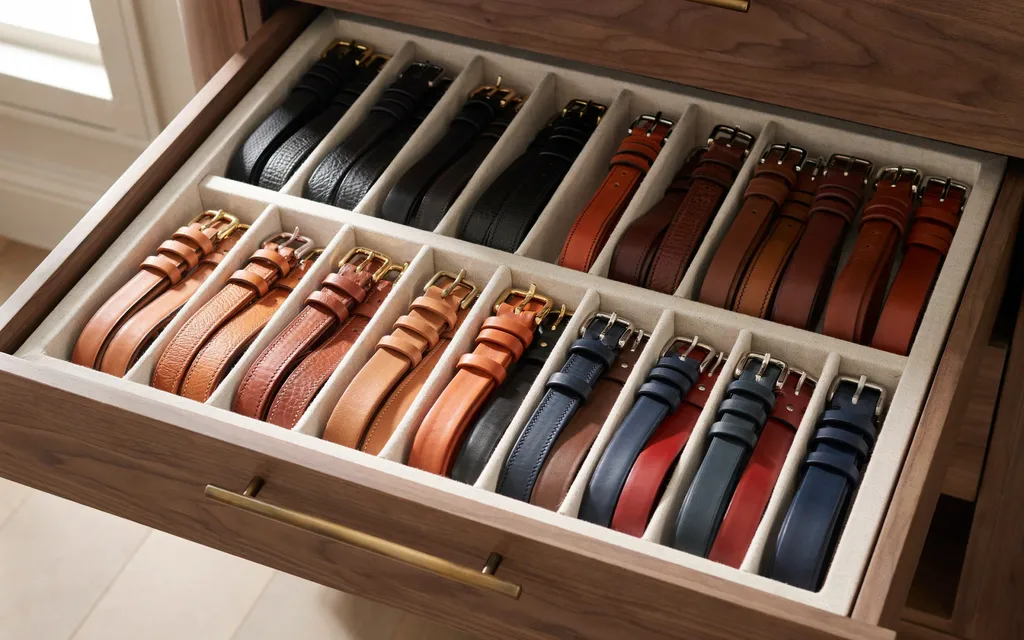
A drawer grid transforms an ordinary drawer into a highly organized belt storage station. Instead of allowing belts to slide around freely, individual compartments keep each one securely in place. This system prevents straps from becoming tangled and helps maintain a neat appearance every time you open the drawer.
The compartment layout also makes it easier to view your entire collection at once. Rather than digging through layers of accessories, you can instantly locate the exact belt you need. This approach works especially well for dressers, closet islands, and wardrobe drawers where maximizing storage efficiency is important.
Pro Tip
Use adjustable drawer dividers so you can customize compartment sizes based on different belt widths and buckle sizes.
Wall Display
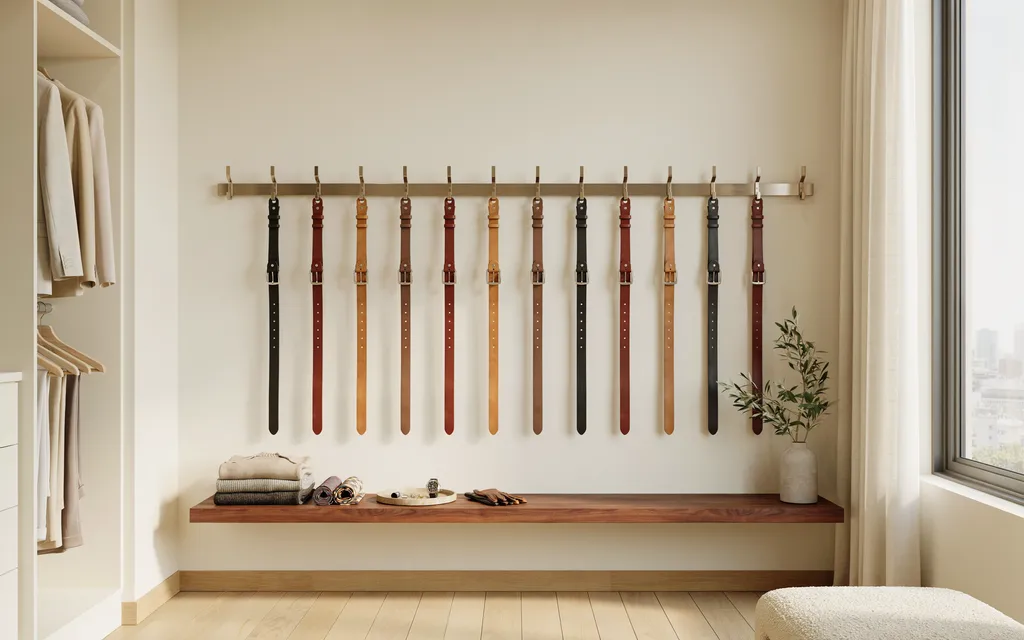
A wall display turns unused wall space into an attractive and functional storage area. Instead of hiding belts away in drawers, this solution allows you to showcase them while keeping them easily accessible. Hanging belts vertically helps maintain their natural shape and reduces the chance of developing deep folds or creases.
This storage style is ideal for walk-in closets, dressing rooms, or organized wardrobe spaces. A simple wall-mounted rail or slat wall system can hold multiple belts while creating a boutique-inspired look. It not only improves organization but also adds a decorative element to your closet.
Pro Tip
Arrange belts from light to dark colors for a clean visual display that makes selection easier and more enjoyable.
Hanger Hooks
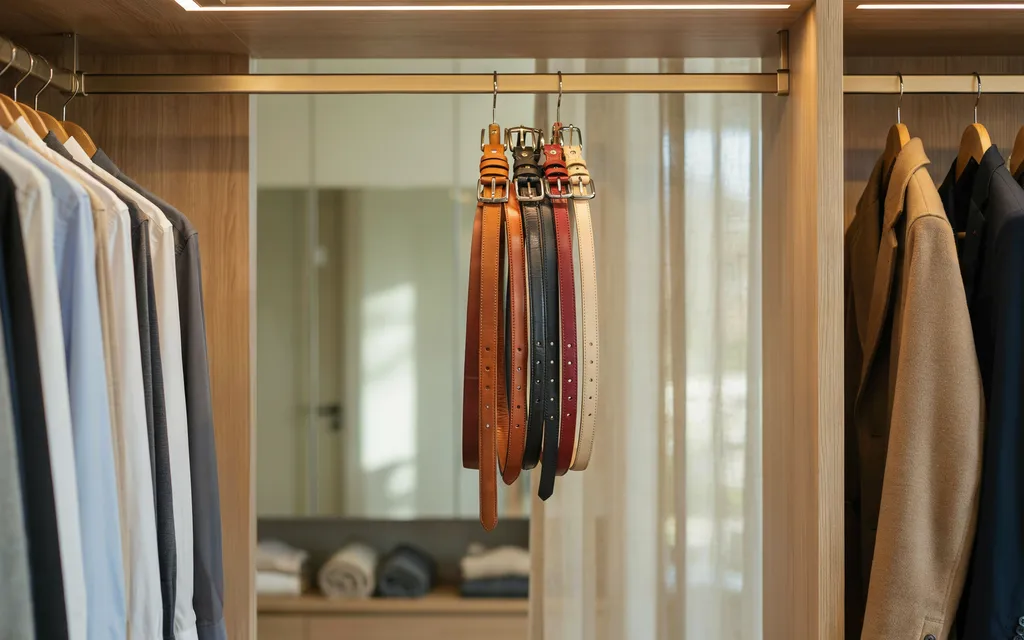
If you prefer a simple and affordable storage solution, hanger hooks can be incredibly effective. These organizers attach directly to a closet rod and allow belts to hang neatly alongside your clothing. Because the belts remain visible, choosing one to match your outfit becomes a much quicker process.
The hanging position also protects the leather by allowing it to remain straight rather than folded. This method is especially useful for smaller closets where drawer space is limited but hanging space is available. It keeps accessories organized without requiring any major closet modifications.
Pro Tip
Dedicate one hanger exclusively to casual belts and another to formal belts for better organization.
Buckle Rack
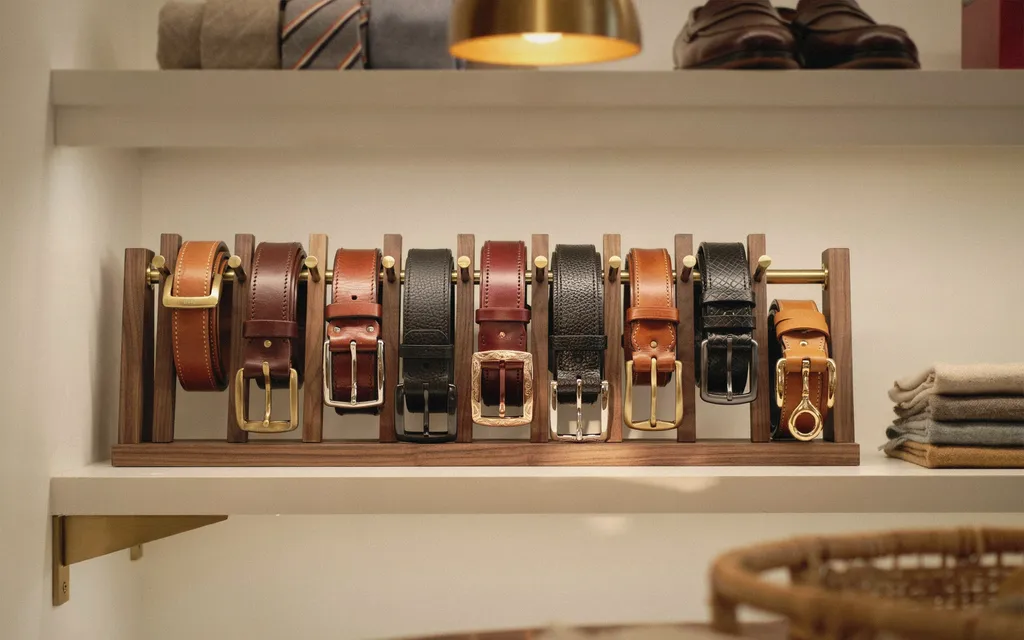
A buckle rack creates a display-like storage system where the buckle becomes the focal point. Instead of stacking belts on top of one another, each belt sits in its own slot, making identification quick and effortless. This setup works particularly well for people who enjoy collecting belts with unique buckle designs.
Keeping belts loosely coiled within individual compartments helps protect the leather while preventing buckles from scratching neighboring belts. The result is a storage solution that combines organization, protection, and visual appeal in one compact space.
Pro Tip
Store your most frequently worn belts at the front of the rack to streamline your daily routine.
Clip Hanger
A clip hanger offers one of the most space-efficient ways to store a large number of belts. Multiple clips attached to a single hanger allow you to keep numerous belts organized without taking up valuable shelf or drawer space. Each belt hangs independently, reducing friction and minimizing the risk of leather damage.
This solution is ideal for shared closets or smaller storage areas where every inch matters. Since the belts hang vertically, you can quickly browse your collection and select the right style without disrupting the rest of your accessories. It provides excellent visibility while maintaining a compact footprint.
Pro Tip
Leave a small gap between clipped belts to improve airflow and prevent straps from rubbing against one another.
Peg Holder
A peg holder is one of the simplest yet most practical belt storage ideas. By installing a few decorative pegs on a wall, behind a door, or inside a closet, you can create a dedicated space for frequently worn belts. This setup keeps belts visible, organized, and ready to grab whenever you need them.
Because each belt hangs individually, the leather remains relaxed and free from unnecessary folds. Peg holders also add flexibility since you can expand the system over time by adding more pegs. It’s an excellent option for anyone who prefers quick access without relying on drawers or complicated organizers.
Pro Tip
Place your peg holder near your dressing area so your most-used belts remain within easy reach during busy mornings.
Divider Drawer
A divider drawer is one of the easiest ways to bring order to a growing belt collection. Without separators, belts tend to pile on top of each other, causing straps to twist and buckles to become scratched. By creating individual sections inside a drawer, every belt gets its own designated space, making the entire collection easier to manage and maintain.
This storage solution works particularly well in dresser drawers, closet islands, and wardrobe cabinets where accessories are already stored. Rolling each belt loosely before placing it inside a compartment helps preserve the leather’s natural shape while preventing unnecessary pressure. The organized layout also makes it easier to view every belt at once instead of digging through a cluttered pile.
Pro Tip
Choose adjustable dividers so you can create custom-sized compartments for wider belts, dress belts, and casual styles.
Hook Hanger
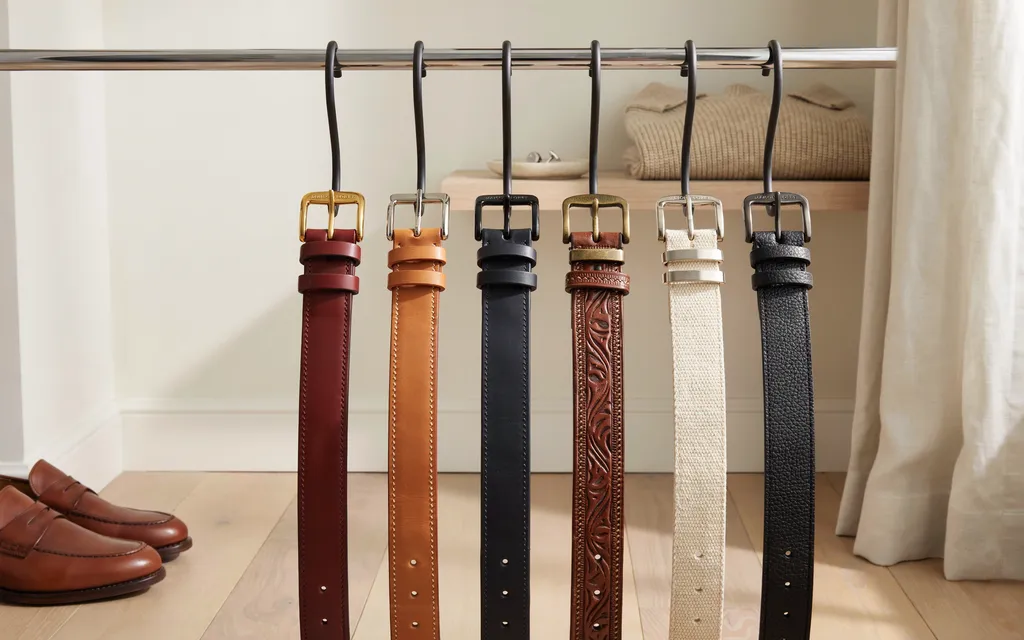
A hook hanger offers a simple yet highly effective way to organize belts without sacrificing closet space. Hanging from a standard closet rod, this organizer features multiple hooks that allow each belt to hang independently. This keeps straps straight, prevents tangling, and makes it easy to browse your collection at a glance.
I particularly like this method for smaller closets because it utilizes vertical space that might otherwise go unused. Since the belts remain visible, coordinating them with outfits becomes much faster. The separated hooks also reduce friction between belts, helping preserve both the leather and buckle finish.
Pro Tip
Arrange belts according to color families, such as black, brown, and tan, to make outfit matching more efficient.
Shelf Hooks
The underside of a closet shelf is often overlooked, yet it can become valuable storage space with the addition of shelf hooks. These compact organizers attach beneath shelves and create a dedicated area where belts can hang neatly without interfering with clothing storage.
Because belts hang vertically, the leather stays relaxed and maintains its shape over time. This setup works well in closets with limited drawer space but ample shelving. It also helps keep accessories visible and accessible without requiring additional furniture or bulky organizers.
Pro Tip
Install shelf hooks near the clothing items you wear most often so selecting a matching belt becomes part of your daily routine.
Pull Rack
A pull-out rack creates a premium storage experience by bringing belts directly to you. Mounted inside a closet system, the rack slides outward like a drawer, displaying every belt in an organized row. This design eliminates the need to search through shelves or drawers and makes excellent use of narrow closet spaces.
Each belt hangs separately, reducing wear and keeping straps smooth and straight. Pull racks are especially useful for larger collections because they allow you to see all available options in one quick glance. The organized appearance also gives your closet a more customized and luxurious feel.
Pro Tip
Install a pull rack at eye level whenever possible to make viewing and selecting belts effortless.
Belt Box
For valuable leather belts, designer pieces, or formal accessories, a belt box offers an extra layer of protection. Unlike open storage systems, a belt box shields belts from dust, sunlight, and accidental scratches while keeping them neatly organized inside divided compartments.
Rolling belts loosely before placing them inside helps preserve the leather and prevents unnecessary creasing. This storage method is ideal for belts that are worn occasionally rather than daily. Opening a well-organized belt box also makes selecting accessories feel more intentional and enjoyable.
Pro Tip
Use silica gel packets inside storage boxes to help control moisture and protect leather from humidity damage.
Accessory Drawer
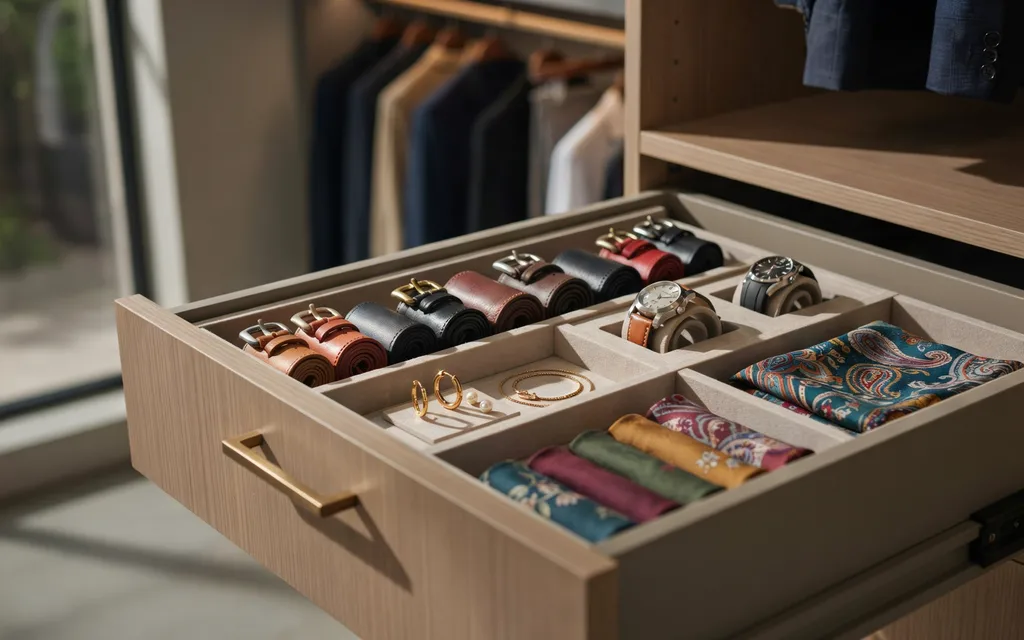
An accessory drawer allows belts to share organized space with watches, jewelry, scarves, and other fashion essentials. Instead of scattering accessories throughout the closet, everything stays together in one centralized location. This makes getting dressed more convenient and helps maintain a streamlined storage system.
Individual compartments prevent belts from tangling with neighboring accessories while protecting buckles from scratches. Rolling each belt loosely inside its designated section creates a clean appearance and maximizes available drawer space. It’s an ideal solution for people who enjoy having all their accessories organized in one place.
Pro Tip
Use velvet-lined organizers inside accessory drawers to add extra protection for premium leather belts and metal buckles.
Wall Strap
A wall strap organizer transforms a small section of wall space into an efficient belt storage station. Unlike traditional hooks, this system uses fabric straps or elastic bands to hold belts securely while keeping them visible and easy to access. The setup is simple, space-saving, and surprisingly versatile.
This option works especially well in compact bedrooms, apartments, and closets where drawer or shelf space is limited. By storing belts vertically, you maintain their shape while creating a neat display that doubles as functional décor. The organized arrangement also encourages better storage habits because every belt has a clearly defined place.
Pro Tip
Mount a wall strap organizer behind a closet door to create hidden storage without sacrificing valuable closet space.
Rod Hooks
Closet rods are already one of the most useful organizational features in a wardrobe, and adding rod hooks makes them even more functional. Instead of storing belts in drawers or boxes, rod hooks allow you to hang each belt individually, keeping them visible and easy to access. This approach prevents straps from becoming twisted while helping the leather maintain its natural shape.
The setup is simple and works well in almost any closet. Small clip-on hooks or specialized belt organizers can attach directly to the rod without requiring tools or permanent installation. Since the belts hang next to your clothing, it becomes easier to coordinate accessories while getting dressed, making your daily routine faster and more organized.
Pro Tip
Place belts near the pants or outfits you wear most often to simplify outfit planning and save time each morning.
Clear Organizer
A clear organizer combines visibility with protection, making it one of the most practical storage solutions for belt collections. Transparent compartments allow you to see every belt immediately without opening multiple drawers or digging through piles of accessories. This not only saves time but also encourages better organization habits.
These organizers work beautifully on closet shelves, dressers, and wardrobe compartments. Each belt can be rolled loosely into its own section, preventing tangling and protecting the leather from unnecessary stress. The clear design also creates a clean, modern appearance that makes the entire storage area feel more organized.
Pro Tip
Arrange belts from light to dark shades inside the organizer for a visually appealing and easy-to-navigate setup.
Fabric Divider
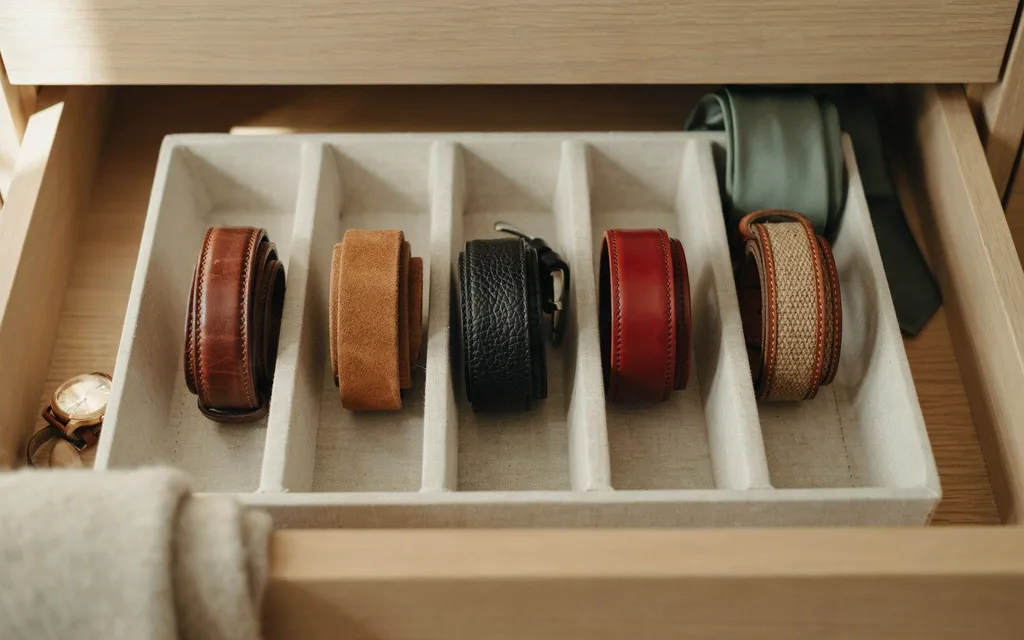
A fabric divider tray offers a soft and protective way to organize belts while keeping them separated from other accessories. Unlike hard plastic compartments, fabric dividers create gentle sections that help protect delicate leather and decorative buckles from scratches and scuffs.
This storage solution works particularly well inside dresser drawers and closet islands where belts share space with watches, ties, or scarves. Rolling belts loosely and placing them in individual compartments helps maintain their shape while making them easier to locate. The soft material also adds a touch of luxury to your organization system.
Pro Tip
Choose fabric organizers with reinforced sides so the compartments maintain their shape even when fully loaded.
Shelf Rows
Closet shelves can become highly effective belt storage areas when organized into dedicated rows. Instead of stacking belts on top of each other, dividing shelf space into individual sections allows every belt to remain visible and accessible. This method makes excellent use of open shelving while helping maintain a neat appearance.
Rolling belts and placing them side by side creates a boutique-inspired display that is both functional and attractive. The straps stay relaxed, the buckles remain visible, and selecting a belt becomes much easier. This approach works especially well for walk-in closets where shelf space is readily available.
Pro Tip
Use acrylic shelf dividers to keep rows perfectly separated and prevent belts from shifting out of place.
Display Island
A closet island offers one of the most luxurious ways to store belts. Dedicated compartments beneath a glass top transform ordinary storage into an elegant display that showcases your collection while keeping every piece protected. This setup creates a high-end dressing room feel while maintaining excellent organization.
Each belt can be rolled and stored within its own wooden or fabric-lined compartment, preventing contact with neighboring belts. The transparent top allows you to view your collection instantly without opening multiple drawers. For larger belt collections, this method combines convenience, protection, and visual appeal in one sophisticated solution.
Pro Tip
Group belts by style, such as casual, dress, and designer options, to create a more organized and functional display.
Belt Tray
A belt tray is perfect for organizing a smaller collection of frequently worn belts. The divided sections keep each belt separate while maintaining easy visibility. Unlike deeper storage containers, trays allow quick access, making them ideal for everyday use.
Whether placed on a shelf, inside a drawer, or on top of a dresser, a structured belt tray helps maintain order without taking up excessive space. Rolling belts loosely into individual slots protects the leather while ensuring that buckles remain visible. This simple solution offers an excellent balance between convenience and organization.
Pro Tip
Reserve your belt tray for your most-used belts while storing seasonal or specialty belts elsewhere.
Luxury Drawer

A luxury drawer system brings together elegance, protection, and practicality. Soft-lined compartments create dedicated spaces for belts, watches, sunglasses, scarves, and other premium accessories. Every item has its own section, preventing scratches and preserving materials over time.
This type of storage is especially useful for leather belts because the soft interior protects the finish while allowing the straps to rest naturally. Opening a beautifully organized luxury drawer makes selecting accessories feel effortless and enjoyable. It also helps maintain a clutter-free environment where every item is stored with intention.
Pro Tip
Use modular inserts inside luxury drawers so you can adjust the layout as your accessory collection grows.
FAQs
How do you store belts without damaging the leather?
The best way to store leather belts is to avoid sharp folds, excessive pressure, and damp environments. Hanging belts by the buckle or loosely rolling them into organizers helps preserve their natural shape while reducing stress on the leather. Proper storage prevents cracking, stretching, and deep creases that can develop over time.
It’s also important to keep belts away from direct sunlight and high humidity. Using dedicated storage systems such as hooks, trays, drawers, or organizers provides additional protection while helping maintain the overall condition of the leather.
Is it better to hang belts or roll them for storage?
Both methods are excellent when done properly. Hanging belts keeps the leather straight and makes every belt easy to see, which works particularly well in closets. This method also minimizes creasing and allows quick access during daily use.
Rolling belts loosely is ideal for drawer organizers, trays, and storage boxes. It saves space while helping the leather maintain its natural curve. The best option depends on your available storage space and personal preference, but either approach can keep belts in excellent condition when used correctly.
Conclusion
Keeping belts organized is about more than creating a tidy closet. Proper storage protects leather, prevents damage, and extends the life of accessories you may wear for years. Whether you prefer simple hook systems, drawer organizers, display trays, or luxury closet solutions, there are plenty of ways to keep belts accessible and well-maintained.
I’ve found that the best belt storage systems are the ones that fit naturally into your existing space and daily routine. By choosing a storage solution that matches your needs, you can eliminate clutter, protect your investment, and make getting dressed much easier. Even a small improvement in organization can make a noticeable difference in both the appearance and functionality of your closet.