
I’ve noticed that headphones are one of those everyday items that easily turn into clutter if they don’t have a proper place. In this guide, I’m sharing practical and creative headphone storage ideas that help keep your setup clean, organized, and damage-free. These solutions focus on simple habits and smart placement so your headphones last longer and your space looks better. Whether you work, study, or game, these ideas will help you stay organized without extra effort.
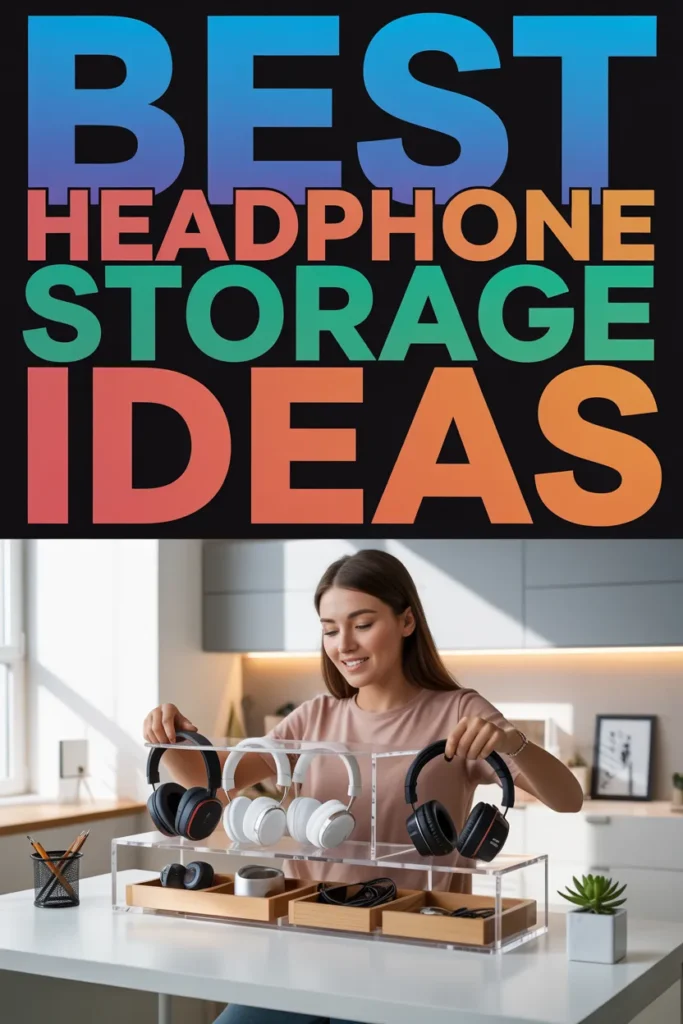
What Is The Best Way To Organize Headphones At Home?
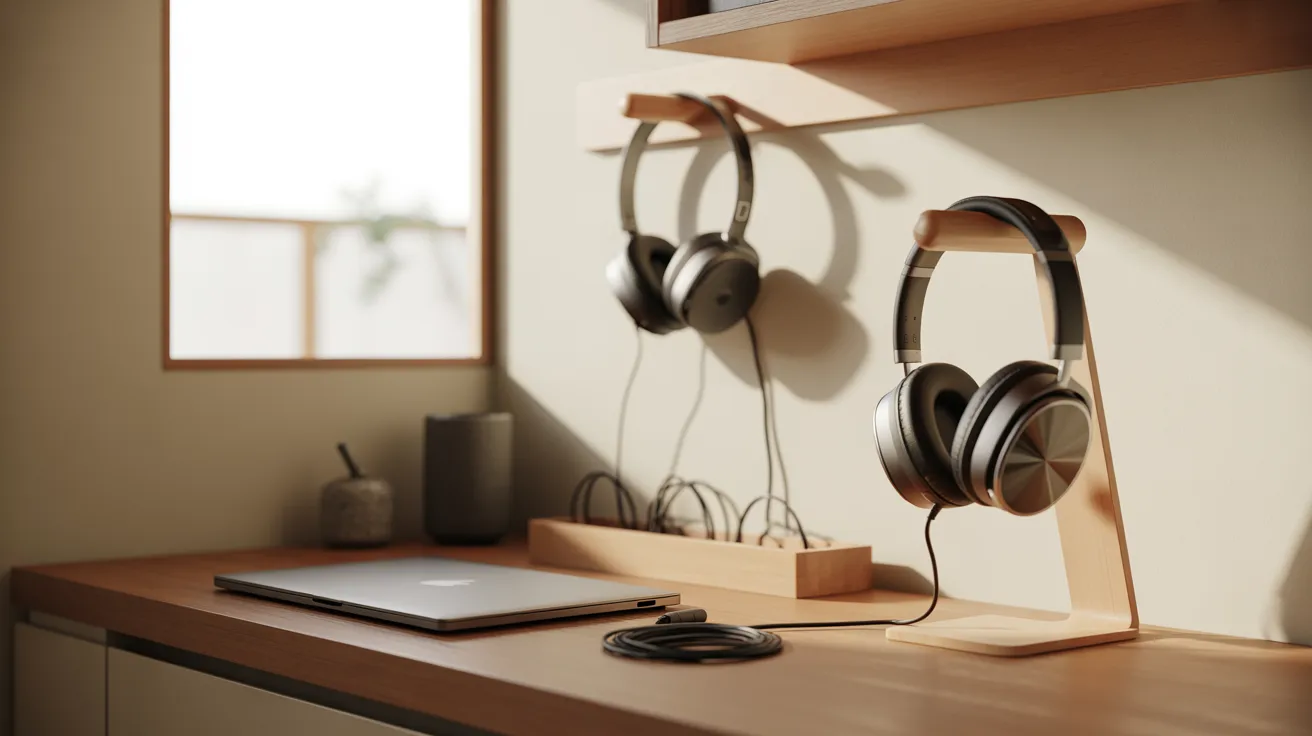
From my experience, the simplest way to organize headphones is to assign them a dedicated spot instead of leaving them wherever you finish using them. When headphones sit on desks or get tossed into drawers, they collect dust, cables tangle, and they’re more likely to get damaged over time.
I always recommend placing storage close to where you actually use your headphones, whether that’s a desk, gaming setup, or study area, because convenience builds consistency. Once you develop the habit of putting them back in the same place every time, your space stays cleaner and your headphones stay in better condition.
Pro tip: I always keep storage within arm’s reach so it’s just as easy to put headphones away as it is to drop them on the desk.
Key Takeaways
Giving headphones a dedicated storage spot prevents clutter and damage.
Using vertical or hidden storage helps keep desks clean and organized.
Separating each pair reduces cable tangling and confusion.
Simple solutions like hooks, stands, and bins make a big impact.
Consistency in storing headphones keeps your setup neat long-term.
Wall Baskets
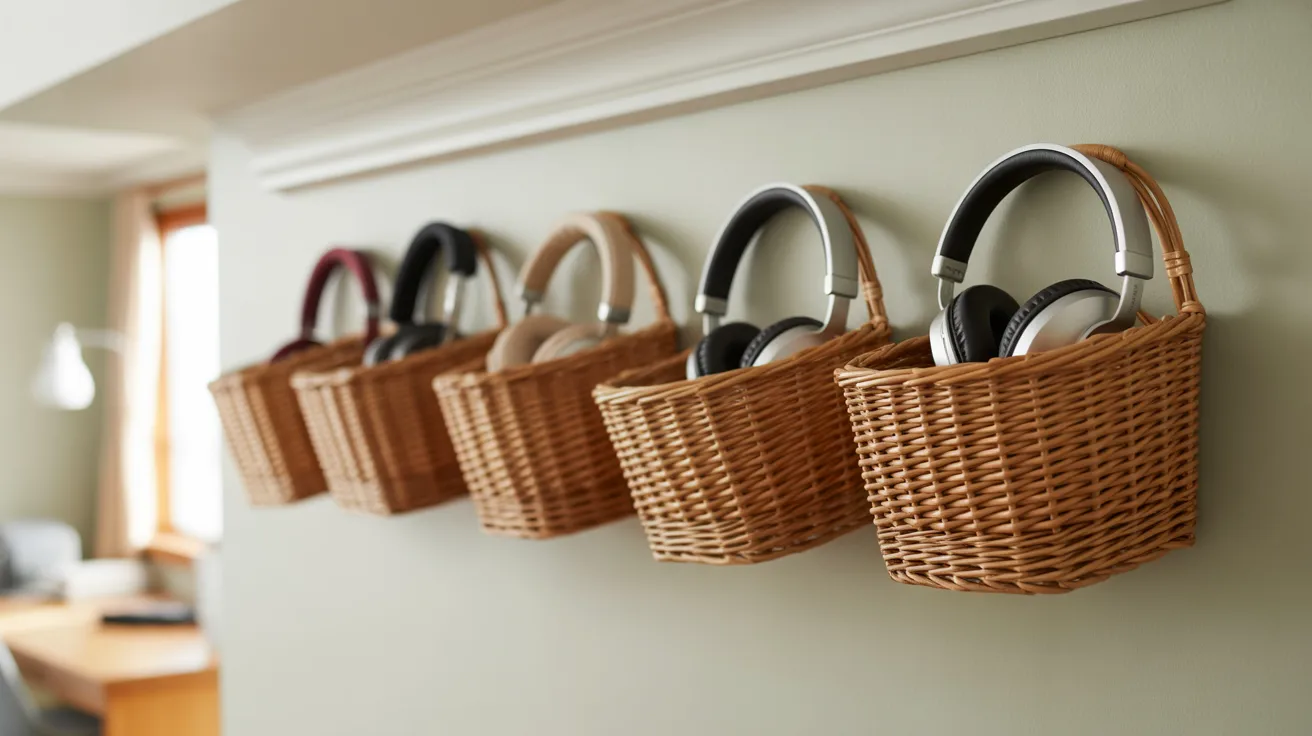
When multiple headphones are used in the same space, things can get messy quickly, which is why I like using wall baskets to keep everything separated and off the desk. By placing lightweight baskets on a wall or cabinet side, I can hang the headband over the edge while letting the earcups rest inside naturally.
This keeps each pair visible and prevents them from getting tangled with others, making it ideal for shared environments like family setups or gaming rooms. Spacing the baskets slightly apart ensures nothing overlaps, and the whole system remains clean and accessible.
Pro tip: I leave small gaps between baskets so headphones don’t bump into each other and lose shape.
Headphone Stand
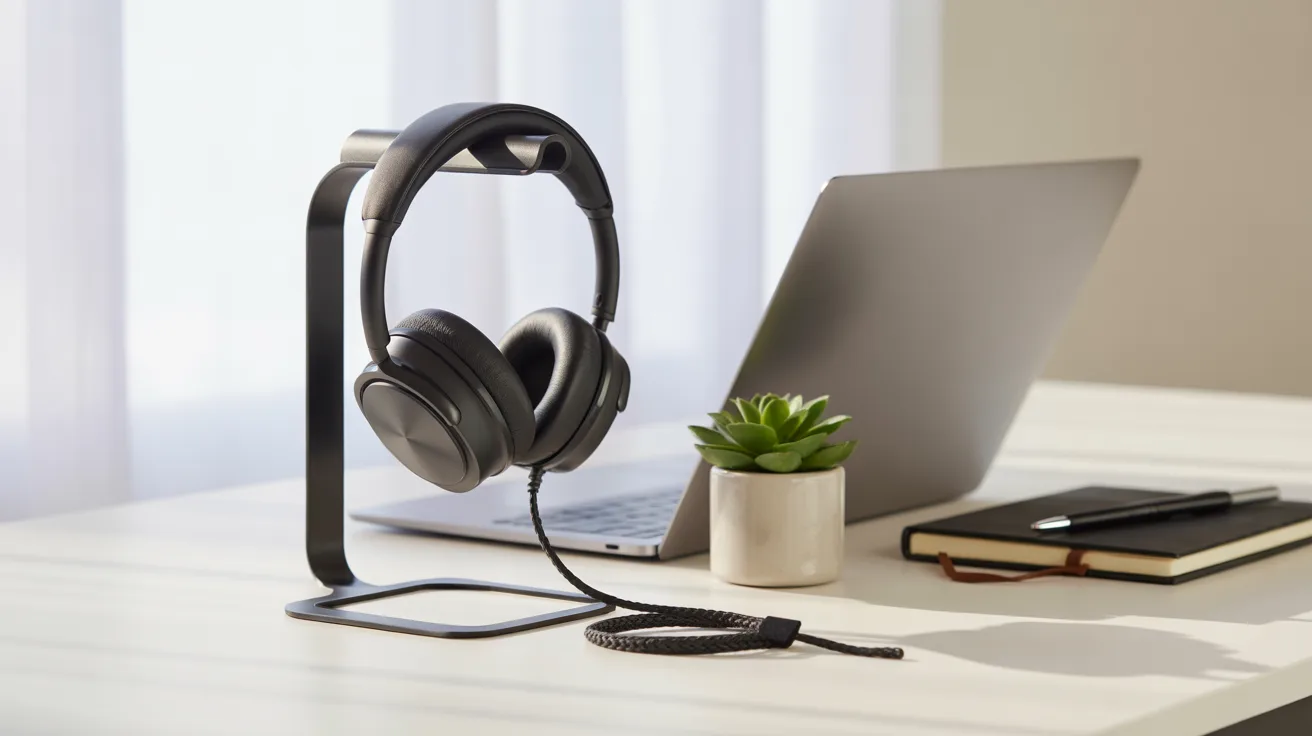
I’ve found that a simple headphone stand instantly makes any desk look cleaner because it gives your headphones a fixed resting place. Instead of tossing them between other items, I hang them neatly so the earcups stay in good shape and the cables don’t tangle.
This works especially well in study areas or bedrooms where space is limited but organization matters. Keeping the stand close to your device helps build a natural routine of placing headphones back after use.
Pro tip: I always choose a compact stand so it fits neatly beside my main setup without taking extra space.
Pocket Organizer
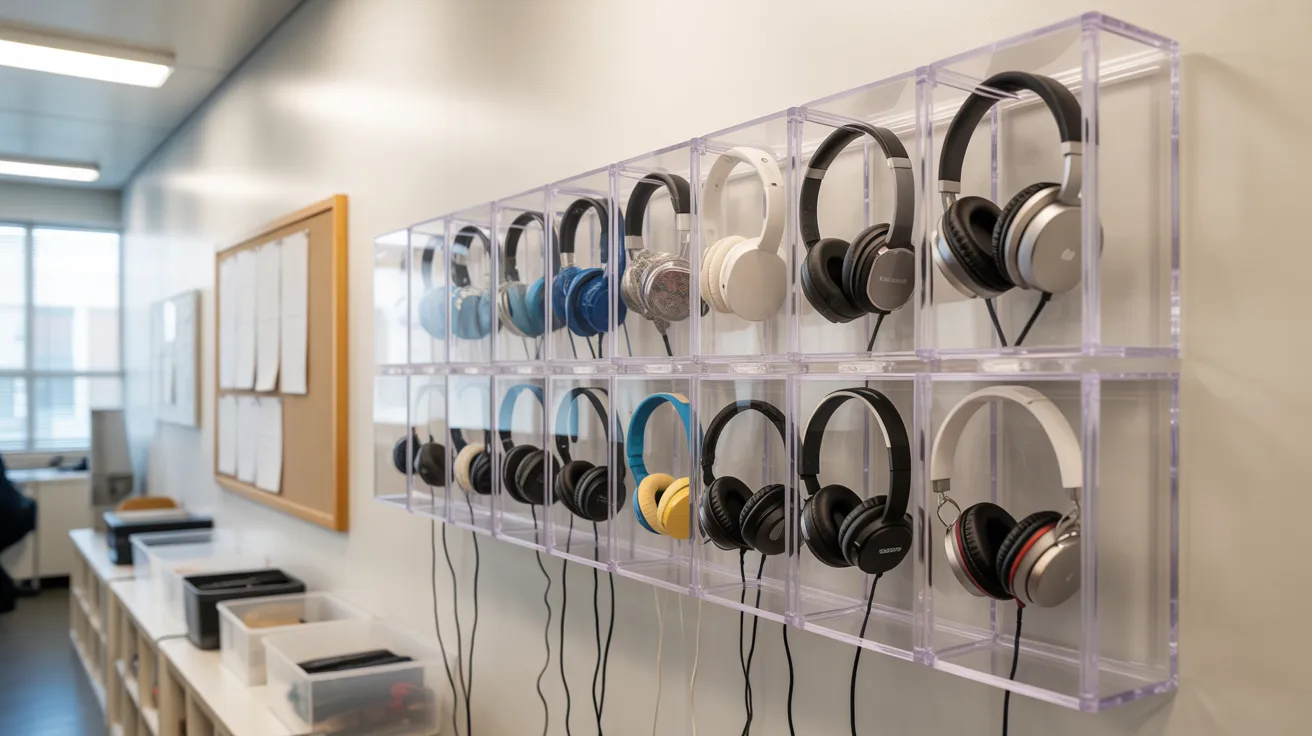
When you have multiple headphones in one place, it’s easy for them to get mixed up, which is why I like using pocket organizers with clear compartments. Each headphone gets its own visible slot, making it easy to grab the right one without confusion.
This setup works great in shared spaces like studios or classrooms because everyone knows exactly where to place their pair. It also reduces cable tangling since each headphone stays separate.
Pro tip: I group similar headphones together so returning them to the right spot becomes automatic.
Bin Storage
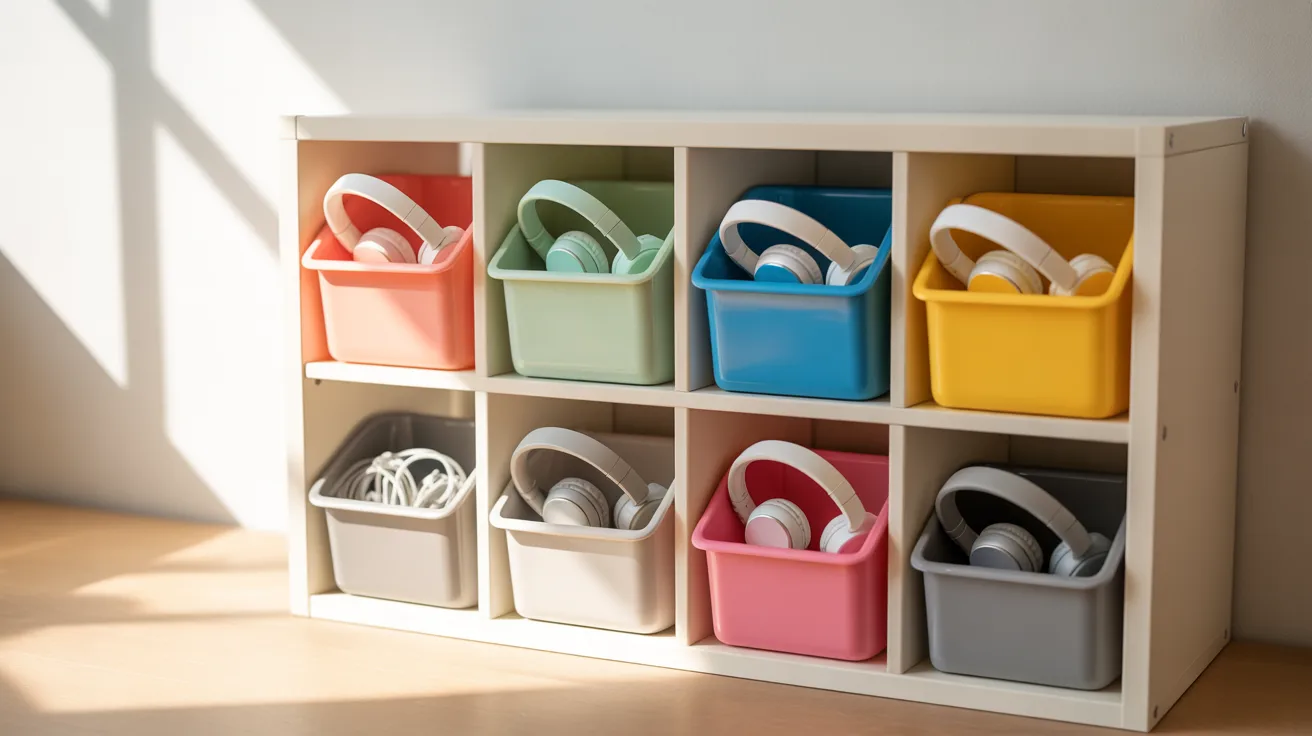
Loose headphones quickly turn into a tangled mess, especially in shared environments, so I use separate bins to keep each pair organized. By placing one headphone set per bin, I prevent cords from mixing and make cleanup much faster.
This approach works well in homes, classrooms, or tech spaces where multiple people use headphones regularly. Keeping bins on a shelf or table makes them easy to access and maintain.
Pro tip: I use labeled bins so everyone knows exactly where each pair belongs.
Desk Hook
Desk space can get crowded fast, so I like using under-desk hooks to store headphones without taking up valuable surface area. Hanging the headphones below the desk keeps them safe from spills while still within easy reach.
This setup works especially well for workstations and gaming setups where space is limited but accessibility is important. It keeps the desk clean while protecting the headphones.
Pro tip: I place the hook on my dominant side so grabbing headphones feels natural.
Cat Stand
Sometimes I like combining functionality with style, and decorative stands like cat-shaped designs make storage feel more personal. They hold headphones securely while adding character to the desk setup.
The curved shape supports the headband naturally and keeps ear cushions from getting squashed. It’s perfect for creative spaces or gaming setups where aesthetics matter.
Pro tip: I keep decorative stands close to my workspace so they stay practical, not just decorative.
Wood Stand
A wooden stand gives a clean and minimal look while keeping headphones properly supported. I prefer this option for modern workspaces because it blends naturally with other desk elements.
It keeps the headphones elevated, preventing pressure on the ear cushions and reducing clutter on the desk. Placing it near frequently used devices makes the setup more efficient.
Pro tip: I position the stand where my hand naturally moves after use to build a habit.
Travel Case
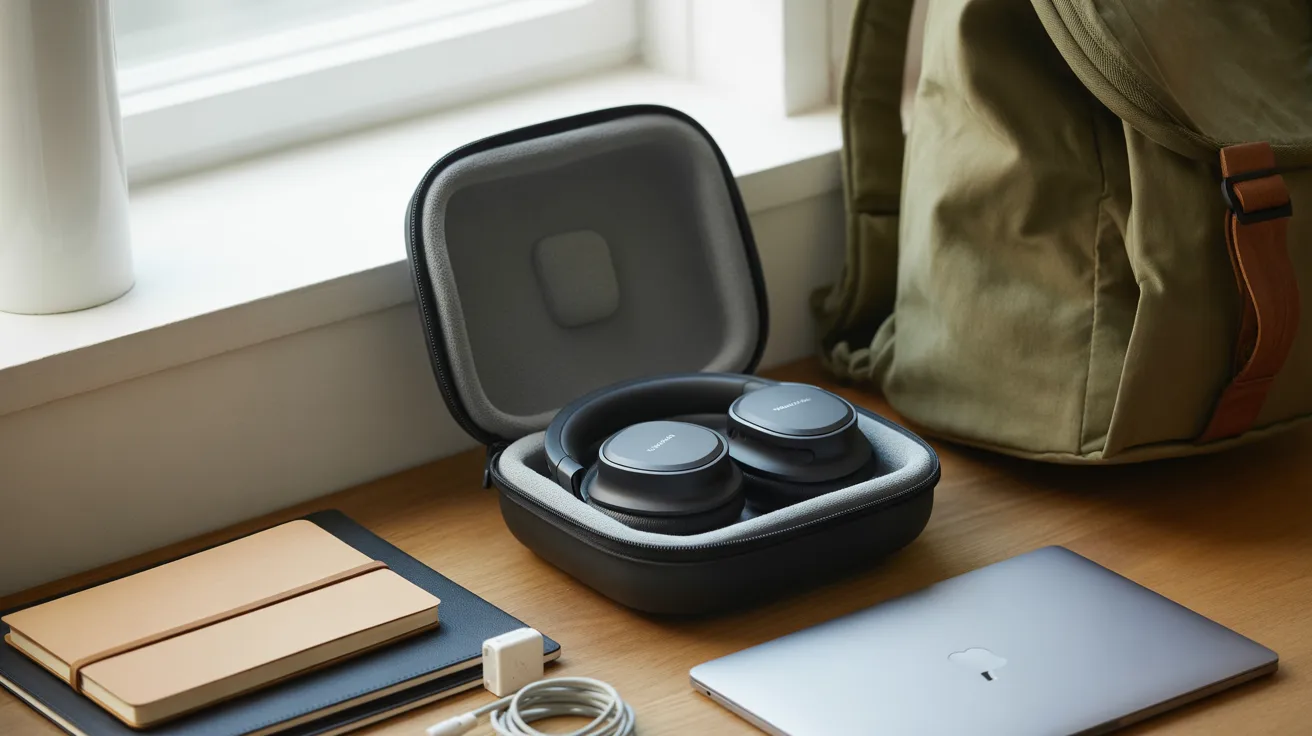
Whenever I’m moving around or storing headphones in a bag, I rely on a protective case to prevent damage. A structured case keeps everything secure and avoids pressure on delicate parts.
It’s especially useful for commuters, students, or remote workers who carry headphones daily. Keeping a case nearby ensures the headphones always have a safe place to go.
Pro tip: I always loosely coil the cable before placing it inside to prevent long-term damage.
Fabric Pockets
In busy environments, fabric wall pockets help keep multiple headphones organized and easy to access. Each pair sits in its own pocket, preventing tangling and confusion.
This setup is ideal for shared spaces like classrooms or training rooms where quick access is important. Keeping the organizer at eye level makes it easy to use consistently.
Pro tip: I label each pocket to maintain order when multiple people use the same setup.
Wall Mount
Mounting headphones on the wall frees up desk space while giving them a dedicated spot. I like using small wall mounts because they keep headphones secure and easy to grab.
This works well for workstations or studios where organization and accessibility matter equally. It also helps prevent accidental drops or scratches.
Pro tip: I install mounts at arm height so placing and removing headphones feels effortless.
Loop Stand
Loop-style stands offer both support and design appeal, making them a great addition to modern desks. The curved shape distributes weight evenly and keeps ear cushions in good condition.
I find this setup particularly useful in creative workspaces where aesthetics and function go hand in hand. It also prevents cables from getting trapped underneath.
Pro tip: I keep the stand slightly away from edges to avoid accidental knocks.
Pegboard Wall
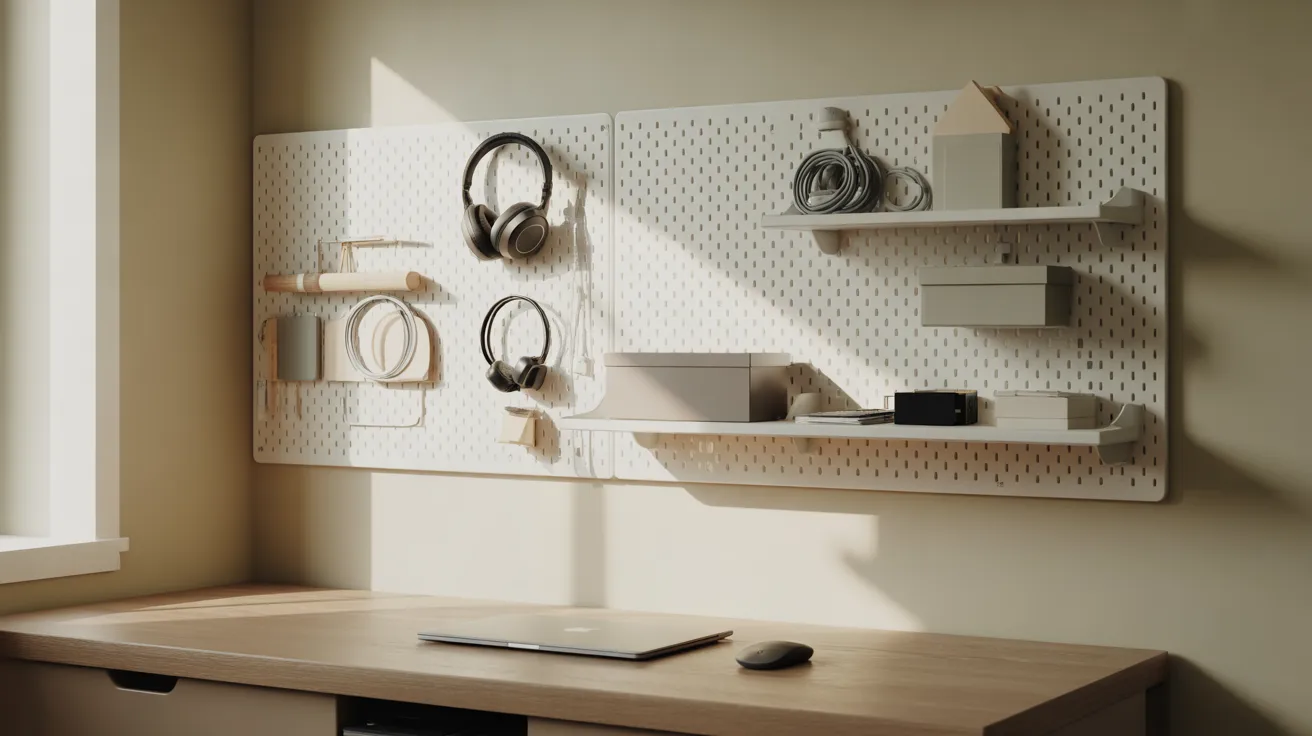
A pegboard wall turns unused wall space into a full organization system, and I love how flexible it is. By adding hooks and small shelves, I can store headphones along with other accessories in one place.
This setup works well for creative studios or gaming desks where multiple items need organizing. It’s easy to adjust as needs change.
Pro tip: I keep frequently used items at eye level for quick access.
Storage Basket
A simple basket can hold multiple headphones without creating clutter if used correctly. I place headphones carefully with bands up and cables relaxed to avoid tangling.
This works best in shared spaces where convenience matters more than strict organization. Soft baskets also help protect headphones from scratches.
Pro tip: I avoid overfilling the basket to keep everything easy to access.
Color Display
Organizing headphones by color or type creates a visually clean and efficient system. I like arranging them on shelves or hooks with enough spacing so each pair is clearly visible.
This works well for studios or organized workspaces where quick selection matters. It also prevents headphones from rubbing against each other.
Pro tip: I keep spacing consistent so the display looks neat and intentional.
Rack Holder
Rack holders are perfect when storing multiple headphones in one compact space. Each pair hangs separately, which keeps cords from tangling and makes everything easy to access.
This setup works well in shared environments like labs or gaming stations. It keeps everything organized without stacking items.
Pro tip: I leave space between each headphone to avoid cable overlap.
Clamp Hook
Clamp hooks are one of the easiest solutions because they don’t require drilling or permanent installation. I attach them to the edge of a desk and hang headphones securely below.
This is ideal for renters or temporary setups where flexibility is important. It keeps the workspace clean while protecting headphones.
Pro tip: I tighten the clamp properly to prevent slipping over time.
Drawstring Pouch
For quick storage, I like using a soft drawstring pouch that protects headphones from dust and scratches. It’s compact and easy to use, especially for daily routines.
This works well for bags, drawers, or travel situations where space is limited. It keeps everything contained without bulky cases.
Pro tip: I always store cables loosely inside to avoid stress on wires.
Bow Stand
A decorative bow stand combines storage with style, making it perfect for bedrooms or personal workspaces. It holds headphones securely while adding a unique design element.
I find it especially useful for encouraging consistent storage habits because it makes the setup visually appealing.
Pro tip: I place decorative stands where they’re visible so I’m more likely to use them.
Cabinet Pockets
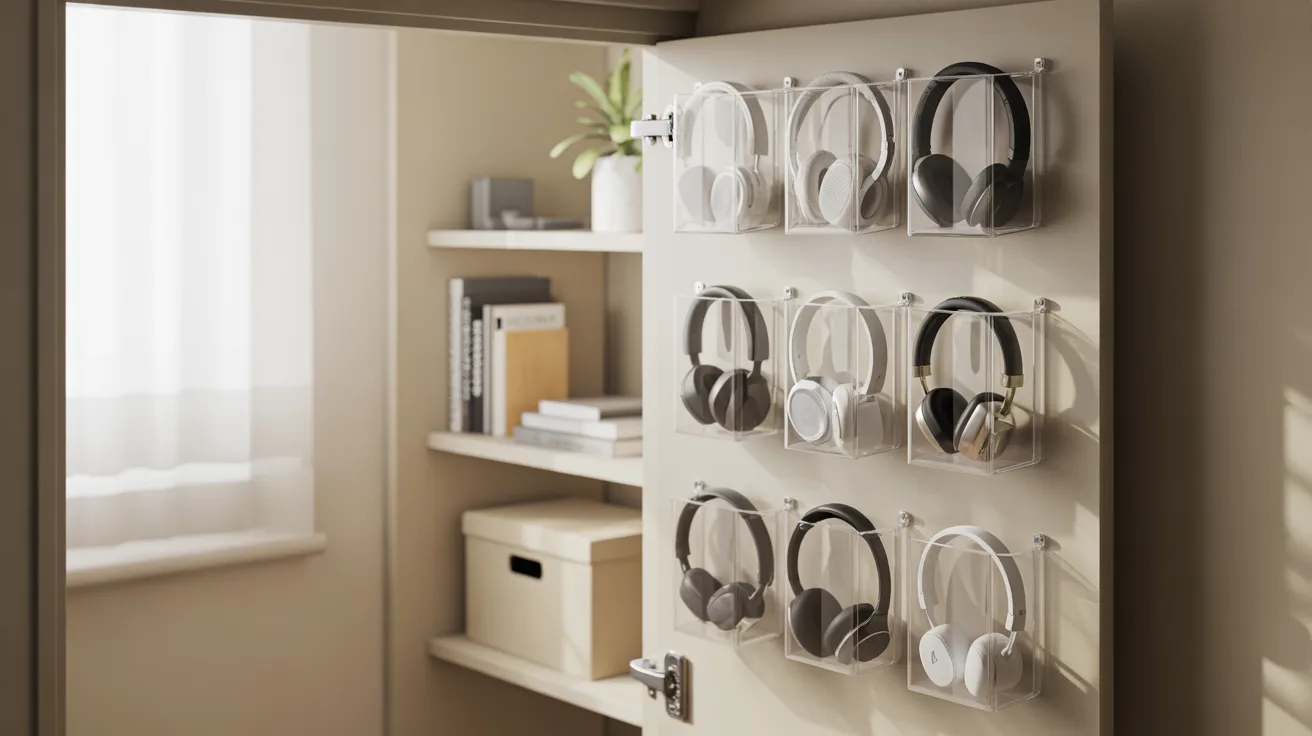
Cabinet door pockets are great for hidden storage, especially when you want to keep things out of sight. Each headphone gets its own pocket, preventing tangling and clutter.
This setup works well in shared spaces or offices where a clean look is important. Closing the cabinet keeps everything neatly tucked away.
Pro tip: I use transparent pockets so I can quickly find the right pair.
FAQs
1. Should headphones be hung or stored flat?
From my experience, hanging headphones is usually better because it helps maintain the shape of the ear cushions and reduces pressure on the headband. When headphones hang naturally, they’re less likely to get damaged compared to being left flat on a surface.
However, storing them flat inside a case works well for travel or long-term storage, especially when protection is needed. The key is to avoid leaving them exposed where they can collect dust or get scratched.
2. How can you keep headphone cables from getting tangled during storage?
The easiest way I manage cables is by gently coiling them before storing the headphones, making sure not to wrap them too tightly around the headband. Tight wrapping can damage the wires over time and reduce durability.
Using separate storage like bins, pockets, or cases also helps keep cables from mixing with others. Keeping each pair isolated makes a big difference in maintaining order and preventing tangles.
Conclusion
From what I’ve learned, keeping headphones organized doesn’t require complicated systems, just consistent habits and smart placement. Once you give your headphones a dedicated spot and make it easy to return them there, your space stays cleaner and your gear lasts longer.
Even small changes like adding a hook or stand can make a noticeable difference in both organization and daily convenience. The key is choosing a system that fits your routine so it becomes effortless to maintain.