
If you’ve ever stared at that empty space under your window and thought it could do more, you’re thinking in the right direction. I’ve been there too, trying to balance storage without crowding the room. A built-in window seat is one of the smartest ways I’ve found to combine comfort with functionality. In this guide, I’ll walk you through practical ideas that actually work in real homes, not just in photos.
If you want to add storage without sacrificing style, a built-in window seat is one of the most efficient solutions. I use it to turn unused space into something functional, whether it’s for blankets, books, or everyday clutter. The key is choosing the right storage type and layout for your space. In this article, you’ll find 16 practical window seat storage ideas that help maximize space while keeping your home organized and visually clean.

Key Takeaways
- Window seat storage helps you use underutilized space efficiently
- Drawer storage is ideal for everyday access items
- Lift-top benches work best for seasonal or rarely used items
- Proper measurements are essential for comfort and usability
- Built-ins can be customized for small, awkward, or unused areas
- Lighting and materials play a big role in the overall look
- Ventilation must be considered when building over heaters
How Can You Maximize Space with Built-In Window Seat Storage?
When I plan a window seat, I don’t just think about adding a bench—I focus on how it will function daily. Measuring the space correctly is always my first step because comfort matters just as much as storage. A seat that’s too deep feels awkward, while one that’s too shallow wastes potential storage underneath. I also decide early whether I need drawers or a lift-top design based on how often I’ll use the items inside. Drawers are perfect for quick access, while lift-top storage works better for things I don’t reach for often. I always check for vents, outlets, or heaters before building to avoid future issues.
Finally, I make sure everything is securely anchored to the wall for safety and durability. When done right, this simple area becomes one of the most practical and stylish parts of the room.
Pro Tip: I always aim for a seat height of around 17 to 19 inches and depth of 18 to 22 inches because it feels comfortable while still leaving enough room for storage underneath.
Framed Drawer Nook
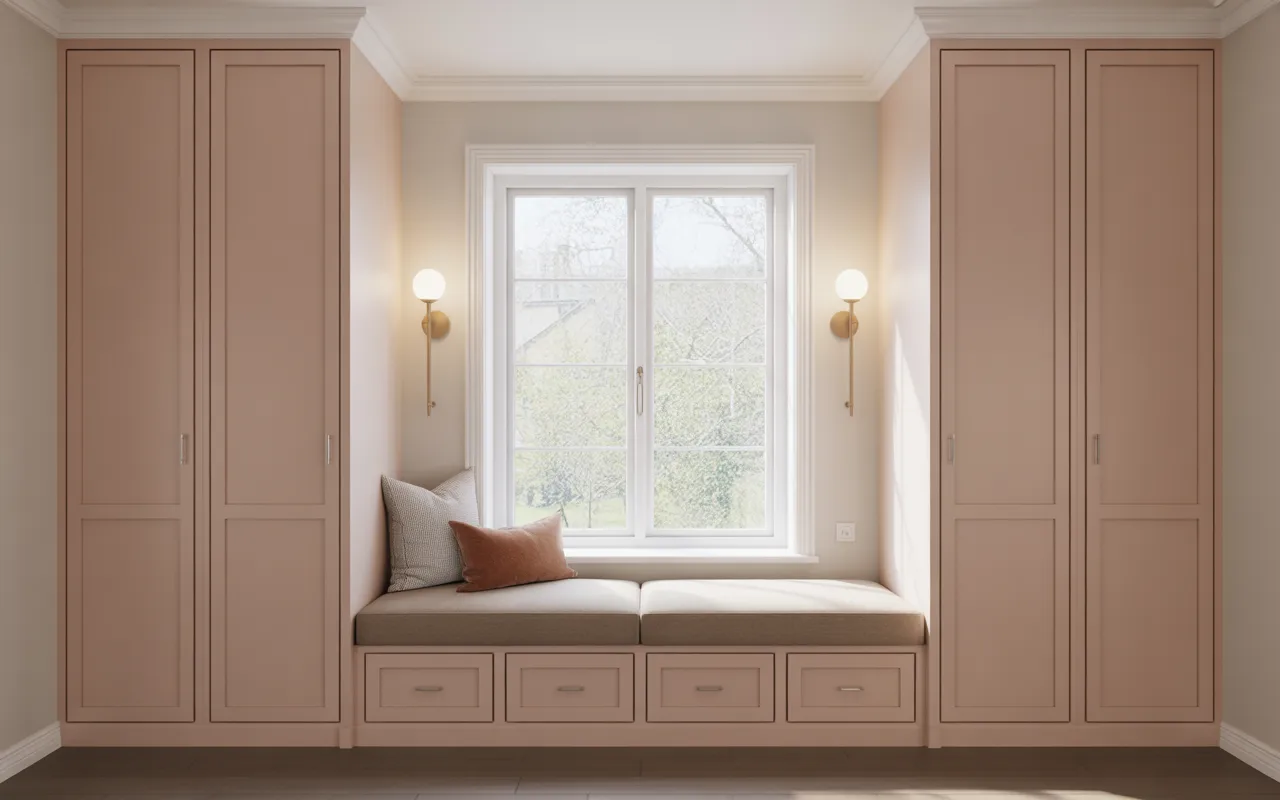
I like this setup when I need serious storage without cluttering the space. Floor-to-ceiling cabinetry around the window creates a built-in look that feels intentional and clean. The drawers under the seat are perfect for storing clothes, linens, or even kids’ items. Adding tall cabinets on both sides gives extra room for bulkier storage while keeping everything visually balanced. I usually match the trim with the rest of the room to make it look seamless. Soft wall lighting combined with natural daylight makes the nook feel warm and inviting.
Pro Tip: Use soft-close drawer slides and label inner sections so you can keep everything organized without digging through deep storage.
Library Corner Bench
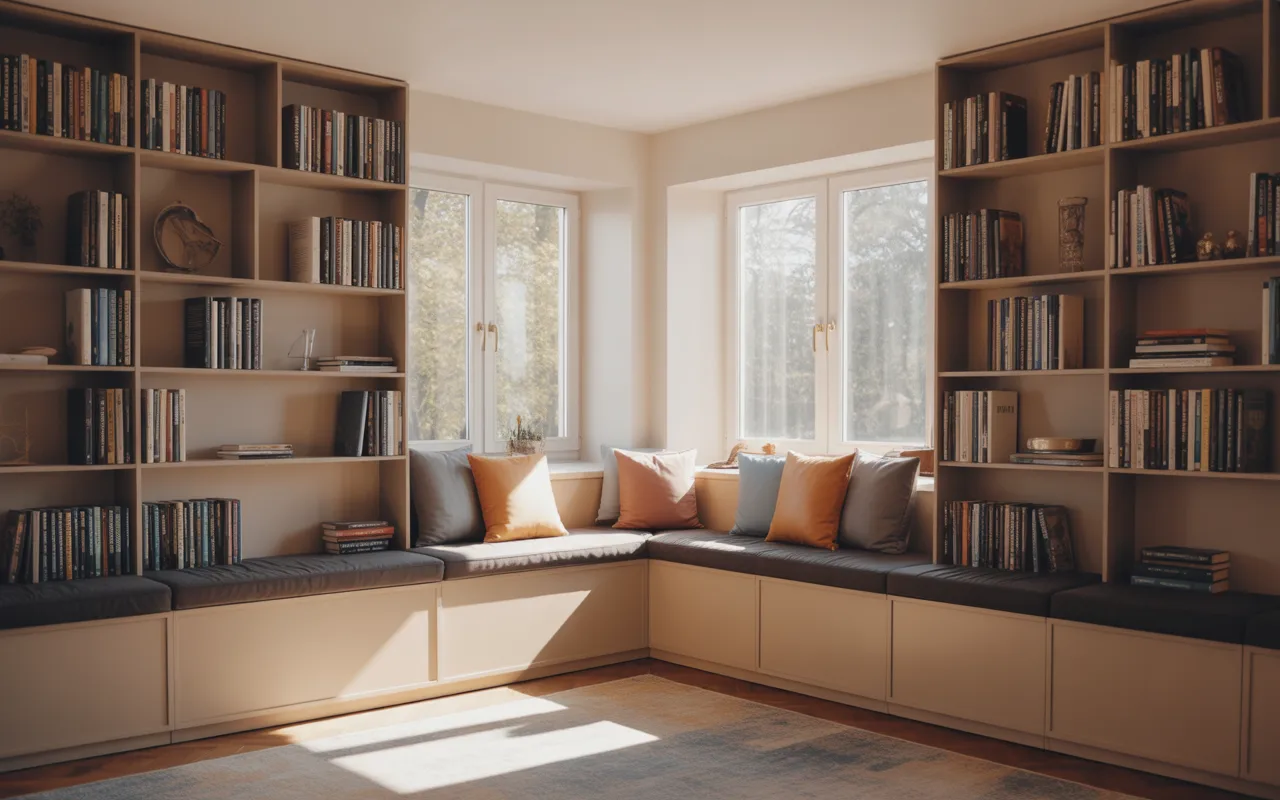
Corners often go unused, but I’ve found they can become the coziest spots in a home. Wrapping storage along the walls creates a functional seating area while maximizing every inch. It’s a great solution for small spaces where layout matters. I use base cabinets for hidden storage and add open shelves for books or décor. This combination keeps things practical but still visually appealing. With proper lighting, it turns into a perfect reading corner that feels both calm and useful.
Pro Tip: Add a plug point or USB outlet nearby so you can comfortably read, work, or charge devices without leaving the spot.
Glass Cabinet Bench
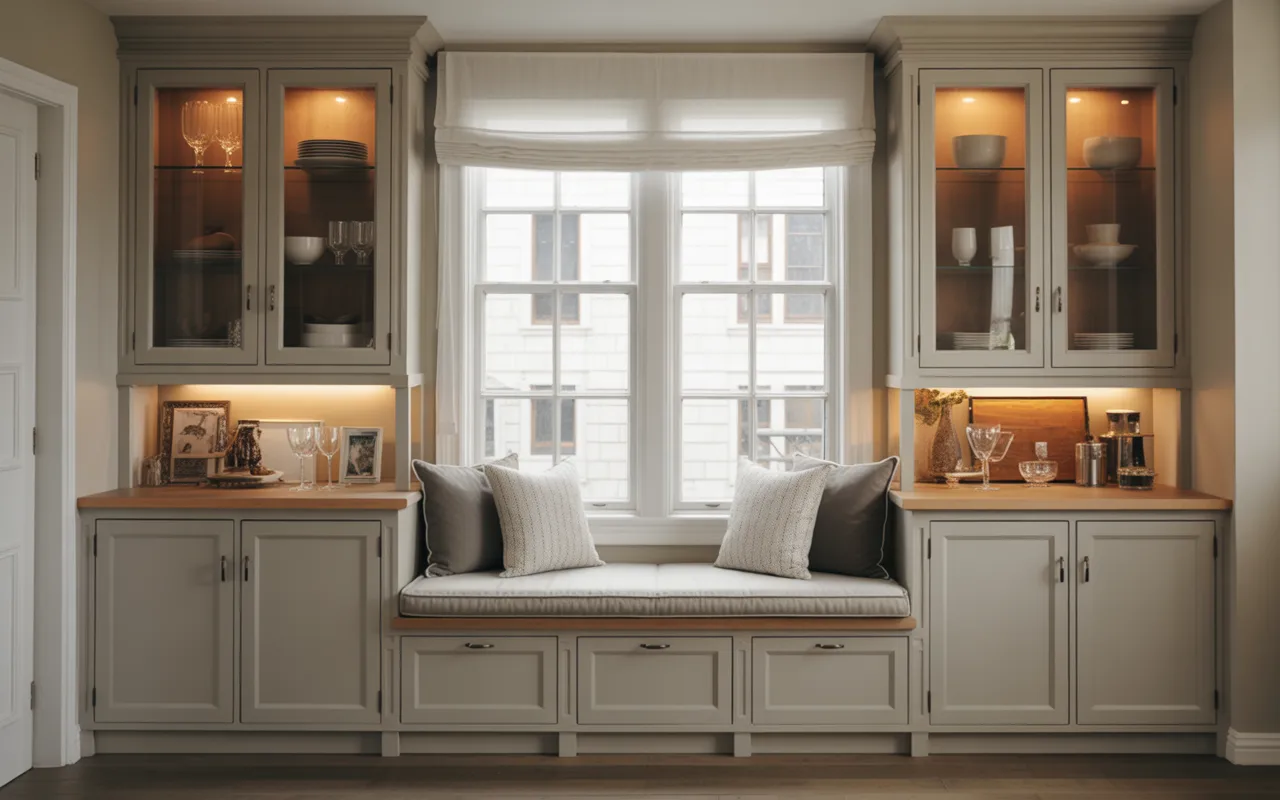
This idea works well when I want storage and display in one place. The lower drawers keep everyday clutter hidden, while glass cabinets above let me showcase decorative items or dishes. It’s especially useful in dining areas. I like how the natural light highlights whatever is displayed, making the space feel brighter. Adding soft lighting inside or around the cabinets enhances the look at night. It’s a simple way to combine functionality with a bit of style.
Pro Tip: Use warm LED strip lights inside glass cabinets to create a premium look and highlight your display items without harsh glare.
Stair Landing Storage
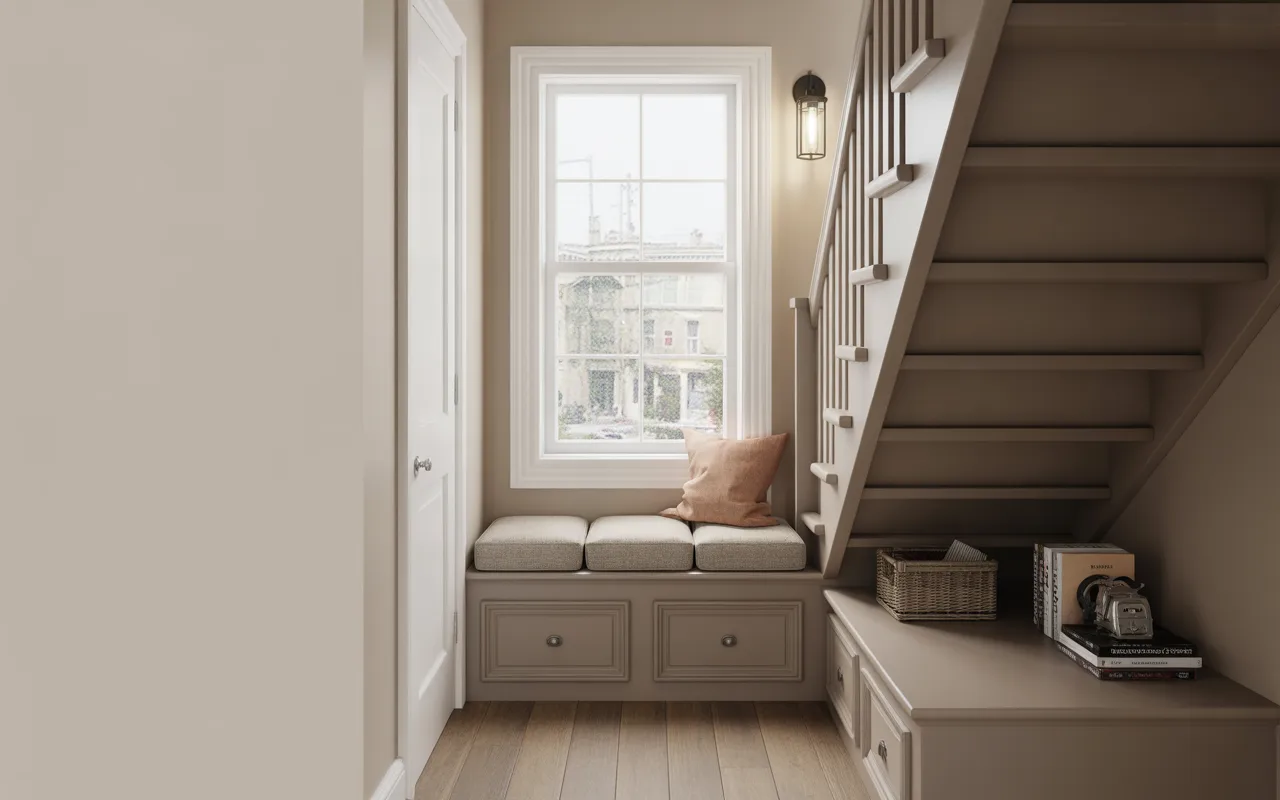
Small landings are often overlooked, but I’ve used them as smart storage zones. A slim window seat with built-in drawers can turn that narrow space into something practical. It’s especially helpful near entryways or upper floors. I keep the depth minimal so the walkway stays comfortable. A firm cushion on top makes it usable for quick seating or putting on shoes. Soft wall lighting helps balance the natural light coming through the window.
Pro Tip: Choose lighter colors for the bench to make tight spaces feel more open and less cramped.
Extended Drawer Bench
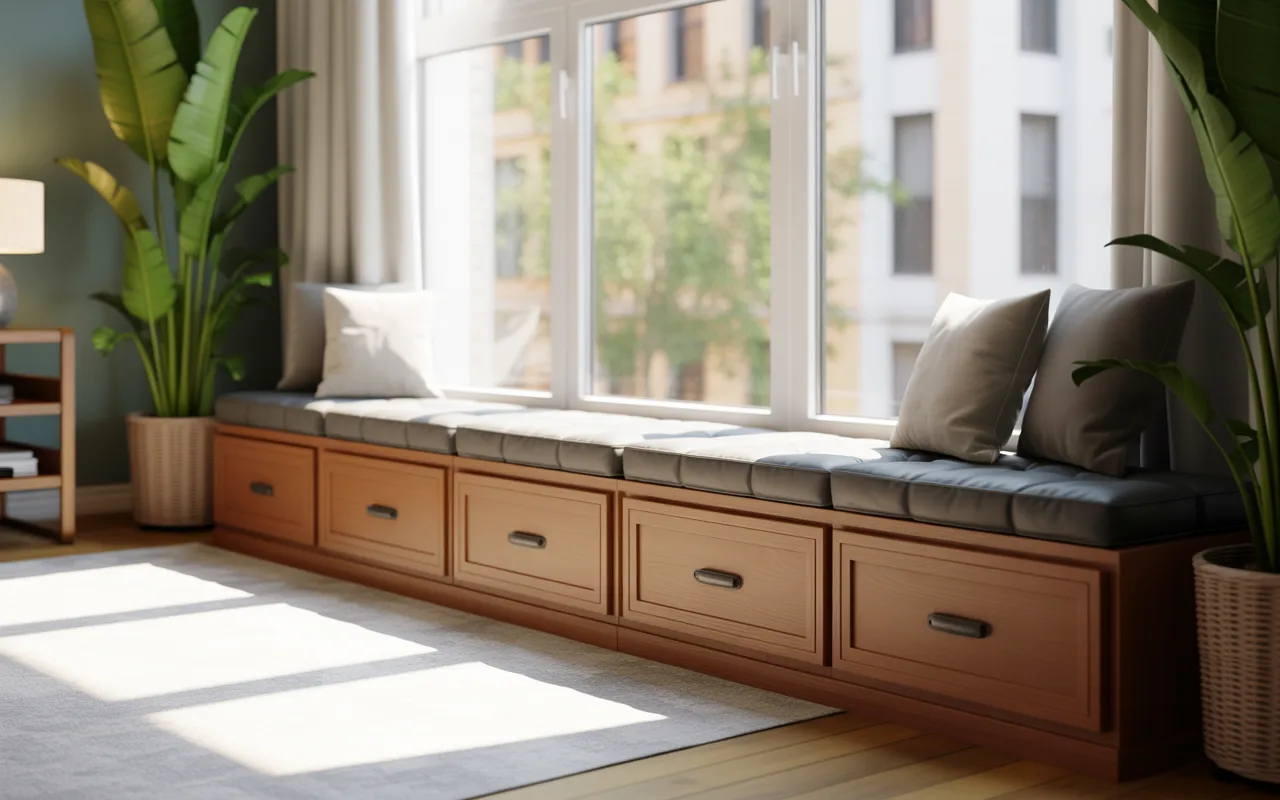
When I have a long wall to work with, I prefer extending the bench across the entire length. It creates a strong visual line and offers plenty of storage underneath. This works really well in apartments or sunrooms. Using multiple deep drawers makes organizing easier because everything has its place. I often use ready-made cabinets to save time during installation. Adding plants and soft lighting helps keep the space feeling relaxed and natural.
Pro Tip: Divide drawers into sections using organizers so you can store different categories without mixing everything together.
Open Log Storage
I enjoy mixing open and closed storage, especially in cozy spaces. Leaving some compartments open under the seat allows me to store firewood or decorative baskets. It adds texture while still being functional. Tall shelves on the sides help frame the window and provide additional display space. I usually keep the design simple with a sturdy base and a slim cushion. Natural light combined with soft interior lighting creates a warm atmosphere.
Pro Tip: Use matching baskets in open cubbies to keep the look tidy while still maintaining easy access.
Wood-Tone Drawers
Wood tones bring warmth into any space, which is why I often use them in bedrooms or quiet corners. Drawers under the seat provide practical storage without overwhelming the design. It’s a clean and timeless look. I prefer simple drawer fronts with minimal hardware to keep things uncluttered. A vertical cabinet on the side can add extra storage without blocking light. The natural daylight enhances the warmth of the wood beautifully.
Pro Tip: Go for matte or satin finishes on wood to reduce fingerprints and maintain a clean look over time.
Minimal Panel Storage
When I want a clean and modern look, I go for flat panel designs. This style works best in small spaces where too many details can feel overwhelming. It keeps everything looking calm and organized. Hidden storage under the seat is perfect for everyday items that I don’t want on display. I pair it with a simple cushion and soft lighting for a balanced feel. Filtered daylight adds a gentle glow without making the space too bright.
Pro Tip: Use push-to-open panels instead of handles to maintain a sleek, minimal appearance.
Wall-to-Wall Library
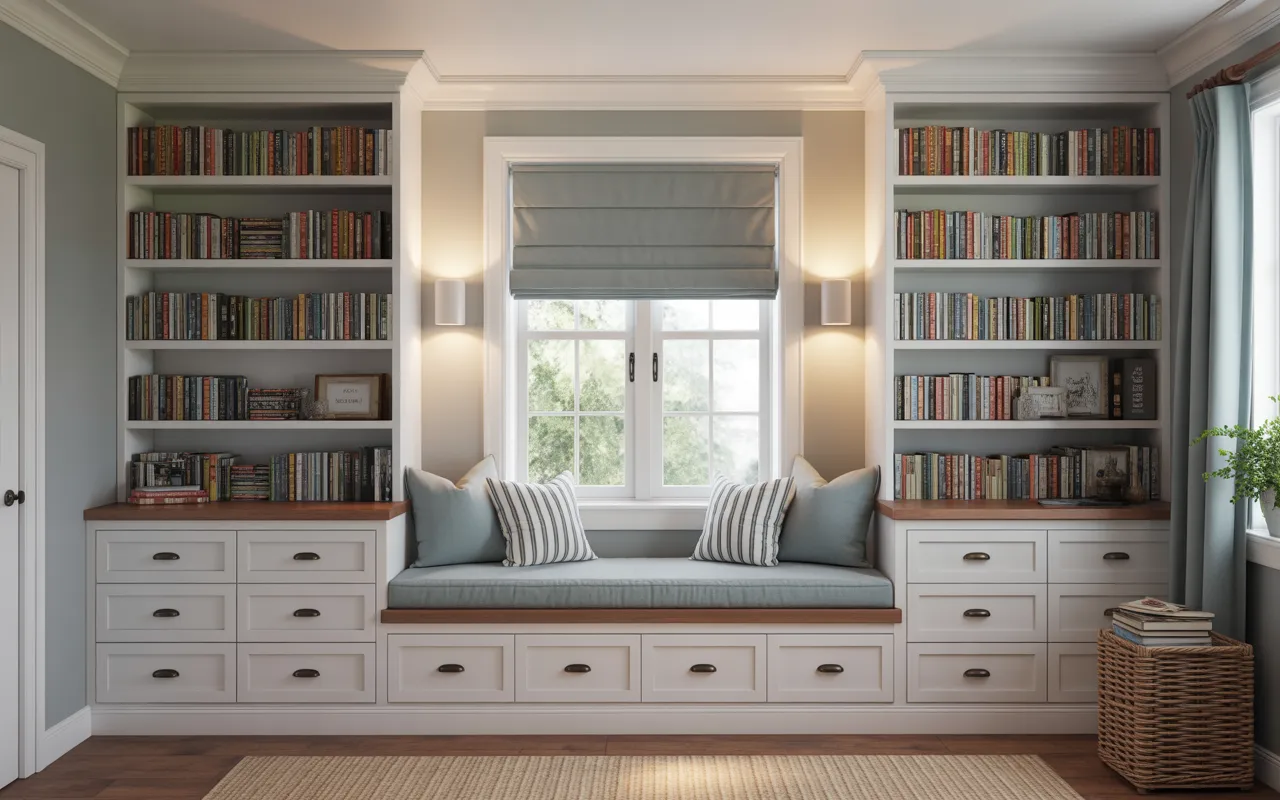
This is one of my favorite designs for combining storage and personality. The drawers below keep clutter out of sight, while shelves on both sides create a mini library feel. It’s perfect for living rooms or home offices. I usually center the window seat and build shelving around it for symmetry. Adding wall sconces helps create a cozy reading environment. The mix of natural and artificial light makes the space usable throughout the day.
Pro Tip: Arrange books by color or size to create a visually appealing and organized display.
Balanced Cabinet Wall
Symmetry makes a big difference in how built-ins look, and I always keep that in mind. A balanced layout with drawers, cabinets, and shelves creates a clean and organized appearance. It works well in family rooms. I start with base cabinets and then build upward to maintain proportion. This setup provides both hidden and visible storage options. Even lighting, both natural and artificial, helps the entire wall feel cohesive.
Pro Tip: Keep frequently used items in lower drawers and less-used items in upper cabinets for better accessibility.
DIY Frame Base
When I want full control over the design, I build the base from scratch. A simple plywood frame allows me to customize the depth and storage layout. It’s a great option for awkward or tight spaces. I add internal sections for drawers or lift-top storage before closing it up. Finishing it with panels and a cushion gives it a polished look. Proper lighting ensures the space stays functional and comfortable.
Pro Tip: Use moisture-resistant plywood if your window area is prone to humidity or condensation.
Integrated Vent Bench
Building over a radiator is possible, but I always make sure airflow isn’t blocked. Using vented panels or slats allows heat to circulate safely. This is especially useful in smaller homes where space is limited. I still include drawers underneath when possible, depending on the radiator placement. Safety is always my priority, so I test how heat affects the area. With the right design, it works both practically and efficiently.
Pro Tip: Install a removable vent panel so you can easily access and clean the radiator when needed.
Cushion Drawer Combo
This is one of the most practical designs I use in everyday spaces. The drawers keep clutter hidden, while the cushion makes it comfortable enough for lounging. It’s a great mix of function and comfort. I install full-extension drawer slides so everything is easy to access. A thick cushion makes a big difference in usability. Adding task lighting improves functionality, especially for reading or relaxing.
Pro Tip: Choose a washable or removable cushion cover to keep maintenance simple.
Classic Panel Seat
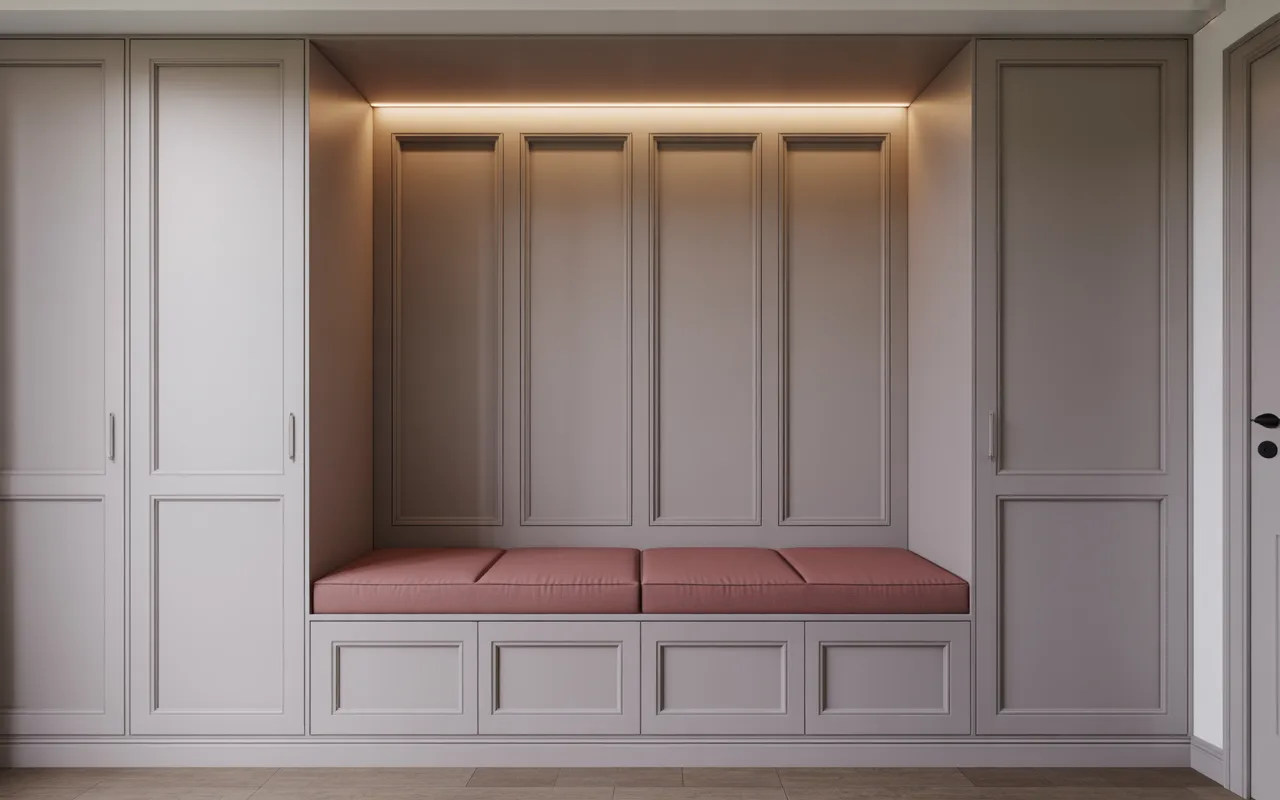
Panel detailing can elevate even the simplest design, which is why I often use it. It adds character while keeping the storage functional and hidden. This works well in hallways or bedrooms. I match the paneling with the wall design for a seamless built-in effect. The seat becomes both a storage solution and a design feature. Soft lighting enhances the overall look without overpowering it.
Pro Tip: Match paint colors exactly with surrounding walls to make the built-in look truly seamless.
Bay Wrap Storage
Bay windows can be tricky, but I’ve found they offer great storage potential. Wrapping a bench around the angles makes the space more usable. It’s perfect for dining areas or family spaces. I usually customize the base to match the exact shape of the window. Storage can be added through drawers or lift-up sections. The natural light in these areas makes the setup feel open and inviting.
Pro Tip: Use hinged lids in angled sections where drawers might not function smoothly.
Lit Display Nook
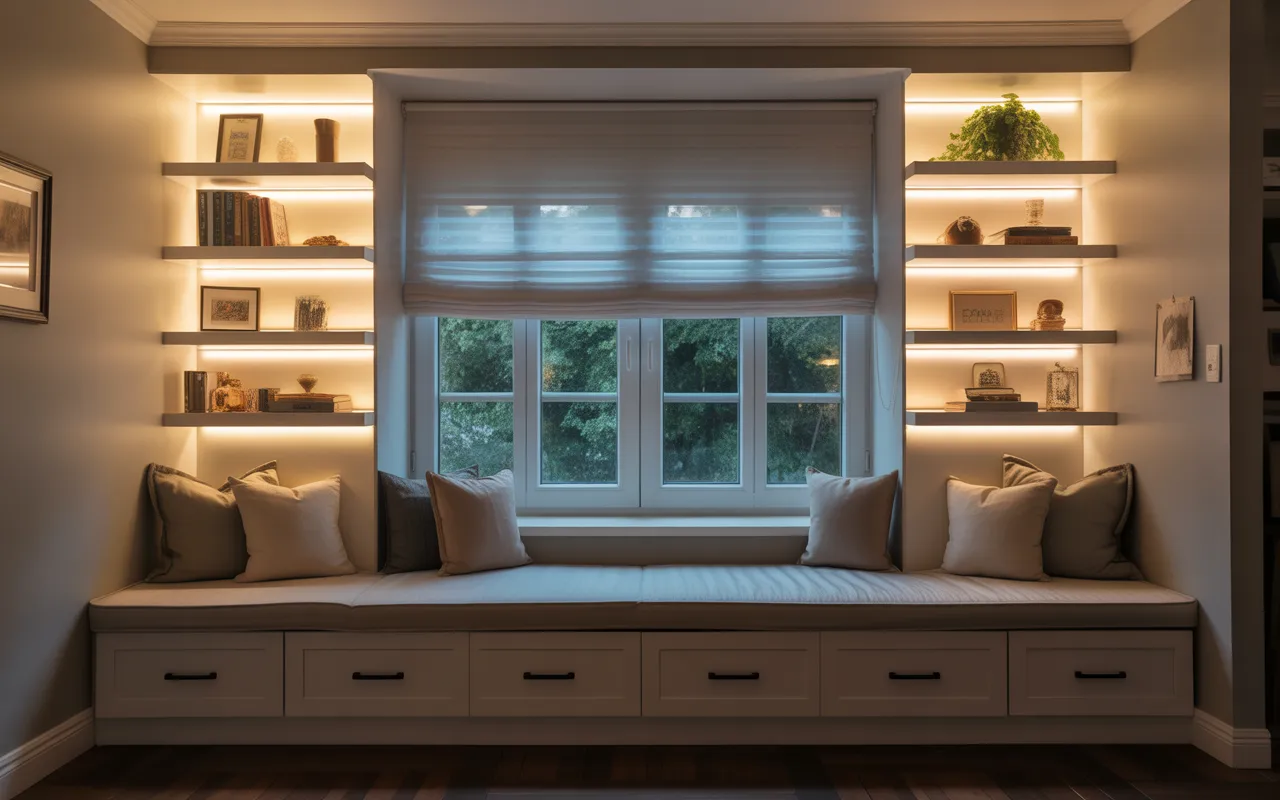
Lighting can completely transform a window seat area. I like adding LED strips to shelves to highlight décor while keeping storage functional below. It’s ideal for workspaces or study corners. Drawers under the seat hide everyday items, keeping the space clean. Adjustable lighting lets me control the mood depending on the time of day. Natural daylight handles brightness during the day, while LEDs take over at night.
Pro Tip: Connect LED lighting to a dimmer switch so you can easily adjust brightness for different moods.
FAQs
1. What should you store in a window seat?
I usually store soft and bulky items like blankets, cushions, and seasonal throws. These items fit well and don’t require frequent access. For everyday items like books or toys, drawers work much better. If the area gets a lot of sunlight, I avoid storing items that can get damaged by heat. It’s always better to think about both convenience and durability when deciding what goes inside.
2. Can you build one over a radiator?
Yes, I’ve done this before, but ventilation is extremely important. I always use vented tops or grilles to allow proper airflow. Without that, heat can build up and cause problems. I also make sure there’s enough clearance around the radiator and avoid sealing it tightly. If the area gets too warm, I only store heat-safe items to prevent damage.
Conclusion
When I look at unused space under a window now, I don’t see wasted space anymore—I see an opportunity. A well-designed window seat can completely change how a room functions without adding bulky furniture. It gives you storage, seating, and style all in one smart solution. What I’ve learned is that the best design depends on how you actually live. Whether you need quick-access drawers, hidden storage, or a cozy reading nook, there’s always a way to make it work. Small adjustments like lighting, materials, and layout can make a big difference.
If you’re planning to add one, start simple and build around your needs. With the right approach, even the smallest window space can become one of the most useful and inviting spots in your home.