
If your entryway turns into a dumping zone the second your kids walk in, I completely understand. Shoes, bags, and jackets seem to land everywhere except where they should. I’ve dealt with the same daily mess, and I know how quickly it builds up.
I’ve learned that an organized entryway isn’t about perfection, it’s about creating a system your family will actually use. When every item has a clear, easy-to-reach home, clutter stops at the door. In this guide, I’m sharing 17 practical foyer storage ideas that help busy families stay organized without constant cleanup.
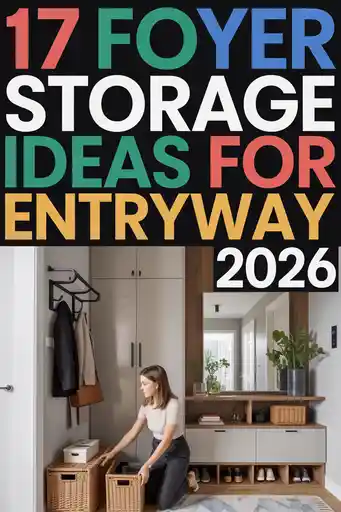
Key Takeaways
- Create a dedicated spot for every daily item
- Use low hooks and open storage for kids
- Combine open and closed storage for balance
- Benches add both seating and hidden storage
- Labels help kids stay consistent
- Design based on real habits, not ideal ones
What’s the Most Practical Entryway Storage Setup for Families With Kids?
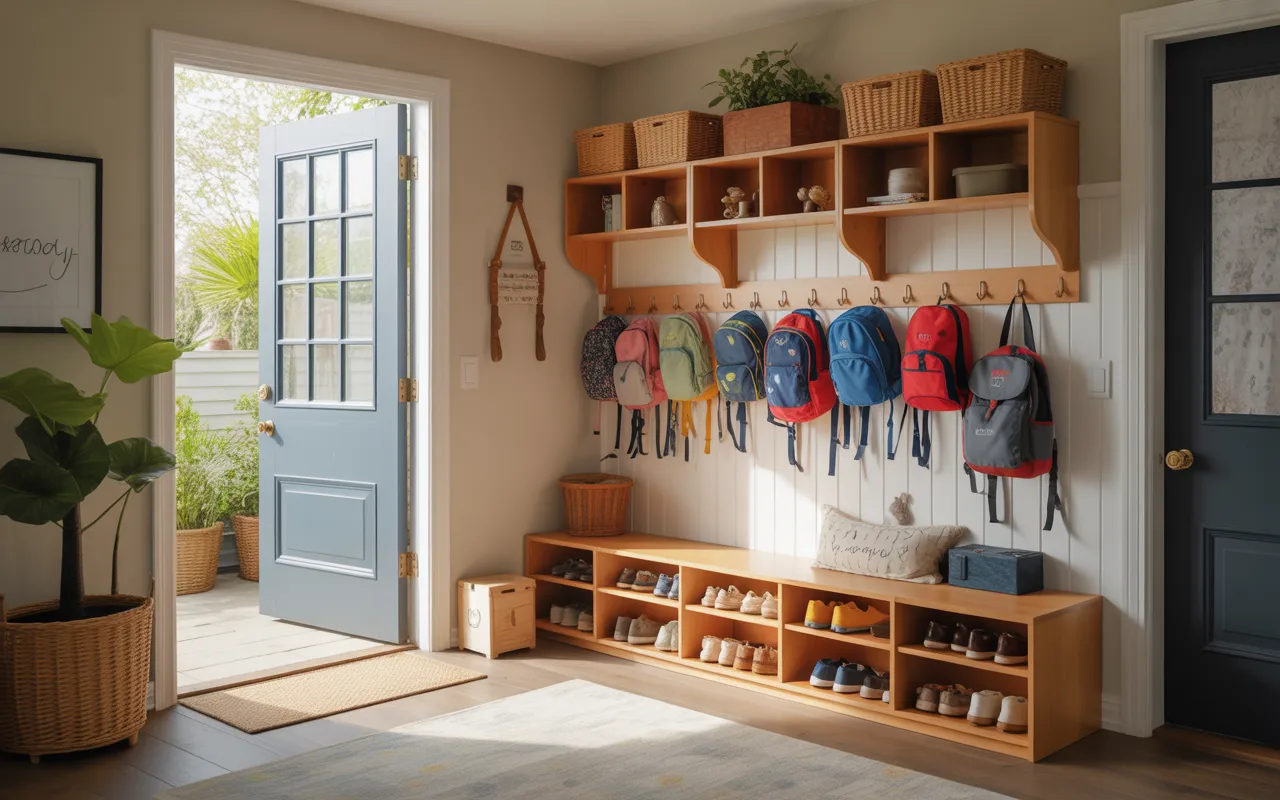
From my experience, the entryway is one of the hardest working spaces in the house. It handles school mornings, messy afternoons, and everything in between. That’s why the best setup isn’t just about looks, it’s about function. I always focus on creating a system where every item has a clear home. Shoes, backpacks, coats, and even small items like lunchboxes need their own place. When kids know exactly where things go, they’re more likely to follow through.
I’ve found that low hooks, open cubbies, and a sturdy bench make a huge difference. When the setup matches how your family actually moves, the mess naturally stays contained near the door.
Pro Tip: Design your entryway at your kids’ height, not yours, so they can use it independently without reminders.
Hidden Bench Drawers
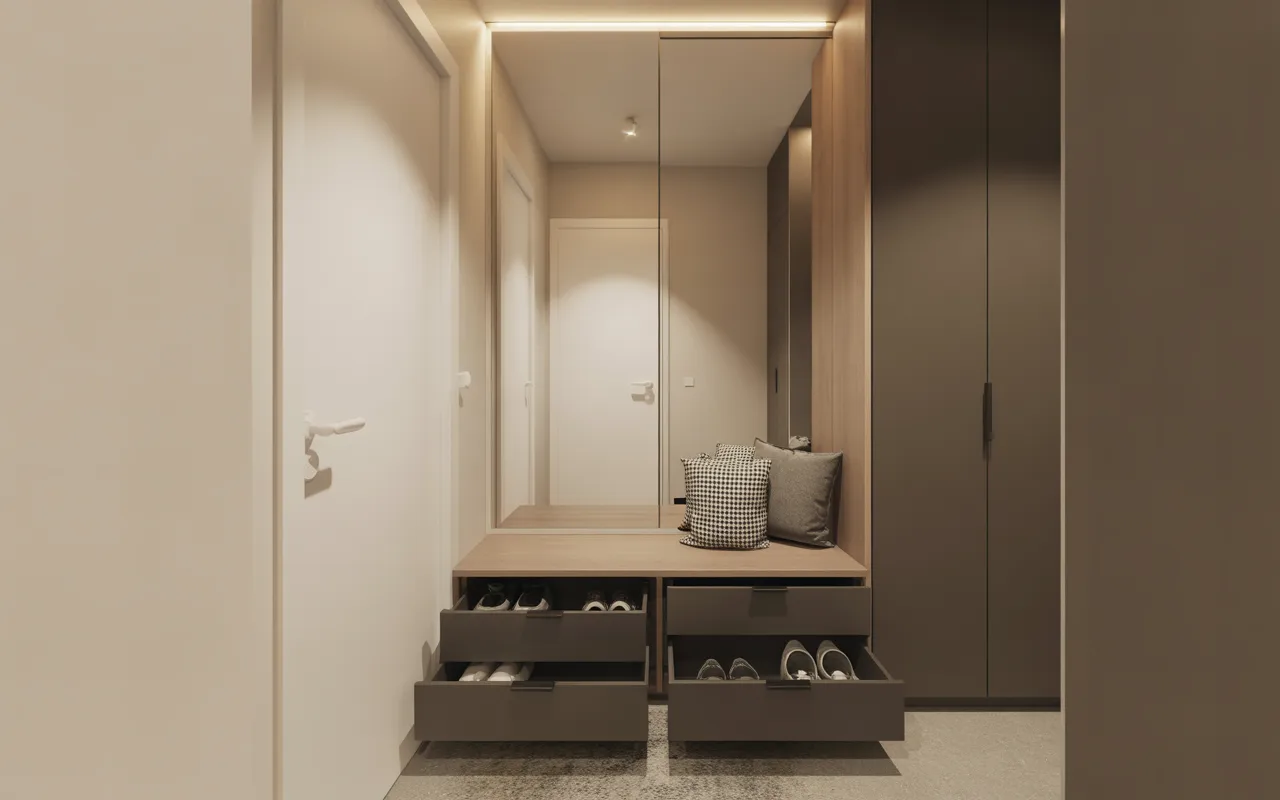
I’ve noticed that shoes scattered around usually mean they don’t have a proper hidden spot. Assigning one drawer per person makes things much more organized. Everyone knows exactly where their items belong. A bench with pull-out drawers keeps clutter out of sight while still giving you a place to sit. It’s especially useful in narrow entryways where visual mess builds up quickly. This setup keeps everything looking clean without sacrificing storage. It’s practical for everyday use and doesn’t require constant tidying.
Pro Tip: Use soft-close drawer slides to avoid noise and extend the life of your storage furniture.
Open Basket Cubbies
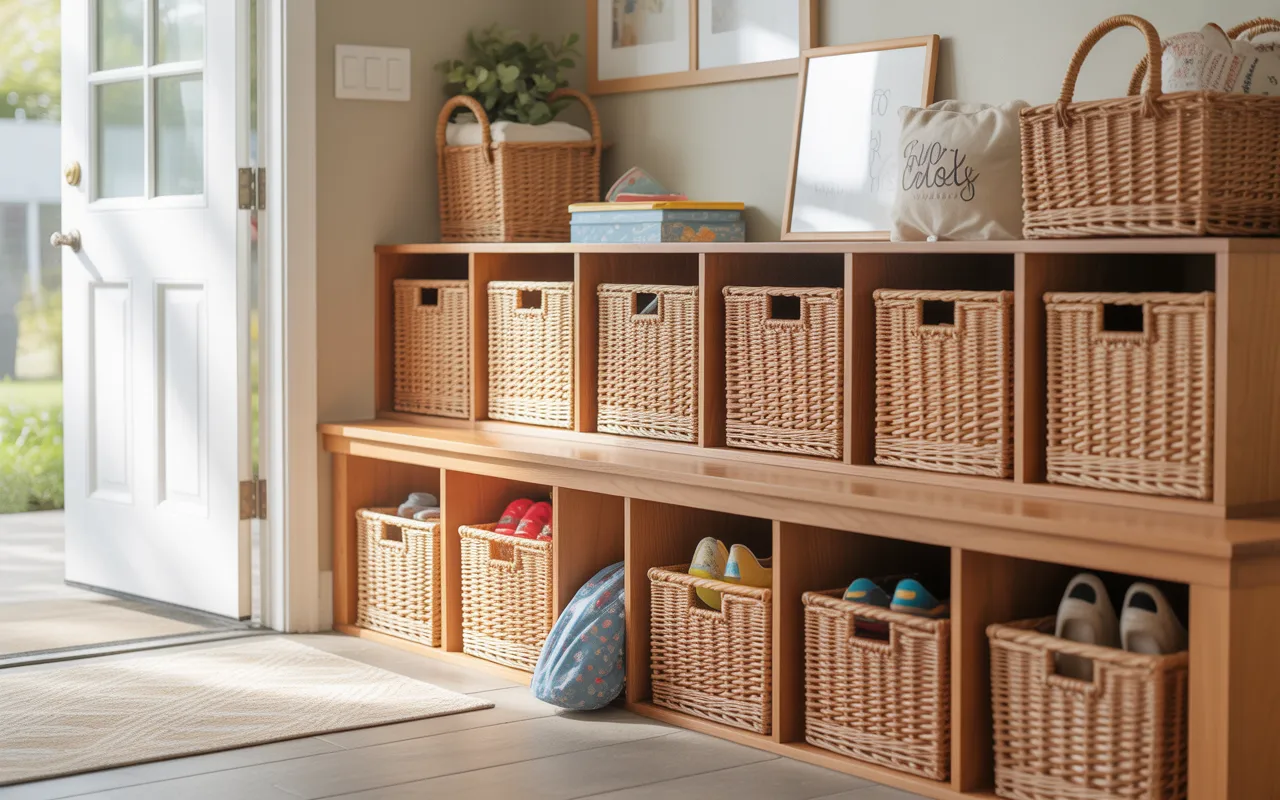
When every kid has a visible space, mornings feel less stressful. I like using open cubbies with baskets because they make it easy to toss things in quickly. No complicated system, just simple grab-and-go storage. Lower cubbies work best for kids since they can reach everything without help. Adding labels helps avoid confusion and keeps things consistent over time. This setup also keeps the space looking light and welcoming. It’s functional without feeling cluttered.
Pro Tip: Choose sturdy, matching baskets to maintain a clean and uniform look even when things aren’t perfectly organized.
Full Mudroom Wall
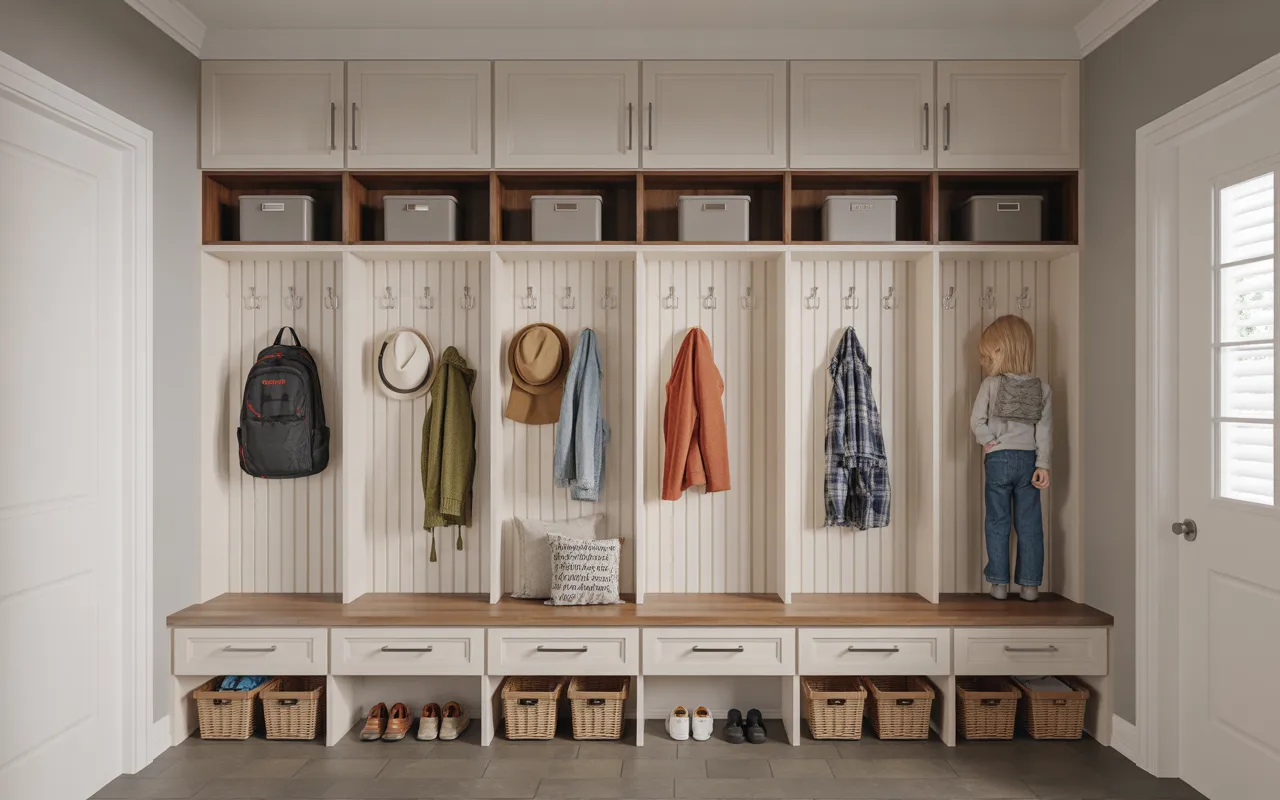
For busy households, a full wall setup can completely transform the entryway. I’ve seen how floor-to-ceiling storage handles heavy daily traffic without falling apart. Drawers at the bottom hide shoes, hooks in the middle manage daily items, and upper cabinets store seasonal gear. It creates a complete system in one place. This type of setup works best when you need serious organization. Everything has a defined zone, which makes daily routines smoother.
Pro Tip: Use durable materials that can handle daily wear, especially if kids are constantly using the space.
Wood Hook Nook
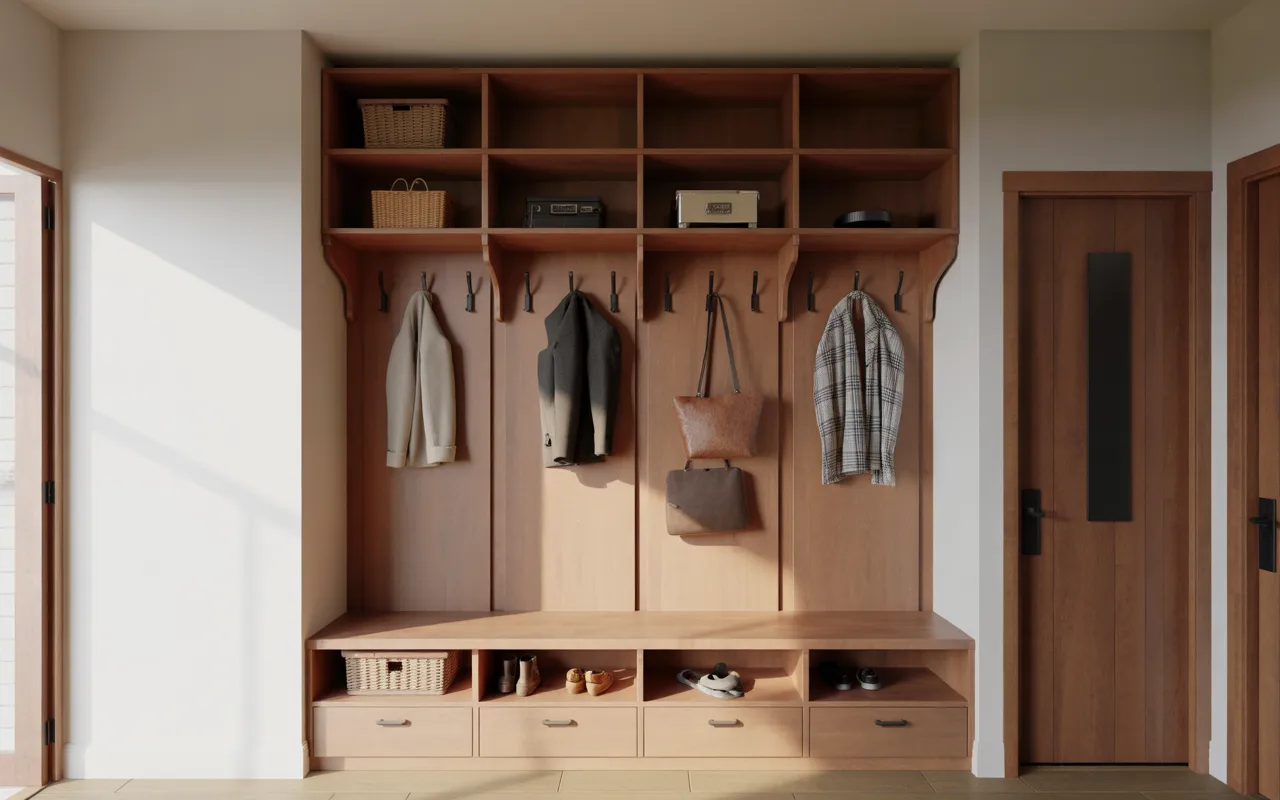
I like the idea of creating a small dedicated nook where everything stays within reach. A wood-backed wall with sturdy hooks adds both function and style. The bench below provides seating while drawers handle hidden storage. It’s a balanced setup that keeps daily clutter off the floor. This works well for families who want structure without building a full mudroom. It keeps things simple but effective.
Pro Tip: Install hooks at different heights to accommodate both kids and adults comfortably.
Open Closet System
When coats start piling up, I’ve found that hooks alone aren’t enough. An open closet system gives more structure while still keeping everything visible. Double hanging rods help maximize vertical space, and shelves above are perfect for baskets and seasonal items. It’s organized but still easy to use. This setup works best when you want everything accessible without digging through closed storage.
Pro Tip: Assign one section per family member to avoid mix-ups and keep things organized long-term.
Cabinet And Hooks
Combining cabinets with hooks is one of the most practical setups I’ve used. Hooks handle daily items while cabinets hide things you don’t need often. This balance keeps the space functional without looking messy. It’s ideal for families who want both accessibility and a clean look. Drawers below help manage shoes and small clutter, making the entire system feel complete.
Pro Tip: Use baskets inside cabinets to keep smaller items from becoming disorganized.
Slim Cabinet Combo
In tight spaces, I’ve learned that bulky furniture only makes things worse. A slim cabinet keeps the walkway clear while still offering useful storage. Open sections can hold baskets for everyday items, while closed compartments hide clutter. It’s a great solution for apartments or narrow hallways. This setup keeps everything functional without overwhelming the space.
Pro Tip: Stick to cabinets under 15 inches deep to maintain easy movement in small entryways.
Labeled Family Stations
Giving each family member their own space has made a big difference for me. It reduces confusion and helps kids stay responsible for their items. Hooks for bags, baskets for small items, and shelves for shoes create a complete station. Everything is clearly organized and easy to access. This setup works especially well for busy families with multiple kids.
Pro Tip: Use simple, readable labels so kids can quickly identify their space without help.
Deep Bench Cubbies
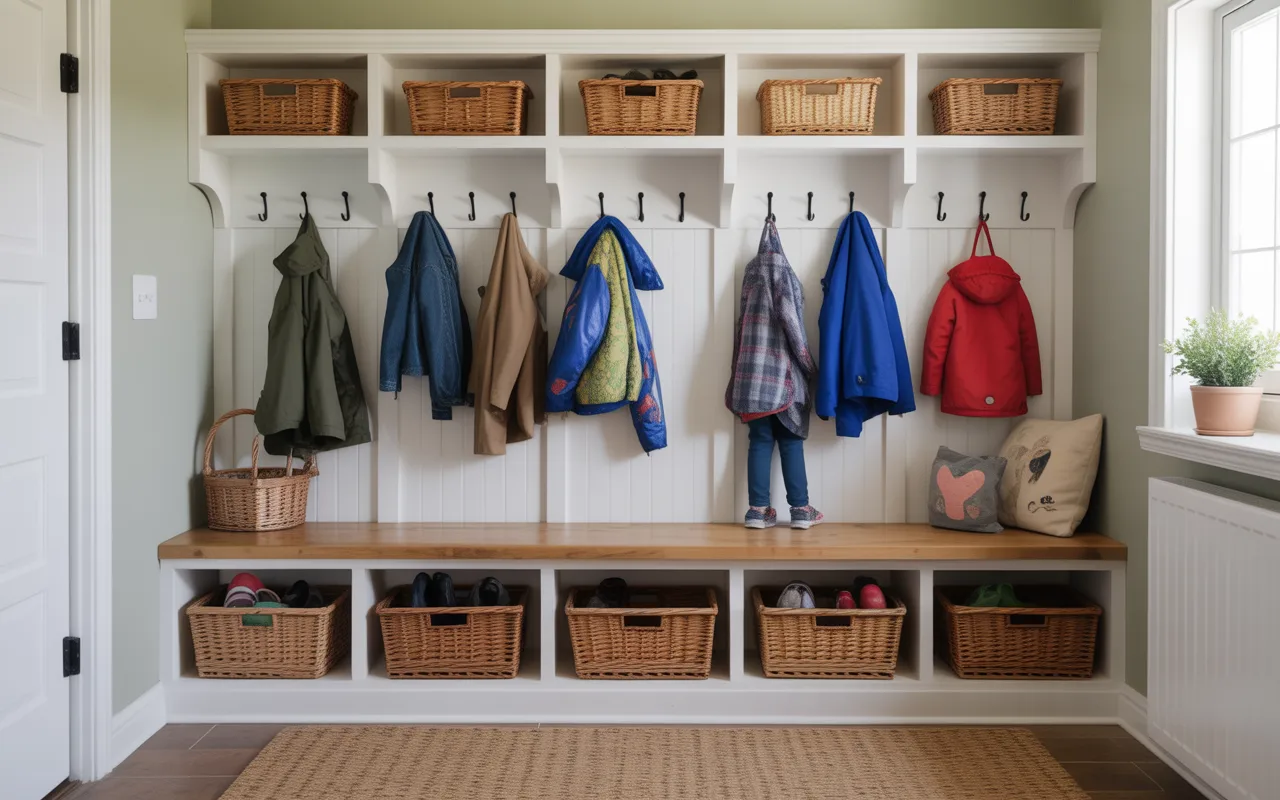
Long entryways need storage that stretches along the wall. A bench with deep cubbies provides plenty of space for everyone. Baskets inside the cubbies make it easy to store shoes and gear without cluttering the floor. Hooks above keep coats off the seating area. This setup is both practical and visually balanced.
Pro Tip: Choose baskets with handles so kids can easily pull them out and put them back.
Slatted Storage Wall
In open layouts, I prefer storage that blends into the design. A slatted wall adds structure without making the space feel closed off. Closed cabinets below hide clutter, while the bench provides a functional seating area. It’s modern and practical at the same time. This setup works well in homes where style and function need to coexist.
Pro Tip: Use consistent wood tones to keep the design cohesive and visually calm.
Minimal Hook Bench
Sometimes simple works best. A bench with hooks above creates an easy system that doesn’t require much effort to maintain. Baskets below the bench handle shoes and smaller items. Everything stays within reach, which makes daily use effortless. This setup is perfect for smaller entryways.
Pro Tip: Space hooks evenly to prevent bags and coats from overlapping.
Shelf And Rail
I’ve found that using vertical space makes a big difference in busy homes. A rail for hooks combined with a shelf above adds extra storage without crowding the floor. The shelf can hold baskets for seasonal items, while the hooks manage everyday essentials. It’s a smart use of wall space. This setup keeps things organized while still feeling open.
Pro Tip: Secure shelves into wall studs to ensure they can handle heavier storage.
Compact Hall Tree
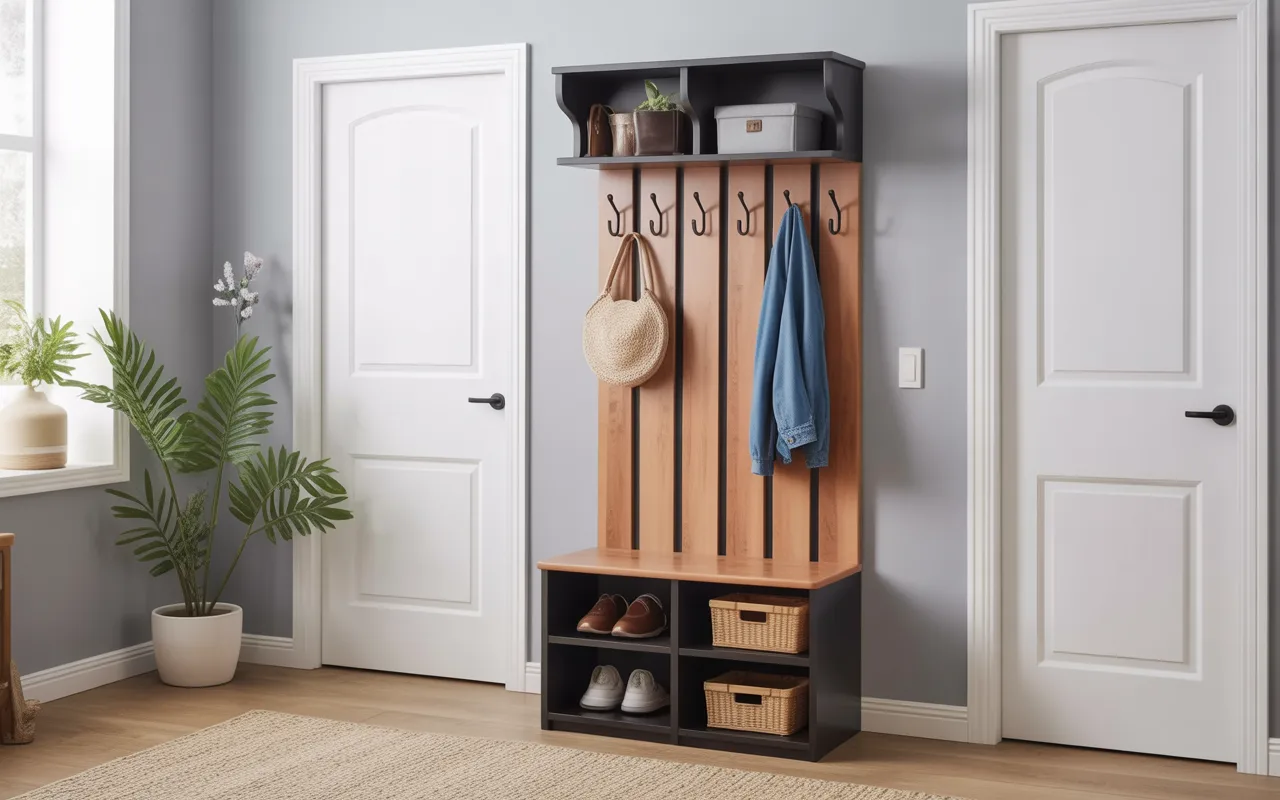
When space is limited, a compact hall tree can do everything in one unit. It combines hooks, seating, and storage without taking up much room. I like how it keeps everything in one place while still looking neat. It’s ideal for apartments or small foyers. This setup is simple but very effective.
Pro Tip: Anchor the unit to the wall for added stability and safety.
Narrow Wall Built-In
Unused narrow walls can become highly functional with the right setup. A slim built-in adds storage without taking up too much space. Drawers below handle clutter, while hooks above manage daily items. It’s a great way to maximize small areas. This setup turns overlooked spaces into something useful.
Pro Tip: Use light colors or mirrors nearby to make narrow spaces feel larger.
Double Bench Alcove
For larger families, I’ve found that dividing space into zones works best. A double bench setup gives everyone their own area. Separate sections prevent items from piling up in one place. Cabinets and shelves keep everything organized. This setup works well when multiple people use the entryway at the same time.
Pro Tip: Assign each section to specific family members to keep things organized long-term.
Simple Shoe Rack
Even the smallest spaces can stay organized with the right system. A simple shoe rack keeps footwear off the floor without adding bulk. Hooks above handle accessories like hats and scarves. It’s a minimal setup that still works well. This is perfect for tight corners or secondary entry points.
Pro Tip: Keep only daily-use shoes here and store the rest elsewhere to avoid overcrowding.
Closet Turned Mudroom
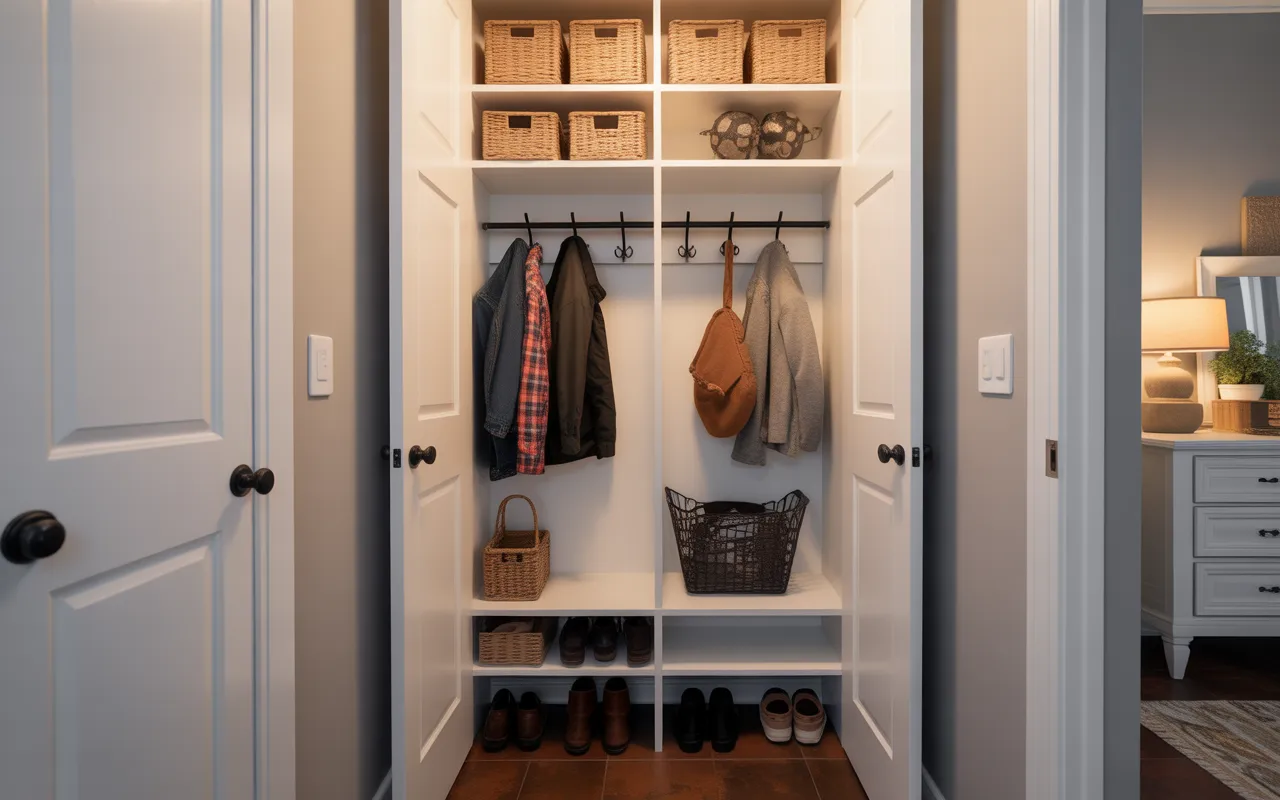
Turning a closet into a mini mudroom is one of the smartest upgrades I’ve tried. It keeps everything contained in one hidden space. Hooks, shelves, and a small bench create a complete system. It’s compact but very effective. This setup works well if you don’t have space for built-ins.
Pro Tip: Add lighting inside the closet so everything stays visible and easy to access.
FAQs
1. How Do You Keep Kids From Dumping Everything on the Floor?
From what I’ve seen, kids usually drop things because there’s no easy place to put them. When storage is too high or complicated, they simply won’t use it. I always recommend adding hooks at their height and giving each child their own basket or cubby. When the system feels simple, they naturally follow it.
The goal isn’t perfection, it’s making the organized option easier than the messy one.
2. What’s Better for Families: Open or Closed Storage?
In my experience, a mix of both works best. Open storage makes daily items easy to grab, while closed storage hides visual clutter. If everything is open, it can look messy. If everything is closed, it becomes inconvenient. Balance is what keeps things working. I usually keep everyday items open and store seasonal or extra items behind doors.
Conclusion
After trying different setups, I’ve realized that the best entryway system is the one your family actually uses every day. It doesn’t need to be perfect or expensive, it just needs to be practical and consistent. Small changes like adding hooks, baskets, or a simple bench can completely change how your entryway functions. Once everything has a place, the clutter naturally stops building up.
Start with one idea that fits your space and build from there. A well-planned entryway doesn’t just look better, it makes your entire home feel more organized.