

A cluttered bathroom cabinet can make even simple daily routines frustrating. When products are piled together, items get lost, space gets wasted, and finding what you need becomes harder than it should be.
The good news is that you don’t need a larger bathroom to solve the problem. A few smart storage strategies can help you make better use of every shelf, drawer, and cabinet while keeping everything easy to access.
Whether you’re organizing a small bathroom cabinet or a large linen storage unit, these practical ideas will help create a cleaner and more functional space.
Key Takeaways
- Group similar products together for faster access.
- Use vertical space to maximize storage capacity.
- Store daily essentials at eye level.
- Separate backup supplies from everyday items.
- Add labels to maintain organization long-term.
- Utilize cabinet doors and under-sink areas.
- Choose clear containers to improve visibility.
- Create dedicated zones for different categories.
How to Organize Things in the Bathroom Cabinet?
Before organizing, remove everything from the cabinet and sort items into categories. Toss expired products, empty containers, and anything you no longer use. Once everything is grouped, assign a specific home for each category. The goal isn’t perfection—it’s creating a system that makes daily routines easier and prevents clutter from returning.
Pro Tip: If you haven’t used a product in the last year, it’s probably time to let it go.
Vertical Product Zoning
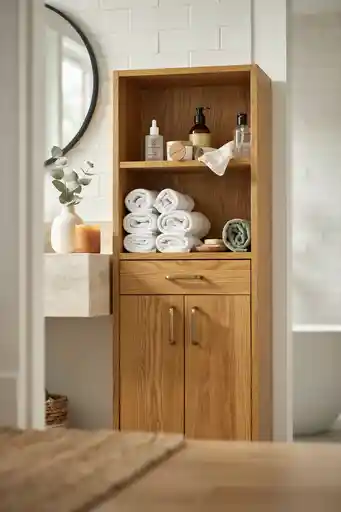
Store products based on how frequently they’re used. Daily essentials should sit at eye level, occasional items can go on higher shelves, and bulk supplies belong lower down. This setup reduces clutter and keeps your most-used products within easy reach every day.
Pro Tip: Eye-level shelves should only contain products you use at least three times per week.
Open Shelf Layers
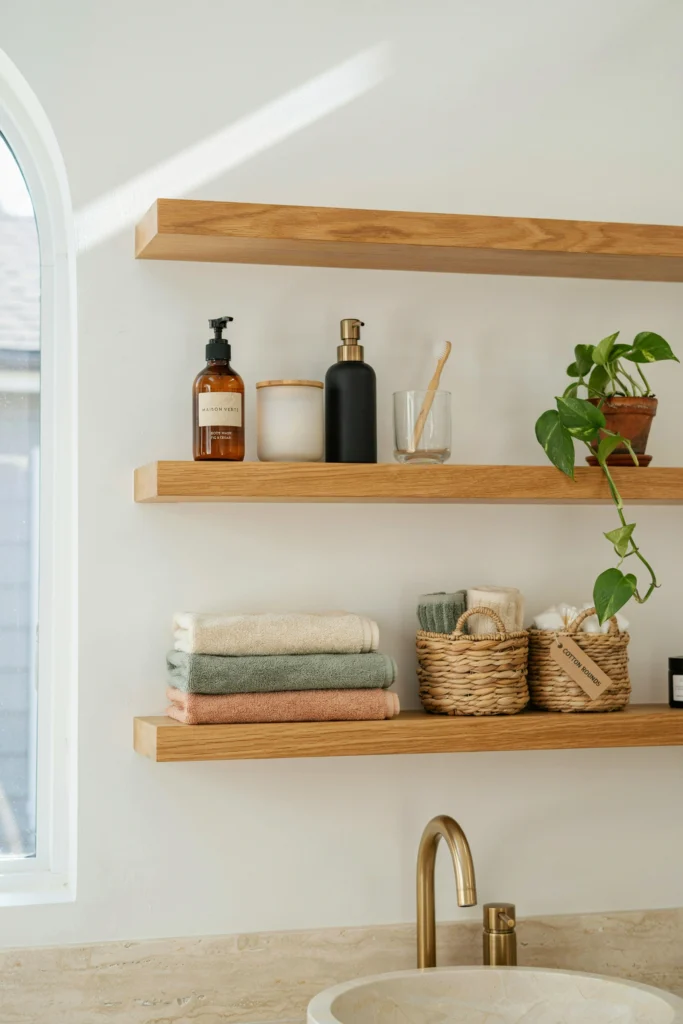
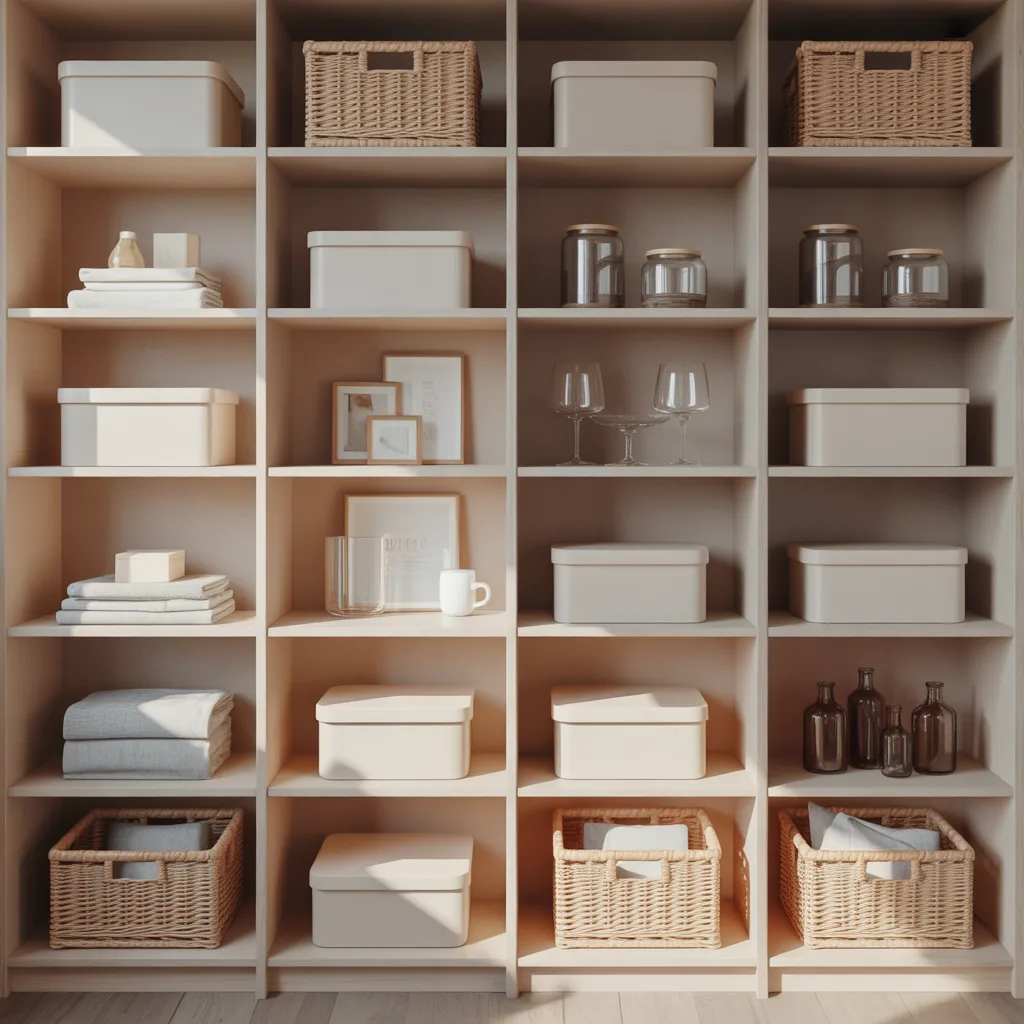
Open shelving works best when items remain visible and organized. Place larger essentials like towels on lower shelves and use baskets or bins to contain smaller products. This approach keeps everything accessible while preventing shelves from looking crowded.
Pro Tip: Use matching baskets to create a cleaner and more coordinated appearance.
Daily-Use Display
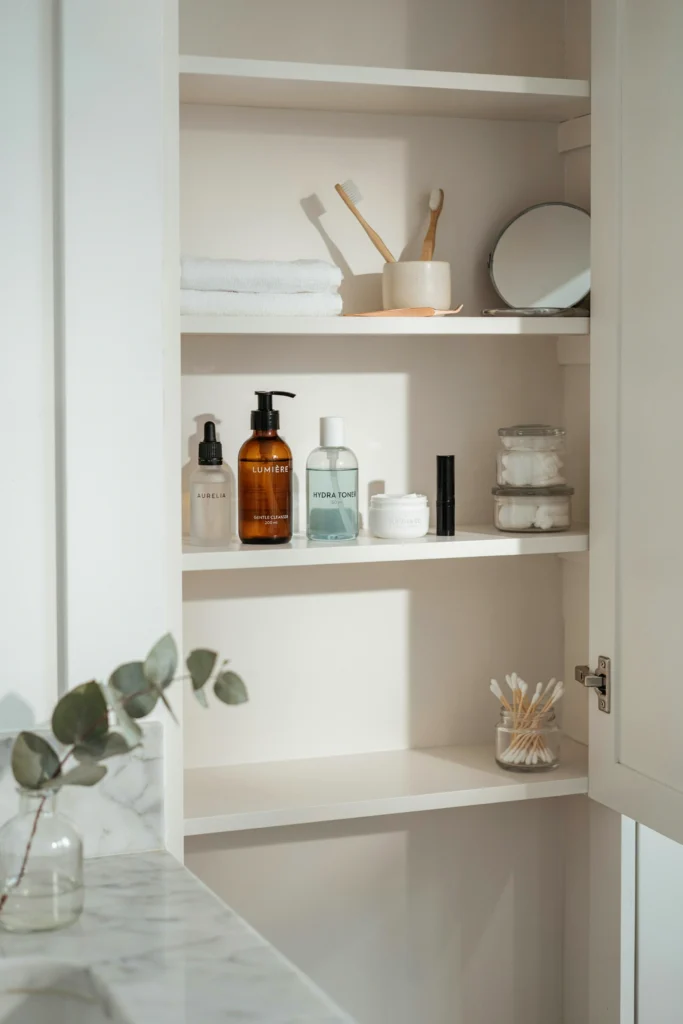
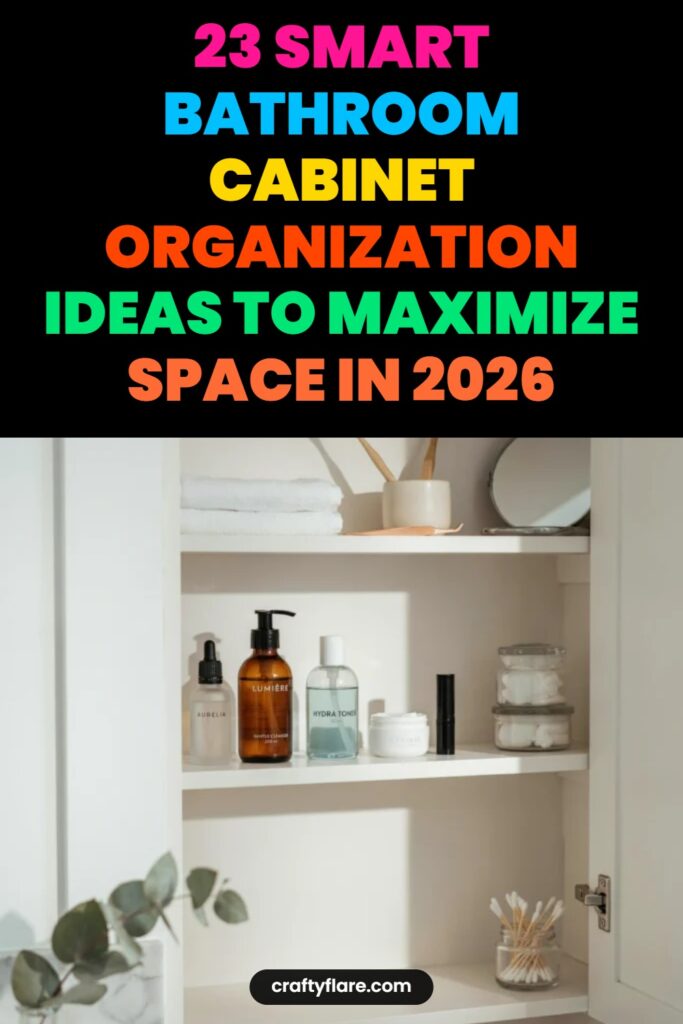
Products used every morning and evening deserve the most accessible spot in your cabinet. Place cleansers, moisturizers, toothpaste, and other daily essentials near the front so they can be grabbed quickly without digging through other items.
Pro Tip: Limit this area to products you genuinely use every day.
Linen-First Storage

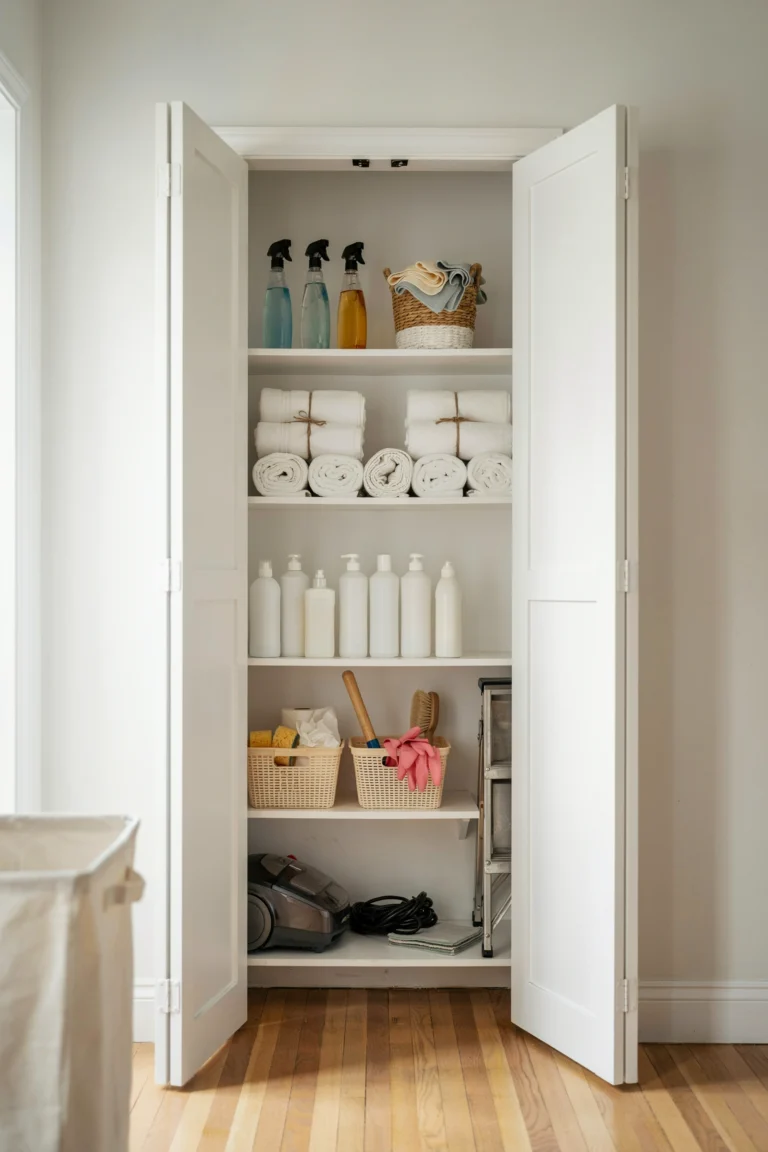
Tall bathroom cabinets are ideal for storing towels, washcloths, and extra linens. Fold everything consistently and dedicate separate shelves to each category. This keeps storage neat and prevents linens from taking over smaller cabinet spaces.
Pro Tip: Roll towels instead of folding them to save shelf space and improve visibility.
Category Shelf Stacking
Organizing products by category makes daily routines much easier. Keep skincare products together, haircare products together, and dental supplies together. When every shelf serves a specific purpose, finding what you need becomes almost automatic.
Pro Tip: Store products in the order you use them for even faster routines.
Pull-Out Access
Deep under-sink cabinets often waste valuable space because items disappear behind plumbing. Pull-out organizers solve this problem by bringing products forward when needed. They work especially well for hair products, cleaning supplies, and backup toiletries.
Pro Tip: Measure around pipes before purchasing pull-out storage systems.
Clear Label Control
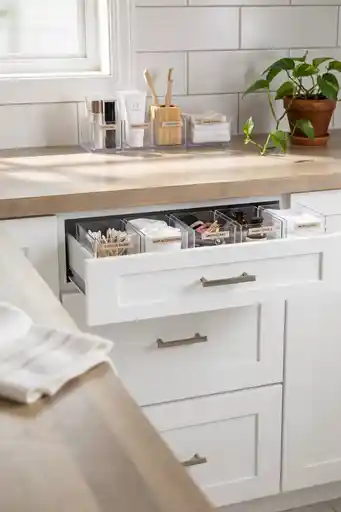
Clear bins paired with simple labels create a system that’s easy to maintain. When every category has a designated container, products are more likely to be returned to the correct place after use.
Pro Tip: Use waterproof labels to prevent peeling in humid bathroom conditions.
Tall Cabinet Split
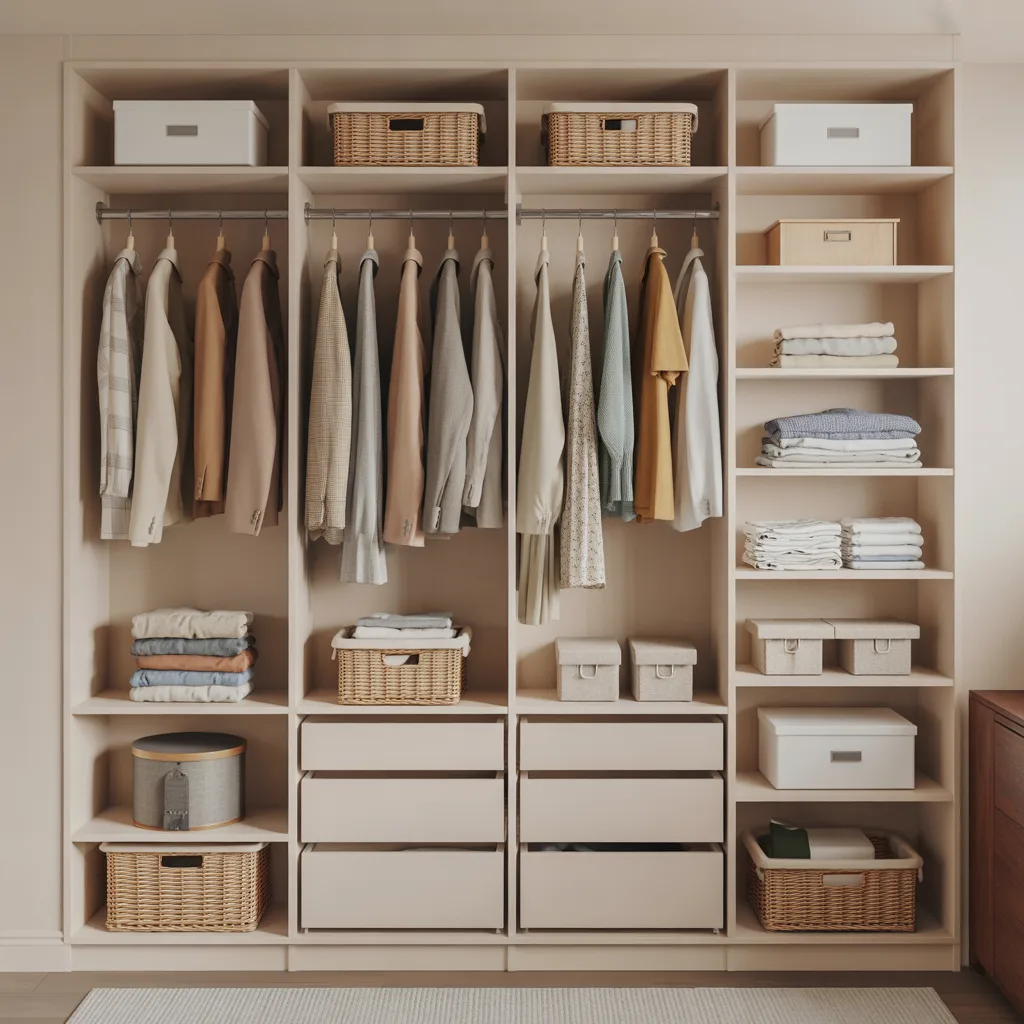
Separate storage zones within tall cabinets to improve functionality. Use upper shelves for towels and everyday products while reserving lower sections for laundry baskets, cleaning supplies, or larger items that don’t need constant access.
Pro Tip: Keep heavier items on lower shelves for safety and convenience.
Minimal Shelf Zones
Less is often more when organizing bathroom cabinets. Limiting each shelf to a few essentials prevents visual clutter and creates breathing room. This simple approach also makes cleaning and maintenance easier.
Pro Tip: Leave at least 20% of shelf space empty to avoid overcrowding.
Medical Zone System
Medical supplies should never be mixed with beauty or grooming products. Create a dedicated health zone for medications, first aid supplies, and wellness products so they’re easy to locate when needed.
Pro Tip: Check expiration dates on medications every six months.
Full-Height Sorting
Make use of your cabinet’s entire height by assigning shelves based on usage frequency. Daily products belong in the middle, seasonal items can go higher, and backup supplies can stay on lower shelves.
Pro Tip: Store rarely used items in labeled containers to avoid forgetting what’s inside.
Under-Sink Zones
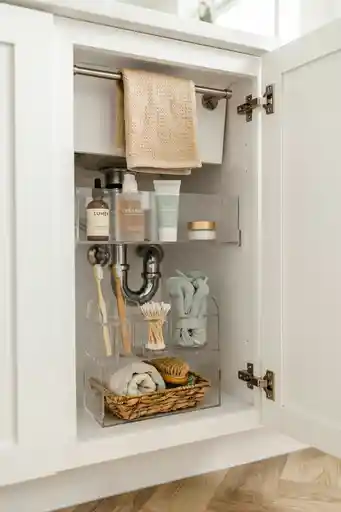
The space beneath the sink can become highly functional when divided into zones. Assign specific areas for makeup, grooming tools, cleaning products, and backup supplies to keep everything organized.
Pro Tip: Use stackable organizers to maximize vertical storage under the sink.
Tool Drawer Control
Hair tools, razors, brushes, and accessories can quickly create clutter. Drawer dividers help separate these items into manageable sections, making them easier to find and store.
Pro Tip: Dedicate one compartment to each type of grooming tool.
Modular Bin Grid
Modular storage bins create a structured system that adapts to your needs. They work especially well for storing first aid supplies, toiletries, towels, and personal care products while maximizing available space.
Pro Tip: Choose containers that stack securely for added storage flexibility.
Balanced Sink Storage
Divide under-sink storage evenly so one side doesn’t become overloaded. Use matching bins, baskets, or drawers to create balance and maintain a clean appearance throughout the cabinet.
Pro Tip: Place taller products near cabinet doors for easier access.
Stacked Health Drawers
Stackable drawers provide an efficient way to separate medications, dental supplies, and first aid products. This setup keeps health-related items organized and easy to locate during emergencies.
Pro Tip: Use transparent drawers so contents remain visible at a glance.
Drawer-Style Stacking
Drawer organizers transform deep cabinets into organized storage zones. Assign each drawer a specific purpose, such as skincare, dental products, or grooming tools, to maintain order.
Pro Tip: Label drawer fronts for even faster identification.
Door Space Hacks
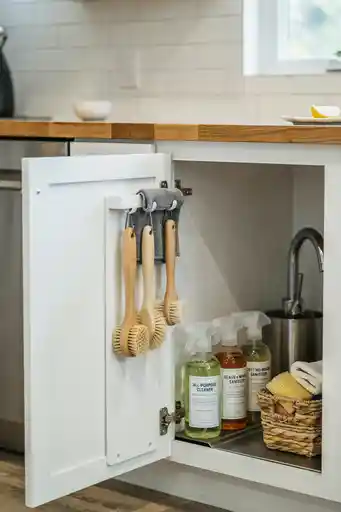
Cabinet doors offer valuable storage space that often goes unused. Add adhesive organizers, hooks, or slim racks to hold brushes, cleaning cloths, and small bottles without taking up shelf space.
Pro Tip: Avoid placing heavy items on cabinet doors to prevent damage.
Backstock Separation
Keeping extra products mixed with daily essentials creates clutter. Store backup shampoos, soaps, and refills in a dedicated container so your everyday storage remains tidy and manageable.
Pro Tip: Create a “use first” bin for older products before opening new ones.
Shelf Risers Use
Shelf risers instantly create extra storage by utilizing unused vertical space. Smaller products can sit beneath risers while taller items remain visible above them.
Pro Tip: Clear acrylic risers help maintain an open and uncluttered look.
Texture-Based Grouping
Using different storage materials helps visually separate categories. Baskets can hold linens, clear bins can store liquids, and trays can organize grooming tools for quick identification.
Pro Tip: Consistent textures within each category make cabinets feel more organized.
Travel Kit Zone
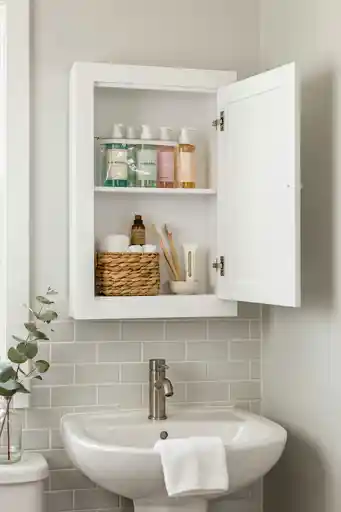
Travel-size products tend to create clutter when scattered throughout the cabinet. Keeping them together in a dedicated travel bin makes packing easier and prevents small items from getting lost.
Pro Tip: Store travel essentials near the front for quick packing before trips.
One-Touch Rule
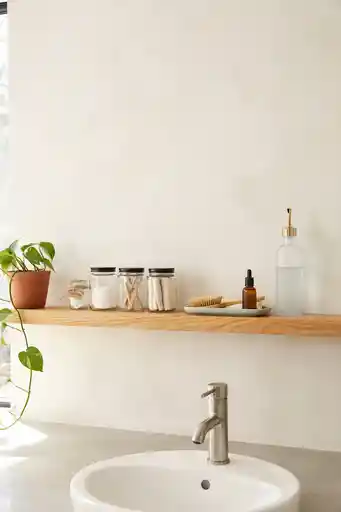
The easiest organization systems are the ones that require minimal effort. Open containers, accessible shelves, and simple layouts encourage everyone to put items back where they belong after use.
Pro Tip: If storing an item feels inconvenient, simplify the system until it becomes effortless.
FAQs
What Are Common Bathroom Cabinet Problems?
Most bathroom cabinet issues happen because products lack designated storage zones. Items become stacked, hidden behind other products, or mixed with unrelated categories. Expired products and unused backups also contribute to ongoing clutter, making cabinets difficult to manage.
Pro Tip: A quick monthly declutter prevents small messes from becoming major problems.
What Should Be in a Bathroom Cabinet?
Only products regularly used in that bathroom should be stored inside the cabinet. Skincare, dental products, grooming tools, medications, and a limited number of backups are usually appropriate. Keeping storage focused prevents unnecessary clutter from building up.
Pro Tip: Review cabinet contents every season and remove anything no longer needed.