DIY Acrylic Paint Storage Ideas
Acrylic paint is much easier to use when you can see your colors and grab the right bottle without digging through a box. A good storage setup can also make better use of a small craft desk, empty wall, cabinet door, or narrow shelf.
The best DIY acrylic paint storage ideas do not have to be complicated. You can build a simple rack from wood, reuse a wall organizer, add shelves inside a cabinet, or create a compact holder from PVC pipe.
Key Takeaways:
- Store acrylic paint somewhere cool and away from direct sunlight.
- Keep bottles closed tightly and wipe paint from the rims before storing.
- Use vertical storage when desk space is limited.
- Sort paints by color, brand, size, or how often you use them.
- Choose a storage system that keeps your most-used colors easy to reach.
How Long Do Acrylic Paints Last Once Opened?
Acrylic paint can stay usable for years when it is stored properly, but there is no single lifespan that applies to every bottle. How often it is opened, how well the lid seals, temperature, and contamination can all affect its condition. Keeping the bottle closed tightly and storing it in a stable indoor space helps slow drying and separation.
If the paint becomes unusually thick, develops a strange smell, forms persistent lumps, or refuses to mix back into a smooth consistency, it may no longer be worth using. Before throwing out an older bottle, give it a careful stir and check its texture rather than judging it by age alone.
Pro Tip: Wipe dried paint from the bottle rim and threads before closing the lid so the cap can form a better seal.
PVC Paint Hive
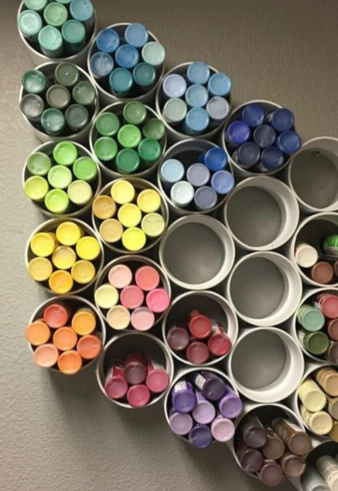
PVC pipe can make a surprisingly practical paint holder because individual sections act like little cubbies for bottles. Cut pieces of appropriately sized pipe and arrange them in a honeycomb-style pattern, then secure the finished holder to a suitable surface. It works particularly well when you have a collection of small bottles that you want to see at a glance.
You can keep similar shades together or arrange the sections from light to dark for quicker color selection. Measure your bottles before cutting the pipe because acrylic containers come in several shapes and sizes, and a holder that is too narrow will quickly become frustrating to use.
Pro Tip: Test one PVC section with your largest bottle before building the entire rack.
Floating Paint Shelves
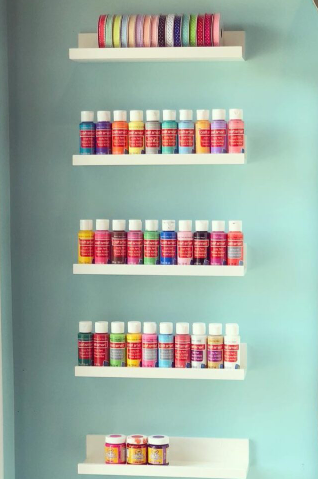
Slim wall shelves or picture ledges are useful when your worktop is already crowded with brushes, palettes, paper, and other supplies. Install several shelves vertically on an otherwise unused wall and line your paint bottles along them. Because the bottles remain visible, you can usually spot a color without opening drawers or moving containers around.
Arrange the paints by color family, such as warm colors, cool colors, neutrals, and metallics. Leave enough room between shelves for the tallest bottle you own, and make sure the wall fixings are suitable for the weight of the paint collection.
Pro Tip: Keep your most frequently used colors on the middle shelf so they are easy to reach without stretching.
Grid Bottle Rack
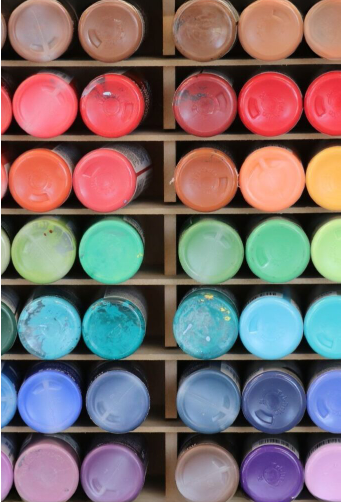
A grid-style rack gives each paint bottle its own small space while keeping the entire collection visible. You can make a simple wooden cubby arrangement or adapt sturdy craft-board dividers to fit your bottles. This style is especially handy when you have many similar-sized containers that tend to become mixed together in drawers.
A color-based layout makes the rack even more useful. You might place reds and pinks together, follow with oranges and yellows, then move through greens, blues, purples, browns, and neutrals. That arrangement makes it easier to compare nearby shades when choosing paint for a project.
Pro Tip: Add small color labels to the front edge of each section if the bottle labels are difficult to read.
Tilted Wire Racks
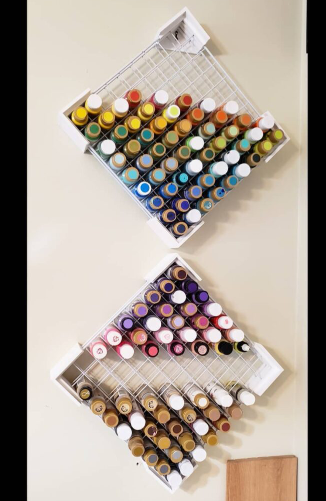
Angled wire shelves let you store bottles with their labels or caps facing outward, which can make choosing paint much quicker. They are a good option above a craft desk because they use vertical space instead of taking up another section of the work surface.
Before mounting the rack, check that the angle keeps the bottles secure rather than allowing them to slide forward. Narrow wire shelving can work well for smaller collections, while a wider rack gives you room to separate colors into groups.
Pro Tip: Leave a little extra space between the rack and your work area so bottles can be removed without knocking nearby supplies.
Rustic Cubby Shelf
A wooden cubby shelf gives acrylic paint a dedicated home while adding a warmer, handmade feel to the craft area. Each compartment can hold a small group of bottles, making it easier to separate colors and prevent the collection from becoming one large pile.
You can build a simple grid from plywood or repurpose an existing cubby organizer if its compartments fit your paint containers. A shallow design is often better than a deep one because you want to see the bottles rather than hide them behind one another.
Pro Tip: Arrange the shades from light to dark within each color family for a storage system that also works as a visual color guide.
Tiered Wall Rack
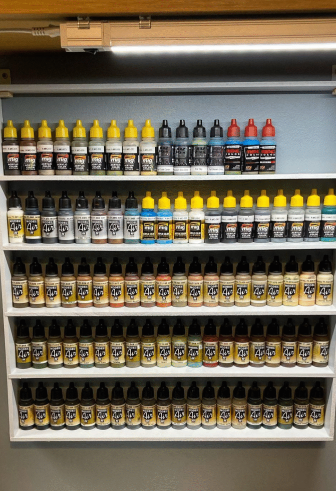
A tiered rack is useful when you have a growing paint collection but very little desk space. Several shallow levels give each row of bottles a clear view, so the colors are easier to identify than they would be in a deep box or drawer.
This setup works particularly well for people who use many colors during the same project. Keep the shelves shallow enough that bottles do not disappear behind the row in front, and position the rack where you can comfortably reach every level.
Pro Tip: Put your everyday paints on the easiest-to-reach tiers and reserve the higher levels for colors you use less often.
Cabinet Door Shelves
The inside of a cabinet door is often wasted space, but narrow shelves can turn it into useful acrylic paint storage. Small wooden strips or compact ledges can hold bottles upright without taking away much room from the main cabinet.
This approach is especially helpful in a small craft room where wall space is already occupied. Make sure the door can close properly after the shelves are installed, and avoid making the shelves so deep that they interfere with the cabinet’s contents.
Pro Tip: Measure the cabinet depth, door clearance, and bottle height before installing anything permanently.
Grid Wall Holder
A wire grid can be turned into a flexible paint holder with very little construction. Attach the grid securely to the wall and place the bottles into suitable sections so their labels remain visible. The open design also leaves room to add hooks or small baskets for brushes and other supplies.
One advantage of a grid system is that it can change as your collection grows. You can move accessories around, add storage baskets, or dedicate one section to paints and another to frequently used tools.
Pro Tip: Use a sturdy wall anchor and make sure the grid is firmly secured before loading it with paint bottles.
Rotating Tray Stand
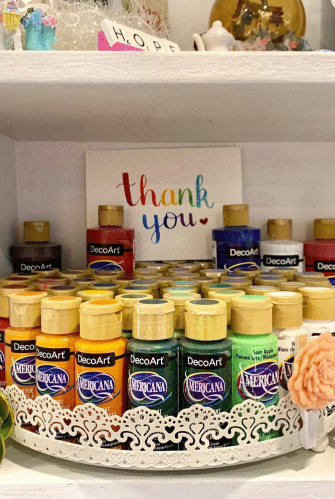
A rotating tray is handy when your paints sit on a desk or shelf and you want quick access without reaching across the entire collection. Place bottles on a tray with raised edges and attach it to a suitable rotating base so the whole group can turn toward you.
This setup is especially convenient for a small collection of frequently used colors. Instead of arranging dozens of bottles across a large surface, you can keep a selected group together and rotate the tray until the shade you need is in front of you.
Pro Tip: Keep only your current-project colors on the rotating tray and store the rest separately to avoid overcrowding.
Wall Grid System
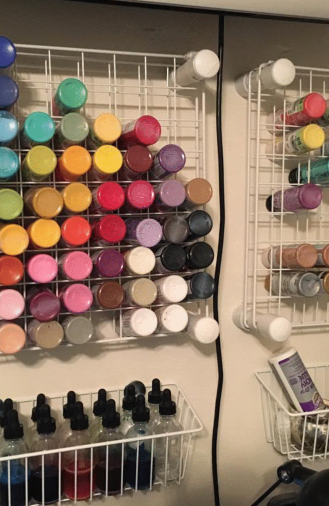
A wall grid system offers a flexible way to combine paint storage with space for other craft supplies. Paint bottles can occupy the main grid while small baskets underneath hold glue, scissors, brushes, palettes, or other items that normally clutter the desk.
The biggest benefit is that you can change the arrangement later. If your paint collection grows, you can dedicate more grid space to bottles; if you start using different supplies, baskets and hooks can be moved to suit your new setup.
Pro Tip: Group supplies by task rather than randomly filling the grid so everything you need for a project stays close together.
Pegboard Paint Wall
A pegboard can become a complete craft-storage station rather than just a place for paint. Add small shelves for bottles, hooks for brushes and tools, and containers for mediums or other supplies. Since the accessories can be repositioned, the setup can change as your workspace changes.
For a cleaner appearance, give paint its own section and keep unrelated tools in separate areas. You can also organize the bottles by color or frequency of use so the pegboard remains practical rather than becoming another crowded storage spot.
Pro Tip: Leave a few empty pegboard spaces so you have room to add new tools or reorganize your supplies later.
Hanging Pocket Organizer
A clear hanging pocket organizer can turn the back of a door into compact paint storage. The individual pockets separate bottles while keeping the collection visible, making this a useful option when you do not have enough room for shelves or a dedicated paint rack.
Choose an organizer with pockets large enough for your paint bottles and check its weight capacity before filling every compartment. You can dedicate different rows to different color families, or place your most-used paints in the pockets that are easiest to reach.
Pro Tip: Check each pocket’s size before buying the organizer because some shoe organizers are designed for slimmer items than standard acrylic paint bottles.
FAQs
How Do People Store Their Acrylic Paint?
Acrylic paint is commonly kept upright in a cool, dry indoor area where the bottles are protected from direct sunlight and major temperature changes. The best setup depends on the size of the collection and the available space. Shelves, pegboards, racks, drawers, cabinet organizers, and hanging pockets can all work when they keep bottles secure and easy to access.
For a small collection, a compact tray or narrow shelf may be enough. Larger collections benefit from color grouping and dedicated storage because it becomes much harder to find individual shades when bottles are mixed together.
Pro Tip: Choose storage based on how you actually use your paint, not just how much storage space you have available.
Is It Better to Store Paint in Metal or Plastic?
The container itself is only one part of proper paint storage, but acrylic paint is commonly sold in plastic bottles and containers because they are lightweight and convenient for craft use. Rather than transferring paint unnecessarily, it is usually sensible to keep it in its original container when the container is in good condition and seals properly.
Whatever the container material, keeping the lid tightly closed is important. Avoid leaving paint exposed to air, and keep the storage area away from excessive heat, freezing temperatures, and direct sunlight.
Pro Tip: If you transfer paint to another container, label it clearly with the color and other useful information so you do not lose track of what is inside.