21 DIY Cat Bed Ideas for 2026
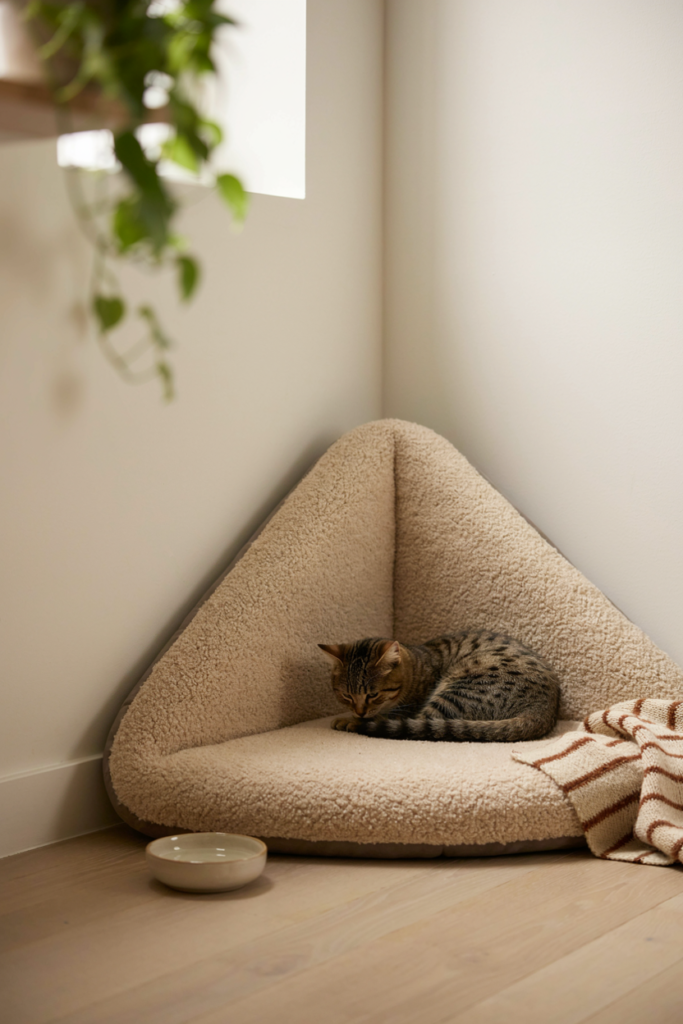
I’ve found that making a cat bed does not have to mean buying expensive materials or building complicated furniture. Many cats already choose simple places such as boxes, baskets, blankets, drawers, shelves, and piles of laundry because these spots feel warm, familiar, or protected. That makes them a useful starting point for a DIY cat bed.
Above the Fold
In this guide, I’m sharing 21 DIY cat bed ideas that range from quick no-sew options to more creative caves, hammocks, shelves, and recycled beds. I’ve focused on comfort, easy materials, practical placement, and the way cats naturally choose resting areas. Before making any elevated or heated bed, I’d also make stability and safety the priority.
Key Takeaways
How to Make a Comfortable DIY Cat Bed at Home?
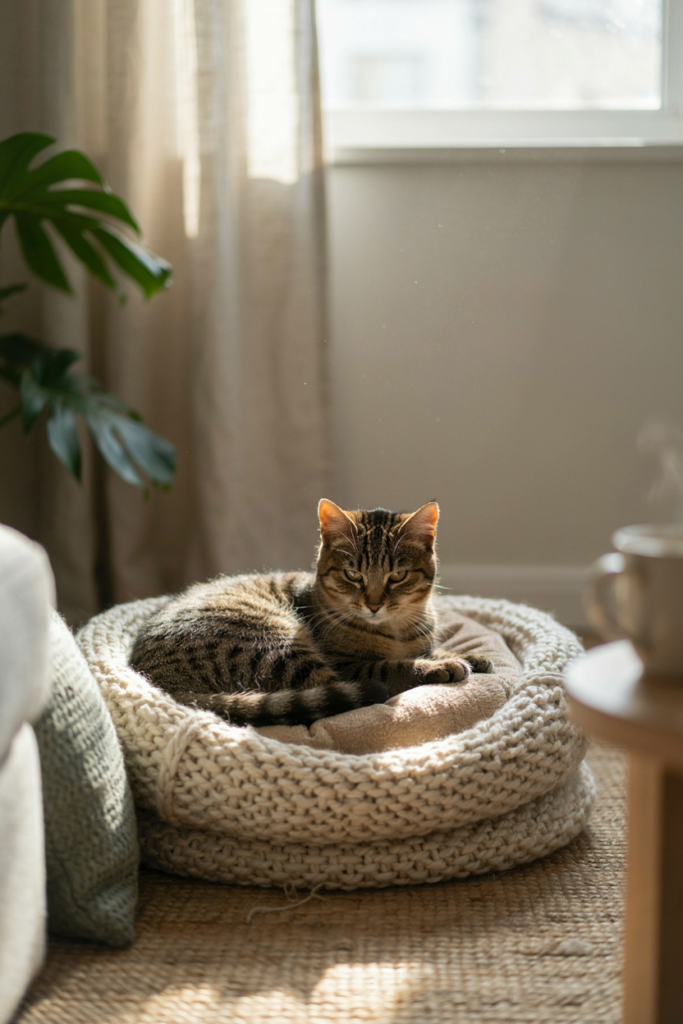
I start by watching where my cat naturally sleeps. If that spot is warm, quiet, sunny, elevated, or tucked into a corner, I use those clues when choosing the design. A beautiful bed is not much help if it ignores the sleeping habits your cat already has.
For the base, I like using an old blanket, towel, fleece piece, or soft sweater. Familiar fabric can make a new bed feel less strange because it already carries a familiar household scent.
I also pay attention to the size. I would rather make a bed that gives my cat enough room to turn around and stretch while still providing a comfortable edge to lean against. Raised sides can make a simple cushion feel more protected without requiring a complicated structure.
(Pro Tip) I recommend making the cover removable whenever possible. It makes regular cleaning much easier and lets you change the fabric when it becomes covered in fur or loses its shape.
What Can I Use Instead of a Cat Bed?
I don’t think a traditional pet bed is always necessary. A sturdy cardboard box with a folded blanket, a basket with a cushion, an unused drawer, or even a padded shelf can become a useful resting place.
I usually look around the house first because many DIY cat beds can be made from items I already have. This also gives me a better chance of matching the bed to the place my cat already prefers.
The main things I look for are softness, stability, a comfortable temperature, and a location where the cat feels secure. I also avoid anything with loose strings, sharp edges, unstable parts, or small pieces that could become a problem.
Felted Cave
I like a felted cave for cats that prefer privacy. The enclosed shape gives them a quiet place to rest while still leaving an entrance where they can come and go easily.
A thick felt structure can be made around a rounded form, or a ready-made felt material can be shaped into a simple dome. I would keep the entrance large enough for easy access rather than making it unnecessarily tight.
I’d place this type of bed in a calm corner, beside a wall, or near a favorite resting area. A removable soft pad inside also makes cleaning much easier.
Basket Nook
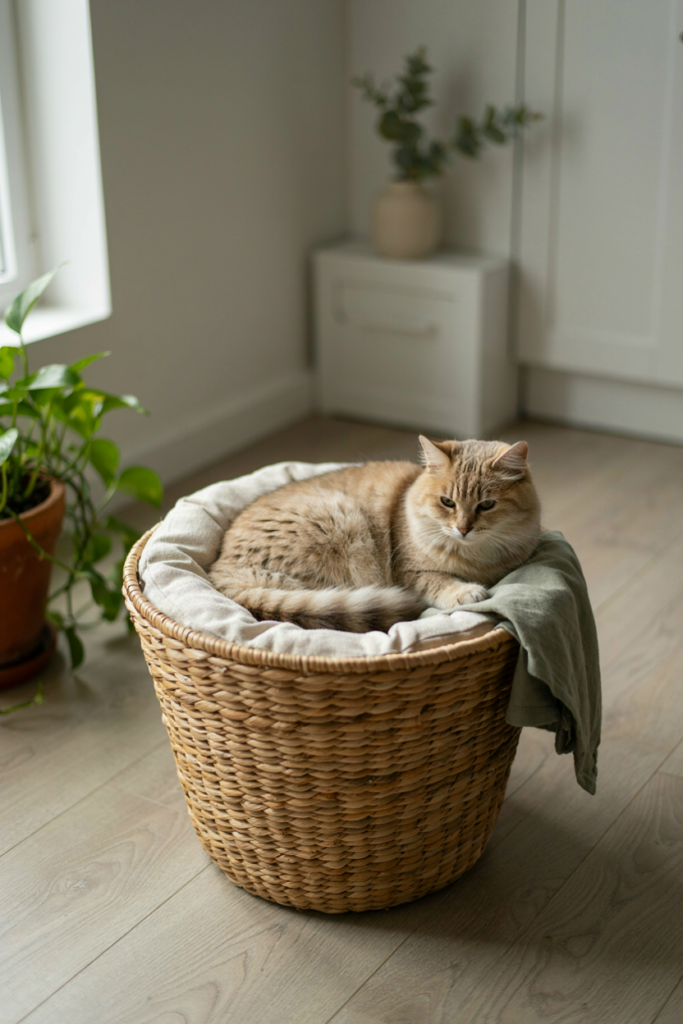
A strong woven basket can make a charming cat bed without much construction. I like this idea because the curved sides naturally create a little boundary around the sleeping area.
For a simple version, I would place the basket securely on its side and add a thick cushion or folded blanket. The basket should be sturdy enough that it cannot roll or collapse when the cat jumps inside.
This works especially well in a quiet corner where the cat can rest while still seeing what is happening around the room.
Blanket Bolster
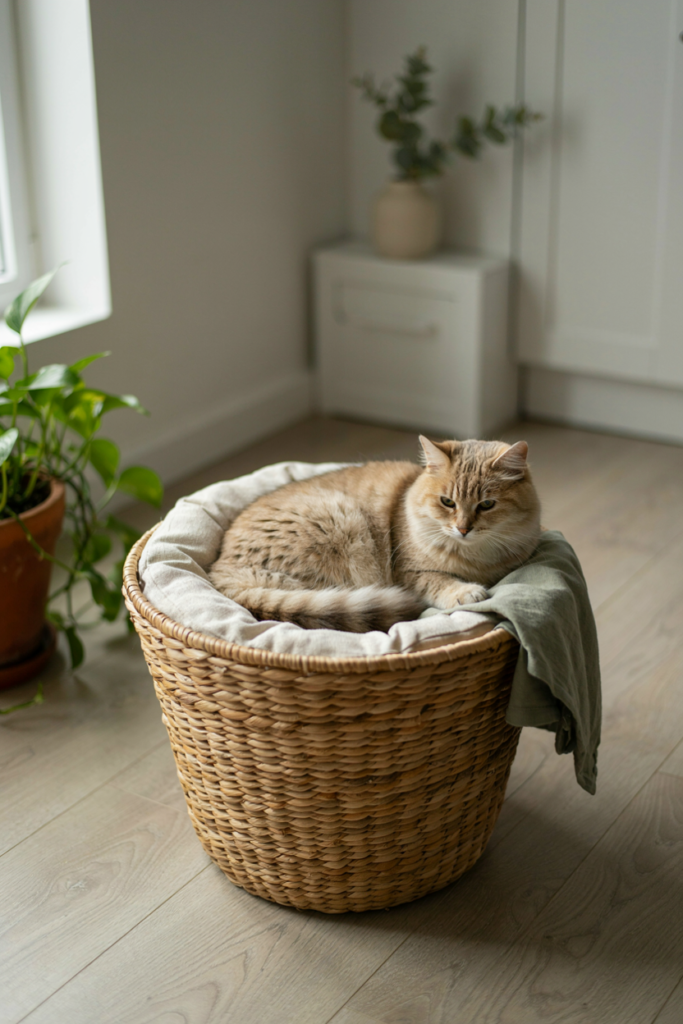
When I want something extremely simple, I like the blanket bolster idea. I roll or fold blankets around the outside of a soft sleeping surface to create supportive sides.
This gives the cat a place to lean against while keeping the center open enough for stretching or curling up. It can also be adjusted easily when I want more or less padding.
I find this especially practical for floors that feel cold or hard because the blanket layers add both cushioning and insulation.
Knit Nest
A thick knitted nest can give a cat a soft, rounded place to curl up. I like the texture because it can make a basic bed look more decorative in a bedroom or living room.
For a DIY version, thick yarn can be knitted, crocheted, or arm-knitted into a broad circular shape with raised sides. The finished material should be firm enough to hold its shape but soft enough to remain comfortable.
I would check the finished piece carefully for loose yarn or threads before allowing a cat to use it.
Mini Bed
A small raised bed designed specifically for a cat can look like miniature furniture. I like this option when I want the bed to fit naturally into the room rather than looking like a temporary pet accessory.
The frame can be made from suitable wood or another sturdy material, while the sleeping surface can use foam and a washable fabric cover.
I would keep the structure low and stable unless I am intentionally building a properly secured elevated bed. The goal is comfort, not unnecessary height.
Cone Cave
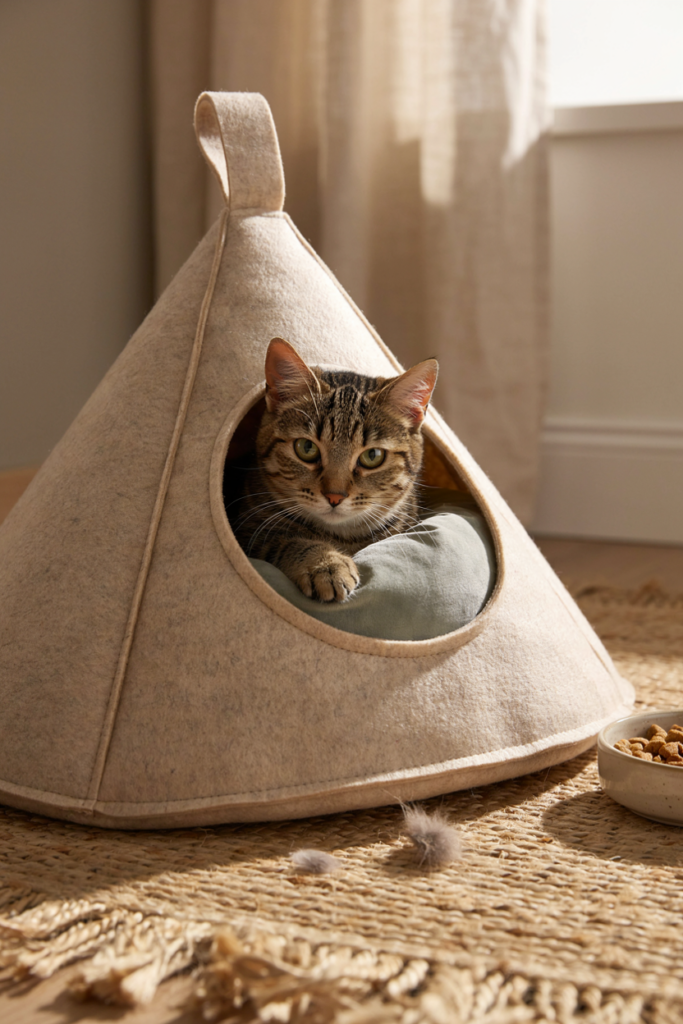
A cone-shaped cave gives a cat a partially enclosed place to hide and sleep. I like this style for cats that often crawl under blankets or into other sheltered spaces.
Foam, felt, or sturdy fabric can be used to form the outer structure, with a soft cushion placed inside. The opening should be easy for the cat to enter and leave.
I would position it somewhere quiet rather than in a busy walkway. That gives the cat a private place without making the bed difficult to access.
Plush Dome
A plush dome creates a soft shelter with an opening at the front. I like it because the cat gets some privacy while still being able to look outside.
Foam panels or firm batting can help create the rounded shape, while fleece or another soft fabric can cover the outside and inside.
I would make the interior pad removable so I can wash it regularly. The structure should also stay open and breathable rather than becoming completely sealed.
Bubble Lounger
A bubble-style lounger is a fun option for cats that enjoy watching their surroundings while resting. Its rounded shape can provide a comfortable supported area without completely hiding the cat.
For a homemade version, I would focus more on the shape and secure base than trying to recreate a complicated transparent structure. A curved cushion on a stable frame can give a similar lounging effect.
If the bed is raised, I would test the frame carefully before letting the cat use it. Stability matters more than the appearance of the finished project.
Cushion Perch
A cushion perch gives a cat a comfortable place to sit above floor level. I like this option for cats that enjoy looking out over the room.
A thick round or donut-shaped cushion can be placed on a sturdy low platform. If the base is homemade, I would make sure every joint is secure and that the surface does not slide.
This idea can work beside a window, in a quiet living-room corner, or anywhere your cat already likes to watch people.
Soft Shelter
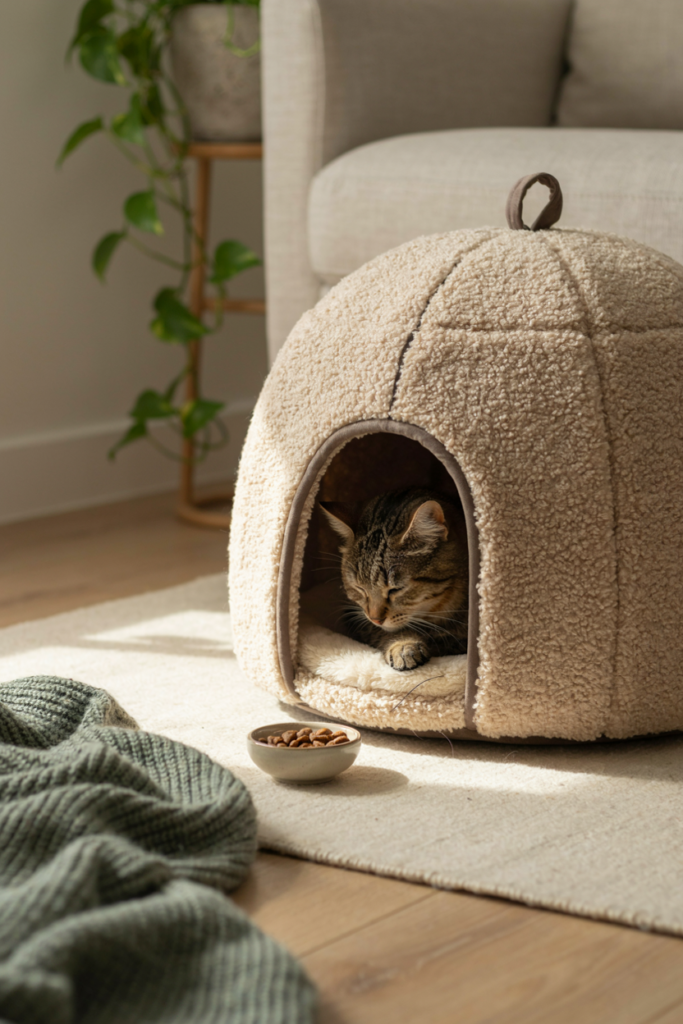
A soft shelter is useful when a cat wants darkness and privacy but still wants an open entrance. I like the simple dome shape because it can fit into a corner without taking over the room.
Rigid felt, foam panels, or another suitable structure can form the shell. I would then add a washable interior cushion for softness.
(Pro Tip) Before using any zipper, button, tie, or fastener inside a pet bed, I check that it cannot snag claws or become loose. A simple removable cover is often the safer choice.
Hooded Donut
The hooded donut combines a circular sleeping surface with a raised section that blocks some light. I like this design for cats that enjoy curling tightly into soft beds.
The base can be made from thick batting and covered with washable fabric or faux fur. The hood can be supported with additional padding or a carefully designed fabric section.
I would leave the entrance wide enough for the cat to move freely and avoid making the hood too heavy or unstable.
Window Wave
Cats often enjoy sitting near windows, so I like the idea of turning that favorite location into a dedicated resting spot.
A curved cushion or padded platform can give the cat space to stretch, curl up, or watch outside. I would use a firm base if the bed is mounted or elevated.
Before attaching anything near a window, I would check every fixing point and make sure the bed cannot shift under the cat’s weight. A floor-level version is an easier alternative if I cannot create a secure mount.
Hidden Ring
A hidden ring gives the cat a soft center surrounded by a raised border. I like this shape because it offers support without completely enclosing the animal.
A foam center can be surrounded with padded material and covered with a durable fabric. The outer ring should remain firm enough to hold its shape but not become uncomfortable.
This design works nicely in open areas where a cat wants a little separation without disappearing completely.
Hammock Loft
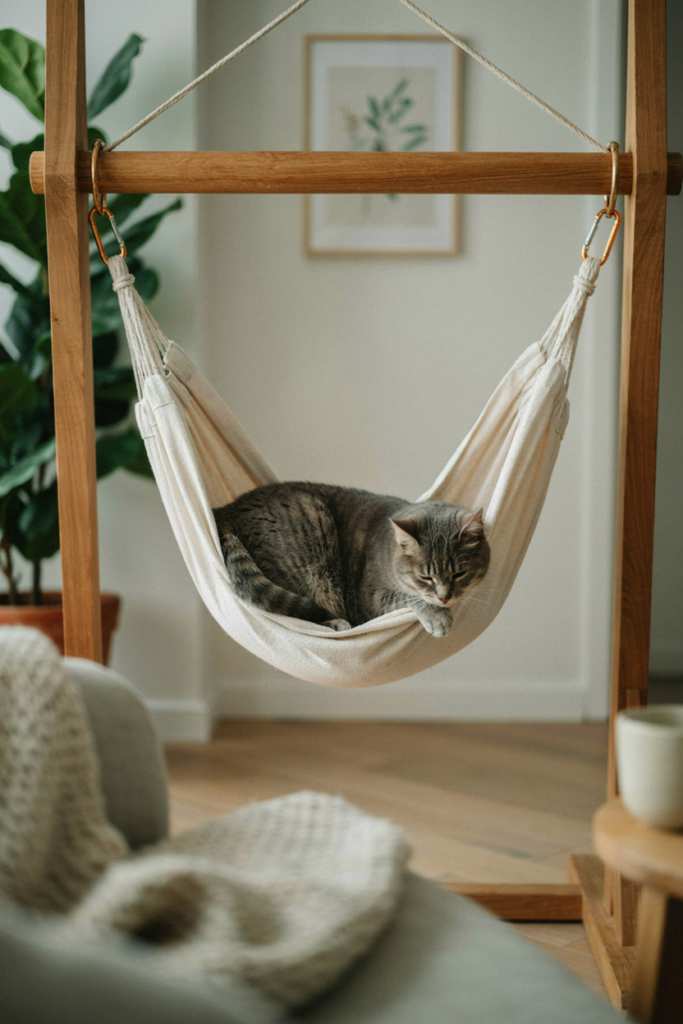
A hammock bed is a good choice for cats that enjoy elevated resting places. The fabric naturally supports the body and can create a comfortable lounging surface.
For a DIY version, I would use strong, tightly secured fabric attached to a sturdy frame or properly rated mounting points. I would never rely on a loose hook or weak furniture connection.
(Pro Tip) I always test an elevated cat bed before allowing the cat to climb onto it. Push and pull the structure from different directions and check for movement, loose hardware, or tipping.
Cube Cave
A cube cave gives a cat a defined little room of its own. I like the clean shape because it can work with modern home decor while still providing a sheltered sleeping area.
A lightweight but sturdy frame can support fabric or felt panels, with a soft cushion inside. The entrance should remain open enough for easy movement.
For homes with limited space, I find this design useful because the vertical shape can provide a private resting zone without needing a large floor area.
Drawer Den
An unused drawer can become a surprisingly simple cat bed. I like this idea because the basic structure is already there, so very little construction is needed.
I would remove the drawer completely, check that there are no sharp edges or loose hardware, and add a folded blanket or cushion. If the drawer remains inside furniture, I would make sure it cannot close unexpectedly.
A drawer den works best in a quiet area where the cat can enter and leave without obstruction.
Radiator Shelf
A radiator shelf can create a warm resting area during colder weather, but I would treat this idea as a safety project rather than simply placing wood above a heat source.
The shelf must be properly supported and positioned so that the cat cannot become overheated or come into contact with a dangerously hot surface. A thin, heat-appropriate cushion can provide extra comfort.
I would also avoid blocking the radiator’s normal airflow. If the heat source becomes excessively hot, I would choose another location instead.
Suitcase Bed
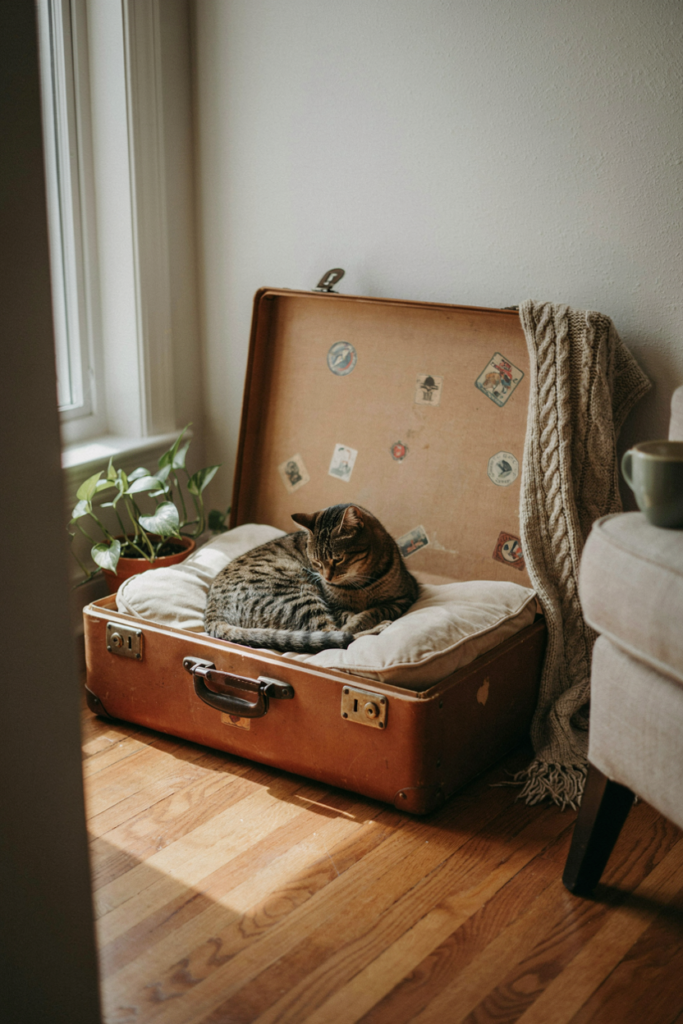
An old suitcase can become a fun recycled cat bed. I like the raised edges because they can give the cat a defined sleeping space while the inside provides room for a cushion.
Before using one, I would remove straps, loose hardware, sharp pieces, and anything the cat could chew or catch a claw on.
A folded blanket or fitted cushion can make the inside comfortable. I would also keep the suitcase open and secure rather than allowing the lid to fall unexpectedly.
Shelf Pad
A shelf pad is one of my favorite space-saving ideas because it uses vertical space instead of valuable floor area.
A sturdy shelf can be fitted with a non-slip pad and a slim cushion. If it is wall-mounted, I would use appropriate hardware and make sure the shelf is designed to carry the expected load.
I like placing this type of bed where the cat can see the room or look toward a window. The best location is one that combines a good view with safe access.
Laundry Nest
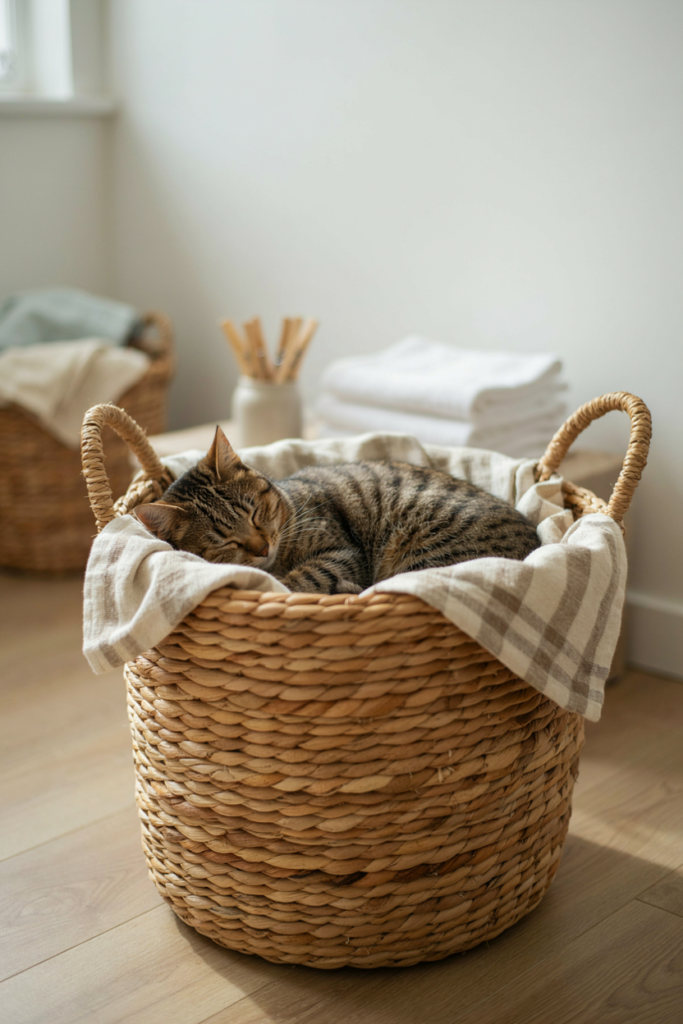
If your cat constantly chooses fresh laundry, I would turn that habit into a dedicated bed. A sturdy laundry basket with a soft liner can create a warm and familiar resting place.
I would choose a basket that cannot easily tip over and add a folded blanket to the bottom. The basket should also have no sharp edges, broken sections, or loose handles that could cause trouble.
This is an easy option for bedrooms or laundry rooms, especially when I want to reuse something I already have.
Corner Cushion
A corner cushion makes use of an area that can otherwise be difficult to decorate. I like it for smaller homes because it can fit neatly where two walls meet.
A triangular foam cushion can be covered with washable fabric and placed securely on the floor. The shape gives the cat a defined resting area without taking up much space.
I would choose a fabric that matches the room and can handle regular washing. That way, the bed looks like part of the room while remaining practical for everyday use.
FAQs
Can a DIY cat bed replace a store-bought one?
Yes, I think a well-made DIY cat bed can work perfectly well instead of a commercial bed. What matters most to me is whether the bed is comfortable, stable, appropriately sized, easy to clean, and suitable for the cat’s preferred sleeping style.
I would not judge the success of a DIY bed by how attractive it looks. If my cat consistently chooses it for naps, that is a much better sign that the design is working.
I also keep the cat’s age, mobility, size, and habits in mind. A young cat that loves climbing may prefer a different setup from a cat that mainly sleeps on the floor.
How do I know if my cat actually likes the bed I made?
I watch what my cat does when I am not encouraging them to use it. Returning to the bed regularly, settling down comfortably, kneading the fabric, stretching out, or sleeping there for longer periods are all useful signs.
If the cat ignores the bed, I do not immediately assume the project failed. I first consider the location, fabric, temperature, size, and amount of privacy.
Sometimes moving the same bed closer to a favorite window, chair, corner, or sleeping area is enough to make it more appealing. I would rather adjust the setup than keep building new beds without understanding what my cat prefers.
Conclusion
I’ve found that the best DIY cat bed does not need to be complicated or expensive. A cardboard box, basket, drawer, shelf, suitcase, blanket, or simple cushion can become a comfortable resting place when it matches the way your cat already likes to sleep.
From enclosed caves to sunny window loungers and space-saving corner cushions, these 21 ideas give me plenty of ways to create something useful from materials I already have at home.
Most importantly, I would make comfort and safety the priority. A stable structure, soft washable surface, safe materials, and a location your cat already enjoys will usually matter far more than making the bed look perfect.
Related Articles
21 DIY Dog Bed Ideas for 2026: Easy, Cozy & Practical Designs