

Small bedrooms can feel impossible to organize. I’ve lived in rooms where the bed seemed to swallow every inch of floor space, leaving little room for a desk, storage, or even comfortable movement. That’s what made me start looking into DIY loft beds.
A loft bed isn’t just a place to sleep. When planned correctly, it can create an entirely new functional area underneath. I’ve seen people turn that extra space into home offices, reading nooks, wardrobes, gaming stations, and even mini playrooms for kids.
The best part is that building your own loft bed allows you to customize the size, height, storage, and style to fit your exact room. Whether you’re furnishing a tiny apartment, a teenager’s bedroom, or a shared kids’ room, these DIY bed loft ideas can help you make every square foot count.
Quick Summary
- Loft beds help maximize floor space in small rooms.
- Safety should always come first when building a DIY loft.
- Storage stairs add functionality and reduce clutter.
- Built-in desks create productive work or study zones.
- Themed loft beds can make children’s rooms more fun.
- Proper measurements and strong materials are essential.
- Many loft bed designs can work for both kids and adults.
What to Know Before Building a Loft Bed?
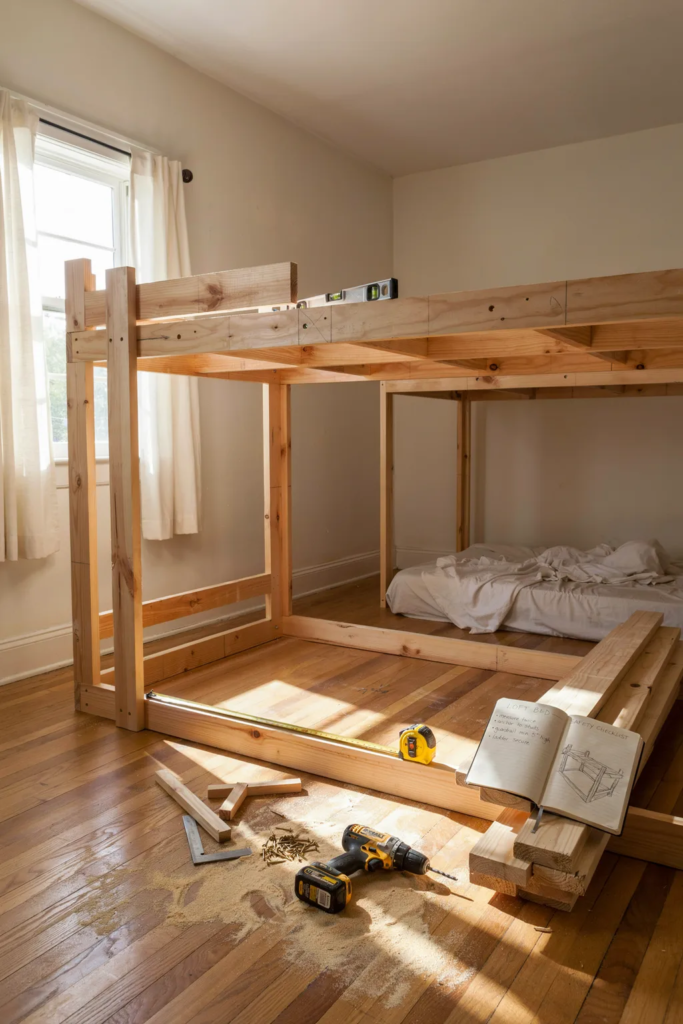
Before I start any loft bed project, I always focus on measurements. One of the biggest mistakes people make is building too high and leaving very little space between the mattress and ceiling.
A good rule is to leave enough room for someone to sit upright comfortably without bumping their head. In most homes, keeping at least 30 inches of clearance above the mattress works well.
Material selection matters just as much. Solid wood lumber typically provides better long-term durability than particleboard or lightweight furniture panels. If adults will use the loft, stronger framing becomes even more important.
I also recommend planning electrical outlets, lighting, and storage before construction begins. Many people finish the bed first and later realize they have no easy access to power for charging devices or using a desk underneath.
Pro Tip
Sketch the entire room layout before buying materials. A simple drawing can prevent costly mistakes and help you visualize how the loft bed will fit within the space.
Built-In Desk Loft
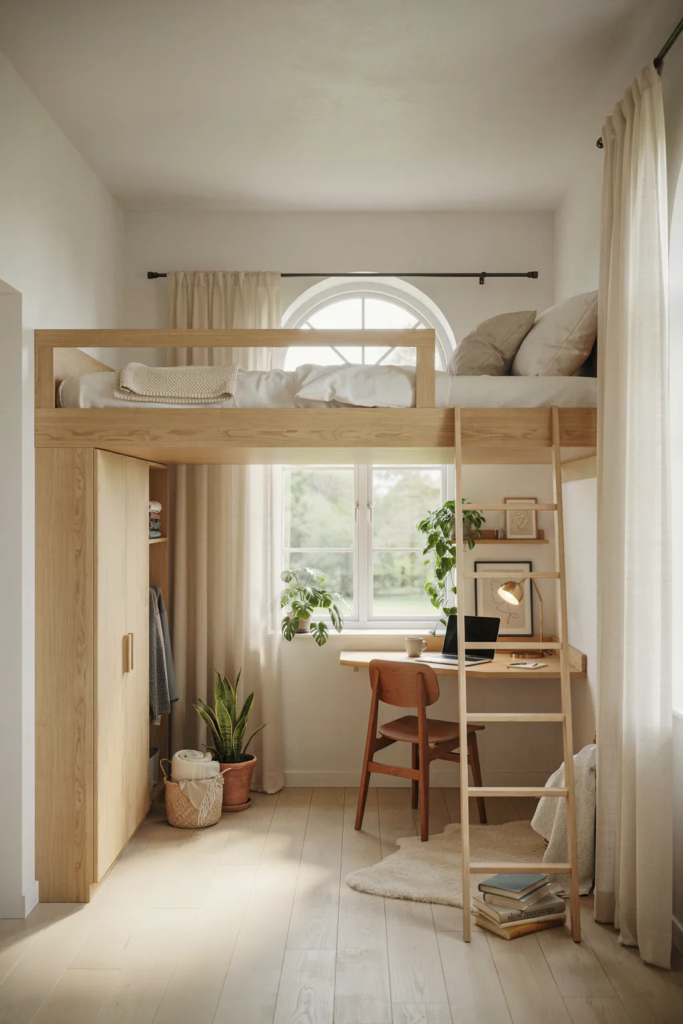
One of my favorite space-saving solutions is combining a loft bed with a built-in desk underneath.
This setup works especially well for students, remote workers, and anyone living in a small apartment. Instead of using separate furniture pieces, the sleeping area and workspace occupy the same footprint.
I like adding wall-mounted shelves above the desk because they keep frequently used items within reach without taking up valuable desk space.
For better comfort, install task lighting directly under the loft frame. This creates a bright workspace while keeping the overall room clean and organized.
Rope Guard Loft
Traditional guardrails aren’t the only option. A rope guard loft adds a unique visual element while maintaining safety.
I’ve noticed this design works particularly well in coastal, rustic, and modern children’s bedrooms. The open appearance allows natural light to flow through, making the loft feel less enclosed.
When choosing rope, always select heavy-duty climbing or marine-grade rope designed for significant weight and tension.
One mistake to avoid is leaving large gaps between ropes. Proper spacing helps prevent children from slipping through while maintaining the design’s airy appearance.
Study Loft with Shelves
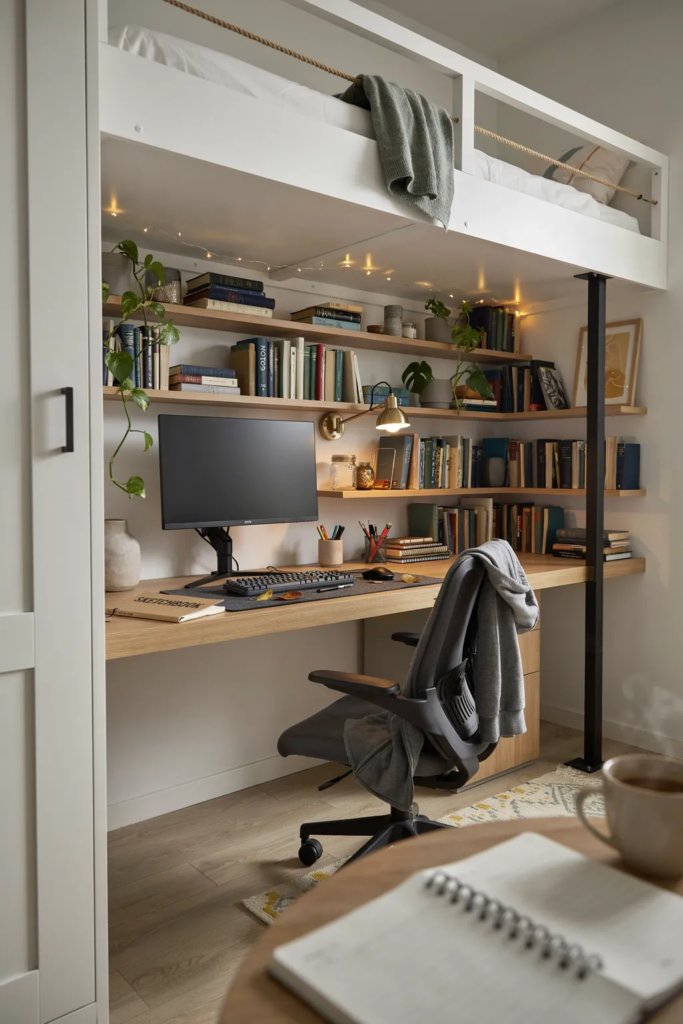
A study loft takes productivity to another level by combining sleeping, storage, and work areas into one compact design.
I especially like this option for teenagers because it naturally creates a dedicated study zone without requiring additional furniture.
Built-in shelving can hold textbooks, decorative items, school supplies, and electronics. Adjustable shelves offer even more flexibility as needs change over time.
Adding cable management during construction can also keep chargers and cords hidden, creating a cleaner and more organized workspace.
Loft with Storage Stairs
Storage stairs are one of the smartest upgrades you can add to a loft bed.
Unlike traditional ladders, stairs provide safer access while creating valuable storage opportunities. Each step can double as a drawer or cabinet compartment.
I’ve found this design especially useful in homes where closet space is limited. Seasonal clothing, extra bedding, toys, and shoes can all be stored inside the staircase.
The key is ensuring every step remains sturdy enough to support daily use while still functioning smoothly as storage.
Loft with Slide
A loft bed with a slide instantly adds excitement to a child’s bedroom.
While it’s definitely fun, I always suggest treating the slide as seriously as any other structural feature. Proper anchoring and smooth surfaces are essential for safety.
This design works best when there is enough floor space for safe slide clearance. Crowding furniture too close can create unnecessary hazards.
To make the setup even more enjoyable, consider placing a soft rug or play mat at the bottom landing area.
Minimalist Loft Frame
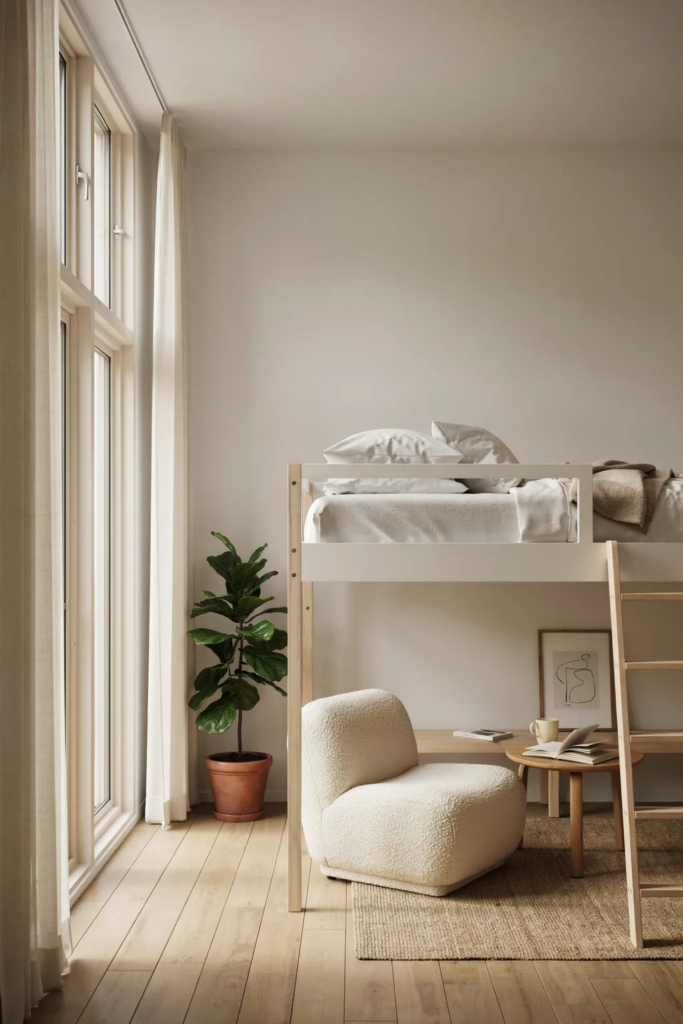
Sometimes the simplest designs create the best results.
A minimalist loft frame focuses on clean lines, sturdy construction, and functional use of space without unnecessary decorations.
I prefer natural wood finishes because they blend easily with changing room styles over the years. White accents can also help make the room feel brighter and more open.
This style works particularly well in modern apartments, Scandinavian-inspired interiors, and small bedrooms where visual clutter can make spaces feel cramped.