21 DIY Cat House Ideas for 2026
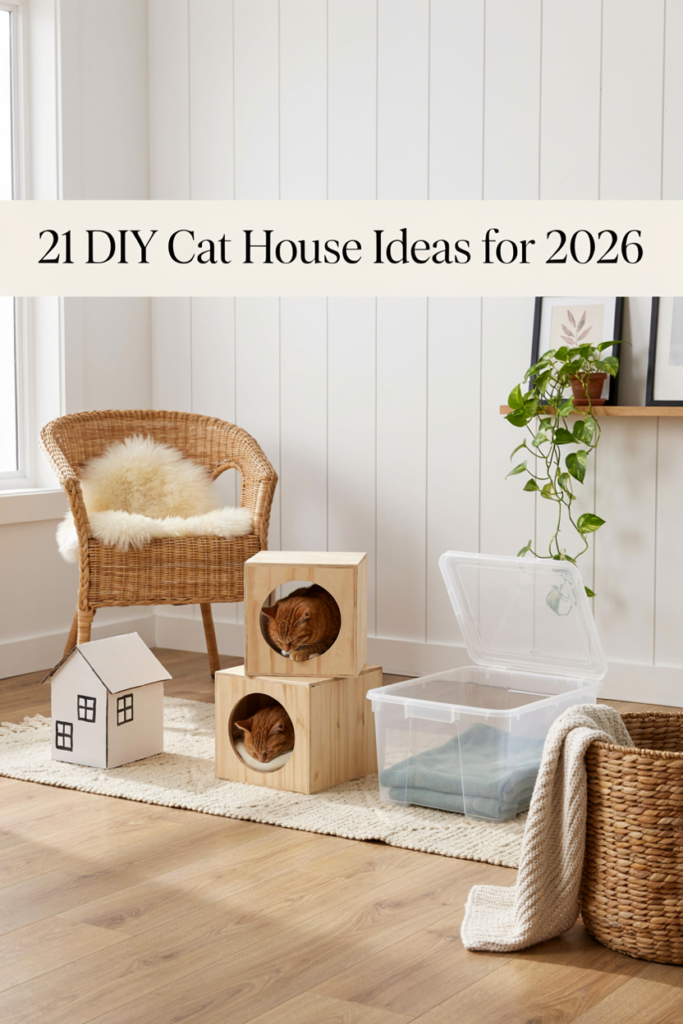
I’ve found that a good DIY cat house does not have to be expensive or complicated. What matters most to me is creating a space that feels secure, stays comfortable, is easy to clean, and matches the way my cat actually likes to rest or play. I can use cardboard, storage totes, old furniture, wooden crates, or even an unused corner of my home to create a useful cat shelter.
Above the Fold
In this guide, I’m sharing 21 DIY cat house ideas that I can adapt for indoor cats, outdoor cats, small spaces, and multi-cat homes. I’ve also included practical material choices, simple construction tips, and safety points so I can choose an idea based on my cat’s habits rather than appearance alone.
Key Takeaways
What Materials Do You Need for a DIY Cat House?
When I build a DIY cat house, I start with the material before worrying about decoration. I want the structure to stay stable and comfortable after repeated use, especially if my cat scratches, climbs, or pushes against it.
For a simple indoor project, I can use thick cardboard, a clean plastic tote, plywood, wooden crates, an old cabinet, or a sturdy box. For comfort, I can add a washable cushion or suitable bedding. If the shelter will be outside, I pay much more attention to moisture protection, insulation, ventilation, and keeping the sleeping area dry.
I also check every cut edge before letting my cat inside. Sanding rough wood, covering sharp plastic edges, and removing exposed fasteners can prevent small construction problems from becoming safety issues.
(Pro Tip) I avoid using materials with strong chemical smells, peeling finishes, loose pieces, or treatments that I cannot confirm are pet-safe. A simple untreated surface is often a better starting point than a heavily decorated one.
How to Make a Cat House Out of a Plastic Tote?
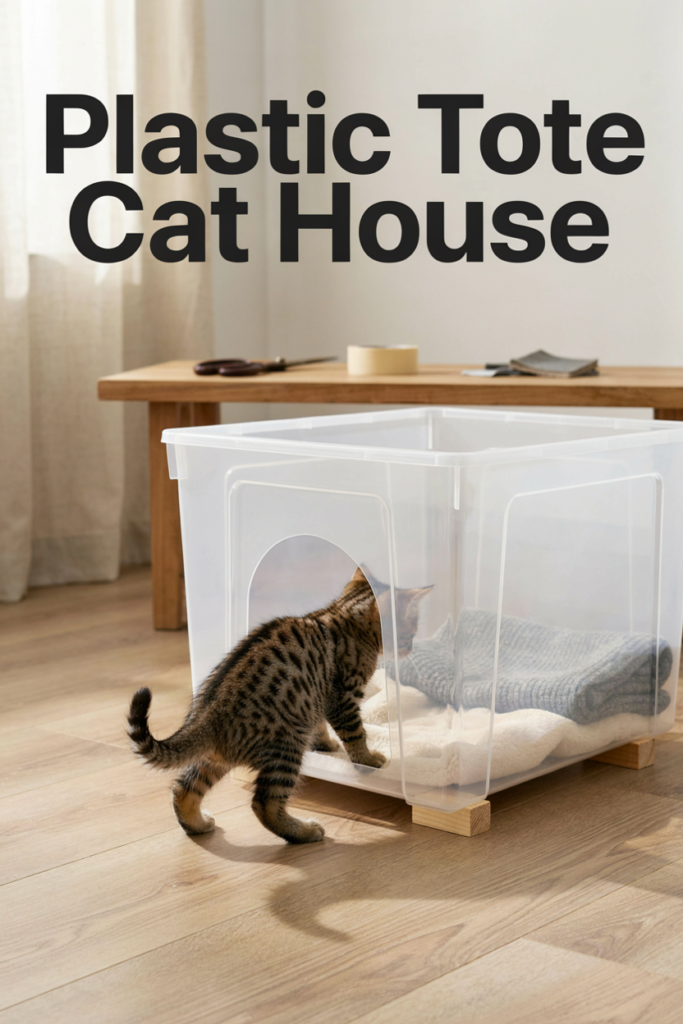
I can turn a clean plastic storage tote into a practical cat shelter with only a few basic changes. I start by choosing a tote large enough for my cat to turn around comfortably without making the interior unnecessarily huge.
I cut an entrance into one side and carefully smooth or cover the cut edge. I prefer placing the opening slightly away from the center because it leaves more enclosed space inside for resting. For an outdoor shelter, I focus on keeping rain out and raising the tote above damp ground.
Inside, I can add suitable bedding or straw depending on where the shelter will be used. I keep checking the interior for moisture because even a weather-resistant container is not useful if water collects inside.
Cardboard Castle
I like a cardboard castle when I want to give an indoor cat both a hiding place and a little climbing activity. I can combine several strong boxes into towers and connect them with openings so my cat can move from one section to another.
I make sure every box is securely joined before allowing my cat to climb on it. I also keep the structure low enough that a collapse or fall is unlikely to cause injury.
This idea works especially well for playful cats that enjoy hiding, exploring, and sitting slightly above floor level. When the cardboard becomes damaged or damp, I can replace individual sections instead of rebuilding everything.
Wooden Playground
I can turn sturdy wood into a larger cat playground with platforms, ramps, resting boxes, and climbing areas. This option takes more work than cardboard, but I can create a structure that lasts much longer when it is properly assembled.
I sand every exposed edge and make sure the base cannot wobble. For multiple cats, I prefer creating several resting levels so one cat does not have to fight another for the only comfortable spot.
I also check each joint regularly. Screws can loosen over time, especially when a cat repeatedly jumps onto the platforms.
(Pro Tip) I build the strongest part of the structure first: the base. A stable foundation matters more than adding extra levels or decorative features.
Wall Cubes
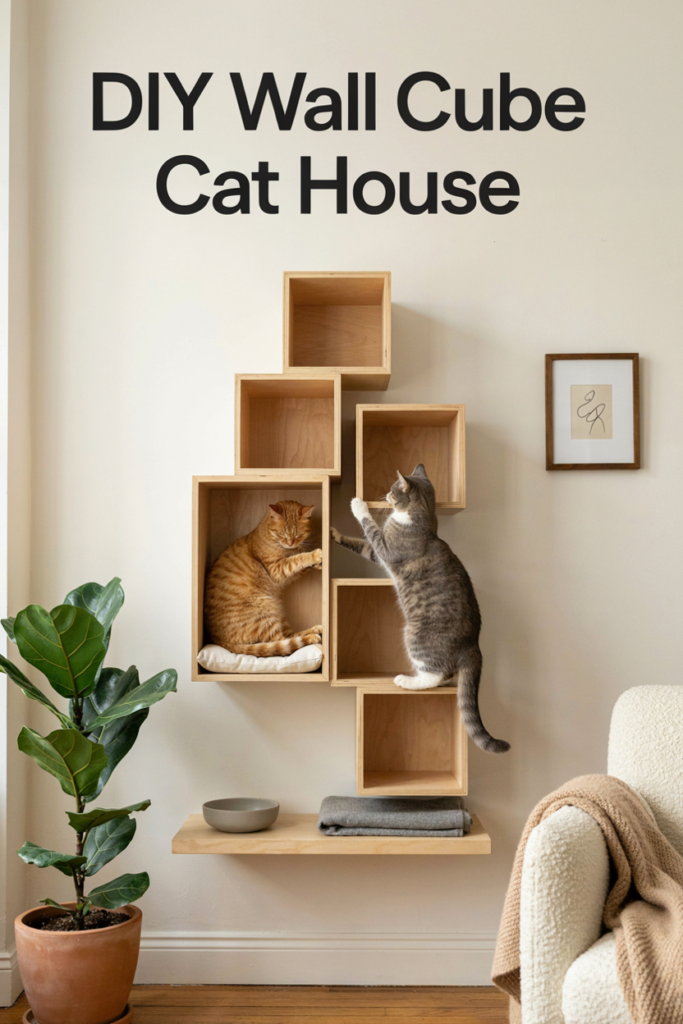
I can make good use of vertical space by arranging sturdy wooden cubes on a properly secured wall. This is particularly useful when my floor area is limited but I still want to give my cat separate resting spots.
I add cushions or washable mats inside the cubes and make sure the mounting hardware is appropriate for the wall. I never rely on adhesive alone for a structure that a cat will climb on.
This setup can work nicely in small homes because it moves some of the cat furniture away from the walking area. I can also arrange the cubes at different heights to create a simple climbing route.
Retro Cabinet
An old cabinet, side table, or similar piece of furniture can become a cat house without looking like typical pet furniture. I can remove unnecessary internal parts, create a suitable entrance, and add a washable cushion.
Before using old furniture, I inspect it for loose hardware, peeling finishes, unstable legs, and damaged boards. I also make sure the interior has enough airflow.
I particularly like this approach when I want the cat house to blend with the rest of my room. The finished piece can look like ordinary furniture while giving my cat a private resting area.
Box Stack
I can create a simple multi-level cat house by stacking strong cardboard boxes and cutting openings between them. It costs very little and gives me plenty of freedom to change the arrangement.
I make the base wider and more stable than the upper sections. I also stagger the boxes rather than placing everything in one tall, narrow column.
This idea works best indoors and is easy to replace when the cardboard becomes worn. I can add a scratching surface or a simple ramp if my cat enjoys climbing.
Tire Shelter
For an outdoor shelter, I can reuse clean tires to create a more weather-resistant structure. I first clean them thoroughly and inspect them for damage before using them.
I can arrange the tires to form a sheltered space, but I make sure the entire structure is stable and cannot roll or shift. The sleeping area should also be protected from standing water and direct exposure to bad weather.
Because outdoor cat shelters need more than just a roof, I pay attention to ventilation, dryness, and safe bedding. I would not use a tire shelter if I could not make the structure stable and comfortable.
Painted Cubes
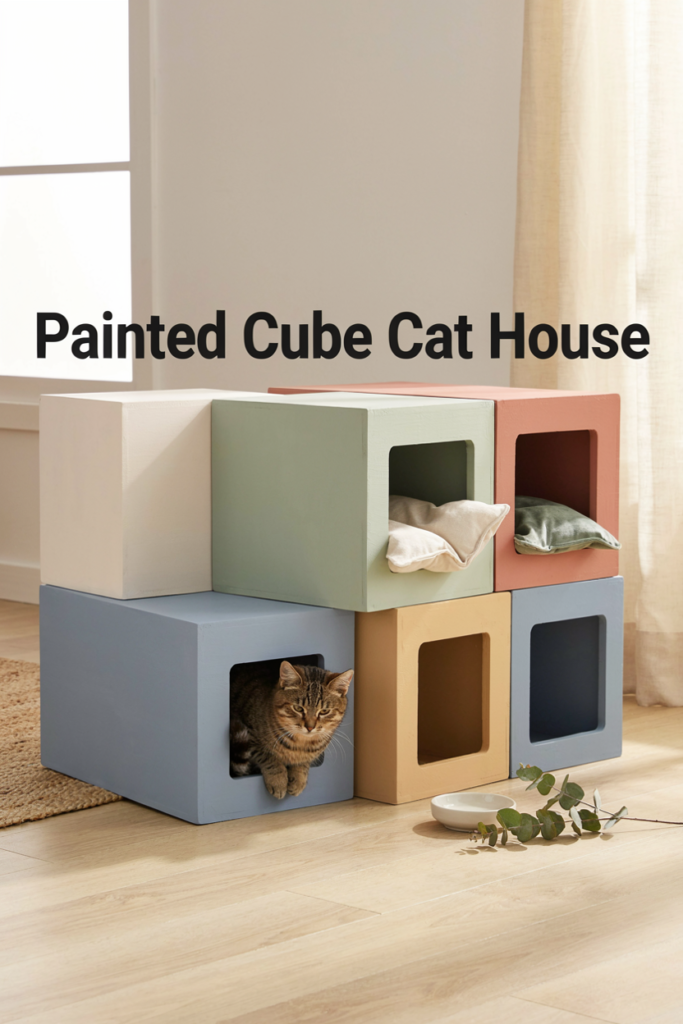
I can build a clean-looking cat house from plywood or another suitable wood product and finish it with a simple paint color that matches my room.
Before painting, I sand the edges and make sure the surface is clean. I let the finish cure fully according to the product instructions before allowing my cat to use the furniture.
I like cube designs because I can make one enclosed section or combine several cubes into a larger arrangement. Removable cushions also make regular cleaning easier.
Tote Shelter
A plastic storage tote is one of my practical choices when I need a simple outdoor cat shelter. Unlike cardboard, plastic does not soften immediately when exposed to damp conditions.
I create a suitably sized entry and carefully smooth the cut area. I then focus on keeping the sleeping compartment dry and raising the container away from wet ground.
For colder outdoor conditions, I pay attention to the bedding and placement rather than assuming the plastic alone provides enough protection. I also check the shelter regularly for condensation, leaks, and damaged edges.
Playhouse Build
I can turn sturdy cardboard or foam board into a small playhouse that looks more decorative than a basic box. I can add windows, doors, a roof shape, and different sections for hiding.
I keep the construction simple enough that I can replace damaged pieces. I also avoid small decorations that could become loose and create a chewing or swallowing hazard.
This design is best suited to indoor use where I can control moisture and temperature. It works particularly well when I want a temporary project that my cat can use for both play and rest.
Grid Condo
When floor space is limited, I can use modular storage grids to build upward instead of outward. I can add secure shelves, enclosed boxes, and resting platforms to create several usable levels.
I make sure the entire frame is firmly secured because a lightweight grid structure can become unstable if it is too tall. I also avoid leaving large gaps where a paw or leg could become trapped.
The biggest advantage for me is flexibility. I can rearrange or expand the structure as my cats’ needs change without throwing away the whole setup.
Fabric Hideaway
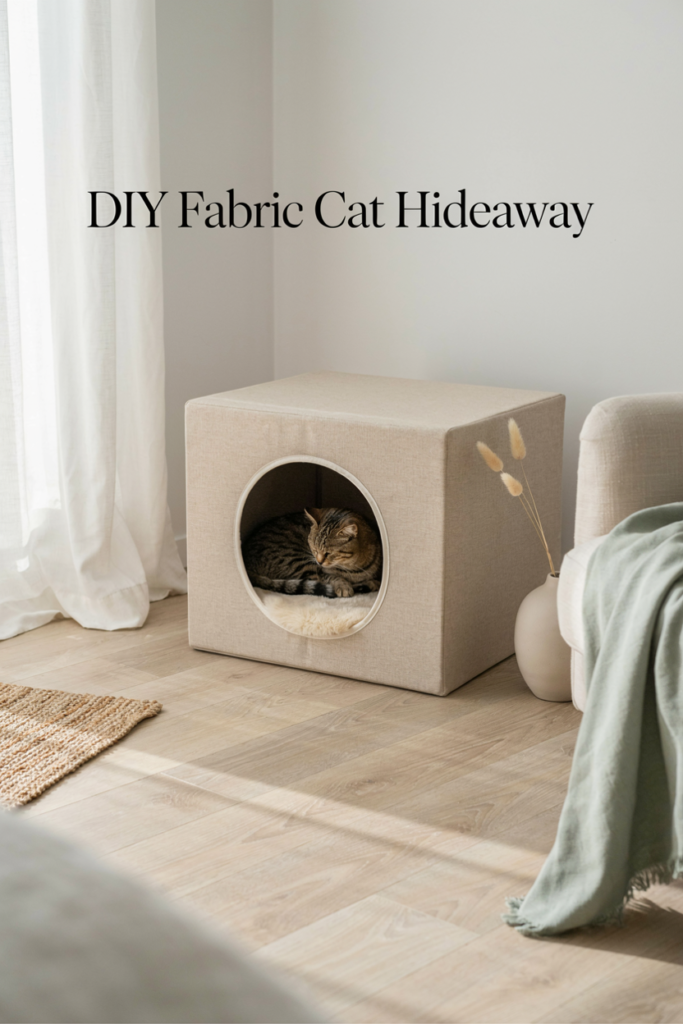
I can make a soft cat hideaway using a sturdy frame covered with washable fabric. This type of house works especially well indoors where I want something comfortable and quiet.
I choose fabric that can be removed or cleaned easily because cat beds collect fur quickly. I also make sure the frame keeps its shape and does not collapse when my cat climbs inside.
A lower entrance can make the space feel private, but I still leave enough room for my cat to enter and exit without struggling.
Gingerbread House
I can turn sturdy holiday cardboard into a temporary gingerbread-style cat house for the winter season. It gives me a fun decorative project while providing my cat with a small place to hide.
I keep the structure strong and avoid using loose decorations that my cat could chew. I also make sure any paint, adhesive, or finish is fully suitable for the intended use and completely dry before introducing my cat.
This is mainly an indoor seasonal project. Once the cardboard becomes weak or damaged, I replace it rather than trying to keep a worn structure in use.
Mini Villa
I can use wooden crates to create a small multi-level cat villa with separate resting areas. By arranging the crates securely, I can give each section a different purpose.
One level can hold bedding while another can serve as an observation spot. For homes with multiple cats, having more than one resting location can also give each cat the option to move away from the others.
I prefer placing this type of structure in a quiet corner where my cats can watch the room without being directly in the middle of household traffic.
Ramp House
A ramp house is useful when I want to give my cat access to a raised area without requiring repeated jumps. I can build a simple enclosed section and attach a gently angled ramp.
I cover the ramp with a material that provides reliable traction and secure every joint before use. I also keep the height reasonable so that the structure remains stable.
This can be especially useful in compact homes where I want to combine climbing, resting, and hiding in one small footprint.
Suitcase Nook
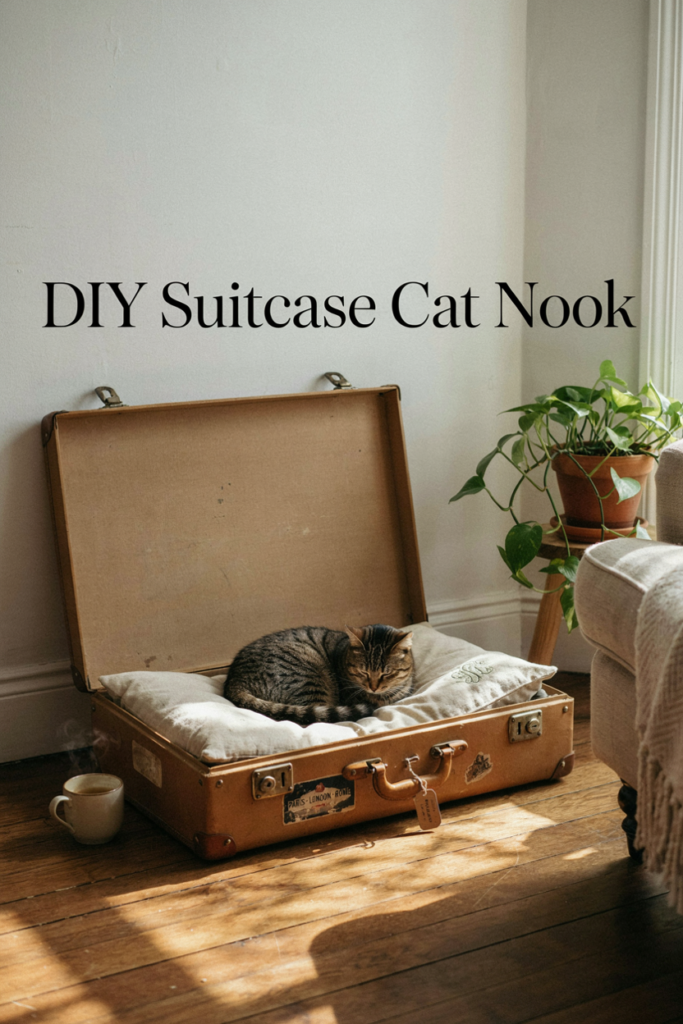
An old suitcase can become a surprisingly cozy cat nook. I can place it on its side, remove or secure any loose hardware, and add a washable cushion inside.
I check the hinges, handles, lining, and edges carefully before using it. If the suitcase has sharp metal parts or damaged lining, I choose another project instead.
I like this idea for bedrooms and quiet corners because the enclosed shape creates a private resting area without taking up much room.
Bookshelf Den
I can convert an unused section of a sturdy bookshelf into a simple cat den. I place a suitable box, cushion, or wooden insert into the lower section while keeping the entrance clear.
I make sure the bookshelf itself is stable and cannot tip when my cat jumps onto or into it. For taller furniture, securing it properly to the wall is an important step.
This approach works well when I want to use furniture I already own instead of adding another large cat tree to the room.
Drawer Retreat
An old dresser drawer can become a compact resting space with very little modification. I can remove the drawer, check that there are no exposed nails or damaged pieces, and turn it into a small bed or enclosed nook.
I add a washable cushion and place the opening at a comfortable height. If I stack drawers to create multiple levels, I secure the entire arrangement so it cannot slide or tip.
This is one of my favorite reuse projects because it gives an old furniture part a new purpose without requiring complicated construction.
Window Lounge
I can create a window lounge by placing a secure cat bed, box, or small platform near a safe window. Many cats enjoy watching outdoor activity, so the location itself can make a simple shelter more appealing.
I keep the window area free from hazards and make sure the platform cannot slip or fall. If I use a box, I provide enough openings for easy access and ventilation.
I find this idea particularly useful for indoor cats that enjoy watching birds, people, or outdoor movement from a comfortable resting spot.
Table Hideout
An unused side table can become a hidden cat house with fabric panels or wooden sides added around part of the lower area. I can leave one side open so my cat has a clear entrance.
The top of the table can also become a resting or observation spot if the furniture is stable enough. I check that the table does not rock when weight is placed on it.
This idea works well in living rooms because I can create a cat space underneath furniture that already fits the room.
Laundry Cave
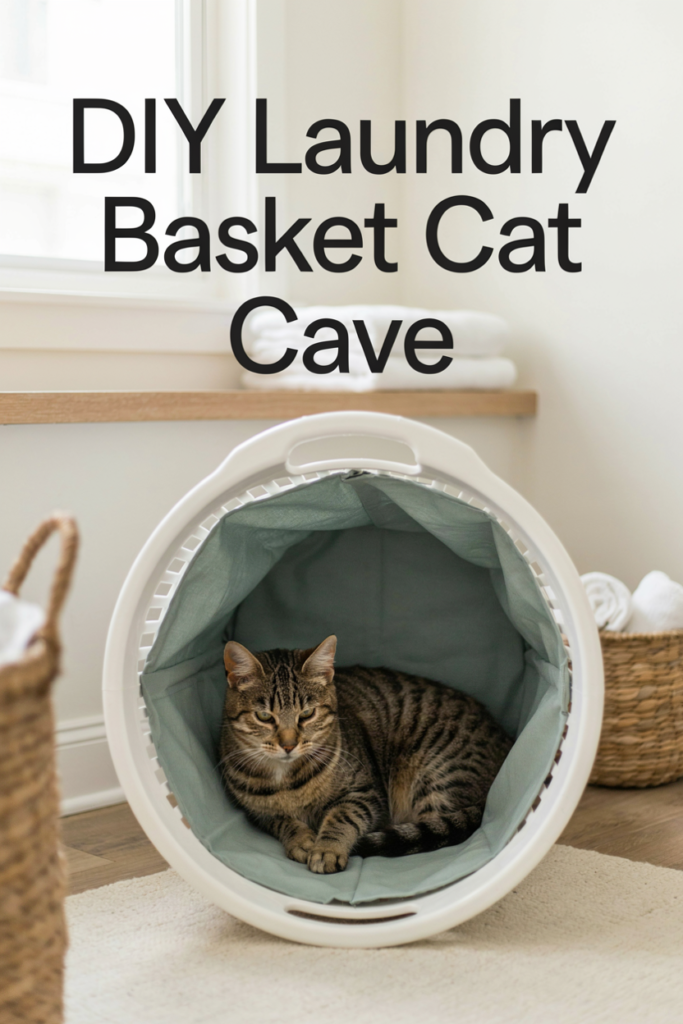
A sturdy laundry basket can become a simple indoor cat hideaway. I place it on its side, secure it so it cannot roll, and add a washable lining.
I prefer a solid-sided basket over one with openings that could catch claws or paws. I also check the basket for cracked plastic, sharp edges, or damaged areas.
Because laundry areas can become warm and busy, I place the finished hideaway somewhere away from machines, cords, detergents, and other household hazards.
Closet Corner
I can use an unused section of a closet to create a quiet cat retreat. A sturdy crate or box can provide the basic structure, while a washable cushion makes it more comfortable.
I keep the entrance unobstructed and make sure the closet has enough airflow. I also keep cleaning products, chemicals, loose cords, and other unsafe household items completely away from the cat’s resting area.
This is a good option when my cat prefers quiet places and tends to avoid busy areas of the home.
FAQs
Can a DIY cat house really work better than a store-bought one?
I think a DIY cat house can work better for a particular cat because I can customize the size, entrance, location, materials, and bedding. I am not limited to the dimensions or style of a ready-made product.
The important part is not whether I built it myself. I focus on stability, safety, comfort, cleanliness, and whether my cat actually wants to use the space.
How do I know if my DIY cat house is the right size for my cat?
I make sure my cat can enter, turn around, lie down, and leave without struggling. I do not make the interior unnecessarily large when the goal is to create a cozy sleeping space.
I also consider my cat’s body size and habits. A large cat needs more usable interior space than a small cat, while an active cat may benefit from a larger opening or a separate play area.
Conclusion
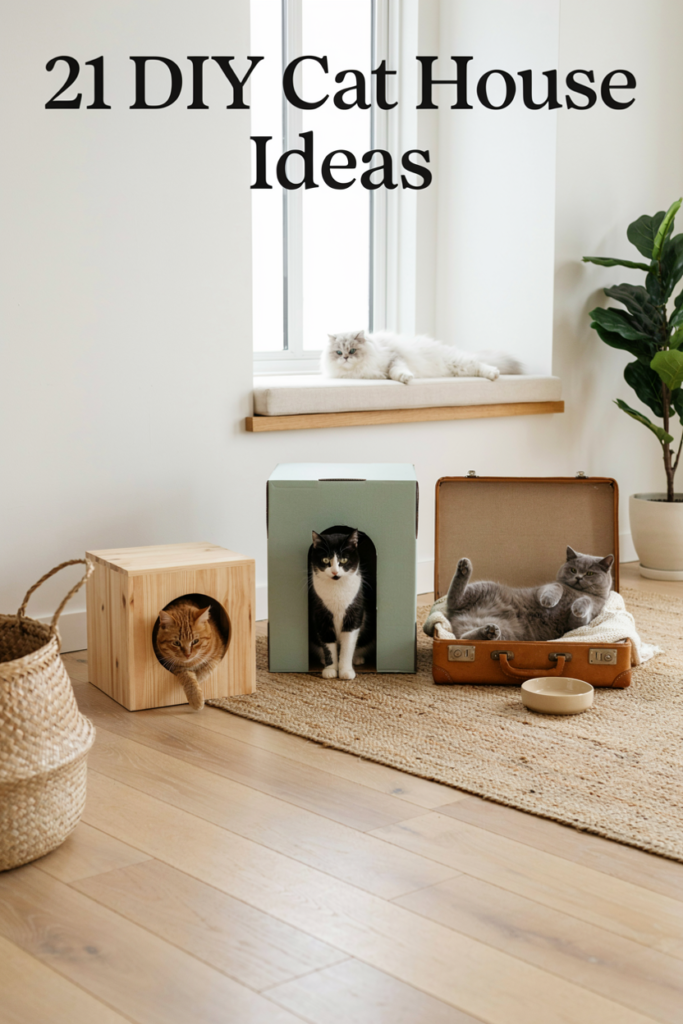
I’ve found that the best DIY cat house is not necessarily the most complicated one. A simple box, tote, old drawer, cabinet, or wooden crate can become a useful retreat when I choose safe materials and put it in a location my cat already enjoys.
For a quick indoor project, I would start with cardboard, a drawer, suitcase, or bookshelf den. For something more durable, I would consider a properly secured wooden structure or plastic tote. If the shelter will be outdoors, I give extra attention to weather protection, moisture, stability, and bedding.
Most importantly, I watch how my cat responds. If my cat ignores a beautiful house but loves a simple box in a quiet corner, that tells me exactly what matters more: comfort and security rather than decoration.