
How to Build a Goat Playground: 24 Easy DIY Ideas for 2027
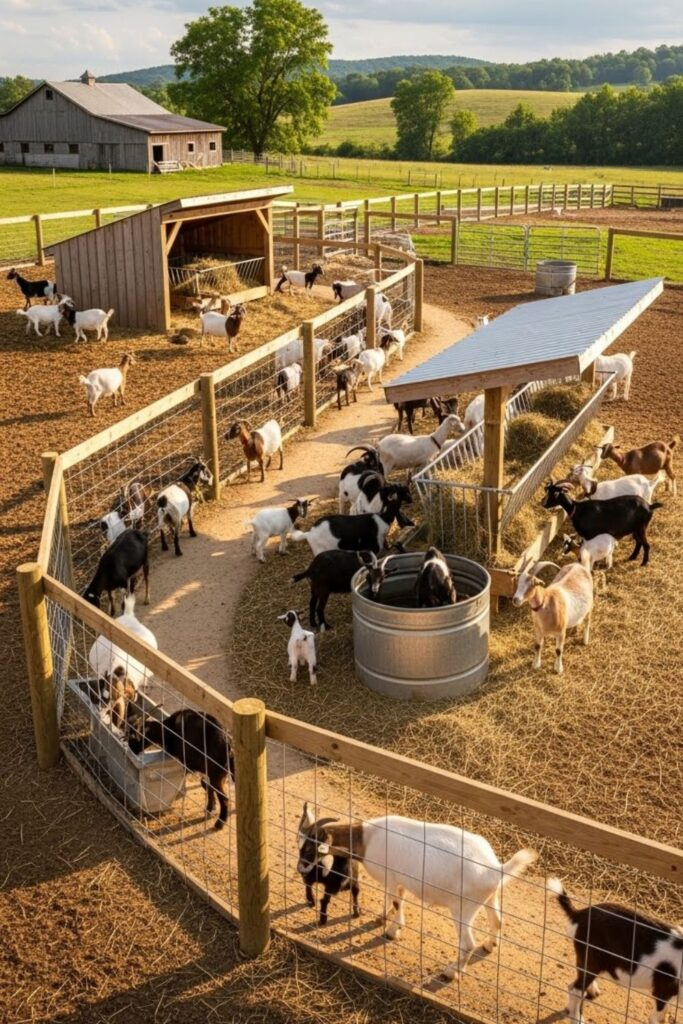
Goats rarely leave an interesting object alone. They climb on feeders, investigate raised surfaces, jump onto sturdy objects, and find ways to explore every corner of their pen. Instead of constantly trying to stop this behavior, you can create a dedicated play area where they have safe places to climb, balance, scratch, and explore.
A goat playground doesn’t have to be an expensive farm project. Old wooden spools, solid logs, properly prepared pallets, large tires, and low platforms can become useful play features. The important part is choosing suitable materials, securing every structure, and leaving enough room for your goats to move freely.
Below are 24 DIY goat playground ideas, from simple ground-level features to larger climbing arrangements. You can start with one or two projects and build a more interesting playground as your space and budget allow.
Key Takeaways
- Build with sturdy materials that are safe around animals.
- Use low platforms, wide ramps, and secure climbing surfaces.
- Spread play features around the pen to prevent crowding.
- Check structures regularly for damage, movement, and sharp edges.
- Keep feeding, watering, shelter, and cleaning areas accessible.
your goats move through the pen after installing a new feature. If they crowd around one entrance or block access to a feeder, adjust the layout.
24 DIY Goat Playground Ideas for 2026
1. Pallet Platform
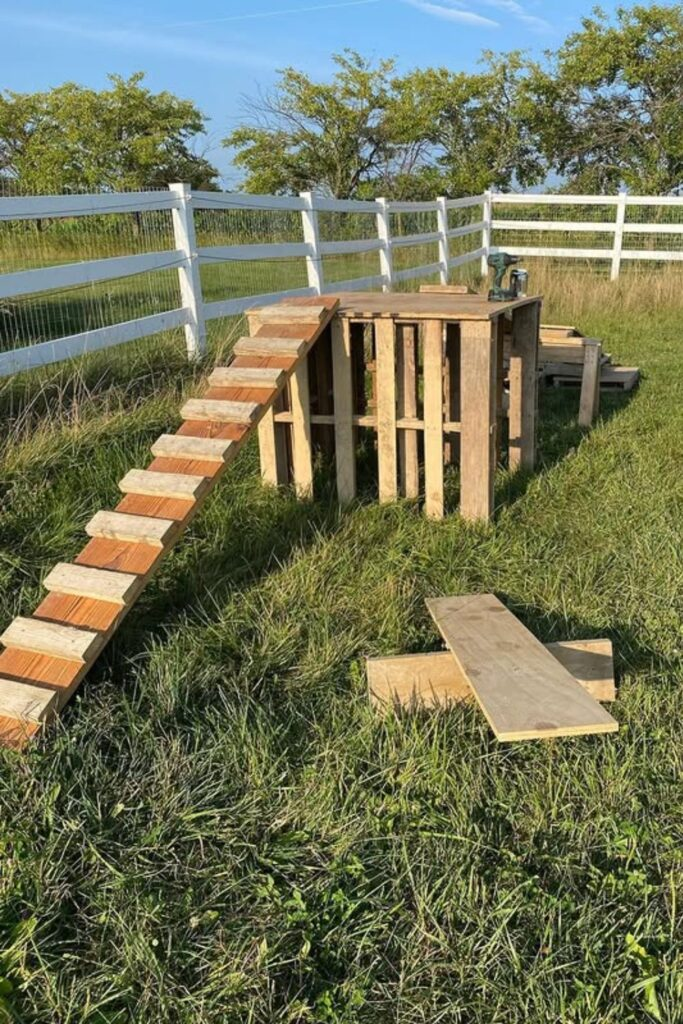
A pallet platform is a practical starting point if you want to add a raised area without building an elaborate structure. Use sound, properly prepared pallets to create a broad base, then add a gradual ramp so goats can walk up instead of having to jump. A wide top gives them room to stand, turn around, or rest without competing for a tiny landing spot.
Pro Tip: Use only pallets that are suitable for animal contact, and cover or remove openings that could catch a hoof.
2. Spool Table

A large wooden cable spool can become a simple lookout platform in a spacious goat pen. Its round top gives goats a different shape to climb onto, while the solid center can provide support when the spool is in good condition. Place it on firm, level ground and check that the base doesn’t rock when pressure is applied.
Pro Tip: Choose a wide spool with a stable base, and avoid damaged or cracked ones that may split under repeated use.
3. Ground Platform
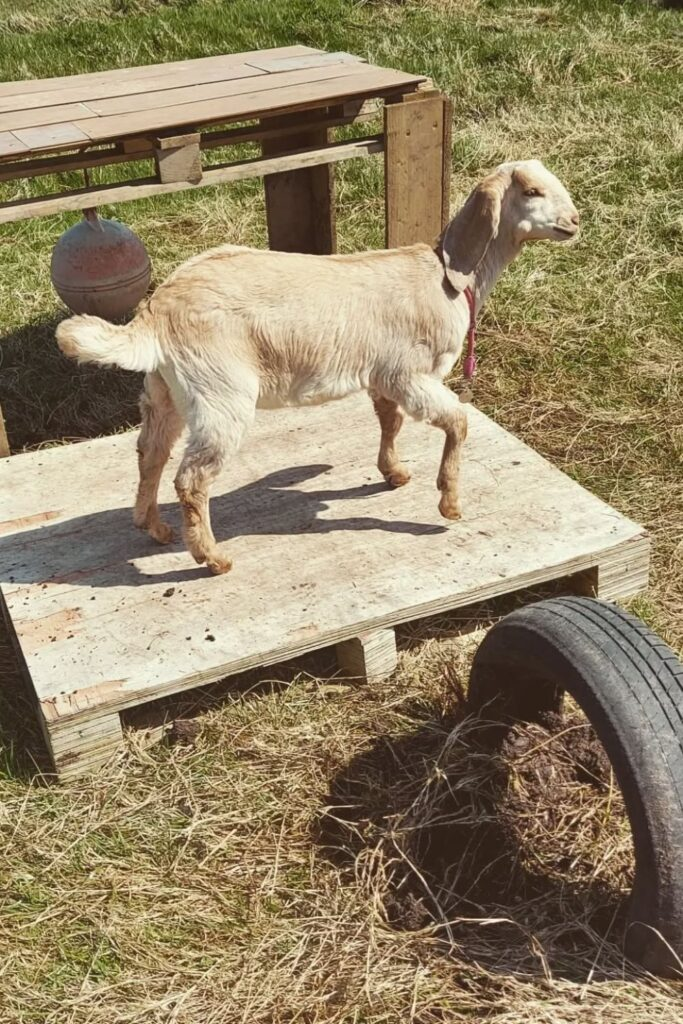
A low ground platform is a good choice for goats that are still getting used to climbing structures. Build a simple rectangular platform from sturdy boards and keep it close to the ground. You can place a large, stable tire nearby to create another surface for exploring, giving goats a small activity area without introducing a difficult climb.
Pro Tip: Keep the first platform low and broad. You can add a slightly higher section later if your goats use it comfortably.
4. Pallet Fortress
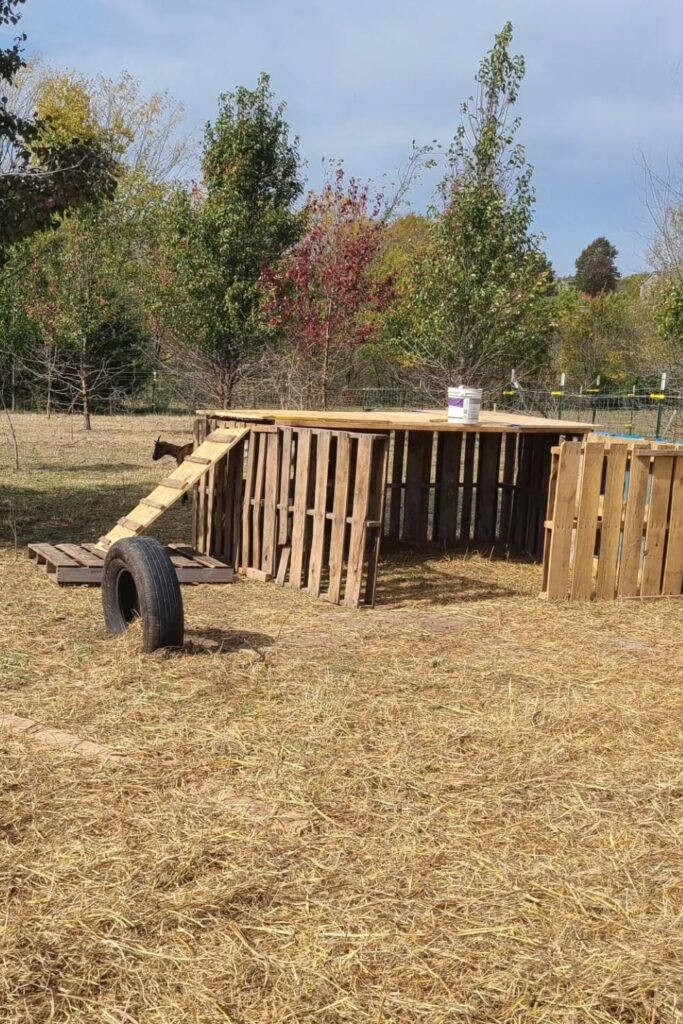
A pallet fortress gives goats several things to investigate in one place. Arrange sturdy pallets to form an open-sided structure with a raised top and a sheltered lower section. Add a wide ramp for access, and leave enough open space underneath for airflow and easy cleaning. The design can be simple, but every connection needs to be secure.
Pro Tip: Don’t leave narrow gaps between pallets where horns, heads, or legs could become stuck.
5. Fallen Logs

If you have access to suitable fallen trees, logs can make a natural-looking climbing area. Arrange thick trunks at ground level or in a few low sections so goats can step over them, stand on them, and explore their different textures. You can use several logs to create a small route rather than relying on one large climbing obstacle.
Pro Tip: Choose solid logs without rot or sharp broken branches, and secure rounded trunks so they cannot roll when stepped on.
6. Tire Tunnel
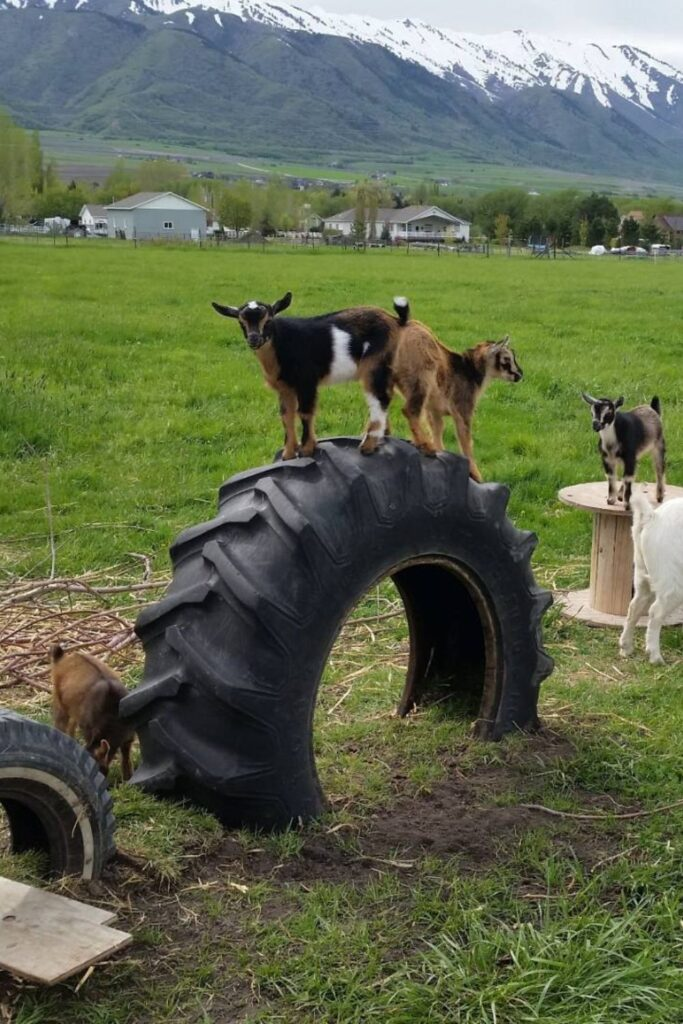
A large tire can become an interesting tunnel for goats to walk through and investigate. Set it securely into the ground so it cannot roll or shift when an animal pushes against it. You can place a low platform nearby to create a small route with more than one activity.
Pro Tip: Inspect the inside of the tire for exposed wire, damaged rubber, and sharp edges before adding it to the pen.
7. Raised Deck

A raised deck creates a larger standing area where goats can climb, look around, and rest. Build a strong wooden frame with a broad top and connect it to the ground with a gradual ramp or wide steps. If you like the look of simple outdoor platforms, these DIY pallet patio deck ideas can provide layout inspiration, although a goat structure needs to be designed specifically for animal use.
Pro Tip: Keep the deck at a manageable height and check its supports regularly for movement, rot, or loose fasteners.
8. Picnic Beam
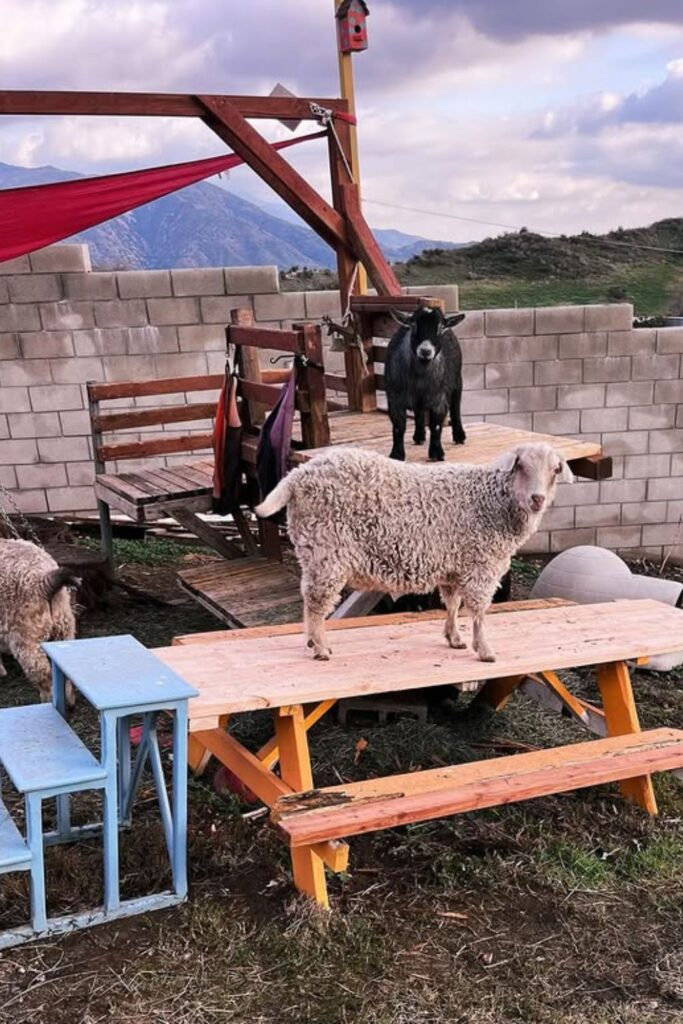
An old picnic table can be adapted into a low balance-style feature if it is strong, stable, and in good condition. The long surface gives goats room to walk from one end to the other, while the legs create a different shape from a standard platform. Remove loose parts and check the table carefully before placing it in the pen.
Pro Tip: Avoid tall picnic tables or lightweight folding designs. A low, solid structure is a better starting point.
9. Modular Platforms
Modular platforms are useful when you want a playground that can change with your goats’ interests. Make several separate wooden platforms with different low heights and arrange them around the pen. Some can remain independent, while others can be connected with short ramps or broad planks.
Pro Tip: Begin with two or three platforms and see how your goats use them before adding more sections.
10. Ramp Tower
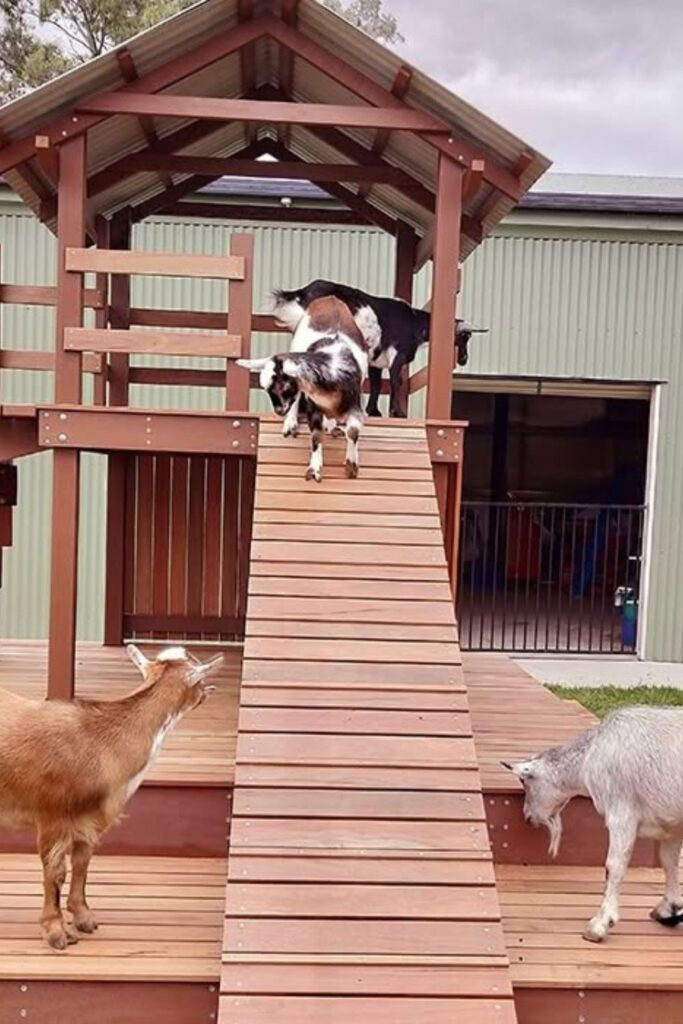
A ramp tower gives goats a clear way to reach a raised platform. Build a sturdy base and attach a wide ramp with a gentle slope. The top should be spacious enough for goats to stand comfortably, and the ramp surface should provide reliable footing in different weather conditions.
Pro Tip: Test the ramp for movement and slippery spots before use. A steep or narrow ramp can make climbing harder than it needs to be.
11. Lookout Levels
A multi-level playground gives goats several places to climb and observe their surroundings. Build a series of connected platforms, starting with a low level and gradually increasing the height. Make the lower platforms wide enough for less confident animals, and use ramps or broad steps to connect the sections.
Pro Tip: Keep the height differences between levels modest so goats don’t have to make large jumps to reach the next platform.
12. Pallet Bridge

A pallet bridge connects two low platforms and creates a simple walking route through the pen. Use a strong, wide bridge section with secure supports underneath, then add a gradual ramp at each end. This can work well in a larger enclosure where goats have enough room to approach the bridge from either side.
Pro Tip: Check the middle of the bridge for bending or movement, especially if several goats may use it around the same time.
13. Climbing Circuit
A climbing circuit combines different playground features into one connected route. Arrange low platforms, ramps, logs, and short bridges so goats can move from one feature to another. Include wider resting areas along the way, and avoid making the route a narrow passage with only one entrance or exit.
Pro Tip: Give goats more than one way to leave the circuit. This helps reduce crowding around a single exit.
14. Spool Path
Connect a few wooden spools with short, sturdy planks to make a simple spool path. Goats can step onto each spool top, cross the connecting sections, and move along the route. Keep the spools firmly on the ground and use broad connectors rather than narrow boards.
Pro Tip: Leave enough space between the spools for a comfortable step, and make sure each connecting plank is secured at both ends.
15. Spool Pods

Instead of connecting every spool, arrange several individual spools around an open section of the pen. Each one becomes a separate standing or climbing spot, giving goats a choice of where to explore. You can use different spool sizes, provided every piece has a stable base and a suitable height.
Pro Tip: Avoid placing the spools too far apart. The aim is to encourage easy movement, not force goats into long or awkward jumps.
16. Spool Network
A spool network brings several platforms together to create a larger activity area. Arrange wooden spools at different points and connect selected sections with secure planks or low ramps. Leave open ground between parts of the network so goats can pass one another without getting crowded.
Pro Tip: Check the whole layout after installation. A connection that seems stable on its own may shift when goats climb onto both ends.
17. Winter Stack
For colder months, create a few low wooden platforms close enough for goats to move between them without jumping large distances. Position the structure in an area that stays as dry as possible, and keep the walking surfaces free from ice, standing water, and loose material. A sheltered location can make the playground more useful when the weather changes.
Pro Tip: Inspect the platforms after rain or snowfall, and don’t let goats climb on surfaces that have become slippery.
18. Playhouse Ramp

A small open-sided playhouse can combine a raised platform with a sheltered lower area. Build a sturdy frame, add a broad top deck, and connect it to the ground with a gradual ramp. Keep the design open enough for good airflow and easy access when you need to clean or inspect it.
Pro Tip: Make sure the structure has no enclosed gaps where a goat could become trapped, and check that the roof and platform are securely supported.
19. Hay Climber
A hay climber combines a feeding feature with a low platform for added activity. Place a suitable hay rack near a sturdy step or raised surface so goats can approach it comfortably. The feeder should be securely fixed and designed to prevent horns or heads from getting caught.
Pro Tip: Make sure all goats can access feed without having to push past one another. A playground feature should never make feeding more difficult.
20. Rock Steps
Large, stable rocks can create a natural climbing route in an outdoor pen. Arrange them in a gradual staircase pattern, using broad stones with small height differences. Set each rock firmly into the ground so it cannot shift when goats step on it, and leave enough space around the arrangement for easy movement.
Pro Tip: Avoid loose piles of stones. Every step should be stable before goats are allowed to climb on it.
21. Brush Station
A brush station gives goats a dedicated place to rub and scratch. Attach a livestock-safe brush to a sturdy post or suitable wall, positioning it where goats can reach it without stretching awkwardly. A well-placed brush can add a useful enrichment feature without taking up much room in the pen.
Pro Tip: Check the brush and its fasteners regularly for broken bristles, loose screws, and sharp edges.
22. Sand Mound
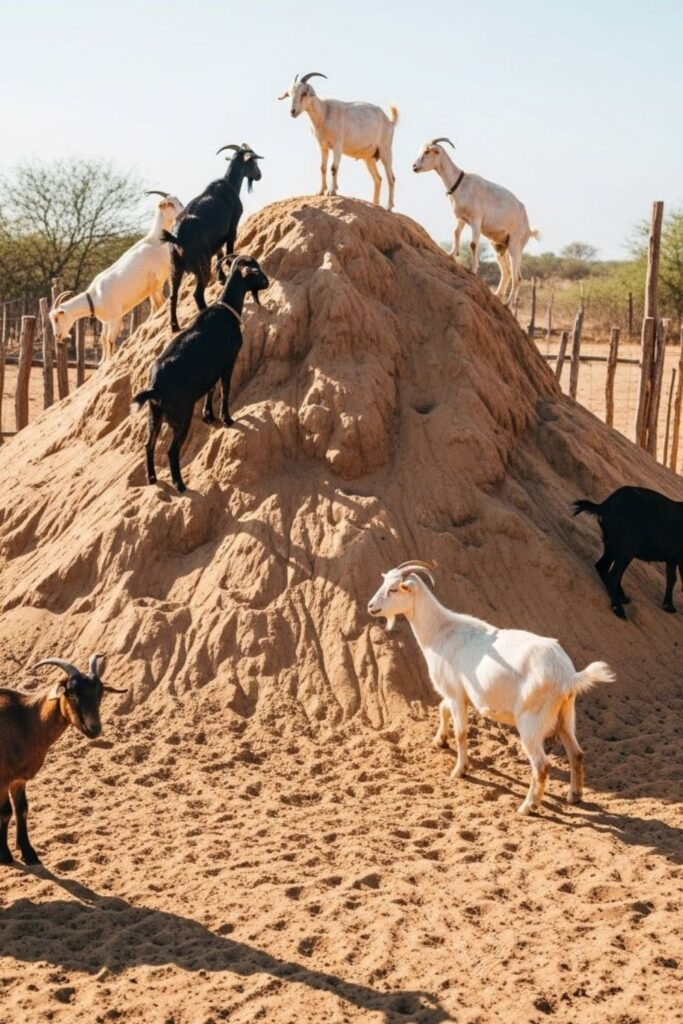
A low sand mound adds a different surface for goats to explore. Shape clean, suitable sand into a gentle hill with gradual slopes and a broad top. Place it in a well-drained part of the pen, and check its shape after heavy rain or repeated digging.
Pro Tip: Keep the sides gentle and firm. Loose sand that shifts underfoot can make the mound difficult to use safely.
23. Corner Ledge
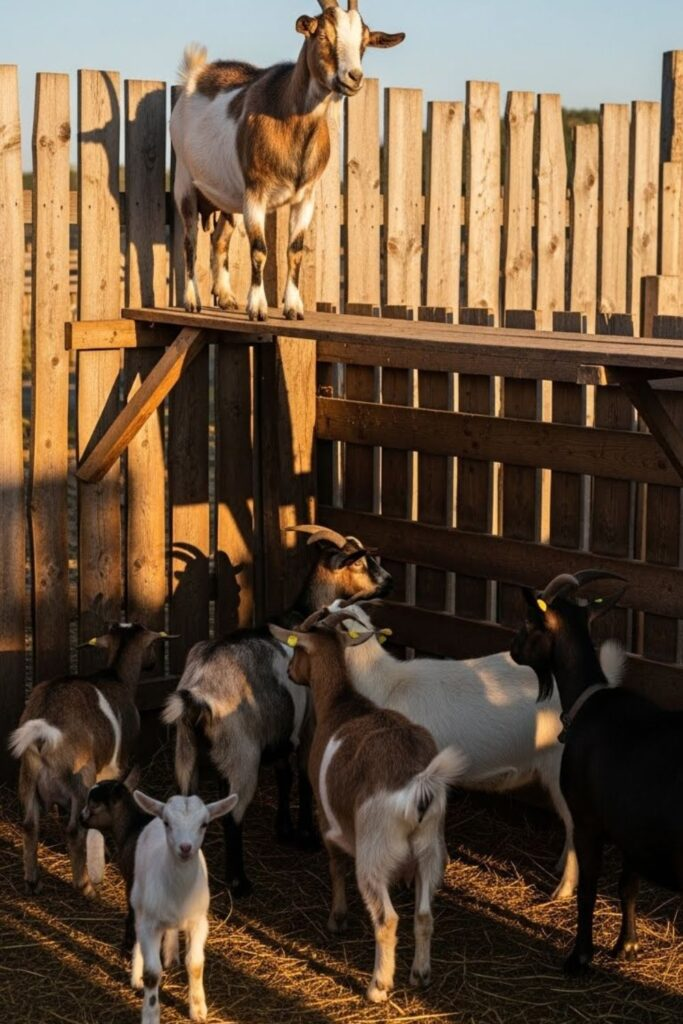
A corner ledge makes use of an area that might otherwise stay empty. Build a short, low platform with strong supports and a secure walking surface. It can give goats another place to stand or rest, but it should not create a tight corner where animals could become trapped.
Pro Tip: Never rely on ordinary fence panels to support a climbing platform unless they are specifically built to carry that weight.
24. Shade Tunnel
A shade tunnel gives goats a place to walk through and spend time away from direct sunlight. Build a wide, sturdy frame with an appropriate covering, keeping both entrances open and easy to access. If you want to add a climbing surface above the tunnel, make sure the frame is specifically designed to support the extra weight.
Pro Tip: Check the covering for loose edges and make sure the tunnel stays well ventilated, especially during hot weather.