
25 DIY Classroom Decorations Ideas for 2027
A classroom feels more inviting when students can see their work, find what they need, and enjoy the space around them. You don’t need expensive furniture or store-bought decorations to make that happen. A few handmade displays, clever storage solutions, and colorful learning areas can make an ordinary room feel much more welcoming.
These DIY classroom decorations ideas include simple paper crafts, reading corners, wall displays, and practical ways to organize everyday supplies. You can adjust each idea to suit your classroom size, grade level, and available materials.
Key Takeaways
- Use handmade decorations to add color without spending too much.
- Give student artwork and classroom projects a visible place.
- Combine attractive displays with useful storage and learning areas.
- Choose decorations that are easy to update throughout the school year.
- Keep walkways and shared spaces clear so the room stays comfortable.
25 DIY Classroom Decorations Ideas for 2027
1. Patterned Color Grid
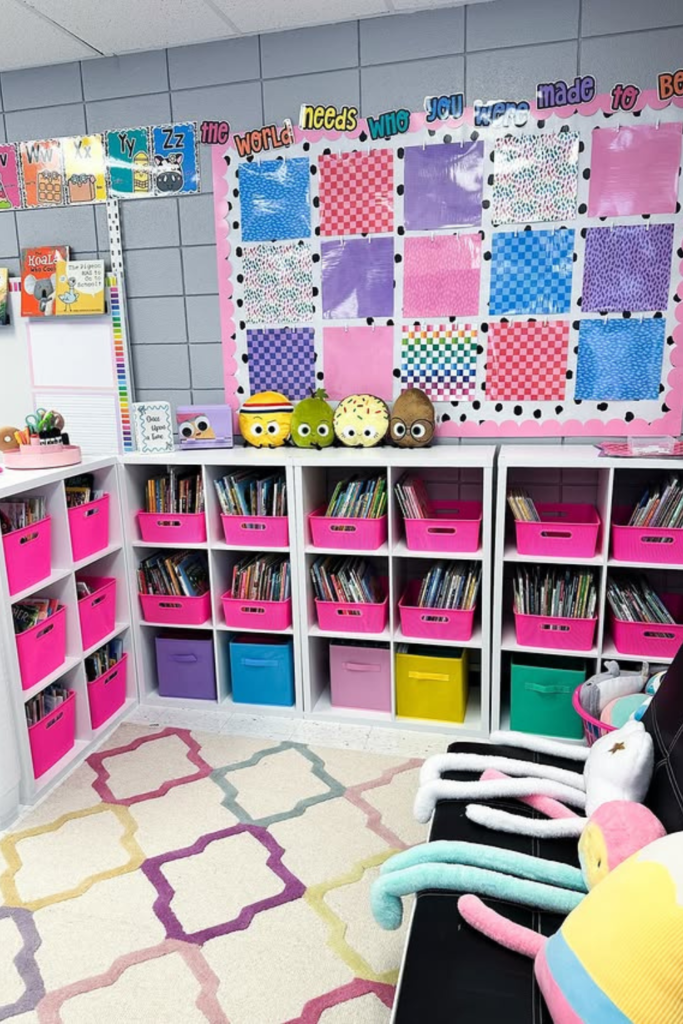
A patterned color grid is an easy way to fill an empty classroom wall with something bright and organized. Cut squares from colored paper, scrapbook sheets, or leftover craft materials, then arrange them in a repeating pattern. You can use alternating colors, simple shapes, or different patterns to create a display that suits your classroom theme.
Pro Tip: Use two or three main colors and repeat them across the grid so the finished wall looks coordinated rather than too busy.
2. Flying Paper Butterflies
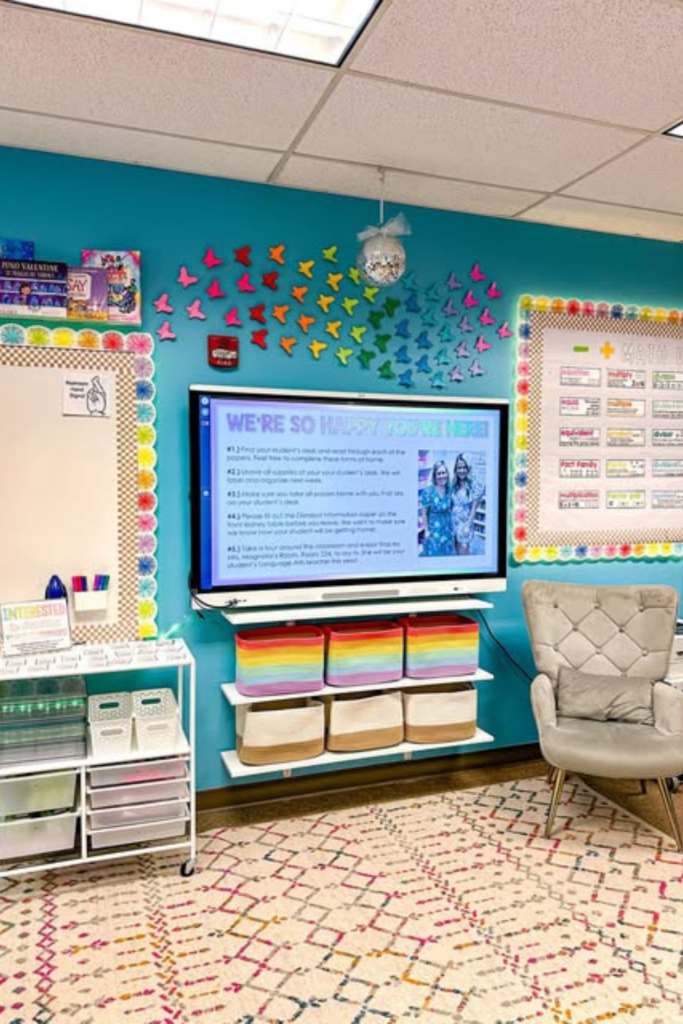
Paper butterflies can add a playful touch to a classroom wall, window, or reading corner. Cut butterfly shapes from colored construction paper, fold each one slightly down the middle, and attach it with removable adhesive so the wings appear raised. For another handmade decoration, you can coordinate the display with these easy paper flowers DIY ideas.
Pro Tip: Arrange the butterflies as if they are flying upward from one corner instead of placing them randomly across the wall.
3. Student Work Spotlight
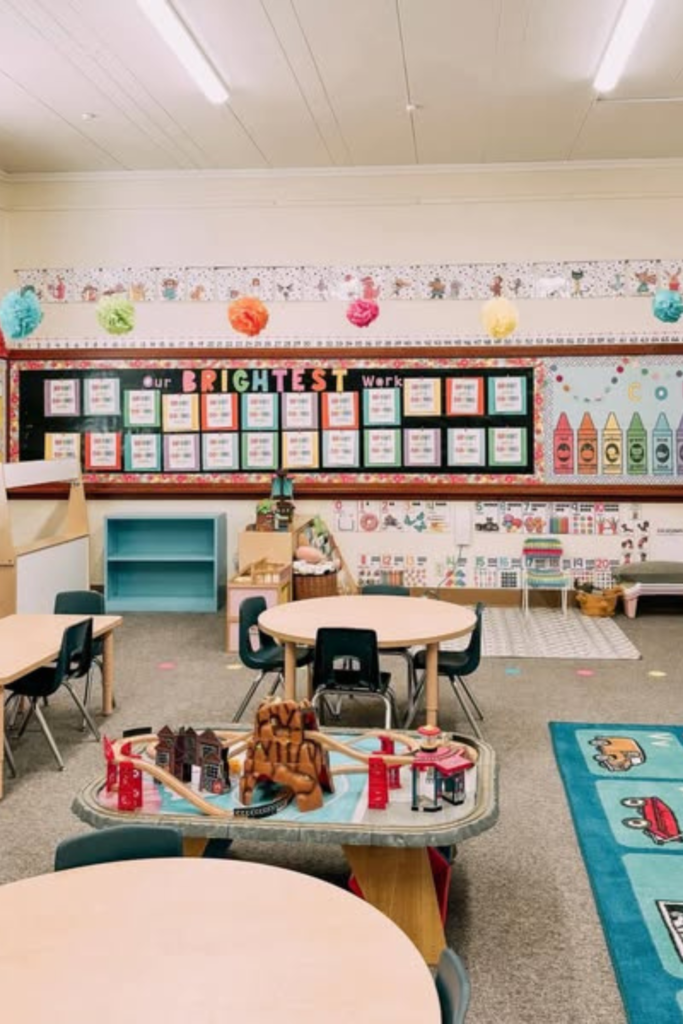
Give students a dedicated space where their drawings, writing assignments, and classroom projects can be displayed. A large board covered with colored paper works well, but you can also hang string across a wall and use small clips to hold each piece. A handmade DIY pin board can provide a practical base for changing the display whenever new work is ready.
Pro Tip: Rotate the featured work regularly so different students get a chance to see their projects displayed.
4. Cozy Reading Corner
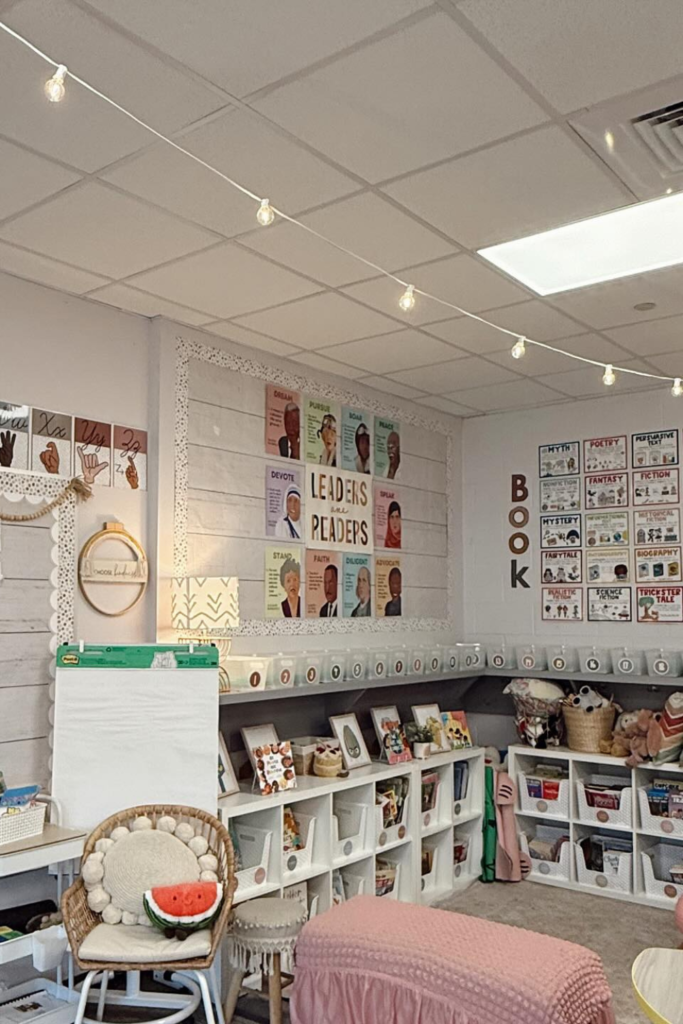
Turn an unused classroom corner into a comfortable place for quiet reading. Add a small rug, floor cushions, a low book basket, and a few book-themed decorations to make the area feel separate from the rest of the room. Keep books within easy reach and avoid adding so many accessories that students have little room to sit.
Pro Tip: Use a small basket or low shelf to keep books organized and make tidying up easier after reading time.
5. Color-Coded Storage
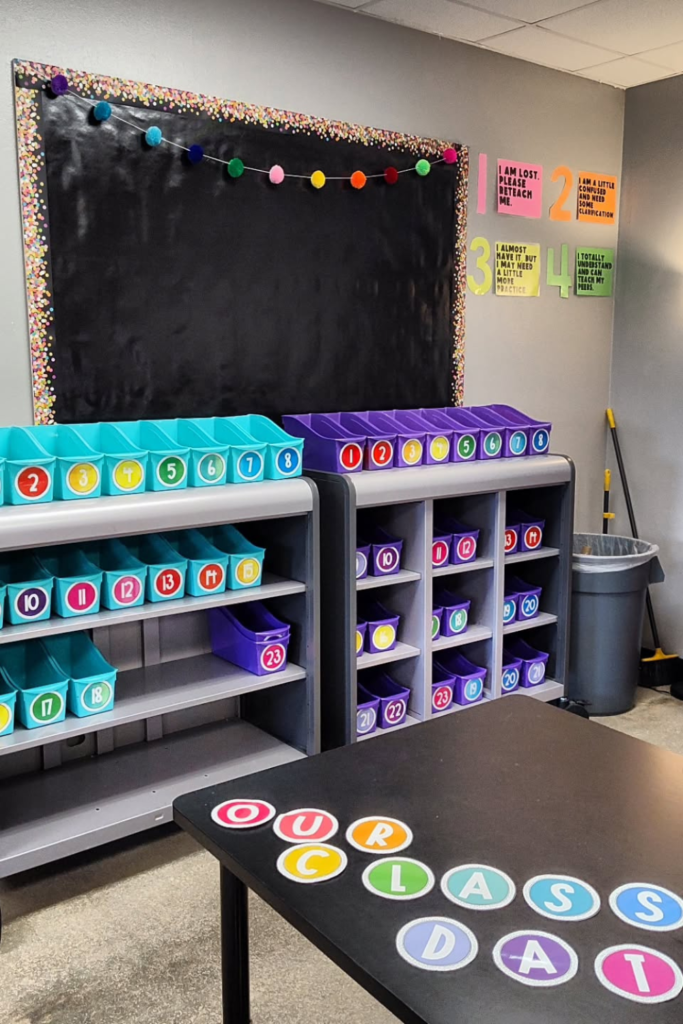
Color-coded storage makes it easier for students to find classroom supplies without asking where everything belongs. Cover small boxes, jars, or containers with colored paper and add clear labels for pencils, markers, scissors, glue, and other materials. If you enjoy making your own organizers, these DIY acrylic paint storage ideas offer another way to arrange craft supplies neatly.
Pro Tip: Give each subject or supply category its own color and use the same color on its storage label.
6. Balanced Learning Zones
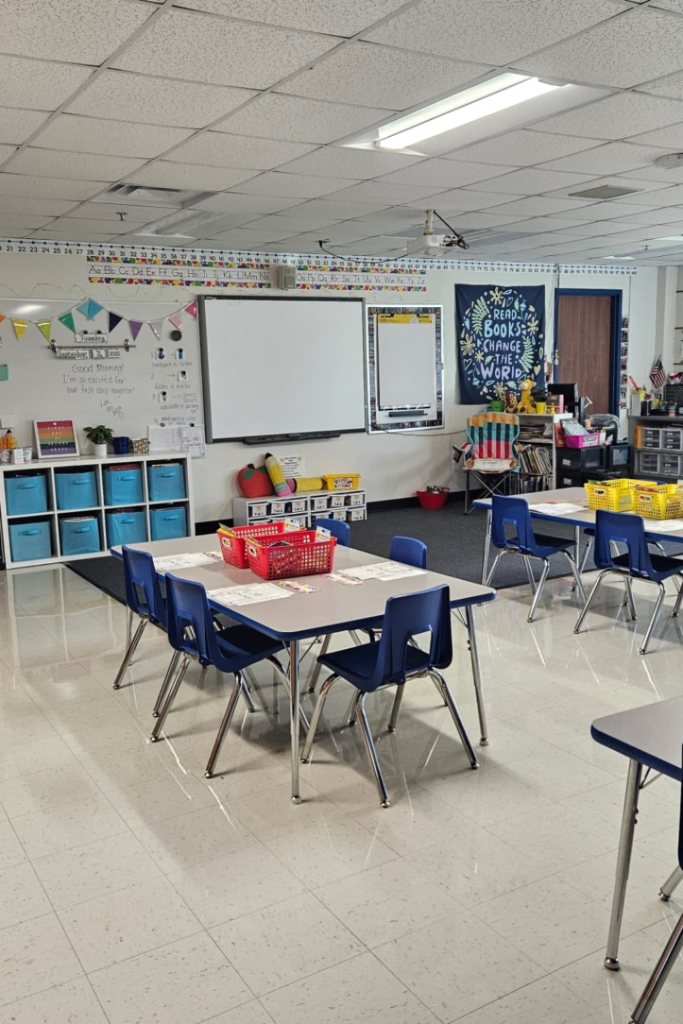
Divide the classroom into small areas for different activities, such as reading, writing, art, and group work. You can use rugs, colored labels, low shelves, or simple wall signs to show where each activity takes place. The idea is to make each section easy to recognize without building physical barriers that take up valuable space.
Pro Tip: Keep frequently used areas close to the supplies students need so they don’t have to walk across the room during activities.
7. Colorful Reading Circle

Create a reading circle where students can sit together for story time, shared reading, or group discussions. Arrange floor cushions or small chairs in a circle and place a basket of books nearby. A colorful rug or paper sign can help mark the space without requiring a major classroom makeover.
Pro Tip: Leave enough space between seats so students can get in and out without disturbing the rest of the group.
8. Warm Welcome Wall
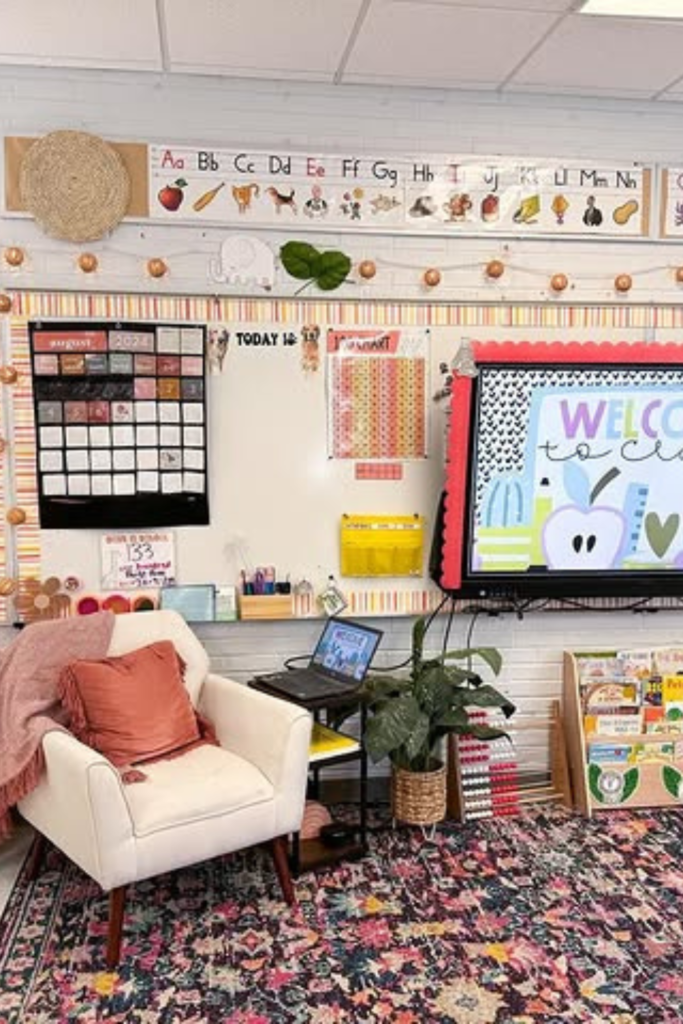
Make the classroom entrance feel friendly with a handmade welcome wall. Use a large paper heading, colorful lettering, and small decorations that match the classroom theme. You can also add students’ names or a space where they can write a short greeting at the beginning of the week.
Pro Tip: Keep the main welcome message large and easy to read from the doorway, especially if the display includes several smaller details.
9. Soft Light Focus
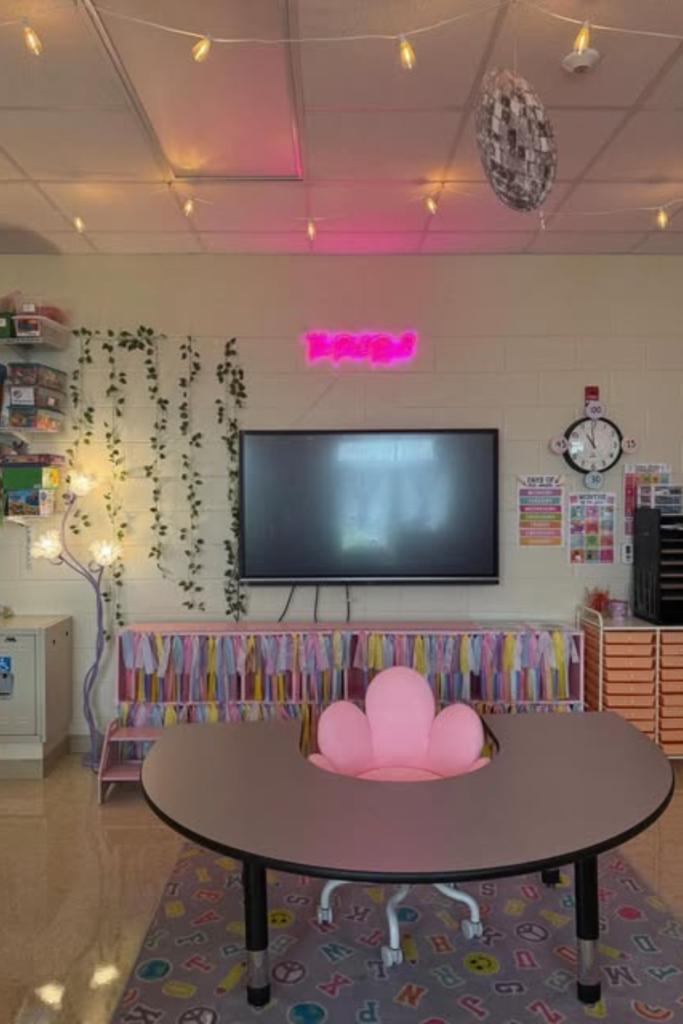
Harsh or uneven lighting can make some classroom corners feel less comfortable. If your classroom allows it, use soft decorative lamps or battery-operated lights in a reading or quiet area. Keep cords away from walkways and use only lighting that is approved for your classroom and school safety rules.
Pro Tip: Place extra lighting where students read or work quietly rather than adding decorative lights to every part of the room.
10. Rainbow Window Draping
Bring a little color to classroom windows with lightweight paper shapes or translucent decorations. Cut strips in rainbow colors and hang them near the top of the window, leaving enough space for natural light to enter. You can also use paper circles, stars, or simple geometric shapes to create a display that changes with the seasons.
Pro Tip: Avoid covering the entire window. Keeping most of the glass clear helps the classroom stay bright.
11. Interactive Math Corner
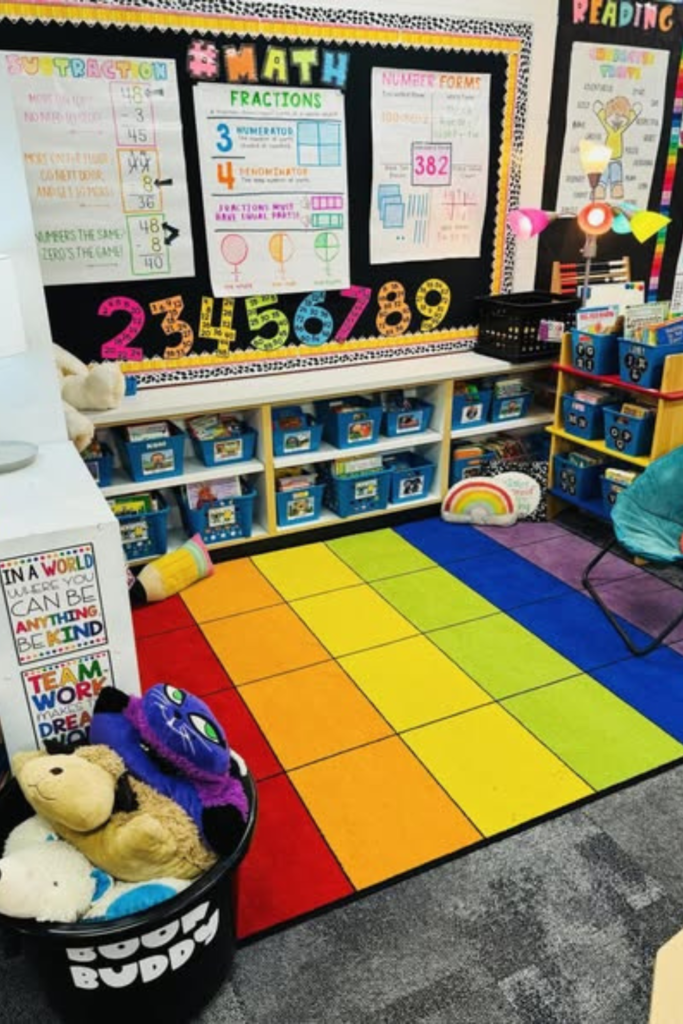
Make math practice more approachable with a small display that students can use during lessons or independent activities. Add number cards, shapes, simple puzzles, multiplication charts, and a small whiteboard for working out answers. You can change the materials as students move on to new topics.
Pro Tip: Include a few hands-on items, such as counting sticks or shape cards, so the corner is useful for more than just looking at posters.
12. Seasonal Reading Nook
Give your reading corner a fresh look by changing a few decorations throughout the year. Paper leaves can work for autumn, snowflakes for winter, flowers for spring, and bright shapes for summer. Keep the main furniture and book storage in place, then switch out the smaller details when a new season begins.
Pro Tip: Store seasonal decorations in labeled envelopes or boxes so you can reuse them next year.
13. Writing Station Zone
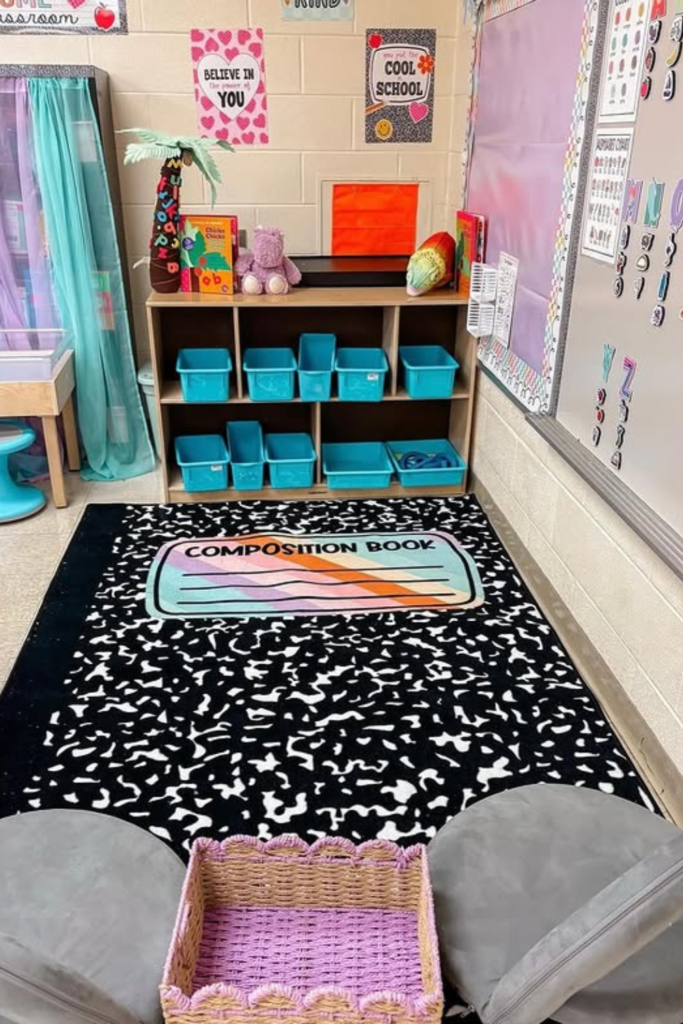
Set up a small writing station with paper, pencils, notebooks, envelopes, and simple writing prompts. Use a wall sign to identify the area and arrange supplies in separate containers so students can take what they need. You can also display a few writing examples to give students ideas when they are unsure what to write.
Pro Tip: Keep the most frequently used supplies at the front of the station so students can reach them without moving everything around.
14. Vertical Supply Tower
When classroom floor space is limited, use vertical storage to keep supplies organized. Stack sturdy, clearly labeled containers on a stable shelf or use a purpose-made organizer with separate compartments. This works well for art materials, notebooks, paper, and other items that students need regularly.
Pro Tip: Put lightweight and less frequently used items on higher shelves, while everyday supplies should stay within easy reach.
15. Open Play Zones\
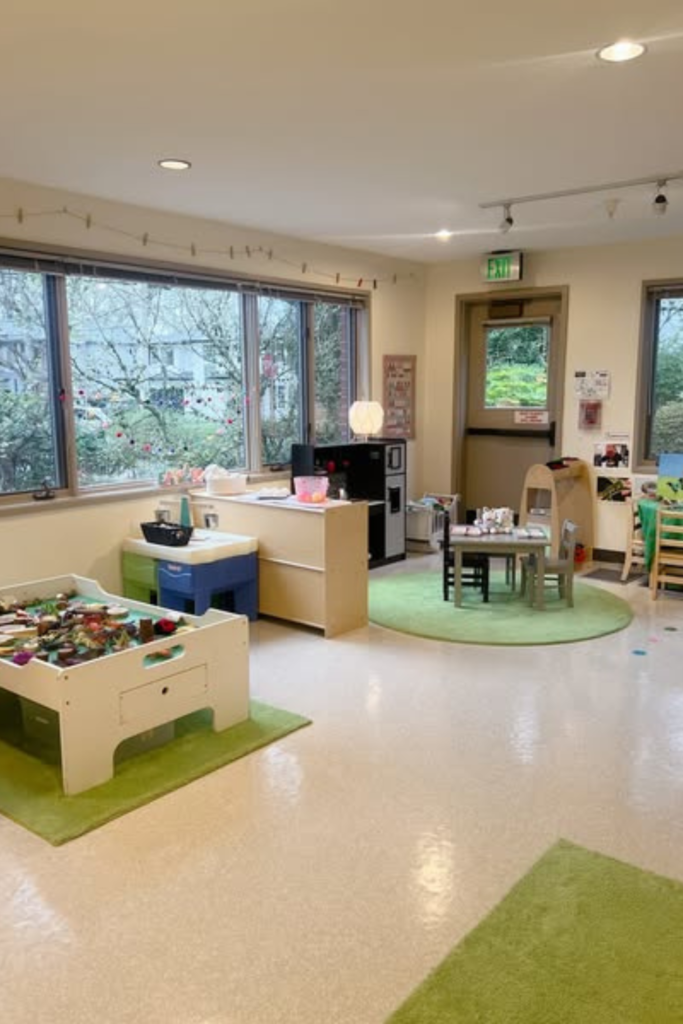
Younger students often need space for hands-on activities, building, and imaginative play. Mark a small area with a washable rug or floor mat, then keep blocks, puzzles, and pretend-play materials in nearby containers. A simple sign can help students understand what the space is for and where the toys belong afterward.
Pro Tip: Keep the play area away from busy walkways so students can use it without interrupting other classroom activities.
16. Natural Classroom Flow
A well-arranged classroom can make everyday routines easier. Place desks, shelves, activity tables, and storage in a way that leaves clear paths between the entrance, learning areas, and supplies. Use small signs or floor markers to help students understand where to go during different activities.
Pro Tip: Walk through the room as if you were a student carrying books or supplies. If a path feels narrow, rearrange the furniture before adding more decorations.
17. Statement Wall Art
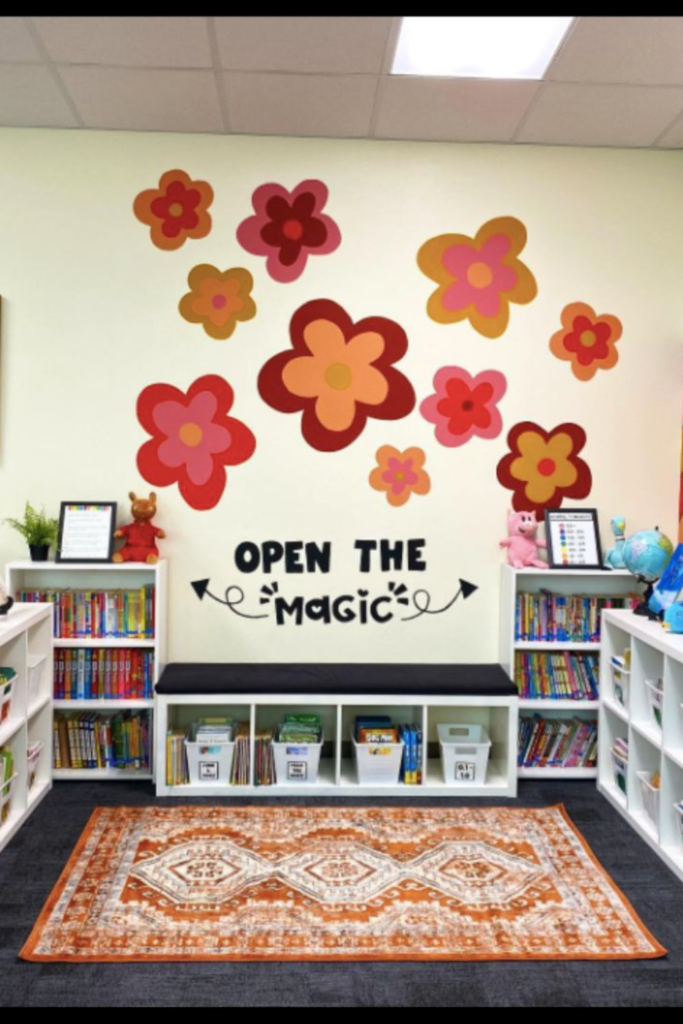
Choose one classroom wall for a larger handmade art display instead of decorating every wall with small pieces. You could create a large tree with paper leaves, a colorful alphabet mural, or a collection of shapes that match your classroom theme. Students can also contribute smaller pieces to make the artwork feel connected to the class.
Pro Tip: Choose one main design and keep the surrounding wall space fairly simple so the artwork stands out.
18. Calm Reading Bench
If your classroom has a bench or a small seating area, make it more inviting with a washable cushion and a few simple decorations. Add a nearby basket for books and keep the area free from unnecessary supplies. This can become a quiet spot for students who want to read independently or take a short break from group activities.
Pro Tip: Choose easy-to-clean fabrics and avoid loose decorative items that could fall onto the floor.
19. Colorful Learning Wall
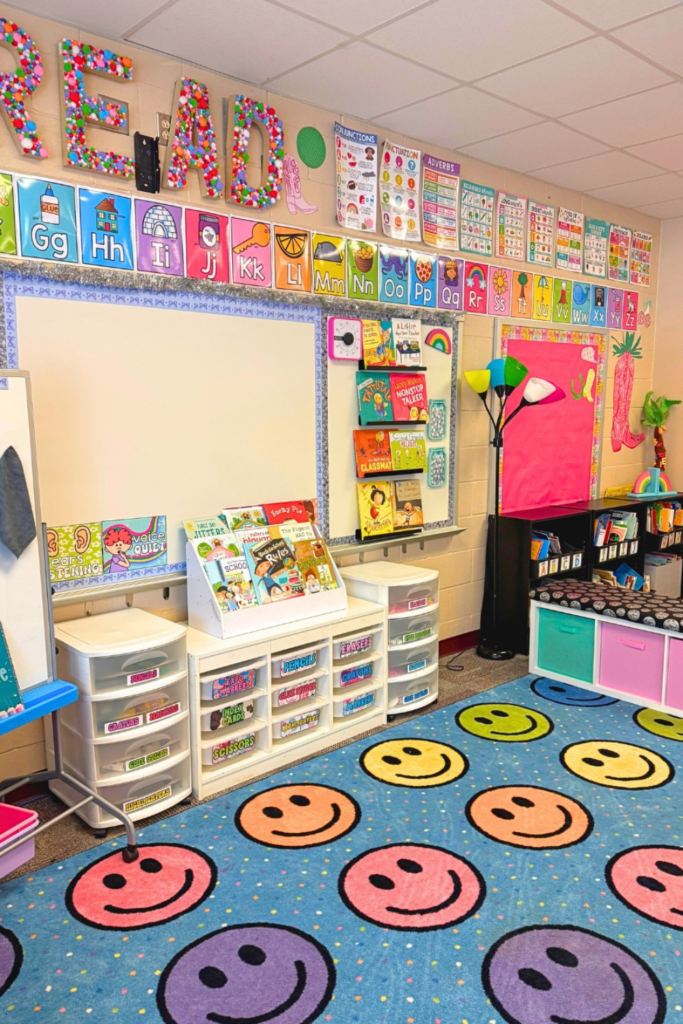
Use one wall to display useful classroom information in a way that students can refer to during lessons. Depending on the grade level, this might include the alphabet, number charts, vocabulary words, maps, or classroom routines. Arrange the information in separate sections so students can find what they need without searching through a crowded display.
Pro Tip: Remove outdated charts when a topic is finished. A smaller display of current learning materials is often more useful than a wall full of old posters.
20. Ceiling Learning Trails
Create a simple ceiling display using lightweight paper shapes, letters, numbers, or seasonal decorations. Hang them at a safe height where they won’t interfere with lights, fans, sprinklers, or other classroom equipment. You can arrange the pieces in a line or repeat a pattern to make the ceiling feel more colorful.
Pro Tip: Check school rules before hanging anything overhead, and make sure every decoration is securely attached.
21. Student Identity Wall
Give each student a small space to share something about themselves through artwork, a drawing, or a short written introduction. Arrange the pieces on a shared wall display using matching borders or name labels. This creates a personal classroom decoration while giving students a chance to learn more about one another.
Pro Tip: Let students choose what they feel comfortable sharing instead of asking everyone to display personal information.
22. Rotating Quote Strip
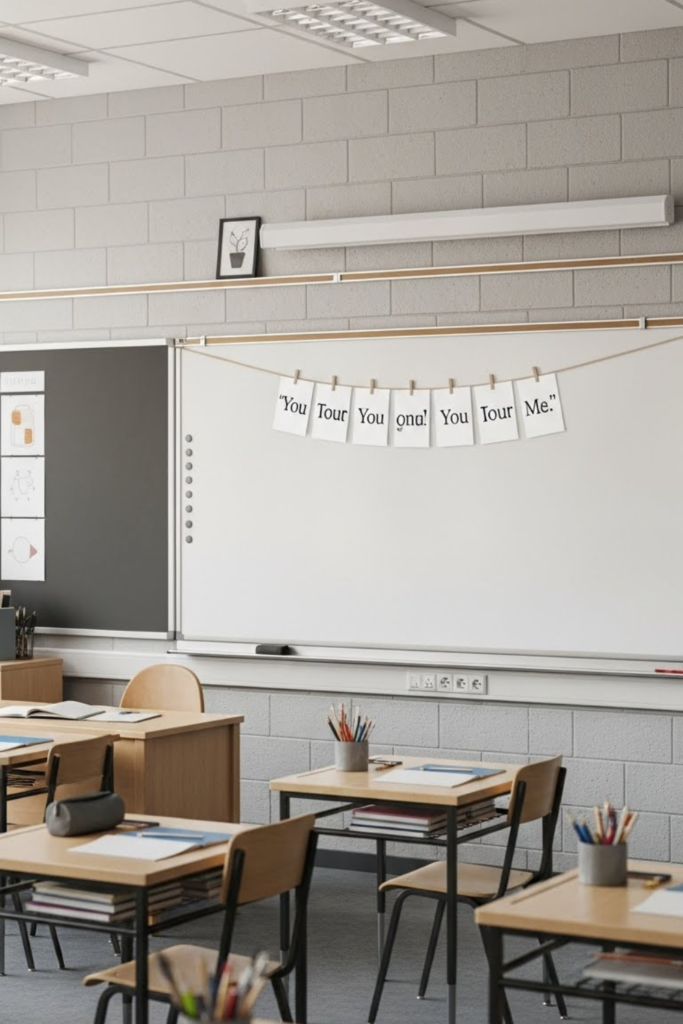
Add a narrow display where you can feature a short classroom quote, encouraging message, or thought for the week. Use colored paper strips or letter cards and change the message regularly. You can also invite students to suggest short phrases that reflect kindness, teamwork, effort, or curiosity.
Pro Tip: Keep each message short enough to read quickly from across the classroom.
23. Texture-Based Decor Wall
Create a wall display with different safe textures and materials to add interest to a classroom corner. You might use felt shapes, corrugated paper, fabric pieces, or textured cardstock arranged in a simple pattern. For younger students, make sure all materials are securely attached and suitable for their age group.
Pro Tip: Use a limited selection of textures and colors so the wall looks organized rather than cluttered.
24. Floor-Level Visual Guides
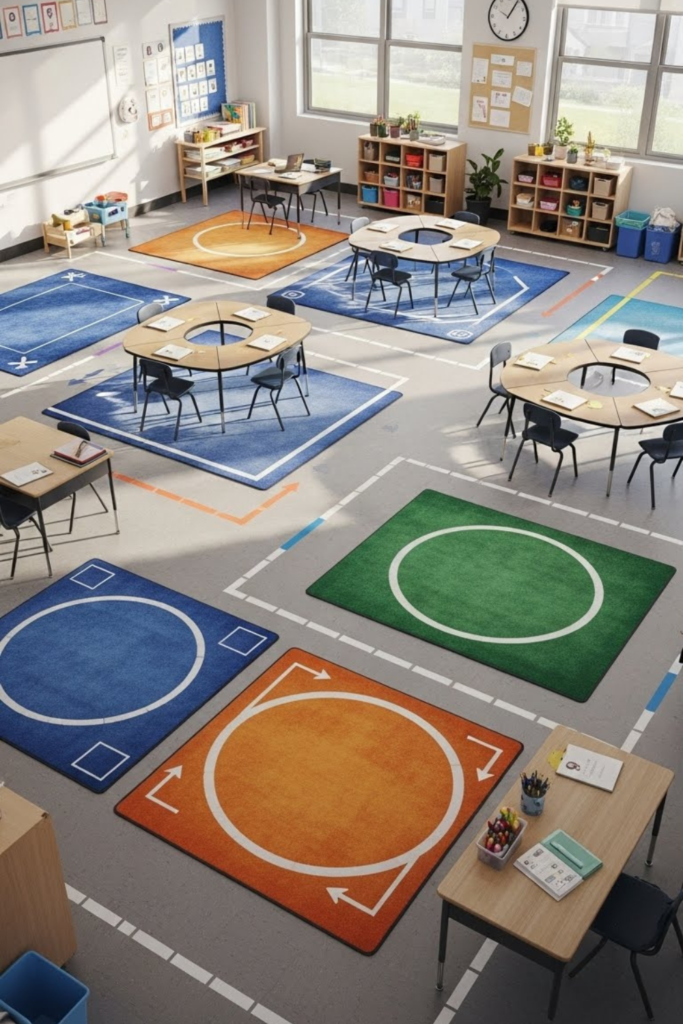
Use simple floor markers to help students identify activity areas or follow classroom routines. Washable, non-slip floor decals can mark a reading space, group-work area, or line-up point. You can also use a small floor sign near storage to remind students where certain materials belong.
Pro Tip: Choose markers that won’t create a tripping or slipping hazard, and check that they stay firmly attached to the floor.
25. Minimalist Theme Corners
If you prefer a tidy classroom, decorate a few small corners around one simple theme instead of covering every wall. For example, a nature corner could use paper leaves and plant illustrations, while a space corner might feature handmade stars and planets. Keep the colors and decorations consistent so the room feels connected without becoming overwhelming.
Pro Tip: Start with one themed corner and add more only if the classroom still has enough open space.